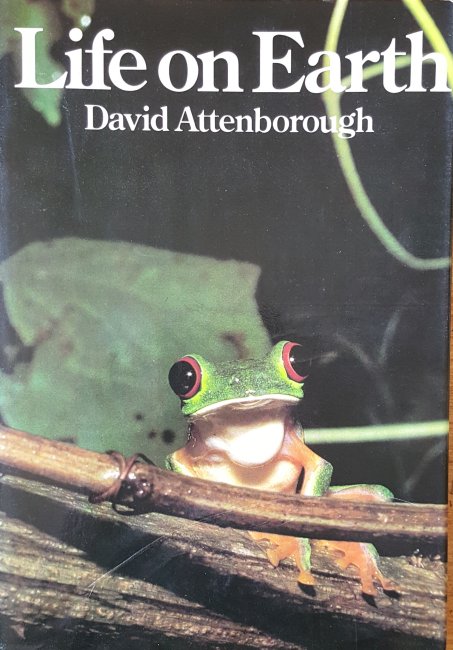
The first in a colossal series of adventures round the world and what would eventually be seen as an incredible lifetimes work is my third natural history book for August but really it is possibly the most significant book and programme series by Attenborough in his career as it totally changed both television’s view of natural history and the global influence of such programmes. Nobody, not even David Attenborough, foresaw back in the late 1970’s just where this would lead and that almost fifty years after he started planning Life on Earth that he would still be writing and presenting on huge television wildlife spectaculars. Attenborough had started out in television back in the mid 1950’s, always with a natural history theme to his work and after the massive success of Zoo Quest, which started in 1954 and which had Atttenborough as the presenter at short notice after the originally planned presenter fell ill, he became a familiar face on British television. In 1965 however his career took a different direction when he became controller of BBC2, one of the then just three TV channels in the UK and ultimately rose to Director of Programmes, taking over control of the output of both BBC channels in 1969. Amazingly despite the high pressure management role he now had he still managed to fit in presenting the occasional wildlife programme. In 1972 when offered the ultimate top job in British television, that of Director General of the BBC he declined and abruptly resigned.
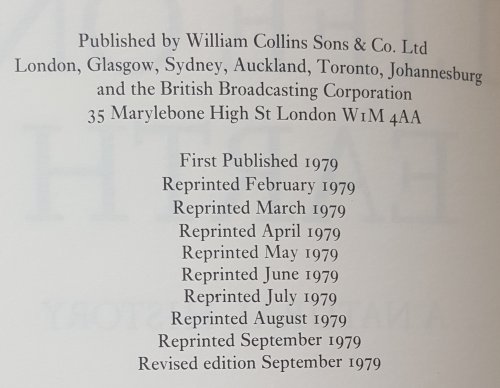
Why? Well he missed the hands on presenting role where he had made his name and after a short TV wildlife series in Asia he started planning an altogether more ambitious work ‘Life on Earth’ a series of thirteen 55 minute long programmes each of which would focus on one aspect of life and would try to tell as much of the whole story from the first single cellular creatures through to the incredible diversity of today. The series took years to film and was well in advance of anything seen before from any television channel anywhere in the world when it was first broadcast weekly between 16th January and 10th April 1979. It was an immediate hit and the accompanying book, which was released as the first episode was broadcast was already into its third reprint by the time the series had finished. My copy is the first revised edition and amazingly the tenth printing dated September 1979, just nine months after it first came out.
Back then you couldn’t record, or buy for watching again, TV programmes so you saw it when it was first broadcast and then all you had was the book and that probably explains the massive amount of reprints. Whilst reading this book again, for probably the first time in over forty years, I watched the entire series again on the DVD set that came out in 2003 and I have to say it has stood up remarkably well.
The book closely follows the structure of the television series with thirteen chapters each of which is dedicated to an episode, so we start with the first appearance of life three thousand million years ago and by the end of the first chapter get to the beginning of multicellular life. But this first chapter, like the first episode is also an introduction to the series and begins laying out just what a massive project it was to be. Reading and alternating watching the programmes made me appreciate how similar but also how different the two media are. The book can go into detail that watching a presenter speil through on screen would be potentially overbearing. With the video you want to concentrate on the wonderful pictures but in the book where there are a dozen or so images per chapter you want to get immersed in the words and can take in more information at one sitting, so the two formats complement one another.
What you also are aware of looking back from today is that Life on Earth whilst groundbreaking and feeling spacious at the time in giving almost twelve hours television and 311 pages in the book, feels nowadays like a rapid flit through its subject. Chapter eight of Life on Earth entitled ‘Lords of the Air’ covers the whole subject of birds in just thirty pages, I also have the book for the much later series ‘The Life of Birds’ (1998) which oddly takes the same total number (311) pages to cover just birds over ten chapters again mirroring the episodes of that TV series. So vastly more information and detail but ‘The Life of Birds’ and the other follow up series would not have existed if ‘Life on Earth’ had not been such a resounding worldwide success. The book is an interesting read and an excellent start for anyone who wants to get a grasp on the development of species and how our planet has become populated with countless different creatures. One point that should be made is that the emphasis is on creatures that are alive today, yes dinosaurs are mentioned and fossils shown but only on the way to modern examples. There is no specific chapter on the hundreds of millions of years that dinosaurs ruled the Earth. Frankly something had to go to get the vast subject still within the time frame for the television shows and you can’t go out and film dinosaurs so they are mainly dealt with in passing.
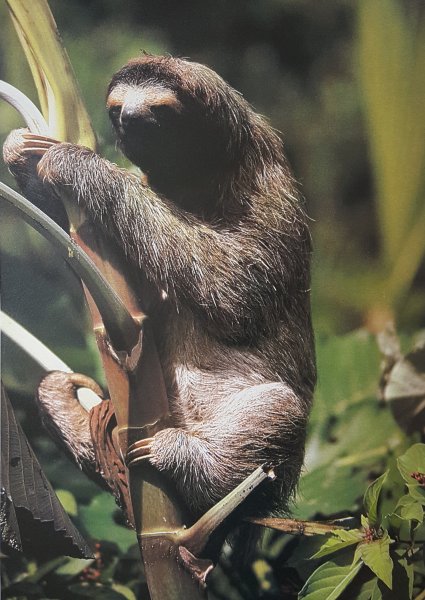
The book has lots of wonderful wildlife photographs inside and perhaps my favourite is the one above of a three toed sloth taken in Panama by David Attenborough himself, one of nineteen photos in the book that he took. The cover photo of a Panamanian Red-eyed Tree Frog, which became an icon of the series, was also taken by Attenborough. Reliving a television milestone which I remember watching enthralled back when I was a teenager has been a great experience, the book appears to be out of print at the current time but due to the huge numbers sold over the decades it is very easy to get a copy.
 Ramblings on my bookshelves
Just after finding your blog, as a lecturer in psychotherapy its great to find such erudite reviews. We have two young girls here and your pointings will also benefit the books we choose for them. Wonderful. Thanks
LikeLike
Many thanks, glad you like the blog
LikeLike