For those of you who don’t know of Henry Blofeld, or Blowers as he became known on the radio, but feel the name Blofeld feels familiar then you are probably thinking of the James Bond villain Ernst Stavro Blofeld whom Ian Fleming named after his fellow Etonian Thomas Blofeld, Henry’s father. Now I have always thought of Henry as a genial old buffer from his days broadcasting on the BBC and thoroughly enjoyed the other, and considerably more substantial, volume I have by him ‘It’s Just Not Cricket!’ so to say I was disappointed by this book would be an understatement. I picked it up in a charity shop expecting more of the same good humoured anecdotes interspersed with journalism and travel writing and yes there are snippets of what I anticipated but for such a short book it is massively padded out. The body of the book itself lasts just 100 pages and of that there are 15 full page cartoons taking it down to 85. Chapters are always stared on a new page so there is a lot of blank space at the end of the previous one which total roughly 6 complete pages meaning there is really only 79 pages of text to the actual book and seven of those are taken up with a chapter simply reprinting pretty poor quality jokes. You would hope therefore that the remaining 72 pages would be worth reading, sadly that is rarely the case.
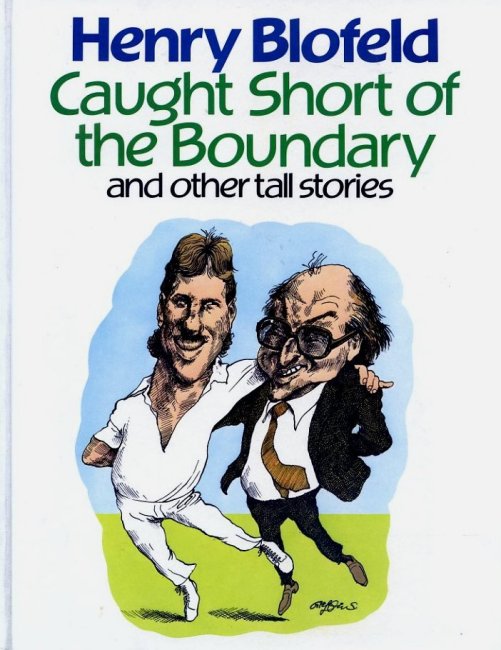
What comes over is a somewhat boorish character especially when he’s had a few glasses of wine, which appears to be most of the time, who was arrested for assault of his then girlfriend whilst visiting New York and describes visiting brothels whilst following cricket tours. The picture on the front cover shows him looking matey with England cricketer Ian Botham but the story inside concerns Botham’s indignation to a piece written by Blofeld which was highly critical of his abilities. Later on we discover that he also upset Dennis Lillee, the great Australian player, again through his highly critical writing, only to find himself booked as a speaker at one of Lillee’s testimonial dinners, he attempts to make this funny but fails miserably. I simply cannot recommend this book to anyone, indeed by the time you read this it will already be back in the charity shop and I hope that whoever picks it up next has a better time with it but at least the charity will make a little money each time it gets bought.
The cartoons are by Charles Griffin, then working as the political cartoonist for the newspaper The Sunday People, and frankly they are often the best part of the book.
 Ramblings on my bookshelves