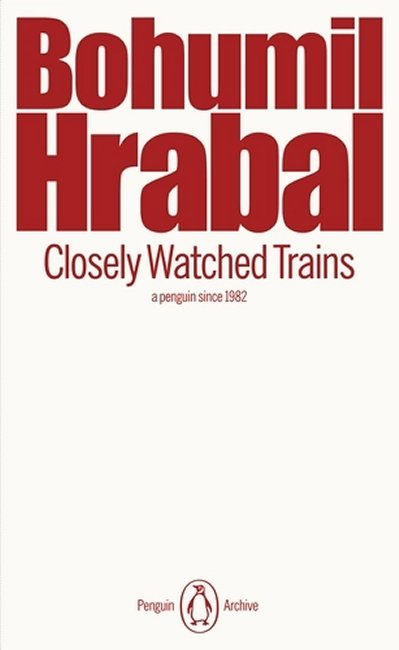
The first book to be featured on my blog of the ninety volumes published as Penguin Archive to mark the ninetieth birthday of Penguin Books on 30th July 2025 and oddly I have chosen this one because of the translator rather than the author. The book was translated into English from the original Czech by Edith Pargeter, better known by her pen name Ellis Peters and the author of the medieval mystery books featuring the monk from Shrewsbury Abbey called Brother Cadfael. Pargeter was born and brought up within a few miles of where I live now and died just a couple of miles away so I’m always intrigued when I come across anything different she worked on and until reading this book I didn’t know that Pargeter became fluent in Czech following her time in the country in 1947. The original Czech title is ‘Ostře sledované vlaky’ and in some English translations is given as ‘Closely Observed Trains’. The 1966 film that was based on the novella also seems to switch titles between the two options depending on where it was released. The film won the 1968 Oscar for best foreign film and was nominated for the 1969 BAFTAs in the best film and best soundtrack categories. The line on the cover ‘A Penguin since 1982’ refers to the first year one of Hrabal’s works was published by Penguin Books.
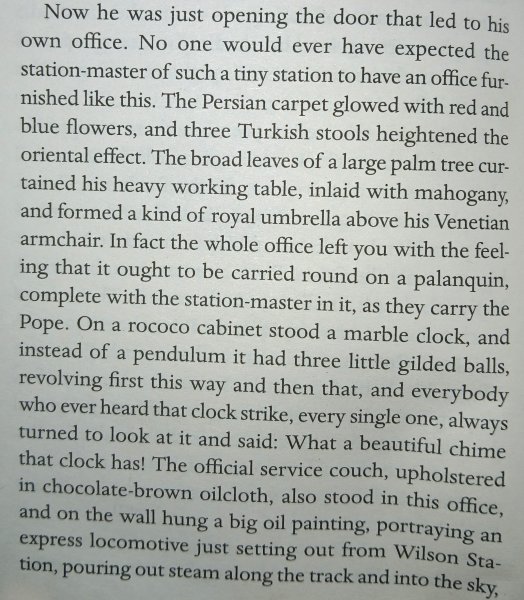
Hrabal worked as a railway labourer and train dispatcher during WWII, whilst waiting to complete his law degree in Prague as the university was shut down during the German occupation. The knowledge he gained from this experience is fully used in this 1965 novella which is set at a somewhat eccentrically run small railway station during 1945 as the Nazi troops were being forced back across Czechoslovakia. The main protagonist of the book is twenty two year old apprentice dispatcher Miloš Hrma, who at the beginning is about to start his first shift back at the station after attempting suicide by slitting his wrists three months previously. The eccentricity of the station can best be emphasised by the description of the Station Masters office:
The station master is as unconventional as his office, keeping his pigeons, which he exchanged from a German to a Polish breed at the start of hostilities, in the roof of the station and when upset shouting profanities into the ventilation ducts in his office. Miloš may be the apprentice dispatcher and his suicide attempt after failing to perform in his first foray into lovemaking with his girlfriend does mark him out but his senior dispatcher is also a man to be reckoned with. During Miloš’s time recovering Výpravcí Hubicka had had a bet with the telegraph operator and when she lost had used all the station’s ink rubber stamps to decorate her naked behind. Something that she simply finds as funny but has greatly upset not only the station master but the railway inspector who unexpectedly arrives to perform a disciplinary. As you can imagine the operation of the station is somewhat chaotic and that’s without the interaction with the occupying German troops.
The fighting on the Eastern Front and the subsequent traffic with trains containing fresh troops going east and injured and dead troops going west along with ammunition and equipment heading into the conflict seems to provide most of the movements through the station. These are presented as stark contrasts to the craziness at the station which flips between the wildly funny and the tragic, especially in the brilliant and unexpected denouement. I greatly enjoyed this book and will now try to search out the film.
 Ramblings on my bookshelves
Have you read Edith Pargeter’s detective novels featuring Dominic Felse? One of those is set in Czechoslovakia.
I’ll look out for Closely Watched Trains following this fascinating review. It sounds somewhat reminiscent of Radetsky March and The Good Soldier Schwejk.
LikeLike