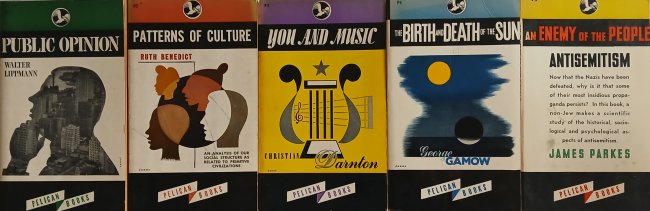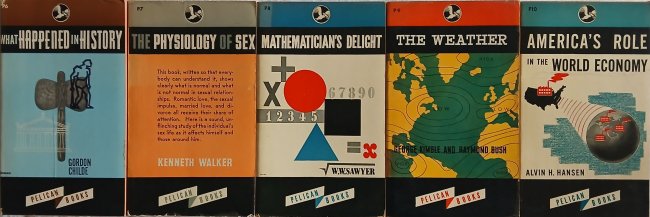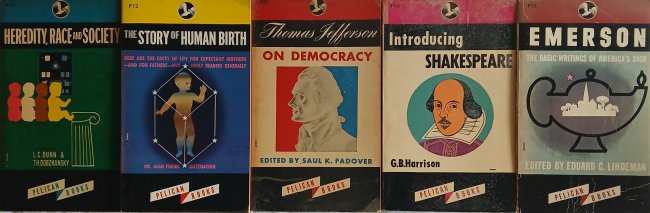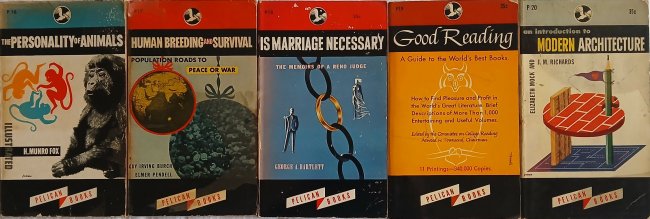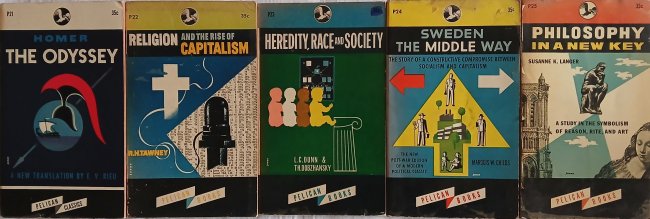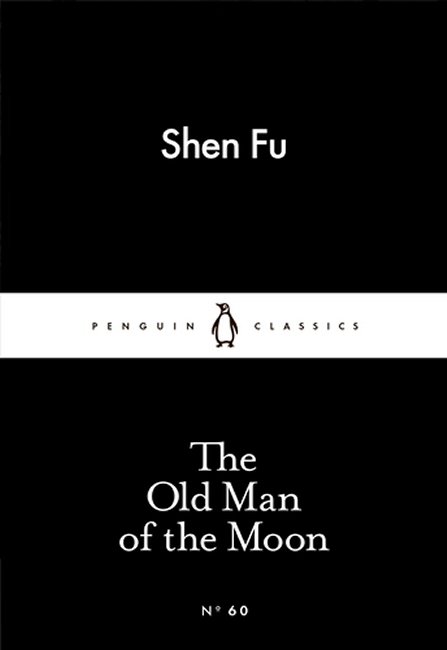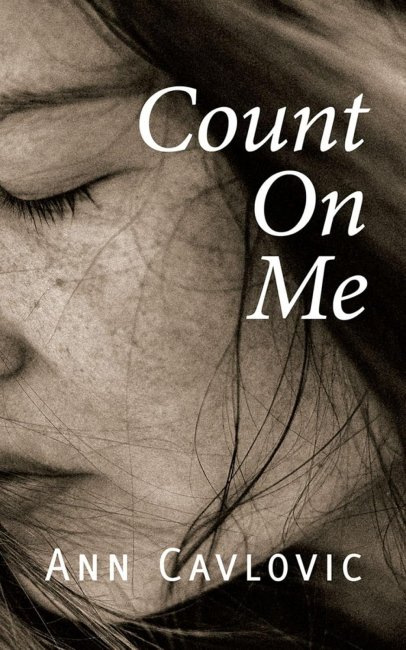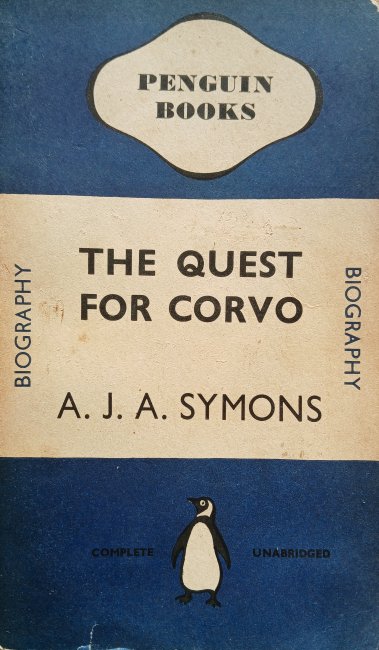
Keepers of the House – Lisa St Aubin de Terán

Lisa St Aubin de Terán gained her exotic sounding name from a mix of her mothers maiden name (St Aubin) and her first husband’s surname (Terán) of which more later. Born in London she was just twenty nine in 1982 when she wrote this, her first novel, but had already by then amassed life events enough for any aspiring writer to draw on. The novel tells the story of Londoner Lydia Sinclair who at the age of seventeen marries thirty five year old Venezuelan Don Diego Beltrán and goes to South America to live with him on his vast but declining estate. The book starts with a prologue which is set in the present day and tells how Lydia ended up in Venezuela before diving back over the two centuries of the rise and fall of the Beltrán family and estate until Don Diego is virtually the last of the family, and even he has a stroke several years into the marriage and is paralysed.

But the story of the early years of the Beltrán’s is of strong and powerful men rising to senior political and military ranks backed by the wealth from their estate. It is only after a horrific massacre of the family a century ago, men, women and children gunned down by soldiers goaded by members of a rival dynasty and a plague of locusts that destroyed all the crops in the valley leaving the villagers starving and almost as importantly the sugar cane that was the source of the money. The years of drought during Lydia’s time was the final straw, nothing is left, it is time to go. It sounds like a depressing read and in places it is but there is still some lightness to provide succour to the reader and it is certainly well worth reading. I also have her second novel ‘The Slow Train to Milan’ which is also based on her life with Jaime from after their marriage but before they finally moved to Venezuela and were instead travelling around Europe with increasingly bizarre experiences

Keepers of the House gets its title from a quote in the bible, specifically Ecclesiastes 12, and won the British literary prize The Somerset Maugham Award in 1983, which ironically is “to enable young writers to enrich their work by gaining experience of foreign countries.” whilst St Aubin de Terán had already had seven years of experiences in Venezuela, which was used as the basis of the novel, and was now safely back in England. I have written about one of her other autobiographical books in another blog back in 2020 ‘A Valley in Italy‘ and up until now have largely read her non-fiction works but have recently purchased a couple of her novels, this one included. I was struck particularly by the similarities between the stories of fictional Lydia and real life Lisa when comparing this book to ‘The Hacienda’, her memoir of her time in Venezuela published in 1997. If you thought that the plot of the novel was somewhat far fetched then the real story of Lisa is definitely worth reading as in ‘The Hacienda’ she tell of how she married at the age of sixteen to an exiled Venezuelan man more than twice her age who is wanted in his home country for bank robbery but who nevertheless takes her back to South America to live on his estate. She eventually comes back to England with her daughter Iseult to avoid the planned suicide pact intended by her husband Jaime as he realises that the marriage is falling apart.

The Unpleasantness at the Bellona Club – Dorothy L Sayers

This post is going live on Remembrance Day 2025 so it is appropriate to feature this Lord Peter Wimsey crime novel as the body is discovered on the 11th November and the fact that it is Armistice Day, as it is called throughout the book, is vitally important to the plot. This is the fifth of the original ten Penguin books published on 30th July 1935 that were the start of the company and which I started reading in their first editions in August, the remaining five will be covered between now and July 2026. This book was originally published in 1928 and is the fourth title featuring Sayers’ amateur detective Lord Peter, I have previously written about her twelfth novel Busman’s Honeymoon and a collection of short stories, some of which feature Lord Peter, Hangman’s Holiday.

I’ve always liked the Lord Peter Wimsey books since watching as a child the television series featuring Ian Carmichael in the 1970’s and this, whilst not one of the best, is a really good read. As can be expected the initial unpleasantness at the Bellona Club is the discovery of the body of Colonel Fentiman in his customary chair by the fire in the club on the evening of the 11th November still clutching his newspaper which he was wont to doze under soon after arriving in the morning. He was after all in his nineties so the death, apparently of heart failure, was not entirely unexpected although unfortunate. To the club members however the unpleasantness was to continue for several more weeks due to the wording of both his and his sister’s wills, as she had also died on the morning of the 11th. The Colonel’s will left the majority of his estate, some £2,000 (roughly £110,000 today) to his youngest grandson George with the residual going to his other grandson Robert on the basis that George as a married man suffering from shell shock after WWI needed the money more than Robert who was still single and a Major in the army. His sister, Lady Dormer, however drafted her will so that her estate, which had come to her on the death of her wealthy husband, and was worth around £700,000 (about £38 million today) would mainly pass to the Colonel if he was still alive when she died but if he predeceased her the vast majority would go to Miss Dorland who had been her companion for many years. It was therefore vitally important to establish exactly when the Colonel had died as if it was before 10:37am, when Lady Dormer had passed, then Miss Dorland was now extremely wealthy and if it was after that time then Robert Fentiman, gaining the residual after George had his £2,000, would be the one to gain.

But that is somewhat leaping ahead, Lord Peter is a member of the club and a friend of George and was acquainted with the Colonel and Robert. A the book begins the club was busy as a lot of members had come to London for the Remembrance Day event, Lord Peter and all three of the Fentiman family were at the club, Robert was staying there as he didn’t live in London whilst George and Lord Peter met in the bar that evening, the Colonel, as previously mentioned, either dozed or had died but had not yet been discovered in his chair by the fire but was about to be. Fortunately when Colonel Marchbanks found he was addressing a body Dr. Penberthy, the old man’s physician was also at the club and he and Wimsey moved the body to one of the club bedrooms noticing one thing odd in that the left knee of the corpse moved freely indicating that rigor mortis had begun to pass off but strangely only that joint was free.

That should have been the end of the story for Lord Peter but Mr Murbles, Peter’s solicitor and also the representative of Colonel Fentiman called several days later to advise him of the conflicting wills and asked him to make some discrete enquiries to try to establish when the old man had died. But how to establish when a man’s heart had given out precisely enough to reconcile the issue and both Fentiman brothers were acting rather oddly. Peter begins to suspect foul play…

The sixth of the first ten Penguins is ‘The Mysterious Affair at Styles’ which I have already reviewed as The Strange Case of the Sixth Penguin Book where I explain why there are two books with that number so the next book to be covered of this group will be Twenty-Five, the autobiography of the young Beverley Nichols.

The Holiday Train books – Peter Heaton

These three charming books were printed by Puffin Books in the 1940’s. They don’t seem to have been reprinted, not just by Puffin but by anyone, which bearing in mind that they are for very young readers, or more likely parents reading to young children, and their inherently fragile nature consisting of just eight sheets of paper, including the covers, folded and stapled in their centre makes finding them in good condition extremely difficult. Due to their rarity I have decided to include several double page spreads so that you can appreciate what a delight these little books (182mm x 110mm or 7.16 x 4.33 inches but so thin they are almost pamphlets) are. As implied the three books feature an anthropomorphic railway engine similar to the slightly later, and much more famous Railway Series by Wilbert Awdry and later his son Christopher which feature, amongst others, Thomas the Tank Engine, although that particular character isn’t in the first book which first appeared in May 1945.

The Holiday Train

Published in November 1944 as Baby Puffin number five, this introduces The Holiday Train as a character along with the love of his life The Little House which he passed every day whilst travelling up and down the line. Like the Puffin Picture Books, which were well established by then, the books were produced from plates normally cut direct by the artist, But Heaton was not a lithographer and didn’t know the technique so his drawings were converted in house by staff at the printers W.S. Cowell Ltd of Ipswich.

The story actually starts with the older engines, including The Holiday Train, being retired and going off to rest which he was happy about although he was really going to miss The Little House. But the seaside town where he had worked grew in popularity and population so the new engines couldn’t cope and it was decided to bring back the old locomotives.

As you can see above his return didn’t get off to a great start but soon all was well and The Holiday Train could renew his friendship with The Little House until…

The dreadful thing is a violent storm where a lightening strike hits The Little House and destroys it which sends The Holiday Train into depression at the loss of his friend. Trying to work out what to do to bring him back to normal the managers of the railway decide to get him to pull a special train, I love the expressions of the people on this next double page spread.

Of course The Holiday Train not only manages but sets a new record for the journey and as a reward it is decided to rebuild The Little House. I particularly like the puffin, the logo of the imprint, hiding behind a bush on the rear cover of the book as the Holiday Train settles down for the night in his new engine shed built from the ruins of The Little House.

The Holiday Train Goes to America

Published in June 1946 as Baby Puffin number six this takes the form of an international competition held in America between five locomotives from England against five from the USA which means of course crossing the Atlantic by ship. Which is a step up from the branch line antics of the first book, even if The Holiday Train is by far the smallest locomotive and is rather looked down on by the others. This book is very different to the other two, not only because of the use of four colour printing which allows for a full colour palate but also due to the much greater amount of text needed to tell a more complex story. This means a significantly smaller font is used, which along with the more literate style makes this definitely a book to be read to a small child rather than one they would read themselves.

Heaton makes full use of his extended colour range, it would have been difficult to do this book without the inclusion of blue. Speaking of which I’m sure the large blue loco called Blue Racer at the back of the left hand image above is a version of Mallard which at had broken the world speed record for a steam train in July 1938 by pulling seven coaches at a peak of 126 miles per hour, a record that still stands today. This can be better appreciated in a later picture where the streamlining of the LNER class A4 is shown, see below.

I love this picture of a seasick train, not a sentence I thought I would ever type, but Heaton manages to capture the abject misery of this condition so well on the face of the engine.

At last they arrive in New York and after being unloaded were welcomed to America and it appears that The Holiday Train runs on a narrower gauge that the mainline locomotives alongside him, which would somewhat explain his size difference. The two locos either side of him above are definitely giving him side-eye.

The three competitions are explained, a race, a beauty competition and a prize for the biggest engine which was almost certainly going to go to an American entrant as they are so much bigger than the locomotives from England. It didn’t look like The Holiday Train stood a chance in any of them. But there was a problem with the huge American engine Texas Tom who suddenly let out a lot of smoke obscuring the view for the other engines, but The Holiday Train is so small that he could see clearly under the dark cloud

and went on to win the race. I haven’t included the picture of the race itself but it does feature one of the errors Heaton made in his artwork as the green English train has vanished along with any tracks for him to run on. Another error is seen above as there is only one blue engine out of the ten and that is the Mallard lookalike but the loco shown above is missing the streamlining clearly depicted a few pages earlier. At the beauty contest there are again only nine tracks and no sign of the English green loco.

At the ball, where The Holiday Train is presented with the cup there are ten locos depicted but yet again Heaton has forgotten that one of the English locos is streamlined. It’s a fun story somewhat let down by the artistic faults, it is possible however that due to the age of the intended readership that this wasn’t noticed at the time by them, however it was spotted by Penguin management.

The Holiday Train Goes to the Moon

The last book in the series, not just of the Holiday Train but of Baby Puffins themselves as an imprint was published in April 1948 as the ninth Baby Puffin. Frankly this is the least interesting of the three titles, having a fairly simplistic story and a return to just red, yellow and black illustrations. It is noticeable that the scale between The Holiday Train and his engine shed formally The Little House has changed somewhat from the first book. In that the loco only just fitted in the picture on the back cover in the original title but now he is inside quite a roomy place with highly impractical curtains and a rug on the floor, see below.

The book tells the story of The Holiday Train being surprised by Carrumpus, a magical character who introduces himself saying “I come to visit trains when they get tired or overworked and cheer them up.” He does this by granting them a wish.

As you can see above The Holiday Train wishes he could fly and soon he has wonderful golden wings so he could fly around rather than running on rails.

Soon he decides to travel to the moon where he finds a railway, but not one like at home as here the carriages pull the locomotive rather than the other way round. But nevertheless The Holiday Train sets off to explore.

Arriving over the town of Lubbelium he sees some strange birds but suddenly Carrumpus notices the time, it’s almost midnight and the wish expires in a few minutes. Quickly The Holiday Train flies back to Earth and his home in The Little House.

It’s a pity that only nine different Baby Puffins were printed but I’m guessing that they were quite difficult for booksellers to display and sell them as they were so thin with no spine and usually were a horizontal format. With regard to the finishing of The Holiday Train books, by April 1948 the first book featuring Thomas the Tank Engine had appeared and he would go on to become enormously popular so did the world really need another anthropomorphic locomotive especially as Thomas and friends were somewhat more realistically drawn although not as delightfully whimsical. The rear cover of this last book has an appeal from Peter Heaton,

Dear Children,

As you know from reading my little books. I like having adventures. If you can tell me of any exciting places I could go to, write to me, care of Penguin Books, West Drayton, Middlesex, England

So clearly Heaton had no idea either that this would be the last anyone would see of The Holiday Train. Although he also wrote and illustrated the eighth Baby Puffin ‘Dobbish the Paper Horse’ Peter Heaton is probably best known to collectors of Penguin books for his Pelican titles dealing with a very different mode of transport, Sailing (first published June 1949) and Cruising (first published April 1952). He served in the Royal Navy during WWII on armed Merchant Navy vessels, corvettes and Motor Torpedo Boats ending up at the Admiralty and after the cancellation of the Baby Puffin series became friends with Penguin Books’ Managing Director, Allen Lane, regularly accompanying him on journeys on his boat. These trips led to the two factual books which made his name and which would be in print for several decades.

The Seventh Voyage – Stanislaw Lem

Polish author Stanislaw Lem is probably best known for his 1960’s science fiction masterpiece Solaris which has been adapted into a couple of films, in 1972 there was a Russian version and then fifty years later in 2002 James Cameron produced another in America. The Russian original is generally regarded as the better film although the latter is supposedly closer to the original book. This collection produced as part of Penguin Books 90th birthday celebrations consists of the short story ‘The Seventh Voyage’ (27 pages) along with a couple of short novellas, or longer short stories depending on how you define the categories, ‘Terminus’ (63 pages) and ‘The Mask’ (68 pages). I’ll review each one separately.

The Seventh Voyage

Well that was great fun, the story comes from a 1957 collection entitled The Star Diaries and despite being called The Seventh Voyage it is the first one in the collection which are different numbered journeys through space by Ijon Tichy as told by the equally fictional Professor Tarantoga. In this one Tichy encounters time loops after his spaceship is damaged and needing two people to effect the repairs decides to team up with one of his alternate selves to do the work. However all the various versions of himself seem to be a cross purposes and start fighting amongst themselves over who should have the one spacesuit to ensure that a future version can also have a suit on and also who can eat which bits of the limited rations.

Terminus

From Lem’s Book of Robots this story from 1961 is much more a ghost story rather than the humour of the first story although it is also clearly a work of science fiction. Pirx has just received command of an old spaceship and on first arrival at the spaceport was less than impressed with his ship with it’s visible rust internally and obvious patch jobs all over the place. Intrigued as to its history he searches for the ship’s log and finds out that the agent was not kidding when he said it was historic. In fact notorious would be closer to the mark as the ship was originally called Coriolanus and every space traveller knew that name and the disaster that befell it when it was caught in a meteor storm and so badly damaged that the crew were trapped in separate sections as the oxygen slowly ran out. All nineteen crew members died and the ship was assumed to be scrapped, but it was here, with its slapdash repairs to save money and barely capable of the run to Mars that Pirx had been assigned to do. Whilst exploring the ship after take-off Pirx notices that a pipe is vibrating and what is more it is doing so in Morse code and passing messages between the now dead crew calling for help as they slowly suffocate…

The Mask

This 1974 story can originally be found in the collection of Lem’s stories entitled Mortal Engines and we are this time in the realm of science fiction horror and it is a very strange but engaging tale. It is however very difficult to review without giving away the twists in the story, which is what the Wikipedia entry does within the first paragraph, you have been warned. The story starts with a nightmarish sequence where our first person narrator has no real idea what is going on or even who they are. This very quickly segues into what appears to be a regency royal ball, all crinolines and lace, but our narrator has no idea as to why she is there and still no clue as to their identity, is she recovering from amnesia, is she mad, or is there some other explanation? She is drawn to a mysterious stranger sitting alone in a window, but why and how can she know him better when she doesn’t even know herself? The explanation to these various questions is slowly revealed and the true horror of both their situations is a total surprise, unless that is you have sneaked a peek at Wikipedia, which I’m glad to say I only did to verify when this was first published after completing the story.

Although I knew the name Stanislaw Lem I have to admit that I hadn’t read any of his work before this book which was the main reason I bought a copy from this anniversary collection. I’m definitely going to read more, starting with Solaris of which I have seen the original Russian film version but never read the book.

Jonathan Wild – Henry Fielding

Born in 1707 Fielding was a barrister from 1740 and later as Chief Magistrate in London where he helped found The Bow Street Runners, the first British police force in 1749. Despite his legal career he was never good with money and had lived largely off his earnings as first a playwright, since 1728 and then as one of the first novelists in English. His first two published novels, ‘An Apology for the Life of Mrs. Shamela Andrews’ (published 1741) usually known just as ‘Shamela’ and ‘The History of the Adventures of Joseph Andrews and of his Friend Mr. Abraham Adams’ (published 1742) were both parodies of fellow early novelist Samuel Richardson’s ‘Pamela’ and also show his weakness for overlong titles, indeed this, his third novel is more properly entitled ‘The Life and Death of the Late Jonathan Wild, the Great’ and was first published in 1743. His most famous work is ‘The History of Tom Jones, a foundling’ (published 1749), which I also have but thought I would start with this earlier, and shorter, work as writers from this period can often be somewhat hard work.

Jonathan Wild was a real person and was officially paid as a ‘thief taker’ or someone who found and handed over criminals and their illicit gains to the authorities in return for a substantial reward. But in reality he was a criminal mastermind himself who would simply hand over those who had got on his wrong side or who didn’t pay a big enough bribe. The majority of the returned goods were from thefts Wild had himself either taken part in or had organised using his large gang, as it was simpler to get the reward than dispose of the goods any other way. Wild was eventually exposed and hung in 1725 and was almost immediately satirically fictionalised by writers such as Daniel Defoe and John Gay in his ‘The Beggars Opera’, the target of the satire was not Wild but the Prime Minister Robert Walpole with Wild taking his place in the various works and this was widely understood by the public. This is also the case in Fielding’s novel with Wild taking the title of The Great Prig (slang for thief) which would be immediately understood as Walpole as he was sometimes known as the Great Whig (the political party he was part of) and particularly desired the epithet ‘the Great’ to be applied to his name. The image below is of the judge sentencing Jonathan Wild to his execution.

As explained above, the book is a satire of Robert Walpole but frankly after 275 years the allusions are lost on the modern reader, I for one have no idea as to what Walpole was getting up to that so upset so many writers at the time. It therefore is worth pointing out that after a slow start the plot fairly rattles along and you don’t need to know the intricacies of mid eighteenth century politics to enjoy the book. The version of Wild depicted in the book is a thoroughly unpleasant character to all that encounter him whilst appearing law abiding and pleasant to their face, as indeed was the real person, but Fielding did make the point that he invented a lot of the interactions to suit the plot. I have included one of the illustrated pages below to give you an idea of the story.

My copy is the 1966 Folio Society edition, which as it is a book with a slipcase rather than a dust wrapper, has attractive but somewhat nondescript covers, which is why I have used the frontispiece as the initial image. The wood engravings by Frank Martin have the feel of eighteenth century illustrations and fit beautifully with the book and with the bawdiness of the period. If you want to read the book for free in various different versions such as HTML online, as a Kindle file or as a PDF it can be found on Project Gutenburg here.

The Crusades Through Arab Eyes – Amin Maalouf

I’ve read several accounts of the Crusades but all from the perspective of the Christian west so it was fascinating to read this version from the Islamic side. The first thing you discover is that the invaders were not taking on established states, but rather what was mainly individually controlled cities and towns which were sometimes in loose alliances but more often were warring amongst themselves making them relatively easy prey for the more organised crusader forces. Certainly for the first hundred years or so of the crusader conflicts whenever an Islamic ruler died there would invariably not be a clear successor so internecine warfare would break out making the city and its surrounding territory ripe for conquest by not only the crusaders but also the neighbouring city states that were, in theory at least, on the same side. What the Islamic forces lacked was a leader that most of them would follow and this was why the crusaders found the invasion of the holy lands relatively easy in the beginning and with a couple of short lived exceptions this would be the case until the rise of the Kurdish officer Salah al-Din Yusef known in the west as Saladin, who had gone to Egypt with his father in 1173 as a young man despite having no appetite for warfare and ended up the effective ruler of Egyptian lands but still nominally under the control of Nur al-Din from Syria who had sent the army in the first place. The complex interrelationships between the various states and warlords with the added mix of a fanatical sect founded in the 1070’s by Hasan Ibn al-Sabbah who became known as the Assassins. Although these killers would operate independently they were often paid by various rivals, or even other family members to remove people in the way of their own rise to power. How these original assassins operated is described in the book.

Although the preparation was always conducted in the utmost secrecy, the execution had to take place in public, indeed before the largest possible crowd. That was why the preferred site was a mosque, the favourite day Friday, generally at noon. For Hasan, murder was not merely a way of disposing of an enemy, but was intended primarily as a twofold lesson for the public: first the punishment of the victim, and second, the heroic sacrifice of the executioner, who was called fida’I or ‘suicide commando’ because he was almost always cut down on the spot.

This constant warfare amongst the various states and cities lasted long into the Crusade period and the various parties rarely agreed on alliances to take on the invaders and when they did, at least initially had nothing that would allow them to ambush knights in armour as they had no equivalent defences so hadn’t developed weapons to defeat them. But the book is not all negative regarding the Islamic resistance there were leaders who could push back the Crusaders, at least temporarily, before Saladin and he had a bad habit, at least in a war leader, of being too merciful to those he defeated often simply sending them away, along with their armaments, leaving them free to attack again at a later date or surrendering territory in the hope of achieving a more lasting peace

The book is fascinating, especially if you have read any of the various western accounts of the period, I will be reading The Chronicle of the Crusades by Geoffrey of Villehardouin and Jean de Joinville at some point next year, the book is already on my shelves, and this will round off the overview of the Crusades I started with T.E Lawrence’s book on Crusader castles which I read at the start of this year. It’s a period of history I remember reading a lot about whilst at school both as set texts and independent study and this book has certainly given me a lot to think about with its alternative viewpoint.

The Man Who Died Twice – Richard Osman

Earlier this year I read Richard Oman’s first novel and thoroughly enjoyed it, so it really was only a matter of time before I got to the second one. This continues the story of the four residents of a senior citizens residential village who originally got together to discuss unsolved murders and have now moved on to solving various current crimes, invariably including murder but not exclusively. One of the things I really liked about this book was the development of the characters from their first adventure, we gain quite a lot of new information on everyone, especially former spy Elizabeth who we now know as Dame Elizabeth Best, the title implying that she was even more senior in the service that previously suggested and from other comments that she had a reputation as one of the finest in her field. Fiery ex trade union leader Ron gets to show his gentle side as his grandson comes to stay, as well as becoming a highly effective ‘field operative’ for the Club and Joyce is braver and more intuitive than previously expected, although still so innocent that she chooses a combination of an old nickname and the year her daughter was born giving @GreatJoy69 as her Instagram user name, fortunately she can’t work out how to access her private messages. Her diary is again used as a mean of filling in story as she can review the days occurrences it’s a clever use of first person narrative in largely alternating chapters throughout the book. Ibrahim, the semi-retired psychiatrist, gets seriously mugged and kicked in the back of the head early on in the book and this puts him off leaving the retirement complex, or even his flat there, for a large part of the book. But it also drives the others to come up with a way of exacting revenge on his mugger in a way only they, and certainly not the police, could.

The remaining three have their work cut out dealing with £20 million worth of diamonds, the American mafia, an international crime go-between, a drug dealer, Elizabeth’s old employer MI6 or possibly MI5 it’s not made clear, and even Elizabeth’s ex husband whom he hadn’t seen for twenty years amongst others. Like the first book the plot is fast paced, full of twists and turns and the body count is surprisingly high for a book about four pensioners. We also find out more about the two local detectives who seem to have been seconded by the Club, Donna and Chris; along with the ever useful Polish builder Bogdan who has certainly gone up in the world since he killed off his main local rival in the first book and therefore got a lot more lucrative work. The book is full of humour as well, again not laugh out loud jokes, but humour nevertheless, it really is a fun read which is probably why less than twenty four hours after starting a 444 page book (I have the Waterstones edition with the extra chapter) I have finished it and am writing this blog.

The fifth book in the series came out last month and is of course already a bestseller, it seems that Osman can do no wrong with his septuagenarian detectives, although Ibrahim at least is now in his eighties and I hope to read many more books about them all. By the way I checked out the Instagram account and it is registered as belonging to Joyce Meadowcroft from the book, well done Richard Osman or possibly Penguin Books for not only having the account but posting pictures of her dog Alan and trips out exactly as I would expect Joyce to do. Much more sensible than Douglas Adams who used his own phone number in the first Hitch-hikers Guide to the Galaxy book and had to get his phone number changed when people started ringing it.
Strata – Terry Pratchett

I have done several blogs about Pratchett but always tried to emphasise some of the less well known aspects of his work and this time I’m going back to his third novel, and the last before he created Discworld, which was to make him rightly famous. My copy is a signed first edition published by Colin Smythe Limited on the 15th June 1981 in a print run of just 1,001 copies, 850 of which were sold to Reader’s Union, and it is in this book that Terry first explored the concept of a flat world although not in this case borne on the back of a giant turtle; as he wrote at the time:

I am also working on another ‘discworld’ theme, since I don’t think I’ve exhausted all the possibilities in one book! 

That theme would result in ‘The Colour of Magic’ first published on 24th November 1983 and it, along with the subsequent forty plus books, proved that he definitely hadn’t exhausted all the possibilities. But back to Strata which I must admit I hadn’t reread for at least thirty years, the story starts with a fake quote from an equally fake book that sets up the premise for the beginning of the plot:

Whilst it would undoubtedly fun to have developed more on this idea, instead Pratchett abandons the dubious fossil record concept quite quickly after explaining it was done via a huge device called a strata machine. This was invented to form fake sedimentary layers and their accompanying embedded fossils on newly created planets by a race known as the Spindle Kings who predated mankind by several million years and had also built Earth. A small number of these machines had been found buried on other planets and humans were now using them to terraform new planets for ongoing colonisation. There has been other galaxy wide races before the Spindle Kings such as The Wheelers and these had died out in turn leaving the present day to Humanity along with a few other sentient and space travelling races, specifically for this book, Kung and Shand. The main human character in the story is Kin Arad who had written a book called ‘Continuous Creation’ giving the history of the various galaxy creating races and this had made her famous so that she was approached by a man who claimed to have found a flat Earth out in a largely unvisited part of the galaxy and wanted to put together a small crew to explore it, this crew would consist of Kin Arad, Marco a representative of the Kung along with Silver a Shand. I can explain all this because it is dealt with in the first forty pages of the book and gives away nothing of the main story.

Anyone who has read Pratchett’s Discworld books will keep seeing references throughout the book, for example our three protagonists first meet in a bar called The Broken Drum and when we get to the flat world there is a rimfall, a continuous flow of the oceans off the edge, amongst other similarities. However the flat planet is recognisably the Earth with much the same continental pattern unlike Discworld and it works using technology, such as matter transference to replenish the seas, rather than magic which drives The Disc in the later books. Anyone who has read Discworld and wants to get an inkling of Pratchett’s ideas in creating it should probably read Strata, it is by no means as an accomplished work as certainly the Discworld novels from the fourth one onwards where Pratchett had more fully developed his skill as a storyteller but it is definitely worth a go and the twist at the end is a good one. It is definitely a science fiction story rather than a fantasy and is probably closer to Larry Niven’s Ringworld than to Pratchett’s Discworld series.

The Ring of the Nibelung – Richard Wagner

Back in March 2021 I reviewed a book about the trials and tribulations of staging the magnificent four opera series of the Ring Cycle by Richard Wagner, see here. Soon after that I purchased this magnificent cloth bound volume from The Folio Society, which is the full libretto in parallel text with Wagner’s original German alongside the superb translation by Stewart Spencer. This was first published by Thames and Hudson back in 1993 as ‘Wagner’s Ring of the Nibelung; A Companion’, but the Folio version, published in 2020, is much larger at 289 × 205 × 41 mm, and has added illustrations by John Vernon Lord. As can be imagined as the four operas in the 1991 Barenboim recording I have play for a grand total of 15 hours and 5 minutes the libretto runs for well over three hundred pages with an extra seventy pages of authoritative essays on the development of the opera cycle at the beginning along with extensive notes at the end making a total of over four hundred pages of text with seventeen unnumbered leaves of plates. All in all a comprehensive guide to this greatest of Wagner’s operatic works. It should be pointed out that whilst the words sung are all in both languages the stage directions are only in English, this didn’t bother me but if you were looking for a ‘full’ parallel text then bear in mind that these parts are missing.

Wagner is unusual in writing his own libretto, it is much more common to either set an existing work or work with a librettist. For the most part he combined Norse with Old German mythologies in developing his story, these are closely related anyway with much the same characters only with different names, Odin becomes Wotan and Thor becomes Donner for example, but there are also echoes of the ancient Greek especially Homer’s Iliad. Occasionally he merges two characters from different origins into one such as Freia (this is how Wagner spells her name, more usually Freya or Freyja) a Norse goddess of fertility and in this version also the one who looks after the golden apples that confer everlasting life to the gods; she is also referred to as Holde, a similar but different character from German folk tales. Wagner also adds to the mythology with his own concepts such as carving important contracts in runes on Wotan’s staff, the staff exists in the mythologies but not the binding contracts. This melding of the various myths and new ideas make the reading of the libretto so fascinating, especially if you have a reasonable knowledge of the original mythologies, and whilst I have picked up some of this whilst listening to the operas it was only when reading the text at my own pace rather than moving rapidly on as you do in a performance that I more deeply appreciated the complex weaving of stories that Wagner achieved. Certainly the librettos can be read as a long poem without any deeper knowledge of the operas but I found myself adding the music in my mind as I read the words especially in parts I knew well.

The book is really lovely to read, as can be seen above in this section of the third opera ‘Siegfried’ shown with an engraving of the sword Northung being repaired by Siegfried. The sword had belonged to his father Siegmund but was shattered by Wotan during Siegmund’s fight with Hunding in the previous opera ‘Die Walkure’ (The Valkyrie) as Wotan’s wife, Fricka, had demanded that he die as punishment for his incestuous relationship with his sister Sieglinde which had left her pregnant with Siegfried. The illustrations deliberately do not include any of the characters but are rather of important objects within the opera cycle, which I think is an interesting choice as John Vernon Lord explains in his note on the illustrations:

I thought that the words and music together would be best for conveying the ‘appearance’ of the various characters. At the outset, I felt that the inclusion of people would detract from the symbolic nature of what I wanted to express.

It is later in this opera, in fact in the final scene, that we get one of the few ‘humorous’ lines although this was not intended as such by Wagner but I always smile when we reach the ‘This is not a man’ line when Siegfried discovers and wakes the Valkyrie Brunnhilde from where she has been left in a magical trance by Wotan.

It should be realised that Siegfried has never seen a woman before, being brought up by Mime in a secluded location away from all others, but even so ‘Das ist kein Mann!’ is not Wagner’s finest hour.

I have really enjoyed having a deeper dive into the text of the operas and will have a much greater understanding the next time I listen to or watch them, being able to look back over previous sections to refresh my memory has proved to be well worth the cost of purchasing the book especially as it is such a fine edition.

Guerrilla Warfare – Che Guevara

I have known of the existence of this book for many years and was somewhat confused that a book first published in the USA in 1961 and then in the UK by Pelican Books in 1969 was so elusive. I wanted it because I thought it would be a logical follow up of ‘The Motorcycle Diaries’ which I reviewed back in June 2022 and which very entertainingly covered a trip around South America by Guevara and his friend Alberto Granado whilst Guevara was studying to become a doctor. This book I assumed would cover his time as part of the Cuban revolution leading to his promotion as second in command below Fidel Castro and the ultimate overthrow of the Batista regime, But no I have since found out that a book I hadn’t previously heard of ‘Reminiscences of the Cuban Revolutionary War’, also written by Guevara and published in Pelican along with this book in 1969, performs that function. So what is ‘Guerrilla Warfare’ about? Well here we are probably coming to the reason it is so difficult to find, as it is basically a handbook on how to run a popular insurgency, from recruiting fighters to how to actually run a guerrilla band, feeding and clothing them, obtaining arms and proposed combat methodology. A look at the contents list gives an idea as to what to expect.

Despite not being what I expected the book is fascinating and gives an insight into the way a guerrilla band operates with some of the problems which come from operating in a secret way and some things that are different with a regular army. For example the chapters on warfare on favourable and unfavourable ground are diametrically opposite to a ‘normal’ army in that favourable ground for the guerrilla is the mountains and jungle where they can easily melt away or establish defensible positions whilst a regular army likes more open country where their heavy vehicles can move easily and this is precisely what a guerrilla army counts as unfavourable. Likewise armaments for a guerrilla fighter is largely restricted to rifles, preferably not fully automatic, and hand guns with homemade grenades or Molotov cocktails. The army on the other hand can utilise aircraft, tanks and tripod mounted machine guns which are too heavy to be easily moved by hand, which is usually how a guerrilla band would need to move them and quickly use far too much ammunition, which is always in short supply until they manage to capture more. Guevara explains that should a heavy machine gun be captured by all means use it but be prepared to abandon it if pressed as it is simply not worth the effort of carrying it away during combat. Guevara also says that a bazooka is an excellent guerrilla weapon let down by its size and the fact than a man can only just carry three shells any distance due to their weight and even then someone else has to carry the shoulder mounted launcher.

The need to capture ammunition also applies to most of the guns and rifles used by a guerrilla band, it is far easier to obtain these from the enemy than try to smuggle armaments in from outside, it also means that the ammunition is the same thus largely getting round the difficulties of supply. The section I have included below makes the distinction between a revolutionary and a terrorist in that a terrorist is indiscriminate in his targets unlike the more focused revolutionary. In another section Guevara also dismisses gangs of bandits as preying on the poor population whilst the revolutionary is there to support them, although he admits that the guerrillas will need food and clothing which the peasant agrarian economy must provide as they are the only practical source. But he explains that whenever possible this should be paid for either with cash or promissory notes which should be honoured as soon as possible. How likely this is to actually happen isn’t explained.

It should be pointed out that Guevara had a reputation as a ruthless fighter and unforgiving disciplinarian, executing deserters from his troops. But none of this is mentioned in this work which, whilst not glorifying Guevara as he isn’t mentioned by name, is more a guide on how to operate a revolutionary force at least in the context of 1950’s/60’s South American environment, which is almost certainly why it is no longer in print and copies are so difficult to come by. It was an unexpectedly interesting read and I have deliberately not included some of the more specific sections on armaments and tactics in this review.