The Gospel As Recorded by St. Mark

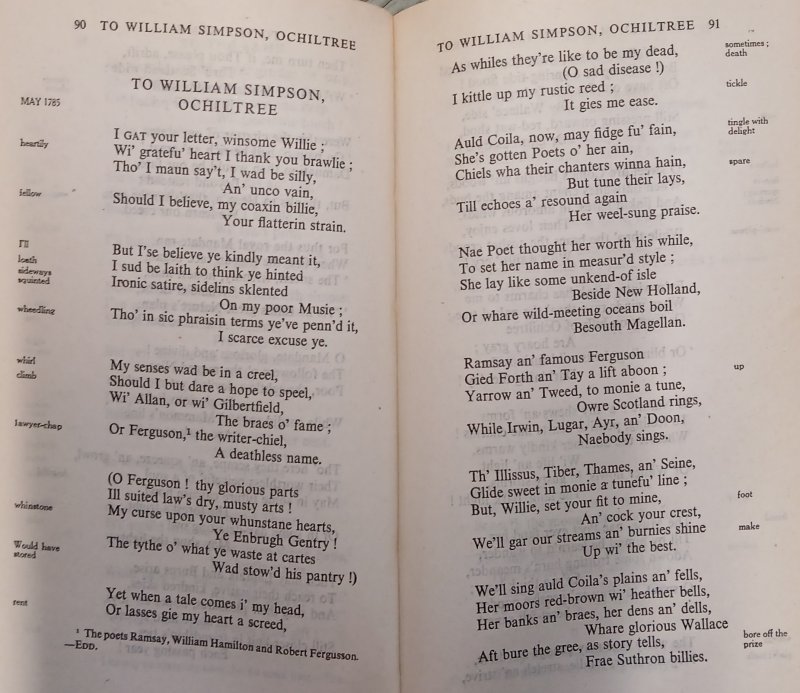
As this blog is being published on Christmas eve, I have taken the opportunity to review another of the privately printed Christmas books given by Alan and Richard Lane as gifts, in this case the book for Christmas 1951. I’m not going to attempt to review the gospel itself, this blog is concerned with the new translation, this edition of the translation and this book in particular. Penguin were to publish a new translation of The Four Gospels by E V Rieu a year later in November 1952 so this was a first view of this very readable new translation. It was a little odd to select the gospel of Mark as a Christmas gift as only Matthew and Luke include the birth of Jesus, which you would have thought would have been a consideration, but as you can see below Mark starts with the adult Christ being baptised by John in the River Jordan.

Mark is one of the three synoptic gospels where the same stories are told in much the same sequence and in similar words, indeed three quarters of Mark’s gospel also appears in those of Matthew and Luke whilst the gospel of St John is quite different both in style and content. As I said earlier the big difference is the lack of a nativity story in Mark but you also don’t get the Sermon on the Mount or several parables amongst other items in Mark which is quite a bit shorter than the other three gospels.

Looking at the first page as translated by Dr. Rieu it is clear that it is written as much more of story than the classic King James translation which I grew up with, which for all its magnificent prose can be a little daunting to approach, particularly for a modern reader. By way of contrast this is the same passage in the King James version.

1:1 The beginning of the gospel of Jesus Christ, the Son of God;

1:2 As it is written in the prophets, Behold, I send my messenger before thy face, which shall prepare thy way before thee.

1:3 The voice of one crying in the wilderness, Prepare ye the way of the Lord, make his paths straight.

1:4 John did baptize in the wilderness, and preach the baptism of repentance for the remission of sins.

1:5 And there went out unto him all the land of Judaea, and they of Jerusalem, and were all baptized of him in the river of Jordan, confessing their sins.

1:6 And John was clothed with camel’s hair, and with a girdle of a skin about his loins; and he did eat locusts and wild honey;

1:7 And preached, saying, There cometh one mightier than I after me, the latchet of whose shoes I am not worthy to stoop down and unloose.

1:8 I indeed have baptised you with water: but he shall baptize you with the Holy Ghost.

1:9 And it came to pass in those days, that Jesus came from Nazareth of Galilee, and was baptized of John in Jordan.

1:10 And straightway coming up out of the water, he saw the heavens opened, and the Spirit like a dove descending upon him:

1:11 And there came a voice from heaven, saying, Thou art my beloved Son, in whom I am well pleased.

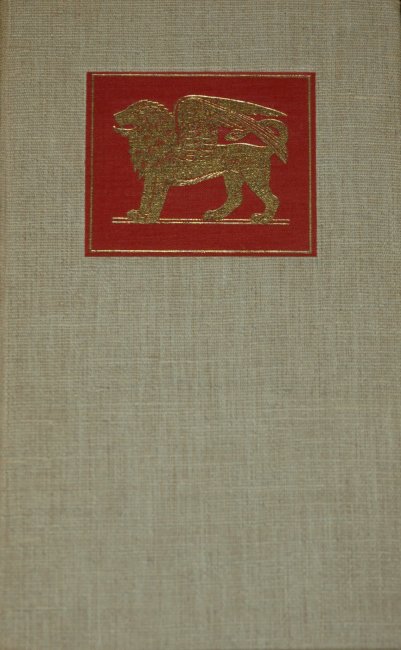
It is almost forty years since I first read E V Rieu’s translation of the four gospels. I took it, along with a couple of others from the Penguin Classics series, as my in flight reading for the first time I crossed the Atlantic in February 1986. I’m not remotely religious although I did go to a Church of England primary school for my education between the ages of four and eleven, but the way the gospels are presented in this translation means you can read them more like a collection of four novellas and enjoy the stories as they are told. This edition is really beautifully produced with canvas covered boards and terracotta cloth labels blocked in gold. The pages are a lovely grey and compliment the overall design by Hans Schmoller well. The lion design by Reynolds Stone is different to the one, also engraved by him, used for the Penguin Classic when it was finally published.

My copy was given to typographer Ruari McLean (it has his bookplate inside) who had joined Penguin Books in 1946 with specific responsibility for Puffin books and was instrumental in introducing Jan Tschichold to Penguin. By 1949 he had moved on and was working with Rev. Marcus Morris on the design of a new comic for boys he had devised called Eagle, which would go on to massive success in the 1950’s and 60’s. Tschichold would radically redesign Penguin books in the late 1940’s and came up with The Penguin Composition Rules.

Paint Your Dragon – Tom Holt

Chosen by way of a comedy interlude between two serious works, I actually have no memory of acquiring this book although I suspect it was part of a job lot of second hand fantasy novels I bought in the early 2000’s most of which have been read and passed on to other people who might be interested. This is the only book by Tom Holt I own, although he has written over seventy novels along with numerous novellas and short stories in his own name and that of K J Parker since giving up his original job as a solicitor in Somerset. As I have probably owned this book for a couple of decades it seems only right to finally read it especially when I read the back cover and it sounds intriguing…

To my surprise this retelling of the George and the dragon story is largely set in modern day Birmingham (England not USA). The local council has commissioned renowned sculptor Bianca Wilson to create a grand statue for the square outside the town hall and much to her amazement she finds herself selecting George and the dragon as the subject, very different to previous works of hers. It’s as though she is being led into the subject, and that’s because she probably is. One of the main premises of the book is that it is possible for the dead to inhabit a statue and effectively come alive again with the statue returning to flesh and blood when it is possessed. The first inkling that Bianca gets that something is amiss is when she and her friend Mike arrive in her studio one morning and on the plinth is just St George, several tonnes of Carrara marble in the shape of a dragon has vanished overnight with no trace of the mechanical equipment that would have been needed to cut it from the plinth or lift it onto presumably a flat bed lorry. Even more oddly the next day the dragon is back and George goes missing and there is a bit of toing and froing over the following days before both statues disappear. In the meantime we are introduced to some more protagonists, to wit five demons that got left behind in the Cotswolds region of England on their way on holiday from Hell to a country music event in Nashville.

I really enjoyed the interplay between the demons, one of which is female and is attracted to the effective leader of the stragglers much to his obvious concern and the situations they get into when they get recruited by St George to help him win the big rematch with the dragon, because who says the saint has to be the good guy after all? The other main characters include Chubby who makes his money selling time to people who need it along with his worryingly sentient computer and Kurt, a professional hit-man who may or may not be dead already. Holt manages to keep the various sub-plots moving at a rapid pace but not so that you lose track of who is doing what, where and why and I loved that the most likeable characters are the least obvious contenders for that position and that St George is clearly a nasty piece of work who apparently won the first contest with the dragon due to a fix with a gambling syndicate so you are rooting for the dragon almost from the start of the book.

I really enjoyed this book and am now surprised I haven’t any more works by Tom Holt. From the evidence of this book he seems to fall into much the same comic fantasy genre as Robert Rankin with unbelievable things happening in a fully believable modern setting.

The Dark Invader – Captain Von Rintelen

The first Penguin books were published in July 1935 and introduced their distinctive colour coding by subject category, a scheme copied from the Albatross Books in Europe. Initially there was just orange for fiction, dark blue for biography and green for crime but gradually more categories and colours were added including the first cerise for travel and adventure in September 1936. This is that first title and tells in his own words the story of how German WWI spy and saboteur Captain Von Rintelen operated in America for a few short months in 1915 and what happened to him afterwards. It may be thought of as an odd book to be publishing so close to WWII but presumably it was seen as an object lesson for possible activity if Germany did indeed start war again.

Rintelen was chosen from the German Naval Command to go to America to try to stop munitions being shipped to the the Allies. The latest American shells were made from steel rather than the inferior iron still utilised in Europe so were far more destructive, America was still neutral in the conflict so Germany had at first tried to stop America supplying weapons at all as they were seen as taking sides but America then offered to supply Germany as well knowing full well that the British blockade of German shipping routes meant that such a trade was impossible. The only option to the Germans was therefore to stop the ships somehow and Rintelen was just the man, he spoke English fluently and apparently had no problem passing as either English or American and had proved his resourcefulness already in transferring five million marks worth of gold by train and lorry from Berlin to Constantinople to pay bills for the cruisers Goeben and Breslau as German paper money wasn’t being accepted. Rintelen travelled to America via Denmark using papers describing him as a Swiss merchant but once there found that the contact he had arranged had not turned up so he had to start from nothing in the way of a plan but at least he had three million dollars which he had managed to transfer to American banks via various circuitous routes.

Rintelen was to be in America for just four months but in that time managed to do an amazing number of things from arranging manufacture and distribution on board ships of incendiary devices timed to go off during the Atlantic crossing to gaining the contract to supply Russia with wartime supplies none of which made it due to the ships being planted with the devices but which significantly added to the his coffers due to being paid at loading. He also formed a union of dock workers which came out on strike thereby preventing further ships being loaded and ultimately discussed with the deposed president of Mexico starting an uprising with an invasion of America to regain Arizona and therefore directing munitions to an America/Mexico war rather than Europe. That he managed to do so much in so little time and caused major disruption to military supplies across the Atlantic was a tribute to his resourcefulness, that he managed to also largely deflect suspicion from himself was remarkable. However his superiors were not so careful and intercepted telegrams in a code the Allies had access to led to his downfall.

Recalled to Germany, supposedly to review progress and adjust plans Rintenlen was intercepted in his Swiss guise by the British and interned in reasonable luxury at a camp for officers before being transferred to America where he spent four years in a regular prison for actions carried out whilst America was neutral so he wasn’t recognised as a prisoner of war. All this is covered in the book with surprising insights into how well he was treated by the British as opposed to the Americans. The book finishes with him returning to Germany in 1921 as a largely forgotten man. Rintelen came back to Britain in 1933 as he despised Hitler and he lived here until his death in 1949.

This book, along with the sequel ‘The Return of the Dark Invader’ (not published by Penguin) went out of print around 1941/2 when books about the cleverness of German spies ceased to be of interest to the general public and both books stayed out of print for decades. I have found ‘The Dark Invader’ published in 1998 by Frank Cass under their Classics of Espionage series. Apart from that if you want to read this book, and I do recommend it not only for its historical interest but because it is very well written, then you need to hunt down an eighty to ninety year old copy. Fortunately it is surprisingly easy to find them and it shouldn’t cost much more than £10 for a Penguin.

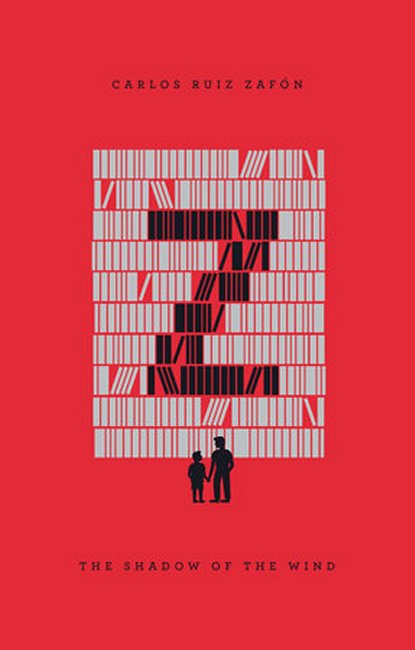
The Shadow of the Wind – Carlos Ruiz Zafón

Dawn is breaking in post-war Barcelona when Daniel’s bookseller father guides him through the mist to a mysterious building hidden in the heart of the old city. Here in the Cemetery of Forgotten Books, ten-year-old Daniel is allowed to choose one from the hundreds of thousands of abandoned volumes that line the labyrinthine corridors. Inexplicably drawn to ‘The Shadow of the Wind’ by Julian Carax, the boy clutches the book and he and his father leave. That night Daniel reads through the night totally captivated by the story and the quality of the writing and I know exactly how he felt as although my all night reading sessions are well behind me as I found it difficult to put this remarkable book by Zafón down. Perhaps a longer section than I would normally quote will give an insight into the wonderful descriptive prose and the building tension that is maintained throughout the 511 pages. This passage is very early in the book so doesn’t contain any spoilers and describes the night after Daniel took the book to Don Gustavo Barceló, another bookseller but one who knew more about the rarities of printing than Daniel’s father, for him to have a look at. There he discovered that he may well have the last remaining copy of Carax’s final novel and that all the other copies along with editions of all his other books had been systematically bought or stolen and mysteriously found burned over the years.

I turned off the light and sat in my father’s old armchair. The breeze from the street made the curtains flutter. I was not sleepy, nor did I feel like trying to sleep. I went over to the balcony and looked out far enough to see the hazy glow shed by the streetlamps in Puerta del Angel. A motionless figure stood in a patch of shadow on the cobbled street. The flickering amber glow of a cigarette was reflected in his eyes. He wore dark clothes, with one hand buried in the pocket of his jacket, the other holding the cigarette that wove a web of blue smoke around his profile. He observed me silently, his face obscured by the street lighting behind him. He remained there for almost a minute smoking nonchalantly, his eyes fixed on mine. Then, when the cathedral bells struck midnight, the figure gave a faint nod of the head, followed, I sensed, by a smile that I could not see. I wanted to return the greeting but was paralysed. The figure turned, and I saw the man walking away, with a slight limp. Any other night I would barely have noticed the presence of that stranger, but as soon as I’d lost sight of him in the mist, I felt a cold sweat on my forehead and found it hard to breathe. I had read an identical description of that scene in The Shadow of the Wind. In the story the protagonist would go out onto the balcony every night at midnight and discover that a stranger was watching him from the shadows, smoking nonchalantly. The stranger’s face was always veiled by darkness, and only his eyes could be guessed at in the night, burning like hot coals. The stranger would remain there, his right hand buried in the pocket of his black jacket, and then he would go away, limping. In the scene I had just witnessed, that stranger could have been any person of the night, a figure with no face and no name. In Carax’s novel, that figure was the devil.

The plot flies along at a breakneck speed with multiple clues as well as a few blind alleys as to what is going on as Daniel tries to find out what happened to Julian Carax and how he came to be found shot dead in Barcelona when he should have been safely in Paris and what the wartime thug, murderer and now Inspector of Police Fumero has to do with it, as we progress from 1945 when Daniel first visits the Cemetery of Forgotten Books to the end of 1955 when the story finally reaches its denouement. Along the way a cast of superbly drawn characters are introduced, some of which help but more than a few are there to hinder Daniel’s fascination with Carax and his slowly developing interest in women as he goes through his adolescence. At about two thirds through the book and three days after I started I still hasn’t worked out how everybody was linked and how the various plot strands were connected so took an evening off reading to think through what I knew so far without adding more detail. This proved to be a good idea as I finally realised where the story was going and who the man watching from the shadows was, just in time as Zafón was about to upend the story and make my guess a possibility. I read the remainder of the book the next evening as Zafón neatly tied up all the loose ends in an eminently satisfying way.

Sadly Carlos Ruiz Zafón died of cancer in 2020 aged just 55, robbing the world of a great author well before his time. This English language version of the book is translated by Lucia Graves, daughter of the poet and novelist Robert Graves. She was brought up in Mallorca from the age of three, and according to her memoir ‘A Woman Unknown’ she grew up speaking English at home, Catalan with locals, and Spanish at school and it is she who has translated into English all five of Zafón’s ‘Cemetery of Forgotten’ novels.

This is the fifth book from the Penguin Drop Caps series I have written about along with a general overview of the series. There are twenty six in total, one author per letter of the alphabet and previously I have covered Ellery QueenJohn SteinbeckXinran and W B Yeats.

Holy Terrors – Arthur Machen

it’s a riff on Arthur Machen’s “The Great God Pan,” which is one of the best horror stories ever written. Maybe the best in the English language. Mine isn’t anywhere near that good, but I loved the chance to put neurotic behavior—obsessive/compulsive disorder—together with the idea of a monster-filled macroverse. That was a good combination. As for Machen vs. Lovecraft: sure, Lovecraft was ultimately better, because he did more with those concepts, but “The Great God Pan” is more reader-friendly. And Machen was there first. He wrote “Pan” in 1895, when HPL was five years old.

The above quote is by Stephen King and if anyone can judge a horror story then he is probably the man, it can be found on his website here as part of one of his ‘self interviews’. Sadly I don’t have a copy of ‘The Great God Pan’ as this is the only book I have by Arthur Machen, which is actually the pen name of Welsh fantasy and horror writer Arthur Llewellyn Jones. Even Lovecraft regarded Machen as a great in the horror story genre naming him amongst the four modern masters of the style and he was highly influential in the development of Lovecraft’s Cthulhu stories. This book consists of fourteen short stories which whilst none of them are of the horror genre give a glimpse of the abilities of this popular writer many of whose works are still in print almost eighty years after his death. Indeed several bear the mark of another writer who came later that of Roald Dahl and his ‘Tales of the Unexpected’.

As is often the case with collections of short stories the better examples are the longer ones, especially in this set, the final tale of which, that I will also come to last, is excellent. The stories range from a story about a clergyman who vanishes without trace from his home for six weeks only to re-appear exactly as he was last seen by his housekeeper working at his desk and with no feeling that he had stepped away for more than a few minutes. One story I particularly enjoyed is ‘The Tree of Life’ which tells of a seriously unwell man running the lands of his estate from his sick bed by communicating his wishes via his land agent. The ending of the tale completely upends the story so far but in a completely believable manner. ‘The Bright Boy’ and ‘The Happy Children’ are the closest we get to horror in this collection with the first story of a man with the appearance of a boy and the odd occurrences that happen in the vicinity of the house where he lives with his supposed parents. The happy children tells however of a journalist unexpectedly coming across the spirits of dead children in the streets of a Yorkshire town before they process up to the abbey ruins. There is also the story an unspecified ceremony being performed at a strange stone in the woods that I wish was longer as the atmosphere is so well created and then it stops leaving me wanting more and ‘The Soldiers Rest’ where it gradually becomes clear what sort of rest he is having. All of these are wonderfully written but it is the final story of this collection along with one that is sadly missing that cement Machen in his position as a truly great writer of short stories never mind his horror novels.

The one that is missing is ‘The Bowmen’ which was first published on 14th September 1914 and tells the story of a horde of phantom bowmen from the Battle of Agincourt, five centuries earlier, which came to the aid of British troops at the Battle of Mons. This story, as it was published in The Evening News newspaper which Machen worked for at the time became believed as true and is the foundation of The Angel of Mons and evidence of divine intervention on behalf of the British soldiers. No matter how often Machen tried to say that he made it up he was rarely believed and the tale was spread around the world as fact. The story that completes this set is however ‘The Great Return’ and this is the first published story telling of the existence of the Holy Grail in modern times and the miracles that occur along with its reappearance. The story which along with Machen’s novel taking the same theme ‘The Secret Glory’, which he had already written by then but which wasn’t published until 1922, would clearly influence writers such as Dan Brown in his Da Vinci Code and George Lucas with Indiana Jones amongst others.

You can find out more about Machen via ‘The Friends of Arthur Machen‘ an international literary society dedicated to the works of this remarkable author.

Memoirs From Beyond the Tomb – François-René de Chateaubriand

I was going to call this an autobiography, but it is so much more than the history of one man, for example there are over a hundred pages that detail the rise and fall of Napoleon from his early days in power when Chateaubriand was in various roles including Secretary to the Holy See until their split over the execution of the Duke of Enghien and then onwards to Moscow, exile to Elba, his return and ultimate defeat at Waterloo and final exile to St Helena. None of these later actions after his diplomatic roles ended involved Chateaubriand except as an observer on the impact in his beloved France. Chateaubriand is an excellent historian and writer but with considered views on the results of that history on himself, those around him and the wider public which add considerably to his narrative. But if you don’t know of him a section from his preface will give an idea of the breadth of his experience:

I have met nearly all the men who in my time have played a part, great or small, in my own country or abroad: from Washington to Napoleon, from Louis XVIII. to Alexander, from Pius VII. to Gregory XVI., from Fox, Burke, Pitt, Sheridan, Londonderry, Capo d’Istrias to Malesherbes, Mirabeau and the rest; from Nelson, Bolivar, Mehemet Pasha of Egypt to Suffren, Bougainville, La Pérouse, Moreau and so forth. I have been one of an unprecedented triumvirate: three poets of different interests and nationality, who filled, within the same decade, the post of minister of Foreign Affairs—myself in France, Mr. Canning in England, Señor Martinez de la Rosa in Spain. I have lived successively through the empty years of my youth and the years filled with the Republican Era, the annals of Bonaparte and the reign of the Legitimacy.

It should be pointed out at this point that this 2016 Folio edition is a reprint with some amendments of the abridged 1961 Hamish Hamilton Ltd. version, later a Penguin Classic, selected and translated by Robert Baldick and even at 367 pages doesn’t have room for Chateaubriand to encounter all the people listed above but it is still a substantial read covering an important part of French history from the Revolution through the entire time of Napoleon and beyond to the restoration of the Bourbons with Louis XVIII and Charles X and their subsequent fall. I have to admit that apart from the British view of Napoleon and the basic knowledge from school of the French Revolution I didn’t know much about this period of French history and Chateaubriand is in a unique position to expand my knowledge. As members of the nobility his eldest brother and wife were executed during the revolution and a lot of his family, including his mother were imprisoned, Chateaubriand was the tenth child, so as he was not seen as important at the beginning managed to escape France and lived in poverty in London, a time he writes about decades later in this book whilst a famous author and French Ambassador to the UK. The juxtaposition of his various positions through his life is one of the things that make the story so fascinating, he left the ambassadors role to become a member of the French government as Minister for Foreign Affairs in 1822.

I found myself constantly learning French history as I read Chateaubriand’s story of riches to rags, back to riches, obscurity to fame and a return to relative obscurity in his later life as he largely became a recluse trying to complete the four sets of volumes (there is a total of forty two ‘books’ each of which form part of a published volume) that this work became. as the range covered kept expanding and he was also busy with many other projects. Originally he planned for these books to be published fifty years after his death but in fact the first part appeared just a year after he died with the rest published the following year. This was to be his masterpiece and it is a fascinating read. It sealed his place as one of the founders of French romanticism and influenced French writers for decades.

Designing Terry Pratchett’s Discworld – Paul Kidby

Well I was halfway through the book that will now be the subject of next weeks blog when this arrived and was begging to be read. As regular readers of this blog will know I have been a reader of Terry Pratchett’s work since the very beginning of Discworld back in 1983 and have numerous pictures by Paul Kidby on my walls that attest to that interest, some signed by Paul, some by Terry. For Terry the art of Paul Kidby came the closest to what was in his mind of anyone who has illustrated his works so I was fascinated to read this book, indeed I had ordered it from Paul many months ago and whilst knowing it was to be published in November 2024 had lost track of the actual publication date so when this signed copy dropped through my door on Friday then it just leapt to the top of the to be read list and frankly I haven’t been remotely disappointed. The pages have a high gloss finish, entirely appropriate for the art book that this is, but making them extremely difficult to photograph.

The above picture is of Kidby in his surprisingly bare, and quite small, studio with his dog asleep under his desk. This is from a chapter where we look at the materials he uses to create his art, specific boards, brushes, pencils and paints that he prefers and this is interesting as he explains why he picks particular art supplies. But the vast majority of the book looks at the development of the various characters. All the major characters have at least a page discussing how Kidby came up with the their look and how they have changed over the years, so I’ll feature Lady Sybil Ramkin.

As you can see there is an original sketch which frankly looks more like the Clarecraft version of Lady Sybil than the later iterations by Kidby and there are often handwritten notes like the one featured above adding more details of the artistic influences to the illustrations. One thing I particularly liked was the inclusion of the original art when Kidby does one of his numerous parodies of famous paintings so that you can clearly see where his inspiration came from.

One of the joys of the book however is right at the end in a chapter called ‘The Road Not Taken’ where Kidby has produced a brief sketch for books that never were, Pratchett’s work in progress at the point of which he could no longer write and one of these is Twilight Canyons.

I was in the audience for ‘Bedtime Stories’ at the 2016 UK Discworld Convention, this section had always featured a reading from a book that hadn’t been published yet, initially read by Terry and latterly by his Personal Assistant Rob Wilkins. This was the first convention after Terry’s untimely death and seeing this on the programme had raised a definite buzz of anticipation, what would Rob do? Maybe just tell stories about how he and Terry had worked together and that indeed is how he started but suddenly he reached over for a sheaf of paper and started reading Twilight Canyons, a book that was clearly well in progress but which we would never get to read, the room fell even quieter as we all knew this was our only chance to experience this book.

Right after he finished the quite long extract he removed the On Air sign and the coat to reveal that the ‘table’ beside him was a shredder and he duly dropped the manuscript into the slot of the now working machine, continuing Terry’s wishes that all his unfinished work was to be destroyed. A sad but fitting end.

Rob wrote the afterword to this book where he explains that it is hoped that this will simply be the first in a series of volumes looking at various aspects of Pratchett’s work and I do hope there is more as this was a fascinating book.

Caught Short of the Boundary – Henry Blofeld

For those of you who don’t know of Henry Blofeld, or Blowers as he became known on the radio, but feel the name Blofeld feels familiar then you are probably thinking of the James Bond villain Ernst Stavro Blofeld whom Ian Fleming named after his fellow Etonian Thomas Blofeld, Henry’s father. Now I have always thought of Henry as a genial old buffer from his days broadcasting on the BBC and thoroughly enjoyed the other, and considerably more substantial, volume I have by him ‘It’s Just Not Cricket!’ so to say I was disappointed by this book would be an understatement. I picked it up in a charity shop expecting more of the same good humoured anecdotes interspersed with journalism and travel writing and yes there are snippets of what I anticipated but for such a short book it is massively padded out. The body of the book itself lasts just 100 pages and of that there are 15 full page cartoons taking it down to 85. Chapters are always stared on a new page so there is a lot of blank space at the end of the previous one which total roughly 6 complete pages meaning there is really only 79 pages of text to the actual book and seven of those are taken up with a chapter simply reprinting pretty poor quality jokes. You would hope therefore that the remaining 72 pages would be worth reading, sadly that is rarely the case.

What comes over is a somewhat boorish character especially when he’s had a few glasses of wine, which appears to be most of the time, who was arrested for assault of his then girlfriend whilst visiting New York and describes visiting brothels whilst following cricket tours. The picture on the front cover shows him looking matey with England cricketer Ian Botham but the story inside concerns Botham’s indignation to a piece written by Blofeld which was highly critical of his abilities. Later on we discover that he also upset Dennis Lillee, the great Australian player, again through his highly critical writing, only to find himself booked as a speaker at one of Lillee’s testimonial dinners, he attempts to make this funny but fails miserably. I simply cannot recommend this book to anyone, indeed by the time you read this it will already be back in the charity shop and I hope that whoever picks it up next has a better time with it but at least the charity will make a little money each time it gets bought.

The cartoons are by Charles Griffin, then working as the political cartoonist for the newspaper The Sunday People, and frankly they are often the best part of the book.

Whatever Happened to Margo? – Margaret Durrell

Last weeks blog about Lawrence Durrell’s book ‘Bitter Lemons of Cyprus‘ was intended to be my last encounter with the Durrell siblings for a while having started with Gerald a couple of weeks ago, but here we go again with a memoir by their sister Margaret. This deals with her time starting a lodging house in Bournemouth just over the road from the home then belonging to her mother but which was sold soon after Margo got her business running. Quite when the book was written isn’t clear but it deals with the end of the 1940’s so coincides with Gerald’s ‘The Overloaded Ark‘ which I wrote about in the first of these linked blogs. ‘Whatever Happened to Margo?’ however wasn’t published until 1995, long after Gerald’s Corfu trilogy about his childhood on that island made the family household names and gave rise to the title as whatever happened to Margo, and presumably her other brother Leslie, became regular questions amongst readers. Margaret’s book also answers some of the questions about Leslie as he appears fairly regularly in here, as at the time he is also living in Bournemouth having returned to the family fold from a business failure when the fishing boat he had put his life savings and his share of his father’s inheritance into had sunk. But more of Leslie, just to round out the family, later.

Margaret has a writing style far closer to Gerald than Lawrence with a gentle humour enveloping the trials and tribulations of running a lodging house with no previous experience of doing such a thing, especially as a young (she was twenty eight when she bought the property) recently divorced mother of two boys. We are introduced to another member of the family, Aunt Patience, early on in the book and she encourages Margaret in her business plan whilst making regular suggestions as to how to keep the place running efficiently and with propriety. Margaret is somewhat subdued by her aunts overbearing personality and also by the need to keep her sweet as the potential source of investment funds but dreads her arriving to see the somewhat eclectic mix of people she has already had moving in. Margaret attracts oddballs the way her younger brother attracts unusual animals, her first lodger is Edward, an artist who has fallen out with his previous landlady over his liking to paint nudes, along with his wife who also poses for him. She also gains the downtrodden Mrs Williams and her fat son Nelson who would prove to be a lovable rogue; always getting into scrapes, he features in numerous tales often leading Margaret’s own children in ways she would never have thought of including breeding mice in the disused outside toilet. The lodgers increase rapidly including a pair of glamorous nurses whose trail of ardent male admirers gave rise to the suggestion in the neighbourhood that Margaret was in fact running a house of ill repute. The list of interesting characters just keeps going and keeping the peace between them whilst not upsetting the neighbours is a constant battle especially when Gerald arrives with a selection of animals whilst still looking for somewhere to set up his own zoo. The book is great fun, and whilst not a laugh out loud read keeps the reader thoroughly entertained throughout its just over 250 pages.

And so to Leslie, during the time this book covers he moved in with Doris, the landlady of a local off-licence for whom he was delivering beer, they married in 1952 and later that year moved to Kenya to run a farm. They swiftly left Kenya in 1968 after Leslie was accused of theft, probably accurately as he always sailed close to the wind as far as the law was concerned, this is implied right at the start of Margaret’s book. They briefly moved in with Margaret in Bournemouth before getting a job as caretakers to a block of flats in London and it was in London that he died. By this time he had so estranged relations with the rest of the family that none of his siblings attended his funeral.

Margaret would outlive all her brothers by quite a long way. Leslie had a heart attack in 1982 aged 65, Lawrence died after a stroke in 1990 aged 78, Gerald succumbed to septicaemia in 1995 aged 70 but Margo was 87 when she died in 2007. This meant that none of her siblings saw her book get published, Gerald died in January of the year the book came out but he did write the preface in November 1994 where he states that she is still in Bournemouth, although presumably no longer a landlady as she was 75 by then. He continues that he often visits her there, just as she comes out to his zoo in Jersey and home in Provence, they have even holidayed together in Corfu so bringing the whole saga full circle. I’ll leave the final word to Gerry (as he is called in his books about Corfu) :

From the beginning and every bit as keenly as the Durrell brothers, Margo displayed an appreciation of the comic side of life and an ability to observe the foibles of people and places. Like us, she is sometimes prone to exaggeration and flights of fancy, but I think this is no bad thing when it comes to telling one’s stories in an entertaining way.

Bitter Lemons of Cyprus – Lawrence Durrell

Following on from his brother Gerald’s book last week, this is one of Lawrence Durrell’s travelogues and covers the years he spent in Cyprus from 1952 to 1956 after he left the British Council in Belgrade and planned to restart his novel writing, hopefully inspired by returning to a Greek island. Although he was there with his very young second daughter Sappho, born 1951, and without his wife who had been hospitalised back in England with post-natal depression you wouldn’t really know it as he largely avoids his family problems in the book. Indeed apart from a brief mention of Gerald, whom he claims had died in Thermopylae fighting alongside the Greeks in order to calm down a somewhat drunk Greek in a bar there are very few family references.

Sappho makes her first (and unnamed) fleeting appearance on page 102 and then only to note that she could see Turkey from an upstairs window of the house Lawrence is having renovated. Lawrence’s mother even makes an appearance, mainly I suspect to look after Sappho whilst Lawrence is working away to support the renovations, and Gerald threatens to appear, which as Lawrence points out would be awkward due to his apparent death at Thermopylae. One odd thing did occur to me at this point, why could the brother who died fighting not be thought of as Leslie, anyone who has read Gerald’s accounts of growing up in Corfu knows that there is another brother but Lawrence seems determined to ignore his existence, much as Gerald left out Lawrence’s first wife Nancy whom he lived with throughout the time the family were in Corfu and not with the rest of the Durrell family as stated in the books, and with whom he had his first daughter, Penelope.

Back however to this book, chapters vary wildly from good humour and even hints of farce when considering the purchase of the house and the crazy driving from person to person to get the legal process complete before they are caught up with by the rest of the sellers family who don’t think she is getting enough money for the property; to extremely serious such as the chapter entitled ‘A Telling of Omens’ which deals with the issue of Enosis, or the proposed union of Crete with mainland Greece and thereby ending the British rule, which was still in place whilst Lawrence was there. You can tell when reading this chapter that Lawrence initially didn’t believe that this would such an issue and neither did the Cypriots he lived amongst. It is only from the older students he started teaching English to in order to raise money to complete the house that he starts to see the first flickering of the violent unrest that is less than a few months away. But from this point onwards the tone of the book changes, turning from gentle humour to deadly serious as the situation on Cyprus quite literally explodes.

Lawrence was also a poet and the book ends with his poem Bitter Lemons, as does this review, but the beauty of his text can be seen in this extract describing a beach at dawn.

In the fragile membranes of light that separate like yolks upon the cold meniscus of the sea when the first rays of the sun come through, the bay looked haunted by the desolate and meaningless centuries which had passed over it since the first foam-born miracle had occurred. With the same obsessive rhythms it beat and beat again on that soft eroded point with its charred looking sand: it had gone on from the beginning, never losing momentum, never hurrying, reaching out and subsiding with a sigh.

When Gerald and his wife arrive Lawrence is about to take on a new role as press adviser for the colonial government which would mean living in the capital rather than his out of the way village so he basically left the house in Gerald’s care during the week, only returning at weekends. This role also gives him an insight into the ramshackle government operation which is totally ill prepared for what is to come and it is this summary of the failings of the British administration that makes the book so important as a document of the times. The book changes tone roughly halfway through as Durrell leaves the realm of good natured village life and instead describes the slow disintegration of all that he had come to love about Cyprus and the introduction of thousands of British troops to try to put a lid on the bombings and shootings which would eventually lead to independence in 1960, long after Durrell had left the island.