The Overloaded Ark – Gerald Durrell

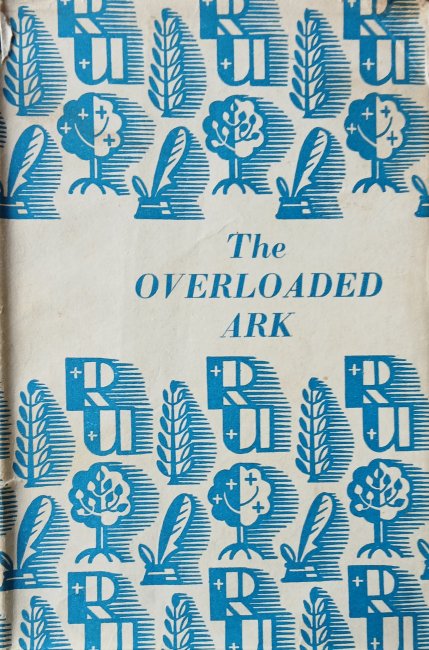
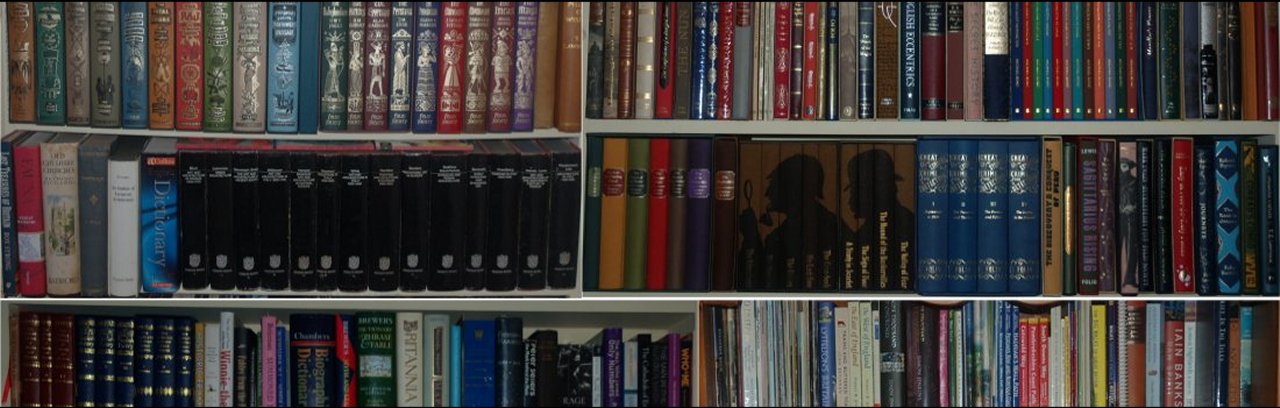
I remember reading lots of Gerald Durrell books as a child but this was the first I read as it is one of my father’s books, so it was sitting on the bookshelf for as long as I can remember. Published by The Readers Union, a book club run by Faber and Faber, who had first published the book, this volume dates from 1955. The odd thing is that I don’t remember any other books from this club at home although there were other book clubs represented on the shelves as that was probably the source of most of dad’s books. This was Durrell’s first attempt at writing a book and described his first ever collecting expedition which was to to British Cameroons and took place in 1947 with ornithologist John Yealland. He took to writing not because he particularly enjoyed it but because he needed the money partly to pay off debts from his first three collecting expeditions and also to finance his family life as he had married in 1951. He was fortunate to be able to get advice on writing from his elder brother the novelist and travel writer Lawrence Durrell and although their two styles are dramatically different they are both eminently readable.

The best way to illustrate Durrell’s style is to quote a section from the preface where they were loading the truck to get from Victoria to Mamfe where the two men were to part company to set up separate camps, Yealland to collect birds around the town of Bakabe and Durrell to go further into the bush to Eshobi searching for reptiles and mammals and also some birds not found near Bakabe. The truck was arranged for 7:30am and the plan was to be on the road by around 8:30am. The lorry however finally arrived at 11am and was full of a dozen of drivers relatives, friends and assorted goods that he was planning on getting a paid for ride up country with. The first job was therefore to get all these people and various items off the lorry as it would be fully needed to carry all the equipment.

After a prolonged altercation which for shrillness and incomprehensibility could not have been rivalled by any race on earth, they were removed, together with their household goods and livestock. The driver then had to turn the lorry for loading, and my faith in his abilities was rudely shattered when he backed twice into the hibiscus hedge, and once into the rest house wall. Our baggage was then loaded with a speed and lack of care that was frightening, as I watched, I wondered how much of our equipment would be left intact on arrival in Mamfe. I need not have worried. It turned out later that only the most indispensable and irreplaceable things got broken.

This diary like narrative, although without specific dates, is continued for the rest of the book as Durrell gets in and out of various scrapes, either attempting to collect animals himself or dealing with the numerous creatures brought to this strange white man that wants animals but not to eat them. Sadly it also covers animals that he obtained but which try as he could he couldn’t keep alive in the rapidly growing makeshift zoo he became in charge of, despite his time as a trainee keeper at Whipsnade Zoo before quitting to go animal collecting. These included the Giant Otter Shrews two of which he obtained and apparently successfully converted to a diet that could be more expected to be available in captivity only for them both to die overnight for no apparent reason and the lovely Duiker antelope fawns which eventually he put a stop to collecting as they always refused milk from a bottle and gradually starved to near death before being humanely killed, and he only ever had young as these were ones found after the hunter had killed its mother.

He does however put together an excellent collection in his time at Eshobi and transports what he has obtained to Bakabe to join Yealland and see what else he can find there which includes Cholmondeley, a large fully grown chimp that had been brought up with an English family and had gained quite a few idiosyncrasies including liking a large mug of sweet tea and cigarettes which he could light either with matches or using a lighter and sit there smoking away extremely happy. The funniest part of the book is probably the partly successful trip to the mountain of N’da Ali, the first attempt at which is interrupted by a hunter bringing an Angwantibo, a species of primate he was particularly keen to find. This means dashing back to Bakabe to look after his new prize and delaying his attempt at the mountain for a week.

To say that John Yealland was much happier with his bird only collection he had built up before Durrell joined him would be an understatement as the birds would rarely be in a position to kill him, unlike say the snakes and small crocodiles that came with Durrell, some of which made escapes from their cages, in this case abetted by one of the monkeys that had undone the door to all the cages that it could reach including the deadly Gaboon Viper’s so I’m going to include one final passage from the book:

John was seated near the table, in his pyjamas, he was busy cutting down some old fruit tins to make into water pots for the birds, and he was absorbed in his work. I was just putting the finishing touches to my toilet when I saw something move in the shadows beneath his chair. Putting on my dressing gown I went closer to see what it was. There on the floor, about six inches away from John’s inadequately slippered feet, lay the Gaboon Viper. I had always believed, judging by what I had read and was told, that at moments like this one should speak quietly t the victim, thus avoiding panic and sudden movement. So, clearing my throat, I spoke calmly and gently:

“Keep quite still, old boy, the Gaboon Viper is under your chair.”

On looking back I feel I should have left out my reference to the snake in my request. As it was my remark had an extraordinary and arresting effect on my companion. He left the chair with a speed and suddenness that was startling; and suggestive of the better examples of levitation.

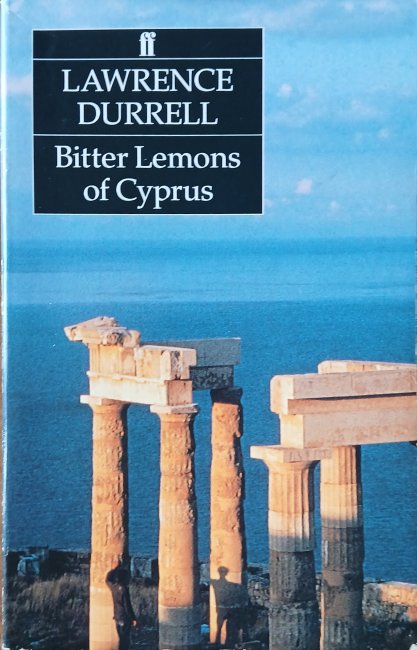
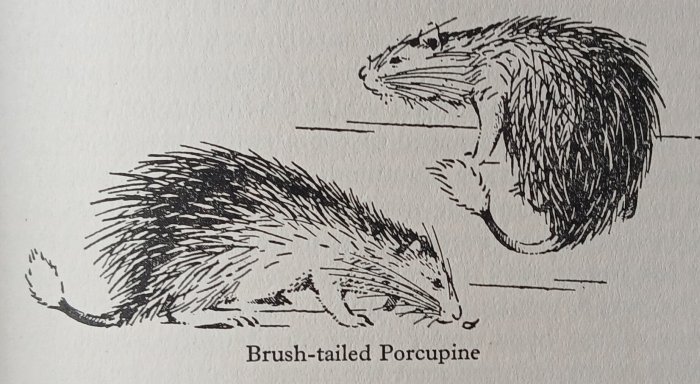
The numerous illustrations through the book are by Sabine Baur based on drawings and photographs by Gerald Durrell. Durrell wrote many books about his collecting experiences, the zoo he founded in Jersey and various conservation projects he became involved in but is probably best known for his series of three books about growing up with his family on Corfu just before WWII, especially the first ‘My Family and Other Animals’. I’m going to stay with the Durrell family next week with his eldest brother’s book ‘Bitter Lemons of Cyprus‘.

Short Stories – Fyodor Dostoyevsky

I’ve been meaning to read Fyodor Dostoyevsky for a long time but in common with a lot of other Russian novelists his books are somewhat daunting for a blog which appears every week, just checking my shelves I find:

  • ‘Crime and Punishment’ – 559 pages
  • ‘The Devils’ – 669 pages
  • ‘The Idiot’ – 661 pages
  • ‘The Brothers Karamazov’ – 2 volumes totalling 913 pages
  • and a volume containing two short stories and a novella ‘The Cossacks’ – 334 pages

It was then I spotted that I had two volumes from the Penguin Little Black Classics series which would give me an entry point to Dostoyevsky to see if I like him as an author. The first one is number 44 from this series ‘The Meek One’ which only has this one short story in it. The title is more usually translated as ‘A Gentle Creature’, and it is just 57 pages, still quite long for a short story, but a lot more approachable. Warning there are spoilers in this review if you want to read the stories first I cannot find ‘The Meek One’ but ‘White Nights’ is on Project Gutenberg here and ‘Bobok’ can be found here.

‘The Meek One’ begins with the un-named narrator contemplating the body of his equally un-named young wife laid out on a table in their home waiting for the undertaker to arrive the next day and we then go back over the story of how the two met and the short and largely unhappy marriage that they had. They had originally come into contact with one another as she would often come and pawn items in his pawnbrokers to raise money to advertise her services as a governess or more latterly almost any job to enable her to leave her two aunts. At the time of their marriage he was forty one and she just sixteen, however he regarded himself as her saviour from a planned marriage arranged by these aunts to a shopkeeper in his fifties who had killed his two previous wives whilst drunk and was looking for a third. The relationship between the couple seems to have deteriorated very quickly after the wedding and it is a sad story he tells of long silences and barely communicating through the winter including a time when she places a loaded gun to his head whilst thinking he was asleep but doesn’t pull the trigger. In the spring he makes an unexpected move to rescue the marriage suggesting a journey to France but it is whilst out getting the passports that she commits suicide.

Russian writing has an often undeserved reputation for gloominess and this short story doesn’t go any way to repudiate that impression, maybe the next book will have something more uplifting.

The second and third of Dostoyevsky’s short stories in volume 118 of the Penguin Little Black Classics series has ‘White Nights’ paired with ‘Bobok’. ‘White Nights’ is 86 pages long, ‘Bobok’ is the shortest at just 27 pages.

‘White Nights’ tells the story of a twenty something recluse in St Petersburg and yet again we don’t have his name, this lack of a name seems to increase the isolation of Dostoyevsky’s characters and this time he is pretty well the only un-named person in the story. He spends his days wandering around the city imagining having conversations with the people and even the houses he sees but in fact the only person he communicates with is his maid Matrona who is supposed to look after his apartment but hasn’t even removed the cobweb on the ceiling, mind you neither has he. One day whilst out on one of his aimless walks he sees a pretty young girl crying on a bridge and this time builds up the courage to approach her, however she evades him only to be threatened by an older passerby and our narrator steps in the save her. So begins the four days of happiness that he is to enjoy as they get to know one another, he explains that he is a lonely dreamer whilst she tells of a unhappy time living with her blind grandmother who pins their clothes together so that she can be sure Nastenka is not wandering off. She also tells of a lodger they had a year ago whom she fell in love with but who had to return to Moscow but promised to return and marry her when he left. The narrator rapidly also falls in love with her but agrees to carry a letter to a family who know the ex-lodger to see if he has returned and is still planning on restarting their relationship whilst secretly hoping that he has found somebody else in Moscow. The story is well written with the narrator regarding himself as the hero almost of a book of his life, indeed Nastenka rebukes him for telling his story almost as if he was reading it out. Sadly the ex-lodger does return and the narrator returns to his apartment downcast looking to another fifteen years of loneliness but Matrona does at least remove the cobweb.

‘Bobok’ is easily the strangest of the three stories and to my mind the best due to its originality, although it starts out normally enough with our narrator, this time with a name, Ivan Ivanych, going to the funeral of a distant relative and avoiding the lunch afterwards, takes to lying down on one of the long stones in the graveyard for a rest. All of a sudden he hears voices, muffled but intelligible, and wonders where they may be coming from. Gradually he realises that they are coming from the graves around him and it appears that the dead have a second short life in the grave where they can communicate with each other for two or three months, possibly up to six before they decompose too far. I loved this story as I hadn’t read anything like it before, The various conversations start off reflecting the status of the characters as they were before they died but gradually they decide to throw off their previous lives and simply talk to one another until they suddenly fall silent when they become aware he is listening. Another possible reason for our narrator hearing them is given in the opening lines of the story:

The day before yesterday Semyon Ardalyonovich suddenly comes out with: ‘And would you kindly tell me Ivan Ivanych will the day come when you’ll be sober?’

All three tales are taken from the Penguin Classics volume ‘The Gambler and Other Stories’ translated by Ronald Meyer which also includes the short stories ‘The Dream of a Ridiculous Man’, ‘A Christmas Party and a Wedding’ and ‘A Nasty Story’ along with its title novella ‘The Gambler’ which was actually written by Dostoyevsky in order to pay off his debts from losses at roulette.

The Good Soldier – Ford Madox Ford

This truly remarkable novel makes use of the ‘unreliable narrator’ literary style and is probably the best version of this particular method of slowly revealing the true aspects of the story I have read. Not for nothing did it come as high as thirteenth in the BBC poll of literary critics for the one hundred greatest English novels. But first let’s address the title, which is not the original given to it by Ford. The book was due to be first published by John Lane: The Bodley Head in 1915, in his later dedication appended to the book in 1927 Ford explains what happened:

The book was originally called by me The Saddest Story, but since it did not appear until the darkest days of the war were upon us Mr. Lane importuned me with letters and telegrams – I was by that time engaged in other pursuits! – to change the title which he said would at that date render the book unsaleable. One day, whilst I was on parade, I received a final wire of appeal from Mr. Lane and the telegraph being reply paid I seized the reply form and wrote in hasty irony ‘Dear Lane, why not The Good Soldier’… To my horror six months later the book appeared under that title.

That the new title was ironic certainly becomes obvious the more you read the book, although initially it appears to be highly suitable. The original title does make its appearance in a few places with Ford having his narrator say several times similar phrases to ‘I call this The Saddest Story’, which is actually the opening line of the final part or ‘THIS is the saddest story I have ever heard’ which is the books’ first sentence. When you start reading however there is no hint of the tragedies still to come as John Dowell, our unreliable narrator, starts off painting a happy friendship between the English couple Edward and Leonora Ashburnham and the Americans John and Florence Dowell set over nine years largely in the German spa resort of Bad Nauheim where the couples regularly meet. Captain Edward Ashburnham is the good soldier of the title and is apparently there for treatment of his heart condition that has effectively invalided him out of his regiment. Florence is also there for treatment of a heart condition, fear of which has prevented her from having sexual relations with John since their marriage began. Apart from that the couples seem ideal, independently wealthy so they can choose to live where they want and largely do what they want all is happiness in this small group of friends.

But that is what John initially wants you to think and it may be what he believes at least at the start of the narrative but gradually he reveals more, almost inadvertently, recalling details that turn the situation on its head and this is where reviewing this book becomes tricky because I really want to encourage you to read the book and discussing what happens is almost impossible without revealing too much. Suffice to say that almost nothing you are told in the first part of the book turns out to be true, instead there is a complex inter-relationship between the characters which is nothing like it first seems and even the reasons for them being in Germany at all is based on a tissue of lies.

The slow reveal of the various facts and of the other tragic characters associated with the ‘good’ Captain show a superb skill in the writing of the book as revelation after revelation come after the barest of hints that all is not right but remain believable and despite John’s bewildered insistence that he is the one steady rock in the narrative the fact that he keeps changing his story leaves the reader wondering just how much of what you come to understand by the end is really what happened and what is still John’s reinterpretation of the story. There is a good reason why this book has remained in print for almost 110 years so far so even if you have never heard of Ford Madox Ford I recommend that you get hold of a copy and read it.

Artemis Fowl – Eoin Colfer

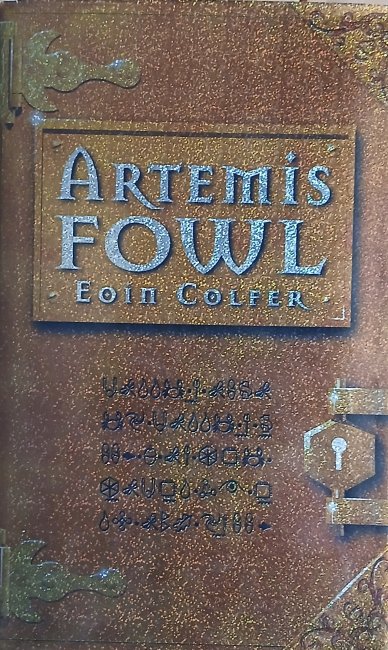
This is the first of an eleven book series written by Irish author Eoin Colfer, eight of which are about Artemis Fowl II and in the final three books, which are effectively a reboot, his twin younger brothers. My copy is a hardback from the first year of publication, 2001, and has a metallic, highly reflective dust jacket which made it very difficult to photograph. Later editions retain the gold colouring but are not metallic. At the start of this book is an introductory prologue which finishes as follows:

Artemis Fowl had devised a plan to restore his family’s fortune. A plan that could topple civilisations and plunge the planet into a cross-species war.
He was twelve years old at the time…

This last line, more than anything else in the prologue, establishes that we are in the literary genre known as young adult, which is not a area I have explored on this blog for a while so please be aware that this book is not aimed at me as a typical reader. Having said that I quite enjoyed this, and the next two books which I have also read, I have also discussed the series with other people who first read the books whilst they were within the target age range of roughly twelve to eighteen to obtain a more rounded viewpoint.

Artemis’s father is missing, presumed dead and his mother has become a barely functioning recluse in the attic triggered by her grief for her missing husband, this leaves Artemis without parental supervision in his parents large house in Ireland with only his mountainous bodyguard, deliberately confusingly called Butler and Butler’s younger sister Juliet. There are presumably servants but they don’t appear in the narrative. The family money was built upon criminal enterprises and Artemis is definitely a chip off the old block but he believes he has found a target for his genius beyond the jurisdiction of the Irish Gardaí or indeed any normal police force, his plan is to get money from the fairy world by obtaining their legendary supply of gold. And so we are entering the realm of fairies, elves, dwarfs, trolls and other magical creatures but not as imagined by Tolkein, Pratchett or others who have raided mythology for their characters modifying them to suit their plots. Here the changes are if anything more radical, dwarfs chew their way through the earth having first dislocated their jaws and expelling the residue via what can most delicately be called their opposite end having first dropped the flap in their trousers. That Butler at one point is in the way of a cataclysmic fart from Mulch Diggums. the kleptomaniac dwarf, is clearly there to appeal to the younger readers who by and large can never resist a fart joke. Elves are approximately a meter tall and one of the books major characters, Holly Short, is one of those, she is also part of LEPrecon, part of the police force for the fairy peoples who are now forced to live deep underground to avoid the Mud People as they refer to humans. Colfer explains that LEP stands for Lower Elements Police a somewhat tenuous forcing of the word Leprechaun into his plot line.

I’m not going to go into the plot of the book, suffice to say that Artemis has quite an ingenious plan to part the fairies from their gold which first involves deciphering their language, a sample of which is on the cover and which is also depicted on the base of each page of the novel, as far as I can tell differently on each page. The story moves on at quite a pace and I found myself at the end of the 280 pages far quicker than I expected. I mentioned at the beginning that I have read the first three Artemis Fowl books and talking to my friends who read them as teenagers I’m told I shouldn’t go much beyond about book five as they reckon that the plots get a bit similar as though Colfer was running out of stories to tell with these characters. One friend has read the first of the Artemis twins books but didn’t feel the urge to read the others, which I think says a lot, so by all means have a go at the early books as a bit of light reading between more weighty tomes but probably skip the later ones.

Hotel Splendide – Ludwig Bemelmans

Ludwig Bemelmans is nowadays probably best known as an artist or as the writer and illustrator of the Madeline series of children’s books. In total he wrote over forty books along with several plays and film scripts but my favourites are the three autobiographical memoirs dealing in a humorous way with his time working at the Ritz hotel in New York and when he ran his own restaurant of which this is the second, the first being Life Class and the final collection being Hotel Bemelmans. This book takes us from his first job there as a bus boy (the lowest of the low in the hierarchy of waiting staff) working at the worst tables in the restaurant facing the stairs, therefore draughty, and between the doors to the pantry, whose hinges needed oiling but never were, and the linen closet so waiters were constantly going to and fro serving other customers. The waiter assigned to these tables, Mespoulets, was probably the worst waiter imaginable, quite often ignoring his customers and eventually delivering cold or incorrect meals, sometimes both, to their table. Monsieur Victor, the maitre d’hotel regarded these tables as ideal for all the customers he didn’t like for whatever reason, complainers, poor tippers, anything that he didn’t approve of and so Mespoulets was allowed to continue for years with his appalling treatment of clients.

Gradually our narrator moves up through the ranks until at the end of the book he has made it to Assistant Banquet Manager and effectively moves into the best suite of the hotel which is permanently engaged, although seldom used, by a European multi-millionaire. He does this on the basis that he needs somewhere quiet to sleep as the job often doesn’t finish until six in the morning, even though he starts on duty during the mid afternoon so doesn’t have time to go home and come back and still get some proper rest. That he also works his way through fine wines and cigars is seen as a perk of the job, both by himself and the other staff on the banqueting team. Indeed a lot of the staff seem to make full use of the hotels food and drink especially that left over from banquets on the basis that it would be simply thrown away otherwise. One of the staff, named Kalakobe, even took to bottling the dregs from all the glasses in the dining room and drink this foul concoction the next day whilst resting from his strenuous role of the cleaner of the heavy coppers used in the kitchen.

The book ends with another story about Mespoulets, this time about him finally leaving the hotel but I particularly want to show one of the drawings that adorn the start of each chapter and also include the opening of this section where you can appreciate the word craft of Bemelmans in his description of this fallen figure. The image is a little bent as the book I’m reading is from 1947 and the spine is rather fragile so I was careful not to press too hard on the pages.

Mespoulets is suspected of being the author of death threats posted to Monsieur Victor and the chapter revolves round how best to safely get rid of him after a psychiatrist states baldy that he definitely should not be sacked as that could cause Mespoulets to carry out his threats. Needless to say that after managing to get him on a ship home to France the letters continue to arrive so nobody is any the wiser who the real culprit is.

I loved reading these short stories of the quite often disreputable life of the staff in a major luxury hotel although I doubt very much that I would want to stay there as they all had a ring of truth about them regardless of how outlandish some of them sounded. I’m glad to say that Hotel Splendide along with Hotel Bemelmans are both still in print eighty five years after they first appeared so the talent of Ludwig Bemelmans to entertain is still enjoyed by modern readers.

This has been my 350th weekly blog on the books I share my home with and I look forward to reading and writing about many more.

The Art of Floating – Melanie Marttila

Melanie Marttila lives in Sudbury in Ontario, Canada north of Lake Huron and several of the poems in this collection are clearly inspired by her environment especially in the final section ‘Fire and Ice’. As someone who lived in Wisconsin, northern USA, for a while I appreciate the descriptions of the cold winters in this section especially the poem ‘Ice Storm’ the extreme effects of which has to be seen to be believed and her description of “temperature drops and for two days, the world is quicksilver bright in the sun”. My first exposure to rural Wisconsin was during an ice storm and I’ve never forgotten the experience, the beauty and yet the awe inspiring danger of trees whose individual branches are encased in brilliant ice making them far heavier than the tree would normally support. I loved being taken back to that winter of 1985/6 but this section also has poems that reflect the equally dramatic changes autumn brings such as the one below.

I now live back in England and from my window a wooded hillside does its best to emulate the sudden turns of seasons from Canada and Northern USA, especially round the Great Lakes or even Sweden where I also lived for a while. This collection brings back memories.

Yet to dwell on the poems recalling my familiar past is to leave out a lot of the other side of Marttila, this her first collection of poetry, published April 2024, is dedicated to her father who died in 2011 and the sense of loss comes through in many of the works. There are also unexpected poems where we suddenly delve into cosmology, apparently her partners subject, but we also explore aspects of her mental health, Marttila is autistic but is not willing to be brought down by her diagnosis, so along with the deeper poems there are highlights of beauty. Reading the conclusion of the blurb on the back cover “The Art of Floating is dedicated to the poet’s father who taught her how to surrender to and survive the rough waters of mental illness.” you might expect a depressing read but the collection is far from it. But I am always drawn back to her lovely depictions of the Canadian countryside especially in its most extreme, but even then I’m regularly surprised by the imagery she chooses such as the opening lines of ‘Compensation’

small blue spruce and
tender birch
are the foundation
upon which this
green world is built.
scantily clad tamarack,
waif like larch
towering jack-pine
branches twisted by
wind, reaching for
sun, like the arms of Lakshmi
or Saraswati

Lakshmi and Saraswati are Hindu goddesses, Saraswati is the goddess of knowledge whilst Lakshmi represents wealth, beauty and fertility. It seems odd to invoke their names in a world that is so clearly Canadian as the Tamarack is a species of larch native to the wilds of that country, Both of the goddesses however have four arms often depicted holding items in multiple directions so their appearance represents the spreading branches.

The Art of Floating is published by Latitude 46 Publishing, a company founded in 2015 that specialises in authors connected to northern Ontario, which you might think is overly restrictive but a glimpse of their catalogue shows the rich variety of works represented and there are so many more books I would love to explore.

Fairy Tales – Charles Perrault

Frenchman Charles Perrault was one of the earliest collectors of fairy tales predating the German Brothers Grimm by over a century and these were well before the Danish Hans Christian Anderson and it is in this collection that we find some of the earliest published versions of such classics as Cinderella, The Sleeping Beauty, Little Red Riding Hood and Puss in Boots. Not that anyone brought up on the sanitised modern versions would recognise much of what they believe is in the story. A prime example of this is Little Red Riding Hood, which is much shorter than the tale I first read as a child, basically the wolf meets the young girl on her way to Grandmother’s house, establishes where she is going and gets there first. The wolf immediately eats the grandmother when he gets in the house and gets into the bed waiting for Little Red Riding Hood, when she arrives he tells her to undress and get into the bed at which point he eats her and the story ends just five pages after it starts with a moral that ‘plausible wolves are the most dangerous kind’ a clear warning to young ladies to beware of some men.

The most striking example of dangerous men preying on females is a story which I have never thought of as a fairy tale but it is included here and that is Bluebeard. I first came across this horror story in the opera by Hungarian composer Bela Bartok which is largely faithful to the Perrault version at least initially. A young woman visited one of the many fine homes of a wealthy man along with her family and they were all royally entertained for several days, so much so that she agreed to marriage. About a month after the wedding he has to go away on business but suggests she invites her family and friends round and gives her the keys to the house and the strong boxes, she can go and do anything but tells her never to enter the room at the end of a corridor. However she cannot resist and when she goes in finds dried blood on the floor and the bodies of his previous brides hanging on the walls, in her horror she drops the key which becomes coated with blood. Bluebeard unexpectedly returns that evening and finds blood on the key so knows she has been in the forbidden room and therefore determines that she has to die like the others. Fortunately for the young bride her brothers arrive and kill Bluebeard before he can kill her. Again there are morals to be learnt from the story at its conclusion the second of which says that the story is from long ago and nothing like this happens anymore indeed nowadays it is the wife to be afraid of not the husband.

Geoffrey Brereton as well as translating this book wrote a very interesting introduction going back to the even earlier Italian collections of fairy tales although they weren’t called that back then and taking the reader through the development of the stories such as Cinderella which in the Grimm version has the ugly sisters mutilating their feet to try to get the slipper on and having their eyes pecked out when they try to go to the castle after the wedding whilst Perrault has Cinderella forgive her sisters and invite them to live in the castle. Brereton was a freelance translator and writer specialising in French and to a lesser amount Spanish literature as such he was ideal for this 1957 translation and his erudition regarding the history of fairy tales is shown in his excellent introduction, which alone would make reading this book worthwhile. The book has reproductions of woodcuts from the first English edition of Perrault’s Fairy Tales dated 1719 before each story as in the example below for Little Red Riding Hood.

Longitude – Dava Sobel

The fourth week of August, and Cook only did three voyages of exploration so what to do here, well as the second voyage carried watches to test new ways of calculating longitude with varying levels of success as I will cover below it only seems fair to delve deeper into just what was being tested and why, fortunately Dava Sobel has written this excellent summary of just what was going on and how a group of astronomers colluded to keep John Harrison and his son William from winning the main prize.

As I said a couple of weeks ago “Cook had a watch made by Larcum Kendall which was a copy of that designed by John Harrison and alongside this a watch made by John Arnold, Ferneaux had two watches made by Arnold,” It may seem odd that the original clock by Harrison didn’t go on the 1772 voyage seeing as he was the one in line for the £20,000 prize (over £2.5 million for the modern equivalent according to the Bank of England inflation calculator) but the Board of Longitude were by then determined that he shouldn’t succeed and insisted that the original was effectively held hostage by them whilst a, hopefully inferior, copy was sent instead. But we are getting ahead of the story, let’s go back a few decades.

Dava Sobel presents the development of H4, the superb watch made by Harrison, by starting at the very beginning with explaining the problem of determining longitude. How far up or down the Earth you are is relatively easy to determine but longitude, how far round the Earth from your start point is a lot more difficult as you either need complex astronomical readings and their subsequent calculations and it could easily take four hours to work out where you roughly are using that method; or an accurate indication of the time in your home port to compare with local time which you could get from when the sun was highest in the sky which would be noon. Local time changes as you go round the world with a full twenty four hours representing a circumnavigation so an hour difference would be equivalent to fifteen degrees of longitude away from home. The problem was that no clock would work accurately on a ship due to temperature and humidity changes along with the movement of the ship and it had to be accurate as just a minute out would drastically alter the determination of longitude.

John Harrison, a self taught clock maker from the north of England starting to construct his first clocks back in 1713, a year before the Longitude Act setting out the prizes for determining longitude was passed. His clocks were, most unusually, mainly made of wood rather than the more common brass and most still exist with his fourth, the clock at Brocklesby Park, built in 1722 still running and telling excellent time today. Harrison’s first encounter with the Board of Longitude would be in 1730 when he went to London to present his early plans but he couldn’t find them as they had yet to meet due to no sensible proposal being sent for them to consider. That it took until 1773 for him to be finally awarded half the money he was fully entitled to and then only following intervention by the King is a scandal that Sobel covers so well in this book. Admittedly Harrison himself was partly to blame for the delay as he kept seeing improvements he could make and wanted but most of the problems were down to astronomers, especially Maskelyne, who were determined that solving longitude via lunar observations was the only way forward and as they were on the Board they kept changing the rules in order to prevent Harrison winning.

The story of the determination of longitude sounds like a fairly dry subject but it is anything but and this is one of the most interesting books I have read this year.

The Third Voyage – Captain James Cook

Before his third, and final, voyage Cook was formally given the rank of Captain and was officially retired, assigned to Greenwich Hospital at the age of just forty seven. He accepted this transfer off active duty on the basis that he would be allowed to come back and this he duly did, taking command of the apparently refurbished HMS Resolution in 1776. This time he was tasked to head north in search of the fabled North-West Passage which would give a route above the top of Canada between the Atlantic and the Pacific oceans. This had been sought for many years starting from the north Atlantic, Cook’s instructions was to start off Alaska and see if the route could be discovered coming in the opposite direction. Charts at the time for this part of the world were poor to say the least with one of the maps showing Alaska as a giant island off the coast of Canada although the Danish explorer Vitus Bering had discovered the Strait that bears his name many decades earlier whilst in the employ of the Russian navy.

In the absence of any alternative route Cook headed south to go north as he first had to enter the Pacific. The first thing that strikes the reader as we head back to familiar territory of New Zealand, Tonga and Tahiti is that the book is written in a very different style compared to the first two voyages. Instead of the formal naval journal with each day detailed with position, wind speed, heading etc. we get a manuscript that is far more aimed at the lay reader where a lot of the technical information is dispensed with and it reads much more like a diary. I have checked this with the full 1784 first edition to make sure that this style is not just a creation of the abridgement and that book is also in this more readable style so Cook was clearly aiming at publication from the start. Sadly he was never to see the book come out as he was to die on this voyage and never return to England but the manuscript that was to be published was just 17 days behind when he died so he must have been constantly working on it whilst at sea.

Cook had another reason to go to the South Pacific and that was to return Omai, a native of one of the islands with Tahiti who had travelled back on HMS Adventure as part of Cook’s second voyage. Omai was the first Polynesian to visit Europe and had achieved celebrity status whilst he was there and his return was the publicly stated reason for the trip as the search for the North West Passage was kept secret. It took longer to get to the South Pacific than intended so Cook decided that by the time he headed north it would be too late to attempt the search so stayed in the southern summer before heading north the next year and on his way became the first European to encounter Hawaii, or the Sandwich Isles as he named them after the then First Lord of the Navy, Lord Sandwich. Cook’s two ships HMS Resolution and HMS Discovery, commanded by Captain Charles Clarke, arrived at an opportune time as the islanders believed that their god was due to arrive at pretty well the same time as Cook did so they were treated royally and the elaborate ceremonies are described in the journals. When he finally left to continue north he was somewhat later than the predicted date for the god’s departure and the islanders were getting a little annoyed that he had not gone according the the plan.

Cook then headed north sighting Oregon and then following the coast of Canada, all the way to the Bering Strait producing the first accurate maps he then went east across the top of Canada before being stopped by ice bu which time he had gone past 70 degrees north. Turning round he headed west and continued on that heading, mapping the Siberian coast of Russia before again being stopped and having to go back to the Bering Strait. By then it was September and nothing more could be done so far north so he decided to return to Hawaii where they had been so welcome. The ships stayed for a month and were again welcome but soon after leaving a mast broke and knowing nowhere else he could go to effect repairs Cook went back to Hawaii and this time he was definitely not expected, Lomo was supposed to appear then leave and not come back again so soon and relations between the islanders and the ship’s crew rapidly deteriorated leading to the killing of Cook.

Now at this point the two versions of the book I have separate as the first edition is just two volumes in to a three volume set, the third volume being written by Captain King, whilst the Folio edition pretty well stops here presumably as the set is called the Journals of Captain Cook and he is now dead. The three books that make up the Folio set are however an excellent summary of what should in fact be a much larger nine volume set if you had the full version but it is no less good for that. Anyone interested in voyages of exploration should definitely read Cook and this is one of the most approachable editions being beautifully typeset and therefore a pleasure to read. One oddity of the images that I have used from the Folio Society web site is seen below as the picture of the included maps appears to show them in the middle of the book whilst they are in fact at the front of each volume.

The Second Voyage – Captain James Cook

Continuing with the voyages of Captain James Cook, the second trip had much greater funding than the first and Cook had charge of two vessels, Resolution and Adventure with Cook leading from HMS Resolution and HMS Adventure captained by Tobias Furneaux. They were charged with trying to discover the supposed great southern continent then known as Terra Australis, modern day Antarctica as opposed to Australia which was called New Holland at the time. It was believed by many scientists that such a mass of land must exist, if only as the source of the icebergs. The other thing that Cook and Furneaux were to study was on behalf of the Board of Longitude. Calculating latitude, how far up or down you are in the world was relatively easy however longitude, how far round the world you are, was much more difficult and ideally needed accurate knowledge of the time back where you started and clocks and watches were highly susceptible to temperature and climate variations. Cook therefore had a watch made by Larcum Kendall which was a copy of that designed by John Harrison and alongside this a watch made by John Arnold, Ferneaux had two watches made by Arnold, these were to be tested at sea and their accuracy determined, Cook and Ferneaux duly set off in May 1772. I’ll be reading more about the search for accurate longitude in the fourth book of this months theme ‘Longitude’ by Dava Sobel.

Cook duly sailed south and spent months skirting ice fields, with the two ships becoming on the 17th January 1773 the first from Europe to cross the Antarctic Circle and the following day getting to seventy five miles from the continent itself but without spotting land due to the amount of ice between them and Antarctica. Cook describes himself as surprised that the ice they recovered from the ocean in order to replenish the ships water stocks was fresh with only a small salty coating which would soon melt off and wonders how sea water freezes without retaining salt without realising that this is proof of fresh water glaciers further south that have broken off and are simply floating past the ships. One interesting quote a few days earlier gives an idea as to how the crew were faring in the extreme cold again featuring Cook’s idiosyncratic approach to spelling.

Monday 4th January 1773: First and middle parts strong gales attended with a thick fogg, sleet and snow, all the rigging covered with ice and the air excessive cold, the crew however stand it tolerably well, each being clothed with a Fearnaught jacket, a pair of trowsers of the same, and a large cap made of canvas and baize, these together with an additional glass of brandy every morning enables them to bear the cold without flinshing.

Cook would make another trip south in December 1773 after spending time in New Zealand along with Tahiti and Tonga amongst others repairing and re-equipping his vessels, and indeed getting back with HMS Adventure as the two ships had lost one another in thick fog in February 1773. Fortunately anticipating such an occurrence there had agreed to meet at New Zealand if they parted in the Antarctic ice. This trip round the South Pacific islands enabled Cook to also reacquaint himself with people he had met on his first voyage and pass on the bad news that the islander who had accompanied Cook on that voyage had sadly died on his way from Indonesia to South Africa and had therefore never seen Europe.

The second trip in search of Antarctica was no more successful than the first and Cook became convinced that there was no great southern continent, what he did however prove was that none of the lands known and partly mapped reached down through the ice to the far south. Indeed there would be no confirmed landing on Antarctica until the Norwegians got there in 1895 but to my surprise Cook is definitely a pioneer of Antarctic exploration getting far further south than anyone else in his time, something I hadn’t realised until I read this book. I had always though of Cook sailing in warmer climes so to read the battles with ice in this volume was fascinating but by February 1774 he finally turned north again eventually arriving at Easter Island in the hope of trading for more supplies. However Easter Island was to be a disappointment, the rich fertile land described by the first European visitors, the Dutch, in 1720 had gone and the people were reduced to a subsistence existence, the population also appeared to be greatly reduced, clearly something had happened here but Cook didn’t have the time, or the inclination, to find out what as he needed supplies so headed back to Tahiti.

Cook would make a further attempt to head south in 1775, this time in the South Atlantic having passed the southern tip of South America and would briefly visit South Georgia. By this time although he still hadn’t seen land to the far south he was convinced there was something as he had realised that it was needed to be a source of the ice. He wrote on 6th February 1775:

We continued to steer to the south and SE till noon at which time we were at the Latitude of 58 degrees, 15 minutes South, Longitude 21 degrees 34 minutes West and seeing neither land nor signs of any. I concluded that what we had seen. which I named Sandwich Land was either a group of islands or else a point of the continent, for I firmly believe that there is a tract of land near the Pole, which is a source of most of the ice which is spread over this vast Southern Ocean.

From the South Atlantic Cook finally turned north and sailed back to England, arriving in July 1775. The illustrations shown above are from Tanna, in the New Hebrides, now Vanuatu including a portrait of a native islander whilst below is the map that comes with this set which folds out to quite a good size.