The First Voyage – Captain James Cook

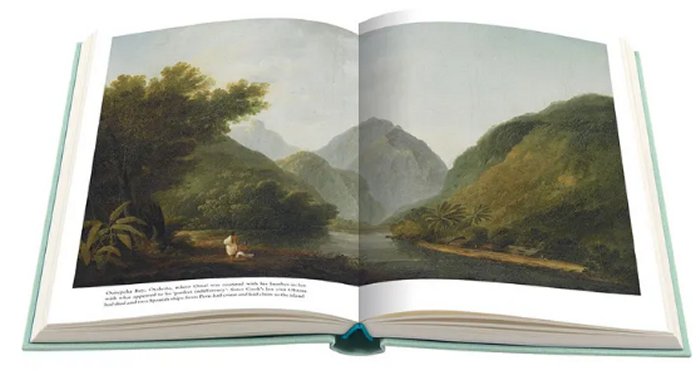
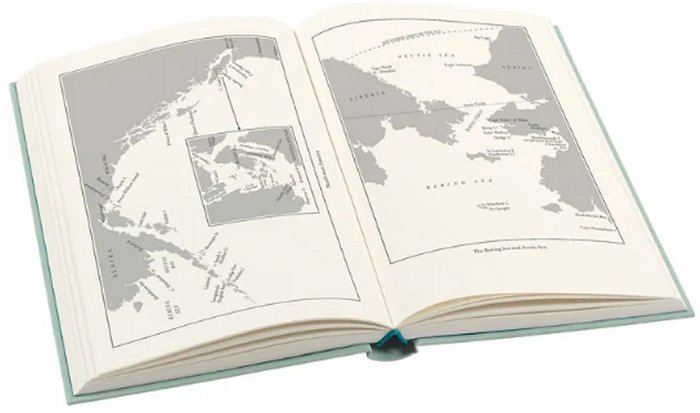
August is the month I read a theme and this year I have decided to tackle the journals written by James Cook describing his various voyages round the world. To do this I am starting off with the excellent abridged collection published by The Folio Society which is based on the JC Beaglehole version first published by The Hakluyt Society between 1955 and 1967. Beaglehole went back to Cook’s original manuscripts and ships logs and especially for the first voyage removed a lot of the extraneous material added by the Admiralty’s appointed editor which so annoyed Cook when he first saw the published work when he returned from his second voyage.

The barque HMS Endeavour set sail in August 1768 with 94 people aboard on what would be an almost three year voyage of exploration, both geographic and scientific as amongst the ships passengers were the eminent naturalist and Fellow of the Royal Society, Joseph Banks, and astronomer Charles Green specifically there to observe the transit of Venus from Tahiti. There were also other scientists to assist in the collection of specimens and a couple of artists, Sydney Parkinson and Alexander Buchan, sadly neither of which survived the trip. First port of call after leaving England was the island of Madeira for further provisions and where amongst other things they took on 3,032 gallons of wine (presumably the local fortified variety), twenty pounds of onions per man, 270 pounds of beef and amazingly a live bullock. I dread to think how killing the beast and its subsequent butchery were accomplished whilst crossing the Atlantic to Brazil on a crowded ship which was less than 100 feet (30 metres) long.

The first target destination was Tahiti for the observation of the transit of Venus due on Saturday 3rd June 1769 this was, as far as the Royal Society was concerned, the primary reason for the voyage because from this observation along with ones made in England and seven other locations around the Earth, it would be possible to accurately calculate for the first time the distance from the Earth to the Sun. Tahiti was chosen as one of the main points due to its distance from Europe, being the other side of the world therefore improved the accuracy of the calculation. By the time all the calculations were done the value was 93,726,900 miles, the modern value is 92,955,000 miles so remarkably close and within the variation of distance due to the fact the Earth does not orbit the Sun in a circle. Cook and his crew spent three months in Tahiti establishing a fortified base to make the observations from, this was necessary due to large amount of thefts that occurred from the natives who seemed to take things regardless of whether they were any use to them.

Leaving Tahiti the expedition was to search for the the legendary southern continent, but what they instead encountered was New Zealand, which had already been discovered by Abel Tasman the Dutch explorer. However over the next six months Cook would circumnavigate both the North and South Islands establishing that they were islands and mapping the coasts of them for the first time. Cook’s encounters with the Maori were fraught with disaster from the start with numerous native people being killed as they were deemed to pose a threat to either the ship or crew that landed in search of water, wood and fresh food. It is worth saying at this point that the quite small ship had by this time also taken on board some sheep as there are numerous mentions of grass being cut to feed them so it was not just the crew that needed sustenance. Cook’s interactions with the Maori people also seem to improve over the months there and there are far fewer documented fatal encounters beyond the initial landings.

After New Zealand Cook held a meeting to determine where they should go next and it was decided to sail west still looking for the southern continent. After sixteen days at sea they arrived at Australia, then called New Holland, and sailed up the north east coast of New South Wales and it is from Botany Bay that the animals shown in the plates above were seen. However whilst travelling up the coast disaster struck when on the 11th June 1770 the ship struck the Great Barrier Reef, which in this part of Australia comes very close to the shore, and was holed. After a few days they managed to get loose from the coral by dumping 40 or 50 tonnes of stores and the larger guns overboard. There then follows an interesting passage of around a month where Cook managed to beach the ship so that repairs could be undertaken and at least the large hole was repaired but the sheathing to protect the timbers was irreparable they also had considerable difficulty refloating the ship and getting back out of the trap they had found themselves in as the winds were against attempts to sail back south. Whilst trying to free themselves from a stretch of water deemed ‘The Labyrinth’ by Cook they finally managed, on 14th July 1770, to shoot one of the strange creatures spotted several times at a distance and therefore unidentifiable to find a odd animal.

The head, neck and shoulders was very small in proportion to the other parts; the tail was nearly as long as the body, thick near the rump and tapering towards the end; the fore legs were 8 inch long and the hind 22, its progression is by hopping or jumping 7 or 8 feet at each hop upon its hind legs only, for in this it makes no use of the fore, which seem to be only design’d for scratching in the ground etc. Its skin is cover’d with a short hairy fur of a dark mouse or grey colour. Excepting the head and ears which I thought was something like a hare’s it bears no sort of resemblance to any European animal I ever saw.

The entry for the 15th July includes the following observation “Today we din’d of the animal shott yesterday & thought it was excellent food”. So ended the first kangaroo examined by Europeans. The odd spelling is by the way directly from Cook’s journal, although a great seaman he was not highly educated and the spelling throughout the books is eccentric to say the least.

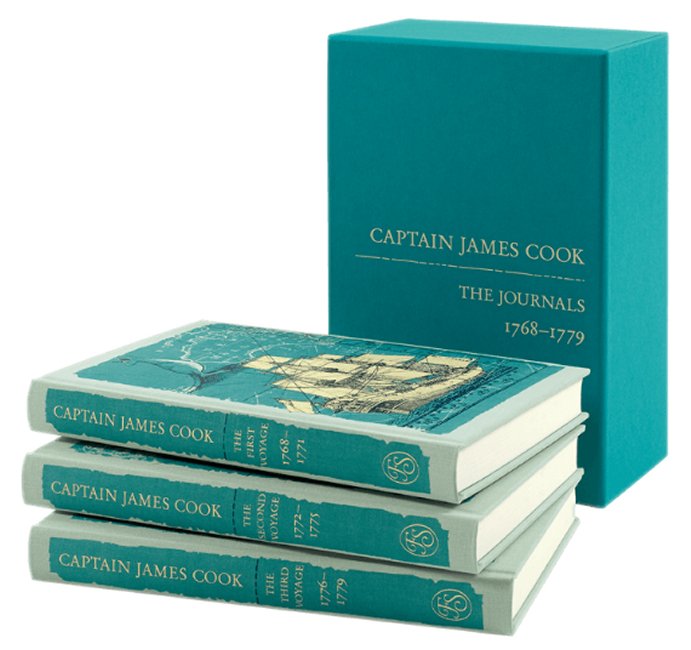
Above can be seen the Folio Society boxed set of the three voyages I am reading this month, I have the second printing from 2002.

Songs to an African Sunset – Sekai Nzenza-Shand

A fascinating journal of the time in the mid 1990’s when Nzemza-Shand returned to Zimbabwe with her Australian husband Adam Shand. She is a qualified nurse and gained a PhD in International relations whilst living in Melbourne which makes her almost effortless transition back to part time rural Zimbabwean village life all the more interesting. I say part time as Adam lived in the capital, Harare, working as a freelance journalist covering African affairs and obviously she spent time with him in the capital but she appears to have also spent a lot of time apart in the village where she was born and grew up. She only mentions Adam as being in the village during specific events and they clearly spend a lot of time living apart whilst she gets more involved in village life and it is those periods which are the most interesting in this book.

The tale starts with the impact of the AIDS epidemic in Africa and the loss of so many people including family friends and ultimately her brother Charles, indeed it was to attend funerals that first brought her back to Zimbabwe from a comfortable life in Australia. Her descriptions of the simple village life in a part of Africa largely denuded of its forests and wildlife even during her lifetime, of the coexistence of Christianity and ancestor worship, and the poverty of the villages especially compared to the greater affluence in the capital is powerful reading. Polygamy is also normal in rural Zimbabwe with men having many wives and lots of children with each of them which of course adds to the scarcity of food for such large families and the resultant hand to mouth existence for so many she describes.

AIDS rears its ugly head later in the book as well when she is travelling to Omay in the north west of the country to visit the Tonga people who had been displaced from their lands by the creation of Lake Kariba in a hydroelectric scheme. Whilst they had been promised support in transitioning to a new life as farmers as opposed to a semi-nomadic existence alongside the Zambezi River this had barely materialised so they relied on international support including the Australian aid corporation that paid her to go there to evaluate what they most needed. During an evening meal stop she started talking to some local prostitutes who assume that she is also there to work in that trade and they told her that the going rate was $30 for a night at a man’s house, $40 if they went to the woman’s place but they explain that if the man wants sex without a condom then she should insist on $60 because less than that “it’s not worth getting AIDS for”.

I was particularly interested in the rituals described such as the second funeral for her brother at which his wandering spirit is finally at peace and the description of the process surrounding the death of a local chief. There is also a chapter dealing with local law and another chief’s court with justice meted out far swifter than a formal court of law and in the presence of the local people so they could see that all was fair and just. There is so much that is done because it has always been done that way without involving the formal authorities and everything is accepted by the people as right and proper. Anyone who is interested in just how rural Africa continues to operate much as it always has done should read this book and by way of contrast there is a chapter dealing with Nzenza going to a baby shower in Harare, mainly because she had never been to one.

Nzenza left Zimbabwe for a career with an international development organisation based in the USA before returning to Zimbabwe in 2011 and later starting a weekly newspaper column for The Herald, a paper based in Harare, largely continuing her theme of rural life that she started with this book. That column ended in 2018 when she was elected as the Member of Parliament for Chikomba East although she no longer holds a parliamentary seat.

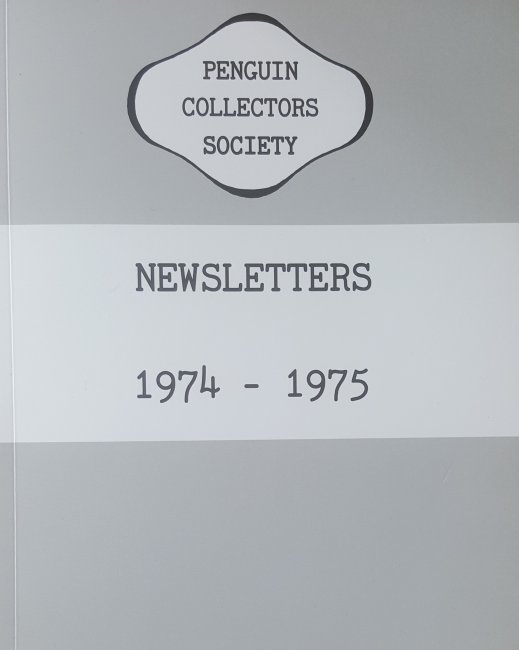
Celebrating Fifty years of The Penguin Collectors Society Newsletter

Although founded towards the end of 1973 the Penguin Collectors Society didn’t really get going until 1974 with the first meeting of like minded collectors being in the spring of that year and the first newsletter coming soon afterwards in May by which time there were 38 members. Member number one was Tanya Schmoller who had been personal assistant to the founder of Penguin Books, Sir Allen Lane, and number two was her husband Hans Schmoller who was at the time still Head of Typography and Design at Penguin Books. Sadly I never met Hans as he died in 1985 before I joined the society but I remember Tanya fondly for the encouragement she gave to a then relatively new collector when I discovered the society in 1990. By then the newsletters had become professionally printed rather than the typed onto a waxed paper and Gestetner reproduced early examples. There were also some three hundred members including several institutions including The Library of Congress in America, Canterbury College of Art, Manchester Polytechnic and the State Library of Victoria in Melbourne Australia to name just four.

The first page of newsletter number one is reproduced above, taken from the book and possibly the most striking sentence in this age of data protection regulations is “whose names and addresses are included in this issue”, it is difficult to imagine such a thing being done nowadays. The last directory of members was in 1988 and that not only had names and addresses but phone numbers and in many cases their collecting interests and approximate size of collection. Reading through these early issues, which I’d never seen before, was fascinating and I thank whoever came up with the idea of collating them. The society has only ever produced an appropriate number of copies for the members it has plus a small number for new members who want to purchase old editions and with just thirty eight members for issue one and just over a hundred by the time of the fifth and last 1975 edition finding these early newsletters is pretty well impossible.

So what was covered in the first newsletters? Well even the first issue at just thirteen pages, two of which were the directory of members and another two a series of adverts where members were searching for specific titles managed to cover wartime advertisements in Penguin Books, a couple of printing variations on “The Penguin Herodotus” along with “Russian Campaigns”, other early paperback printers and how many titles were printed in various Penguin periodicals. By the time we reach issue five, confusingly called volume 2, number 2, from December 1975 we get an interesting short article regarding the book on the Spanish Civil War entitled “Searchlight on Spain” by the Duchess of Atholl which may be unique in Penguin history as it prompted a second book, published by Hutchinson aimed squarely at refuting the original Penguin and entitled ” Daylight on Spain: The Answer to the Duchess of Atholl”. I had never heard of this second book however the review is not exactly complimentary as it seems solely intent on attacking the original book rather than establishing a cognitive argument so I won’t be searching for a copy. There is also an attempt to sort out the various publications of the early Penguin Handbooks along with a breakdown of the wartime Penguins issued in French. All very interesting.

This collection of early newsletters came with the latest example, June 2024’s number 101

This, as you can see is a very different beast to the early examples, now 112 pages long and illustrated in full colour, with articles as diverse as early days of the society, the development of the railway bookstall, various articles of designing particular books, two of the Allan Lane Christmas books and a couple of articles on translation amongst others. Following an appeal for more material there are also three articles based on entries from this blog:

I was surprised to see all three included as I just sent versions expecting the editor to use one or possibly two and hold the remainder over to a future newsletter. The articles were largely rewritten with new illustrations but you can get a feel for what appeared in this newsletter from myself.

The society can be contacted via its website and if you are remotely interested in Penguin Books or their various offshoots I heartily recommend membership, which by the way now stands at 470 according to the accounts dated December 2023. You don’t just get the newsletter but normally a special volume dedicated to a specific topic or reproducing hard to find items such as: A.S.B. Glover by Tim Graham and White Horses by Eric Ravilious.

Going Postal – Terry Pratchett

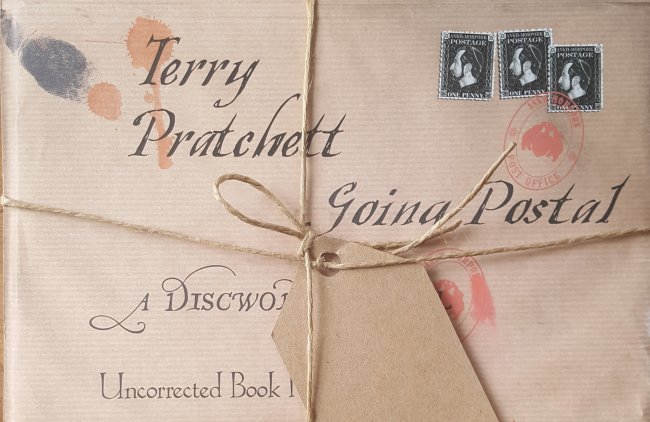
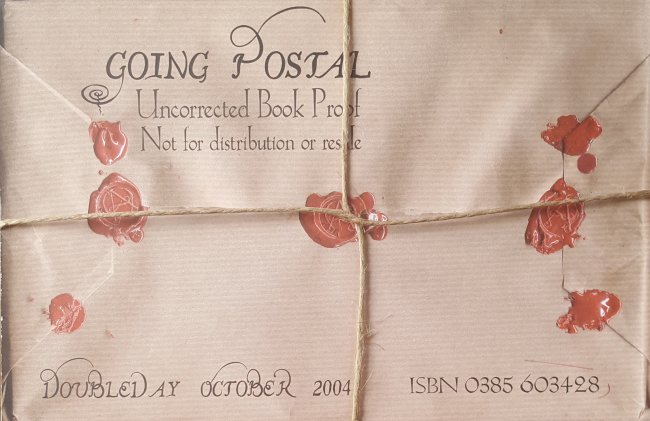
The 9th July 2004 saw the first appearance of stamps purportedly from Terry Pratchett’s Discworld and as I posted an entry on my Instagram account to mark the 20th anniversary of this and the book ‘Going Postal’ which had inspired them I got out my copies of the book of which I have three, the uncorrected book proof, and the first hardback and paperback editions. The cover of the book proof was designed by Bernard Pearson and made to look like a brown paper parcel tied up with string, just 727 copies were printed and sent to book reviewers on the 28th June 2004 with the instruction that they were not to be distributed or sold, the hardback was released on 1st October 2004 and the paperback followed on the 26th September 2005. I’ve never untied the string around my proof copy so had to read the first commercially available edition, see cover further down the blog. As you can see the front cover of the proof includes ‘stamps’ clearly based on the worlds first stamp, the penny black from 1840, but with Queen Victoria’s head replaced by that of Stephen Briggs in his guise as Lord Vetinari, the Patrician of Ankh Morpork, the largest city on the Disc. As I had got them off the shelves, probably for the first time in almost twenty years it seemed logical to read the book again.

Going Postal is the first appearance of a character who would play a major role in most of the remaining Discworld books , well those set in Ankh Morpork anyway, that Pratchett would write before his untimely death in 2015, i.e. Moist von Lipwig, who at the start is facing being hanged for forgery and embezzlement amongst other crimes. To his surprise, and undoubted relief, after being hanged he comes round in the office of Lord Vetinari who reveals that the hangman is an expert in almost hanging somebody such that those observing the event would believe that the prisoner had indeed been executed and instead his lordship wants to offer him a job. Recognising von Lipwig’s abilities and importantly expendability if it doesn’t work out, he wants him to resurrect the moribund Post Office, a branch of government which had failed and no longer delivered anything. The populace instead relying on ‘the clacks’, a primitive form of telegraph system in a world yet to discover electricity, which is increasingly expensive and prone to failure as the new money men who had taken it over fail to understand the importance of daily maintenance to fix small problems before they become much bigger ones.

Without giving the plot away von Lipwig succeeds in re-invigorating the Post Office but in the meantime what initially reads as a comedy fantasy also dissects the world of crooked finance where men just interested in making more money for themselves fiddle the books to project a business doing much better than it really is. The company is therefore able to take on large loans at preferential rates which will be used to enrich the directors whilst loading the company with debts they have no intention of paying back, simply waiting for it to collapse at which point they will buy what is left at a knockdown rate and do it all over again. Pratchett would have another go at the murky world of finance in the next Moist von Lipwig book ‘Making Money’ in 2007.

‘Going Postal’ is a highly entertaining book both for the ruses Moist von Lipwig makes use of in reinventing the Post Office and making it work again, demonstrating time and again the wisdom of Lord Vetinari in putting a conman and most significantly a showman in charge who along the way invents stamps as a means of getting money further up front for delivery of letters and parcels even though he doesn’t understand people who collect them and therefore simply hand over the money for a service they are never going to use. The climactic way he ultimately destroys the money men running the clacks is beautifully written and I highly recommend both this book and ‘Making Money’, something I probably wouldn’t have said at the time they were written when Moist von Lipwig simply didn’t appeal to me as a character but I have to say he has grown on me over the years as I better understood what Pratchett was trying to do with the books.

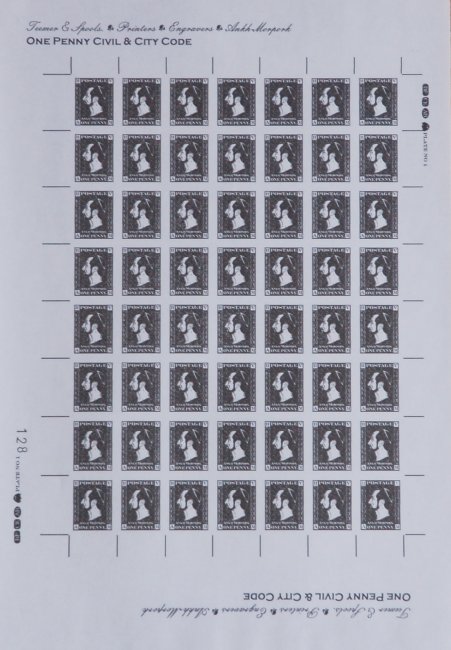
The sheet of stamps shown above replicates the original sheet described as being printed in the book by Teemer & Spools and just 250 sheets were produced by letterpress to be sold to lucky collectors who managed to get one in the couple of days before they sold out. Mine is number 128 as can be seen in the left hand margin. Discworld stamps have become a highly collectable product over the couple of decades they have existed and numerous examples have been produced with new designs coming out every year. For a brief history of the stamps and other postal artefacts see here.

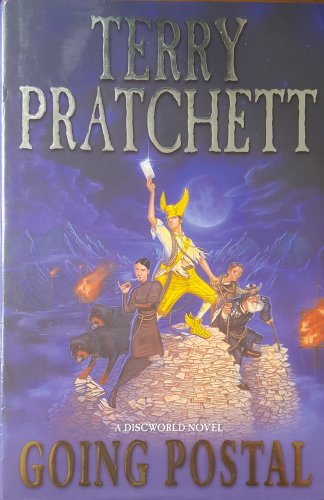
Below is the cover of the first hardback edition this time designed by Paul Kidby.

Love Triangle – Matt Parker

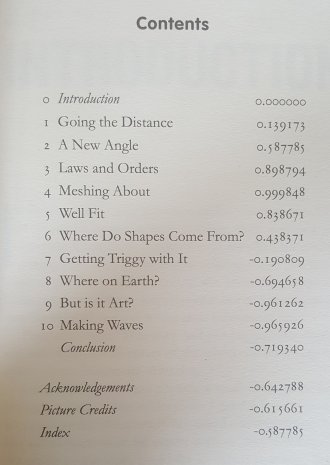
Yes this is a book about trigonometry, well actually it’s more about triangles and how important they are as we don’t get sines, cosines and tangents properly introduced until chapter seven entitled ‘Getting triggy with it’ which tells you all you need to know regarding the wordplay dotted throughout the book. I’ve covered one of Matt Parker’s maths books before, ‘Humble Pi‘ which deals with mathematical errors and like this book I bought it direct from Matt via his website which is full of things that no maths nerd should be without. The extra bonus of being one of the early orders is detailed below but of course the first extra you gain is that books ordered from the site are signed.

The first maths joke you encounter is the price which is £24.85 rather than the expected, and far more normal, £24.99 this is because 2485 is a triangular number of pennies, in this case a triangle with seventy coins on each side. If you’re not familiar with triangular numbers think of the snooker, or pool if you prefer, original setup with fifteen balls in a 5 x 5 x 5 triangle so fifteen is a triangular number with five on each side.

Below you can see the index and immediately you will spot something a little odd because, as he did in ‘Humble Pi’, the page numbering is a somewhat strange. In that book we start at page 314 and count down before hitting an overflow error and leaping up to a huge value, with this book the page numbers are the sine of the angle represented by the page number expressed to six decimal places so they start at zero range up to one and then slowly fall to minus one before rising again to -0.390731 (page 337 in a ‘normal’ book) and yes that does mean that most page numbers occur twice so finding things in the index is a little more tricky than you might expect, more on that later. I knew most of the maths covered in the book although I haven’t used trigonometry seriously for over forty years so a refresher course was interesting. I last had a practical use for trig about ten years ago when I was trying to hang sixteen pictures on a wall in a pleasing display of five on the top and bottom with six evenly spaced across the middle and needed to work out where all the nails should go, preferably before knocking holes in the wall.

The one ‘new’ formula that I hadn’t seen before, even though it is two millennia old was the truly ridiculous Heron’s formula, which gives the area of a triangle, normally expressed as ½ x base x height, but using only the lengths of the three sides a, b, and c without having to calculate the height. Instead you add the three values together, then add any two and subtract the third (for all 3 combinations) then multiply these four values together, extract the square root and divide by four.

Matt actually says “You might need to take a moment to sit down upon hearing that for the first time, I know I did”. Personally I was so confused by what appears to be a series of arbitrary calculations that I sat down and worked out some areas of triangles using ½ x b x h alongside Heron’s formula just to convince myself that it really worked.

And now we come to the index and here Matt has gone a little mad, in ‘Humble Pi’ the index gave the decimal position of the word you are trying to look up, so something given an index value of 23.5 would be half way down page 23. In this book Matt has gone for polar coordinates which is explained at the top of the index. This means that to use it properly you really need a protractor to determine the angle from the bottom left corner of the page. It would also help if he had somehow indicated which of the two possible pages had the page number referred to, for example the first entry ‘A Problem Squared’ is on the second occurrence of page 0.669131. Maybe a suffix r or f for rising or falling as you move along the sine wave of page numbers would work, in this case changing the page number, at least in the index, to 0.669131f

One fun section deals with British road signs that indicate the gradient of an approaching slope in the road. These are normally given as a percentage such as 20% for a 1 in 5 incline however apparently there are still signs which express the value as a ratio and Matt has deliberately left a gap in the text to insert a photo of him pointing at the sign as he fully expects readers who know where one of these is to tell him so he can go there.

Now onto the other reason for buying the book direct from Matt and that is the limited edition alternate covers available. Each of the first 8020 books bought from Maths Gear come with an extra cover with a special design and are all of these are initialled and numbered by Matt, see below.

To explain the extra cover I can do no better than to quote Matt’s website.

As a bonus for anyone who orders direct from me on Maths Gear, I have commissioned three (special, limited) × edition book covers as a collaboration between me and print-artist Paul Catherall. They’re pretty special. You’ll get one free while stocks last.

All books will be signed by me. All book covers will be signed and numbered by me. The first 1,001 orders will get a free “simplex edition” cover, the next 2,024 covers will be “tetrahedron edition” and the remaining 5,995 covers are the “triangle edition”. They will be assigned to orders in that order, so earlier pre-orders get the more-limited cover. Once the covers run out, people will have to be satisfied with just a signed first edition of the book.

I was early enough to get number 219 of the simplex edition, a simplex is the expression of a triangle in n-dimensions, in two dimensions you get a triangle, in three a tetrahedron, in four dimensions it’s a pentachoron etc. At the point of writing this there are still limited edition covers available but you would have to make do with the triangle design. Sadly 219 is not a triangular number, coming between 210 and 231 however there had to be something special about the value and a bit of digging revealed that 219 is the smallest number that is the sum of four positive cube numbers in two different ways i.e. 1 + 1 + 1 + 216 = 219 and 27 + 64 + 64 + 64 = 219. Thanks to the On-line Encyclopedia of Integer Sequences.

If all of this mathematics has potentially put you off, don’t be. Matt is an excellent presenter of mathematical examples and you really don’t need much grasp of mathematics to follow the majority of the book and you may well learn something, even if it is the crazy formula first written down by Heron of Alexandria over two thousand years ago and which apparently is used today when doing the conversion of file format from a digital image on a phone or digital camera to something that can be printed. So something that ridiculous turns out to have a modern practical application, and yes it surprised Matt as well.

Dear reader, I need you to believe me that I had already written the chapter about triangle laws where I called Heron’s Formula stupid (because it is) when I read the official HP documentation for this technique, and came across the sentence ‘The area of a triangle is given by Heron’s formula’. I honestly just pushed back my chair, stood up and silently left the room, for a walk outside.

Publisher – Tom Maschler

For those not familiar with the name, Tom Maschler was the managing director and later chairman of the publishing firm Jonathan Cape for many decades. He died in 2020 aged 87 and this is the first and apparently only edition of his book published in 2005, interestingly by Picador which is a division of Pan Macmillan rather than Jonathan Cape which by 2005 was part of the Penguin Random House group. I can’t even find a paperback edition, suggesting the book rightly disappeared without trace. Having read it I doubt whether anyone from Cape, or indeed Penguin, would have been interested in this terrible example of vanity publishing so it’s hardly a revelation that it turned up under a different publishing house, the only surprise was that Picador actually picked it up. Oddly the photographer of the portrait on the front cover isn’t credited in the book.

I had hoped for some sort of insight into the world of publishing but all you get is an insight into an apparent egomaniac who considered that he knew best even when starting as a junior at the publishing house André Deutsch where he lasted a few months and by his own admission started selling ski tours whilst working for them, even running his operation from his office at André Deutsch. From there he moved to MacGibbon & Kee where he lasted somewhat longer but was reprimanded by the firms owner because even then he liked to give the impression that he ran the business and was not so lowly as to just be an employee. This two and a half years employment is dismissed in three pages of the book and is followed with the a year and a half at Penguin which is similarly summarily dealt with, this time with 4½ pages most of which is moaning that he is not treated as more senior than he actually was. This is all to get to his next job, this time at Jonathan Cape where he could let his ego fly.

There are some interesting short sections covering authors he dealt with but the overwhelming impression is that none of them could have succeeded without him, even the already famous ones before he published them. I really cannot recommend this book, even assuming you could find a copy to read and fortunately they are in short supply even on the secondary market which says a lot about how many were sold.. If ever a book was about me, me, me this is it, the only vaguely comparable experience would be Englebert Humperdink on the BBC radio programme Desert Island Discs where the the guest is supposed to choose eight records that would give them pleasure to listen to if stranded on a desert island and uniquely Humperdink chose eight records all sung by himself.

I’ll finish with an extract from his obituary in The Guardian newspaper which deals with the book and sums up my reaction to the overblown, self-aggrandising text I have just read, indeed I wish I had read this before wasting my time on this book. The obituary had just covered his first assignment for Cape, which was to help Mary Hemingway go through the trunk full of papers left by her husband Ernest after his suicide.

The episode provided Maschler with the opening line for Publisher (2005): “I was 27 when Hemingway killed himself, and I had just joined Cape.” It set the tone for a much-parodied memoir, in which his guiding mantra appeared to be “when in doubt claim credit”. Which he did, for books and authors with which he had little or nothing to do: Midnight’s Children, for example, even though Salman Rushdie had followed his editor, Liz Calder, from Gollancz. Calder was also responsible for acquiring the debuts of Julian Barnes (and his alter ego Dan Kavanagh), and Anita Brookner. In the London Review of Books, John Sutherland declared that Publisher was “dead on arrival”, but acknowledged Maschler’s effectiveness and the loyalty his authors had for him, as well as more widely held reservations.

As for the reference to ‘much parodied’ I refer you to a brilliant review of the book also in The Guardian from 21st March 2005. Read it here.

Until August – Gabriel García Márquez

In December 2019 I reviewed Gabriel García Márquez’s last collection of short stories ‘Strange Pilgrims‘. I love his work so was pleased to see that in March this year, on the 97th anniversary of his birth, his last novel was finally published in English, ten years after his death. According to the preface written by his children Márquez was not happy with what he had written and wanted it destroyed. Instead they simply put the manuscript on one side and almost ten years later read it again and decided that it was probable that the dementia he was suffering from, and which undoubtedly prevented him completing the novel, clouded his judgement as to the quality of the work.

At just 110 pages it is really more of a novella rather than a novel, especially when compared to his other far more weighty works, however I do agree with Rodrigo and Gonzalo that the book is definitely worth publishing even in this unfinished state. Originally planned as a set of five short (roughly 150 pages each) novels all of which would tell the story of Ana Magdalene Bach’s experiences during her annual visit to an unnamed island where her mother is buried. Instead we get six linked short stories all set around the 16th August, the anniversary of her mother’s death, where she travels to the island without her husband or children to tidy up and lay flowers on the grave.

We join Ana, at the start of the book, on her way to the grave having just got off the ferry, and this is clearly not the first time she has made the pilgrimage as she heads straight for a familiar taxi driver who by routine takes her to the flower stall where there is a pre-prepared bouquet of gladioli ready to be collected and then straight on to the cemetery returning later to the somewhat dilapidated hotel where she regularly stays the night before returning to the mainland the next day. But this is not to be the usual routine as she sips her gin in the bar after her evening meal she spots an intriguing stranger and invites him to join her. After a few more drinks she invites him to join her in her room and they make love. The next year on the ferry over to the island she is already looking forward to her night of passion with a stranger and by the time she is again sipping her gin is searching for the man she will choose, for this has already been added to her routine. The six visits detailed in the six chapters are sometimes successful in her hunt and sometimes not but the development of Ana and her relationship with her husband on her return to the mainland are fascinating as she becomes more and more convinced that he also has lovers and despite her own infidelity gets increasingly angry about it each year.

As well as the novella we get a translation of the original editor’s note from the Spanish edition written by Cristóbal Pera who had also edited Márquez’s autobiography. This is fascinating as it goes into the development of the novel, through the five main drafts along with a digital version maintained by his personal secretary Mónica Alonso and gives a glimpse as to how Márquez worked. The final published version is an amalgam of the fifth draft, heavily pen amended by Márquez, and the digital version which retained some of the earlier variants of the text, There are also four pages of the fifth draft manuscript showing hand written alterations both by Márquez and Alonso as she would read the pages to him and he would suggest changes as she read.

I’ll guarantee you won’t expect the highly original ending, I certainly didn’t, yet it perfectly rounded out Ana’s story. A final note of brilliance from the man described as “the greatest Colombian of all time” at the time of his death by the then president of Columbia, Juan Manuel Santos.

Modern Battle – Major Paul W Thompson (WWII Penguin versions)

Inspired by the eightieth anniversary of the D-Day landings which was marked earlier this month I thought I’d look back on a book covering the start of the war. This is not a review of Modern Battle by Major Paul W Thompson, although it is a surprisingly interesting book which studies actual engagements between German and Allied troops in the early years of World War II so I will talk about it later in this blog. Rather I am looking at the various editions I have of the book and what these tell us about the war. Starting with The Forces Book Club edition published in October 1942, which is the second most difficult of the four versions to find as it as not sold to the public but rather only as packs supplied under subscription to military units, as described below on the inside front cover of this book. This explains why my copy has “C” Mess handwritten on the cover, sadly there is no further indication as to which battalion the mess (a place where military staff would eat and socialise) was associated with. Several of the other books I have from The Forces Book Club are ink stamped with the battalion or ship which had subscribed.

The rear cover gives a list of the first twenty books to make up, what was intended to be a substantial library for isolated units who otherwise would have little to read. The project however was a failure, partly down to the poor information regarding the existence of The Forces Book Club disseminated by the Ministry of Defence and partly due to the overly worthy choice of titles. The mystery and crime editions such as ‘Panic Party’ or ‘The Murders in Praed Street’ would undoubtably have been voraciously read but I can’t imagine Thomas Sharp’s volume on ‘Town Planning’ would have been as popular. Penguin did produce the 120 books needed to fulfil original subscriptions taken out, but in far lower numbers than expected and a lot of the books were subsequently rebound, initially as books to go to prisoner of war camps in Germany and later in the ‘normal’ covers these books would have had for general sale to the public.

The POW versions have the normal front cover but on the inside of this there is a replacement of the description of The Forces Book Club with some information regarding The Prisoner of War Book Service. Again the overall cost is three pounds for 120 books but this time even the more esoteric titles would probably have been read due to serious shortage of other reading material in the camps. All the remaining FBC titles appear to have been rebound as POW editions but they are all incredibly rare, I have a couple that, whilst popular as reading for the forces would definitely not been acceptable to the Germans i.e. ‘The Escaping Club’ and ‘The Tunnellers of Holzminden’ both of which deal with escapes from POW camps in the First World War and would therefore not pass the censors which probably explains why they have survived. I suspect that the company doing the rebinding simply did all the books without consideration as to the material they contained.

Books that didn’t make it out as FBC or POW editions were potentially rebound again as the main production run, so it is relatively common to find books that inside say they were printed for the Forces Book Club but in the ‘normal’ covers, rather than the one shown at the top of this blog. Speaking of which the first UK edition of the book in the Penguin Special cover from July 1942 can be seen below. All of the editions described so far have identical text inside with a foreword by Tom Wintringham, who had already written a couple of books published by Penguin including ‘English Captain’ and ‘New Ways of War’.

But we now come to a variant text as the book was also printed as a Penguin Special in America in association with The Infantry Journal, a company that already had distribution within the USA military and this has a new introduction by the editors of The Infantry Journal giving some background for their readership. This book was also published in July 1942, so just a few months after the Japanese attack on Pearl Harbour and the direct involvement of USA in the Second World War in December 1941. The original hardback first edition was published by W W Norton’s and Co. of New York earlier during 1941. A brief quote from the introduction to this Penguin American edition.

Modern Battle is based on a variety of source materials mainly from the professional military journals. Some of the accounts come from interviews with actual participants in the engagements described. Much of the background material is German, since the Nazi methods of warfare are those that have been most successful, and those that we need to know best as we work to find methods still better.

The copy I have is the third US edition from November 1942 by which time Paul Thompson had been promoted to Lieutenant Colonel. In the introduction there is an acknowledgement that the numerous included maps are drawn by Captain William H Brown of the US Army, who had also apparently been promoted, as in the July editions he is given as a Warrant Officer for the U.S. Coast Artillery Corps.

Now to the actual book. As alluded to above Thompson had access to German sources, presumably because America was not a combatant in WWII at the time he wrote the book, and these enable him to provide a comprehensive review of the various actions beyond anything available to a UK author. Of particular interest is the account of the aerial attack on Crete in May 1941 which is covered in the final chapter, which has a lot of information from German sources explaining how they went about the invasion which took just eleven days to complete despite the island being around 160 miles long. These alternative sources are evident throughout the book whether it be the German 10th army in Poland or the 1st Panzer division advancing on Aachen in 1940 and it makes the book a fascinating read as I have rarely come across information from outside Allied write ups.

Full Circle – Luis Sepúlveda

Part biography part travelogue this is an interesting book in that it consists of notes that were taken at various times but which didn’t make it into a book, and Sepúlveda didn’t really know what to do with for a long time.

These notes, which I can’t think what to call, lay about on a shelf somewhere gathering dust. From time to time, looking for old photos or documents, I would come across them, and I confess that I read them with a mixture of tenderness and pride, because in these scribbled, or clumsily typed pages I had made an attempt to come to terms with two themes of capital importance, aptly defined by the Argentinian writer Julio Cortázar: understanding what it means to be human what it means to be an artist.

The book starts with memories of being a boy being taken round town by his grandfather, Sepúlveda was born in 1949 so this would be the mid to late 1950’s in Chile, being loaded up with soft drinks and ice-cream until he was desperate to empty his bladder and then taken to whatever church his grandfather had picked as that weeks target and made to urinate on the church door. This would of course be met with approbation by the priest of the church but his grandfather would defend his right to pee where he needed to and would get satisfaction from the insult to the church thus engendered. Eventually at the age of eleven he simply refused to do his grandfathers bidding and insisted on going to a proper toilet. Expecting to be punished for refusing to so his grandfathers bidding he is relieved, in more ways than one, to simply be taken to a bar and after finishing is given a book to read (one of the classics of social realism – Nikolay Ostrovsky’s How the Steel was Tempered) and made to promise to go on a journey inspired by the book and also to his grandfather’s birthplace of Martos in Spain.

After the comic start it was quite a shock to read the next chapter which deals with his time as a political prisoner in Chile as inspired by Ostrovsky he had joined the Young Communists so under the right wing dictatorship of General Pinochet he was regarded as a dangerous radical. The descriptions of the appalling conditions and the allusions to the electrical torture endured including the doctor who could tell how much electricity had been imposed when the victims were returned to the prison and could therefore judge what treatment each prisoner needed to recover are graphic yet needed to be told and I can see why Sepúlveda couldn’t think of what to do with his notes about these three years of his life.

After this the book becomes more of the travel book implied by it’s title with trips out of Chile and into various other South American countries with greater or lesser success in getting to his aimed for destination and the people he met on the way. Including a trip to Patagonia when he was finally allowed back into his home country after years of exile which was originally intended to have been with the British writer and explorer Bruce Chatwin, who had sadly died young and before Sepúlveda could go to Patagonia. This is one of the times the notes had actually been the basis of a book ‘Patagonia Express’ first published in 1995 in Spanish and then in 2004 in English translation. After reading this book I feel the need to get hold of this work and see what it ultimately became. There is a lot more travel writing beyond this trip in the book and I greatly enjoyed following Sepúlveda around the continent.

The penultimate chapter takes Sepúlveda to Spain and a fulfilment of a promise to his grandfather right at the start to visit Martos where he starts searching for anything his grandfather had told him about the place especially a drinking establishment called Hunter’s Bar. He goes to the pub in the central square to make enquiries but the landlord doesn’t recognise the name however older patrons point out that the bar he is in was known decades ago as Hunter’s Bar so he had inadvertently discovered where he was looking for within minutes of arrival. This then leads to him telling the tales as to why he was there only for the patrons to take him en masse to the local church to consult the priest for birth records. There they find not only his grandfather but also his grandfather’s brother who is still alive in the town. Taken to the man’s house he eventually overcomes his nervousness and we go full circle as he introduces himself to his great uncle, Don Angel.

It’s a good read, difficult at times with the description of his time in prison but uplifting so many times after this dark period and I’m glad I’ve read it. It is another of the short lived Lonely Planet Journeys series which as I’ve explained before I bought a lot of when it was clear the series was being discontinued and am only now sitting down to read.

The Big Sleep – Raymond Chandler

Rightly regarded as one of the finest writers of prose in crime fiction Raymond Chandler was admired by other writers as diverse as W H Auden and Evelyn Waugh. It is his descriptive passages that mark him out and make reading Chandler’s works so much fun even if sometimes his completion of plot lines just isn’t there. In this, his first novel, we never do find out who killed the chauffeur but it doesn’t really matter as the rest of the story is compelling and there are plenty of other crimes that do get fully sorted out. The Big Sleep is a remarkably accomplished work for a first novel, but by the time he wrote it in 1939 he had had short stories published many times over the previous six years, this is also the first appearance of his most famous character Philip Marlowe who appears in the first person so we see everything from his perspective. An example of Chandler’s descriptive writing is shown below, taken from a paperback copy of the novel I also have as I didn’t want to possibly damage the spine of the lovely leather bound edition I was reading.

Chandler was clearly influenced by Dashiell Hammett and his hard-boiled detectives such as Sam Spade in ‘The Maltese Falcon’ . The ‘hard-boiled’ genre is a very specific category of crime fiction featuring a sole detective fighting organised crime, usually in the US prohibition era and whilst this novel isn’t set in prohibition times, definitely not based on the amount of whiskey Marlowe gets through in this book alone, these is definitely organised crime in the shape of casino owner Eddie Mars and his main hit-man Canino. The plot is complex, so I can forgive Chandler not sorting out the chauffeur’s murder, with lots of characters sometimes working together but often double crossing one another. But we start with the elderly General Sternwood, who appears to have only a short time left to live, setting Marlowe on a case to find out about a blackmailer and stop him. Sternwood has two wayward daughters who keep appearing across Marlowe’s tracks in unexpected ways and the final denouement involving the two women was a complete surprise to me. I’m not going to go into any more of the plot which rapidly heads off in all sorts of directions and makes the book one of the most enjoyable I’ve read for a long time as I simply didn’t know what was going to happen next.

In 2005 ‘The Big Sleep’ was included in Time Magazine’s top 100 novels (the list isn’t ranked) and it also came 96th in Le Monde’s 100 books of the century compiled in 1999.

The edition that I read is from a set of six Penguin Classics designed in 2008 by Bill Amberg, the London based leather work studio, each book comes in a sturdy box with a belly band indicating which book is inside. The book itself is fully bound in a soft brown leather with a hole punched right through the cover and all the pages in the top left corner where a leather book mark is attached with the title and author embossed in it. The only thing marking the cover itself is the Penguin Books logo at the base of the spine. It is also incredibly difficult to photograph accurately. The leather cover overlaps the pages by a significant amount making it a yapp binding where over time and repeated reading the leather will fold over to totally encase the book. Each book was published in a limited edition of 1000 and priced at £50 per volume.