The Overloaded Ark – Gerald Durrell

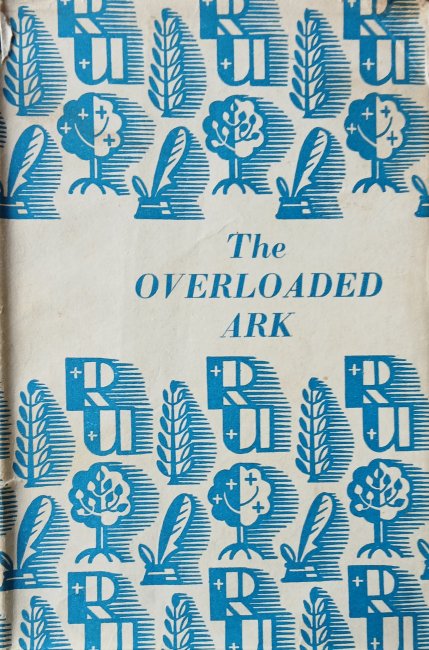
I remember reading lots of Gerald Durrell books as a child but this was the first I read as it is one of my father’s books, so it was sitting on the bookshelf for as long as I can remember. Published by The Readers Union, a book club run by Faber and Faber, who had first published the book, this volume dates from 1955. The odd thing is that I don’t remember any other books from this club at home although there were other book clubs represented on the shelves as that was probably the source of most of dad’s books. This was Durrell’s first attempt at writing a book and described his first ever collecting expedition which was to to British Cameroons and took place in 1947 with ornithologist John Yealland. He took to writing not because he particularly enjoyed it but because he needed the money partly to pay off debts from his first three collecting expeditions and also to finance his family life as he had married in 1951. He was fortunate to be able to get advice on writing from his elder brother the novelist and travel writer Lawrence Durrell and although their two styles are dramatically different they are both eminently readable.
The best way to illustrate Durrell’s style is to quote a section from the preface where they were loading the truck to get from Victoria to Mamfe where the two men were to part company to set up separate camps, Yealland to collect birds around the town of Bakabe and Durrell to go further into the bush to Eshobi searching for reptiles and mammals and also some birds not found near Bakabe. The truck was arranged for 7:30am and the plan was to be on the road by around 8:30am. The lorry however finally arrived at 11am and was full of a dozen of drivers relatives, friends and assorted goods that he was planning on getting a paid for ride up country with. The first job was therefore to get all these people and various items off the lorry as it would be fully needed to carry all the equipment.

After a prolonged altercation which for shrillness and incomprehensibility could not have been rivalled by any race on earth, they were removed, together with their household goods and livestock. The driver then had to turn the lorry for loading, and my faith in his abilities was rudely shattered when he backed twice into the hibiscus hedge, and once into the rest house wall. Our baggage was then loaded with a speed and lack of care that was frightening, as I watched, I wondered how much of our equipment would be left intact on arrival in Mamfe. I need not have worried. It turned out later that only the most indispensable and irreplaceable things got broken.

This diary like narrative, although without specific dates, is continued for the rest of the book as Durrell gets in and out of various scrapes, either attempting to collect animals himself or dealing with the numerous creatures brought to this strange white man that wants animals but not to eat them. Sadly it also covers animals that he obtained but which try as he could he couldn’t keep alive in the rapidly growing makeshift zoo he became in charge of, despite his time as a trainee keeper at Whipsnade Zoo before quitting to go animal collecting. These included the Giant Otter Shrews two of which he obtained and apparently successfully converted to a diet that could be more expected to be available in captivity only for them both to die overnight for no apparent reason and the lovely Duiker antelope fawns which eventually he put a stop to collecting as they always refused milk from a bottle and gradually starved to near death before being humanely killed, and he only ever had young as these were ones found after the hunter had killed its mother.

He does however put together an excellent collection in his time at Eshobi and transports what he has obtained to Bakabe to join Yealland and see what else he can find there which includes Cholmondeley, a large fully grown chimp that had been brought up with an English family and had gained quite a few idiosyncrasies including liking a large mug of sweet tea and cigarettes which he could light either with matches or using a lighter and sit there smoking away extremely happy. The funniest part of the book is probably the partly successful trip to the mountain of N’da Ali, the first attempt at which is interrupted by a hunter bringing an Angwantibo, a species of primate he was particularly keen to find. This means dashing back to Bakabe to look after his new prize and delaying his attempt at the mountain for a week.

To say that John Yealland was much happier with his bird only collection he had built up before Durrell joined him would be an understatement as the birds would rarely be in a position to kill him, unlike say the snakes and small crocodiles that came with Durrell, some of which made escapes from their cages, in this case abetted by one of the monkeys that had undone the door to all the cages that it could reach including the deadly Gaboon Viper’s so I’m going to include one final passage from the book:

John was seated near the table, in his pyjamas, he was busy cutting down some old fruit tins to make into water pots for the birds, and he was absorbed in his work. I was just putting the finishing touches to my toilet when I saw something move in the shadows beneath his chair. Putting on my dressing gown I went closer to see what it was. There on the floor, about six inches away from John’s inadequately slippered feet, lay the Gaboon Viper. I had always believed, judging by what I had read and was told, that at moments like this one should speak quietly t the victim, thus avoiding panic and sudden movement. So, clearing my throat, I spoke calmly and gently:

“Keep quite still, old boy, the Gaboon Viper is under your chair.”

On looking back I feel I should have left out my reference to the snake in my request. As it was my remark had an extraordinary and arresting effect on my companion. He left the chair with a speed and suddenness that was startling; and suggestive of the better examples of levitation.

The numerous illustrations through the book are by Sabine Baur based on drawings and photographs by Gerald Durrell. Durrell wrote many books about his collecting experiences, the zoo he founded in Jersey and various conservation projects he became involved in but is probably best known for his series of three books about growing up with his family on Corfu just before WWII, especially the first ‘My Family and Other Animals’. I’m going to stay with the Durrell family next week with his eldest brother’s book ‘Bitter Lemons of Cyprus‘.

Songs to an African Sunset – Sekai Nzenza-Shand

A fascinating journal of the time in the mid 1990’s when Nzemza-Shand returned to Zimbabwe with her Australian husband Adam Shand. She is a qualified nurse and gained a PhD in International relations whilst living in Melbourne which makes her almost effortless transition back to part time rural Zimbabwean village life all the more interesting. I say part time as Adam lived in the capital, Harare, working as a freelance journalist covering African affairs and obviously she spent time with him in the capital but she appears to have also spent a lot of time apart in the village where she was born and grew up. She only mentions Adam as being in the village during specific events and they clearly spend a lot of time living apart whilst she gets more involved in village life and it is those periods which are the most interesting in this book.

The tale starts with the impact of the AIDS epidemic in Africa and the loss of so many people including family friends and ultimately her brother Charles, indeed it was to attend funerals that first brought her back to Zimbabwe from a comfortable life in Australia. Her descriptions of the simple village life in a part of Africa largely denuded of its forests and wildlife even during her lifetime, of the coexistence of Christianity and ancestor worship, and the poverty of the villages especially compared to the greater affluence in the capital is powerful reading. Polygamy is also normal in rural Zimbabwe with men having many wives and lots of children with each of them which of course adds to the scarcity of food for such large families and the resultant hand to mouth existence for so many she describes.

AIDS rears its ugly head later in the book as well when she is travelling to Omay in the north west of the country to visit the Tonga people who had been displaced from their lands by the creation of Lake Kariba in a hydroelectric scheme. Whilst they had been promised support in transitioning to a new life as farmers as opposed to a semi-nomadic existence alongside the Zambezi River this had barely materialised so they relied on international support including the Australian aid corporation that paid her to go there to evaluate what they most needed. During an evening meal stop she started talking to some local prostitutes who assume that she is also there to work in that trade and they told her that the going rate was $30 for a night at a man’s house, $40 if they went to the woman’s place but they explain that if the man wants sex without a condom then she should insist on $60 because less than that “it’s not worth getting AIDS for”.

I was particularly interested in the rituals described such as the second funeral for her brother at which his wandering spirit is finally at peace and the description of the process surrounding the death of a local chief. There is also a chapter dealing with local law and another chief’s court with justice meted out far swifter than a formal court of law and in the presence of the local people so they could see that all was fair and just. There is so much that is done because it has always been done that way without involving the formal authorities and everything is accepted by the people as right and proper. Anyone who is interested in just how rural Africa continues to operate much as it always has done should read this book and by way of contrast there is a chapter dealing with Nzenza going to a baby shower in Harare, mainly because she had never been to one.

Nzenza left Zimbabwe for a career with an international development organisation based in the USA before returning to Zimbabwe in 2011 and later starting a weekly newspaper column for The Herald, a paper based in Harare, largely continuing her theme of rural life that she started with this book. That column ended in 2018 when she was elected as the Member of Parliament for Chikomba East although she no longer holds a parliamentary seat.

The Coronation of Haile Selassie – Evelyn Waugh

I’m planning on reading ‘Scoop’, Evelyn Waugh’s comic novel about the life of a foreign journalist in the coming months but remembered I had on the shelves an example of Waugh’s own time as a foreign reporter, namely his account of attending the coronation of Emperor Haile Selassie in Abyssinia, now Ethiopia. This occurred in 1930, eight years before he wrote ‘Scoop’ during which he was submitting stories for several newspapers in a freelance capacity. The main inspiration for ‘Scoop’ was when he was back in Abyssinia in 1935, this time on behalf of the Daily Mail covering the second Italo-Abyssinian war. Whilst he was not a great war reporter he did get plenty of material for his subsequent novel. But this link does make reading his stories about reporting in 1930 an ideal prelude to tackling ‘Scoop’.

This Penguin 70 book is actually a couple of extracts from his 1931 travelogue ‘Remote People’, a book I’m now keen to track down to read more fully, but for now the two sections included here regarding the coronation and the apparently interminable journey to get home from it are all I have and I have loved the dry humour and observation of detail that are a trademark of his writing. He starts off by introducing a few of the people he has dealings with or are directly involved with the coronation or in several cases both in particular who was originally in Abyssinia as a trader but had somehow ended up as chief, and apparently only member of the bureau of foreign affairs and had an office in the centre of Addis Ababa, the country’s capital. Described as extremely handsome of German and Abyssinian descent he was also an excellent linguist and could apparently arrange anything even finding copies of the apparently non-existent coronation service…

In this last statement Mr Hall appears to be no different to anyone else Waugh has to deal with or indeed just observes. Addis had been the capital for almost forty years by then but large parts of it was still under construction. The hotel the British Marine band had been quartered in lacked a roof and building work all over the city was making very little progress as the workmen would apparently simply stop if they weren’t under constant supervision. Throw into this chaos the organisation of a coronation and the consequent arrival of foreign dignitaries along with the world media to cover it and the difficulties of communication both inside and outside the country and it’s a wonder anything progressed to any sort of a plan. This is where Waugh had an advantage over his fellow representatives of the press he didn’t have a daily newspaper to serve that needed something all the time he could wait and write accurately what happened unlike others he derided such as Associated Press which sent in totally fictitious accounts of the ceremony because of time constraints needing copy before it had even started. Mind you those members of the press that waited to get at least accurate reports of the first part of what turned out to be an interminable event discovered that the only telegraph office in the city had closed for the day so they couldn’t send their reports anyway.

The book doesn’t have any of Waugh’s actual reports in it, rather it is a diary of his experiences both in the lead up to and being at the coronation and the six days of feasting and celebration that followed for the royal family and the numerous tribal leaders that attended and it is at times both an important historical document and also extremely funny. The second account included in the book is entitled ‘First Nightmare’ and describes how Waugh attempted to get at least part way home with ships and trains being either cancelled, not turning up even when expected or even taken over by a Princess and her retinue who could just bounce all the passengers who had managed to find seats out of Abyssinia back out of them again. In all Waugh takes four days to go from Harar to Aden, a distance of 311 miles (500km) with numerous hold ups and false hopes of possible means of moving forward and you can feel his frustration building. At the time Aden was part of the British Empire and regular ships travelled back to the UK all he had to do was get there but it proved incredibly difficult.

I’ve really enjoyed this short book and am now looking forward to reading ‘Scoop’, probably early next year by the look of the planned reading list I already have for the rest of 2023.

Maverick in Madagascar – Mark Eveleigh

This is not my own lie. This is a lie that the ancestors told me

Mark Eveleigh opens his book with this traditional start to any story being told in Madagascar as he describes his plan to walk from north to south along the western coastline of the fourth largest island in the world and before you even get to that original plan you know that he doesn’t succeed because the maps at the very beginning of the book only show less than a quarter to that route. Instead there is a second map relating to Part II of the book where he heads across the middle of the country in a search for the Vazimba tribe who are a group of white pygmies not seen for decades or even centuries and this may be because the various tales relating to them describe them as alternately not short and not white. This is going to be a difficult hunt.

That his original plan was doomed almost from the start was due in part to the late rainy season which made the going even more difficult that it should have been and the fact that, despite his intention to purchase a horse as a pack animal for his equipment, all the horses in the north of the country appeared to have succumbed to a mysterious disease and died in the few months before he got there. Instead he decides to buy Jobi the bull zebu (a local breed of humped cattle) and despite warnings that nobody could drive a zebu that far decides to set off in the company, at least initially, of a couple of locals who were taking two cows for slaughter part way down the route he would have to follow,

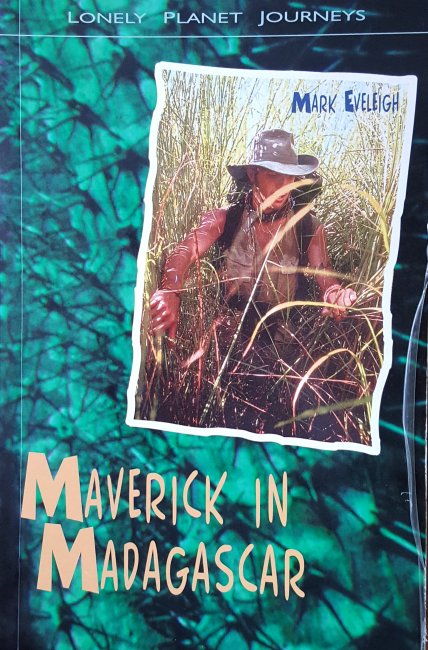
Mark is an entertaining writer, particularly when describing his own discomforts, and there are plenty of those especially in Part II where he gets poisoned by various plants that he is walking through and has recurrences of the malaria he first caught in Indonesia whilst trying to avoid being shot by bandits. He is also an excellent photographer so it is somewhat disappointing that despite frequent references to taking photographs the format of the Lonely Planet Journey’s books doesn’t allow for pictures apart from on the cover as you so want a few pages of images especially when he describes a breathtaking view. He also clearly bonded with Jobi during his aborted trek and is genuinely upset when the walk has to be abandoned partly due to Jobi getting unwell so he sells him for a significant loss to a family that will take care of him rather than the higher offers from others where his lifespan is likely to be considerably shorter.

What stands out through the whole book is the welcoming and friendly nature of almost all the Malagasy people he meets, apart from the bandits, and their determination to share what little they have despite Madagascar being one of the poorest countries on Earth. Their astonishment that a Vazaha (literally outsider) has made it to their isolated village, quite probably the first white man that the children at least have ever seen, is an ongoing theme. Madagascar does have its tourist traps but they are few and far between and due to the danger of travelling especially in the zone rouge in the middle of the country tourists tend to be restricted to these small areas and mainly to an island off the west coast which Mark visits in order to complete paperwork and send letters but gets away from as quickly as possible. It’s a really good read and I definitely recommend it.

Lonely Planet Journeys was a relatively short lived series of travellers tales published by Lonely Planet between 1996 and 2002, I really enjoyed the eclectic selection and when it became clear the series was coming to an end I bought up as many different ones as I could find in my local bookshop and in all have twenty five titles. There doesn’t appear to be a definitive list of all the book published under this imprint, the LibraryThing list has forty seven titles but includes several books that were not actually part of the series so I’m guessing that I’m missing no more than ten actual books from the set, probably quite a bit fewer than that. This one has been sitting unread on my shelves for twenty years so it was about time I finally got round to picking it up. I have read most of the ones I have now but whilst checking the shelves for the date range and the tally of books there are at least two that I have no memory of reading so they will probably appear sometime in the next few months.

Conrad’s Congo

In 1890 naturalised Briton, although Polish born, Captain Józef Teodor Konrad Korzeniowski left England to take command of the steamship Roi des Belges on the River Congo. He had gained his Master of the British Merchant Marine certificate four years earlier and had had a previous command of a ship called the Otago but this was to be his most significant position, at least as far as it’s mark on his later life. He had begun his maritime career back in 1875 as a trainee seaman on the barque Mont Blanc and had worked his way up the ranks on various vessels over the following years and hoped this would be a stepping stone to command of larger ships but it wasn’t to be. Amongst the possessions he took with him for an expected 3 years away in the Congo was a manuscript for a novel he was working on and it was this, along with the ill health that followed his African adventure that largely kept his away from future seagoing, would make the name of Joseph Conrad. ‘Almayer’s Folly’ was published in 1895, 15 months after he left his final marine post and a stream of novels and stories were to follow including the novella ‘Heart of Darkness’ based on his time in the Congo and published in 1899.

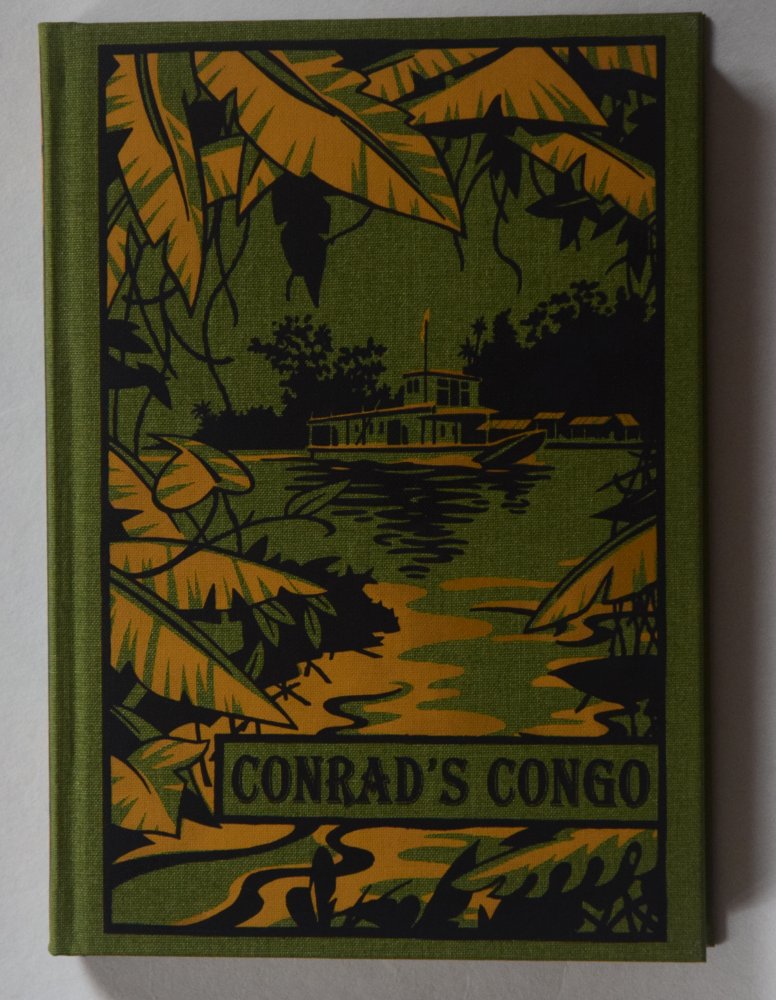
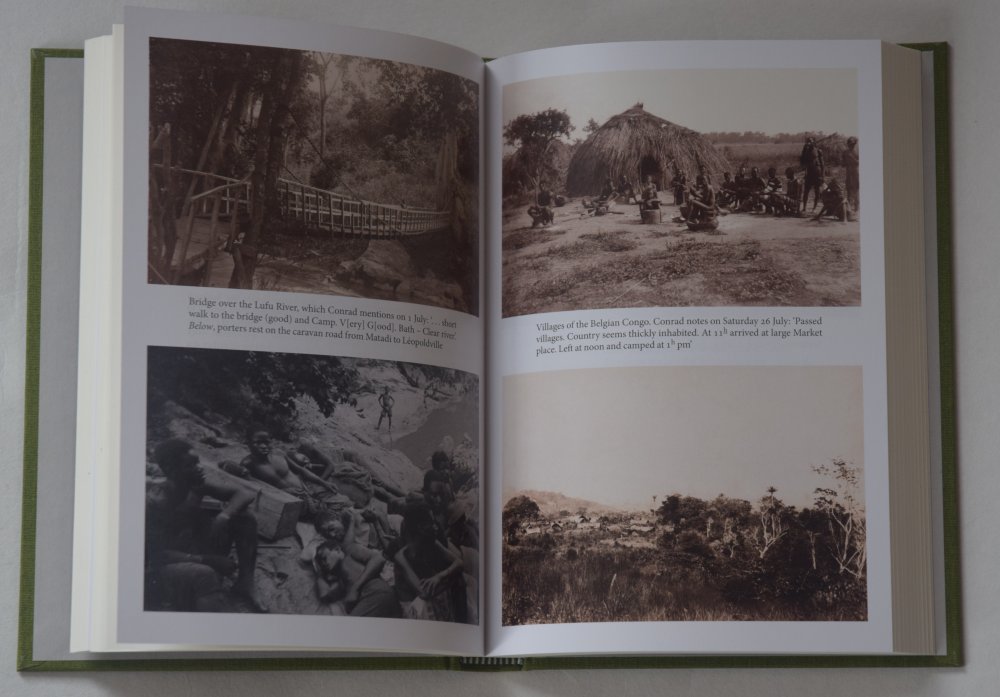
Although I will refer to Heart of Darkness several times during this essay, the book that has prompted me to write is ‘Conrad’s Congo’ published by the Folio Society in 2013 which gathers for the first time in one volume letters and diaries by Conrad relating to his ill-fated trip, along with the short story ‘An Outpost of Progress’ which also draws on his time in Congo. The book is bound in cloth blocked with a design by Neil Gower of the Roi des Belges steaming along the Congo. At 256 pages it is more than twice the length of Heart of Darkness and includes some fascinating contemporary photographs.

20180501 Conrads Congo 1

The Congo at the time was being run a private fiefdom by King Leopold II of Belgium and the astonishing cruelty against and exploitation of the people there was without parallel even amongst other colonies. It only started to be reigned in after the report into what was happening there by Roger Casement became public and eventually the Belgian government stripped Leopold of his autocratic control. It is estimated that of Congo’s 20 million population in 1880 this was roughly halved by 1920 mainly from famine and disease as all able bodied people were forced to work collecting ivory, rubber or other commodities to enrich Leopold meaning there was nobody to hunt, fish or plant crops. Part of Casement’s report is included as an appendix to the book and makes disturbing reading even though I already knew some of the background.

20180501 Conrads Congo 2

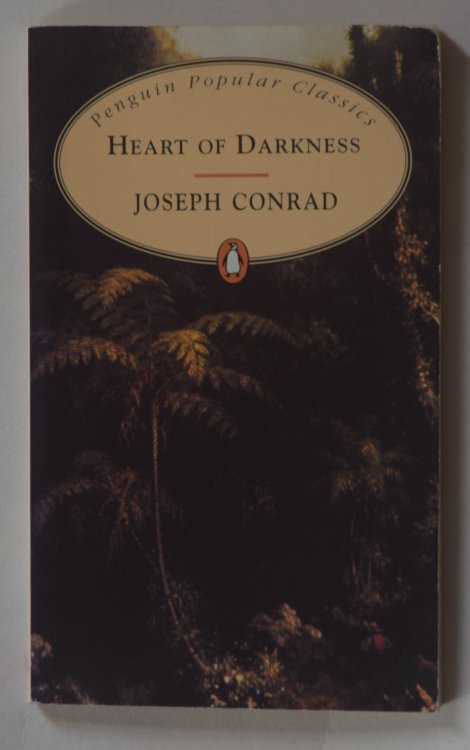
The cover of the Penguin Popular Classics edition  of Heart of Darkness was chosen by somebody who wanted a dark jungle view but managed to select not only the wrong country but even the wrong continent as the painting is a detail from Hunter in Brazilian Jungle by Marrin J Heade, so the plants growing are completely wrong for Africa.

Conrad’s Congo starts off with a series of letters initially with Albert Thys, deputy director of the Belgian Company of the Upper Congo as he tries to get a job with them then moves on to letters to his distant cousin (although referred to as uncle in the letters) Aleksander Poradowski then living in Belgium and when he dies soon after this correspondence starts the letters continue to his widow Marguerite (written to as aunt) and it is she that helps get him the captaincy he is looking for. In Heart of Darkness this is fictionalised in the tale told by Marlow (a thinly disguised Conrad) in which he says

“I am sorry to own I began to worry them. This was already a fresh departure for me. I was not used to get things that way, you know. I always went my own road and on my own legs where I had a mind to go. I wouldn’t have believed it of myself; but, then–you see–I felt somehow I must get there by hook or by crook. So I worried them. The men said ‘My dear fellow,’ and did nothing. Then–would you believe it?–I tried the women. I, Charlie Marlow, set the women to work–to get a job. Heavens! Well, you see, the notion drove me. I had an aunt, a dear enthusiastic soul. She wrote: ‘It will be delightful. I am ready to do anything, anything for you. It is a glorious idea. I know the wife of a very high personage in the Administration, and also a man who has lots of influence with,’ etc. She was determined to make no end of fuss to get me appointed skipper of a river steamboat, if such was my fancy.

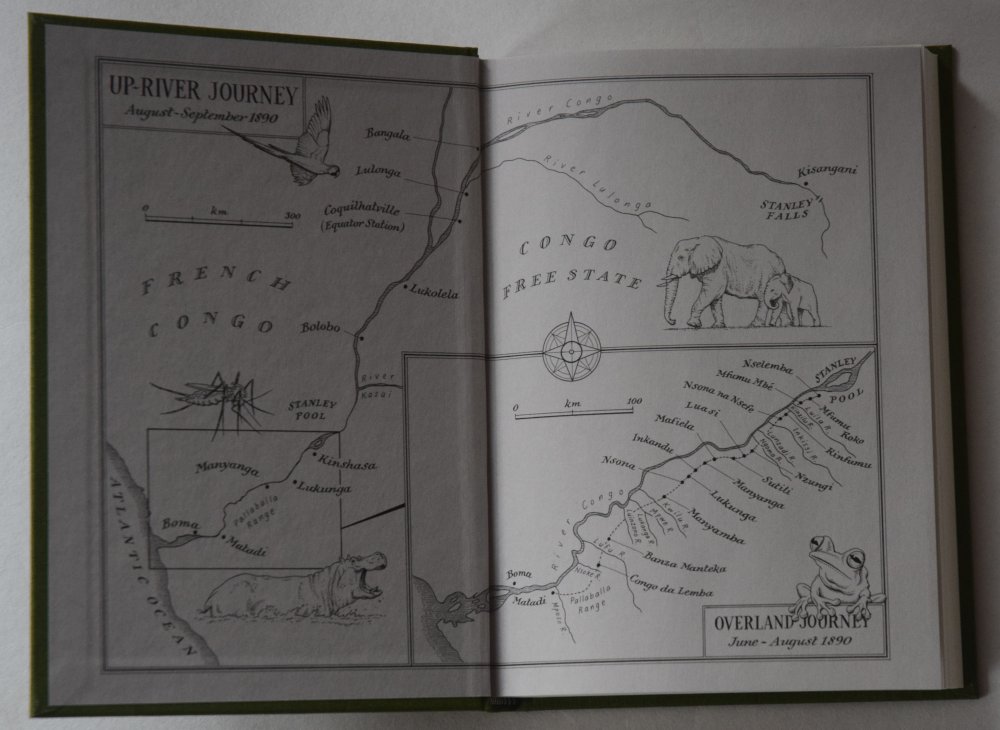
Six months after approaching Thys, Conrad had his job and his letters to his ‘aunt’ continue through his voyage to the Congo talking about the trip but also his first impression of colonial Africa as he works his way along to coast encountering French ships. The letters hint at a growing romantic link between the two as the tone becomes more playful such as might be written between two lovers separated by distance. On arrival at Matadi he finds that the Roi des Belges is 200 miles away and there is no way to get there up the river due to the rapids between the coast and the station where the ship awaits him so Conrad is forced to walk to his boat and this is covered in ‘The Congo Diary’ which makes up the next section of the book. It is in this short work where he meets Roger Casement and we first read of the casual cruelty inflicted on the natives and hints as to the fate of the majority of the colonialists.

On the road today passed a skeleton tied up to a post. Also white man’s grave – no name. Heap of stones in the form of a cross.

The short Congo Diary is immediately followed with ‘The Up-river book’ which covers his first trip on the Roi des Belges and is largely technical notes presumably to assist him in future trips such as this part of the entry for the 3rd August 1890.

Always keep the high mountain ahead crossing over to the left bank. To port of highest mount a low black point. Opposite a long island stretching across. The shore is wooded –

As you approach the shore the black point and the island close in together – No danger – steering close to the mainland between the island and the grassy sandbank, towards the high mount.

There are also numerous sketch maps of sections of the river which are also included in the Folio edition. The endpapers of this book have maps for both The Congo Diary and The Up-river Book so that you can follow the journeys.

20180501 Conrads Congo 3

Unlike in Heart of Darkness where Marlow on having walked to his boat just as Conrad did, the Roi des Belges was clearly ready to sail as they set off a couple of days after he arrived. In the story Marlow found his ship had sunk a few days earlier so was obliged to spend many months getting it out of the water and repaired before they could do anything. The enforced break affords Conrad the chance to set up his plot for the rest of the story and also to make various observations about the conditions the natives are under. In reality he was off from Kinshasa to Stanley Falls almost immediately. This section of the Folio book is frankly not very readable and in truth was not intended to be so as it is really just notes on the route to avoid the numerous sandbanks and rocky snags that litter the river. Conrad’s sketch maps are interesting with their dotted lines indicating the correct path between islands especially the long section dealing with the clearly complicated Lulanga river passage, this takes 7 maps and several pages of notes to get through so it must have had a justified reputation for difficulty in navigation.

At the end of The Up-river book we are back to a small section of correspondence as letters have caught up with Conrad at Stanley Falls. One of these is highly significant as the letter to Marguerite includes the first mention that he has been very ill with dysentery as well as fever (malaria) and that there is a mutual dislike between him and the manager of the station he is based at so there is little hope of any advancement in his career. It is quite clear from the letter that the manager of the station that Marlow finds himself at is modelled on the real Monsieur Delcommune. This is how Marlow describes him..

He was commonplace in complexion, in features, in manners, and in voice. He was of middle size and of ordinary build. His eyes, of the usual blue, were perhaps remarkably cold, and he certainly could make his glance fall on one as trenchant and heavy as an axe. But even at these times the rest of his person seemed to disclaim the intention. Otherwise there was only an indefinable, faint expression of his lips, something stealthy–a smile–not a smile–I remember it, but I can’t explain. It was unconscious, this smile was, though just after he had said something it got intensified for an instant. It came at the end of his speeches like a seal applied on the words to make the meaning of the commonest phrase appear absolutely inscrutable. He was a common trader, from his youth up employed in these parts–nothing more. He was obeyed, yet he inspired neither love nor fear, nor even respect. He inspired uneasiness. That was it! Uneasiness. Not a definite mistrust–just uneasiness–nothing more. You have no idea how effective such a… a… faculty can be. He had no genius for organizing, for initiative, or for order even. That was evident in such things as the deplorable state of the station. He had no learning, and no intelligence.

The last letter in this section is to the publisher Thomas Fisher Unwin who was acting as Conrad’s literary agent and mentions the short story ‘An Outpost of Progress’ based on his experience at the station which makes up the next section of the Folio volume.

20180501 Conrads Congo 4

Conrad would be invalided out of the Congo by the end of 1890 to the relief not only to himself but also to Delcommune who wanted rid of him, and never recovered his health. Malaria is one of those persistent diseases that keeps flaring back up and it would afflict him several times back in England. The remainder of the Folio book is letters he sent long after his return, including 3 to Roger Casement at the end of 1903 just before the Casement report was published in February 1904, along with extracts from articles he wrote, followed by 2 appendices. The first of these is a series of five short testaments about Conrad written by people who met him including John Galsworthy and Bertrand Russell and then finally the extracts from Casement’s report that was mentioned earlier.

All in all a fascinating book which gives an insight into the creation of Heart of Darkness and which even if you have never read the novella provides an overview of the awful situation in the Congo under Belgian control and it should be recommended if only for the historical record.