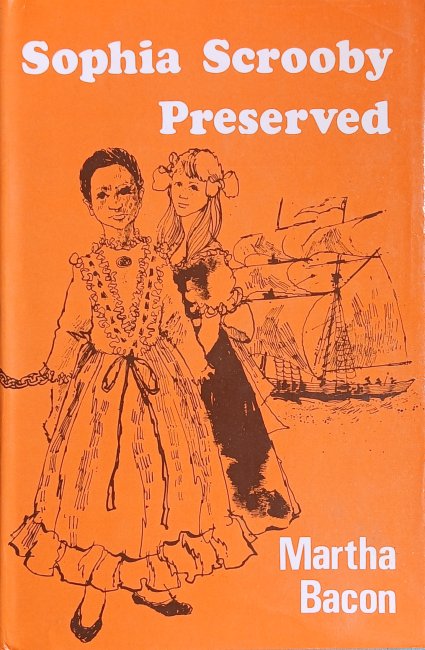
Sophia Scrooby Preserved – Martha Bacon

Another of the small number of books I still own from my membership of the Children’s Book Club in the early 1970’s, this one has a rather unusual subject for a book for children as Sophia Scrooby is a child slave in Connecticut around the time of the American War of Independence. Captured in Africa at the age of about six years old after her entire tribe were wiped out in a Zulu raid, she was transported to New England and sold for three pounds (around £500 today) to be trained as a lady’s maid and companion to Prudence, the young daughter of the Scrooby family. Pansy, as Sophia is normally called lives a somewhat unusual life as a slave being treated by the family more as the companion than a servant and is taught embroidery to work on a sampler and whilst working on the letters comprising the border she learns the alphabet and thence by looking through Squire Scrooby’s library secretly slowly teaches herself to read. This ability she reveals after she has been there a year, Squire Scrooby is blind and on his birthday she picks up a book and starts to read to him astonishing the entire family, especially Prudence who hasn’t managed to learn to read yet, Pansy is then tutored along with Prudence in the skills of a young lady, playing music, singing, painting etc. a far different life to that normal for a slave.

This pleasant existence is cut short however by the failing of the Squire’s fortune during the war and his house and goods are seized along with Pansy, who as a slave is simply another chattel to be sold to offset the debts. From this point of the book the narrative speeds up dramatically with Pansy sold to another slaver and pirate intending to take her to New Orleans but she escapes along with two other child slaves and the English captain of a ship captured during a pirate raid. He takes them all to England where Pansy uses her musical talents entertaining his aunt and her friends and then on the London stage. Frankly reading it now for the first time in probably fifty years it’s all rather far fetched but I remember fondly first reading the book (probably at the age of nine) which is why it stayed in my library when a lot of the other books from my Children’s Book Club collection are long gone. I’m glad I came across it again and reread it, it’s not as good as ‘Mortimer Also‘ or ‘The Ghost of Thomas Kempe‘ which are also survivors from that series on my shelves but it was a pleasant read with a satisfying, if rather predictable, ending after 225 pages.
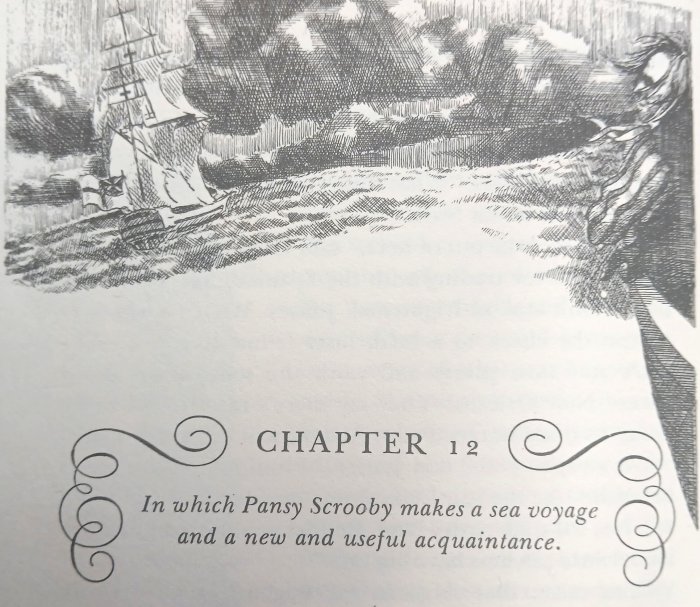
Martha Bacon Ballinger died of cancer in 1981 at the age of sixty four. At the time she was associate professor of English at Rhode Island College and had published several books including two volumes of poetry. Sophia Scrooby Preserved was originally published in 1968 and was her first book for children. After the initial hardback editions by Little, Brown and Company and Atlantic Monthly Press in America and Victor Gollancz in the UK, this Children’s Book Club version was probably published around 1971/2 (it isn’t dated) and finally there was a 1973 paperback by Puffin Books which doesn’t appear to have been reprinted. I can find no further examples and it has remained out of print for over fifty years. All the editions, regardless of publisher, were illustrated by David Omar White.

Hotel Splendide – Ludwig Bemelmans

Ludwig Bemelmans is nowadays probably best known as an artist or as the writer and illustrator of the Madeline series of children’s books. In total he wrote over forty books along with several plays and film scripts but my favourites are the three autobiographical memoirs dealing in a humorous way with his time working at the Ritz hotel in New York and when he ran his own restaurant of which this is the second, the first being Life Class and the final collection being Hotel Bemelmans. This book takes us from his first job there as a bus boy (the lowest of the low in the hierarchy of waiting staff) working at the worst tables in the restaurant facing the stairs, therefore draughty, and between the doors to the pantry, whose hinges needed oiling but never were, and the linen closet so waiters were constantly going to and fro serving other customers. The waiter assigned to these tables, Mespoulets, was probably the worst waiter imaginable, quite often ignoring his customers and eventually delivering cold or incorrect meals, sometimes both, to their table. Monsieur Victor, the maitre d’hotel regarded these tables as ideal for all the customers he didn’t like for whatever reason, complainers, poor tippers, anything that he didn’t approve of and so Mespoulets was allowed to continue for years with his appalling treatment of clients.

Gradually our narrator moves up through the ranks until at the end of the book he has made it to Assistant Banquet Manager and effectively moves into the best suite of the hotel which is permanently engaged, although seldom used, by a European multi-millionaire. He does this on the basis that he needs somewhere quiet to sleep as the job often doesn’t finish until six in the morning, even though he starts on duty during the mid afternoon so doesn’t have time to go home and come back and still get some proper rest. That he also works his way through fine wines and cigars is seen as a perk of the job, both by himself and the other staff on the banqueting team. Indeed a lot of the staff seem to make full use of the hotels food and drink especially that left over from banquets on the basis that it would be simply thrown away otherwise. One of the staff, named Kalakobe, even took to bottling the dregs from all the glasses in the dining room and drink this foul concoction the next day whilst resting from his strenuous role of the cleaner of the heavy coppers used in the kitchen.

The book ends with another story about Mespoulets, this time about him finally leaving the hotel but I particularly want to show one of the drawings that adorn the start of each chapter and also include the opening of this section where you can appreciate the word craft of Bemelmans in his description of this fallen figure. The image is a little bent as the book I’m reading is from 1947 and the spine is rather fragile so I was careful not to press too hard on the pages.

Mespoulets is suspected of being the author of death threats posted to Monsieur Victor and the chapter revolves round how best to safely get rid of him after a psychiatrist states baldy that he definitely should not be sacked as that could cause Mespoulets to carry out his threats. Needless to say that after managing to get him on a ship home to France the letters continue to arrive so nobody is any the wiser who the real culprit is.

I loved reading these short stories of the quite often disreputable life of the staff in a major luxury hotel although I doubt very much that I would want to stay there as they all had a ring of truth about them regardless of how outlandish some of them sounded. I’m glad to say that Hotel Splendide along with Hotel Bemelmans are both still in print eighty five years after they first appeared so the talent of Ludwig Bemelmans to entertain is still enjoyed by modern readers.

This has been my 350th weekly blog on the books I share my home with and I look forward to reading and writing about many more.

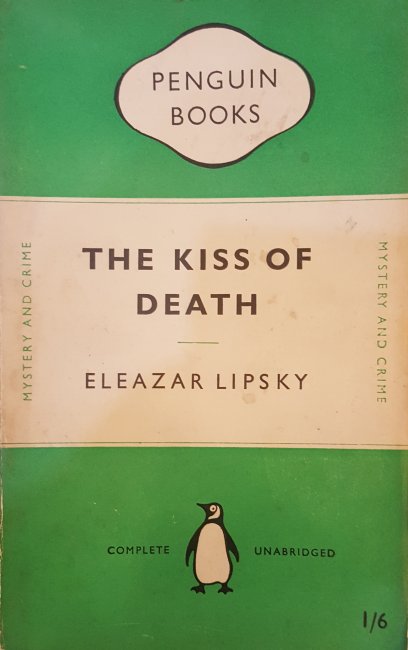
The Kiss of Death – Eleazar Lipsky

A 100-page manuscript by Mr. Lipsky was the basis of the 1947 film “Kiss of Death,” starring Richard Widmark, and the full novel was published by Penguin that same year. 

New York Times obituary – Eleazar Lipsky – February 15, 1993

This is that first edition, published by the USA division of Penguin in August 1947, I also have the first UK Penguin edition, with a significantly less garish cover, from December 1949. see image at the end of this blog. Lipsky was by trade a lawyer and served as an assistant district attorney for Manhattan in the 1940’s, he later had a law practice in Manhattan and amongst other jobs served as legal counsel to the Mystery Writers of America. He was still practising law up to three weeks before his death at the age of eighty one from leukaemia. This solid background in law shows itself in his writing and you can be certain that the trial scenes and interactions with the Manhattan assistant district attorney in the book are procedurally accurate.

It’s an unusual crime novel as it is less concerned with the crime undertaken by Vanni Bianco and his mob then the repercussions of the act. Vanni is quickly captured and in the lead up to his trial D’Angelo, the assistant D.A. tries to persuade him to turn in the other members of his gang to avoid the mandatory thirty year jail sentence he faces for a fourth offence and this time involving a gun although it wasn’t fired during the robbery. Bianco refuses due to a code of honour and determines to do his time leaving his wife and children to be looked after by his gang. This however they fail to do and four years into his sentence word reached Bianco that his wife has died of tuberculosis brought on by cash shortages so she was looking after their daughters as well as she could to the detriment of her own health. The children were admitted into a home. This terrible situation strikes home at Bianco who determines to testify against his fellow criminals in an act of recrimination.

This is where the story totally changes tack as we follow Bianco into a new ‘career’ of stool pigeon being placed in prison cells with criminals where the D.A.’s office had insufficient evidence to see if he could get them to talk to him, an extremely dangerous role which could easily have got Bianco killed if he was suspected. It’s a very interesting aspect to the way of working of the District Attorney’s office and presumably is based on real life examples that Lipsky had during his professional career. I don’t remember reading a book dealing so specifically with the way the District Attorney would handle an informant of the type of Vanni Bianco. However I certainly didn’t see the final twist in the plot coming and it transforms the whole story in a completely believable but totally unexpected way.

As for the film mentioned in the obituary, it doesn’t really star Richard Widmark as claimed, as it was actually his debut. The film actually stars Victor Mature as Bianco and Brian Donlevy as D’Angelo with Widmark playing one of the criminals D’Angelo hopes Bianco will manage to get some more information on. I tried watching some of the movie and frankly wasn’t particularly impressed, unlike the book which was fast moving and a delight to read. It is nowadays sadly out of print but is pretty easy to track down on the second-hand market in either the USA or UK Penguin editions.

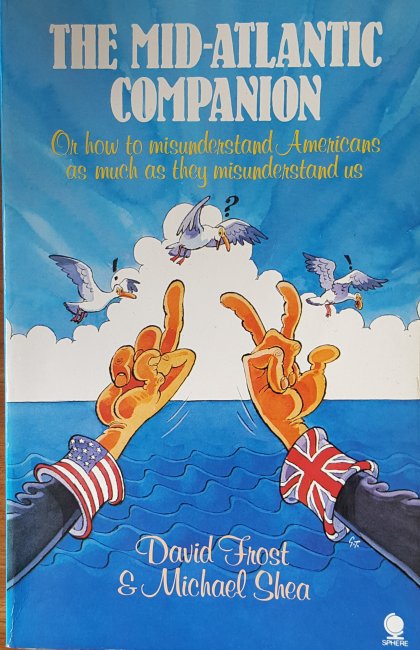
The Mid-Atlantic Companion – David Frost & Michael Shea

A friend is off to New York for the first time so it occurred to me to dig out this funny guide to the differences between America and the UK which originally came out in 1986. My copy is the first paperback edition from 1987, which is when I started regularly crossing the Atlantic to see my then girlfriend and found this full of handy hints. At the time David Frost was presenting TV programmes in both countries and commuted each week between London and New York, Michael Shea was a diplomat and Director of British Information Services in New York but when he wrote this book with Frost he was Press Secretary to Queen Elizabeth II. Both men therefore had extensive experience of the differences that you only appreciate really when you live in the country you are not native to.

The joy of this book is it’s not just the linguistic differences that they highlight but history, politics, food etc. are covered, if not comprehensively then at least enough to give a warning to the unwary. Back in 1887 Oscar Wilde said “We have really everything in common with America nowadays, except, of course, language.” and it is still very true today. I remember back in the early 1980’s Jane Fonda’s first workout video came out which included the surprising, to British female watchers at least, instruction to sit on the floor and bounce around on your fannies. Americans who don’t know what is wrong with that should know that a fanny moves from behind in America to the front and female only in the UK.

That passage gives some idea of the differences and fortunately the book is not as relentless as that all the way through, the book is equally fair, or unfair if you prefer, in dealing out warnings both for Brits going to America or Americans going to the UK so Brits are warned about the huge size of portions and the sweetness that pervades a lot of American food whilst Americans are equally warned about a lot of British food and heartily recommended to have breakfast three times a day. There are also specific chapters on London and, usefully for my friend, New York which includes a comment on street crime that “they even had a bank robber who got mugged on the way to the getaway car”. As for the cab drivers “Help wanted ads in NY papers claim you can get a cabby’s licence in three days. Most people are surprised they have been driving that long”.

Of course the book has dated, it is after all getting on for forty years old, however as both authors have been dead for a log time, Shea died in 2009 and Frost in 2013 there is no chance of an updated version. There are still enormous differences in language and culture between the UK and USA a lot of which are in this book and still relevant but there are new pitfalls for the unwary traveller to fall into and a new guide is probably called for.

A final thought from the politics section, which still seems relevant, at least in Donald Trump’s mind:

When the President does it, that means it’s not illegal

Richard Nixon

The House of the Seven Gables – Nathaniel Hawthorne

It’s thirty five years since I first read this book and it has definitely stayed on the shelf since then. I remember writing to the person who sent it to me and recommended I read it that the most remarkable thing was that it contained it’s own review in the opening line of chapter fifteen.

Several days passed over the Seven Gables, heavily and drearily enough.

Still maybe thirty five years have changed my opinion…

Well I enjoyed the book more than the last time but it is interminably slow, taking at one point nineteen pages to talk about a dead body sitting in the chair where he expired and in the 363 pages that the novel takes very little happens that couldn’t have been told in half that. The novel starts by describing the wrong committed against Mathew Maule by Colonel Pyncheon who under the pretence of calling him out as a wizard, for this was the times of the Salem witch trials, took his house and land to build his own mansion on, the eponymous House of the Seven Gables. Maule curses the Colonel as he is on the gallows that he shall die and very specifically

“God” said the dying man, pointing his finger, with a ghastly look, at the undismayed countenance of his enemy; – “God will give him blood to drink!”

When, on the very first day of the house being completed and open to guests the Colonel is nowhere to be seen and is later discovered sitting at his desk with a great gout of blood on his chest which had gushed from his mouth the curse of Mathew Maule is remembered and the descendants of Pyncheon are reckoned to be likewise cursed. The book then leaps forward to the present day, or at least to the late 1840’s (it was written in 1851) and we are slowly introduced to our small cast of characters. Hepzibah Pyncheon is an old maid and now sole occupier of the house apart from the lodger Holgrave who inhabits one of the gables, cut off from the main property by a bolted door. She is agitated when we first meet her as she is about to do something that if it wasn’t the poverty that she had been reduced to she would never have attempted and that is to open a small shop in part of the house, Hepzibah is not cut out for trade. On the first day she meets her cousin Judge Pyncheon who is most upset with her opening the shop and bringing, as he sees it, disrepute on the family name. There is clearly animosity between Hepzibah and the distinguished judge, but the root of what it is we won’t find out for over three hundred pages.

Fortunately for Hepzibah the next day her cousin Phoebe arrives from the country and proves very good at running the shop and then a little later the household is completed by the arrival of Hepzibah’s brother Clifford who is aged and apparently simple minded, but has also apparently been the cause of scandal and has been away for thirty years. From the hostility Clifford shows to his cousin the judge it is clear that there is bad blood between them. And there the book remains, dealing with minor household triumphs and tragedies for a couple of hundred pages whilst the reader is left wondering when Hawthorne is actually going to get round to doing anything significant with these characters he has assembled. Ironically just after my original quote about dreariness the plot suddenly speeds up as a crisis brings everything to a head but by which time we are well after page 275 and I have to wonder how many readers have given up before then.

Despite Hawthorne’s statements in the preface of the novel that there is no specific locality where the story is set other than a generic ‘New England’ he was actually inspired to write after visiting a 1666 colonial property owned by some relatives of his in Salem, Massachusetts. The house at the time had been remodelled and only had three gables but when it became a museum, in the early part of the 20th century, another four gables were added along with a representation of Hepzibah’s cent shop which had never previously existed. I visited the house in 1986 which was the reason for reading the book in the first place. It has taken 35 years for me to pick it up again and I might have another go in another 35 years but I can’t really see me making the effort somehow even assuming I’m still around to do so.

The copy I have is a very tatty copy of The Pocket Library ninth edition from 1959, originally published by them in 1954 so it must have been popular. The Pocket Library was a very short lived imprint from Pocket Books lasting as it did from 1953 to 1959.

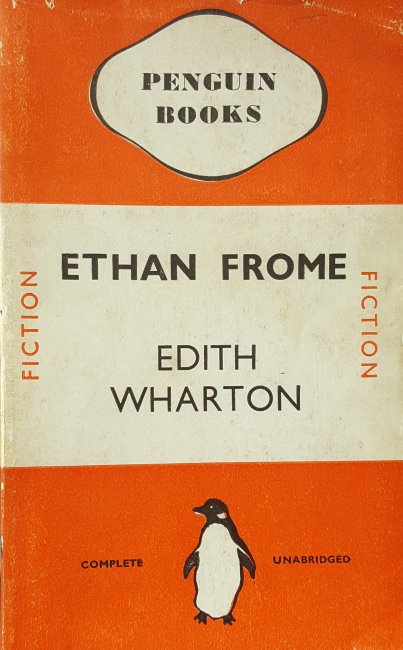
Ethan Frome – Edith Wharton

I had the story, bit by bit, from various people, each time it was a different story. If you know Starkfield Massachusetts, you know the post-office.If you know the post-office you must have seen Ethan Frome drive up to it, drop the reins on his hollow-backed bay and drag himself across the brick pavement to the white colonnade: and you must have asked who he was.

The opening of Ethan Frome draws the reader in immediately, who is Ethan Frome? Nobody seems to know yet everybody ‘knows’ him and as a reader you to already want to know about this mysterious character. The narrator seems determined to find out so lets keep reading, further down the first page he is described as “but the ruin of a man” with “lameness checking each step like the jerk of a chain”, what on earth had happened to him? After the opening preface in which the anonymous narrator gets to know a little more about Ethan Frome whilst employing him to drive a sleigh each day to and from the railway station as it is winter and the snow is feet deep. He is about to enter Ethan’s home after finally being defeated by the snow one evening trying to get back to town when suddenly the preface ends and the first chapter leaps back in time. The book drops the narrator and continues in the present tense but this is clearly the present for Ethan of almost two and a half decades ago.

Back then the Frome farm is in a bad way, very little money coming in and what there is being spent on remedies for his ‘ill’ wife. I put the word ill in quotes because it’s fairly clear that a lot of what is wrong with Zeena is psychosomatic although she probably does have some underlying illness but not a severe as she believes. The other occupant of the farmhouse is Mattie, Zeena’s cousin, whom they took in a year ago when her parents died and is supposedly helping around the house although she isn’t very practical. Over the seven years since their marriage Zeena has become more and more sour tempered and nagging and the arrival of Mattie into their household had initially given Ethan some relief from her constant complaints. Over the intervening months however his feelings for her had changed to something far more and it transpires that Mattie’s feelings for Ethan had also grown but it is obvious that Zeena had noticed this and resolves to send Mattie away which leads to the tragedy which is foreshadowed several times during the book. The development of the entirely platonic romantic relationship between Ethan and Mattie in the shadow of the terrible atmosphere at the farm is beautifully written, neither character will admit to their feelings for the other with its implications for Ethan and Zeena’s marriage which frankly had fallen apart years ago and they were only still together due to the impossibility of doing anything else given the dire financial position of the farm.

The final chapter returns to the narrator and what he finds in the Frome household when he enters and all I’m going to say about that is that it isn’t what I expected from the start of the book.

My copy is the first Penguin Books edition from November 1938, the book was first published in 1911 nine years before Wharton won the Pulitzer Prize for easily her best known work ‘The Age of Innocence” but by 1911 she had already published three full length novels, three shorter novellas, a couple of books of poetry, six volumes of short stories and even four non-fiction books, Wharton was clearly an experienced writer and this shows in her confident use of language and entirely believable dialogue in Ethan Frome. The book is now out of copyright and can be read or downloaded as an ebook from Project Gutenburg at this link.

My Life and Hard Times – James Thurber

Originally published in 1933, this is the first Penguin Books edition from July 1948 and the introduction printed inside the front cover made me want to read it.

James Thurber is America’s greatest genius of humour and is as much a phenomenon as the Grand Canyon; indeed, they might both be said to have a nightmare and fantastic unreality about them. Yet both are undeniably acts of nature, which delight as well as amaze. This volume – the first of his to appear in Penguins – contains some of his maddest stories, such as The Night the Bed Fell and The Day the Dam Broke, which will be the best of introductions to non-Thurber readers and a renewed delight to confirmed Thurberites.

With a build up like that how could I resist? Well I wish I had. All I can say is that in the intervening eighty seven years since the book was first published and seventy two years since that glowing introduction the humour has apparently evaporated. It felt very like reading old copies of Punch magazine where you find yourself wondering how anyone ever found any of this remotely funny. The tales are tedious in the extreme, I even tried reading them aloud in case they sounded better that way; they didn’t. Fortunately the book was only 135 pages long or it may have made it to my fairly short list of books I failed to finish.

Am I missing something? Maybe a confirmed Thurberite could comment and explain why his writing should be compared to the Grand Canyon. As far as I can see the only similarity is that both consist of a massive hole, one in the ground and the other in the four hours I spent reading and then writing about this humourless rubbish. I can sort of see what he is trying to do, the family situations that he writes about could be the basis of a theatrical farce but a large part of such a performance is the visuals and Thurber for the most part failed to enable me to envisage the scenes and when I did see in my minds eye the household running around in confusion I simply didn’t care about the characters or what happened to them.

There is also what can only be described as casual racism, especially in the section entitled ‘A Sequence of Servants’ where non-white characters are reduced to ridiculous stereotypes with ‘comedy accents’ all spelt out phonetically. It was a deeply uncomfortable read at times especially in this age of the Black Lives Matter campaigns and coming from an American author who was lauded in his time it simply emphasised the ingrained prejudices in an unsettling manner.

I really cannot recommend this book to anyone.

Valley of Hunted Men – Paul Evan Lehman

There is an entire genre of fiction that I have never read any example from and that is the American Western. Well I’ve recently bought a copy of Valley of Hunted Men so time to find out if I should have explored the category years ago…

20200121 Valley of the Hunted Men

First impressions were mixed, right from the first page we have a train robbery, six men holding up the express causing death and destruction before riding out of town with $20,000 in gold coins, a classic trope of the genre. So yes I was intrigued where this was going but I was already caught up in the issues of the language used in the novel, the slang and unusual spelling would be familiar with regular readers of this style but I found it off putting whilst recognising that it was a necessary part of the writing structure. One word in particular struck me as anomalous, which was the constant reference to the stolen loot as specie. Now I know this is the correct word for gold (and sometimes silver) coins rather than paper currency but I’d only ever come across the term in books written or set in Victorian London so it seemed odd to it was being used here, in fact I found it so jarring that it kept pushing me off the narrative and every few pages I’d put the book down and not pick it up again for a couple of days, I just couldn’t get into the story.

The tropes just kept coming though, a wounded mystery man falls off his horse at the feet of the pretty daughter of the man running the valley so she takes him home and nurses him back to health where he gives his name as Kirk Dane but refuses to say anything about how he came to be there. But the pretty daughter falls in love with him anyway. There are outlaws in them thar hills surrounding the ranch, and talking of the ranch there’s a grumpy old roustabout with a heart of gold to almost complete the set and then the biggest stereotype of them all rides into the mix…

“Stranger” muttered Butch to his companion, “Ain’t he a dude though

The man was of medium build with smooth olive skin, dark expressive eyes and perfectly moulded lips shaded by a small waxed black moustache. He was attired in a black frock coat, a white silk shirt and a stetson which must have cost fifty dollars at the least. Under the table Kirk had a glimpse of dark trousers and handmade boots of black Spanish leather.

And then finally I got it, I remembered the Spaghetti Westerns I had seen as a child. The wounded cowboy lounging on the porch smoking as he recuperates, the ultra smart man in black, we have Clint Eastwood and Lee Van Cleef all that was needed was a soundtrack by Ennio Morricone and I was back almost fifty years. I could at last picture what I was reading and the second half was read in one sitting after fighting for two weeks with the first. It’s quite clear that Kirk is after the men who did the train robbery but why? Who else is on the same quest? Which of the various possibilities is the lawman on a mission, Kirk is too obvious and when about fifty pages in some of the outlaws decide he is the marshal after them it’s quite clear that he isn’t going to be. There were lots of characters to keep track of, although that does get easier as the book progresses as they start getting killed off. Of course it has a happy ending, well apart from those that don’t make it to the end anyway, I guess that is normal for the genre.

In the end I quite enjoyed the book but the first half was a real struggle until I finally managed to settle down with the plot flow. Will I read another Western? Probably not, it took me over fifty years to get round to reading this one and if that’s my rate of getting to them then I may not get there. Lehman appears to have been a successful writer in the genre with plenty of books to his name but no I don’t have the need to read another.

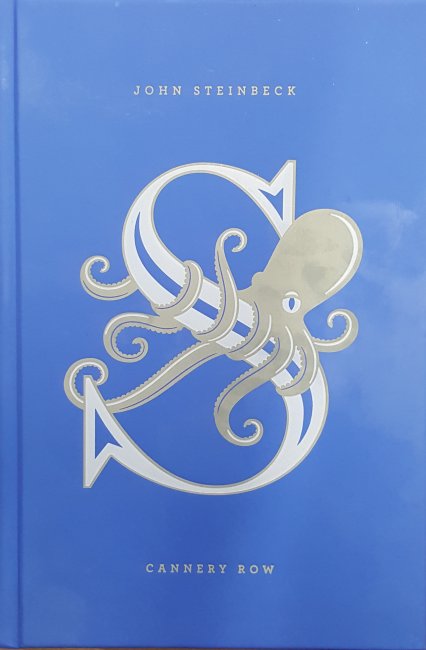
Cannery Row – John Steinbeck

Cannery Row in Monterey in California is a poem, a stink, a grating noise, a quality of light, a tone, a habit, a nostalgia, a dream.

20191112 Cannery Row

From the Penguin ‘Drop Caps’ series that I covered last year in a general review of all twenty six books, and I’m amazed that I had never read it before, the quote at the top is the opening line and immediately draws the reader in. What little Steinbeck I have read in the past I have thoroughly enjoyed, he really was a master wordsmith able to conjure totally believable characters with just a few sentences or even a handful of words and what characters he has populating Cannery Row and it was his “keen social perception” that he was awarded the Nobel Prize for Literature in 1962. There is a plot to the narrative but it is definitely secondary to the characterisations deployed. You really get to know marine biologist Doc and his lab/home, Mack and the boys at the Palace Flophouse and Grill (a rather grandly titled abandoned storage shed), Dora and her girls at the Bear Flag Restaurant (in reality a bordello), Lee Chong and his shop which seems to stock everything, albeit totally randomly, and the general human detritus living in whatever shelter they can find along the Row.

The people are poor but making the best of their situation, the time is the 1930’s during the Great Depression and times are hard. The main employers are the sardine canneries that give the area its name although the work depended on the arrival of the boats loaded with fish which also gives the area its distinctive odour. None of the characters are actually in employment at the canneries though, apart from when they need some money which they cannot get some other way. Lee Chong, Dora and Doc all have legitimate businesses in their own right. Lee’s grocery presumably would make money if his customers actually had any, what it mainly makes is debts which do mainly get paid off when he refuses to extend any more credit to somebody unless they actually part with some money to cover the backlog. Doc is the main character of the book, he owns Western Biological Laboratory, and if anyone in the US wanted a specimen of pretty well any sort of animal Doc would get it for them, eventually anyway. Dora as stated above owns the bordello and probably makes more money than any of the other characters but has to hand over large parts of it in ‘charity’ just to ensure that the authorities keep looking the other way. She is genuinely kind hearted though and looks after her staff who can’t work much due to age or infirmity, one breaks her leg during the book and there is no suggestion that because she can’t work she would lose her room or meals each day.

Mack and the boys at the flophouse, which they con Lee Chong out of at the start of the book, don’t work unless they have to, they have developed over the years a sense of contentment about their lives where they can get what little they need to survive somehow, even if it actually belongs to somebody else at the time. What they will do is get creatures for Doc at a fixed price that everybody knows because that’s more of an adventure than ‘working’ for a living. Despite their low grade criminality you can’t help but like them, they are more victims of their schemes than pretty well any one else and they are genuinely remorseful when things go badly wrong.

Even the bit parts are masterful, I particularly enjoyed the regular appearances of the old Chinaman as he wandered down to the sea and back each day; and like a minor character in a West End farce he always failed to interact with any of the major players whilst just walking through the narrative adding nothing to the plot apart from a comic interlude and a sense of wonder. Just what is it he is doing and why? It’s never explained.

The book revolves around Doc, his need for specimens and his love of classical music, his books and a quiet life. The plot, such as it is, involves Mack and the boys wanting to do ‘something nice for Doc’. They decide on a party so then need to raise some money to finance it, how they get the ‘money’ and the form it takes is really funny and the disaster of the party leads to real poignancy as the various characters reflect on how it went so horribly wrong and what to do to try to make it right. The book is brilliant and difficult to put down when you have started you just need to know more about the population of Cannery Row and apparently there is a sequel so I have to get a copy of that.