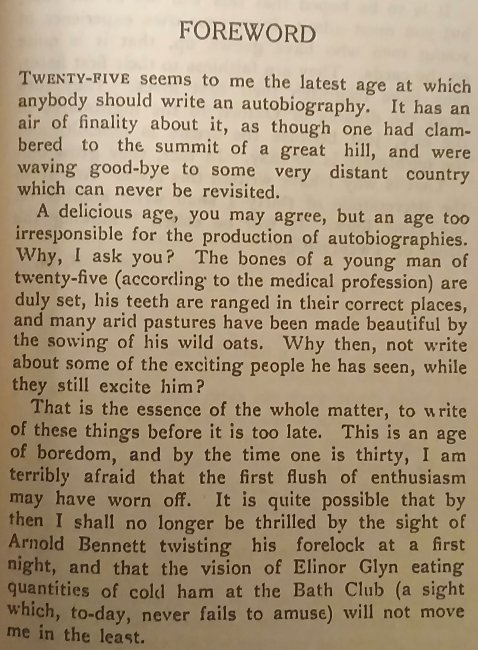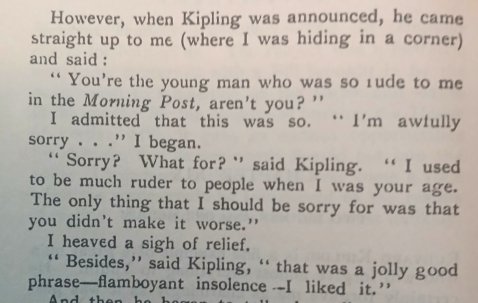
The Man in the White Suit – Ben Collins

By writing this book, which was published in 2010, Ben Collins effectively called an end to his time as The Stig on BBC television’s Top Gear as his contract required him to be anonymous. He was quietly replaced by Phil Keen after the end of series fourteen and Keen continued to set lap times and coach celebrity drivers whilst wearing the white suit until Top Gear came to an end in 2023. To be fair to Collins his identity was becoming known through 2009 and was being hinted at in newspapers just as Perry McCarthy had been revealed as the original ‘Black Stig’ (so called as he wore an all black racing outfit) in 2003 but that didn’t stop the BBC pursuing a legal case to try to stop publication of this book.

The first chapter details Collins’ ‘interview’ for a role he hadn’t been told about, just being asked to go to Dunsfold Aerodrome and do some circuits. He had no idea that Dunsfold was where Top Gear was filmed, as that didn’t become general knowledge until much later, and he didn’t know the shows producer, Andy Wilman, who did the timings so it was a very strange day for a racing driver, just driving a not very good car around an airfield and not being told why. He didn’t hear anything for several months so assumed that whatever it was for hadn’t happened. The book then leaps backwards with Collins growing up and his father was always attracted to fast cars and driving although never as a racer so you can see where he got his love of speed. The story continues with his first forays into racing and the fact that he never raced in Formula 1, but got as close as being offered a test driver role but the team wanted him to put up £1.5 million as his way in which he clearly didn’t have access to. Instead he raced at Le Mans and Daytona in various formats including the GT championship, ASCAR (the European answer to NASCAR) which he won the championship in 2003 in his first year as The Stig and competed in Formula 3.

Collins was also a member of the British Army and interestingly the book covers his training and physical endurance testing to become a member of the Parachute Regiment in parallel with his early days as The Stig, eventually after four years in the army he had to quit as his work as The Stig and racing at circuits around the world didn’t allow for his time in the forces. He then increased his time racing and also became a stunt driver, particularly for the James Bond films although I was quite surprised that quite a few of the segments for Top Gear where The Stig appeared but didn’t actually do any driving were still filmed by him as frankly anyone could have stood in for him on the episode where they raced across London using different modes of transport with The Stig using the Underground and buses. It’s a really good autobiography and the 323 pages flew by but the paperback is rather annoying as at the back it includes acknowledgements for the photographs which were presumably in the hardback but which were removed for the paperback edition.

On the 30th November 2025 Collins and Wilman appeared in a Youtube video where they are talking about Wilman’s new autobiography but they keep hinting that they are going to deal with the publication of ‘The Man in the White Suit’ and finally at about 38 minutes in they address the various issues and the court case. However the entire video is well worth watching and can be seen here.

If the title feels familiar then you are remembering an Ealing Studios satirical comedy film made in London and Burnley in 1951 starring Alec Guinness as a scientist who invents a pure white fibre that never wears out or gets dirty, in fact it cannot even be dyed. To promote the material he has a suit made but eventually it dawns on people that an indestructible garment that doesn’t need to be cleaned would bankrupt the textile industry as nobody would need to buy any more clothes once they had a few items and he is pressured to abandon the invention. Even the book jacket reflects the aesthetic of the original film poster with its red and black background.

The Dark Invader – Captain Von Rintelen

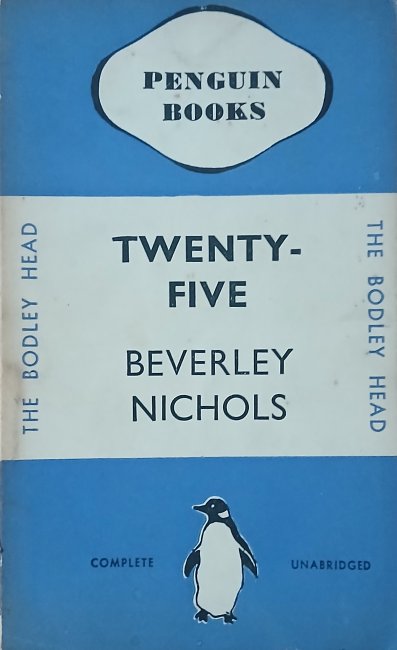
The first Penguin books were published in July 1935 and introduced their distinctive colour coding by subject category, a scheme copied from the Albatross Books in Europe. Initially there was just orange for fiction, dark blue for biography and green for crime but gradually more categories and colours were added including the first cerise for travel and adventure in September 1936. This is that first title and tells in his own words the story of how German WWI spy and saboteur Captain Von Rintelen operated in America for a few short months in 1915 and what happened to him afterwards. It may be thought of as an odd book to be publishing so close to WWII but presumably it was seen as an object lesson for possible activity if Germany did indeed start war again.

Rintelen was chosen from the German Naval Command to go to America to try to stop munitions being shipped to the the Allies. The latest American shells were made from steel rather than the inferior iron still utilised in Europe so were far more destructive, America was still neutral in the conflict so Germany had at first tried to stop America supplying weapons at all as they were seen as taking sides but America then offered to supply Germany as well knowing full well that the British blockade of German shipping routes meant that such a trade was impossible. The only option to the Germans was therefore to stop the ships somehow and Rintelen was just the man, he spoke English fluently and apparently had no problem passing as either English or American and had proved his resourcefulness already in transferring five million marks worth of gold by train and lorry from Berlin to Constantinople to pay bills for the cruisers Goeben and Breslau as German paper money wasn’t being accepted. Rintelen travelled to America via Denmark using papers describing him as a Swiss merchant but once there found that the contact he had arranged had not turned up so he had to start from nothing in the way of a plan but at least he had three million dollars which he had managed to transfer to American banks via various circuitous routes.

Rintelen was to be in America for just four months but in that time managed to do an amazing number of things from arranging manufacture and distribution on board ships of incendiary devices timed to go off during the Atlantic crossing to gaining the contract to supply Russia with wartime supplies none of which made it due to the ships being planted with the devices but which significantly added to the his coffers due to being paid at loading. He also formed a union of dock workers which came out on strike thereby preventing further ships being loaded and ultimately discussed with the deposed president of Mexico starting an uprising with an invasion of America to regain Arizona and therefore directing munitions to an America/Mexico war rather than Europe. That he managed to do so much in so little time and caused major disruption to military supplies across the Atlantic was a tribute to his resourcefulness, that he managed to also largely deflect suspicion from himself was remarkable. However his superiors were not so careful and intercepted telegrams in a code the Allies had access to led to his downfall.

Recalled to Germany, supposedly to review progress and adjust plans Rintenlen was intercepted in his Swiss guise by the British and interned in reasonable luxury at a camp for officers before being transferred to America where he spent four years in a regular prison for actions carried out whilst America was neutral so he wasn’t recognised as a prisoner of war. All this is covered in the book with surprising insights into how well he was treated by the British as opposed to the Americans. The book finishes with him returning to Germany in 1921 as a largely forgotten man. Rintelen came back to Britain in 1933 as he despised Hitler and he lived here until his death in 1949.

This book, along with the sequel ‘The Return of the Dark Invader’ (not published by Penguin) went out of print around 1941/2 when books about the cleverness of German spies ceased to be of interest to the general public and both books stayed out of print for decades. I have found ‘The Dark Invader’ published in 1998 by Frank Cass under their Classics of Espionage series. Apart from that if you want to read this book, and I do recommend it not only for its historical interest but because it is very well written, then you need to hunt down an eighty to ninety year old copy. Fortunately it is surprisingly easy to find them and it shouldn’t cost much more than £10 for a Penguin.

Memoirs From Beyond the Tomb – François-René de Chateaubriand

I was going to call this an autobiography, but it is so much more than the history of one man, for example there are over a hundred pages that detail the rise and fall of Napoleon from his early days in power when Chateaubriand was in various roles including Secretary to the Holy See until their split over the execution of the Duke of Enghien and then onwards to Moscow, exile to Elba, his return and ultimate defeat at Waterloo and final exile to St Helena. None of these later actions after his diplomatic roles ended involved Chateaubriand except as an observer on the impact in his beloved France. Chateaubriand is an excellent historian and writer but with considered views on the results of that history on himself, those around him and the wider public which add considerably to his narrative. But if you don’t know of him a section from his preface will give an idea of the breadth of his experience:

I have met nearly all the men who in my time have played a part, great or small, in my own country or abroad: from Washington to Napoleon, from Louis XVIII. to Alexander, from Pius VII. to Gregory XVI., from Fox, Burke, Pitt, Sheridan, Londonderry, Capo d’Istrias to Malesherbes, Mirabeau and the rest; from Nelson, Bolivar, Mehemet Pasha of Egypt to Suffren, Bougainville, La Pérouse, Moreau and so forth. I have been one of an unprecedented triumvirate: three poets of different interests and nationality, who filled, within the same decade, the post of minister of Foreign Affairs—myself in France, Mr. Canning in England, Señor Martinez de la Rosa in Spain. I have lived successively through the empty years of my youth and the years filled with the Republican Era, the annals of Bonaparte and the reign of the Legitimacy.

It should be pointed out at this point that this 2016 Folio edition is a reprint with some amendments of the abridged 1961 Hamish Hamilton Ltd. version, later a Penguin Classic, selected and translated by Robert Baldick and even at 367 pages doesn’t have room for Chateaubriand to encounter all the people listed above but it is still a substantial read covering an important part of French history from the Revolution through the entire time of Napoleon and beyond to the restoration of the Bourbons with Louis XVIII and Charles X and their subsequent fall. I have to admit that apart from the British view of Napoleon and the basic knowledge from school of the French Revolution I didn’t know much about this period of French history and Chateaubriand is in a unique position to expand my knowledge. As members of the nobility his eldest brother and wife were executed during the revolution and a lot of his family, including his mother were imprisoned, Chateaubriand was the tenth child, so as he was not seen as important at the beginning managed to escape France and lived in poverty in London, a time he writes about decades later in this book whilst a famous author and French Ambassador to the UK. The juxtaposition of his various positions through his life is one of the things that make the story so fascinating, he left the ambassadors role to become a member of the French government as Minister for Foreign Affairs in 1822.

I found myself constantly learning French history as I read Chateaubriand’s story of riches to rags, back to riches, obscurity to fame and a return to relative obscurity in his later life as he largely became a recluse trying to complete the four sets of volumes (there is a total of forty two ‘books’ each of which form part of a published volume) that this work became. as the range covered kept expanding and he was also busy with many other projects. Originally he planned for these books to be published fifty years after his death but in fact the first part appeared just a year after he died with the rest published the following year. This was to be his masterpiece and it is a fascinating read. It sealed his place as one of the founders of French romanticism and influenced French writers for decades.

Whatever Happened to Margo? – Margaret Durrell

Last weeks blog about Lawrence Durrell’s book ‘Bitter Lemons of Cyprus‘ was intended to be my last encounter with the Durrell siblings for a while having started with Gerald a couple of weeks ago, but here we go again with a memoir by their sister Margaret. This deals with her time starting a lodging house in Bournemouth just over the road from the home then belonging to her mother but which was sold soon after Margo got her business running. Quite when the book was written isn’t clear but it deals with the end of the 1940’s so coincides with Gerald’s ‘The Overloaded Ark‘ which I wrote about in the first of these linked blogs. ‘Whatever Happened to Margo?’ however wasn’t published until 1995, long after Gerald’s Corfu trilogy about his childhood on that island made the family household names and gave rise to the title as whatever happened to Margo, and presumably her other brother Leslie, became regular questions amongst readers. Margaret’s book also answers some of the questions about Leslie as he appears fairly regularly in here, as at the time he is also living in Bournemouth having returned to the family fold from a business failure when the fishing boat he had put his life savings and his share of his father’s inheritance into had sunk. But more of Leslie, just to round out the family, later.

Margaret has a writing style far closer to Gerald than Lawrence with a gentle humour enveloping the trials and tribulations of running a lodging house with no previous experience of doing such a thing, especially as a young (she was twenty eight when she bought the property) recently divorced mother of two boys. We are introduced to another member of the family, Aunt Patience, early on in the book and she encourages Margaret in her business plan whilst making regular suggestions as to how to keep the place running efficiently and with propriety. Margaret is somewhat subdued by her aunts overbearing personality and also by the need to keep her sweet as the potential source of investment funds but dreads her arriving to see the somewhat eclectic mix of people she has already had moving in. Margaret attracts oddballs the way her younger brother attracts unusual animals, her first lodger is Edward, an artist who has fallen out with his previous landlady over his liking to paint nudes, along with his wife who also poses for him. She also gains the downtrodden Mrs Williams and her fat son Nelson who would prove to be a lovable rogue; always getting into scrapes, he features in numerous tales often leading Margaret’s own children in ways she would never have thought of including breeding mice in the disused outside toilet. The lodgers increase rapidly including a pair of glamorous nurses whose trail of ardent male admirers gave rise to the suggestion in the neighbourhood that Margaret was in fact running a house of ill repute. The list of interesting characters just keeps going and keeping the peace between them whilst not upsetting the neighbours is a constant battle especially when Gerald arrives with a selection of animals whilst still looking for somewhere to set up his own zoo. The book is great fun, and whilst not a laugh out loud read keeps the reader thoroughly entertained throughout its just over 250 pages.

And so to Leslie, during the time this book covers he moved in with Doris, the landlady of a local off-licence for whom he was delivering beer, they married in 1952 and later that year moved to Kenya to run a farm. They swiftly left Kenya in 1968 after Leslie was accused of theft, probably accurately as he always sailed close to the wind as far as the law was concerned, this is implied right at the start of Margaret’s book. They briefly moved in with Margaret in Bournemouth before getting a job as caretakers to a block of flats in London and it was in London that he died. By this time he had so estranged relations with the rest of the family that none of his siblings attended his funeral.

Margaret would outlive all her brothers by quite a long way. Leslie had a heart attack in 1982 aged 65, Lawrence died after a stroke in 1990 aged 78, Gerald succumbed to septicaemia in 1995 aged 70 but Margo was 87 when she died in 2007. This meant that none of her siblings saw her book get published, Gerald died in January of the year the book came out but he did write the preface in November 1994 where he states that she is still in Bournemouth, although presumably no longer a landlady as she was 75 by then. He continues that he often visits her there, just as she comes out to his zoo in Jersey and home in Provence, they have even holidayed together in Corfu so bringing the whole saga full circle. I’ll leave the final word to Gerry (as he is called in his books about Corfu) :

From the beginning and every bit as keenly as the Durrell brothers, Margo displayed an appreciation of the comic side of life and an ability to observe the foibles of people and places. Like us, she is sometimes prone to exaggeration and flights of fancy, but I think this is no bad thing when it comes to telling one’s stories in an entertaining way.

Bitter Lemons of Cyprus – Lawrence Durrell

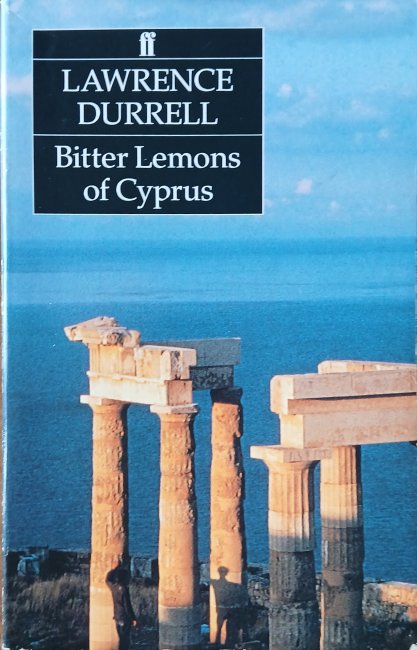
Following on from his brother Gerald’s book last week, this is one of Lawrence Durrell’s travelogues and covers the years he spent in Cyprus from 1952 to 1956 after he left the British Council in Belgrade and planned to restart his novel writing, hopefully inspired by returning to a Greek island. Although he was there with his very young second daughter Sappho, born 1951, and without his wife who had been hospitalised back in England with post-natal depression you wouldn’t really know it as he largely avoids his family problems in the book. Indeed apart from a brief mention of Gerald, whom he claims had died in Thermopylae fighting alongside the Greeks in order to calm down a somewhat drunk Greek in a bar there are very few family references.

Sappho makes her first (and unnamed) fleeting appearance on page 102 and then only to note that she could see Turkey from an upstairs window of the house Lawrence is having renovated. Lawrence’s mother even makes an appearance, mainly I suspect to look after Sappho whilst Lawrence is working away to support the renovations, and Gerald threatens to appear, which as Lawrence points out would be awkward due to his apparent death at Thermopylae. One odd thing did occur to me at this point, why could the brother who died fighting not be thought of as Leslie, anyone who has read Gerald’s accounts of growing up in Corfu knows that there is another brother but Lawrence seems determined to ignore his existence, much as Gerald left out Lawrence’s first wife Nancy whom he lived with throughout the time the family were in Corfu and not with the rest of the Durrell family as stated in the books, and with whom he had his first daughter, Penelope.

Back however to this book, chapters vary wildly from good humour and even hints of farce when considering the purchase of the house and the crazy driving from person to person to get the legal process complete before they are caught up with by the rest of the sellers family who don’t think she is getting enough money for the property; to extremely serious such as the chapter entitled ‘A Telling of Omens’ which deals with the issue of Enosis, or the proposed union of Crete with mainland Greece and thereby ending the British rule, which was still in place whilst Lawrence was there. You can tell when reading this chapter that Lawrence initially didn’t believe that this would such an issue and neither did the Cypriots he lived amongst. It is only from the older students he started teaching English to in order to raise money to complete the house that he starts to see the first flickering of the violent unrest that is less than a few months away. But from this point onwards the tone of the book changes, turning from gentle humour to deadly serious as the situation on Cyprus quite literally explodes.

Lawrence was also a poet and the book ends with his poem Bitter Lemons, as does this review, but the beauty of his text can be seen in this extract describing a beach at dawn.

In the fragile membranes of light that separate like yolks upon the cold meniscus of the sea when the first rays of the sun come through, the bay looked haunted by the desolate and meaningless centuries which had passed over it since the first foam-born miracle had occurred. With the same obsessive rhythms it beat and beat again on that soft eroded point with its charred looking sand: it had gone on from the beginning, never losing momentum, never hurrying, reaching out and subsiding with a sigh.

When Gerald and his wife arrive Lawrence is about to take on a new role as press adviser for the colonial government which would mean living in the capital rather than his out of the way village so he basically left the house in Gerald’s care during the week, only returning at weekends. This role also gives him an insight into the ramshackle government operation which is totally ill prepared for what is to come and it is this summary of the failings of the British administration that makes the book so important as a document of the times. The book changes tone roughly halfway through as Durrell leaves the realm of good natured village life and instead describes the slow disintegration of all that he had come to love about Cyprus and the introduction of thousands of British troops to try to put a lid on the bombings and shootings which would eventually lead to independence in 1960, long after Durrell had left the island.

Hotel Splendide – Ludwig Bemelmans

Ludwig Bemelmans is nowadays probably best known as an artist or as the writer and illustrator of the Madeline series of children’s books. In total he wrote over forty books along with several plays and film scripts but my favourites are the three autobiographical memoirs dealing in a humorous way with his time working at the Ritz hotel in New York and when he ran his own restaurant of which this is the second, the first being Life Class and the final collection being Hotel Bemelmans. This book takes us from his first job there as a bus boy (the lowest of the low in the hierarchy of waiting staff) working at the worst tables in the restaurant facing the stairs, therefore draughty, and between the doors to the pantry, whose hinges needed oiling but never were, and the linen closet so waiters were constantly going to and fro serving other customers. The waiter assigned to these tables, Mespoulets, was probably the worst waiter imaginable, quite often ignoring his customers and eventually delivering cold or incorrect meals, sometimes both, to their table. Monsieur Victor, the maitre d’hotel regarded these tables as ideal for all the customers he didn’t like for whatever reason, complainers, poor tippers, anything that he didn’t approve of and so Mespoulets was allowed to continue for years with his appalling treatment of clients.

Gradually our narrator moves up through the ranks until at the end of the book he has made it to Assistant Banquet Manager and effectively moves into the best suite of the hotel which is permanently engaged, although seldom used, by a European multi-millionaire. He does this on the basis that he needs somewhere quiet to sleep as the job often doesn’t finish until six in the morning, even though he starts on duty during the mid afternoon so doesn’t have time to go home and come back and still get some proper rest. That he also works his way through fine wines and cigars is seen as a perk of the job, both by himself and the other staff on the banqueting team. Indeed a lot of the staff seem to make full use of the hotels food and drink especially that left over from banquets on the basis that it would be simply thrown away otherwise. One of the staff, named Kalakobe, even took to bottling the dregs from all the glasses in the dining room and drink this foul concoction the next day whilst resting from his strenuous role of the cleaner of the heavy coppers used in the kitchen.

The book ends with another story about Mespoulets, this time about him finally leaving the hotel but I particularly want to show one of the drawings that adorn the start of each chapter and also include the opening of this section where you can appreciate the word craft of Bemelmans in his description of this fallen figure. The image is a little bent as the book I’m reading is from 1947 and the spine is rather fragile so I was careful not to press too hard on the pages.

Mespoulets is suspected of being the author of death threats posted to Monsieur Victor and the chapter revolves round how best to safely get rid of him after a psychiatrist states baldy that he definitely should not be sacked as that could cause Mespoulets to carry out his threats. Needless to say that after managing to get him on a ship home to France the letters continue to arrive so nobody is any the wiser who the real culprit is.

I loved reading these short stories of the quite often disreputable life of the staff in a major luxury hotel although I doubt very much that I would want to stay there as they all had a ring of truth about them regardless of how outlandish some of them sounded. I’m glad to say that Hotel Splendide along with Hotel Bemelmans are both still in print eighty five years after they first appeared so the talent of Ludwig Bemelmans to entertain is still enjoyed by modern readers.

This has been my 350th weekly blog on the books I share my home with and I look forward to reading and writing about many more.

Songs to an African Sunset – Sekai Nzenza-Shand

A fascinating journal of the time in the mid 1990’s when Nzemza-Shand returned to Zimbabwe with her Australian husband Adam Shand. She is a qualified nurse and gained a PhD in International relations whilst living in Melbourne which makes her almost effortless transition back to part time rural Zimbabwean village life all the more interesting. I say part time as Adam lived in the capital, Harare, working as a freelance journalist covering African affairs and obviously she spent time with him in the capital but she appears to have also spent a lot of time apart in the village where she was born and grew up. She only mentions Adam as being in the village during specific events and they clearly spend a lot of time living apart whilst she gets more involved in village life and it is those periods which are the most interesting in this book.

The tale starts with the impact of the AIDS epidemic in Africa and the loss of so many people including family friends and ultimately her brother Charles, indeed it was to attend funerals that first brought her back to Zimbabwe from a comfortable life in Australia. Her descriptions of the simple village life in a part of Africa largely denuded of its forests and wildlife even during her lifetime, of the coexistence of Christianity and ancestor worship, and the poverty of the villages especially compared to the greater affluence in the capital is powerful reading. Polygamy is also normal in rural Zimbabwe with men having many wives and lots of children with each of them which of course adds to the scarcity of food for such large families and the resultant hand to mouth existence for so many she describes.

AIDS rears its ugly head later in the book as well when she is travelling to Omay in the north west of the country to visit the Tonga people who had been displaced from their lands by the creation of Lake Kariba in a hydroelectric scheme. Whilst they had been promised support in transitioning to a new life as farmers as opposed to a semi-nomadic existence alongside the Zambezi River this had barely materialised so they relied on international support including the Australian aid corporation that paid her to go there to evaluate what they most needed. During an evening meal stop she started talking to some local prostitutes who assume that she is also there to work in that trade and they told her that the going rate was $30 for a night at a man’s house, $40 if they went to the woman’s place but they explain that if the man wants sex without a condom then she should insist on $60 because less than that “it’s not worth getting AIDS for”.

I was particularly interested in the rituals described such as the second funeral for her brother at which his wandering spirit is finally at peace and the description of the process surrounding the death of a local chief. There is also a chapter dealing with local law and another chief’s court with justice meted out far swifter than a formal court of law and in the presence of the local people so they could see that all was fair and just. There is so much that is done because it has always been done that way without involving the formal authorities and everything is accepted by the people as right and proper. Anyone who is interested in just how rural Africa continues to operate much as it always has done should read this book and by way of contrast there is a chapter dealing with Nzenza going to a baby shower in Harare, mainly because she had never been to one.

Nzenza left Zimbabwe for a career with an international development organisation based in the USA before returning to Zimbabwe in 2011 and later starting a weekly newspaper column for The Herald, a paper based in Harare, largely continuing her theme of rural life that she started with this book. That column ended in 2018 when she was elected as the Member of Parliament for Chikomba East although she no longer holds a parliamentary seat.

Publisher – Tom Maschler

For those not familiar with the name, Tom Maschler was the managing director and later chairman of the publishing firm Jonathan Cape for many decades. He died in 2020 aged 87 and this is the first and apparently only edition of his book published in 2005, interestingly by Picador which is a division of Pan Macmillan rather than Jonathan Cape which by 2005 was part of the Penguin Random House group. I can’t even find a paperback edition, suggesting the book rightly disappeared without trace. Having read it I doubt whether anyone from Cape, or indeed Penguin, would have been interested in this terrible example of vanity publishing so it’s hardly a revelation that it turned up under a different publishing house, the only surprise was that Picador actually picked it up. Oddly the photographer of the portrait on the front cover isn’t credited in the book.

I had hoped for some sort of insight into the world of publishing but all you get is an insight into an apparent egomaniac who considered that he knew best even when starting as a junior at the publishing house André Deutsch where he lasted a few months and by his own admission started selling ski tours whilst working for them, even running his operation from his office at André Deutsch. From there he moved to MacGibbon & Kee where he lasted somewhat longer but was reprimanded by the firms owner because even then he liked to give the impression that he ran the business and was not so lowly as to just be an employee. This two and a half years employment is dismissed in three pages of the book and is followed with the a year and a half at Penguin which is similarly summarily dealt with, this time with 4½ pages most of which is moaning that he is not treated as more senior than he actually was. This is all to get to his next job, this time at Jonathan Cape where he could let his ego fly.

There are some interesting short sections covering authors he dealt with but the overwhelming impression is that none of them could have succeeded without him, even the already famous ones before he published them. I really cannot recommend this book, even assuming you could find a copy to read and fortunately they are in short supply even on the secondary market which says a lot about how many were sold.. If ever a book was about me, me, me this is it, the only vaguely comparable experience would be Englebert Humperdink on the BBC radio programme Desert Island Discs where the the guest is supposed to choose eight records that would give them pleasure to listen to if stranded on a desert island and uniquely Humperdink chose eight records all sung by himself.

I’ll finish with an extract from his obituary in The Guardian newspaper which deals with the book and sums up my reaction to the overblown, self-aggrandising text I have just read, indeed I wish I had read this before wasting my time on this book. The obituary had just covered his first assignment for Cape, which was to help Mary Hemingway go through the trunk full of papers left by her husband Ernest after his suicide.

The episode provided Maschler with the opening line for Publisher (2005): “I was 27 when Hemingway killed himself, and I had just joined Cape.” It set the tone for a much-parodied memoir, in which his guiding mantra appeared to be “when in doubt claim credit”. Which he did, for books and authors with which he had little or nothing to do: Midnight’s Children, for example, even though Salman Rushdie had followed his editor, Liz Calder, from Gollancz. Calder was also responsible for acquiring the debuts of Julian Barnes (and his alter ego Dan Kavanagh), and Anita Brookner. In the London Review of Books, John Sutherland declared that Publisher was “dead on arrival”, but acknowledged Maschler’s effectiveness and the loyalty his authors had for him, as well as more widely held reservations.

As for the reference to ‘much parodied’ I refer you to a brilliant review of the book also in The Guardian from 21st March 2005. Read it here.

Full Circle – Luis Sepúlveda

Part biography part travelogue this is an interesting book in that it consists of notes that were taken at various times but which didn’t make it into a book, and Sepúlveda didn’t really know what to do with for a long time.

These notes, which I can’t think what to call, lay about on a shelf somewhere gathering dust. From time to time, looking for old photos or documents, I would come across them, and I confess that I read them with a mixture of tenderness and pride, because in these scribbled, or clumsily typed pages I had made an attempt to come to terms with two themes of capital importance, aptly defined by the Argentinian writer Julio Cortázar: understanding what it means to be human what it means to be an artist.

The book starts with memories of being a boy being taken round town by his grandfather, Sepúlveda was born in 1949 so this would be the mid to late 1950’s in Chile, being loaded up with soft drinks and ice-cream until he was desperate to empty his bladder and then taken to whatever church his grandfather had picked as that weeks target and made to urinate on the church door. This would of course be met with approbation by the priest of the church but his grandfather would defend his right to pee where he needed to and would get satisfaction from the insult to the church thus engendered. Eventually at the age of eleven he simply refused to do his grandfathers bidding and insisted on going to a proper toilet. Expecting to be punished for refusing to so his grandfathers bidding he is relieved, in more ways than one, to simply be taken to a bar and after finishing is given a book to read (one of the classics of social realism – Nikolay Ostrovsky’s How the Steel was Tempered) and made to promise to go on a journey inspired by the book and also to his grandfather’s birthplace of Martos in Spain.

After the comic start it was quite a shock to read the next chapter which deals with his time as a political prisoner in Chile as inspired by Ostrovsky he had joined the Young Communists so under the right wing dictatorship of General Pinochet he was regarded as a dangerous radical. The descriptions of the appalling conditions and the allusions to the electrical torture endured including the doctor who could tell how much electricity had been imposed when the victims were returned to the prison and could therefore judge what treatment each prisoner needed to recover are graphic yet needed to be told and I can see why Sepúlveda couldn’t think of what to do with his notes about these three years of his life.

After this the book becomes more of the travel book implied by it’s title with trips out of Chile and into various other South American countries with greater or lesser success in getting to his aimed for destination and the people he met on the way. Including a trip to Patagonia when he was finally allowed back into his home country after years of exile which was originally intended to have been with the British writer and explorer Bruce Chatwin, who had sadly died young and before Sepúlveda could go to Patagonia. This is one of the times the notes had actually been the basis of a book ‘Patagonia Express’ first published in 1995 in Spanish and then in 2004 in English translation. After reading this book I feel the need to get hold of this work and see what it ultimately became. There is a lot more travel writing beyond this trip in the book and I greatly enjoyed following Sepúlveda around the continent.

The penultimate chapter takes Sepúlveda to Spain and a fulfilment of a promise to his grandfather right at the start to visit Martos where he starts searching for anything his grandfather had told him about the place especially a drinking establishment called Hunter’s Bar. He goes to the pub in the central square to make enquiries but the landlord doesn’t recognise the name however older patrons point out that the bar he is in was known decades ago as Hunter’s Bar so he had inadvertently discovered where he was looking for within minutes of arrival. This then leads to him telling the tales as to why he was there only for the patrons to take him en masse to the local church to consult the priest for birth records. There they find not only his grandfather but also his grandfather’s brother who is still alive in the town. Taken to the man’s house he eventually overcomes his nervousness and we go full circle as he introduces himself to his great uncle, Don Angel.

It’s a good read, difficult at times with the description of his time in prison but uplifting so many times after this dark period and I’m glad I’ve read it. It is another of the short lived Lonely Planet Journeys series which as I’ve explained before I bought a lot of when it was clear the series was being discontinued and am only now sitting down to read.

Adolf Hitler My Part in his Downfall – Spike Milligan

Spike Milligan’s memoirs of his time in D Battery of the 56th Heavy Artillery during World War 2 are as he says in the preface accurate “All the salient facts are true, I have garnished some of them in my own manner, but the basic facts are, as I say, true”. I would say that most of the ‘garnishing’ is down to hindsight allowing more humour to come through than was probably the case at the time. Milligan kept a diary right trough his service years and kept in touch with many of the men he served with over the following years, not just at the annual D Battery dinner which he attended regularly, but also to cross-reference his own memories. He therefore used to get very annoyed with critics who, especially in the later volumes, accused him of making things up. The preface also says that it was planned to be a trilogy although ultimately he wrote seven volumes, of which I have the first four which cover his active service and were all written in the 1970’s. The remaining books “Where Have all the Bullets Gone?” (1985), “Goodbye Soldier” (1986) and “Peace Work” (1991) deal with his time being hospitalised after being wounded at Monte Cassino through to eventually being demobbed and the early days of his career in entertainment building on his skills honed as a trumpeter and guitar player in the battery, and later the NAAFI, bands.

This volume deals with the events from the outbreak of war in September 1939 through joining his regiment in June 1940 to his arrival in Algiers in January 1943. As you can tell from these dates he spent a large part of the war at various camps along the south east coast of England before finally being posted to North Africa to see active service where he worked as a signaller for the battery. As you would expect from a comedy writer of Milligan’s ability the stories of his military experiences are told with humour as are his various attempts at relationships with the opposite sex, some successful others less so, never rising above the dizzy heights of lance bombardier, and that only whilst in Europe, somewhat cramped his style with the ladies whom tended to prefer the officer class if available but he does document a few successes and their aftermath, the following section covers a couple of those successes and also gives a hint as to the style of the rest of the book.

“have been having it off in the back of a lorry, and I got carried away”. He doesn’t explain how Sergeant Hughes managed to get back from Hastings, presumably he didn’t care.

There are also a lot of descriptions of the banality of life in camp and the things that were done in order to relieve the boredom all of which are highly entertaining to read about. Milligan got jankers (disciplined for breach of regulations, usually being confined to barracks and assigned various menial jobs) on more than one occasion and describes his first punishment in the book. He was attempting to get coal up to his first floor barrack room by means of a bucket on a rope with the assistance of his good friend Harry Edgington, who loaded the bucket from the stores however this was on a day when fires were not permitted when there was a surprise inspection. Spike therefore stopped hauling on the rope but Harry misinterpreting this sudden pause yanked on the rope and pulled Spike backwards out of the window which was a bit of a giveaway.

A later section, on board the troop ship approaching Algeria gives a hint of the sort of humour that would make Spike Milligan famous whilst writing The Goon Show scripts for the BBC in the 1950’s with their lunatic extensions of logic.

It has been great fun reading this memoir again and I’m now inspired to read the other three that I have. I suspect the three final post active service volumes will be quite a bit darker as they will have to deal with his ongoing problems with mental health which saw him hospitalised several times.