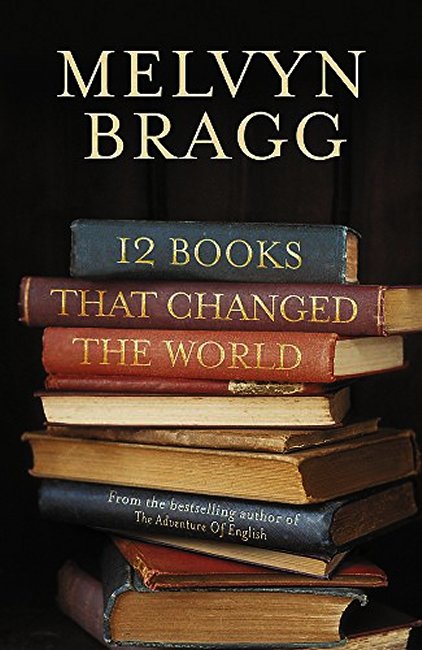
12 Books that Changed the World – Melvyn Bragg

This is the 400th post on my blog so I have chosen this book to mark the occasion. It was written to accompany the 2006 ITV television series of the same name that was presented by Bragg and consisted of twelve hour long episodes looking at each work in depth, I have the first edition of the book published by Hodder and Stoughton also in 2006 but I do feel that Bragg cheated a little as he admits in the introduction.

From the beginning I wanted to enjoy a range. Leisure and literature would, if I could make it work, figure alongside science and the constitution; changes in society as well as changes in technology would be addressed. This has meant taking a risk and, now and then, elasticating the strict meaning of the word ‘book’.

Bragg certainly stretched the definition as can be seen from the list of books and documents he chose:

  • Principia Mathematica by Isaac Newton – 1687
  • Married Love by Marie Stopes – 1918
  • Magna Carta – 1213
  • The Rule Book of Association Football by a group of former English Public School men – 1863
  • The Origin of Species by Charles Darwin – 1859
  • On the Abolition of the Slave Trade by William Wilberforce – 1789
  • A Vindication of the Rights of Women by Mary Wollstonecraft – 1792
  • Experimental Researches in Electricity by Michael Faraday – 1839, 1844 & 1855 (3 volumes)
  • Patent Specification for Arkwright’s Spinning Machine by Richard Arkwright – 1769
  • The King James Bible by William Tyndale and others – 1611
  • An Inquiry into the Nature and Causes of the Wealth of Nations by Adam Smith – 1776
  • First Folio by William Shakespeare – 1623

Of these Magna Carta is definitely not a book but I can see why he included it as eight hundred years later parts of this remarkable document are still in place in the legal systems of not just the UK but America and large parts of the British Commonwealth. The Rule Book of Association Football is also barely a book, more of a pamphlet, as there are just thirteen rules and these would comfortably fit on a sheet of A4 paper. There is presumably a quantity of text surrounding these few bare lines but that isn’t made clear in Bragg’s write up. I enjoyed this choice immensely though, even though I have little interest in football, mainly for the history of the game and how the rules came to be codified combining the various versions that existed at the different public schools where the game was mainly played. I would particularly like the re-introduction of rule three which states that the the teams should change ends after each goal rather than at half time, what do football fans think of this idea? The third ‘book’ that isn’t really a book is Arkwright’s patent as it is just three pages long and as Arkwright wasn’t the actual inventor just the man who got the patent passed and then made millions (in today’s money) from other peoples ingenuity I struggle with it’s inclusion here amongst writers who did genuinely change the world.

Beyond those niggles, apart from Arkwright and the Marie Stopes book, which I must admit I have never read and therefore hadn’t thought of as a ground breaking publication, these are works I could have largely come up with myself if asked to list 12 Books that Changed the World. although like Bragg I would probably have listed far more and then had to trim the list. I think Bragg makes a good case for ‘Married Love’ though, but far less for the intellectual property theft embodied in Arkwright, you can sort of admire him as one of the first major industrialists, although his working conditions were horrific by today’s standards, but definitely not for the patent which he used to gain a monopoly for years.

But let’s look at the books that stand out in this list initially examining how Bragg has presented each one. You get a well thought out essay stating not only his case for the books’ consideration but also the history as to how it came to be written, it’s reception at the time, and the impact of the work from then until now. This is followed by a two or three page timeline of major events up to the present day associated with the ideas within the book. As an example Principia Mathematica, in which Newton not only sets out major advances in mathematics but also in the first volume created calculus and what it could do and how to do it. The book is intended for the intellectual elite of the time and as implied by the title is written in Latin so that it could be read around Europe as anyone sufficiently educated to follow what Newton was writing about could read Latin, it wasn’t translated into English until 1729, two years after Newton died. We get a summary as to how Newton worked pretty well in isolation from others and the slow appreciation that Principia had when it was published, largely due to its subject matter rather than the way it was written which was excellent for such a massive leap in mathematical study. Bragg then looks at how the modern wolrd depends on Newtons three laws of motion and the powerful mathematical tools that he defined in Principia. Then the timeline includes such momentous events as the discovery of infrared and ultraviolet light although these are more related to Newtons work on optics published in 1704 rather than the Newtonian physics of Principia.

As I write this Melvyn Bragg is still very much writing and broadcasting at the age of eighty five and is a member of the Upper House of Parliament, The House of Lords, where he sits as a Labour peer. Until he retired from the show at the beginning of September 2025 his regular broadcasting slot was the excellent radio show and podcast In Our Time which he had presented since 1998, The show picks a wildly different subject each week and discusses it with a panel of experts, it is currently on its summer break and due to start again on 18th September 2025 with a new presenter, there are over a thousand episodes available online.
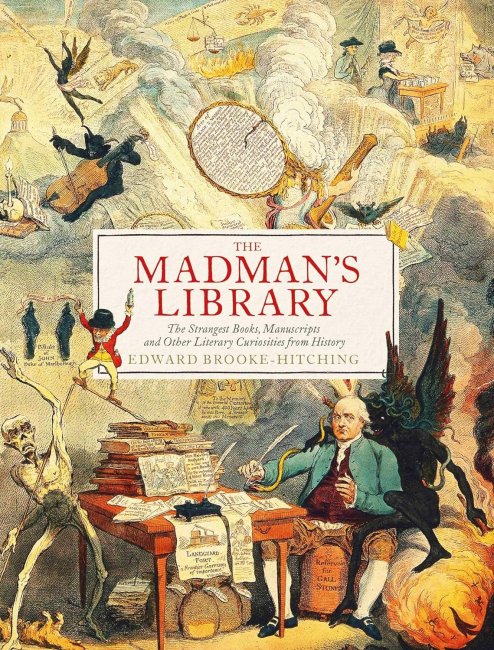
The Madman’s Library – Edward Brooke-Hitching

In July last year I wrote about the second book published by Edward Brooke-Hitching, ‘The Phantom Atlas‘, this more recent volume, first published in 2020 was a gift I received least Christmas, Brooke-Hitching is the son of an antiquarian book dealer and his love of books shines through in this guide to some of the oddest works ever produced from books like The Blood Quran which was written in beautiful calligraphy using around fifty pints of Iraqi dictator Sadsam Hussain’s blood as a major constituent of the ink in 1997 to ones that use arsenic as the dye for the covers so could literally kill the reader as the poison leaches from the boards. It is six years to the day since I started this blog and I think this book about books is an appropriate subject to mark this milestone of three hundred and fourteen articles and almost three hundred thousand words about books in my own library.

The book starts with a fascinating history of books and their precursors such as clay tablets or Sumerian foundation cones along with parchment scrolls including one that was used to wrap an Egyptian mummy. Then there are books that conceal other things such as one with a built in gun for self defence or astronomical equipment or objects that look like books but are actually boxes made from a specific wood with leaves and seeds from the tree inside them. I was reading about these and thinking it would be interesting to own one when the author pointed out the smell of decay that goes with them which somewhat put me off. There is also a long section on literary hoaxes such as biographies of people that didn’t exist or travel books of journeys that never happened several of which I am tempted to track down examples of.

There are further sections on books of the occult and religious oddities which include some of the strange animals depicted in medieval manuscripts and then examples of tiny and gigantic books. I have a love of tiny books, see my blog on the Lilliput Press so this section was particularly interesting and whilst I do have huge books such as the Folio Society’s Temple of Flora I don’t have anything like the atlas made for Charles II which is 1.76 metres tall and 2.3 metres wide when opened and is truly spectacular. There is a special mention in this section for the classic Audubon work ‘The Birds of America’ which exists in several editions but which is most prized for the version where all the birds are depicted life size which as this includes pelicans and flamingos gives some idea as to its immensity.

All in all this is a really interesting compendium of literary oddities, some of which I knew about but a lot that I didn’t and like the other books by Brooke-Hitching is again richly illustrated and it’s well worth a space on the shelf of anyone who loves books.

Confessions of a Bookseller & Remainders of the Day – Shaun Bythell

Shaun Bythell’s first book, ‘The Diary of a Bookseller‘, was one of the very first books I reviewed on this blog back in January 2018. Since then he has written three more books, two of which continue his diary of owning the largest secondhand book shop in Scotland, which is in Wigtown and it is these two books I have read this week. The diaries cover the following periods:

  • The Diary of a Bookseller – Published 2017 – covers Wednesday 5th February 2014 to Wednesday 4th February 2015.
  • Confessions of a Bookseller – Published 2019 – covers Thursday 1st January 2015 to Thursday 31st December 2015
  • Remainders of the Day – Published 2022 – covers Friday 5th February 2016 to Saturday 4th February 2017

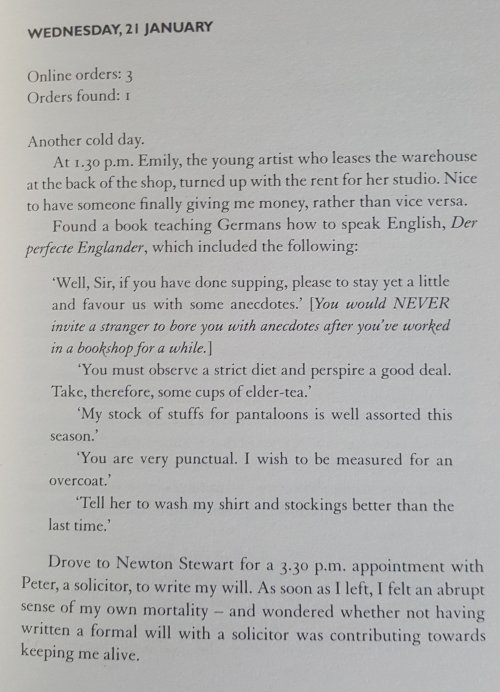
It was only as I typed the list above that I realised that there is a five week overlap between the first two books so had to get ‘The Diary of a Bookseller’ off the shelf to compare the entries. They are completely different even down to the number of orders, customers and shop takings.

Wednesday 21st January – Diary of a Bookseller

Wednesday 21st January – Confessions of a Bookseller

As the third book, like the first, starts on the 5th of February I’m left wondering if the 1st January to 4th February in Confessions and which are clearly labelled 2015 are actually entries for 2016 transposed to the start by an overzealous editor who assumed that a diary should be for a calendar year.

The books are quite long, 328 pages for Confessions and 377 for Remainders but reading them just flies by and I finished both books inside four days. As I mentioned in my review of his first book I also own and run an independent specialist shop so the interactions with customers he details are frighteningly familiar and all the funnier for that. He has also noticed that anyone who comes through the door and says out loud “Oh I’m in heaven, this is just the sort of shop I love”, or words to that effect never buy anything, but will inevitably spend a lot a lot of time wandering round the shop and moving stock from shelf to shelf whilst not doing so. This means that you then have to spend even more time putting things back where they should be so that actual customers have a chance of finding them. I’m going to lend the books to my staff as I’m sure they will appreciate them as well and I’m thankful I don’t have staff as mad as Shaun seems to.

A few months after writing my review of The Diary of a Bookseller in 2018 I met Shaun in Hay on Wye, the Welsh book town that Wigtown has modelled itself on, lots of book shops all in one small place may sound like overkill but it really works by making the town a specific destination for collectors and there are few things I love more than wandering round book shops. Shaun was being interviewed by Jasper Fforde as part of a book collectors Instagram event which the owner of my local secondhand bookshop and I had also given a talk at a couple of days earlier on the subject of collecting Penguin books. Shaun came over as a really nice person but then again I wasn’t trying to buy a book off him at the time, I still haven’t made it to Wigtown but I’m determined to get there, in fact I just checked and it’s 285 miles from where I live and would take just over five hours to get there, the Google maps picture of the shop is from this month and shows a copy of Remainders of the Day in the right hand window along with the inevitable large number of boxes of more stock just inside the door and by the other window.

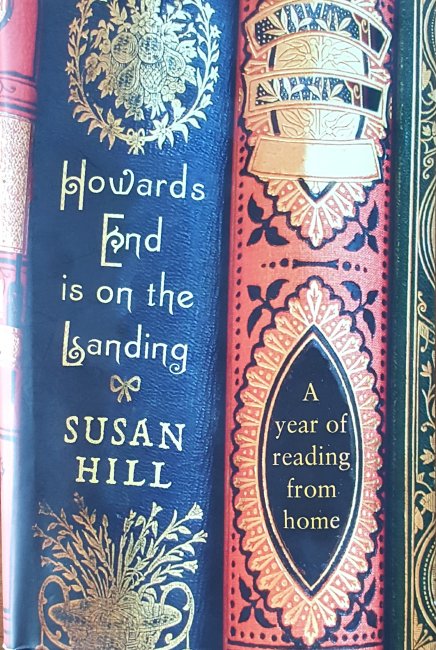
Howards End is on the Landing – Susan Hill

This is the 150th post on my blog so I thought I would purchase a book especially to mark the occasion and what better one could I choose than this. I became aware of this book whilst doing this blog as the concept is similar, Susan decided to spend a year reading the books she already had whilst I started this blog specifically to make me read my own extensive library. There is an irony in buying this book for this blog as she specifically does not buy any books during the year and only reads what she has but I have been going for almost three years now so I think can be excused. Susan Hill is a novelist and has published over sixty books although this is the only one of hers I own or have read and she is probably best known for her ghost story ‘A Woman in Black’ which has also become a TV series, long running play and film. But to introduce this book I can do no better than to quote the opening paragraphs.

IT BEGAN LIKE THIS. I went to the shelves on the landing to look for a book I knew was there. It was not. But plenty of others were and among them I noticed at least a dozen I realised I had never read.
I pursued the elusive book through several rooms and did not find it in any of them, but each time I did find at least a dozen, perhaps two dozen, perhaps two hundred, that I had never read.
And then I picked out a book I had read but had forgotten I owned. And another and another. After that came the books I had read, knew I owned and realised that I wanted to read again.
I found the book I was looking for in the end, but by then it had become far more than a book. It marked the start of a journey through my own library.

I know exactly how she felt.

Susan Hill’s library and mine are very different, and her organisation method would drive me up the wall with books placed wherever she feels they will be most comfortable with companions whose subject, style or author get on together, never place two books by authors who have publicly fallen out next to one another, after all the books might argue as well. Her library is also much more skewed towards the ‘literary novel’ and this was particularly interesting suggesting authors and books to look out for. She is a big fan of Thomas Hardy whom I have struggled with in the past, I own seven of his novels but have only completed one of them, maybe I’ll give her suggestion of ‘The Mayor of Casterbridge’ a go before finally giving up on him. Equally she doesn’t like science fiction or fantasy singling Terry Pratchett out for particular abhorration, maybe she only tried the really early stuff, if not we’ll just have to agree to disagree.

Another section that features large in my library but not in hers is travel writing, I agree with Patrick Leigh Fermor and Bruce Chatwin as giants of this field but there is so much more which she is missing out on. This ability to compare libraries is a particularly fun aspect of the book, who hasn’t, on entering a persons home, not perused the book shelves for a hint of the personality behind them or horror of horrors found no books at all. I love that she still has the pop-up books from when her children were young and we definitely share a love of PG Wodehouse and oddly Gerald Durrell whose books I devoured when I was about ten or eleven and still pick up when I need to have a break from more serious things. She specifically recommends his ‘My Family and Other Animals’ as ideal book for a teenage girl who has grown out of her children’s books, I would suggest it regardless of the sex of the child.

There are chapters on books that have been started but abandoned and books that have never been read and probably won’t be, these fall into two main categories; ones that will stay on the shelves such as Don Quixote although as much for the leather binding and the feeling that it is a classic that deserves space as anything else and books that will head off to the charity shop when next there is a clear out, quite often books suggested by Richard and Judy on their morning TV show. There is even a list of some found on the shelves so far unloved and a brief comment which finishes with

The Little Prince (Le Petit Prince) Antoine de Saint-Exupery

I don’t understand how I can have not read it

Romola. George Eliot

I do understand how I can not have read it

I have read The Little Prince and definitely recommend Susan, and indeed everyone else, to have a go. Right at the end of the book Susan lists forty books that, if she was forced to, she could make a library to live with. I admire her restraint, I don’t think I could come up with such a list, there would always be another book calling to me and another and another. However we probably only agree on twenty or so, as expected there are the heavyweight literary novels but so many that are a surprise, especially Finn Family Moomintroll by Tove Jansonn which sits rather awkwardly between Halfway to Heaven by Robin Bruce Lockhart and Clayhanger by Arnold Bennett. I rejoiced to see two novels by PG Wodehouse made the cut as did two by Anthony Trollope, the only authors to have more than one title listed and both are writers whose books fill my shelves where I can easily get to them. I don’t know if ‘Howards End is on the Landing’ would make my cut but it would be a close run thing, after all it’s almost a cheat as you can vicariously have a lot more books from their description in here and having each book brought to mind and memories of reading it partly makes up for not having it at all.

By the way I have checked my own library and sure enough Howards End is on the landing, it must be the natural home of E M Forster’s 1910 novel.

The Eyre Affair – Jasper Fforde

Jasper Fforde’s first novel also introduces his main protagonist, Thursday Next, an agent for LiteraTec Special Operations who has now appeared in seven books by Fforde. The books exists in an alternate history where, in the case of this book, the year is 1985 and the Crimean War is now into its 135th year, there are companies commercially genetically engineering extinct species so a popular pet is a dodo and Special Operations includes division 27 which looks after works of literature. In fact literature seems to dominate society with people changing their names to that of famous authors to such an extent that they are legally obliged to have a number tattooed on them to identify which John Milton you are talking to for example. There is also the Goliath Corporation a firm that has made billions in financing the Crimean War and seems to have various shadowy sidelines of it’s own which are strictly for the good of the corporation.

A running trope through this book is “Who wrote the plays attributed to Shakespeare?” sometimes there are short discussions regarding Bacon or Marlowe and in one tedious section which ruins the flow of the plot a whole series of pages are dedicated to this discussion for no good reason whatsoever.

20190423 The Eyre Affair 1

The book after all is theoretically about Jane Eyre, although in fact for almost half the story it is about Martin Chuzzlewit. The basic conceit of the book is that there is a master criminal who obtains a machine invented by Thursday’s uncle Mycroft which allows people to travel in and out of works of literature. Archeron Hades steals the original manuscript of Charles Dickens’ work, removes one of the minor characters and has him killed in the present day. This changes all copies of the book, even those already printed, and he threatens to do the same to Chuzzlewit himself unless a ransom is paid.

For various reasons the plot is foiled and the ransom not paid but Hades escapes to the fiercely independent Republic of Wales where he cannot be followed by English justice, only to try again by this time stealing the original manuscript of Jane Eyre and kidnapping Jane herself immediately before she rescues Mr Rochester from his flaming bed. All copies of the book are therefore much shorter and there is uproar. Thursday Next is sent to get Jane and the book back together.

As implied above there are numerous sub plots, in fact far too many sub plots, as the book is overly complicated by them. You get the feeling that Fford is trying to show off his literary erudition at the expense of just telling a good story and there is definitely a good story to be found in there if you work at it. I’m inclined to forgive him as this is his first published work and I will definitely read at least the next volume about Thursday Next entitled “Lost in a Good Book” which is set a few months after “The Eyre Affair”.

The book cover by the way is printed to look as though it is rather dog-eared, my copy is brand new.

Chapter 13

There is an ongoing joke in Fforde’s books regarding chapter thirteen or rather the lack of one. If there are numbered chapters then there is always one listed in the contents at the start but in fact chapter 14 always immediately follows chapter 12 and the page given for chapter 13 to start is either blank or part way through chapter 12. They do however have titles:

  • The Eyre Affair – The church at Capel-y-ffin
  • Lost in a Good Book – Mount Pleasant
  • The Well of Lost Plots – Reservoir near the church of St Stephen
  • Something Rotten – Milton
  • First Amongst Sequels – Cross Lewis’ number
  • One of Our Thursdays is Missing – 14th May 1931
  • The Woman Who Died a Lot – A Penguin
  • The Big Over Easy – First on the right
  • The Fourth Bear – 111110000

Note: assuming 111110000 is binary then the decimal equivalent is 496, it is anyone’s guess if this is significant or if there is any meaning to the choice of titles for the missing chapters; although the 14th May 1931 was a Thursday.

It’s been a year

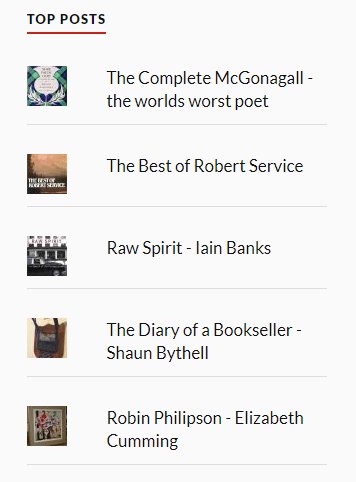
I have kept this weekly blog now for just over a year and I thought I would take the opportunity to look back at the entries and see if it can give me some ideas as to which books to talk about next. To my surprise the top five liked entries as I write this are all related to Scotland

20190122 it's been a year 1

William McGonagall wrote excruciatingly bad verse about Scotland and the people there and was a proud resident of Dundee, eventually Dundee has become proud of him as well. Iain Banks was another Scotsman through and through and the book I reviewed was his homage to the land of his birth. Shaun Bythell’s book was one of the first things I wrote about so his diary of keeping a Scottish bookshop going has had a whole year to accumulate its tally of likes whilst I only wrote about Elizabeth Cummings book about Scottish artist Sir Robin Philipson a couple of weeks ago and it has already made it to number five. You may have noticed I skipped Robert Service, he was also Scottish although found fame as a poet in Canada however I left him to last as he highlights another trend in popular posts here and that is poetry.

This is even more obvious when I look at the next five entries…

20190122 it's been a year 2

The Frogs is a classical Greek play in verse, Persian Poets is clearly about poetry and Under Milk Wood is a poetic masterpiece by Dylan Thomas, this makes half of the top ten liked entries are about poetry although there is nowhere near that percentage represented in the total number of essays I have produced so far.

The remaining two are interesting. The Royal Tour is a beautifully illustrated diary of a cruise around a lot of the then British Empire and Uncle Jim is a bit of a sleeper as it deals with the early output of fantasy author Sir Terry Pratchett but without mentioning him in the title so you had to read the article to find out.

There are other statistics available that don’t display on the front page so aren’t visible to readers of the blog and from those I can see that Deep in the Forest – Estonian Folk Tales is looked at more often than any other entry and it is viewed from all over the world, as opposed to my other Estonian review of the Apothacary Melchior books which also gets quite a few readers but 90% of these are in Estonia or Finland. Only one entry has not been read by anybody according to the statistics available and that is The Tempest by William Shakespeare. Sorry Will although I have all your plays several times I don’t think you are going to be featured here again.

So what does all this tell me? Well poetry is definitely popular here and that’s good as I also like poetry and have quite a few more poets to write about, one of which will probably be in the next four weeks. Bearing in mind the Scottish bias as well I suppose I had better get the volume of Robert Burns I have from 1946 out and reread that soon.

The Frogs by Aristophanes was a surprise hit, to me at least, so we will see how next weeks entry, which is also classical Greek, goes down. I have a lot of ‘the Classics’ and am also planning a review of a book dealing with the subject of what makes a classic in the next month or so. Art and Design has also been popular and again this is something I have a lot about in my library so expect more of those subjects in the coming year.

But is there anything you would like me to write about? Not specific books, as according to the rules I set myself I have to own the title to write about it so you would have to be really lucky to hit one of the 6,500 titles on my shelves, but general subjects. I haven’t done much on Travel and Exploration but what has been done has been generally well received, should I do more? Any suggestions would be good either as a comment below or as a message through the site.

84 Charing Cross Road – Helene Hanff

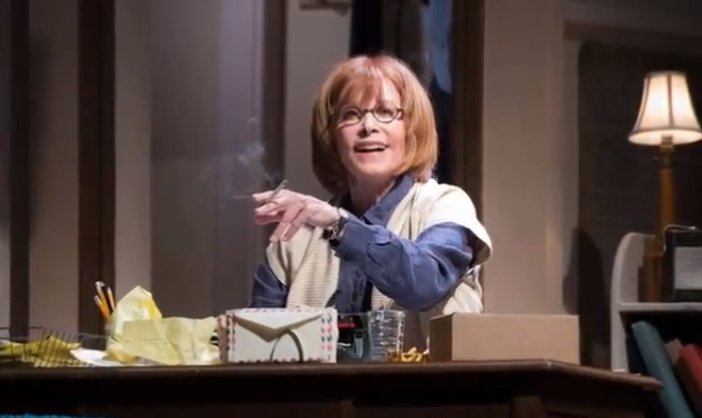
Last week I went to see the play based on Helene Hanff’s best known work 84 Charing Cross Road at the Grand Theatre in Wolverhampton. There is a touring production currently travelling the UK with Stephanie Powers playing Helene and Clive Francis as Frank Doel. I first read the book in the early 80’s and have happy memories of that and seeing the film with Anne Bancroft and  Anthony Hopkins made in 1987 so it was a joy to see the play and how well it was done. I think that from now on that when reading the book I will always hear the letters as read by Stephanie Powers she gave a wonderful performance. Clive Francis was very good as Frank, but it’s very difficult to beat Anthony Hopkins, so I now have a weird mix of play and film in my head. You can see a clip from the film on youtube here.

20180605 Charing Cross Road

However this is a review of the book, it was first published by Grossman in the US in 1970 then by Andre Deutsch in the UK in 1971, the copy I currently have was printed by Time Warner Books in 2006. It has to be at least the third copy of this book I have owned as previous copies have disappeared over the years, as I either gave them away to people who I thought would love the book or just never got back a loaned volume. Like most editions nowadays in this copy the original book is paired with Hanff’s follow up work The Duchess of Bloomsbury Street which describes her journey to London for the UK launch of the original book. The first book itself simply consists of the letters between Hanff, who is in New York and Marx & Co. antiquarian booksellers based at number 84 Charing Cross Road. Initially they are quite business like, Hanff has seen an advert in the Saturday Review of Literature so on 5th October 1949 she first makes contact with the firm and pens a short note with a list of books she wants to see if they can supply them. but by the time of the last letter from the firm to Helene it is almost 20 years later on 8th January 1969.

There is no exposition, it is just the letters so all you know about Frank, Helene and the others who write occasional missives is what they include in the correspondence; but from this you really get involved in this developing two decade long friendship. By the end you feel you know them and the final few letters mean as much to you as they must have meant to Helene when they prompted her to compile the book, as she writes in Q’s Legacy.

“I have to write it.”

Then I went cold inside, I could only write it if I still had Frank’s letters. I’d begun saving them 20 years later because a tax accountant wanted a record of what I spent on books… The thin blue airmail letters with a rubber band round them took up no space, lying nearly flat under manuscripts in a back corner of one of six small cabinet drawers under my bookshelves. But year after year when I cleaned out the cabinets, I’d come on them and wonder why I was saving them. Sitting there that evening, I vividly remembered that when I had reorganised the cabinets a few weeks earlier I’d stood by the waste basket hefting the letters, debating whether to keep them or throw them out. I couldn’t remember which I’d done. And I was afraid to find out.

Fortunately she hadn’t thrown them out although they were only found after an agonising search

I carried the letters to the table and opened them – and snapshots of young families spilled out of them. Some were from Nora Doel, some were from one of the girls who worked in the shop, all of them were 10 or 15 years in the past … I found snapshots of Frank standing proudly beside his new secondhand car. I was laughing by this time, I poured another cup of coffee and settled down to read the letters.

By the time I went to bed I was positively happy, I was going to relive the lovely episode Marks & Co. had been in my life by making a short story of the correspondence.

20180605 Charing Cross Road 3

The letters get less formal as the years go on, by February 1952 Frank is writing to ‘Dear Helene’ as opposed to ‘Dear Miss Hanff’ which is how he starts off and whilst initially Frank’s letters are solely about the books or in response to gifts of food Helene sends to ration struck England, Helene’s become quite chatty very early on and she jokingly tells him off several times (these are just extracts from letters not full examples)

November 2, 1951

Dear Speed ___

You dizzy me, rushing Leigh Hunt and the Vulgate over here whizbang like that. You probably don’t realise it, but it’s hardly more than two years since I ordered them. You keep going at this rate you’re gonna give yourself a heart attack.

20180605 Charing Cross Road 4

Clearly remembering this letter many years later Frank was able to eventually get in a small riposte.

3rd May 1957

Dear Helene,

Prepare yourself for a shock. ALL THREE of the books you requested in your last letter are on their way to you and should arrive in a week or so. Don’t ask how we managed it – It’s just a part of the Marks service.

20180605 Charing Cross Road 2

Other members of staff at Marks & Co. also write to Helene, along with Dora (Frank’s wife) who initially just thanks her for the food she has sent but then also enters into a longer correspondence. What I really liked about the play was that the script really was just reading the letters to one another, the stage was split into Helene’s New York apartment on the left with the bookshop taking up roughly two thirds of the stage to the right. Almost all the letters in the book were read verbatim, in the film the letters are still the main part of the text but it is expanded to make it more cinematic and as you can see from the clip I included a link to above we even see other locations than the bookshop and the apartment.

It’s very difficult to review this book without spoiling it for new readers but it is truly a delight to read and if you haven’t read it then please do so, then see the film and if possible catch it in the theatre. The images from the play are lifted from the Cambridge Arts Theatre website whose production this was.

The second book included in the paperback is The Duchess of Bloomsbury Street and this is more of a diary tracking Helene’s trip to the UK, all the people she meets and the various publicity events she goes to including a special opening up of the by now closed Marks & Co. shop on Charing Cross Road, so she did finally get to visit ‘her bookshop’ even if it was too late. The main signing event took place in Poole’s bookshop, next door in number 86. This diary runs from 17th June to 26th July 1971 and is considerably longer that the book it celebrates. Sadly the shop is now a McDonald’s burger place but there is a plaque outside commemorating the old bookshop and Hanff’s apartment on  305 E. 72nd Street has been named “Charing Cross House”.

For the really keen there is the third book in ‘the series’ which I quoted from above, Q’s legacy explains how, when it became clear she was not going to be able to afford any more than a year at college, she was in a library and she first came across Sir Arthur Quiller-Couch. She felt his books of essays and lectures taught her more than the first year had done and she was hooked. Q, as he was invariably known, introduced her to Walton, Newman, Milton and numerous others and she wanted to read more than just the extracts he quoted so was looking for a good bookshop when she saw that advert in the Saturday Review. If anyone is responsible for all that followed after that it is the now largely forgotten Q. Forgotten that is except by those of us who own a copy of his massive 1100 page work The Oxford Book of English Verse which for decades was the definitive collection, first published in 1900 and revised in 1939 to expand the selection up to 1918.