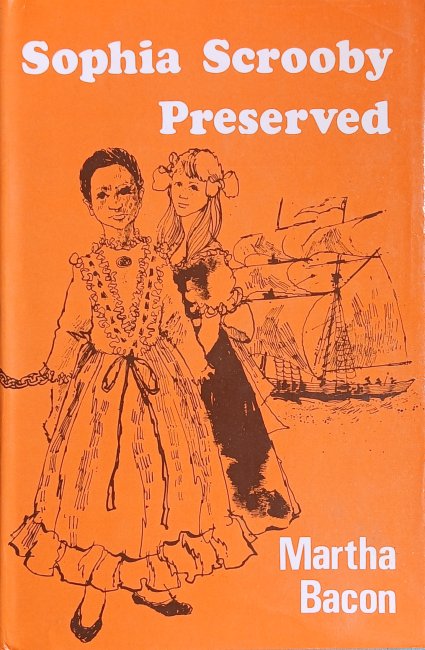
Sophia Scrooby Preserved – Martha Bacon

Another of the small number of books I still own from my membership of the Children’s Book Club in the early 1970’s, this one has a rather unusual subject for a book for children as Sophia Scrooby is a child slave in Connecticut around the time of the American War of Independence. Captured in Africa at the age of about six years old after her entire tribe were wiped out in a Zulu raid, she was transported to New England and sold for three pounds (around £500 today) to be trained as a lady’s maid and companion to Prudence, the young daughter of the Scrooby family. Pansy, as Sophia is normally called lives a somewhat unusual life as a slave being treated by the family more as the companion than a servant and is taught embroidery to work on a sampler and whilst working on the letters comprising the border she learns the alphabet and thence by looking through Squire Scrooby’s library secretly slowly teaches herself to read. This ability she reveals after she has been there a year, Squire Scrooby is blind and on his birthday she picks up a book and starts to read to him astonishing the entire family, especially Prudence who hasn’t managed to learn to read yet, Pansy is then tutored along with Prudence in the skills of a young lady, playing music, singing, painting etc. a far different life to that normal for a slave.

This pleasant existence is cut short however by the failing of the Squire’s fortune during the war and his house and goods are seized along with Pansy, who as a slave is simply another chattel to be sold to offset the debts. From this point of the book the narrative speeds up dramatically with Pansy sold to another slaver and pirate intending to take her to New Orleans but she escapes along with two other child slaves and the English captain of a ship captured during a pirate raid. He takes them all to England where Pansy uses her musical talents entertaining his aunt and her friends and then on the London stage. Frankly reading it now for the first time in probably fifty years it’s all rather far fetched but I remember fondly first reading the book (probably at the age of nine) which is why it stayed in my library when a lot of the other books from my Children’s Book Club collection are long gone. I’m glad I came across it again and reread it, it’s not as good as ‘Mortimer Also‘ or ‘The Ghost of Thomas Kempe‘ which are also survivors from that series on my shelves but it was a pleasant read with a satisfying, if rather predictable, ending after 225 pages.
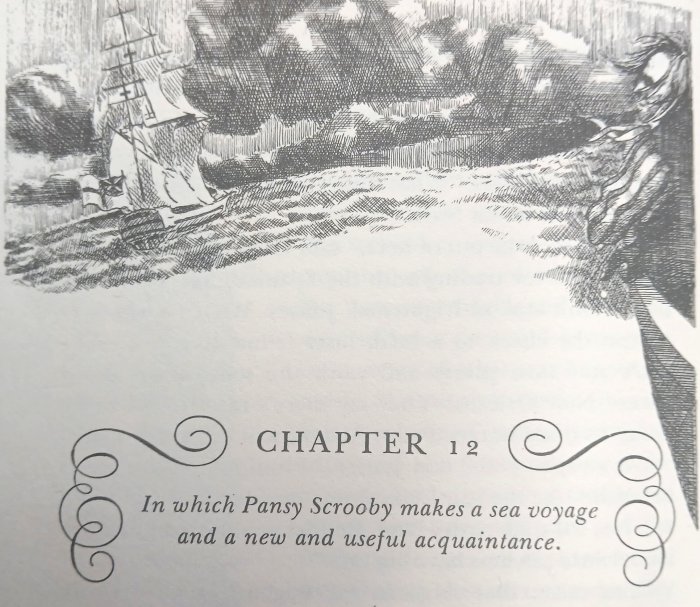
Martha Bacon Ballinger died of cancer in 1981 at the age of sixty four. At the time she was associate professor of English at Rhode Island College and had published several books including two volumes of poetry. Sophia Scrooby Preserved was originally published in 1968 and was her first book for children. After the initial hardback editions by Little, Brown and Company and Atlantic Monthly Press in America and Victor Gollancz in the UK, this Children’s Book Club version was probably published around 1971/2 (it isn’t dated) and finally there was a 1973 paperback by Puffin Books which doesn’t appear to have been reprinted. I can find no further examples and it has remained out of print for over fifty years. All the editions, regardless of publisher, were illustrated by David Omar White.

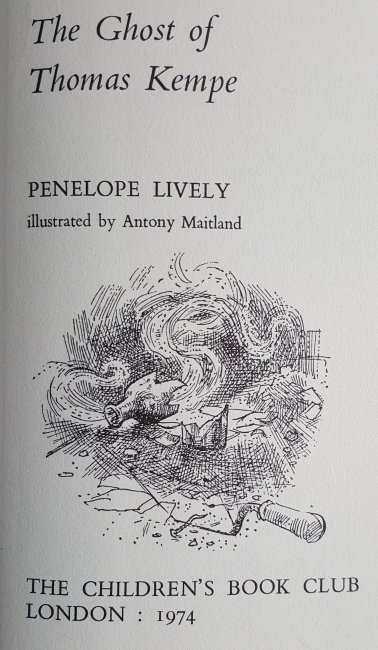
The Ghost of Thomas Kempe – Penelope Lively

Although Penelope Lively is nowadays best known for her books for adults, having been shortlisted for the prestigious Booker Prize three times and winning it in 1987, she started out as a children’s author and this was her fifth book. all of which had been aimed at children. The Ghost of Thomas Kempe was published in 1973 and won the Carnegie Medal, as best children’s book of the year which makes Lively the only author to win both of these major book prizes. Just for good measure she also won the Whitbread Children’s Book award in 1976 amongst other book prizes over the years.

I was prompted to pick this book up however due to an instagram post I saw last week which featured the Puffin edition and brought back happy memories of reading it all those decades ago. I knew exactly where it was on the shelves so I had to get it out and those memories haven’t let me down, it is still a fun read. The story starts with workmen renovating East End Cottage in the growing small town of Ledsham before a new family are due to move in. As one of them removes a rotten piece of wood from under the windowsill in the attic room a small bottle falls out and smashes on the floor and unbeknown to them something, or someone is released. This is the featured illustration on the title page and gives an immediate indication of the delightful drawings by Antony Maitland used to illustrate the book.

The room is destined to be the bedroom for James and at first he is very happy to have such an interesting room, all odd angles, so much better than the normal shaped rooms occupied by his sister Helen and their parents. It’s not long however before things start to very badly wrong as Thomas Kempe makes his presence felt. Kempe was a sorcerer back in the last sixteenth and early seventeenth century and had lived at East End Cottage, now he is a poltergeist and a particularly annoying one, smashing items, slamming doors, along with throwing things at James when he won’t do what he wants, because the worst thing is the notes making it quite clear that he regards James as a particularly useless apprentice and is intent on making his life as difficult as possible. Unfortunately for James he appears to be the only person who knows what is really going on, his parents are very sensible and don’t believe in ghosts so suggesting that is the real cause of the problems is a non starter. James therefore becomes blamed for the disturbances and broken items and suspected of the vandalism in the town as Kempe writes abusive messages on doors, walls and fences all over the place making clear his dislike of modern times and the people living in ‘his’ village. What is James to do?

Fortunately for James he eventually meets Bert Ellison, builder and part time exorcist, and finally he has somebody who not only believes him but may be able to do something about the increasingly erratic ghost. The picture below shows Bert’s second attempt at exorcising Thomas Kempe, which unfortunately is no more successful than the first. But then again the reader knew this would fail for some reason as there is still far too much of the book to go. The story rattles along and all to soon I had finished with a satisfying conclusion. I doubt I have picked the book up, other than to transfer it from shelf to box and back to shelf over various house moves, in over forty years but it was still there when I wanted it and it’s been a very enjoyable read.

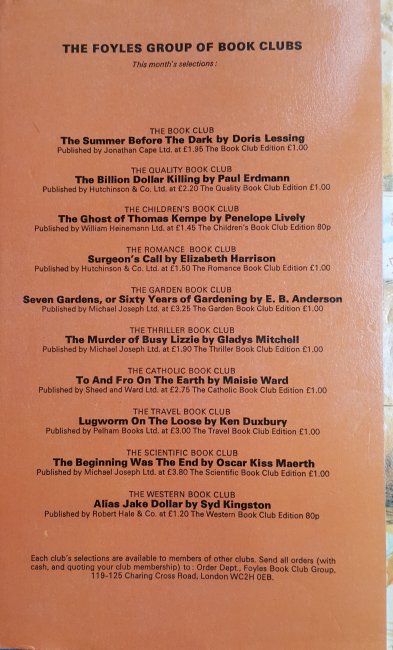
This is one of my few remaining books from the Foyles Children’s Book Club, that I was a member of from about the age of five or six up to at least twelve. I discussed the club in an earlier blog and I was either eleven or twelve when this book came out in the club edition in 1974, it doesn’t say which month so I don’t know for sure. These monthly books were really formative of my early reading and as can be seen below from the back cover of this edition they were a real bargain. You could also have books from any of the other clubs either as well, or I think instead, and it was around this time I broadened my reading by dabbling with the science and travel clubs as well before leaving the club as I discovered science fiction and would rather have the choice in my local book shop rather than a monthly book in the post. I am forever grateful to the Children’s Book Club though and I hope there is something similar still going on somewhere.

Mortimer Also – Jo Rice

20200107 Mortimer Also 1

I was lucky, I was introduced to books at an early age and was a confident, and voracious, reader by the time I was five and around that time my parents subscribed to the Children’s Book Club which supplied a hardback book every month from a selection they provided in a catalogue sent with the previous month’s book. The book club was run by the famous London bookshop Foyles, at least going by the address printed in the books I still have of 121 Charing Cross Road, there is no mention of the owner of the club in any of the books I still have from them. As well as books reprinted for the club there were also books from other publishers included in the selection and all editions were offered at a significant discount to the listed price. I know I was a member for at least five years judging by the dates of the books I retain and memory of the significant shelf space they took up and this weeks blog subject is one of the earliest from when I turned six years old.

20200107 Mortimer Also 3

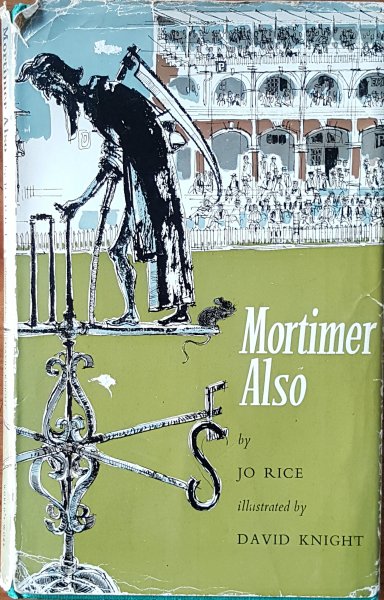
It was great fun to read Mortimer Also again, probably for the first time in over forty years. Over those intervening decades the only time it has come off the shelf was to be packed in a box and then unpacked again after each house move. It was one of those not reprinted by the book club so this is the 1968 first edition printed by Worlds Work and sadly it would appear to have been the only edition as a search of abebooks and biblio only revealed this version. It seems odd it never got reprinted, the story is well written and beautifully illustrated by David Knight and I’m sure would have found a wider readership if it had been picked up for a paperback reprint, at 21 shillings for the hardback (roughly £18 in today’s money) it was quite expensive if not bought through the book club.

20200107 Mortimer Also 2

The story concerns Henry Lester, a leading cricket umpire about to start on his final season before retiring with the highlight being the Lord’s Test Match, The Ashes, England v Australia. Certainly in the 1960’s when the book was written this would have been the standout game of cricket that year however Henry has a problem, his eyesight is failing him and he occasionally has double vision so he is planning on quitting before his career grand finale. He also has another concern which he makes some notes of before going to bed one night and to his surprise finds replies added to his piece of paper the next morning

1. A mouse has taken up residence in the skirting board of my parlour
THAT'S RITE!
2. Clean, tidy, quiet, no trouble at all
THANKS I'M SURE
3. Listens to wireless, only on Saturday evenings
SEE B.B.C. 6:30pm
4. During Summer
WHO PLAYS CRICKET IN WINTER?
5. Sits in entrance to hole - backwards!
YOUR FAULT?
6. Makes strange scratching noises and occasionally twitches tail
SEE 5.
7. The sports page of my evening paper disappears every Saturday night
YOU GET IT BACK ON SUNDAY
8. I am worried
AWRIGHT I'LL GO.

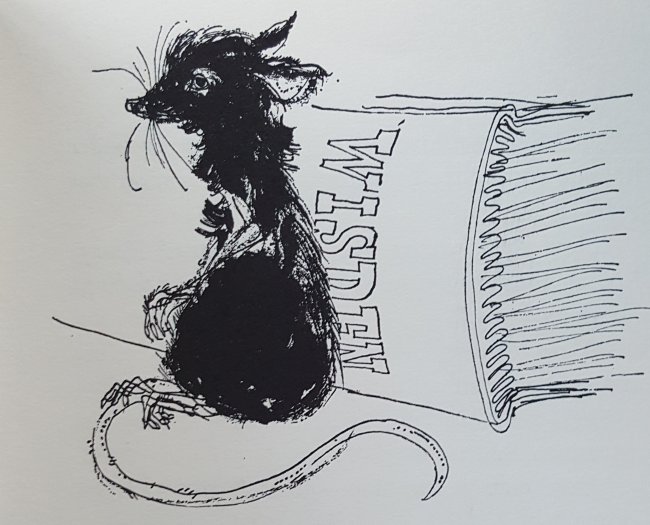
And so Henry gets to meet Mortimer Also, a family name “Grandfather Mortimer; father – Mortimer Too; yours truly – Mortimer Also” a cricket mad mouse who notes the scores down on old bus tickets, hence scratching noises and sitting in his hole backwards to prevent them being blown about, and is also perceptive enough to spot Henry’s secret eyesight problem. He talks Henry out of resigning and between them come up with a plan where Mortimer Also will hide in his hat, observing the game through tiny holes and signalling to Henry what decisions he should make. The story is full of gentle humour with Mortimer reacting to the Australians initially in a highly partisan way especially after the fast bowler sees him on the ground and tries to hit him with a bat. Gradually though he settles down and the plan succeeds in getting Henry through the five days of the game with only a few incidents. In the final few pages where Mortimer Also steps up to defend the ruse to the Lords Committee after Henry confesses all after Mortimer was knocked out by a stray ball are beautifully written and that is probably why over fifty years after I first had this book it is still on my shelves unlike most of my original childhood library.

20200107 Mortimer Also 4

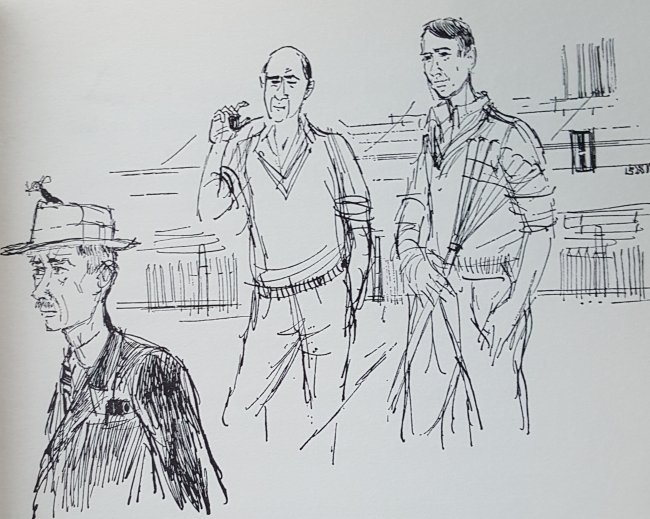
The book includes a few very thinly disguised actual cricketers including a large framed Australian fast bowler called Kelly who was probably based on Graham McKenzie and the captains of England and Australia from the early 1960’s, Ted Dexter and Richie Benaud respectively. Dexter is simply referred to as Ted Baxter but there is a quite an accurate summary of Benaud as Henry describes him to Mortimer before the start of the game.

Archie Renaud, Captain; all-rounder; slow spin bowler; lively bat; goes in 6 or 7.

This dates the year that this is based on to probably 1961 as by the 1964 series Benaud was no longer captain. Ah the serendipity of cricket, whilst looking that up I found that the Australian touring team in 1961 included a slow left-arm bowler called I Quick. Although he never played in the Test Matches I love that fact almost as much as I loved reading Mortimer Also, now will somebody please reprint it so that more people can discover this little gem of a book.

20200107 Mortimer Also 5