Caught Short of the Boundary – Henry Blofeld

For those of you who don’t know of Henry Blofeld, or Blowers as he became known on the radio, but feel the name Blofeld feels familiar then you are probably thinking of the James Bond villain Ernst Stavro Blofeld whom Ian Fleming named after his fellow Etonian Thomas Blofeld, Henry’s father. Now I have always thought of Henry as a genial old buffer from his days broadcasting on the BBC and thoroughly enjoyed the other, and considerably more substantial, volume I have by him ‘It’s Just Not Cricket!’ so to say I was disappointed by this book would be an understatement. I picked it up in a charity shop expecting more of the same good humoured anecdotes interspersed with journalism and travel writing and yes there are snippets of what I anticipated but for such a short book it is massively padded out. The body of the book itself lasts just 100 pages and of that there are 15 full page cartoons taking it down to 85. Chapters are always stared on a new page so there is a lot of blank space at the end of the previous one which total roughly 6 complete pages meaning there is really only 79 pages of text to the actual book and seven of those are taken up with a chapter simply reprinting pretty poor quality jokes. You would hope therefore that the remaining 72 pages would be worth reading, sadly that is rarely the case.

What comes over is a somewhat boorish character especially when he’s had a few glasses of wine, which appears to be most of the time, who was arrested for assault of his then girlfriend whilst visiting New York and describes visiting brothels whilst following cricket tours. The picture on the front cover shows him looking matey with England cricketer Ian Botham but the story inside concerns Botham’s indignation to a piece written by Blofeld which was highly critical of his abilities. Later on we discover that he also upset Dennis Lillee, the great Australian player, again through his highly critical writing, only to find himself booked as a speaker at one of Lillee’s testimonial dinners, he attempts to make this funny but fails miserably. I simply cannot recommend this book to anyone, indeed by the time you read this it will already be back in the charity shop and I hope that whoever picks it up next has a better time with it but at least the charity will make a little money each time it gets bought.

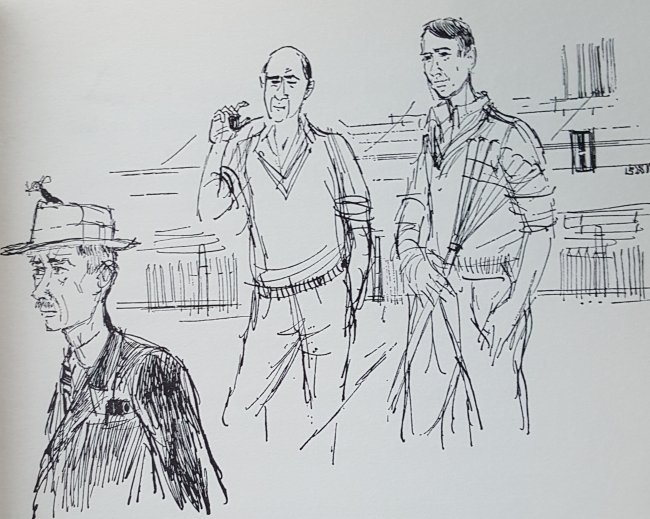
The cartoons are by Charles Griffin, then working as the political cartoonist for the newspaper The Sunday People, and frankly they are often the best part of the book.

Tuffer’s Alternative Guide to The Ashes – Phil Tuffnell

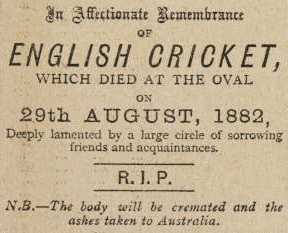
The 2023 Ashes Series is starting on Friday 16th June, for those of you who don’t follow cricket this is one of the oldest bilateral sports tournaments in the world, starting in 1877 and pits Australia versus England at cricket in a series of five day matches. It’s worth noting that it didn’t gain the name of ‘The Ashes’ until the ninth test match between the two sides, which took place in England in 1882 and which England somehow managed to lose from what should have been a winning position. This led to a mock obituary appearing in The Sporting Times on 2nd September 1882.

The urn containing ‘the ashes’ was presented to the captain of the touring England team in Australia that Christmas and is now kept at Lord’s Cricket Ground in London as it is extremely fragile, only rarely being removed from its glass display case for ceremonial occasions, and has only actually travelled to Australia twice in the intervening years. It isn’t the official trophy for the tournament but symbolises the rivalry between the two countries but replicas and images of this tiny, 6 inch (15cm), vase are to be seen whenever the two teams play each other and its silhouette can be seen on the front cover of this book between the words ‘The’ and ‘Ashes’.

This year there are five games to be played in June and July at various venues across England, five games is the most common number of matches but it does sometimes alter. Phil Tufnell played in five of these series and both his first and last test matches for England were against Australia. It should be noted that at the time the England team were pretty weak and the Australians very good so he never got near to being on the winning side in an Ashes series. Tufnell retired from playing serious cricket in 2003 and gained a job as a summariser on The BBC Test Match Special which he still does and he continued to play cricket for celebrity teams for many years after his official retirement.

I didn’t know what to expect from this book, but thought it would probably be descriptions of his experiences and whilst those do appear, the book is a whole lot more than that. In fact it is a highly entertaining look over the entire existence of the tournament from the first matches and includes the origin story of the Ashes urn but also lots of stories of players and games over the entire, almost 150 years, that England and Australia have faced each other on the cricket grounds in both countries. These range from when in 1903, back before aeroplanes existed and it would take three weeks by boat each way to get to the tour, the England team on their way out managed to lose a game of deck cricket against a team of female passengers. In 2001 The Australians hosted a charity function in Manchester and the first auction item was a chance to train with the team, bidding was slow as the room hadn’t really got going when they started this so a couple of Australian players decided to bounce the bids on a bit, which was fine until Steve Waugh ended up winning the auction and paying £500 to train with his own team-mates.

Scattered through the book are lists of ten players in various categories including, ten fast bowlers Tuffers was happy to have never faced, ten Ashes blockers and ten Ashes bashers amongst other selections. These are fun as it’s not just a list but reasons why. Chris Tavare is probably the best of the blockers that I have seen and he once spent ninety minutes at the crease without scoring anything at all and had on a different occasion taken two hours to score nine, not entertaining but incredibly frustrating for the Australian bowlers and winding them up led to mistakes.

My copy is the first edition hardback from 2013 published by Headline and I have to wonder why it has languished on my shelves for ten years its been a really fun read and here’s hoping for an equally fun summer of cricket.

Penguins Stopped Play – Harry Thompson

Harry Thompson was the original producer for the hit BBC TV show ‘Have I Got News For You’ and ran it for the first five series, he was also involved in several other TV programmes, there are a few short references to his TV career in the book, most notably when he managed to get people such as comic actor Hugh Dennis to turn out for his cricket team but this is not really an autobiography.It is instead a history of the cricket team he started and captained for over twenty five years. Now village cricket is not a high level sport and The Captain Scott XI, named after a person who famously came second, struggled to reach even this low bar. Initially this was deliberate on the part of several members of the team who simply wanted to lark about and had no intention of winning a game, gradually however this complete disregard for sporting etiquette meant that it became harder and harder for Thompson to find teams willing to play them. Gradually the team split into two camps and eventually into two separate teams one which continued to just lark about and the other, led by Thompson, determined to win a few games for a change.

The book starts however with a rapidly abandoned game on an Antarctic ice shelf which ironically doesn’t feature the Captain Scott XI at all but is instead an impromptu match thought up by passengers on an Antarctic cruise (including Thompson) who discover that due to excess ice they were going to be unable to get to Shackleton’s and Scott’s huts after all. Using oars from the ship as bats and a real cricket ball packed by a New Zealand passenger just in case it would be useful they start a game but presumably the echoes in the water underneath the ice shelf attracted the penguins which soon swarmed over the ‘pitch’ making play impossible leading to the oddest reason for stopping a game and the title of this book.

Before the original Captain Scott XI fell apart someone came up with the bright idea to go as a team to India to play a few matches in the hope that this would bring the increasingly fractious players together.

It sounded like a great idea; and also like a terrible mistake. It turned out to be both

The ‘tour’ started in Hong Kong as one of the ex members of the Captain Scott XI had been posted there by the bank he worked for and promised to arrange a couple of games, they would then fly back via India for a few more games before heading home a more united team. Almost none of this went to plan. As stated at the beginning English village cricket is just about as low level as you can get and still play, this standard doesn’t seem to be understood by any other country so they kept coming up against far better teams and losing spectacularly even without the sabotage several of the players indulged in. They did however play some games and get back without actually killing each other and this ‘success’ inspired Thompson to try again, this time heading for South Africa, the home country of a couple of the regular players for the team. Not only was the Captain Scott XI destined to be beaten again by much better teams who simply didn’t believe that another cricket team could be this bad but the travelling arrangements were almost impossible to make. This was the tour that finally split the team completely and ‘the layabouts’ as Thompson refers to them went off and formed a separate team.

Freed from the players that were ‘holding them back’ and flushed with the success of almost winning a couple of games Thompson came up with a clearly crazy plan, the Captain Scott XI would tour the world, and it is this trip that makes up the second half of the book. The cricket definitely gets better and they had managed another quick tour before then, just a week with only two matches in Malaysia because two of the team were half Malay which included them actually winning against the Malaysian national team, although a severely depleted version by playing on a week day when half the team would be working. Touring Barbados, Buenos Aires, Australia, Singapore and South Africa one after another on eleven round the world tickets when the British Airways system ‘gets confused’ if there is more than nine people in a group was an amazingly chaotic experience. Several times BA assured them that there were no flights from one destination to another leaving them flying thousands of miles in the wrong direction when they boarded next to a direct flight going exactly where they wanted to go, wasting time and adding to increasingly bad jet lag. Tickets kept getting refused, players arrested for having the wrong paperwork (normally whilst transiting America) and one thing they could almost always guarantee was torrential rain on arrival. It was to be the last international tour of the Captain Scott XI under Harry Thompson and the stories he tells are hilarious.

Sadly Thompson died from lung cancer aged just 45 despite never having smoked in his life, he had time to go over the final notes for this book in his last few days. This therefore becomes the third book I’ve read in as many months where the author didn’t live to see it come out after Barry Letts and Elisabeth Sladen. You don’t need to be a cricket fan, although I am, to enjoy this book, the often disastrous travel stories are what makes it a great read and you fume along with Harry at the magnificent incompetence of the British Airways flight booking service.

Mortimer Also – Jo Rice

20200107 Mortimer Also 1

I was lucky, I was introduced to books at an early age and was a confident, and voracious, reader by the time I was five and around that time my parents subscribed to the Children’s Book Club which supplied a hardback book every month from a selection they provided in a catalogue sent with the previous month’s book. The book club was run by the famous London bookshop Foyles, at least going by the address printed in the books I still have of 121 Charing Cross Road, there is no mention of the owner of the club in any of the books I still have from them. As well as books reprinted for the club there were also books from other publishers included in the selection and all editions were offered at a significant discount to the listed price. I know I was a member for at least five years judging by the dates of the books I retain and memory of the significant shelf space they took up and this weeks blog subject is one of the earliest from when I turned six years old.
20200107 Mortimer Also 3

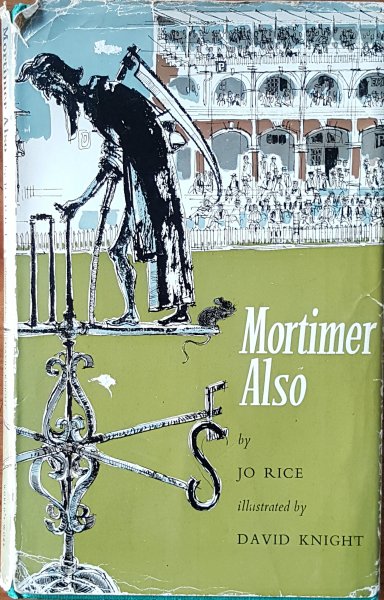
It was great fun to read Mortimer Also again, probably for the first time in over forty years. Over those intervening decades the only time it has come off the shelf was to be packed in a box and then unpacked again after each house move. It was one of those not reprinted by the book club so this is the 1968 first edition printed by Worlds Work and sadly it would appear to have been the only edition as a search of abebooks and biblio only revealed this version. It seems odd it never got reprinted, the story is well written and beautifully illustrated by David Knight and I’m sure would have found a wider readership if it had been picked up for a paperback reprint, at 21 shillings for the hardback (roughly £18 in today’s money) it was quite expensive if not bought through the book club.

20200107 Mortimer Also 2

The story concerns Henry Lester, a leading cricket umpire about to start on his final season before retiring with the highlight being the Lord’s Test Match, The Ashes, England v Australia. Certainly in the 1960’s when the book was written this would have been the standout game of cricket that year however Henry has a problem, his eyesight is failing him and he occasionally has double vision so he is planning on quitting before his career grand finale. He also has another concern which he makes some notes of before going to bed one night and to his surprise finds replies added to his piece of paper the next morning

1. A mouse has taken up residence in the skirting board of my parlour
THAT'S RITE!
2. Clean, tidy, quiet, no trouble at all
THANKS I'M SURE
3. Listens to wireless, only on Saturday evenings
SEE B.B.C. 6:30pm
4. During Summer
WHO PLAYS CRICKET IN WINTER?
5. Sits in entrance to hole - backwards!
YOUR FAULT?
6. Makes strange scratching noises and occasionally twitches tail
SEE 5.
7. The sports page of my evening paper disappears every Saturday night
YOU GET IT BACK ON SUNDAY
8. I am worried
AWRIGHT I'LL GO.

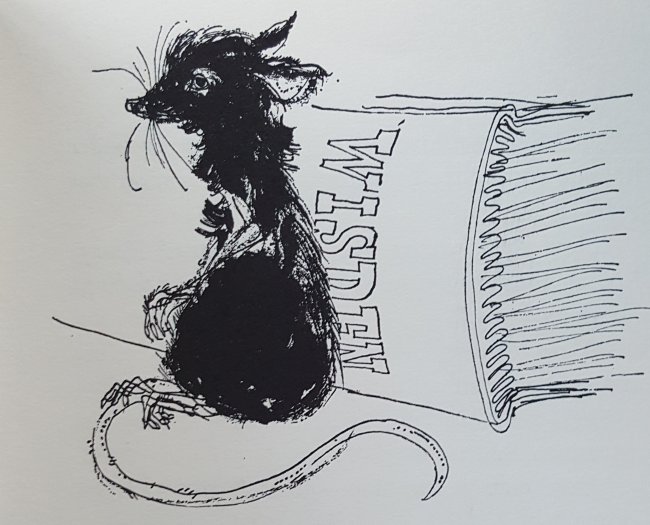
And so Henry gets to meet Mortimer Also, a family name “Grandfather Mortimer; father – Mortimer Too; yours truly – Mortimer Also” a cricket mad mouse who notes the scores down on old bus tickets, hence scratching noises and sitting in his hole backwards to prevent them being blown about, and is also perceptive enough to spot Henry’s secret eyesight problem. He talks Henry out of resigning and between them come up with a plan where Mortimer Also will hide in his hat, observing the game through tiny holes and signalling to Henry what decisions he should make. The story is full of gentle humour with Mortimer reacting to the Australians initially in a highly partisan way especially after the fast bowler sees him on the ground and tries to hit him with a bat. Gradually though he settles down and the plan succeeds in getting Henry through the five days of the game with only a few incidents. In the final few pages where Mortimer Also steps up to defend the ruse to the Lords Committee after Henry confesses all after Mortimer was knocked out by a stray ball are beautifully written and that is probably why over fifty years after I first had this book it is still on my shelves unlike most of my original childhood library.
20200107 Mortimer Also 4

The book includes a few very thinly disguised actual cricketers including a large framed Australian fast bowler called Kelly who was probably based on Graham McKenzie and the captains of England and Australia from the early 1960’s, Ted Dexter and Richie Benaud respectively. Dexter is simply referred to as Ted Baxter but there is a quite an accurate summary of Benaud as Henry describes him to Mortimer before the start of the game.

Archie Renaud, Captain; all-rounder; slow spin bowler; lively bat; goes in 6 or 7.

This dates the year that this is based on to probably 1961 as by the 1964 series Benaud was no longer captain. Ah the serendipity of cricket, whilst looking that up I found that the Australian touring team in 1961 included a slow left-arm bowler called I Quick. Although he never played in the Test Matches I love that fact almost as much as I loved reading Mortimer Also, now will somebody please reprint it so that more people can discover this little gem of a book.


20200107 Mortimer Also 5

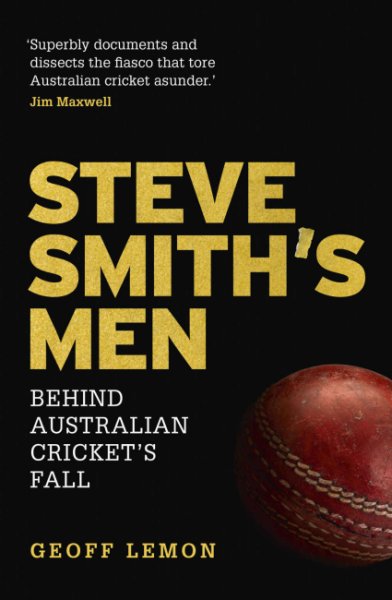
Steve Smith’s men – Geoff Lemon

20190625 Steve Smith's Men

The moment you pick this book up you notice the texture of the printed title, it looks and feels like the sandpaper that caused all the trouble and the crash and burn of Australian cricket in South Africa that March day in 2018. Geoff Lemon has covered the team for many years and this is his analysis not just of what happened in Cape Town but also just how did the Australian national team come to be in this mess in the first place. However as Lemon points out at the start of chapter three

This book is not a detective story. It won’t give you every detail of what happened in the Cape Town dressing rooms…

… Only once careers finish will talk begin. Someone can write the comprehensive history then.

What Lemon does do is look deeply at the team and make as good attempt as can be done now as to what happened and why.

For those people who don’t know the background to this, Cameron Bancroft was seen rubbing the ball with sandpaper to roughen it and make it swing more during the Test Match against South Africa. More details can be found on the BBC website here which details the bans given to Bancroft and also the captain Steve Smith and his vice-captain David Warner after this incident.

However this isn’t just about cricket it is also a look at the psyche of a team that formed an effectively closed group and how harmful attitudes were just amplified as there was nobody from the outside to point out how the worst things became normal and then continued on a downward spiral egged on by certain members. As such it can be read as a useful resume of just how groups can deteriorate if left to their own devices. As Lemon points out the team became self selecting, performance on the field became secondary to being mates and being seen to fit the culture that had been created. At times it reads like a real life Lord of the Flies, and just as self-destructive, no matter how good you were you wouldn’t get in the national team unless you were one of the gang and that gang was so tight knit that they rejected all suggestions that things might be wrong.

Things had been going wrong for years and Lemon looks back over that time not just at the team but also at the governing body, Cricket Australia, to try to track why Australia had become the most disliked team in world cricket. Chapter 21 “Australia’s Cricket Culture” starts with five pages of quotes all riffing on the theme that they “never cross the line” meaning that they play hard but not beyond limits, the problem was that the Australian team wanted to set the limits and wanted them further in the distance for them than their opponents. Although stressing that this was a much older problem Lemon decides to focus of the England tour of Australia over 2017/8 to emphasise the build up to the South African debacle. This was a pretty bad tempered few months with Australia emerging the clear victors so they should have gone to South Africa on a high especially given their record in that country, but things started to go wrong soon after they arrived at the first test match. The sledging on both sides was distinctly unpleasant, Warner had taken considerable offence to references to his wife and this had led to a fight almost breaking out after they left the field which unfortunately was caught on camera. That it was Warner, who is probably the nastiest sledger in world cricket, who took offence is ironic in the extreme but that set the tone for what was to come. The Australians claimed that the attempt to alter the ball in the third test was the first time it had been done but nobody believed them so the one caught along with the captain and vice captain had to go, not because of the cheating, but because they were caught out telling bare-faced lies that just kept the story going. If they had just held a press conference at the end of the day and admitted to what had been done then there would have been fines from the match referee but probably not much more.

The book is not only incisive but funny and difficult to put down, the one problem with it getting a wider readership may well be the frequent use of expletives, the ‘f’ and ‘c’ words appear a lot. Now that isn’t necessarily a bad thing, Lemon is trying to show where things had got to and on-field abuse hurled at the opposition, known as sledging, is often quoted verbatim and this may put off some readers. I think he was justified in the use of language because of the story he is trying to tell and it is a thoroughly good read.