The Haunted Man – Charles Dickens

The Haunted Man and The Ghost’s Bargain to give the book its full title is the fifth and final Christmas book by Charles Dickens. I have a copy as part of my collected volume of Christmas Books published by Gerald Duckworth Ltd in 2005 as part of their failed series of facsimile reproductions of the famed 1937 Nonesuch Press collected Dickens. I say failed as there was originally supposed to be twenty four volumes published at a rate of six a year from 2005 but six years later only twelve books had appeared (six in 2005, three more in 2008, and a final three in 2011) before the project was abandoned. The private Nonesuch Press Dickens was one of the finest editions of his collected works ever produced and was limited to just 877 sets, the odd number being due to the inclusion with each set of an original engraved steel plate from the first edition printed by Chapman and Hall Ltd. They had 877 plates in storage, all of which were purchased by Nonesuch and included in a box made to look like one of the books. As I don’t have the several thousand pounds needed to buy one of these sets nowadays, the Duckworth reprint looked like a good option until they stopped printing them. Happily they did include all five of the Christmas stories, combined in one large book as one of the first six volumes printed.

I must admit that apart from ‘A Christmas Carol’, which I read regularly and reviewed on Christmas Day five years ago, the other four Christmas tales by Dickens are ones I have rarely, if ever, dipped into. I’m pretty sure that I have never read ‘The Haunted Man’ before but I really enjoyed it now that I have finally done so. The story concerns a chemist, and lecturer in the subject, Mr Redlaw whose home and teaching establishment occupies part of an old educational building in a somewhat poor and rundown, but otherwise unidentified, part of London.

His dwelling was so solitary and vault-like,—an old, retired part of an ancient endowment for students, once a brave edifice, planted in an open place, but now the obsolete whim of forgotten architects; smoke-age-and-weather-darkened, squeezed on every side by the overgrowing of the great city, and choked, like an old well, with stones and bricks; its small quadrangles, lying down in very pits formed by the streets and buildings, which, in course of time, had been constructed above its heavy chimney stacks; its old trees, insulted by the neighbouring smoke, which deigned to droop so low when it was very feeble and the weather very moody;

From Chapter one: The Gift Bestowed

One of the joys of reading Dickens is his power of description, in a few words he has created a vision of the building occupied by Redlaw and his servants and I can see it clearly in my minds eye. The servants consist of a man and wife along with the mans aged father who continually, and comically, keeps repeating that he is eighty-seven whilst hanging the holly for Christmas Eve. But what of Redlaw, why are we concerned with him? Well he is the haunted man of the title and unusually, in an interesting twist of the traditional ghost story, he is haunted not by the dead but by himself, or at least a simulacrum of himself. Mr Redlaw is a troubled man, deeply wounded by the death of his sister and apparently unable to recover from that loss and it is to apparently offer succour that the phantom has appeared. It suggests that forgetfulness would be the best solution but it is not simple forgetfulness of his sister that is part of the gift it is so much more and the power to continually pass on this ‘gift’ even unwillingly. After great indecision Redlaw consents.

The second chapter appears at first to have abandoned Mr Redlaw as we move to the nearby Jerusalem Buildings, an even more rundown part of the neighbourhood, and the home of the Tetterby’s, A small man running a decrepit shop that has tried, and failed, to make money with all sorts of endeavours. Indeed the only thing that the Tetterby’s have succeeded in is the production of children, of which there are a great many and very little money to go round to support them leading to possibly my favourite and most typically Dickensian passage in the book, the description of their meal for Christmas Eve.

There might have been more pork on the knucklebone,—which knucklebone the carver at the cook’s shop had assuredly not forgotten in carving for previous customers—but there was no stint of seasoning, and that is an accessory dreamily suggesting pork, and pleasantly cheating the sense of taste. The pease pudding, too, the gravy and mustard, like the Eastern rose in respect of the nightingale, if they were not absolutely pork, had lived near it; so, upon the whole, there was the flavour of a middle-sized pig.

From Chapter two: The Gift Diffused

Into this poor but happy home comes Mr Redlaw in search of a student of his whom he has been told is unwell and lodging with the Tetterby’s but brought with him is his curse of forgetfulness of familial ties which leads to fractiousness of the children and more concerning wonders between themselves as to why Mr and Mrs Tetterby ever married each other. He spreads his contamination of discontent between the student and his carer before fleeing into the night so as not to cause more disagreements amongst those whom until his arrival were not just content but happy with their lot.

I’m going to say no more regarding the story except to recommend that you read it as it is wonderfully written, as I would expect from Dickens, and the denouement in chapter three is as unexpected as it is heart warming. If you can’t find a physical copy of the book it is available here on Project Gutenberg.

Merry Christmas
The Tale of Peter Rabbit – Beatrix Potter

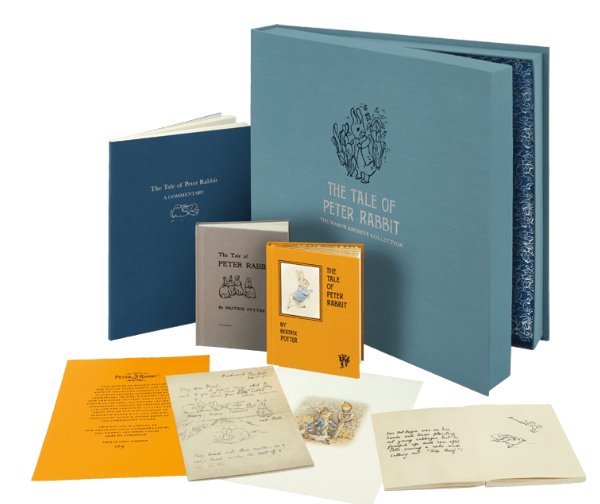
October 2022 marks the 120th anniversary of the first commercial publication of The Tale of Peter Rabbit and this magnificent collection of facsimiles of items from the Frederick Warne Archives was produced by The Folio Society to mark the occasion. The set is limited to 1000 examples and mine is number 5. There is so much to look at and compare from the very first appearance of Peter in a picture letter eight years before Beatrix Potter privately printed Peter’s first book to replicas of some of the tiny Christmas letters she created, There is also a wonderfully informative booklet which tells the story of the creation of The Tale of Peter Rabbit and has a introduction by Emma Thompson who wrote her own Peter Rabbit stories starting with the 110th anniversary set published by Frederick Warne, see here.

Just how much is included can be seen in the following list:

  • Facsimile of picture letter, 1893, printed on Arena Wove paper – 8 pages. 8˝ × 4¾˝
  • Facsimile of privately printed edition, 1901 bound in Wibalin paper, printed on Sirio Calce Stucco paper – 88 pages. 5¾˝ × 4¼˝
  • Facsimile of maquette, 1902, printed on Arena Wove paper and presented in an archive folder made from Sirio Color paper blocked in silver foil – 88 pages. 5˝ × 3¾˝
  • Facsimile of deluxe edition, 1902, bound in cloth with an inset label, printed on Sirio Calce Stucco paper with gold page tops and printed endpapers – 104 pages. 5½˝ × 4˝
  • Five Christmas letters printed on Arena Wove paper, each 3˝ × 1½˝
  • Giclée print on Modigliani Insize Neve paper with blind embossed frame line – 9˝ × 6½˝
  • Commentary set in Caslon, printed on Abbey Pure paper and bound in Sirio Color paper blocked in silver foil – 80 pages. 9½˝ × 6½˝
  • Limitation certificate printed letterpress on Fedrigoni Tintoretto Ceylon paper

Lets look at some of the items in more detail

Above are the 1901 (grey) and 1902 deluxe (yellow) edition facsimiles, posed on top of the history booklet. These are beautiful replicas from the black and white privately printed edition to the first commercial version in full colour.

1901 Privately printed edition
1902 Deluxe version of the first commercial edition

The number of changes between the two volumes makes reading them side by side is a fascinating experience, even the text of the first page of the commercial edition is split over two pages in the original and consequently has two pictures only the second of which survived into the later book. There are also new pictures in the 1902 edition which aren’t in the 1901, but the most noticeable difference when you first pick them up is that only the frontispiece in the early edition is coloured whilst all commercial versions are full colour throughout. I hadn’t seen the original black and white sketches before and they are a lot more crude than the final watercolours that Beatrix produced but they do have a certain charm about them which makes me glad I spent the £325 that The Folio Society charges for the set. Engaging as these books are, and the text is a lot longer in the 1902 version, although the words and picture shown above from the 1901 edition don’t appear at all in the later version it is the maquette that comes between them that is truly interesting.

1902 Maquette

Here we can see in Beatrix’s own handwriting how she wanted the Frederick Warne edition to appear and apart from a couple of pages reproduced in other books I had never seen this unique edition before. To have the complete book in this form (missing a cover as she didn’t produce one for this version) What I found particularly interesting about this page is that you can see crossing out of words where she intended to change the original text but the words used here are exactly the same as in the 1901 edition but different to what Warne actually printed for this page which runs as follows:

Then he tried to find his way straight across the garden, but he became more and more puzzled. Presently he came to a pond where Mr McGregor filled his water-cans. A white cat was staring at some gold-fish; she sat very, very still and now and then the tip of her tail twitched as if it were alive. Peter thought it best to go away without speaking to her; he had heard about cats from his cousin little Benjamin Bunny

As you can see the text ends the same way as Beatrix’s plan but the start is quite different. The other items included as facsimiles are the 1893 letter which again I had seen small pictures of in various books but never the whole thing and the tiny Christmas letters, there is also a lovely print of Peter eating the radishes in Mr McGregors garden.

This wonderful box set is a lovely edition to my Beatrix Potter collection and has already provided hours of enjoyment in looking at the differences as the story evolved. You can see the video produced by The Folio Society to mark the launch of this collection here.

The Royal Tour – Harry Price

20180925 Royal Tour 01

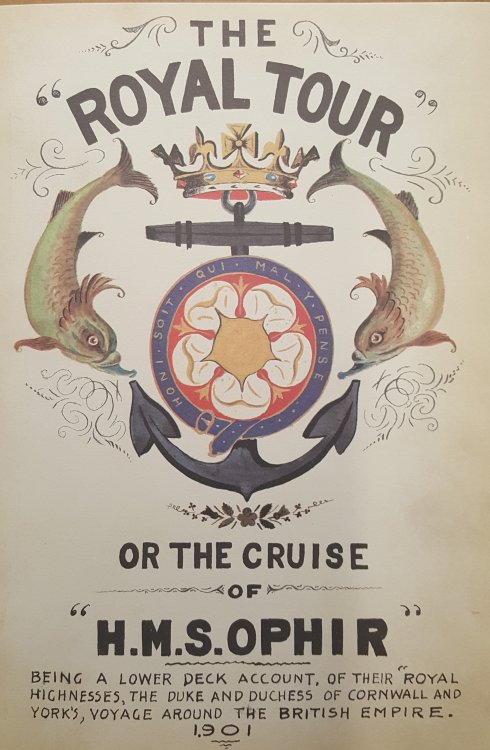
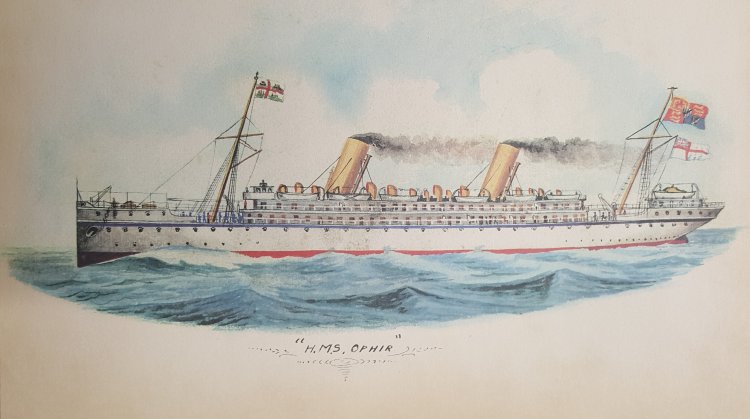
The facsimile of the diary kept by Petty Officer Harry Price on board the H.M.S. Ophir during the Royal Tour of 1901 was printed in 1980 by Webb & Bower of Exeter. Harry had died back in 1965 and it was his son Jack Price who showed it to the publisher and which led to the facsimile printing.  Sadly it’s no longer in print but it is readily available on the secondary market for just three or four pounds, which considering how attractive the book is has to be one of the great book buying bargains.

20180925 Royal Tour 02

Harry was a talented artist and had attended Birmingham School of Art before joining the Royal Navy where he rapidly progressed to Petty Officer before joining H.M.S. Ophir just in time for the nine month long world voyage of Prince George and Princess Mary. George held both titles of Duke of Cornwall and Duke of York hence the slightly odd description given and he would later become King George V on the death of his father in 1910.

20180925 Royal Tour 03

The tour was started just two months after the death of Queen Victoria and was probably seen as an opportunity to introduce the younger Royals to the Empire after the end of her sixty three year reign. The diary is in Harry’s handwriting just as he originally wrote it as the voyage was progressing and provides a fascinating view of the trip and the various onshore excursions he managed.

20180925 Royal Tour 04

According to the list at the front of the diary, the route was as follows: Portsmouth, Gibraltar, Malta, Port Said,Suez Canal, Aden, Colombo, Singapore, Albany, Melbourne, Sydney, Hawksbury River, Sydney, Auckland, Wellington, Lyttleton, Hobart, Adelaide, Albany, Freemantle, Mauritius, Durban, Simonstown, St Vincent, Quebec, Halifax, St. Johns and then back to Portsmouth.

20180925 Royal Tour 05

I am including pages in sequence as the trip progresses so we have already reached New Zealand where he comments on the weather on the right hand page above. The style is quite chatty and it is clear throughout the book that he is intending this to be a souvenir that he can show to other people rather than a private diary. To this end he records his personal experiences but as though telling the reader about them.

The sketch below was taken up the river, some fifteen miles above Christchurch where as you can see the scenery was most bewitching, but a hard frost setting in as the sun went down made matters a little bit disagreeable, to us, who only a short time ago, were under a scorching tropical sun.

The date at this point was the 27th June so midwinter in New Zealand.

20180925 Royal Tour 06

Returning to Australia Harry produced the very attractive full page picture of the various arms of the Australian states inspired by examples displayed along the banks of the Adelaide River, this time he didn’t get ashore but they did have ‘a visitors day’ where local townspeople could tour the ship and this proved so popular that they were almost overwhelmed by the numbers.

It is quite enough; when I say that quite a number of ladies fainted, and the bluejackets and marines had their handsfull

20180925 Royal Tour 07

I remember this book coming out and the original volume by Harry Price being shown on various TV programmes, the reproduction is extremely good but it can’t have been a particularly sound financial proposition for the publisher as it must have been expensive to print and it soon slipped from the list of titles they had available even though it clearly sold well judging by the number of copies available on abebooks. I bought my copy a few years later second-hand for £4, I know I wanted one at the time but I suspect it was beyond my teenage finances.

20180925 Royal Tour 08

The crossing from Australia to Mauritius was surprisingly good for the Southern Indian Ocean but they hit bad weather crossing from there to South Africa as can be seen in Harry’s picture of their escort ship the St. George. It seems odd that South Africa was on the itinerary at all as the Boer War was in full progress with guerilla activity led by Louis Botha and Jan Christiaan Smuts in both the Eastern and Western Transvaal’s and Cape Colony respectively against the British occupation although by now the fighting really was going against the Boer forces. H.M.S. Ophir was protected by several British warships whilst in South African waters and the Royal couple had a significantly stronger armed guard with them whilst ashore whereas before the soldiers with them were largely ceremonial.

20180925 Royal Tour 09

Harry Price even included an image of one of the POW ships moored off the coast, in total they spent less than two weeks in South Africa and three days of that was moving from Durban to Simonstown which was then (as now for the South African Navy) the main naval dockyard. They then set off for Canada via the Caribbean.

20180925 Royal Tour 10

The strength of the Royal Navy at the time that the book was written can be judged by the fact that even leaving the small Caribbean island of St. Vincent there were four other naval ships available to escort the Ophir as it left the territory two of which are described as over 12,000 tonnes and in excess of 500 feet in length. There then followed a journey of ten days solid cruising up the eastern seaboard of the United States to Canada during which the American President William McKinley was assassinated and it is specifically mentioned that all the Royal Naval ships waiting for them in Quebec were also flying the American stars and stripes at half mast in respect.

20180925 Royal Tour 11

For the visit to Canada the Duke and Duchess disembarked and travelled for over a month via railway all over Canada. The Ophir waited for their return in Halifax, Nova Scotia and during that period was fully repainted and all needed repairs done. Discipline was clearly somewhat more relaxed than when the royal couple were aboard and this provided a break for the crew apart from their duties refurbishing the ship in dry dock.

20180925 Royal Tour 12

The final page I have included features a set of stamps issued in Canada to mark the royal visit and describes preparations to leave Canada and sail back for home. The book is a fascinating and beautiful historical document with almost every page decorated by Harry’s watercolours and one I like to pull off the shelves quite often, not just to read but sometimes just to enjoy the pictures.

The Original Alice

Almost everyone knows the children’s tale Alice in Wonderland by Lewis Carroll either having read the book, or seen or heard, one of the many adaptations over the years.  Most readers will know that Alice was a real person, one of the daughters of Henry Liddell, dean of Christ Church college at Oxford and the stories were told to entertain her and her sisters.  They will also know that Lewis Carroll was really the reverend Charles Lutwidge Dodgson, a 24 year old mathematics lecturer at Christ Church when he first met the Liddell’s. But what is less well known is that when the stories were first written down they were intended to just be a one off book as a gift to Alice and the title was Alice’s Adventures Under Ground.

20170116 The Original Alice 4

The book was handwritten and illustrated by Dodgson and was given to Alice for Christmas in 1864 when she was 12 years old, although he originally came up with most of the story when she was 10 on a trip up the river for a picnic. Alice treasured the little book for decades but eventually in 1928 at the age of 75 and now a widow needing money she sold it at auction for £15,000 (approximately £860,000 today). The book was bought by Dr Rosenbach, who was an American book dealer, and he subsequently sold it in the US.   The private collector who owned it died in 1948 and the book was again put up for auction this time making $50,000 (roughly $508,000 or £363,000 nowadays) and Dr Rosenbach was the top bidder at this auction as well.

20170116 The Original Alice 5

This time however was to be the last time it will ever come to the market. Several American benefactors led by book collector Lessing Rosenwald obtained the book in order to give it to Britain in thanks for the gallantry of the British people during the Second World War.  In November 1948 the book was brought on the liner The Queen Elizabeth across the Atlantic and presented to the British Museum with the Archbishop of Canterbury representing the country by receiving it.  The book is now part of the national collection (catalogue ref MS 45700).

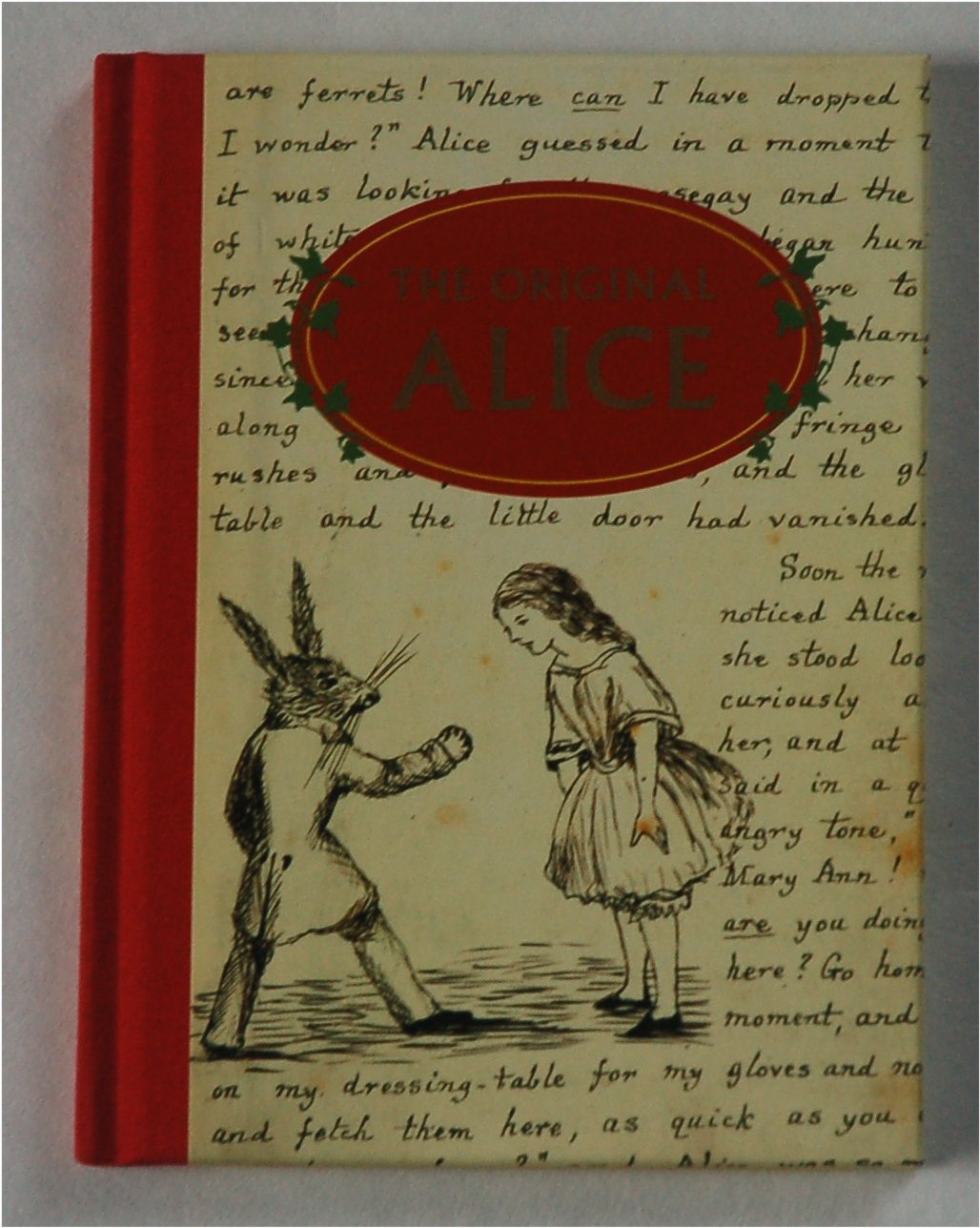
In 1997 The British Library published a book by Sally Brown entitled The Original Alice, which now sadly out of print but fairly easy to find on the second hand market.  This tells the story of how Alice came to be written and compares Alice’s Adventures Under Ground to Alice in Wonderland with examples as to how the books differ.

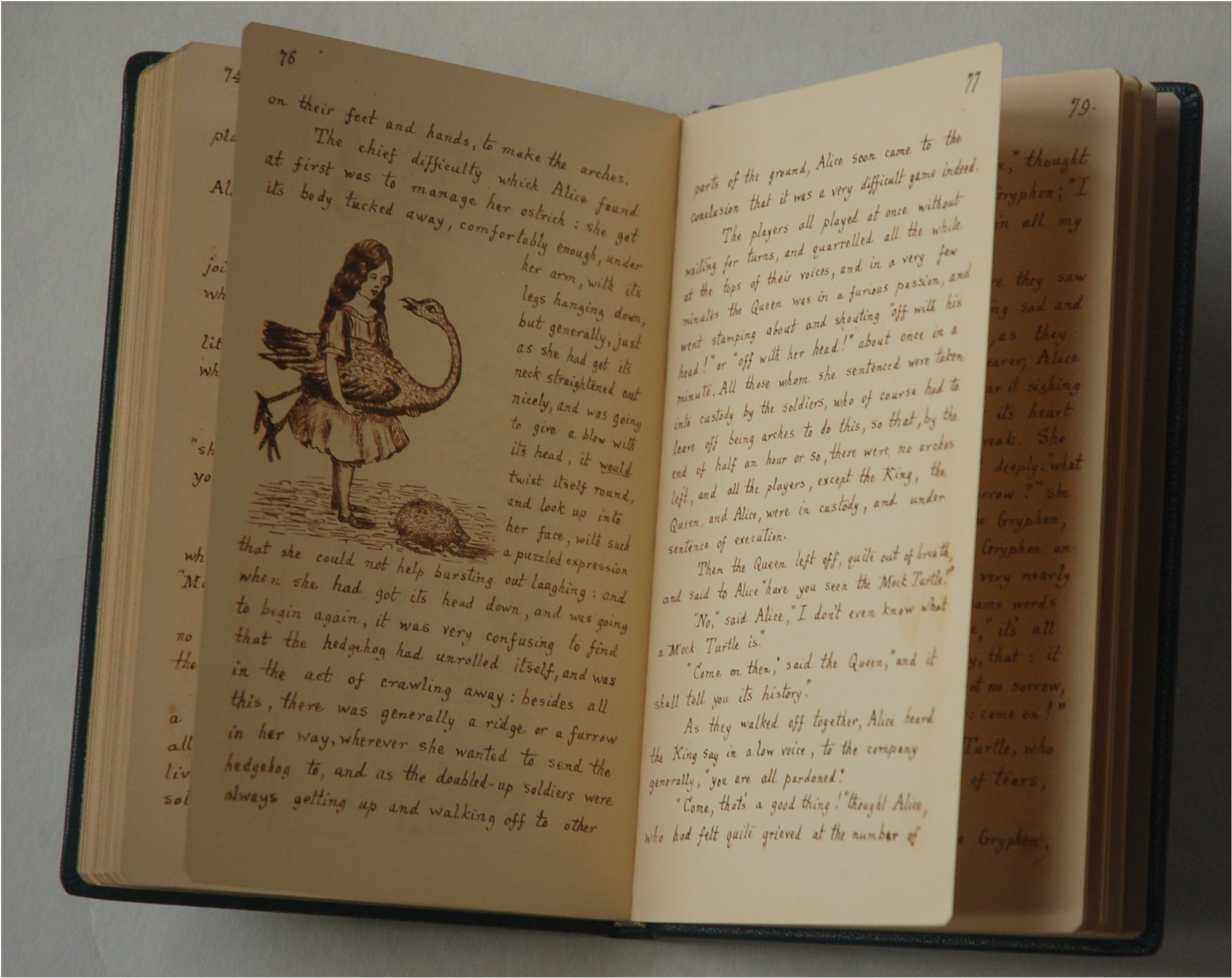
20170116 The Original Alice 1 The illustrations of the original book included here are from another out of print edition, a beautiful leather bound facsimile of the original produced in a limited edition run of just 3750 copies by the Folio Society in 2008, this is somewhat more tricky to track down but it is a beautiful thing to own and read.  It comes in a lovely box with a ribbon to lift the book out with.


Although he never intended publication Dodgson did pass the book to his friend, the children’s novelist George MacDonald, to cast his professional eye over, before giving it to Alice. MacDonald’s children so enjoyed the book that Dodgson was eventually persuaded to publish.  He significantly rewrote the tales, removing a lot of references that only really made sense to the Liddell family and adding Pig and Pepper along with The Mad Tea Party. These additions and revisions to the original text almost doubled the length and took the book up from 18000 to 35000 words.

Alice’s Adventures in Wonderland was finally published in November 1865 in an edition of 2000 copies but in a final twist these were withdrawn as the illustrator, John Tenniel, was unhappy with the quality of the reproductions of his pictures.  This makes the handful of copies that still exist one of the rarest of all children’s books.  The book was finally available to the public in 1866 and was an immediate success.  Alice’s Adventures Under Ground has been printed several times in the intervening 150 years but only the Folio Society have produced a true facsimile of the book with the leather binding and colour illustrations where appropriate, however it is worth searching out a copy of the text as first written as it gives a view of the story that Alice herself first heard and it is quite different to the text that we all know.