Monty Python and The Holy Grail (Book)

This book is a lot of fun, especially if you know the film well as it contains the forty five page first draft, which was used for pitching for funds to make the film, along with the much longer final draft. The original version actually bears little relation to what was actually filmed and even in the final versions there are a lot of sections crossed out with pen amendments alongside so it was clearly a work in progress even whist being filmed. Alongside these two scripts are sketches of possible titles and posters, lots of stills from the film, a statement of accounts as to how much the film cost to make, a total of £229,575 for those of you who are interested and a letter from the producer to Michael Palin.

I feel this tells anyone who hasn’t seen the film quite a lot about it and it is very funny for those of us who have seen the film numerous times and can quote large sections.

It’s the ephemera and the pen amendments that for me make the book so interesting you can see the Python team improving the work as things are going on and they spot opportunities to tighten the humour, such as the section below. This is part of the fight between the three headed knight and Sir Robin which in the original final draft takes 3½ pages of typescript but is replaced with 1½ pages of handwritten alterations which got rid of a lot of the bickering between the heads and speeded up the arrival of the punchline “He’s buggered off” which isn’t even on this page of the script.

On his way to this fight, which as alluded to above Sir Robin ran away from, his minstrels had been singing songs of his bravery but written in such a way as to terrify the knight, which can be seen below. I have included this double page spread to give some idea as to how the book is formatted. On the left, which would have been blank in the original script are all sorts of interesting items such as the Daily Continuity Report seen here, but it could be snapshots from the set, notes on possible improvements, sketches by Terry Gilliam etc. In short anything at all that the editors of the book and Derek Birdsell, the designer, thought would be fun to include. It makes a wonderful mish mash of ideas about how the film is, or should, be progressing and adds a huge amount to what could have been a simple reproduction of the script.

I just had to include one of my favourite sections from the first part of the film where Arthur and his knights have arrived at the French castle, not riding horses but banging coconut shells together in the classic sound effect method to simulate horses hooves. This then leads to a side discussion as to where they had got the shells which comically keeps interrupting the main flow of the text. It is particularly fun as the swallow has become so iconic when attached to this section of the script to see that they originally intended a whole selection of different birds including a gannet, plover or a merlin which would have been a funny preshadowing of later in the book when they do encounter a parody of Merlin in the form of Tim the Enchanter.

The film ends on the shore of a lake where the knights are preparing to embark on their last great adventure but by this time the budget had largely run out and the Python’s decided to simply end the film there with a modern day police raid which stops filming. A truly surreal end to the film in a truly Monty Python way.

The rear cover has lots of suggested advertising slogans all in the form of obviously fake quotes including the then Prime Minister, Margaret Thatcher, her predecessor Edward Heath, and Richard Nixon who had resigned the American presidency following the Watergate scandal just four days after Mark Forstater’s letter the Michael Palin reproduced above. As can be seen I have the first edition of the book published by Eyre Metheun in 1977. Later editions drop the cut out folder format of the cover for a more ‘normal’ binding.

Brother Bear – H Clark Wakabayashi

Brother Bear was the 44th animated feature film by Disney and this book tells the story of how the film was made rather than telling the story in the film. I must admit that I have never seen the film, which was released in 2003, but that was not really important as I was interested in the creative development involved in making an animated feature and a quick flick through suggested that buying this book would give me the insight I was looking for. In fact the book told me much more about the somewhat odd personal development methods at Disney and their willingness to throw staff in at the deep end to see how they get on.

The book is an unusual landscape format is the 2003 first edition and is part of the Welcome Book series from Disney Editions. These books are dedicated to the making of various animated films from Disney and after reading this one I’m tempted to see if I can find more titles. The landscape format allows for the format of the images to be shown better although it does make the book somewhat unwieldy and also produces extra stress on the binding which has already resulted in the pages dropping at the far end so that they rest on the shelf rather than being held straight as originally bound.

The book starts with the determination of one animator, Aaron Blaise, to work on this movie from when it had been just a suggestion of a project that might go ahead. At that time it was to be loosely based on Shakespeare’s play King Lear, so an old bear with three daughters and it would be anthropomorphic like the much earlier Robin Hood with the animals dressed up like humans. Blaise didn’t like this idea and kept pushing, whenever he got a chance, for a more realistic treatment and for him to be involved as one of the animators. Eventually he was called to a meeting with a senior executive and rather than being offered an animators job he was asked to direct the film despite having no experience of directing. At this point there was no script and no real idea as to what the film would look like it was up to Blaise to come up with potential plot summaries and designs and put them in front of the executives who could agree to fund the production. After floundering for several months he was eventually assigned a co director, Bob Walker, to help although Walker hadn’t directed before either. The more you read the more you wonder how Disney ever come to make any movies at all. Eventually they gained a producer, Chuck Williams, who did know what he was doing and progress started to be made although they still didn’t have a script.

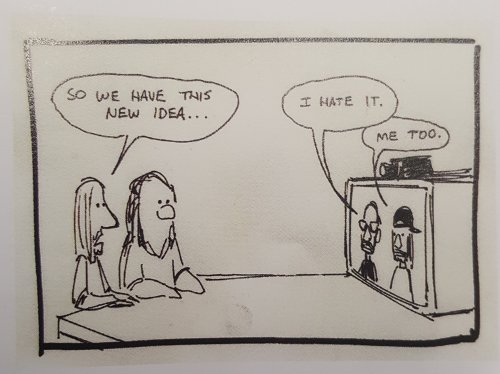
Gradually though the film starts to come together and the idea of transformation of a human into a bear, although how and why remained unclear and that human having to learn to live as a bear. For probably three quarters of the films development he is assisted in this by an old bear named Grizz and this got as far as being animated and even the voice of this bear being recorded and a song written by Phil Collins about the growing friendship between our hero and Grizz. All of this was scrapped very near the end of scheduled production and the old bear was replaced by a young cub named Koda who would be much more appealing to the potential audience. The cub idea came from the much more experienced team of animators in Los Angeles whilst Blaise and his team were in Florida and they held out for Grizz mainly due to the huge amount of work that had already gone into him and they felt tied to this way of the story. The two teams communicated via regular video conferences which were getting more and more fractious to the point that the cartoon below by one of the team of animators, Nathan Greno, was drawn to sum up how the conferences were going.

Eventually Blaise, Walker and Williams were convinced that the cub idea solved a lot of the story problems and a story editor was finally assigned to the movie years after they started making it and this turned the whole production around. The book is fascinating for the details of the conflicts and issues that occurred during the six years the film took to make and just how late in the process the whole project could be totally revised. I’ll have to watch the film now and see if I can spot areas where the whole plot changed direction from the numerous failed attempts to come up with a viable story.

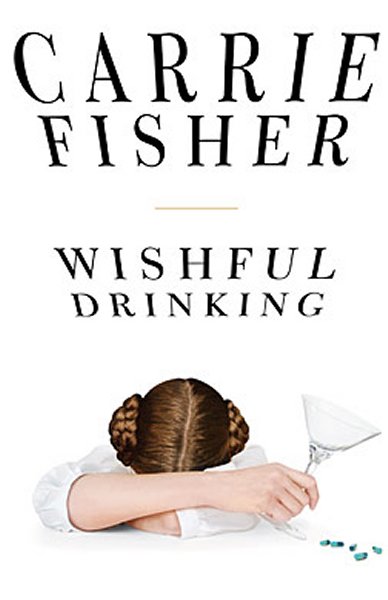
Wishful Drinking – Carrie Fisher

Hi, I’m Carrie Fisher and I’m an alcoholic

And this is a true story.

The start of Carrie Fisher’s first memoir certainly sets out her stall all too well. This is going to be a roller coaster ride through the highs and lows of her life told with self deprecating humour honed by telling much of the material covered in the book in a hit one woman show which premiered in 2006. The copy of the book I have is the 2008 first edition published by Simon and Schuster.

20191029 Wishful Drinking 1

The daughter of film star Debbie Reynolds and singer Eddie Fisher, Carrie grew up in a far from normal household. Her father left when she was two when he started an affair with Elizabeth Taylor, who was also married at the time. Reynolds married again a couple of years later to a millionaire business man (who later lost all his money along with Reynolds’ due to bad business decisions and gambling) but he was Carrie and her brother Todd’s step father through most of their childhood. The book is quite open about this time in her life, how they only saw their mother occasionally, her step father even less often and her biological father about once a year. From the descriptions of the two children spending time with Reynolds’s clothes as they smelt of her when they couldn’t be with her and the times she was around spending as much time as possible in her presence they clearly missed having her in their lives.

By her mid to late teens Carrie had discovered alcohol and drugs, mainly marijuana at this stage and was what would become her life long addictions to both had started. This could have been a really dark book but the humorous way she addresses this along with her later mental health problems (she was bipolar) makes you laugh along with her even when she is describing really low points.

Okay, have it your way. I’m a drug addict.

You know how they say religion is the opiate of the masses? Well I took masses of opiates religiously.

or talking about her committal to a mental hospital a couple of years after giving birth to her daughter.

I was invited to go to a mental hospital. And you know, you don’t want to be rude, so you go. Okay, I know what you must be thinking – but this is a very exclusive invitation.

I mean, hello – have you ever been invited to a mental hospital?

So you see, it’s exclusive. It’s sort of like an invitation to the White House – only you meet a better class of people in the mental hospital.

The reader is introduced to Fishers fragile mental state right at the beginning of the book as she discusses the electroconvulsive therapy she has undergone and the effects it has had on her, including sporadic memory loss but she has also gained a re-awakening of things she has done which had been lost in the fog of drugs, drink and mental imbalance. This enabled her to create the stage show which led to this book.

Yes there is a section about Star Wars, but it’s quite a short one, and surprisingly nothing about her later career as one of the top Hollywood script doctors where she fixed scripts for various TV shows and films, including working for George Lucas. She got the role as Princess Leia at just nineteen years old and you get the impression that she is slightly irked that Lucas owns the image rights to the character including a throw away wry comment that every time she looks in the mirror she owes him a dollar. All those t-shirts, posters, dolls, figurines (large small and Lego) earn money for Lucasfilms not Carrie Fisher and it still seems odd to her that Leia became a sex symbol ‘while being chained to a giant slug’.

One afternoon in Berkeley I found myself walking into a shop that sold rocks and gems.

“Oh my God aren’t you…” the salesman behind the counter exclaimed.

And before he could go any further. I modestly said “Yes, I am”

“Oh my God! I thought about you every day from when I was twelve to when I was twenty-two.”

And instead of asking what happened at twenty-two, I said “Every Day?”

He shrugged and said “Well four times a day.”

Welcome to the land of too much information.

In the book there is a lot of information and a lot of it is dark but there is never too much and it is a great read while she takes us through her fascinating life.