The Natural History of Selborne – Gilbert White

To start off my latest August group of books, which this time is focused on natural history, I am beginning with a classic of the genre, Gilbert White’s The Natural History of Selborne first published in 1789, along with his Antiquities of Selborne, which initially was usually included but nowadays is largely omitted leaving just his famous work The Natural History. Both of these books consist of a series of letters, which in the case of Antiquities none of were never actually posted to anyone and in The Natural History several were also not posted but were instead created to match the rest of the content. The ones that were posted are to two different people over a period of almost two decades, but even these have been edited for publication so the whole is rather contrived. Gilbert White was the curate of Selborne on four separate occasions living in what was his grandfathers vicarage and his younger brother John, who is mentioned several times in the book as providing extra information was a vicar in Gibraltar. He is now famous for this book, which was one of the first true natural history volumes based on studies of wild fauna rather than dead examples. That is not to say White didn’t make use of freshly shot birds to complete his analysis but he was rare in studying live animals and how they reacted with the environment to give colour to his studies.

The book starts with forty four letters to the Welsh naturalist Thomas Pennant, the first nine of which were never posted and were written much later to form an introduction to the book when White decided to publish his notes on local wildlife and plants. These describe the village of Selborne and the surrounding countryside and so give a useful if somewhat tedious background to the observations that he then goes on to make. The second batch of sixty six letters are to English lawyer, naturalist and one time Vice President of The Royal Society the Honorable Daines Barrington and again several of these were never posted especially letters fifty six to sixty five, which are concocted from White’s daily journals and provide interesting details of weather extremes he has experienced in the village including winter temperatures of below zero degrees Fahrenheit (-18 degrees Centigrade) with ice forming below the beds in his house. These also include an account of the effect of a massive volcanic eruption in Iceland from June 1783 to February 1784 which killed around a quarter of the population of Iceland and left volcanic ash in the skies over Europe for months.

the peculiar haze, or smoky fog, that prevailed for many weeks in this island, and in every part of Europe, and even beyond its limits, was a most extraordinary appearance, unlike anything known within the memory of man … The sun, at noon, looked as blank as a clouded moon, and shed a rust-coloured ferruginous light on the ground, and floors of rooms; but was particularly lurid and blood-coloured at rising and setting. 

Letter LXV

One of the frequent issues raised in the various letters is the possibility of bird migration, at the time this was merely a suggestion that it might happen with the majority view, including that of Barrington, being that birds that were not seen all year round hibernated through the winter even though no birds had ever been found in such a torpid state. White is in favour of migration but doesn’t believe that something as small and frail as a bird could travel long distances so keeps going back to the hibernation theory and indeed on at least one occasion caused a potential site for ‘sleeping’ birds to be dug up searching for them. Needless to say they found nothing. But his observations and attempts to understand the natural world from them was pioneering and one of the letters regarding the usefulness of earthworms was undoubtedly an influence on Charles Darwin a hundred years later when he wrote his monograph on the subject.

Four of the letters to Daines Barrington are in the form of monographs and were published in the Philosophical Transactions of The Royal Society which is the worlds oldest scientific journal, started in 1665, and still in print. These four letters are by their nature longer and more detailed than the others and concern four related bird species which attracted White’s particular attention. Letter XVI is about House Martins, letter XVIII discusses Swallows, Letter XX details the habits of Sand Martins and letter XXI deals with Swifts. These are excellent articles on the differences and similarities between the four species and were ground breaking observations at the time (December 1773 to September 1774). In my opinion the letters to Barrington tend to be more interesting than the ones to Pennant which are more deferential to the addressee as Pennant had published several books on natural history including a four volume British Zoology. It is noticeable however that although there have been at least three hundred editions of The Natural History of Selborne and it has never been out of print since first coming out in 1789 I cannot find any currently in print editions of any of Thomas Pennant’s works.
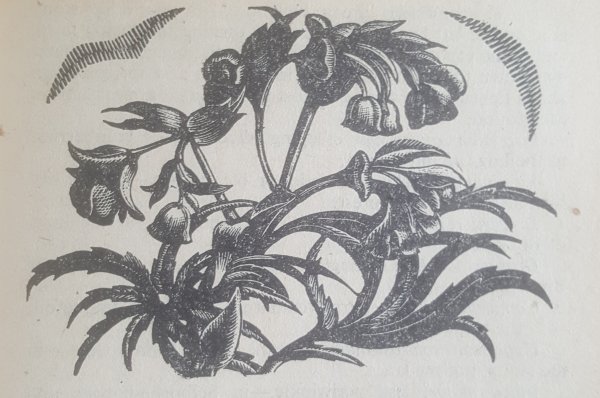
My copy is the Penguin Books first edition from March 1941, which was originally planned to be a part of a second set of Penguin Illustrated Classics following the original ten from May 1938 but this set never happened. However this explains why this book, along with Izaak Walton’s The Compleat Angler, which will be covered later this year, has lovely wood engravings within the text, some of which I have included above, unlike other Penguin Main Series books which are just plain text as these two were designed before the continuation of Illustrated Classics was shelved. The engravings in this volume are by the wonderful artist Clare Leighton who despite being born and brought up in England had moved to America by the time she did these pictures for Penguin and where she continued to live for the rest of her life, dying in 1989 at the age of ninety one.

Chekhov: A Life in Letters – edited by Gordon McVay

Rather than produce a standard biography, Gordon McVay has translated and edited a selection of letters from Anton Chekhov which give a wide view of his interests and career development from starting medical school in Moscow in 1879 through to his final letter in June 1904 written the day of his heart attack which would ultimately prove fatal four days later. There are extensive notes that put the letters into context and this has proved to be an excellent use of the material as Chekhov is a lively letter writer and travelled extensively so his correspondence is full of detailed descriptions of his experiences both good and bad. My copy is the Folio Society 1994 edition bound in black buckram and embossed with Chekhov’s signature across both covers. The book is currently available as a Penguin Classics edition. To give a feel for the letters I’ll selected a few extracts and will add them between paragraphs in this blog.

23 December 1888

That this represents just a tiny fraction of Chekhov’s letters is proven by the regular mention in the notes of a thirty volume Soviet edition and even that is not complete because it can only include those letters that were kept by the recipients. The Soviet edition is also censored to remove things they didn’t feel appropriate, such as his dalliance with a Japanese woman on his trip to Sakhalin, and anything judged not politically sound. The edition I have has 365 pages dedicated to the letters along with a useful 22 page introduction and an excellent index which made going back to find things I wanted to refer to very easy. That the Soviet edition is censored is actually quite appropriate as Chekhov complains many times about what the censors in his own time had done to his stories and plays, some of which he regarded as particularly badly damaged so that the sense of the play is lost.

In Siberia on his way to the island of Sakhalin 1890

In 1890 Chekhov travelled to the penal colony of Sakhalin to survey the conditions and interview prisoners for what he explains in various letters is a payback to medicine. It eventually took him three years to write up his findings to appear in ten parts in one of the serious journals and then more work to produce a somewhat longer book. Presumably he wrote letters from his months on Sakhalin but none of them are included in this collection however there are quite a few describing his massive journey by horse drawn carriages and river boats right across Russia as Sakhalin is as far east as it is possible to go and he started in Moscow. The extract above highlights that even then Siberia was a place of exile for people that had offended the state in someway but his observation that now they can say what they like as where else would they be sent is to the point. On Sakhalin he was only allowed to interview a small number of the political prisoners but he still produced a comprehensive report and oddly his health, which was never very good appeared to improve during his time away from Moscow and St Petersburg. Although he was a doctor he seemed to have a blind spot regarding his own tuberculosis which he suffered from for decades, describing many occasions of ‘blood spitting’ although he was never formally diagnosed until 1897.

4 July 1888

The letters are also often quite humorous which lightens the tone overall against some of the more serious pieces or times when things are just plain going wrong like his descriptions of the disastrous first performance of The Seagull in 1896 or when his health issues cause significant problems which was quite often. One of the more interesting features is the continuation of his career as a doctor even as his fame as a playwright and story writer grew dramatically. As can be seen below this devotion to medicine had serious implications in his ability to write of travel to oversee productions of plays and talk to his various publishers. By the early 1890’s he had purchased an estate in Melikhovo and become the local doctor in preference to renting a home in Moscow which he had done since arriving there to study as a doctor.

16 July 1892

By the mid 1890’s however he had started travelling extensively in Europe and correspondence from various Italian, French and German cities amongst other countries he passed through bring a different outlook to the letters, some places he loved others he was glad to see the back of. There is also a lot of letters to women throughout the book some of which he probably came close to marrying but in fact he was a confirmed bachelor until just three years before he died when he finally married an actress he had come to know from her performances in his plays. Oddly his letters to women, even the ones he was particularly close to, are rarely romantic and quite often have some slight barb to them. The ones to his future wife, Olga, are mainly about her performances rather than anything else even though they actually lived almost 1000 miles apart most of their married lives as she was in Moscow and he was in Yalta to get a better climate for his tuberculosis. Chekhov was much happier on his own, hence his long time avoidance of marriage and indeed living apart suited him well.

13 June 1890

The letters are great fun to read and show much more of Chekhov’s character than would be found in a biography. I don’t think I could cope with the full thirty volumes, even assuming they were available in English, but this selection made an excellent way to pass a few evenings this week.

The History of England – Jane Austen

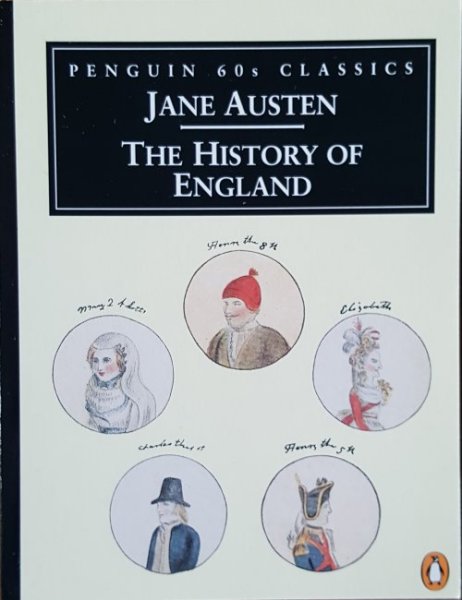
Although entitled The History of England this actually makes up quite a small proportion of this book which includes two pieces from Juvenilia, the other being Lesley Castle, both works were written when Austen was sixteen and show a remarkable talent even at such a young age. Jane Austen is not known for her comedic writing but both of these short works are very funny in completely different ways. This book was published as part of a set to mark fifty years of Penguin Classics in 1995.

The History of England

Subtitled “From the reign of Henry the 4th to the death of Charles the 1st, by a Partial, Prejudiced and Ignorant Historian” this certainly lives up to the initial billing. Jane’s prejudices are specifically pro Yorkist and later pro Stuart and hence very anti Lancastrian and Tudor. This means that Henry VI, Henry VIII and Elizabeth I come out of this rather badly whilst Richard III unusually for the time gets a rather reasonable write up solely due to him being from the House of York. It is best to give some idea of the style of Jane’s writing by quoting a section and I have chosen the opening paragraph on Henry VIII.

It would be an affront to my Readers were I to suppose that they were not as well acquainted with the particulars of this King’s reign as I am myself. It will therefore be saving them the task of reading again what they have read before, & myself the trouble of writing what I do not perfectly recollect, by giving only a slight sketch of the principal Events which marked his reign.

The complete disinterest in dates reminds me of the much later work by R J Yeatman and W C Sellar 1066 and all that, and I can’t help but wonder if they had come across the young Jane Austen’s effort before they wrote their larger but also funny summary of English history. The pictures used on the cover of this slim volume are the ones drawn by Jane’s sister Cassandra for the original manuscript of The History of England.

Lesley Castle

This much longer work is the start of an unfinished novel written in the form of letters between five ladies. There are ten letters and a short enclosed note in all in what was completed and I can only wish that she had written more as she has assembled such a disparate cast of characters that the interaction between them has so many possibilities. That there is also a wonderful bitchiness about the letters just adds to the amusement, I’d love to see it performed with each character reading out the letter as they wrote it with maybe the recipient reacting as though just reading it.

In such a short work we have Charlotte Lutterell being far more concerned with the potential waste of food that has been prepared for the wedding banquet of her sister. That the fact that the match is off because her sister’s fiancee has fallen off his horse and broken his neck is seen by her as a minor inconvenience, she also cannot understand why her concern over how they will eat all the food already prepared is not shared by her sister and the suggestion that at least some of it could be used for the funeral, whilst a practical suggestion, is not seen favourably by her. Her correspondence with Margaret Lesley, one of the two unmarried sisters living in the titular Lesley Castle also covers the surprise wedding of their widowed father and the subsequent difficult relationship between the girls and their new stepmother.

Margaret is apparently also incapable of regarding anybody else’s feelings as the extract below from the final letter between her and Charlotte when Margaret finally comes down to London from Lesley Castle which is up in Scotland.

In short, my Dear Charlotte, it is my sensibility for the sufferings of so many amiable Young Men, my Dislike of the extreme Admiration I meet with, and my Aversion to being so celebrated both in Public, in Private, in Papers, & in Printshops, that are the reasons why I cannot more fully enjoy the Amusements, so various and pleasing, of London. How often have I wished that I possessed as little personal Beauty as you do; that my figure were as inelegant; my face as unlovely; and my Appearance as unpleasing as yours! But ah! what little chance is there of so desirable an Event;

If asked to sum up Jane Austen’s well known novels in one word ‘humorous’ would be very low down on the list of possibilities, but these short works show that, at least as a teenager, she was possessed of a sharp and dark wit.

84 Charing Cross Road – Helene Hanff

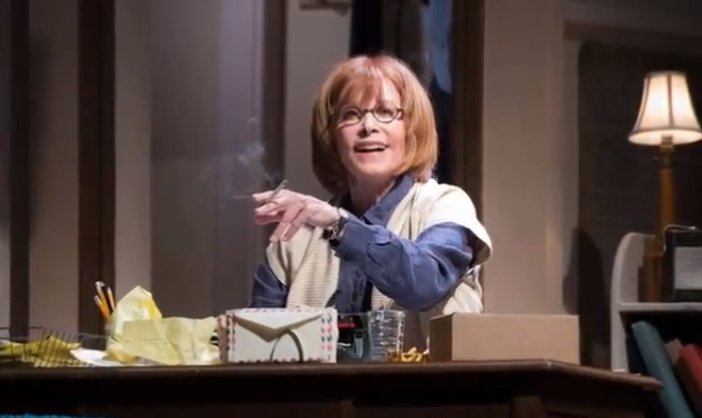
Last week I went to see the play based on Helene Hanff’s best known work 84 Charing Cross Road at the Grand Theatre in Wolverhampton. There is a touring production currently travelling the UK with Stephanie Powers playing Helene and Clive Francis as Frank Doel. I first read the book in the early 80’s and have happy memories of that and seeing the film with Anne Bancroft and  Anthony Hopkins made in 1987 so it was a joy to see the play and how well it was done. I think that from now on that when reading the book I will always hear the letters as read by Stephanie Powers she gave a wonderful performance. Clive Francis was very good as Frank, but it’s very difficult to beat Anthony Hopkins, so I now have a weird mix of play and film in my head. You can see a clip from the film on youtube here.

20180605 Charing Cross Road

However this is a review of the book, it was first published by Grossman in the US in 1970 then by Andre Deutsch in the UK in 1971, the copy I currently have was printed by Time Warner Books in 2006. It has to be at least the third copy of this book I have owned as previous copies have disappeared over the years, as I either gave them away to people who I thought would love the book or just never got back a loaned volume. Like most editions nowadays in this copy the original book is paired with Hanff’s follow up work The Duchess of Bloomsbury Street which describes her journey to London for the UK launch of the original book. The first book itself simply consists of the letters between Hanff, who is in New York and Marx & Co. antiquarian booksellers based at number 84 Charing Cross Road. Initially they are quite business like, Hanff has seen an advert in the Saturday Review of Literature so on 5th October 1949 she first makes contact with the firm and pens a short note with a list of books she wants to see if they can supply them. but by the time of the last letter from the firm to Helene it is almost 20 years later on 8th January 1969.

There is no exposition, it is just the letters so all you know about Frank, Helene and the others who write occasional missives is what they include in the correspondence; but from this you really get involved in this developing two decade long friendship. By the end you feel you know them and the final few letters mean as much to you as they must have meant to Helene when they prompted her to compile the book, as she writes in Q’s Legacy.

“I have to write it.”

Then I went cold inside, I could only write it if I still had Frank’s letters. I’d begun saving them 20 years later because a tax accountant wanted a record of what I spent on books… The thin blue airmail letters with a rubber band round them took up no space, lying nearly flat under manuscripts in a back corner of one of six small cabinet drawers under my bookshelves. But year after year when I cleaned out the cabinets, I’d come on them and wonder why I was saving them. Sitting there that evening, I vividly remembered that when I had reorganised the cabinets a few weeks earlier I’d stood by the waste basket hefting the letters, debating whether to keep them or throw them out. I couldn’t remember which I’d done. And I was afraid to find out.

Fortunately she hadn’t thrown them out although they were only found after an agonising search

I carried the letters to the table and opened them – and snapshots of young families spilled out of them. Some were from Nora Doel, some were from one of the girls who worked in the shop, all of them were 10 or 15 years in the past … I found snapshots of Frank standing proudly beside his new secondhand car. I was laughing by this time, I poured another cup of coffee and settled down to read the letters.

By the time I went to bed I was positively happy, I was going to relive the lovely episode Marks & Co. had been in my life by making a short story of the correspondence.

20180605 Charing Cross Road 3

The letters get less formal as the years go on, by February 1952 Frank is writing to ‘Dear Helene’ as opposed to ‘Dear Miss Hanff’ which is how he starts off and whilst initially Frank’s letters are solely about the books or in response to gifts of food Helene sends to ration struck England, Helene’s become quite chatty very early on and she jokingly tells him off several times (these are just extracts from letters not full examples)

November 2, 1951

Dear Speed ___

You dizzy me, rushing Leigh Hunt and the Vulgate over here whizbang like that. You probably don’t realise it, but it’s hardly more than two years since I ordered them. You keep going at this rate you’re gonna give yourself a heart attack.

20180605 Charing Cross Road 4

Clearly remembering this letter many years later Frank was able to eventually get in a small riposte.

3rd May 1957

Dear Helene,

Prepare yourself for a shock. ALL THREE of the books you requested in your last letter are on their way to you and should arrive in a week or so. Don’t ask how we managed it – It’s just a part of the Marks service.

20180605 Charing Cross Road 2

Other members of staff at Marks & Co. also write to Helene, along with Dora (Frank’s wife) who initially just thanks her for the food she has sent but then also enters into a longer correspondence. What I really liked about the play was that the script really was just reading the letters to one another, the stage was split into Helene’s New York apartment on the left with the bookshop taking up roughly two thirds of the stage to the right. Almost all the letters in the book were read verbatim, in the film the letters are still the main part of the text but it is expanded to make it more cinematic and as you can see from the clip I included a link to above we even see other locations than the bookshop and the apartment.

It’s very difficult to review this book without spoiling it for new readers but it is truly a delight to read and if you haven’t read it then please do so, then see the film and if possible catch it in the theatre. The images from the play are lifted from the Cambridge Arts Theatre website whose production this was.

The second book included in the paperback is The Duchess of Bloomsbury Street and this is more of a diary tracking Helene’s trip to the UK, all the people she meets and the various publicity events she goes to including a special opening up of the by now closed Marks & Co. shop on Charing Cross Road, so she did finally get to visit ‘her bookshop’ even if it was too late. The main signing event took place in Poole’s bookshop, next door in number 86. This diary runs from 17th June to 26th July 1971 and is considerably longer that the book it celebrates. Sadly the shop is now a McDonald’s burger place but there is a plaque outside commemorating the old bookshop and Hanff’s apartment on  305 E. 72nd Street has been named “Charing Cross House”.

For the really keen there is the third book in ‘the series’ which I quoted from above, Q’s legacy explains how, when it became clear she was not going to be able to afford any more than a year at college, she was in a library and she first came across Sir Arthur Quiller-Couch. She felt his books of essays and lectures taught her more than the first year had done and she was hooked. Q, as he was invariably known, introduced her to Walton, Newman, Milton and numerous others and she wanted to read more than just the extracts he quoted so was looking for a good bookshop when she saw that advert in the Saturday Review. If anyone is responsible for all that followed after that it is the now largely forgotten Q. Forgotten that is except by those of us who own a copy of his massive 1100 page work The Oxford Book of English Verse which for decades was the definitive collection, first published in 1900 and revised in 1939 to expand the selection up to 1918.