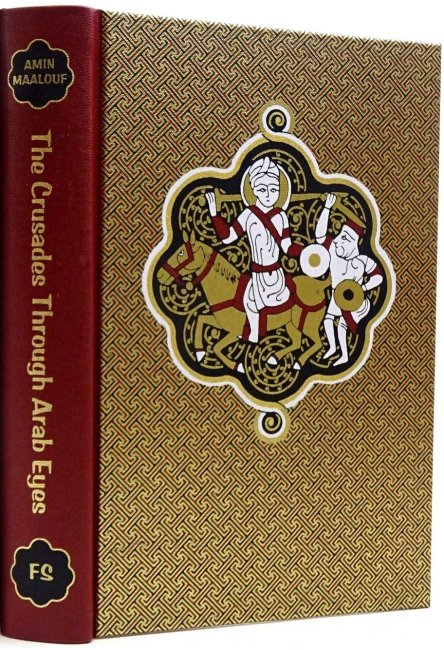
I’ve read several accounts of the Crusades but all from the perspective of the Christian west so it was fascinating to read this version from the Islamic side. The first thing you discover is that the invaders were not taking on established states, but rather what was mainly individually controlled cities and towns which were sometimes in loose alliances but more often were warring amongst themselves making them relatively easy prey for the more organised crusader forces. Certainly for the first hundred years or so of the crusader conflicts whenever an Islamic ruler died there would invariably not be a clear successor so internecine warfare would break out making the city and its surrounding territory ripe for conquest by not only the crusaders but also the neighbouring city states that were, in theory at least, on the same side. What the Islamic forces lacked was a leader that most of them would follow and this was why the crusaders found the invasion of the holy lands relatively easy in the beginning and with a couple of short lived exceptions this would be the case until the rise of the Kurdish officer Salah al-Din Yusef known in the west as Saladin, who had gone to Egypt with his father in 1173 as a young man despite having no appetite for warfare and ended up the effective ruler of Egyptian lands but still nominally under the control of Nur al-Din from Syria who had sent the army in the first place. The complex interrelationships between the various states and warlords with the added mix of a fanatical sect founded in the 1070’s by Hasan Ibn al-Sabbah who became known as the Assassins. Although these killers would operate independently they were often paid by various rivals, or even other family members to remove people in the way of their own rise to power. How these original assassins operated is described in the book.
Although the preparation was always conducted in the utmost secrecy, the execution had to take place in public, indeed before the largest possible crowd. That was why the preferred site was a mosque, the favourite day Friday, generally at noon. For Hasan, murder was not merely a way of disposing of an enemy, but was intended primarily as a twofold lesson for the public: first the punishment of the victim, and second, the heroic sacrifice of the executioner, who was called fida’I or ‘suicide commando’ because he was almost always cut down on the spot.
This constant warfare amongst the various states and cities lasted long into the Crusade period and the various parties rarely agreed on alliances to take on the invaders and when they did, at least initially had nothing that would allow them to ambush knights in armour as they had no equivalent defences so hadn’t developed weapons to defeat them. But the book is not all negative regarding the Islamic resistance there were leaders who could push back the Crusaders, at least temporarily, before Saladin and he had a bad habit, at least in a war leader, of being too merciful to those he defeated often simply sending them away, along with their armaments, leaving them free to attack again at a later date or surrendering territory in the hope of achieving a more lasting peace
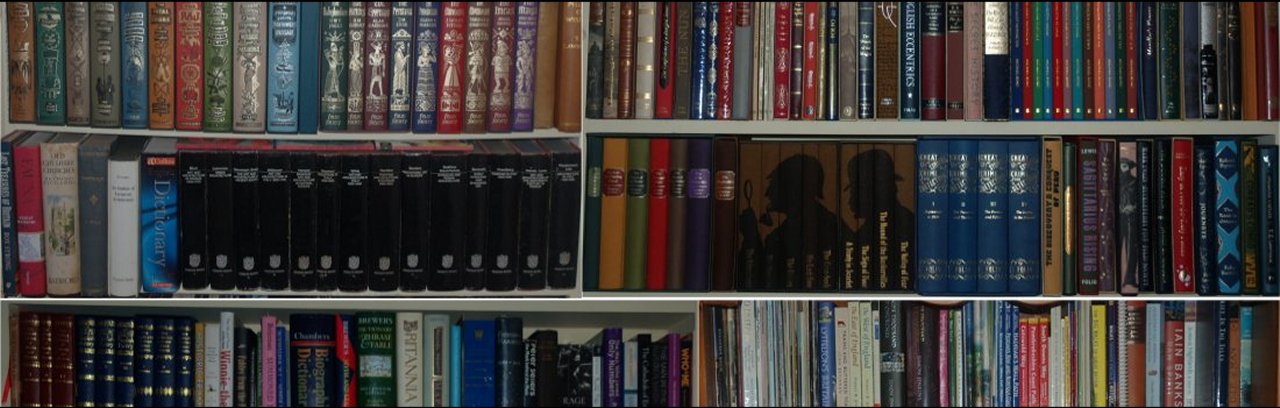
The book is fascinating, especially if you have read any of the various western accounts of the period, I will be reading The Chronicle of the Crusades by Geoffrey of Villehardouin and Jean de Joinville at some point next year, the book is already on my shelves, and this will round off the overview of the Crusades I started with T.E Lawrence’s book on Crusader castles which I read at the start of this year. It’s a period of history I remember reading a lot about whilst at school both as set texts and independent study and this book has certainly given me a lot to think about with its alternative viewpoint.





 Ramblings on my bookshelves