The Overloaded Ark – Gerald Durrell

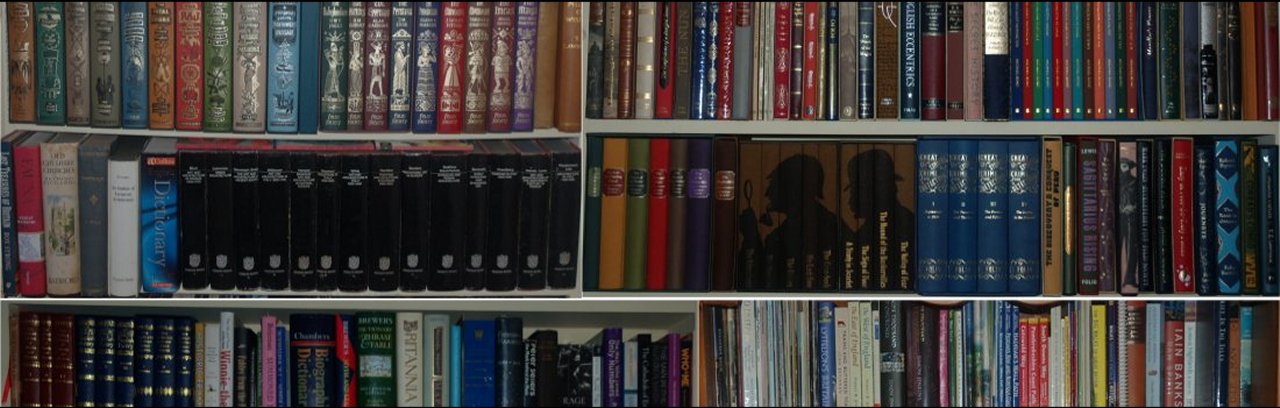
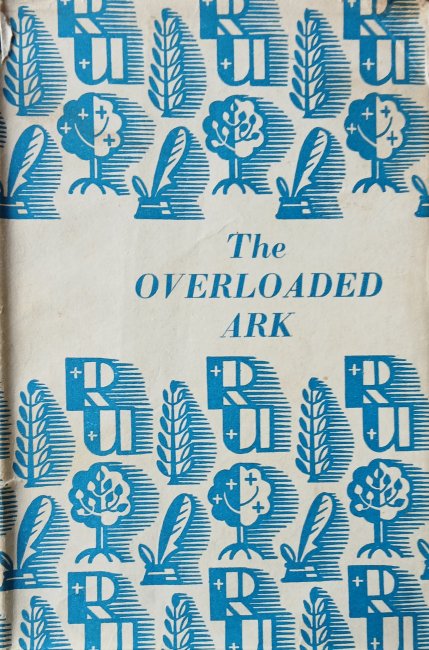
I remember reading lots of Gerald Durrell books as a child but this was the first I read as it is one of my father’s books, so it was sitting on the bookshelf for as long as I can remember. Published by The Readers Union, a book club run by Faber and Faber, who had first published the book, this volume dates from 1955. The odd thing is that I don’t remember any other books from this club at home although there were other book clubs represented on the shelves as that was probably the source of most of dad’s books. This was Durrell’s first attempt at writing a book and described his first ever collecting expedition which was to to British Cameroons and took place in 1947 with ornithologist John Yealland. He took to writing not because he particularly enjoyed it but because he needed the money partly to pay off debts from his first three collecting expeditions and also to finance his family life as he had married in 1951. He was fortunate to be able to get advice on writing from his elder brother the novelist and travel writer Lawrence Durrell and although their two styles are dramatically different they are both eminently readable.
The best way to illustrate Durrell’s style is to quote a section from the preface where they were loading the truck to get from Victoria to Mamfe where the two men were to part company to set up separate camps, Yealland to collect birds around the town of Bakabe and Durrell to go further into the bush to Eshobi searching for reptiles and mammals and also some birds not found near Bakabe. The truck was arranged for 7:30am and the plan was to be on the road by around 8:30am. The lorry however finally arrived at 11am and was full of a dozen of drivers relatives, friends and assorted goods that he was planning on getting a paid for ride up country with. The first job was therefore to get all these people and various items off the lorry as it would be fully needed to carry all the equipment.

After a prolonged altercation which for shrillness and incomprehensibility could not have been rivalled by any race on earth, they were removed, together with their household goods and livestock. The driver then had to turn the lorry for loading, and my faith in his abilities was rudely shattered when he backed twice into the hibiscus hedge, and once into the rest house wall. Our baggage was then loaded with a speed and lack of care that was frightening, as I watched, I wondered how much of our equipment would be left intact on arrival in Mamfe. I need not have worried. It turned out later that only the most indispensable and irreplaceable things got broken.

This diary like narrative, although without specific dates, is continued for the rest of the book as Durrell gets in and out of various scrapes, either attempting to collect animals himself or dealing with the numerous creatures brought to this strange white man that wants animals but not to eat them. Sadly it also covers animals that he obtained but which try as he could he couldn’t keep alive in the rapidly growing makeshift zoo he became in charge of, despite his time as a trainee keeper at Whipsnade Zoo before quitting to go animal collecting. These included the Giant Otter Shrews two of which he obtained and apparently successfully converted to a diet that could be more expected to be available in captivity only for them both to die overnight for no apparent reason and the lovely Duiker antelope fawns which eventually he put a stop to collecting as they always refused milk from a bottle and gradually starved to near death before being humanely killed, and he only ever had young as these were ones found after the hunter had killed its mother.

He does however put together an excellent collection in his time at Eshobi and transports what he has obtained to Bakabe to join Yealland and see what else he can find there which includes Cholmondeley, a large fully grown chimp that had been brought up with an English family and had gained quite a few idiosyncrasies including liking a large mug of sweet tea and cigarettes which he could light either with matches or using a lighter and sit there smoking away extremely happy. The funniest part of the book is probably the partly successful trip to the mountain of N’da Ali, the first attempt at which is interrupted by a hunter bringing an Angwantibo, a species of primate he was particularly keen to find. This means dashing back to Bakabe to look after his new prize and delaying his attempt at the mountain for a week.

To say that John Yealland was much happier with his bird only collection he had built up before Durrell joined him would be an understatement as the birds would rarely be in a position to kill him, unlike say the snakes and small crocodiles that came with Durrell, some of which made escapes from their cages, in this case abetted by one of the monkeys that had undone the door to all the cages that it could reach including the deadly Gaboon Viper’s so I’m going to include one final passage from the book:

John was seated near the table, in his pyjamas, he was busy cutting down some old fruit tins to make into water pots for the birds, and he was absorbed in his work. I was just putting the finishing touches to my toilet when I saw something move in the shadows beneath his chair. Putting on my dressing gown I went closer to see what it was. There on the floor, about six inches away from John’s inadequately slippered feet, lay the Gaboon Viper. I had always believed, judging by what I had read and was told, that at moments like this one should speak quietly t the victim, thus avoiding panic and sudden movement. So, clearing my throat, I spoke calmly and gently:

“Keep quite still, old boy, the Gaboon Viper is under your chair.”

On looking back I feel I should have left out my reference to the snake in my request. As it was my remark had an extraordinary and arresting effect on my companion. He left the chair with a speed and suddenness that was startling; and suggestive of the better examples of levitation.

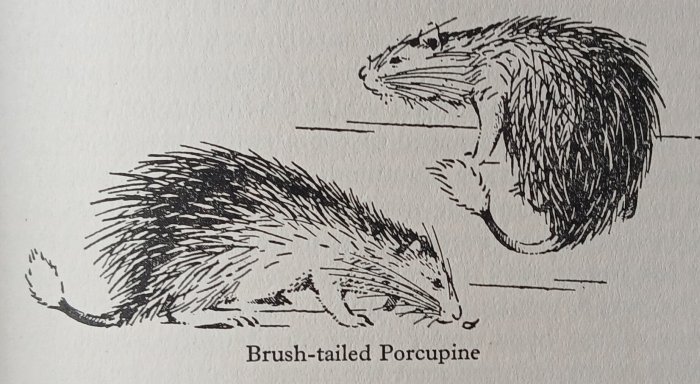
The numerous illustrations through the book are by Sabine Baur based on drawings and photographs by Gerald Durrell. Durrell wrote many books about his collecting experiences, the zoo he founded in Jersey and various conservation projects he became involved in but is probably best known for his series of three books about growing up with his family on Corfu just before WWII, especially the first ‘My Family and Other Animals’. I’m going to stay with the Durrell family next week with his eldest brother’s book ‘Bitter Lemons of Cyprus‘.

The Compleat Angler – Izaak Walton

First published in 1653, so 370 years old this year, my copy is the first Penguin edition from January 1940 and like the first book in the natural history theme for August which was Gilbert White’s ‘The Natural History of Selborne‘, it was intended to be part of the second series of Penguin Illustrated Classics which never happened. Only these two books made it as far as being illustrated, this one with lovely wood engravings by Gertrude Hermes, before the project was cancelled.

Born in Stafford (a town in the English Midlands) in 1593 Izaak Walton originally went into trade as an ironmonger in London and retired in 1644, aged just fifty one, moving back north to Staffordshire where he became a well known countryman and after the publication of this book in 1653 a famous angler. His retirement appears to be linked to the royalist loss in the English civil war as he was a staunch supporter of the King and London was probably uncomfortable for him during the Cromwellian period. Walton would live to be ninety, a remarkable age for the time, and he kept updating The Compleat Angler for a quarter of a century as he came up with things he felt he wanted to add. The book consists of a series of conversations between a Piscator (angler) and a Venator (hunter) along with other characters but these two are the main ones as the Piscator, clearly Walton himself, aims to teach the Venator the noble art of fishing and how to catch the various species of fish in the local rivers. At times the text can be a little tedious if, like myself, you aren’t a fisherman, for example there is a long section which describes various artificial flies used for catching trout and how these should be made, with which feathers, threads and other materials. However the book is largely enjoyable even if you aren’t an angler for its descriptions of country life and the songs and poems that a liberally spread throughout the text.

The Angler’s wish.

I in these flowery meads would be:
These crystal streams should solace me;
To whose harmonious bubbling noise
I with my Angle would rejoice:
  Sit here, and see the turtle-dove
  Court his chaste mate to acts of love:

Or, on that bank, feel the west wind
Breathe health and plenty: please my mind,
To see sweet dew-drops kiss these flowers,
And then washed off by April showers:
  Here, hear my Kenna sing a song;
  There, see a blackbird feed her young.

Or a leverock build her nest:
Here, give my weary spirits rest,
And raise my low-pitch'd thoughts above
Earth, or what poor mortals love:
  Thus, free from law-suits and the noise
  Of princes' courts, I would rejoice:

Or, with my Bryan, and a book,
Loiter long days near Shawford-brook;
There sit by him, and eat my meat,
There see the sun both rise and set:
There bid good morning to next day;
  There meditate my time away,
  And Angle on; and beg to have
  A quiet passage to a welcome grave.

It is these poems and songs along with various descriptive sections that Walton mainly added in his various iterations of the book, the technical sections of how to fish and suggestions as to how prepare the catch for the table are largely unchanged through the published versions. The book is split into five days, the first of which is quite short and is largely an introduction via a four mile walk between the Piscator, Venator and Auceps (a man with hawks) who compare the advantages and pleasures of hunting in water, on land and in the air. This is where the Venator decides to become the Piscator’s pupil therefore leading to the rest of the book however the Auceps is never referred to again after this opening chapter. From day two the lessons on fishing begin and the two men are occasionally joined by the Piscator’s brother, Peter, and his friend Coridon, along with a couple of milkmaids who turn up a couple of times and appear to be there mainly to sing some songs and a few other people who are mentioned just once.

It’s a somewhat odd book, being unsure if it is a technical manual on fishing or a book of songs and poetry with countryside tales. I suspect the first edition was much more the manual but as Walton kept adding to it, taking the book from the original thirteen to the final twenty one chapters over twenty three years it somewhat lost its way. It’s largely an interesting read for the fishing layman and I’m glad I’ve finally read it.

Puffin Picture Books illustrated by Paxton Chadwick

Paxton Chadwick was a well known artist who was born in Manchester in 1903 but after marrying his first wife he moved to Suffolk and took a post of art teacher at Neill’s Summerhill School in Leiston Suffolk which is where he lived for most of the rest of his life. His natural history artworks are justifiably celebrated and this blog looks at the four books he illustrated for Puffin Picture Books, three of which he also wrote. Sadly Chadwick died in 1961 before he completed his fourth title for Puffin Picture Books and so there was a gap in the series at number 116 out of the 120 volumes in the set. Number 116 was eventually published by The Penguin Collectors Society in 1995, see the end of this blog for more details as to how it came about.

Puffin Picture Books was an imprint of Penguin Books originally aimed at children of all ages with counting, spelling and story titles alongside works on shipping, agriculture, nature of all kinds and pastimes such as stamp collecting and building models. Gradually the fiction titles were phased out leaving the educational works, a lot of which would nowadays be categorised as Young Adult for their reading demographic. Starting in 1940 they were the first series of books published by Penguin that were aimed at children but are also excellent illustrated monographs to be read and enjoyed by all ages.

PP81 – Wild Flowers

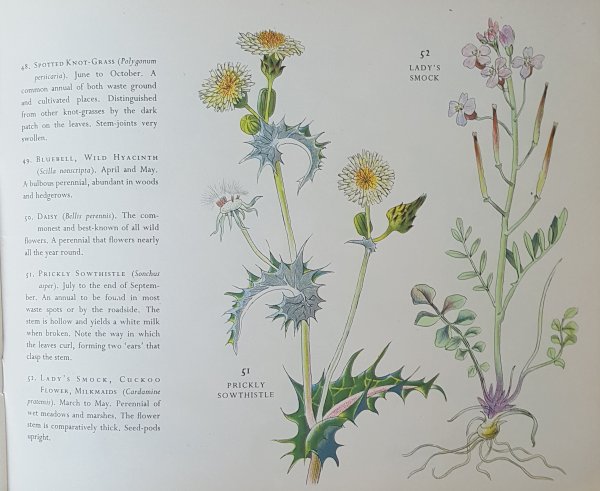
Written and illustrated by Chadwick this is the first edition printed April 1949 and it was reprinted a further four times making it the most reprinted of the four Paxton Chadwick Puffin Picture Books. As soon as you open the book it is clear why it was so popular, unlike any other Puffin Picture Book this one is almost full colour throughout (pages 2 and 3 which describe the structure of a flower are in black and white), normally half the illustrations would be in black and white and the pictures are beautiful. I particularly like the double page centre spread comparing a Great Mullein and a Foxglove see above. In total there are sixty one different plants illustrated and described giving their flowering season and if they are annual, biennial or perennial species. You also get the common English name along with the Latin and some more information as to how to identify the plant making it the best reference work on British wild flowers published by Penguin up to that point and not superseded until John Hutchinson and Edgar Hahnewald’s Wild Flowers in Colour was published by them in April 1958 which covered five hundred species.

The book won a National Book League (NBL) award for its quality of production.

PP93 – Pond Life

This is the only one of the four books just to be illustrated and not written by Paxton Chadwick, but rather by Jean Gorvett, about whom I can find nothing, this is the only book she appears to have written and I have been unable to find any biographical details on the internet. Regardless of the difficulty of finding information about the author the book was first printed in February 1952, going on to be reprinted twice by Penguin and then re-appeared as a hardback in 1971 under the title of Life in Ponds in the USA by McGraw-Hill with a completely different cover of male and female mallards, which was taken from page 25 of this original softback edition.

We are now back to the normal layout of Puffin Picture Books, after the anomaly of ‘Wild Flowers’, so colour only appears on alternate double page spreads. The text is the same chatty style that was familiar from the books written by Chadwick himself and is clearly aimed at a child from about nine to twelve years of age whom has access to a decent sized pond and is interested in what can be found there and is looking for a beginners guide. The first section ‘How to Enjoy Ponds’ discusses how to catch various creatures and suggests a suitable net, various jars for examining your catches and of course don’t forget your wellington boots. We then go on through plants, molluscs, insects, larger animals, fish and finally birds such as ducks and moorhens that you could expect to encounter. The final section discusses how to stock an aquarium so you can continue your pond life watching on rainy days.

Like Wild Flowers the book received an NBL award despite, in my opinion, the least inspiring cover of any of the Puffin Picture Books but the book itself is excellent.

PP105 – Wild Animals in Britain

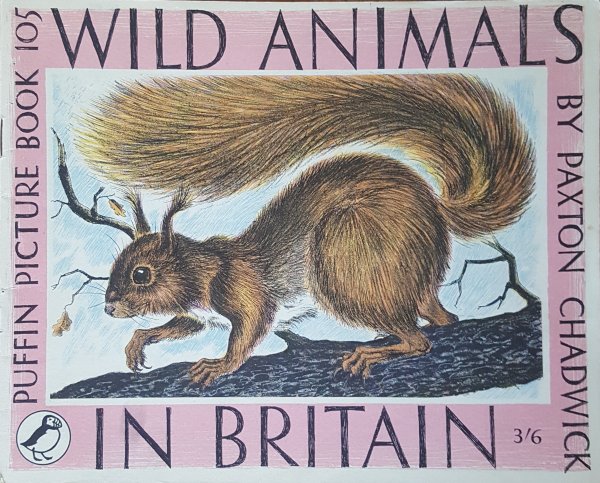
Again written and illustrated by Chadwick, Wild Animals in Britain was printed in April 1958 and was never reprinted. This was not uncommon with Puffin Picture books, indeed 66 of the 119 books issued in this series by Penguin were not reprinted, so the fact that his first two books went through multiple printings says a lot for how well received Chadwick’s books were. The title of this one is somewhat inaccurate as the only creatures included are mammals and reptiles but I suppose ‘Wild mammals and Reptiles in Britain’ is a bit wordy for a title. In all forty one species are illustrated, thirty five mammals and six reptiles ranging from the insectivores such as hedgehogs and shrews, through bats, rodents, hares and rabbits along with the bigger mammals such as badgers, foxes and various species of deer. Amongst the reptiles are the two snakes above, and there is a particularly fine painting of a grass snake on the rear cover. It’s a lovely book and the inclusion of brown on the pages that would normally be just black and white (as seen on the page with the snakes) just lifts the book above the normal format Puffin Picture Books.

PP116 – Life Histories

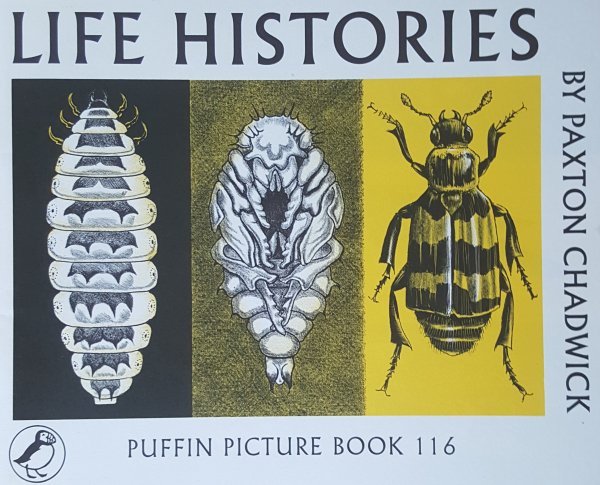
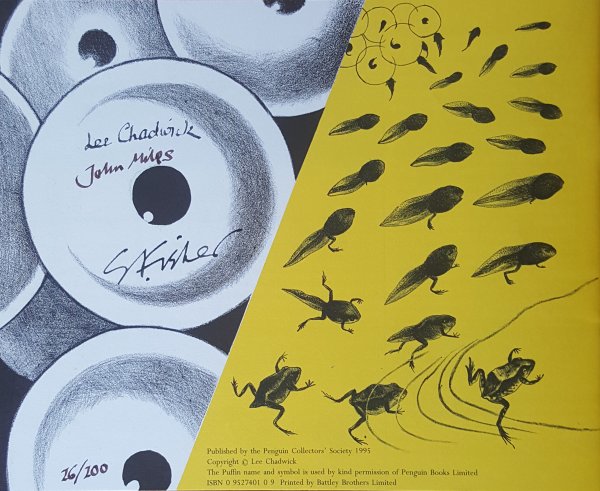
Written and illustrated by Chadwick this book was to be his final work as he died during its production which had started back in 1958 and was nearly complete by his death. Just how complete would become clear when the Penguin Collectors Society approached his widow, Lee Chadwick in the early 1990’s to see what, if anything, still survived. The final agreed text was known to exist in Bristol University archives and Lee confirmed that the plates were at The London College of Printing and when checked were found to be in excellent condition but needing some work before they could be used. This preparation of the plates was done by Sheila Fisher (nee Dorrell) who had been at the Manchester School of Art in the 1930’s when Chadwick had worked there and after the war became his assistant. However there was a further problem, the book needed to be properly designed and typeset in as sympathetic way as possible to the original 1960’s plans and here John Miles stepped in, he had been employed by Penguin back in the 1950’s as assistant to the head designer Hans Schmoller. By getting this remarkable group of people together, all of whom were in their seventies or eighties including Lee Chadwick to do some final editing the book was finally printed March 1996, some thirty five years after it had originally planned to be issued. There were just a thousand copies printed, the first one hundred of which were signed by Lee Chadwick, John Miles and Sheila Fisher. Penguin Books agreed to the edition having the original PP116 number assigned back in 1961. The book came with a twelve page booklet by Steve Hare entitled ‘The Life History of Life Histories’ which details the long gestation of this project and reprints sections of letters between Penguin Books and Paxton Chadwick regarding the work he was doing.

Conscious of the cost pressures that were signalling the end of Puffin Picture Books Chadwick designed the book to just use yellow and blue apart from the black text and line drawings but even so there would be just four more Puffin Picture Books produced after number 116. The creatures featured in this volume tend to be ones that undergo some sort of metamorphosis during their life cycle or have some elusive part of their existence such as eels and their trip to the Sargasso Sea so there is always something different about their entire life span. It makes it a very interesting read and such a pity that it never came out in the sixties for its target audience and that even now you are unlikely to find a copy due to its very limited print run.

The ultimate publication of Life Histories is a fitting tribute to Paxton Chadwick, an artist lost early at just fifty eight years old to an undiagnosed cancer.

Galápagos Diary – Hermann Heinzel and Barnaby Hall

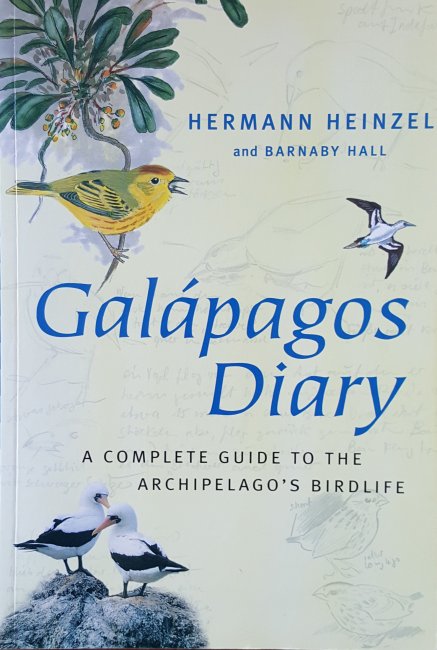
The fourth book in my natural history themed August reading material is a book I originally used as reference material. Although entitled Galápagos Diary, this book is far more than a journal of a 1995 trip round most of the islands in the Galápagos archipelago by artist and author Hermann Heinzel and teenage photographer Barnaby Hall. The book was first published in 2000 and you can see why it took so long to come out as it is a truly beautiful book, heavily illustrated with sketches and photographs. But the reason I bought this copy in 2002 is that I travelled to the Galápagos that year, to mark a significant birthday, and needed a guide to the wildlife, especially the birds. Heinzel I had already heard about as he has illustrated several ornithological volumes including the classic Collins handbook ‘Birds of Britain and Europe’. Originally born in Germany, Heinzel has lived for many years in France and knew Rod and Jenny Hall and their son Barnaby, Jenny and Barnaby had been to Galápagos in 1994 and Barnaby assured Heinzel that he had seen Cattle Egrets there which surprised the naturalist who suspected that what he had really seen was Great Egrets but Baranby was certain so they decided to go together during the school holidays the following year and so the expedition was planned. Not only to see if Cattle Egrets had indeed made it to the islands but also to attempt to see all the endemic species of birds to be found there.

The book is split into three sections, pages 1 to 158 cover the diary of their travels with lovely hand drawn maps showing where on each island they stopped, with drawings and photographs mainly done at the time. A sample page, seen above, deals with part of the time they spent travelling around one of the inhabited islands, San Christobel, the birds drawn by Heinzel are North American Bobolinks which as the name implies are visitors to the islands rather than endemic. Below is a page featuring what for me was the most surprising bird I saw in Galápagos, the endemic Galápagos Penguin. Bearing in mind the island group is on the equator I really wasn’t expecting to see penguins but these photographed by Barnaby on Bartolome, which is where I also spotted them, prove that sometimes animals are not where you think they should be.

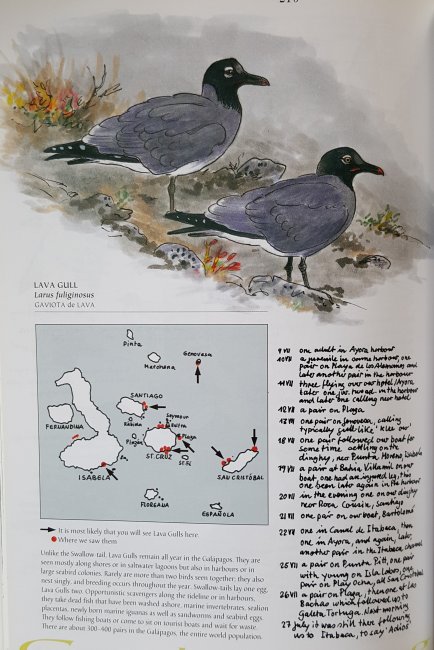
The next section is the species guide and takes up pages 159 to 261, this is entirely done by Hermann Heinzel using sketches and completed paintings of each of the endemic species, no photographs are used in this section. On this trip they failed to see just 3 of the 59 types of breeding species of bird on the islands, just the Marsh Owl, the Painted Rail and the rarest of all, the Mangrove Finch eluded them. In all they saw 66 species and they were all sketched by Heinzel and the three breeding birds they didn’t find had been seen and drawn by him on previous trips so it is a complete guide. Along with the drawings you get a map where they spotted the bird and notes relating to each sighting. The page below is for the Lava Gull, a bird that seems to be everywhere as you can tell by the notes which state that they saw examples on half the days they were in the Galápagos and I spotted them on multiple occasions.

The final section is a nine page checklist of Galápagos birds, both endemic and visitors which invites you to tick off species as you see them but I couldn’t bring myself to do so. It is not just a list but also includes which islands they are to be found on. Despite being able to fly, with the exception of the penguin and oddly the cormorant which has become flightless since arriving in the island group, the birds tend to stick to specific islands where their needs are best catered for. The islands have surprisingly different habitats even though they are a relatively small group and a tiny number of species can be seen from every island, even including those that can be expected to be seen going past.

It was a very useful book when in Galápagos and also later on trying to identify each bird I photographed. Perhaps surprisingly I have no memory of actually reading the diary at the time, I appear to have just used it as a guide to tell what I had been looking at. That is definitely a pity as it is an interesting read as well as a beautiful book.

If you are interested in the photographs I took in 2002 they can be found here:

San Cristobal and Bartolome

Santiago and Genovesa

Seymour and Santa Cruz

Life on Earth – David Attenborough

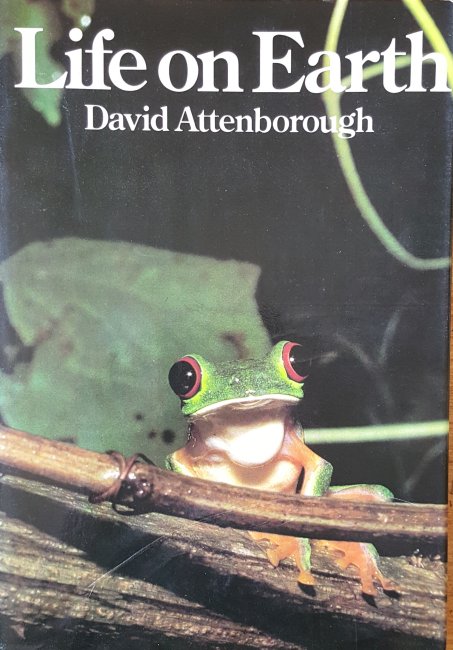
The first in a colossal series of adventures round the world and what would eventually be seen as an incredible lifetimes work is my third natural history book for August but really it is possibly the most significant book and programme series by Attenborough in his career as it totally changed both television’s view of natural history and the global influence of such programmes. Nobody, not even David Attenborough, foresaw back in the late 1970’s just where this would lead and that almost fifty years after he started planning Life on Earth that he would still be writing and presenting on huge television wildlife spectaculars. Attenborough had started out in television back in the mid 1950’s, always with a natural history theme to his work and after the massive success of Zoo Quest, which started in 1954 and which had Atttenborough as the presenter at short notice after the originally planned presenter fell ill, he became a familiar face on British television. In 1965 however his career took a different direction when he became controller of BBC2, one of the then just three TV channels in the UK and ultimately rose to Director of Programmes, taking over control of the output of both BBC channels in 1969. Amazingly despite the high pressure management role he now had he still managed to fit in presenting the occasional wildlife programme. In 1972 when offered the ultimate top job in British television, that of Director General of the BBC he declined and abruptly resigned.

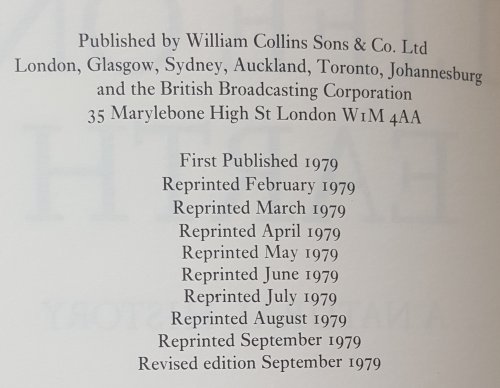
Why? Well he missed the hands on presenting role where he had made his name and after a short TV wildlife series in Asia he started planning an altogether more ambitious work ‘Life on Earth’ a series of thirteen 55 minute long programmes each of which would focus on one aspect of life and would try to tell as much of the whole story from the first single cellular creatures through to the incredible diversity of today. The series took years to film and was well in advance of anything seen before from any television channel anywhere in the world when it was first broadcast weekly between 16th January and 10th April 1979. It was an immediate hit and the accompanying book, which was released as the first episode was broadcast was already into its third reprint by the time the series had finished. My copy is the first revised edition and amazingly the tenth printing dated September 1979, just nine months after it first came out.

Back then you couldn’t record, or buy for watching again, TV programmes so you saw it when it was first broadcast and then all you had was the book and that probably explains the massive amount of reprints. Whilst reading this book again, for probably the first time in over forty years, I watched the entire series again on the DVD set that came out in 2003 and I have to say it has stood up remarkably well.

The book closely follows the structure of the television series with thirteen chapters each of which is dedicated to an episode, so we start with the first appearance of life three thousand million years ago and by the end of the first chapter get to the beginning of multicellular life. But this first chapter, like the first episode is also an introduction to the series and begins laying out just what a massive project it was to be. Reading and alternating watching the programmes made me appreciate how similar but also how different the two media are. The book can go into detail that watching a presenter speil through on screen would be potentially overbearing. With the video you want to concentrate on the wonderful pictures but in the book where there are a dozen or so images per chapter you want to get immersed in the words and can take in more information at one sitting, so the two formats complement one another.

What you also are aware of looking back from today is that Life on Earth whilst groundbreaking and feeling spacious at the time in giving almost twelve hours television and 311 pages in the book, feels nowadays like a rapid flit through its subject. Chapter eight of Life on Earth entitled ‘Lords of the Air’ covers the whole subject of birds in just thirty pages, I also have the book for the much later series ‘The Life of Birds’ (1998) which oddly takes the same total number (311) pages to cover just birds over ten chapters again mirroring the episodes of that TV series. So vastly more information and detail but ‘The Life of Birds’ and the other follow up series would not have existed if ‘Life on Earth’ had not been such a resounding worldwide success. The book is an interesting read and an excellent start for anyone who wants to get a grasp on the development of species and how our planet has become populated with countless different creatures. One point that should be made is that the emphasis is on creatures that are alive today, yes dinosaurs are mentioned and fossils shown but only on the way to modern examples. There is no specific chapter on the hundreds of millions of years that dinosaurs ruled the Earth. Frankly something had to go to get the vast subject still within the time frame for the television shows and you can’t go out and film dinosaurs so they are mainly dealt with in passing.

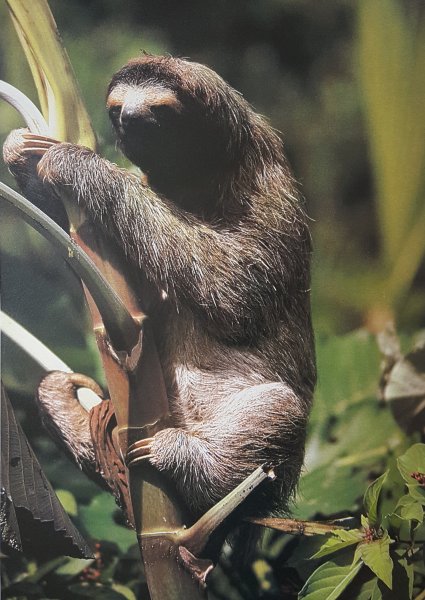
The book has lots of wonderful wildlife photographs inside and perhaps my favourite is the one above of a three toed sloth taken in Panama by David Attenborough himself, one of nineteen photos in the book that he took. The cover photo of a Panamanian Red-eyed Tree Frog, which became an icon of the series, was also taken by Attenborough. Reliving a television milestone which I remember watching enthralled back when I was a teenager has been a great experience, the book appears to be out of print at the current time but due to the huge numbers sold over the decades it is very easy to get a copy.

The Year of Sitting Dangerously – Simon Barnes

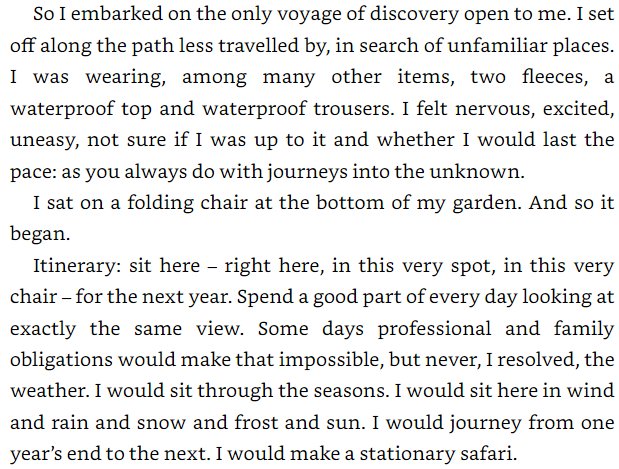
So this August I am devoting to natural history and by contrast with last week’s book from the 18th century this is so contemporary that it was written during the various covid lockdowns here in the UK and was first published by Simon & Schuster on the 13th April 2023. Simon Barnes was looking forward to a trip to South Africa as a guide on a wildlife tour when all of a sudden he wasn’t going anywhere, so decided to really not go anywhere and just sit in a chair at the bottom of his garden for a year and record his experiences. Now Barnes is lucky, he lives in the Norfolk Broads, an extensive flat wetland area to the east of the UK so his bird watching possibilities just sitting at home are considerably better than the average town dweller, although by the nature of it being a flat open landscape (the highest point in Norfolk is just 344 feet (105m) above sea level) he was rather exposed to the elements.

Oddly, although he had decided to do this he didn’t explain what he was doing to his family for several months, they must have assumed that he was having a rather strange reaction to being forced to go nowhere. He is actually quite fastidious about sitting out and noting whatever he sees which is why the book runs to 336 pages from Sunday 27th September 2020 to Monday 27th September 2021, the extra day signalling that he intends to continue sitting out and making notes whenever he can going forward. It isn’t an end to his experiment but a continuation of an experience he has grown to love regardless of the discomfort sometimes. I have included a couple more sample passages below so you can see the changes to the writing style as the year progresses. I think he gets more poetic as he sinks more and more into the communion with nature that his self imposed routine gives him.

There is humour and drama aplenty as he follows the lives of the various creatures he is observing, from the majestic marsh harriers swooping across his eyeline to the much bullied buzzards, which every bird seems engaged in driving away. The herons in the lakes and marshes just beyond the river flowing past his seat and the great flocks of corvids (rooks, jackdaws and crows mainly) that are often seen, to the gay pair of male swans that encroach into his garden and one morning had clearly been roosting overnight in his chair judging by the mess. Through the year we see the animals that live here all the time along with the seasonal visitors, them pairing off in the summer months and hopefully raising young although obviously not in the case of the gay swans the relationship between them only slowly dawns on Barnes as he watches them, initially trying to work out which was the female. We also get brief insights into his family life, especially his increasing frail father who is finding living alone in London through covid lock downs particularly difficult.

I was really looking forward to reading what he saw on my birthday, in early June, and was somewhat disappointed to find that he actually did manage to get away for a weeks family holiday boating on the broads which coincided with the day in question so there were no entries between the 8th and 14th June. I am always intrigued when reading diaries to see what the person was up to on my birthday, it adds something personal to the reading experience, however it wasn’t to be with this book. That however was the only slight let down in a book I have thoroughly enjoyed and definitely learnt from. His descriptions of birds, mammals, and in the later chapters insects as he starts to take more notice of them as well are really good especially as he explains how he determines which species he is actually looking at from bird calls, flight patterns, the shape of wings and other features and what they tell you about the way the bird looks for food or finds a mate. I am by no means a bird watcher although I do watch birds when they are around, a fine but important distinction I think. I no longer have a garden, but when I did I had numerous feeders up to attract birds, nowadays I am restricted to what I can see from my living room window although that does quite often include buzzards wheeling over the valley so it’s not all bad.

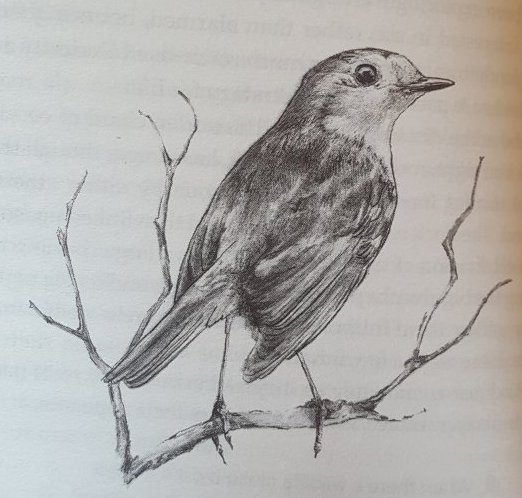
Each month starts with a beautiful pencil sketch of a bird that features in the chapter. These drawings were done by Simon Barnes’ wife, the artist Cindy Lee Wright. The one I have included above is the lovely picture of a robin which starts the chapter ‘February’. I have a certain fondness for robins, they are definitely the bird least bothered by human presence near them here in the UK and used to perch watching me as I worked in my garden in case I unearthed anything worth eating.

I can definitely recommend this book, the idea of just sitting in one place for a year and writing about what was seen from that vantage point could have been dull but I found myself racing through the pages totally drawn in by the gentle and engaging tone of the writing.

The Natural History of Selborne – Gilbert White

To start off my latest August group of books, which this time is focused on natural history, I am beginning with a classic of the genre, Gilbert White’s The Natural History of Selborne first published in 1789, along with his Antiquities of Selborne, which initially was usually included but nowadays is largely omitted leaving just his famous work The Natural History. Both of these books consist of a series of letters, which in the case of Antiquities none of were never actually posted to anyone and in The Natural History several were also not posted but were instead created to match the rest of the content. The ones that were posted are to two different people over a period of almost two decades, but even these have been edited for publication so the whole is rather contrived. Gilbert White was the curate of Selborne on four separate occasions living in what was his grandfathers vicarage and his younger brother John, who is mentioned several times in the book as providing extra information was a vicar in Gibraltar. He is now famous for this book, which was one of the first true natural history volumes based on studies of wild fauna rather than dead examples. That is not to say White didn’t make use of freshly shot birds to complete his analysis but he was rare in studying live animals and how they reacted with the environment to give colour to his studies.

The book starts with forty four letters to the Welsh naturalist Thomas Pennant, the first nine of which were never posted and were written much later to form an introduction to the book when White decided to publish his notes on local wildlife and plants. These describe the village of Selborne and the surrounding countryside and so give a useful if somewhat tedious background to the observations that he then goes on to make. The second batch of sixty six letters are to English lawyer, naturalist and one time Vice President of The Royal Society the Honorable Daines Barrington and again several of these were never posted especially letters fifty six to sixty five, which are concocted from White’s daily journals and provide interesting details of weather extremes he has experienced in the village including winter temperatures of below zero degrees Fahrenheit (-18 degrees Centigrade) with ice forming below the beds in his house. These also include an account of the effect of a massive volcanic eruption in Iceland from June 1783 to February 1784 which killed around a quarter of the population of Iceland and left volcanic ash in the skies over Europe for months.

the peculiar haze, or smoky fog, that prevailed for many weeks in this island, and in every part of Europe, and even beyond its limits, was a most extraordinary appearance, unlike anything known within the memory of man … The sun, at noon, looked as blank as a clouded moon, and shed a rust-coloured ferruginous light on the ground, and floors of rooms; but was particularly lurid and blood-coloured at rising and setting. 

Letter LXV

One of the frequent issues raised in the various letters is the possibility of bird migration, at the time this was merely a suggestion that it might happen with the majority view, including that of Barrington, being that birds that were not seen all year round hibernated through the winter even though no birds had ever been found in such a torpid state. White is in favour of migration but doesn’t believe that something as small and frail as a bird could travel long distances so keeps going back to the hibernation theory and indeed on at least one occasion caused a potential site for ‘sleeping’ birds to be dug up searching for them. Needless to say they found nothing. But his observations and attempts to understand the natural world from them was pioneering and one of the letters regarding the usefulness of earthworms was undoubtedly an influence on Charles Darwin a hundred years later when he wrote his monograph on the subject.

Four of the letters to Daines Barrington are in the form of monographs and were published in the Philosophical Transactions of The Royal Society which is the worlds oldest scientific journal, started in 1665, and still in print. These four letters are by their nature longer and more detailed than the others and concern four related bird species which attracted White’s particular attention. Letter XVI is about House Martins, letter XVIII discusses Swallows, Letter XX details the habits of Sand Martins and letter XXI deals with Swifts. These are excellent articles on the differences and similarities between the four species and were ground breaking observations at the time (December 1773 to September 1774). In my opinion the letters to Barrington tend to be more interesting than the ones to Pennant which are more deferential to the addressee as Pennant had published several books on natural history including a four volume British Zoology. It is noticeable however that although there have been at least three hundred editions of The Natural History of Selborne and it has never been out of print since first coming out in 1789 I cannot find any currently in print editions of any of Thomas Pennant’s works.

My copy is the Penguin Books first edition from March 1941, which was originally planned to be a part of a second set of Penguin Illustrated Classics following the original ten from May 1938 but this set never happened. However this explains why this book, along with Izaak Walton’s The Compleat Angler, which will be covered later this year, has lovely wood engravings within the text, some of which I have included above, unlike other Penguin Main Series books which are just plain text as these two were designed before the continuation of Illustrated Classics was shelved. The engravings in this volume are by the wonderful artist Clare Leighton who despite being born and brought up in England had moved to America by the time she did these pictures for Penguin and where she continued to live for the rest of her life, dying in 1989 at the age of ninety one.

Rescuing the Spectacled Bear – Stephen Fry

20200707 Rescuing the Spectacled Bear

This book was written as a diary during the filming of ‘Stephen Fry and the Spectacled Bear’ which itself was a follow up to an earlier documentary entitled ‘Paddington Bear: The Early Years’. That documentary gives a clue as to how Stephen Fry became involved in a project to highlight the problems the Spectacled Bear has in the wild. The much loved children’s book character Paddington famously came from Peru, but were there really bears in Peru? It turns out that yes there are but the question should have been, for how much longer will there be bears in Peru? So from 11th January to 5th February 2002, Fry and a team from OR Media went back to make a film about saving a couple of captive bears from appalling conditions in a tiny private zoo attached to a cafe along with two more from a zoo in Chile and also to try to film more bears in the wild. Well that was the plan anyway…

Things start to go wrong from the start due to the endemic corruption in Peru, Lima zoo had agreed several months ago to put the bears up for a few days before they were to be transported to their eventual home (see below), suddenly they stated that they had nowhere to put them and needed $4,000 to build a a cage from scratch. This is apparently a fairly normal shakedown, wait until it is impossible for the plans to be changed and then demand money which of course isn’t to build a cage but to line the pockets of the minor official who had thought of this wheeze. Fortunately part of the team was an ex Peruvian diplomat who could deal directly with the minister in charge to get this one sorted out. The people at the national park where they were going to film bears in the wild also suddenly demanded $6,000 to allow the filming; but they weren’t expecting the crew to simply say that alright then we’ll do something else. Other sums did have to be paid to at least get something for the documentary but filming bears in the wild was dropped.

The book is sad, when dealing with the plight of the bears, and you get as fed up as Stephen does with the overwhelming corruption which is determined to make achieving much to help them as difficult as possible. However there are also passages that are extremely funny, my favourite of these concerns him trying to get to sleep whilst staying at a jungle lodge, so well out of his comfort zone in more ways that one, where the noises get louder and odder as the night progresses starting with.

A moth about the size and weight of the Penguin Classics edition of Don Quixote flapped in and started circling the tilley lamp. First mistake. Swearing lightly, I pushed myself out of the netting and took the lamp out onto the porch. Creatures of the night being dark and stupid, are attracted to the light. THEN WHY THE HELL DON’T THEY COME OUT DURING THE DAY?

The photography, by Rob Fraser is superb and does full justice to this spectacular country and the amazing diversity of landscapes that it contains from jungle rivers to Andean peaks via deserts and highland forests. It is also home to a vast selection of animals including ten percent of all known bird species. If the documentary and this book can do anything to hell protect some of them then Stephen Fry’s month in the country will have been worthwhile. All his proceeds from the book are donated to the Bear Rescue Foundation.

In 2008 the team went back to Peru, only this time minus Stephen, to do a follow up documentary entitled ‘Spectacled Bears: Shadows of the Forest’ for which Stephen provided narration. You can see the reserve near Machu Picchu where the bears they rescued ended up in the video linked below, although it was a lot more basic back in 2002.

National Geographic video of Inkaterra Andean bear Sanctuary

At the time I wrote this the follow up documentary can be seen via the link below, but presumably it may get deleted due to copyright at some point. I cannot find an example of the original films.

Spectacled Bears: Shadows of the Forest