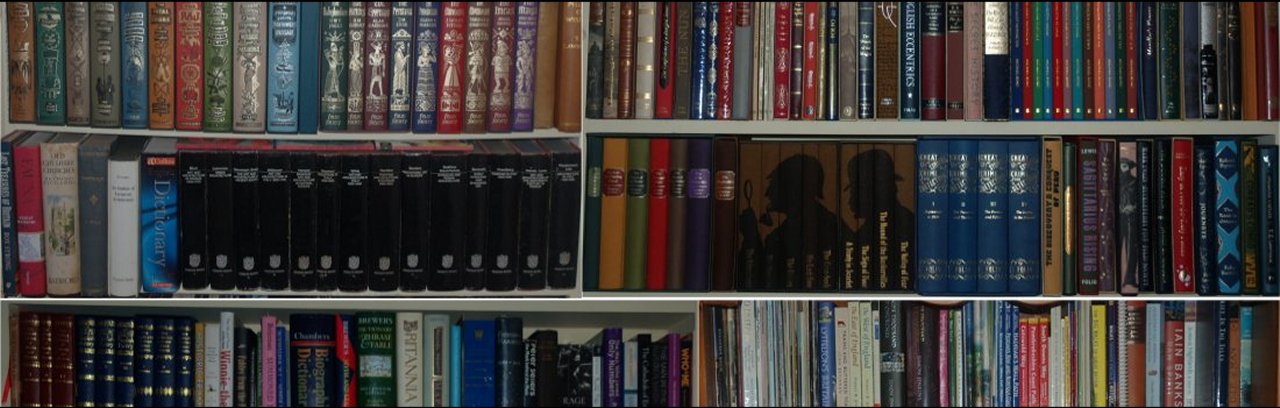

I’ve been meaning to read Fyodor Dostoyevsky for a long time but in common with a lot of other Russian novelists his books are somewhat daunting for a blog which appears every week, just checking my shelves I find:
- ‘Crime and Punishment’ – 559 pages
- ‘The Devils’ – 669 pages
- ‘The Idiot’ – 661 pages
- ‘The Brothers Karamazov’ – 2 volumes totalling 913 pages
- and a volume containing two short stories and a novella ‘The Cossacks’ – 334 pages
It was then I spotted that I had two volumes from the Penguin Little Black Classics series which would give me an entry point to Dostoyevsky to see if I like him as an author. The first one is number 44 from this series ‘The Meek One’ which only has this one short story in it. The title is more usually translated as ‘A Gentle Creature’, and it is just 57 pages, still quite long for a short story, but a lot more approachable. Warning there are spoilers in this review if you want to read the stories first I cannot find ‘The Meek One’ but ‘White Nights’ is on Project Gutenberg here and ‘Bobok’ can be found here.
‘The Meek One’ begins with the un-named narrator contemplating the body of his equally un-named young wife laid out on a table in their home waiting for the undertaker to arrive the next day and we then go back over the story of how the two met and the short and largely unhappy marriage that they had. They had originally come into contact with one another as she would often come and pawn items in his pawnbrokers to raise money to advertise her services as a governess or more latterly almost any job to enable her to leave her two aunts. At the time of their marriage he was forty one and she just sixteen, however he regarded himself as her saviour from a planned marriage arranged by these aunts to a shopkeeper in his fifties who had killed his two previous wives whilst drunk and was looking for a third. The relationship between the couple seems to have deteriorated very quickly after the wedding and it is a sad story he tells of long silences and barely communicating through the winter including a time when she places a loaded gun to his head whilst thinking he was asleep but doesn’t pull the trigger. In the spring he makes an unexpected move to rescue the marriage suggesting a journey to France but it is whilst out getting the passports that she commits suicide.
Russian writing has an often undeserved reputation for gloominess and this short story doesn’t go any way to repudiate that impression, maybe the next book will have something more uplifting.

The second and third of Dostoyevsky’s short stories in volume 118 of the Penguin Little Black Classics series has ‘White Nights’ paired with ‘Bobok’. ‘White Nights’ is 86 pages long, ‘Bobok’ is the shortest at just 27 pages.
‘White Nights’ tells the story of a twenty something recluse in St Petersburg and yet again we don’t have his name, this lack of a name seems to increase the isolation of Dostoyevsky’s characters and this time he is pretty well the only un-named person in the story. He spends his days wandering around the city imagining having conversations with the people and even the houses he sees but in fact the only person he communicates with is his maid Matrona who is supposed to look after his apartment but hasn’t even removed the cobweb on the ceiling, mind you neither has he. One day whilst out on one of his aimless walks he sees a pretty young girl crying on a bridge and this time builds up the courage to approach her, however she evades him only to be threatened by an older passerby and our narrator steps in the save her. So begins the four days of happiness that he is to enjoy as they get to know one another, he explains that he is a lonely dreamer whilst she tells of a unhappy time living with her blind grandmother who pins their clothes together so that she can be sure Nastenka is not wandering off. She also tells of a lodger they had a year ago whom she fell in love with but who had to return to Moscow but promised to return and marry her when he left. The narrator rapidly also falls in love with her but agrees to carry a letter to a family who know the ex-lodger to see if he has returned and is still planning on restarting their relationship whilst secretly hoping that he has found somebody else in Moscow. The story is well written with the narrator regarding himself as the hero almost of a book of his life, indeed Nastenka rebukes him for telling his story almost as if he was reading it out. Sadly the ex-lodger does return and the narrator returns to his apartment downcast looking to another fifteen years of loneliness but Matrona does at least remove the cobweb.
‘Bobok’ is easily the strangest of the three stories and to my mind the best due to its originality, although it starts out normally enough with our narrator, this time with a name, Ivan Ivanych, going to the funeral of a distant relative and avoiding the lunch afterwards, takes to lying down on one of the long stones in the graveyard for a rest. All of a sudden he hears voices, muffled but intelligible, and wonders where they may be coming from. Gradually he realises that they are coming from the graves around him and it appears that the dead have a second short life in the grave where they can communicate with each other for two or three months, possibly up to six before they decompose too far. I loved this story as I hadn’t read anything like it before, The various conversations start off reflecting the status of the characters as they were before they died but gradually they decide to throw off their previous lives and simply talk to one another until they suddenly fall silent when they become aware he is listening. Another possible reason for our narrator hearing them is given in the opening lines of the story:
The day before yesterday Semyon Ardalyonovich suddenly comes out with: ‘And would you kindly tell me Ivan Ivanych will the day come when you’ll be sober?’
All three tales are taken from the Penguin Classics volume ‘The Gambler and Other Stories’ translated by Ronald Meyer which also includes the short stories ‘The Dream of a Ridiculous Man’, ‘A Christmas Party and a Wedding’ and ‘A Nasty Story’ along with its title novella ‘The Gambler’ which was actually written by Dostoyevsky in order to pay off his debts from losses at roulette.
 Ramblings on my bookshelves
I’ve read Crime and Punishment and thought it was brilliant, I was quite surprised at how interested I was and how easy it was to read! On the strength of that I’ve put The Brothers Karamazov on my classics list and am horrified to see that it’s 913 pages, that’s going to take some planning!
LikeLike
Yes I’ve read that Crime and Punishment is very good whilst I was doing some basic research for this blog so that will probably be my next Dostoyevsky
LikeLiked by 1 person