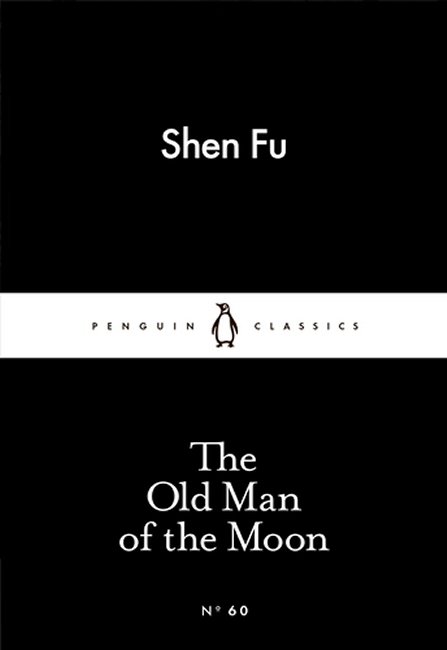
Very little is known about Shen Fu other than what he said in his book ‘Six Records of a Floating Life’ written in 1809 in China, of which only four sections were ever actually published in the 1870’s, the other two were either lost in the intervening decades or were never actually completed. Nothing definite is known of him after his book was written but he is believed to have died around 1825. What is known is that he was born in 1763 and married in 1780 to a cousin Chen Yun and earned his living as a governmental private secretary. The extract I have, entitled ‘The Old Man of the Moon’ by Penguin for this book, is largely from the first of the four surviving sections ‘Wedded Bliss’ and covers his life with Yun from their first meeting to her tragic death twenty three years later. The title of the complete book is presumed to come from the works of the Tang Dynasty poet Li Bai—“Ah, this floating life, like a dream…True happiness is so rare!” Whilst the title chosen by Penguin for this selection is a quote from about halfway through the book itself:
“People say that marriages are arranged by The Old Man of the Moon”, “said Yun. “He has already pulled us together in this life, and in the next we will have to depend on him too. Why don’t we have a picture of him painted so that we can worship him?”
What comes out most if the enduring love between the couple and his admiration for her skill in embroidery amongst other things. Initially their marriage was happy and they had two children and the book is full of simple pleasures that they enjoyed together such as sitting watching the moon at night whilst drinking wine and talking about poetry and art. But money worries overtook them especially after Shen Fu lost his job and resorted to opening up part of their house as a shop to sell his paintings and when that was not enough their possessions also were sold. Unfortunately Yun managed to get on the wrong side of her parents in law and they determined not to see her again, which along with the poverty the couple had been reduced to meant they had to move away leaving the children behind. Yun already had been ill, probably due to the stress she was in, and whilst she did make somewhat of a recovery in their exile in a better environment than they had living near Shen Fu’s parents she would relapse and die by the end of the book.
It’s a sad tale, lifted by the evident joy they had with each other before Shen Fu lost his job and difficulties engulfed them and I’m really glad I read it. Apparently the other surviving parts of ‘Six Records of a Floating Life’ are happier, and it is really good that the manuscript was discovered on a second hand book stall and recognised as a significant work by the brother in law of Wang Tao, who ran Shen Bao (a newspaper in Shanghai). Wang Tao published the manuscript in 1877 and it was an immediate hit.
 Ramblings on my bookshelves