
The Vampyre – John Polidori

Although entitled ‘The Vampyre’ by John Polidori in fact this book consists of three short stories by different writers but all concerned with vampires, The first is indeed the story by Polidori but it is followed by ‘The Stranger’ by Karl Adolf von Wachsmann and the final story is a chapter removed before publication from Bram Stoker’s classic ‘Dracula’, This book is the latest title from the Penguin Little Black Classics and was published on 4th September 2025 over eight years since the last single volume addition to this series appeared ‘The Constitution of the United States’ (published 6th April 2017), which was itself just over a year after the last significant addition of thirty six books on 3rd March 2016. Originally created to mark eighty years of Penguin Classics with eighty books on the 3rd September 2015 and priced at just 80 pence each this latest addition is £4.00, so we have seen a considerable increase in price although this book at 111 pages is significantly larger than examples from the first eighty, but not the second batch where one of this length would have been £2.00.

Let’s look at the stories individually, whilst not giving away any endings:

The Vampyre – John Polidori

This story deserves to be better known if only because of its history. John Polidori was Lord Byron’s doctor and was one of those tasked with writing a ghost story one wet and miserable evening by Lake Geneva in 1816, the others being Byron himself, his fellow poet Percy Shelley and Shelley’s teenage companion Mary Wollstonecraft Godwin. Only Mary produced a classic, published under her later married name of Mary Shelley, and that was of course Frankenstein which I wrote about last year. The Vampyre is actually a combination of Byron’s attempt and Polidori’s later rewriting and was published in 1819, a few months after Frankenstein. The story concerns an English gentleman named Aubrey who soon after meeting the unusual but fascinating Lord Ruthven suggests that they travel together on a European tour which was so fashionable at the time. During the journey he becomes highly discomforted by Ruthven’s character and ultimately they go their separate ways, Aubrey heading to Greece to study the ancient ruins but ending up falling in love with a young Greek girl who is tragically killed and Aubrey in trying to save her falls into a deep fever when he realises she has died only to find Lord Ruthven at his bedside as he recovers. The two set off again together, but are ambushed by bandits and Ruthven is himself killed by their attackers, or is he?

The Mysterious Stranger – Karl Adolf von Wachsmann

This anonymous 1860 translation of von Wachsmann’s ‘Der Fremde’ (The Stranger) was first published in German in his collection ‘Erzählungen und Novellen’ (Stories and novellas) from 1844 over fifty years before Stoker wrote ‘Dracula’. The later unofficial translation didn’t even credit von Wachsmann never mind the translator so its origins were as mysterious as the stranger it features, but it is highly likely to be an inspiration for the famous novel, not just in the setting of the Carpathian mountains but also the vampire control of wolves and the description of the aristocratic undead main character. At around fifteen and a half thousand words it is also the longest tale in this small collection.

The story concerns an Austrian knight who after inheriting a large estate in the Carpathians decides to set off with his daughter Franziska and a niece Bertha as her companion along with the young Baron Franz von Kronstein who in enamoured with Franziska but she is not interested in him. To avoid bad weather they end up taking a route through a forest but delays mean that it gets dark before they clear the woods and they are set upon by a hungry pack of wolves. Fortunately they are near a ruined castle and thinking to get respite there they head that way only to encounter a pale mysterious stranger who is capable of scaring the wolves away but then vanishes. Many weeks later as the estate is coming into order they decide to head back towards the ruin one afternoon and again encounter the stranger just as dusk has fallen and thanking him for their deliverance they invite him to call on their castle sometime. This he duly does and whilst Franziska is impressed by him the others are wary of his taciturn manner and refusal to eat or drink despite joining them during their evening meal. He continues to call over the coming weeks, always after night has fallen and refuses all sustenance but is clearly improving as he now has a better build and colour in his cheeks, Franziska however is getting paler, has a mysterious wound on her neck and is having strange dreams of being visited by the stranger at night…

Dracula’s Guest – Bram Stoker

By far the shortest tale in the book, according to Florence Stoker, Bram’s wife, this was apparently removed from ‘Dracula’ as the book was overlong. Taking this chapter out would not however have represented much of a cut as the published novel is well over 160,000 words (419 pages in my copy) and this story is roughly 5,000 words or less than five times the length of this blog entry, so either the revisions were significantly more extensive than just this chapter or the reason for its exclusion were different. It was first published in 1914, two years after Stoker’s death and seventeen years after the novel came out. The story features an unnamed Englishman, presumably Jonathan Harker, staying in Munich and deciding to go for a drive in a carriage provided by the inn up to the surrounding hills. The innkeeper warns the driver not to be back late because of the date, it is April 30th so Walpurgisnacht is upon them when darkness falls, a time of evil spirits.

After a while the carriage reaches a crossroads where the horses are spooked and Harker wishes to go down one of the side roads but the coachman refuses explaining in broken English that there is a deserted and ruined village down there where terrible things had happened. Harker insists and ultimately as the coachman is so afraid that his limited English deserts him Harker tells him to head back to Munich leaving him to explore on foot. After making his way down to the ruins there is a sudden storm and Harker seeks shelter but the only thing with cover is an old mausoleum with an iron spike through its roof, the door oddly swings open when he leans against it and the horror begins…

Although I greatly enjoyed both Polidori’s and Stoker’s tales the best to my mind was Wachsmann’s. This blog is being posted a couple of days before Walpurgisnacht in honour of Stoker’s chapter which is set on that night.
1066 and All That – WC Sellar & RJ Yeatman

1066 and All That is a 20th century classic piece of humour written by two people who although they worked together many times afterwards never achieved the level of success of this, their first book, ever again. Walter Sellar was a school teacher at various private schools in England including his old alma mater Fettes College and ending up at the highly prestigious Charterhouse. Appropriately he originally taught history although later on switched to English, he also wrote humorous pieces for Punch magazine as did Robert Yeatman although the two originally met at Oriel College, Oxford after the First World War. Yeatman came from a relatively prosperous family involved in importing Port wine in connection with Taylor’s Port but largely worked as an advertising copywriter and executive for such businesses as Kodak. The introduction of this Folio Society edition was written by broadcaster and stage director Ned Sherrin and very informative it is too, as it has anecdotes from several people who knew both men including Yeatman’s son Bill who recalls that his father had a sign on the gate CAVE CANEM (Latin for Beware of the Dog) when someone pointed out that burglars wouldn’t understand the notice he replied “Then they are not the sort of burglars we want.” I think this gives a good insight into the humour that you will encounter on reading the book.

As the subtitle states it is “A Memorable History of England, Comprising All the Parts You Can Remember, Including 103 Good Things, 5 Bad Kings and 2 Genuine Dates”. The two genuine dates are The Battle of Hastings in 1066 which led to the Norman conquest of England and 55BC which was the date of Julius Caesar’s first and not entirely successful foray onto the British Isles, this last one is followed by the observation that “Julius Caesar was therefore compelled to invade Britain again the following year 54BC , not 56 owing to the peculiar Roman method of counting”. We then proceed to race through English history up until World War I, several people, including Ned Sherrin, have written follow up volumes taking the history further on in a similar style to the original but none of them have really caught the public imagination the way ‘1066 and all That’ did in 1930 when it was first published as ably illustrated by the fact that 96 years later it is still in print.

A lot of the humour revolves around confusing dates, events and people in a way that would have been all too familiar to Sellar during his time teaching, such as the appearance of two Henry V’s, Part I and Part II as in the Shakespeare plays and the chapter on Henry VIII which begins:

Henry VIII was a strong king with a very strong sense of humour and VIII wives, memorable amongst whom were Katherine the Arrogant, Anne of Cloves, Lady Jane Austin and Anne Hathaway.

There are also various test papers inserted amongst the main text which sometime bear a passing relevance to what has preceded them but more often are there just to allow a slightly less structured series of jokes to step away from the list of monarchs and battles which school history textbooks at the time were fixated upon and which are the basis of this parody. History is not really taught like this anymore in British schools, lessons nowadays bounce around the past and places in a seemingly random manner, when I was at school we plodded through English history in sequence reaching the Gunpowder Plot (1605) after three years of studying just before I gave up the subject, not that I didn’t enjoy history I just didn’t like the somewhat tedious sequential nature of the teaching although I understand the reasoning behind it. Sellar and Yeatman were partly inspired by this rote learning to produce the book and also ‘Our Island Story’ by Henrietta Elizabeth Marshall which was a major children’s text at the time and depicts some events as desirable and others as undesirable leading to ‘1066 and All That’ and its emphasis on Good Things and Bad Kings. Now that history isn’t taught in the manner parodied I wonder if ‘1066 and All That’ will survive, I hope it does, although you do need to have learnt a lot of real history in order to get a lot of the jokes and it’s therefore possible that it may not.

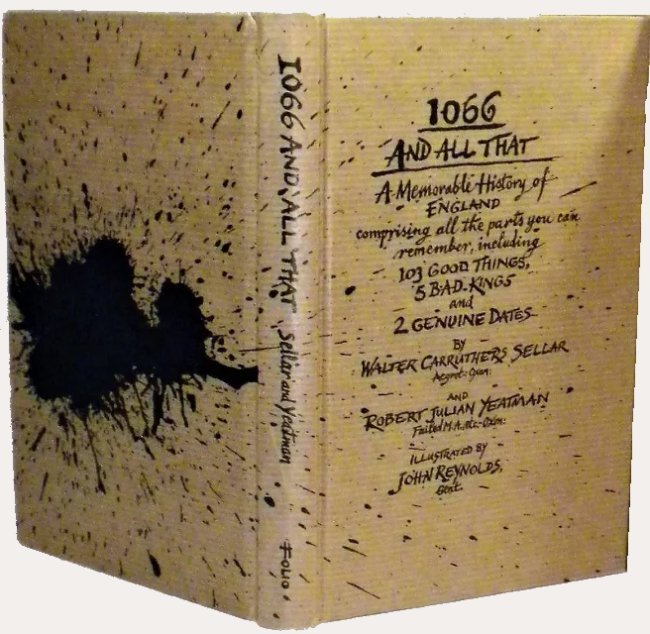
The Folio edition is designed to look like a school textbook of the period which has been wrapped in brown paper to protect it from ink stains, an all too common issue when young people are using fountain pens at school, I remember several books receiving this treatment during my school days although I never managed to make such a mess as seen on on the cover of this book brilliantly designed by David Eccles. It has the original 1930 illustrations by John Reynolds which are so perfect for the book that few editions have ever changed them.

Trains and Buttered Toast – John Betjeman

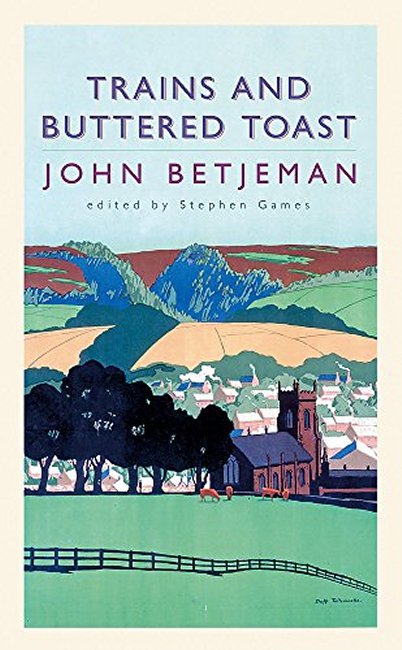
This selection of Betjeman’s radio talks was first published in 2006, twenty two years after the Poet Laureate died and for anyone unfamiliar with Sir John’s prose work this compilation edited and selected by Stephen Games is an excellent introduction. The talks range in date from 17th February 1932 to 6th July 1975 although it should be noted that this last one, concerning the great hymn writer Isaac Watts, is an extreme outrider in the selection and the second most recent is from 1952 so the vast majority are from the 1930’s and 40’s. I grew up listening to Betjeman on the radio or watching him on television extolling the virtues and vices of architecture he either liked or loathed and of course travelling around Britain, preferably by train and introducing me to poetry. It is only when writing this article that I realise that he has been dead for forty two years as of next month and wonder how many people know of or read him today? He was a man of forthright opinions, although always expressed in a polite manner as befits a much loved gentleman of the old school, and his statue in St Pancras railway station is fitting as he campaigned so hard to save this wonderful building. For me the most successful of the forty eight talks are the ones concerning places rather than people, there are twelve biographical works in the book including one autobiographical snippet about Christmas and the final talk is a bit of an oddity in a book as it is entitled ‘John Betjeman reads a selection of his own poetry’ which clearly he doesn’t in this case although the explanations as to why he chose specific works and a little insight into them is well worth reading. A line from the 1937 article on Swindon gives a hint as to why I loved the talks about places:

Swindon is full of good hearts and ugly houses – and it’s the ugly houses I’m going to talk about.

Sir John must have received some remonstrations about this talk as in later essays he says some nice things about Swindon, although not too nice, he doesn’t change his overall position, but does at least find some parts of the city to like. It puts me in mind of his poem Slough, also written in 1937 which begins:

Come, friendly bombs, and fall on Slough
It isn’t fit for humans now,

He was obviously having a bad time with urban planners in 1937. However it’s not by any means a negative book, there is much to celebrate and Sir John does so, highlighting amongst other the beauty and history of the out of the way parts of Exeter and the joys of returning to England during World War II in his brief breaks from being British press attaché in Dublin after being rejected for active service.Even just reciting the names of villages brings him comfort in 1943 appreciating the words in the spirit of a true poet, and yes all of them are real, I’ve been to several of these:

To think of the names is to feel better – Huish Episcopi, Whitchurch Canonicorum, Willingale Spain, Tickencote, Bourton-on-the-Hill, Iwerne Minster, Piddletrenthide, South Molton, Wotton, Norton, Evenlode, Fairford, Canons Ashby, Bag Enderby, Kingston Bagpuize.

The biographical works are mainly split into two sections ‘Eccentrics’ and ‘Christian Soldiers’, which I think tells you a lot about the selection, however in the ‘Christian Soldiers’ section is a talk on St Petroc, the patron saint of Cornwall where Betjeman manages to give a presentation of a man that he freely admits at the beginning virtually nothing is known, The inclusion of Pugin by Sir John is not surprising if only for his detailing on The Houses of Parliament in London and the Irish eccentric Adolphus Cooke Esq. of Cookesborough would be funny if it wasn’t ultimately so tragi

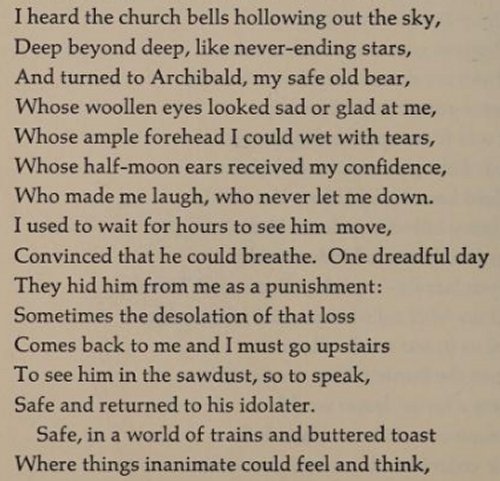
The title of the book comes from an early part of Betjeman’s autobiographical poetic work ‘Summoned by Bells‘ and relates to the comfort he found as a pre-school age child in his teddy bear Archibald. Indeed the words ‘Buttered Toast’ appear five times in this work which says a lot about the simple pleasures that Sir John would fondly celebrate.

There will be more of John Betjeman’s travels around Britain in August as part of my annual summer theme.

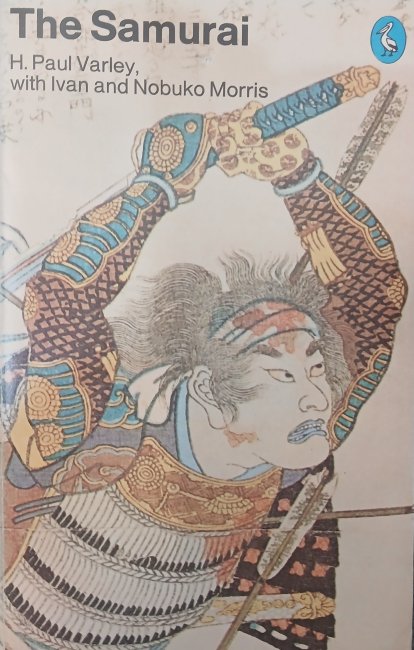
The Samurai – H Paul Varley with Ivan & Nobuko Morris

This book is far more than the story of The Samurai in Japan, rather it is a history of Japan from the medieval period through to mid to late 19th century because to understand the development of Samurai it is essential to place them in context and as this warrior class was a significant feature of Japanese society for over a thousand years. Despite the book covering all of the Samurai Period, which is generally considered as running from the Nine Years War, which started in 1051, and concluding with the abolition of the Samurai class in 1876, the book actually starts on 26th February 1936 in a military attempt to overthrow by assassination the Japanese government and bring back the Emperor as the ultimate ruler. These junior soldiers were inspired by the Samurai of old, but unlike previous centuries the Emperor wasn’t interested in being made absolute ruler again and the senior officers of the army soon quashed the mutiny and those involved in organising it were dealt with swiftly, often by execution, without having a chance to declare their ideas in a court. This was not the first time that such an uprising had occurred in the 1930’s but it was the last; and the only subsequent appearance of the Samurai spirit in Japan would arguably be by the Kamikaze pilots of World War II. After highlighting these modern day examples the book then leaps back to the end of the Heian Period (794-1185 AD) to cover the Nine Years War and the later Three Years War (1086-88) and the rise of the Samurai fighter during those conflicts.

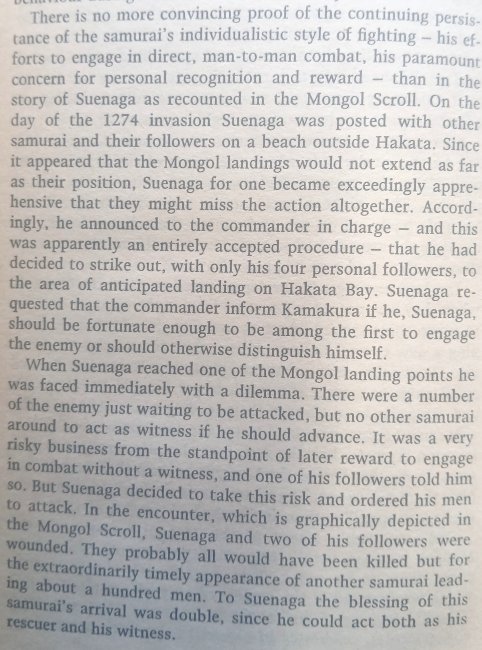
Early warfare in Japan was a particularly strange form of fighting and would have greatly confused a westerner if they had seen it. The Samurai would enter the field of combat and determine which of their opponents was an honourable, similarly ranked, foe and then once the armies had paired off they would effectively fight duels, only moving on to another enemy once they had defeated their current opponent. Gradually warfare evolved into something we would recognise with planned movements of blocks of men and greater strategy rather than one on one combat. This probably grew from the rise of the Shogun or General commanding whole armies on behalf of his Emperor which occurred more often during the Mongol invasions of Japan during the Kamakura Period (1185-1333 AD). This also led to the creation of one of the most remarkable documents on medieval Japanese warfare ‘The Mongol Invasion Scroll’ which covers both of the invasions and the successful repelling of Genghis Khan’s troops, although he didn’t accompany his warriors on either occasion. Below you can see a story of a particular Samurai during the second invasion which highlights the ‘code’ of these specialist warriors.

All very odd, but as stated above later conflicts were more ‘normal’ to western understanding and through the Ashikaga Period (1392-1573 AD) we see opposing warlords attacking each others fortifications and the book explores the various rivals for the throne and then during The Period of Unification (1573-1600 AD) a combined army was to make its first foreign invasion, that of Korea, up until then Japan had largely ignored the rest of the world and even when they had come across guns had largely rejected them as not appropriate to the man to man combat favoured by the Samurai.

It should be noted that the book is not for the faint-hearted, there are several references to seppuku or ritual self disembowelment often incorrectly known in the west as hari-kiri, a cruder term literally meaning belly slitting. There is even a three page eye witness description of the ceremony being performed in 1868. But the concept of a Samurai committing suicide dates back to the middle of the Heian Period and it would be done to avoid being captured in battle, to atone for a particular unworthy action or even more bizarrely for westerners to admonish the Samurai’s lord and master. Samurai generally wished to avoid being captured as there was no concept of ransoming prisoners or prisoner swaps as occurred in medieval Europe, instead they would quite often be severely badly treated as it was deeply dishonourable to be captured alive, not that this would happen often as massacres seem far more likely that the taking of prisoners. The authors make the point that ritual suicide is so common in the Japanese medieval war tales that it is unusual to go more then two or three pages without at least one account of seppuku.

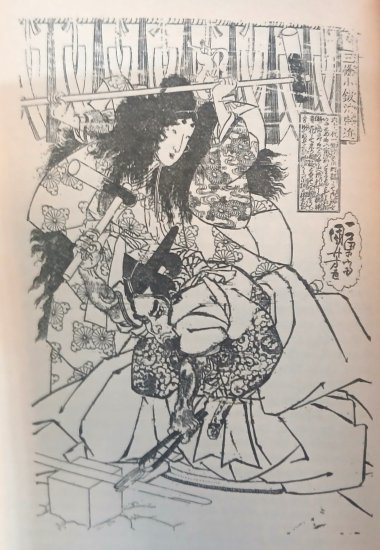
Print by Utagawa Kuniyoshi (1798-1861) depicting the ceremonial forging of a sword, attended by the fox spirit

The book was first published by Weidenfield and Nicholson in 1970, my copy is the Pelican first edition from 1974. I greatly enjoyed this exploration of a very different, at least to those of us in the west, civilisation and it was extremely well written assuming no prior knowledge of the subject matter so was an ideal introduction to a history I knew little about.