The Overloaded Ark – Gerald Durrell

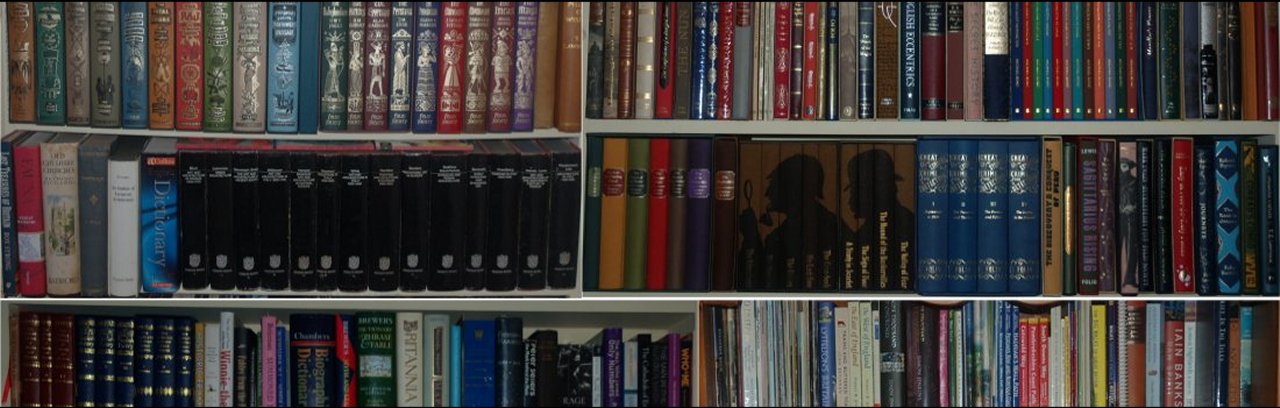
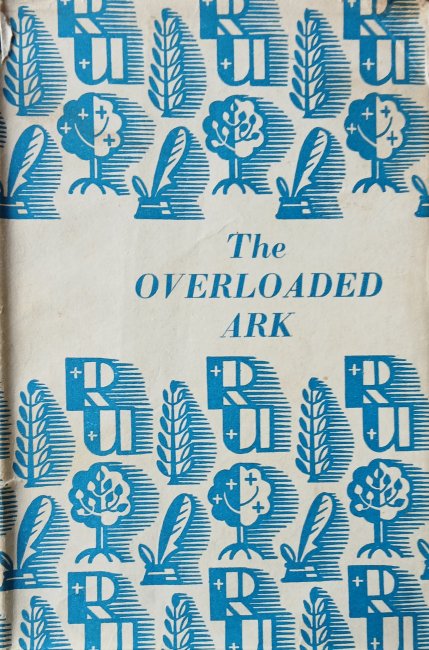
I remember reading lots of Gerald Durrell books as a child but this was the first I read as it is one of my father’s books, so it was sitting on the bookshelf for as long as I can remember. Published by The Readers Union, a book club run by Faber and Faber, who had first published the book, this volume dates from 1955. The odd thing is that I don’t remember any other books from this club at home although there were other book clubs represented on the shelves as that was probably the source of most of dad’s books. This was Durrell’s first attempt at writing a book and described his first ever collecting expedition which was to to British Cameroons and took place in 1947 with ornithologist John Yealland. He took to writing not because he particularly enjoyed it but because he needed the money partly to pay off debts from his first three collecting expeditions and also to finance his family life as he had married in 1951. He was fortunate to be able to get advice on writing from his elder brother the novelist and travel writer Lawrence Durrell and although their two styles are dramatically different they are both eminently readable.
The best way to illustrate Durrell’s style is to quote a section from the preface where they were loading the truck to get from Victoria to Mamfe where the two men were to part company to set up separate camps, Yealland to collect birds around the town of Bakabe and Durrell to go further into the bush to Eshobi searching for reptiles and mammals and also some birds not found near Bakabe. The truck was arranged for 7:30am and the plan was to be on the road by around 8:30am. The lorry however finally arrived at 11am and was full of a dozen of drivers relatives, friends and assorted goods that he was planning on getting a paid for ride up country with. The first job was therefore to get all these people and various items off the lorry as it would be fully needed to carry all the equipment.

After a prolonged altercation which for shrillness and incomprehensibility could not have been rivalled by any race on earth, they were removed, together with their household goods and livestock. The driver then had to turn the lorry for loading, and my faith in his abilities was rudely shattered when he backed twice into the hibiscus hedge, and once into the rest house wall. Our baggage was then loaded with a speed and lack of care that was frightening, as I watched, I wondered how much of our equipment would be left intact on arrival in Mamfe. I need not have worried. It turned out later that only the most indispensable and irreplaceable things got broken.

This diary like narrative, although without specific dates, is continued for the rest of the book as Durrell gets in and out of various scrapes, either attempting to collect animals himself or dealing with the numerous creatures brought to this strange white man that wants animals but not to eat them. Sadly it also covers animals that he obtained but which try as he could he couldn’t keep alive in the rapidly growing makeshift zoo he became in charge of, despite his time as a trainee keeper at Whipsnade Zoo before quitting to go animal collecting. These included the Giant Otter Shrews two of which he obtained and apparently successfully converted to a diet that could be more expected to be available in captivity only for them both to die overnight for no apparent reason and the lovely Duiker antelope fawns which eventually he put a stop to collecting as they always refused milk from a bottle and gradually starved to near death before being humanely killed, and he only ever had young as these were ones found after the hunter had killed its mother.

He does however put together an excellent collection in his time at Eshobi and transports what he has obtained to Bakabe to join Yealland and see what else he can find there which includes Cholmondeley, a large fully grown chimp that had been brought up with an English family and had gained quite a few idiosyncrasies including liking a large mug of sweet tea and cigarettes which he could light either with matches or using a lighter and sit there smoking away extremely happy. The funniest part of the book is probably the partly successful trip to the mountain of N’da Ali, the first attempt at which is interrupted by a hunter bringing an Angwantibo, a species of primate he was particularly keen to find. This means dashing back to Bakabe to look after his new prize and delaying his attempt at the mountain for a week.

To say that John Yealland was much happier with his bird only collection he had built up before Durrell joined him would be an understatement as the birds would rarely be in a position to kill him, unlike say the snakes and small crocodiles that came with Durrell, some of which made escapes from their cages, in this case abetted by one of the monkeys that had undone the door to all the cages that it could reach including the deadly Gaboon Viper’s so I’m going to include one final passage from the book:

John was seated near the table, in his pyjamas, he was busy cutting down some old fruit tins to make into water pots for the birds, and he was absorbed in his work. I was just putting the finishing touches to my toilet when I saw something move in the shadows beneath his chair. Putting on my dressing gown I went closer to see what it was. There on the floor, about six inches away from John’s inadequately slippered feet, lay the Gaboon Viper. I had always believed, judging by what I had read and was told, that at moments like this one should speak quietly t the victim, thus avoiding panic and sudden movement. So, clearing my throat, I spoke calmly and gently:

“Keep quite still, old boy, the Gaboon Viper is under your chair.”

On looking back I feel I should have left out my reference to the snake in my request. As it was my remark had an extraordinary and arresting effect on my companion. He left the chair with a speed and suddenness that was startling; and suggestive of the better examples of levitation.

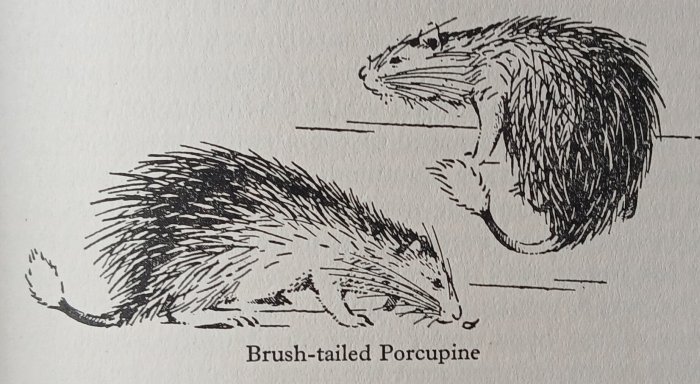
The numerous illustrations through the book are by Sabine Baur based on drawings and photographs by Gerald Durrell. Durrell wrote many books about his collecting experiences, the zoo he founded in Jersey and various conservation projects he became involved in but is probably best known for his series of three books about growing up with his family on Corfu just before WWII, especially the first ‘My Family and Other Animals’. I’m going to stay with the Durrell family next week with his eldest brother’s book ‘Bitter Lemons of Cyprus‘.

The Year of Sitting Dangerously – Simon Barnes

So this August I am devoting to natural history and by contrast with last week’s book from the 18th century this is so contemporary that it was written during the various covid lockdowns here in the UK and was first published by Simon & Schuster on the 13th April 2023. Simon Barnes was looking forward to a trip to South Africa as a guide on a wildlife tour when all of a sudden he wasn’t going anywhere, so decided to really not go anywhere and just sit in a chair at the bottom of his garden for a year and record his experiences. Now Barnes is lucky, he lives in the Norfolk Broads, an extensive flat wetland area to the east of the UK so his bird watching possibilities just sitting at home are considerably better than the average town dweller, although by the nature of it being a flat open landscape (the highest point in Norfolk is just 344 feet (105m) above sea level) he was rather exposed to the elements.

Oddly, although he had decided to do this he didn’t explain what he was doing to his family for several months, they must have assumed that he was having a rather strange reaction to being forced to go nowhere. He is actually quite fastidious about sitting out and noting whatever he sees which is why the book runs to 336 pages from Sunday 27th September 2020 to Monday 27th September 2021, the extra day signalling that he intends to continue sitting out and making notes whenever he can going forward. It isn’t an end to his experiment but a continuation of an experience he has grown to love regardless of the discomfort sometimes. I have included a couple more sample passages below so you can see the changes to the writing style as the year progresses. I think he gets more poetic as he sinks more and more into the communion with nature that his self imposed routine gives him.

There is humour and drama aplenty as he follows the lives of the various creatures he is observing, from the majestic marsh harriers swooping across his eyeline to the much bullied buzzards, which every bird seems engaged in driving away. The herons in the lakes and marshes just beyond the river flowing past his seat and the great flocks of corvids (rooks, jackdaws and crows mainly) that are often seen, to the gay pair of male swans that encroach into his garden and one morning had clearly been roosting overnight in his chair judging by the mess. Through the year we see the animals that live here all the time along with the seasonal visitors, them pairing off in the summer months and hopefully raising young although obviously not in the case of the gay swans the relationship between them only slowly dawns on Barnes as he watches them, initially trying to work out which was the female. We also get brief insights into his family life, especially his increasing frail father who is finding living alone in London through covid lock downs particularly difficult.

I was really looking forward to reading what he saw on my birthday, in early June, and was somewhat disappointed to find that he actually did manage to get away for a weeks family holiday boating on the broads which coincided with the day in question so there were no entries between the 8th and 14th June. I am always intrigued when reading diaries to see what the person was up to on my birthday, it adds something personal to the reading experience, however it wasn’t to be with this book. That however was the only slight let down in a book I have thoroughly enjoyed and definitely learnt from. His descriptions of birds, mammals, and in the later chapters insects as he starts to take more notice of them as well are really good especially as he explains how he determines which species he is actually looking at from bird calls, flight patterns, the shape of wings and other features and what they tell you about the way the bird looks for food or finds a mate. I am by no means a bird watcher although I do watch birds when they are around, a fine but important distinction I think. I no longer have a garden, but when I did I had numerous feeders up to attract birds, nowadays I am restricted to what I can see from my living room window although that does quite often include buzzards wheeling over the valley so it’s not all bad.

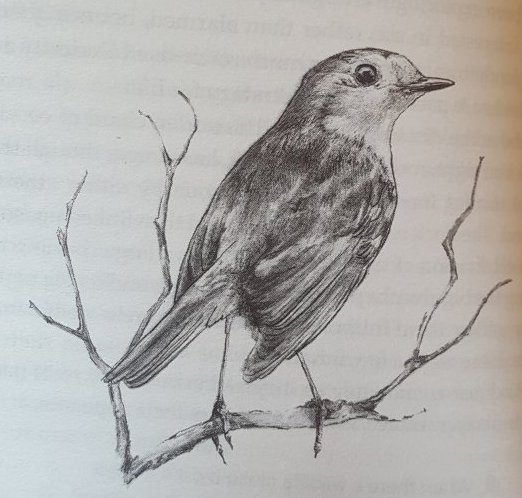
Each month starts with a beautiful pencil sketch of a bird that features in the chapter. These drawings were done by Simon Barnes’ wife, the artist Cindy Lee Wright. The one I have included above is the lovely picture of a robin which starts the chapter ‘February’. I have a certain fondness for robins, they are definitely the bird least bothered by human presence near them here in the UK and used to perch watching me as I worked in my garden in case I unearthed anything worth eating.

I can definitely recommend this book, the idea of just sitting in one place for a year and writing about what was seen from that vantage point could have been dull but I found myself racing through the pages totally drawn in by the gentle and engaging tone of the writing.

Confessions of a Bookseller & Remainders of the Day – Shaun Bythell

Shaun Bythell’s first book, ‘The Diary of a Bookseller‘, was one of the very first books I reviewed on this blog back in January 2018. Since then he has written three more books, two of which continue his diary of owning the largest secondhand book shop in Scotland, which is in Wigtown and it is these two books I have read this week. The diaries cover the following periods:

  • The Diary of a Bookseller – Published 2017 – covers Wednesday 5th February 2014 to Wednesday 4th February 2015.
  • Confessions of a Bookseller – Published 2019 – covers Thursday 1st January 2015 to Thursday 31st December 2015
  • Remainders of the Day – Published 2022 – covers Friday 5th February 2016 to Saturday 4th February 2017

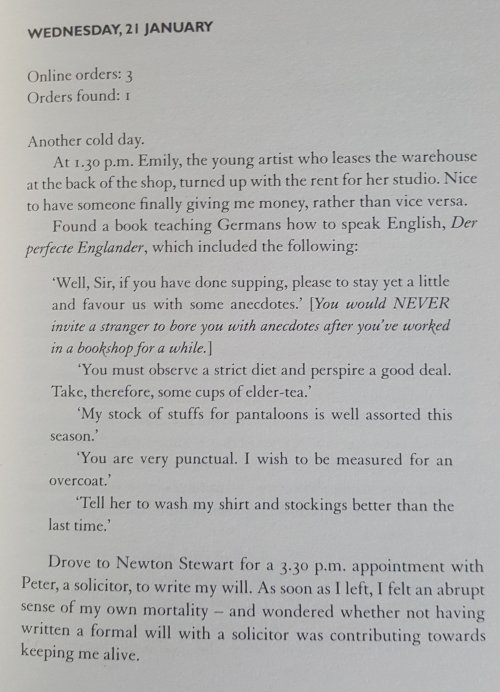
It was only as I typed the list above that I realised that there is a five week overlap between the first two books so had to get ‘The Diary of a Bookseller’ off the shelf to compare the entries. They are completely different even down to the number of orders, customers and shop takings.

Wednesday 21st January – Diary of a Bookseller

Wednesday 21st January – Confessions of a Bookseller

As the third book, like the first, starts on the 5th of February I’m left wondering if the 1st January to 4th February in Confessions and which are clearly labelled 2015 are actually entries for 2016 transposed to the start by an overzealous editor who assumed that a diary should be for a calendar year.

The books are quite long, 328 pages for Confessions and 377 for Remainders but reading them just flies by and I finished both books inside four days. As I mentioned in my review of his first book I also own and run an independent specialist shop so the interactions with customers he details are frighteningly familiar and all the funnier for that. He has also noticed that anyone who comes through the door and says out loud “Oh I’m in heaven, this is just the sort of shop I love”, or words to that effect never buy anything, but will inevitably spend a lot a lot of time wandering round the shop and moving stock from shelf to shelf whilst not doing so. This means that you then have to spend even more time putting things back where they should be so that actual customers have a chance of finding them. I’m going to lend the books to my staff as I’m sure they will appreciate them as well and I’m thankful I don’t have staff as mad as Shaun seems to.

A few months after writing my review of The Diary of a Bookseller in 2018 I met Shaun in Hay on Wye, the Welsh book town that Wigtown has modelled itself on, lots of book shops all in one small place may sound like overkill but it really works by making the town a specific destination for collectors and there are few things I love more than wandering round book shops. Shaun was being interviewed by Jasper Fforde as part of a book collectors Instagram event which the owner of my local secondhand bookshop and I had also given a talk at a couple of days earlier on the subject of collecting Penguin books. Shaun came over as a really nice person but then again I wasn’t trying to buy a book off him at the time, I still haven’t made it to Wigtown but I’m determined to get there, in fact I just checked and it’s 285 miles from where I live and would take just over five hours to get there, the Google maps picture of the shop is from this month and shows a copy of Remainders of the Day in the right hand window along with the inevitable large number of boxes of more stock just inside the door and by the other window.

Down and Out in Paris and London – George Orwell

I was introduced to Orwell in my first year at Grammar School, so aged eleven, when we studied Animal Farm and I’ve read a lot of his works since but somehow not included Down and Out in Paris and London which was his first book. I have no idea how I missed it especially as reading it now I loved the detailed descriptive narrative of his times in poverty in Paris and living amongst tramps around London. The writing is totally immersive and you feel with him as he lives hand to mouth, sometimes not eating for days at a time because he simply has no money left especially after all his meagre savings were stolen leaving him with just the few francs in his pocket. It is after this financial disaster that he seeks out an old friend Boris, who is a Russian émigré, and had often told him of the easy money to be made in tips as a waiter, but Boris had also fallen on hard times and together they scour the city looking for work and not finding it until after many days surviving by pawning their dwindling clothes supply they drop ‘lucky’ and get jobs in the hell of a kitchen of a hotel that Orwell leaves unnamed, just calling it X.

I was at work from seven in the morning till a quarter past nine at night; first at washing crockery, then at scrubbing the tables and floors of the employees’ dining-room, then at polishing glasses and knives, then at fetching meals, then at washing crockery again, then at fetching more meals and washing more crockery. It was easy work, and I got on well with it except when I went to the kitchen to fetch meals. The kitchen was like nothing I had ever seen or imagined—a stifling, low-ceilinged inferno of a cellar, red-lit from the fires, and deafening with oaths and the clanging of pots and pans. It was so hot that all the metal-work except the stoves had to be covered with cloth. In the middle were furnaces, where twelve cooks skipped to and fro, their faces dripping sweat in spite of their white caps. Round that were counters where a mob of waiters and plongeurs clamoured with trays. Scullions, naked to the waist, were stoking the fires and scouring huge copper saucepans with sand. Everyone seemed to be in a hurry and a rage. The head cook, a fine, scarlet man with big moustachios, stood in the middle booming continuously, ‘Ça marche deux oeufs brouillés! Ça marche un Chateaubriand aux pommes sautées!

Chapter X – Orwell was a plongeur, the lowest of the low in the kitchen hierarchy

Orwell was initially amazed at the squalor behind the baize doors that separated the patrons of the hotel from the kitchen staff, what absolutely had to be cleaned was but if it didn’t then rubbish and scraps simply built up in corners or hard to clean places. But this was nothing to the hideous conditions in the new start restaurant that Boris persuaded him to leave hotel X and join. Raw food was simply left on the bare floor as they had no larder and wiped down and cooked as needed. Cats and rats helped themselves to whatever they wanted and again what was left was served to the customers. He also went from working fourteen hours a day for six days to seventeen hours a day every day. Plates weren’t cleaned as they had no hot water just wiped down either with newspaper or on the clothes of the staff and yet the restaurant drew in customers and succeeded despite the filth in the kitchen. Orwell gives the impression that this was perfectly normal in Parisian restaurants, and it quite probably was, but he couldn’t cope with the excessive hours and after a couple of weeks quit and headed back to London after being told by a friend that there was a job for him looking after a congenital imbecile.

The second part of the book dealing with life in and around London was added after Orwell initially tried and failed to get a publisher for the Parisian part on its own under the title of “A Scullion’s Diary”. Adding the English section took the work from around 38,700 words to 66,400, which in this edition is 180 pages and a much more normal size for a book.

Needless to say the job when he got there didn’t exist, both the potential employers and the patient having gone abroad so Orwell is back to no money, nowhere to live and no job, so Orwell took to the streets living hand to mouth as a tramp. This section is very different to the first sixty percent of the book as it is less like a journal of his experiences, although you certainly get his experiences of homelessness in the London area, and more a diatribe against the Vagrancy Act of 1824 and the strict interpretations imposed which meant that not only was homelessness effectively criminalised but all forms of begging were not permitted and rough hostels introduced across the country known as spikes. These, mainly unsanitary, hostels did not allow anyone to stay for more than one night and you couldn’t return inside a month, in London you couldn’t go to more than two spikes inside a month. These rules meant that vagrancy was effectively enforced as the men, and it was nearly always men Orwell met only one female tramp in his time on the road, had to keep moving ten to twenty miles a day in search of a bed if they couldn’t afford even the worst bunkhouses to sleep in and it was a criminal offence to sleep in the open air. Astonishingly whilst looking up this act to write the blog I discovered that parts of the Act are still in force in England and Wales almost two hundred years after it was first passed, I feel every Member of Parliament should be made to read this book.

The book is notable for being the first appearance of the name George Orwell in print, up until then he had used his real name, Eric Blair, for the small number of articles he had published but he wanted to be ‘anonymous’ due to the poor conditions that he had endured in both Paris and outer London and didn’t want his family linked to this book. From then on however he wrote as Orwell, rarely using Eric Blair again. As for the veracity of the stories he tells here, he wrote in the introduction for the 1935 French edition “I think I can say that I have exaggerated nothing except in so far as all writers exaggerate by selecting. I did not feel that I had to describe events in the exact order in which they happened, but everything I have described did take place at one time or another.” The most obvious time distortion is that the times as a tramp around London occur after returning from France in the book whereas in reality this time was before he went to Paris in Spring 1928, as when he returned to London from Paris in December 1929 he went to live at his parents house.

My copy is the first Penguin Books edition from December 1940 and is in remarkably good condition for a wartime paperback printed on very poor quality paper yet it is still perfectly intact. This was the edition that really started interest in the book, as before then it was not a great seller. However despite 55,000 copies being printed in this edition it is a very scarce book and at the time of writing I cannot find any examples for sale on abebooks or biblio which are the two main international websites for secondhand books. Down and Out in Paris and London is of course easy to obtain, it is this first edition, possibly the first time it came out in paperback, that is so rare.

Into Iraq – Michael Palin

Michael Palin’s latest travel adventure took place March 2022 and consisted of a short (two week) trip to Iraq, he was after all seventy eight when he made the journey and the epic trips from the 1980’s and 90’s are probably behind him now but this was still a fascinating read. This was his first documentary travelogue since visiting North Korea in 2018 which was equally short and it is now eleven years since his last trip lasting multiple months which saw him explore Brasil. The book is beautifully illustrated and written in Palin’s easy to read diary format which he has honed over decades of doing such series for television although now they are for ITN and Channel 5 here in the UK rather than the earlier, and higher budget, trips for the BBC.

The book covers eighteen days travelling, although days one to four are in Turkey as he travels down to the Iraq border finally crossing over on the evening of the fourth day and day eighteen has him getting up at 5am to dash to the airport to leave so that doesn’t really count. On the way through Iraq following the River Tigris he gets to places I read about as a child, the ancient city of Ur and its famous ziggurat, Babylon and the astonishing minaret in Samarra which can be seen top right on the cover of the book. Like Palin I have wanted to visit these places for decades, and nearly went soon after returning from Iran in 1997 but various other destinations called to me more urgently and later it became too dangerous to go. From the descriptions in this book it looks like it may be becoming possible to be a relatively safe tourist in Iraq again, however he explains that major destinations such as Ur’s ziggurat and the site of Babylon were largely reconstructed over their original ruins during the time of Saddam Hussain. That doesn’t make them less impressive and the lower parts, certainly of the ziggurat, are genuinely thousands of years old so still worth a visit. It would be the endless waits at random checkpoints that they endured for seemingly little point other than to justify the existence of the checkpoint and the guards manning it, I doubt I have the patience for nowadays.

The book is quite short, just 171 pages and a lot of those have half and half text and photographs of the trip, I therefore read it in about two and a half hours. I would have liked more details especially on the life of the people coming out of decades of conflict. Palin was always good interacting with locals in previous documentaries and whilst I haven’t yet seen the TV series that this book accompanies, that is only three sixty minute episodes and those include adverts so I doubt you get much more insight. Having said that I really enjoyed the book and when I started it was difficult to put down, the urge to just read another chapter was always there and as each chapter was a days journey it felt even more like a diary and you felt you were progressing down Iraq along with the small team making the films.

Unlike his previous expeditions where he planned a lot of the journey himself and was very much an independent traveller, albeit with a TV crew in tow, this time Palin travelled with a company called Untamed Borders which means that a large part of his itinerary can be booked direct with them if you too fancy a trip to Iraq.

The Pillow Book of Sei Shōnagon

20190917 The Pillow Book 1

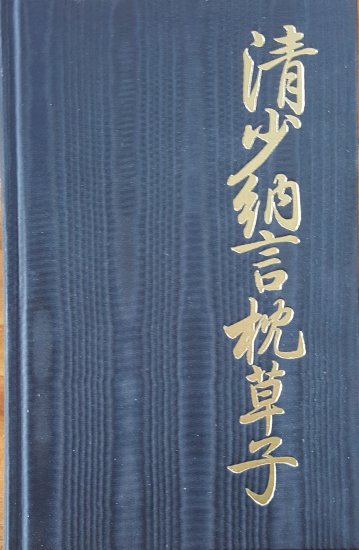
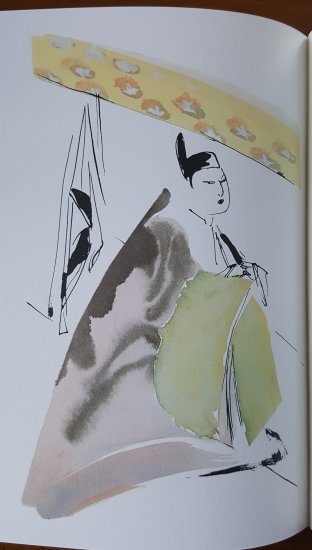
This beautiful Folio Society edition was first published by them in 1979 and my copy is the 4th printing from 2015, it is bound in black artificial moire silk blocked in gold with the title in Japanese characters. The original book was written during the late Heian Period, between 900 and 1000AD, by one of the ladies at the Japanese emperors court and is a rather strange combination of observations, being whatever she felt like writing down at the time. The translation used is that of Ivan Morris from 1967 and he has numbered each of the entries unlike some other translators. It is literally a pillow book because it was a notebook kept by the bed for use when inspiration struck some of the entries are fascinating glimpses into life at court whilst others are just odd lists of objects or places for example entry 140:

Things That Give a Clean Feeling
An earthen cup. A new metal bowl. A rush mat. The play of the light on water as one pours it into a vessel.
A new wooden chest.

Others really are simple lists as in section 108

Hot Springs
Nanakuri, Arima and Tamatsukuri

There are about 150 of these simple lists on subjects as varied as Peaks, Plains, Markets etc. spread through the text. Whether they were just particular favourites it is impossible to tell as very rarely is any context given. The third passage however lets us visit the court itself…

Especially delightful is the first day of the First Month, when the mists so often shroud the sky. Everyone pays great attention to his appearance and dresses with the utmost care. What a pleasure it is to see them all offer their congratulations to the Emperor and celebrate their own new year!

This is the day when members of the nobility who live outside the Palace arrive in their magnificently decorated carriages to admire the blue horses. As the carriages are drawn over the ground-beam of the Central Gate, there is always a tremendous bump, and the heads of the women passengers are knocked together; the combs fall out of their hair, and may be smashed to pieces if the owners are not careful. I enjoy the way everyone laughs when this happens.

I remember one occasion when I visited the Palace to see the procession of blue horses. Several senior courtiers were standing outside the guard-house of the Left Division; they had borrowed bows from the escorts, and, with much laughter, were twanging them to make the blue horses prance. Looking through one of the gates of the Palace enclosure, I could dimly make out a garden fence, near which a number of ladies, several of them from the Office of Grounds, went to and fro. What lucky women, I thought, who could walk about the Nine-Fold Enclosure as though they had lived there all their lives! Just then the escorts passed close to my carriage, remarkably close, in fact, considering the vastness of the Palace grounds, and I could actually see the texture of their faces. Some of them were not properly powdered; here and there their skin showed through unpleasantly like the dark patches of earth in a garden where the snow has begun to melt. When the horses in the procession reared wildly, I shrank into the back of my carriage and could no longer see what was happening.

It is fascinating to see what happens during the period of appointments. However snowy and icy it may be, candidates of the Fourth and Fifth Ranks come to the Palace with their official requests. Those who are still young and merry seem full of confidence. For the candidates who are old and white-haired things do not go so smoothly. Such men have to apply for help from people with influence at Court; some of them even visit ladies-in-waiting in their quarters and go to great lengths in pointing out their own merits. If young women happen to be present, they are greatly amused. As soon as the candidates have left, they mimic and deride them, something that the old men cannot possibly suspect as they scurry from one part of the Palace to another, begging everyone, “Please present my petition favourably to the Emperor” and “Pray inform Her Majesty about me.” It is not so bad if they finally succeed, but it really is rather pathetic when all their efforts prove in vain.

This passage is quite revealing about Sei, she is quite often arrogant and demeaning to others, she also finds it funny to cause problems for people she regards as her social inferiors. In this she is not alone at least according to her own accounts. Entry 292 describes an encounter with a man who has lost everything when his house burnt down following a fire in the Imperial haylofts…

We all burst out laughing at this, including the mistress of the robes; I took a sheet of paper and wrote

If the vernal sun burns strong enough
To sprout the young grass roots
Even a place like Yodo plain
Can ill survive its heat

‘Kindly give him this’ I told Mama throwing the paper to her. With loud laughter Mama handed the paper to the man.

They then instructed him to get somebody to read it to him and set off to the palace roaring with laughter as he set off believing that he had a record slip granting him money. She also claims that when the Empress was told about this she also found if funny.

But for all the casual cruelty of her interactions with others the book is still an important document into the lives of Japanese courtiers over 1000 years ago. She is free (and frequent) with her choice of lovers and this is also clearly normal as is the expectation that as soon as the gentleman has gone home in the morning that he would write a carefully considered letter to her using his finest calligraphy and choose a handsome page to deliver it. We are further told that he should not rush off on leaving in the morning but should linger a while, however if he is leaving during the night then spending time getting formally dressed is not acceptable as who would see him and he should just go when decent. What things look like or at least appear is everything to the ladies of the court, a deep knowledge of poetry and an ability to produce their own lines at a moments notice and of course write them with beautiful lettering is vital.

20190917 The Pillow Book 2

I was simultaneously fascinated by and surprised by the details in this book, admittedly as Sei herself says at the end this was not intended for publication, it was her notes for her own pleasure, but it has gone on to be one of the classics of Japanese literature. We do not even know her real name, Sei is either a pseudonym or possibly a family name and Shōnagon is actually her title (a minor counsellor of the fifth rank). She was however of the class that would place her in the court as a daughter of a provincial governor and a long distant descendant of the former Emperor Temmo (630 to 686AD). She was a part of the Yokihito, literally ‘The Good People’. who comprised the aristocracy, and they preserved a complete lack of knowledge and indeed interest of the Tadahito, ‘Mere People’, which comprised the vast majority of the Japanese population. As such she can tell us nothing regarding the life of most Japanese at the time but the rarefied existence at the very top that she enjoyed is fascinating. In fact the Emperor whilst running the country at least in name was for centuries merely a puppet of the Fujiwaras family who were careful to never actually become Emperor but were always the power behind the throne and ensured that the cultivated art inspired court remained completely distant from the people so they could get on with actually controlling the country.

It was an interesting time, the Heian period lasted well over three centuries and there are few other records for us to see what was happening during that period. Sei Shōnagon has left us this record and it is well worth finding a copy and reading.

Note: I have now seen the Penguin Classics version of Ivan Morris’s translation, first published in 1971, and in that he edited it to remove the simple lists so that instead of 326 sections there are only 185. This means that the section numbers above don’t work with this edition. I have therefore given below a cross-reference for passages quoted above:

  • 140 – Things that give a clean feeling becomes 97
  • 108 – Hot Springs is omitted
  • 3 – Especially delightful is the first day becomes 2
  • 292 – We all burst out laughing becomes 168

My Name Escapes Me – Alec Guinness

20190528 My Name Escapes Me

Subtitled “The diary of a retiring actor” this book takes us from the 1st January 1995 to the 6th June 1996. 1995 is treated rather episodically with large gaps in the diary but there are much more frequent entries for 1996 at least as far as that year goes. The book is quite a gentle read, ideal for a quiet afternoon where you just want something to entertain rather than educate. Guinness is in his eighties by the time he wrote this and effectively has retired although he does do a couple of very small parts for films and a short voice-over during the 18 months of the diary.

There are the expected reminiscences scattered through, not just of stage and screen but also of his conversion to Roman Catholicism forty years earlier. Through most of the book his wife Merula is having problems getting about leading to hip surgery and a long slow recovery and he clearly dotes on her, with various changes of plan wrapped around her current health. He is an inveterate name dropper and chides himself several times in the diary for long convoluted stories he tells at dinner parties probably boring everyone else in the process, a habit Merula sometimes curtails by commenting, with the punchline that he is slowly working up to, during the story. People expect actors, especially ones of his seniority, to be able to talk in public but Guinness is quite clear several times that having him give a speech is doomed to failure from the start, it always has been and age has not improved his ability.

One running commentary relates to the Star Wars films and the fan mail, usually with photographs they want signing that he gets all the time.  As in this entry from 16th December 1995 which gives a good flavour of the style of the book.

Today I have felt querulous. Behaviour has been spiky; largely due, I think, to our affable postman dutiful pushing piles of junk mail through the letterbox daily. It gets worse near Christmas. The rubbish, the charity appeals (often in duplicate) and worst of all, the photographs from Star Wars demanding autographs. They mostly come from America and as often as not enclose a stamped addressed envelope – the stamps being US stamps are useless her. The English usually make their demand without photograph, envelope, stamp or money. The nation has got acclimatized to asking something for nothing. Bills in the post are welcome in comparison. It’s mean and hard of me but from 1 January 1996 I am resolved to throw it all in the waste bin unopened (bills excepted, of course); I no longer have the energy to assist teenagers in their idiotic, albeit lucrative, hobby.

He makes a good point here, that a lot of the signed pictures are probably destined for Ebay or some such autograph trading site, where they would make a significant profit for the person who sent them and that is the reason for the contact in the first place. This is something that Sir Terry Pratchett was also somewhat wary of, threatening to sign any book where no dedication was requested “To Ebay purchaser”. Terry does actually make a slight appearance in the book in the 13th June 1995 entry where Guinness praises the Jungle Quest episode from the previous night which featured Terry and his PA Rob in Borneo with Orang Utans.

The diary ends on the 56th birthday of their son Matthew (also an actor) soon after a much needed holiday at Lake Como, not just to mark his birthday but also the anniversary of the Normandy invasion in 1945. Guinness was in the opposite side of Europe, in Italy, at the time having taken part in the attacks on Sicily and Italy several days before, designed not only to take that area but also to divert German military forces away from Dunkirk.

It’s a good read, if a little light, and has an excellent index which reveals that Alan Bennett is mentioned twelve times, The National Theatre four times whilst the National Lottery gets five. Shakespeare or his plays are name checked forty five times whilst the second highest is his wife Merula at twenty nine (although much longer entries) and third comes dogs at twenty one times. I think this says a lot for his priorities. Sir Alec Guinness died in August 2000 and Merula only lived another couple of months afterwards.

The Royal Tour – Harry Price

20180925 Royal Tour 01

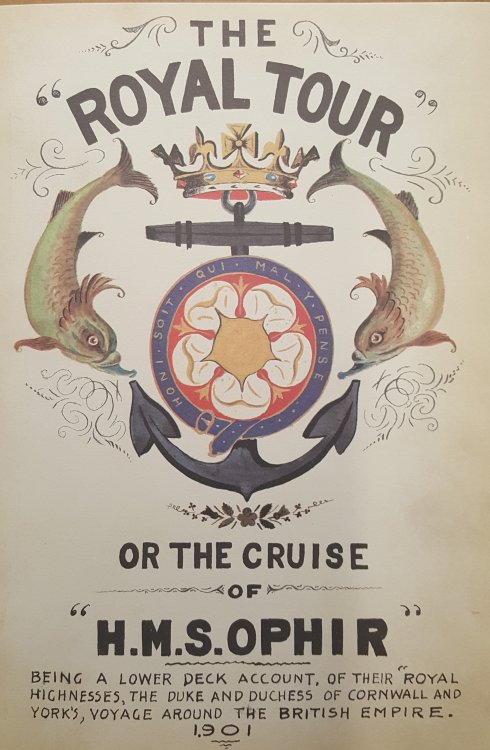
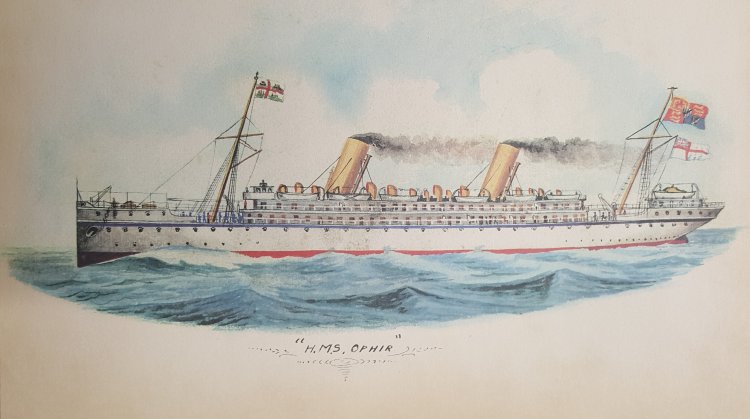
The facsimile of the diary kept by Petty Officer Harry Price on board the H.M.S. Ophir during the Royal Tour of 1901 was printed in 1980 by Webb & Bower of Exeter. Harry had died back in 1965 and it was his son Jack Price who showed it to the publisher and which led to the facsimile printing.  Sadly it’s no longer in print but it is readily available on the secondary market for just three or four pounds, which considering how attractive the book is has to be one of the great book buying bargains.

20180925 Royal Tour 02

Harry was a talented artist and had attended Birmingham School of Art before joining the Royal Navy where he rapidly progressed to Petty Officer before joining H.M.S. Ophir just in time for the nine month long world voyage of Prince George and Princess Mary. George held both titles of Duke of Cornwall and Duke of York hence the slightly odd description given and he would later become King George V on the death of his father in 1910.

20180925 Royal Tour 03

The tour was started just two months after the death of Queen Victoria and was probably seen as an opportunity to introduce the younger Royals to the Empire after the end of her sixty three year reign. The diary is in Harry’s handwriting just as he originally wrote it as the voyage was progressing and provides a fascinating view of the trip and the various onshore excursions he managed.

20180925 Royal Tour 04

According to the list at the front of the diary, the route was as follows: Portsmouth, Gibraltar, Malta, Port Said,Suez Canal, Aden, Colombo, Singapore, Albany, Melbourne, Sydney, Hawksbury River, Sydney, Auckland, Wellington, Lyttleton, Hobart, Adelaide, Albany, Freemantle, Mauritius, Durban, Simonstown, St Vincent, Quebec, Halifax, St. Johns and then back to Portsmouth.

20180925 Royal Tour 05

I am including pages in sequence as the trip progresses so we have already reached New Zealand where he comments on the weather on the right hand page above. The style is quite chatty and it is clear throughout the book that he is intending this to be a souvenir that he can show to other people rather than a private diary. To this end he records his personal experiences but as though telling the reader about them.

The sketch below was taken up the river, some fifteen miles above Christchurch where as you can see the scenery was most bewitching, but a hard frost setting in as the sun went down made matters a little bit disagreeable, to us, who only a short time ago, were under a scorching tropical sun.

The date at this point was the 27th June so midwinter in New Zealand.

20180925 Royal Tour 06

Returning to Australia Harry produced the very attractive full page picture of the various arms of the Australian states inspired by examples displayed along the banks of the Adelaide River, this time he didn’t get ashore but they did have ‘a visitors day’ where local townspeople could tour the ship and this proved so popular that they were almost overwhelmed by the numbers.

It is quite enough; when I say that quite a number of ladies fainted, and the bluejackets and marines had their handsfull

20180925 Royal Tour 07

I remember this book coming out and the original volume by Harry Price being shown on various TV programmes, the reproduction is extremely good but it can’t have been a particularly sound financial proposition for the publisher as it must have been expensive to print and it soon slipped from the list of titles they had available even though it clearly sold well judging by the number of copies available on abebooks. I bought my copy a few years later second-hand for £4, I know I wanted one at the time but I suspect it was beyond my teenage finances.

20180925 Royal Tour 08

The crossing from Australia to Mauritius was surprisingly good for the Southern Indian Ocean but they hit bad weather crossing from there to South Africa as can be seen in Harry’s picture of their escort ship the St. George. It seems odd that South Africa was on the itinerary at all as the Boer War was in full progress with guerilla activity led by Louis Botha and Jan Christiaan Smuts in both the Eastern and Western Transvaal’s and Cape Colony respectively against the British occupation although by now the fighting really was going against the Boer forces. H.M.S. Ophir was protected by several British warships whilst in South African waters and the Royal couple had a significantly stronger armed guard with them whilst ashore whereas before the soldiers with them were largely ceremonial.

20180925 Royal Tour 09

Harry Price even included an image of one of the POW ships moored off the coast, in total they spent less than two weeks in South Africa and three days of that was moving from Durban to Simonstown which was then (as now for the South African Navy) the main naval dockyard. They then set off for Canada via the Caribbean.

20180925 Royal Tour 10

The strength of the Royal Navy at the time that the book was written can be judged by the fact that even leaving the small Caribbean island of St. Vincent there were four other naval ships available to escort the Ophir as it left the territory two of which are described as over 12,000 tonnes and in excess of 500 feet in length. There then followed a journey of ten days solid cruising up the eastern seaboard of the United States to Canada during which the American President William McKinley was assassinated and it is specifically mentioned that all the Royal Naval ships waiting for them in Quebec were also flying the American stars and stripes at half mast in respect.

20180925 Royal Tour 11

For the visit to Canada the Duke and Duchess disembarked and travelled for over a month via railway all over Canada. The Ophir waited for their return in Halifax, Nova Scotia and during that period was fully repainted and all needed repairs done. Discipline was clearly somewhat more relaxed than when the royal couple were aboard and this provided a break for the crew apart from their duties refurbishing the ship in dry dock.

20180925 Royal Tour 12

The final page I have included features a set of stamps issued in Canada to mark the royal visit and describes preparations to leave Canada and sail back for home. The book is a fascinating and beautiful historical document with almost every page decorated by Harry’s watercolours and one I like to pull off the shelves quite often, not just to read but sometimes just to enjoy the pictures.

Conrad’s Congo

In 1890 naturalised Briton, although Polish born, Captain Józef Teodor Konrad Korzeniowski left England to take command of the steamship Roi des Belges on the River Congo. He had gained his Master of the British Merchant Marine certificate four years earlier and had had a previous command of a ship called the Otago but this was to be his most significant position, at least as far as it’s mark on his later life. He had begun his maritime career back in 1875 as a trainee seaman on the barque Mont Blanc and had worked his way up the ranks on various vessels over the following years and hoped this would be a stepping stone to command of larger ships but it wasn’t to be. Amongst the possessions he took with him for an expected 3 years away in the Congo was a manuscript for a novel he was working on and it was this, along with the ill health that followed his African adventure that largely kept his away from future seagoing, would make the name of Joseph Conrad. ‘Almayer’s Folly’ was published in 1895, 15 months after he left his final marine post and a stream of novels and stories were to follow including the novella ‘Heart of Darkness’ based on his time in the Congo and published in 1899.

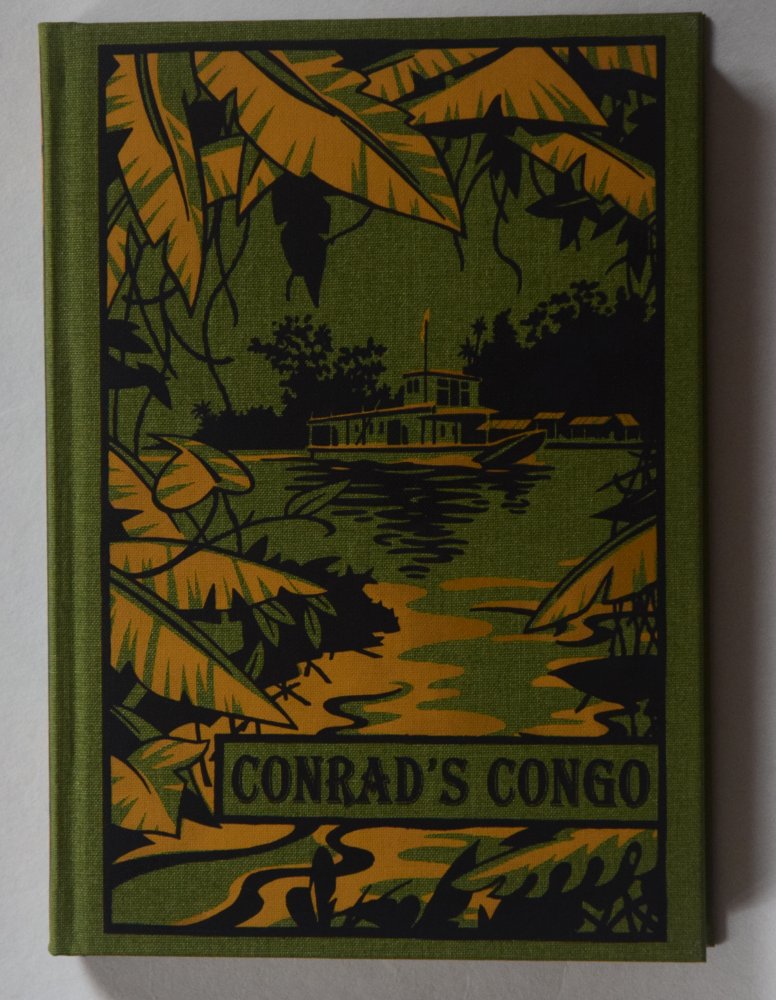
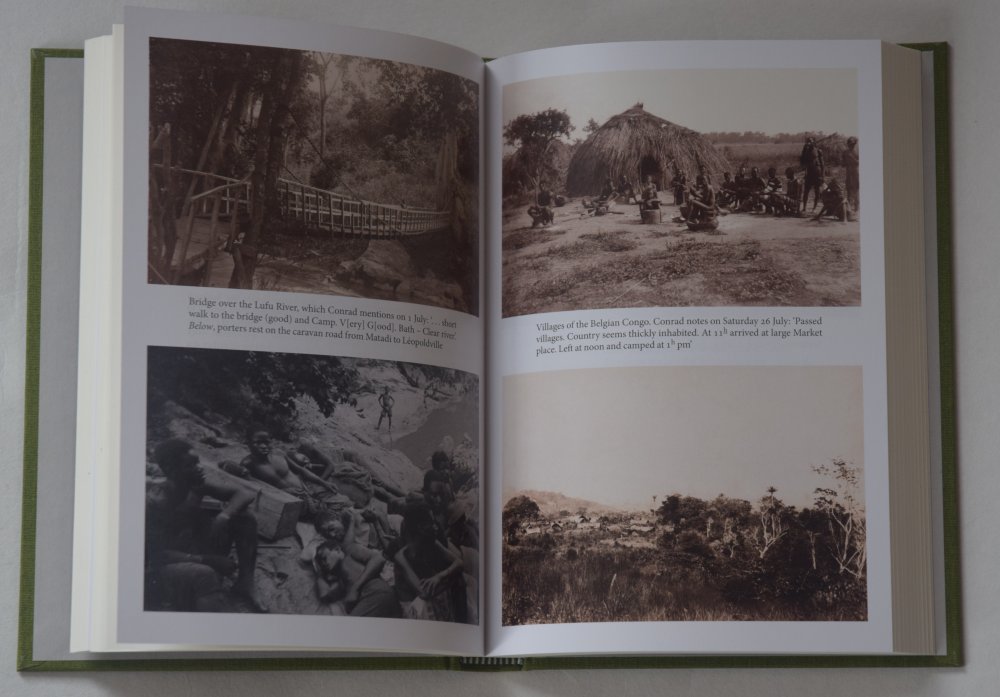
Although I will refer to Heart of Darkness several times during this essay, the book that has prompted me to write is ‘Conrad’s Congo’ published by the Folio Society in 2013 which gathers for the first time in one volume letters and diaries by Conrad relating to his ill-fated trip, along with the short story ‘An Outpost of Progress’ which also draws on his time in Congo. The book is bound in cloth blocked with a design by Neil Gower of the Roi des Belges steaming along the Congo. At 256 pages it is more than twice the length of Heart of Darkness and includes some fascinating contemporary photographs.

20180501 Conrads Congo 1

The Congo at the time was being run a private fiefdom by King Leopold II of Belgium and the astonishing cruelty against and exploitation of the people there was without parallel even amongst other colonies. It only started to be reigned in after the report into what was happening there by Roger Casement became public and eventually the Belgian government stripped Leopold of his autocratic control. It is estimated that of Congo’s 20 million population in 1880 this was roughly halved by 1920 mainly from famine and disease as all able bodied people were forced to work collecting ivory, rubber or other commodities to enrich Leopold meaning there was nobody to hunt, fish or plant crops. Part of Casement’s report is included as an appendix to the book and makes disturbing reading even though I already knew some of the background.

20180501 Conrads Congo 2

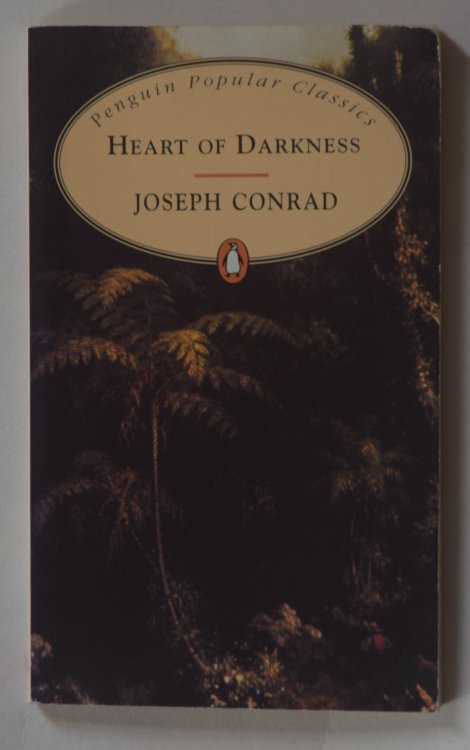
The cover of the Penguin Popular Classics edition  of Heart of Darkness was chosen by somebody who wanted a dark jungle view but managed to select not only the wrong country but even the wrong continent as the painting is a detail from Hunter in Brazilian Jungle by Marrin J Heade, so the plants growing are completely wrong for Africa.

Conrad’s Congo starts off with a series of letters initially with Albert Thys, deputy director of the Belgian Company of the Upper Congo as he tries to get a job with them then moves on to letters to his distant cousin (although referred to as uncle in the letters) Aleksander Poradowski then living in Belgium and when he dies soon after this correspondence starts the letters continue to his widow Marguerite (written to as aunt) and it is she that helps get him the captaincy he is looking for. In Heart of Darkness this is fictionalised in the tale told by Marlow (a thinly disguised Conrad) in which he says

“I am sorry to own I began to worry them. This was already a fresh departure for me. I was not used to get things that way, you know. I always went my own road and on my own legs where I had a mind to go. I wouldn’t have believed it of myself; but, then–you see–I felt somehow I must get there by hook or by crook. So I worried them. The men said ‘My dear fellow,’ and did nothing. Then–would you believe it?–I tried the women. I, Charlie Marlow, set the women to work–to get a job. Heavens! Well, you see, the notion drove me. I had an aunt, a dear enthusiastic soul. She wrote: ‘It will be delightful. I am ready to do anything, anything for you. It is a glorious idea. I know the wife of a very high personage in the Administration, and also a man who has lots of influence with,’ etc. She was determined to make no end of fuss to get me appointed skipper of a river steamboat, if such was my fancy.

Six months after approaching Thys, Conrad had his job and his letters to his ‘aunt’ continue through his voyage to the Congo talking about the trip but also his first impression of colonial Africa as he works his way along to coast encountering French ships. The letters hint at a growing romantic link between the two as the tone becomes more playful such as might be written between two lovers separated by distance. On arrival at Matadi he finds that the Roi des Belges is 200 miles away and there is no way to get there up the river due to the rapids between the coast and the station where the ship awaits him so Conrad is forced to walk to his boat and this is covered in ‘The Congo Diary’ which makes up the next section of the book. It is in this short work where he meets Roger Casement and we first read of the casual cruelty inflicted on the natives and hints as to the fate of the majority of the colonialists.

On the road today passed a skeleton tied up to a post. Also white man’s grave – no name. Heap of stones in the form of a cross.

The short Congo Diary is immediately followed with ‘The Up-river book’ which covers his first trip on the Roi des Belges and is largely technical notes presumably to assist him in future trips such as this part of the entry for the 3rd August 1890.

Always keep the high mountain ahead crossing over to the left bank. To port of highest mount a low black point. Opposite a long island stretching across. The shore is wooded –

As you approach the shore the black point and the island close in together – No danger – steering close to the mainland between the island and the grassy sandbank, towards the high mount.

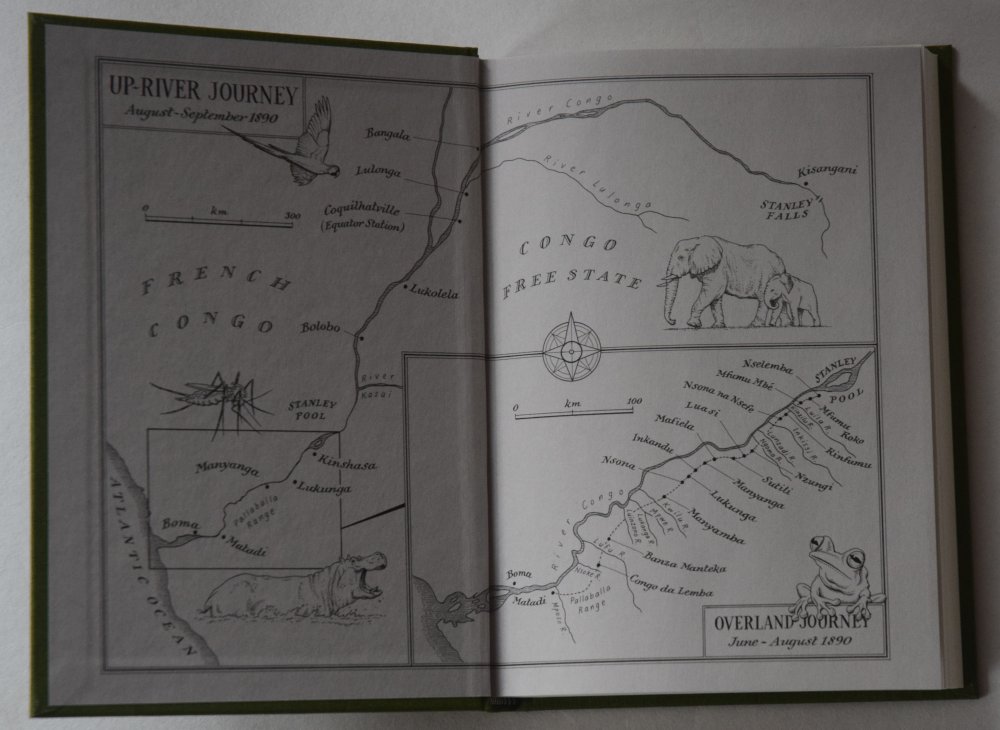
There are also numerous sketch maps of sections of the river which are also included in the Folio edition. The endpapers of this book have maps for both The Congo Diary and The Up-river Book so that you can follow the journeys.

20180501 Conrads Congo 3

Unlike in Heart of Darkness where Marlow on having walked to his boat just as Conrad did, the Roi des Belges was clearly ready to sail as they set off a couple of days after he arrived. In the story Marlow found his ship had sunk a few days earlier so was obliged to spend many months getting it out of the water and repaired before they could do anything. The enforced break affords Conrad the chance to set up his plot for the rest of the story and also to make various observations about the conditions the natives are under. In reality he was off from Kinshasa to Stanley Falls almost immediately. This section of the Folio book is frankly not very readable and in truth was not intended to be so as it is really just notes on the route to avoid the numerous sandbanks and rocky snags that litter the river. Conrad’s sketch maps are interesting with their dotted lines indicating the correct path between islands especially the long section dealing with the clearly complicated Lulanga river passage, this takes 7 maps and several pages of notes to get through so it must have had a justified reputation for difficulty in navigation.

At the end of The Up-river book we are back to a small section of correspondence as letters have caught up with Conrad at Stanley Falls. One of these is highly significant as the letter to Marguerite includes the first mention that he has been very ill with dysentery as well as fever (malaria) and that there is a mutual dislike between him and the manager of the station he is based at so there is little hope of any advancement in his career. It is quite clear from the letter that the manager of the station that Marlow finds himself at is modelled on the real Monsieur Delcommune. This is how Marlow describes him..

He was commonplace in complexion, in features, in manners, and in voice. He was of middle size and of ordinary build. His eyes, of the usual blue, were perhaps remarkably cold, and he certainly could make his glance fall on one as trenchant and heavy as an axe. But even at these times the rest of his person seemed to disclaim the intention. Otherwise there was only an indefinable, faint expression of his lips, something stealthy–a smile–not a smile–I remember it, but I can’t explain. It was unconscious, this smile was, though just after he had said something it got intensified for an instant. It came at the end of his speeches like a seal applied on the words to make the meaning of the commonest phrase appear absolutely inscrutable. He was a common trader, from his youth up employed in these parts–nothing more. He was obeyed, yet he inspired neither love nor fear, nor even respect. He inspired uneasiness. That was it! Uneasiness. Not a definite mistrust–just uneasiness–nothing more. You have no idea how effective such a… a… faculty can be. He had no genius for organizing, for initiative, or for order even. That was evident in such things as the deplorable state of the station. He had no learning, and no intelligence.

The last letter in this section is to the publisher Thomas Fisher Unwin who was acting as Conrad’s literary agent and mentions the short story ‘An Outpost of Progress’ based on his experience at the station which makes up the next section of the Folio volume.

20180501 Conrads Congo 4

Conrad would be invalided out of the Congo by the end of 1890 to the relief not only to himself but also to Delcommune who wanted rid of him, and never recovered his health. Malaria is one of those persistent diseases that keeps flaring back up and it would afflict him several times back in England. The remainder of the Folio book is letters he sent long after his return, including 3 to Roger Casement at the end of 1903 just before the Casement report was published in February 1904, along with extracts from articles he wrote, followed by 2 appendices. The first of these is a series of five short testaments about Conrad written by people who met him including John Galsworthy and Bertrand Russell and then finally the extracts from Casement’s report that was mentioned earlier.

All in all a fascinating book which gives an insight into the creation of Heart of Darkness and which even if you have never read the novella provides an overview of the awful situation in the Congo under Belgian control and it should be recommended if only for the historical record.

Burghall’s Diary – a record of the English Civil War

Until the advent of print on demand publications in the last decade or so the diary of Edward Burghall, vicar of Acton in south Cheshire was one of the most difficult to source of all local history accounts for that county. This was a pity as he was an eye witness to the progress of the English Civil War (1642-51) and his diary covers this entire period and once the style settles down it provides a real feel of how the county and its population was affected by the conflict.

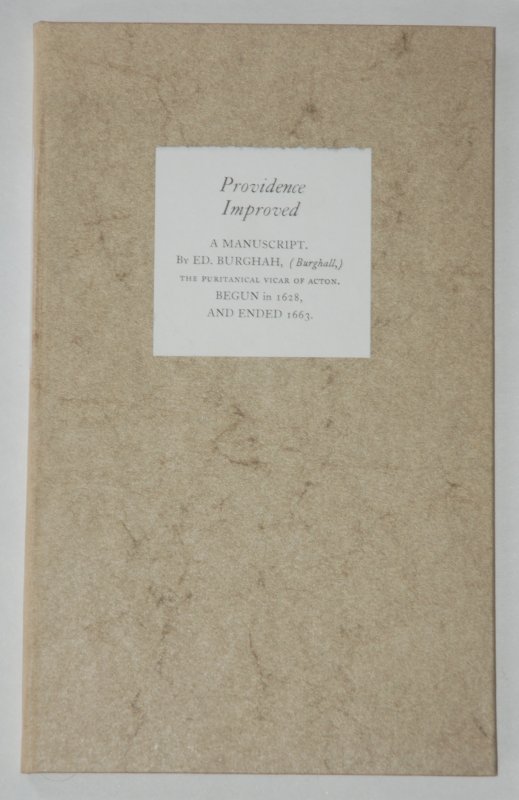
The diary first appeared in print as an adjunct to the Chester edition of King’s Vale Royal of England by William Smith and William Webb, published by Daniel King in 1656, this book is now extremely rare and supplements like this are even rarer as they were not issued at the time but were additional extras that the publishers came up with as they found them. It was included in the combination volume of the relevant section of King’s Vale Royal with Sir Peter Leycester’s Antiquities of Cheshire published in two volumes by John Poole of Chester in 1778. The next time it is known to have been reprinted is as part of Cheshire Biographies by Barlow, printed in 1855 which is also a very difficult book to locate. After that we have to leap all the way to 1993 when it was printed for the first time as a separate book by The Tern Press of Macclesfield as a limited edition of just 200 under the title of Providence Improved and that is the copy on my bookshelves.

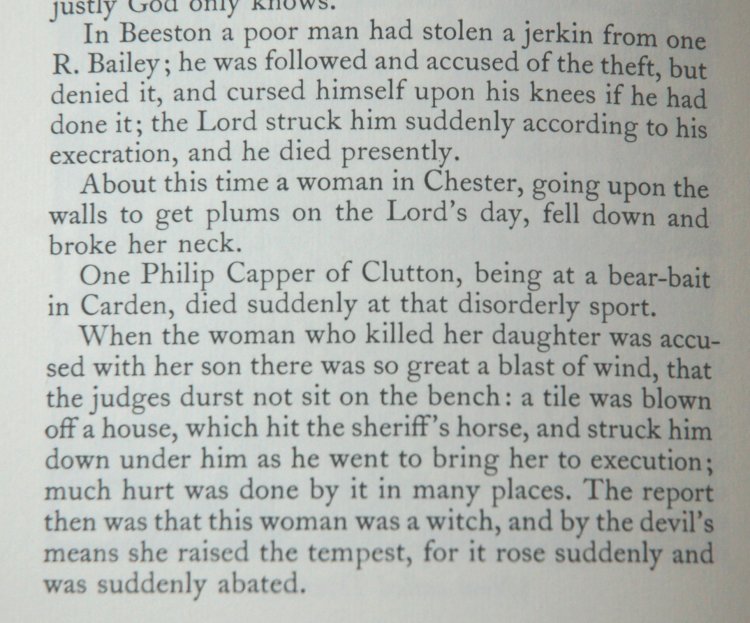
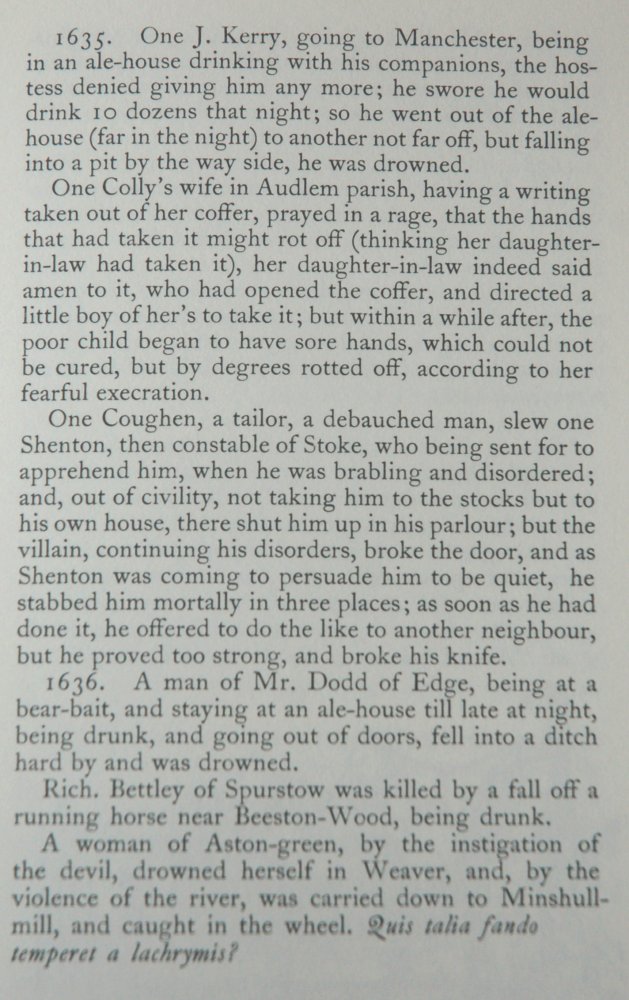
20180312 Burghalls Diary 1

As mentioned above Edward Burghall was vicar of Acton, a small village about a mile from the ancient market town of Nantwich which dominated the otherwise mainly rural surroundings in south Cheshire. Nantwich was for Parliament in the war against the Royalists so the diary does tend to cover the conflict from that side. The diary whenever it has been printed has included extracts from various years before the war which as well as illustrating the style of the diary at that time which was more of a series of notes rather than the  extended essays it became during the war also give an idea of Burghall’s belief that god shall strike down the unrighteous, there are very few examples of the righteous being blessed by god however.

20180312 Burghalls Diary 2

20180312 Burghalls Diary 3

Interesting as these are is showing the beliefs and attitudes of the people at the time the diary really gets into it’s stride with the origins of the war and descriptions of military actions. Here Burghall proves to be a faithful witness of manoeuvres either seen by himself or reported by people involved in the local area and especially in the lead up to the siege of Nantwich and it’s aftermath in January 1644.

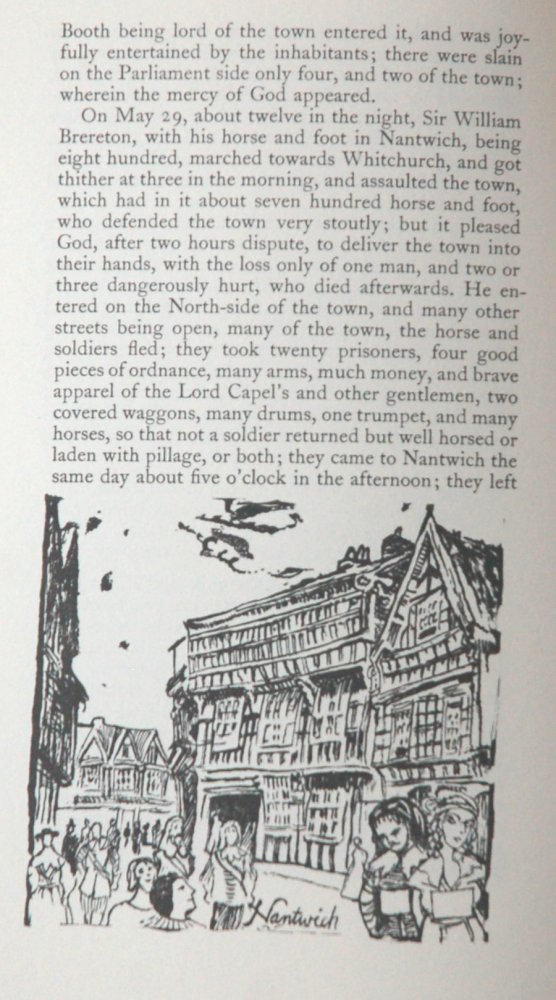
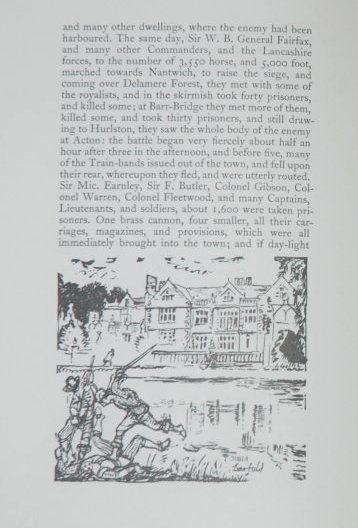
This page from May 1643 also includes a drawing by Nicholas Parry of the Crown Hotel which still looks pretty much the same now as it did then.

20180312 Burghalls Diary 4 May 1643

Whitchurch is 14 miles (22½ km) from Nantwich so the soldiers starting at midnight marched 14 miles in 3 hours, fought a battle, won it, gained some booty from the defeated army and march 14 miles back again returning by 5 in the afternoon. Quite a days work! This isn’t the only example of similar there and back again in a day raids run out of Nantwich that are recorded in the diary; on another day they went to Chester, fought in a battle and got back a round trip of 41 miles (66 km)

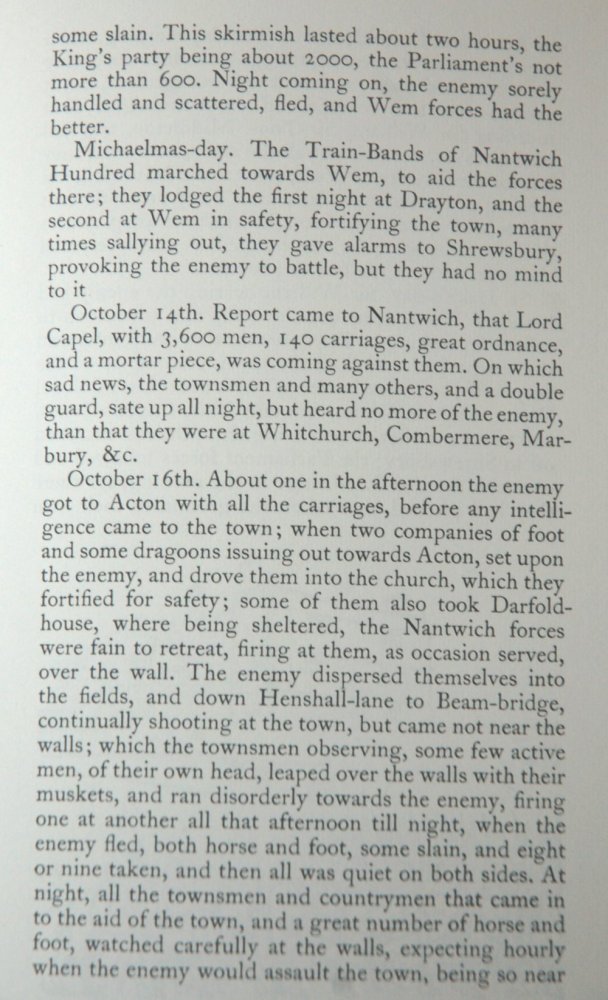
20180312 Burghalls Diary 5 Oct 1643

By the end of 1643, as can be seen above, the Royalists were clearly getting fed up about the way the troops from Nantwich were able to so disrupt their positions that it was decided to move against the town itself.  By then Nantwich was the only town still under Parliamentary control in the entire county so it was definitely becoming a nuisance and  skirmishes started in October that would eventually lead to the Battle of Nantwich on 25th January 1644.20180312 Burghalls Diary 6 Jan 1644


The battle is still commemorated in the town each year and since the 1970’s there has been a re-enactment and other entertainments suitable to the period on the Saturday closest to the 25th January and is known as Holly Holy day as back in January 1644 the townspeople wore sprigs of holly in their hats to celebrate the victory there being no other colourful plants at that time of year. I was born in Nantwich and lived there throughout my childhood which is why wanted this book so much when it came out. As I said at the beginning of this blog nowadays it is easy to get the text from more than one print on demand source both here and in America, it is always found with Memorials of the civil war in Cheshire and the adjacent counties by Thomas Malbon, of Nantwich as both books are quite short and it makes for an interesting read.

Another aspect of this book that I want to cover is how this edition came to be printed. Crowd-funding is seen by many as a modern phenomenon, sites such as KickStarter and GoFundMe are in common use now however the book business has used this model for centuries with subscribers editions and selling books against a prospectus. Printing a book was an expensive game, and still is if you want an object of quality, so subscribers would be sought to put up money in advance to ensure that the massive initial outlay was at least mainly offset before the publisher went to press. Subscribers would get the earliest editions and often their name printed in the back, also their edition may be on larger paper or have extra illustrations to make it stand out. The alternative would be a prospectus, a simple sheet of paper produced to interest buyers before publication and again persuade them to pay before the physical book exists, usually by getting a discount on the final published price. That was how Tern Press went about selling this book as can be seen below as I kept my copy of the prospectus and tucked it inside the book when I had it.

The specials were a lot more expensive (from memory about £200) but for that you got an original watercolour by the artist tipped into the book and you could choose what you wanted him to paint. I however couldn’t afford that so handed over my £48 in advance of publication and eventually received number 31 in the post.

You don’t have to be from Nantwich, or even be interested in Cheshire history to find the book interesting. Burghall eventually lost his position at Acton on the 3rd October 1663, as a fervent Parliamentarian he was always at risk after the restoration of the monarchy in May 1660, and he died in apparent poverty on the 8th December 1665.