The Seventh Voyage – Stanislaw Lem

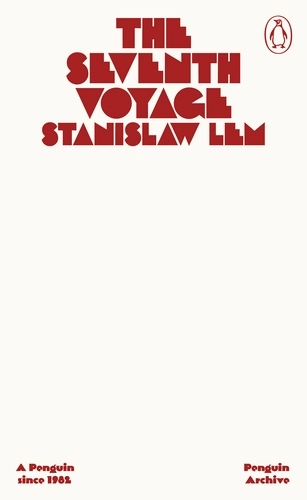
Polish author Stanislaw Lem is probably best known for his 1960’s science fiction masterpiece Solaris which has been adapted into a couple of films, in 1972 there was a Russian version and then fifty years later in 2002 James Cameron produced another in America. The Russian original is generally regarded as the better film although the latter is supposedly closer to the original book. This collection produced as part of Penguin Books 90th birthday celebrations consists of the short story ‘The Seventh Voyage’ (27 pages) along with a couple of short novellas, or longer short stories depending on how you define the categories, ‘Terminus’ (63 pages) and ‘The Mask’ (68 pages). I’ll review each one separately.

The Seventh Voyage

Well that was great fun, the story comes from a 1957 collection entitled The Star Diaries and despite being called The Seventh Voyage it is the first one in the collection which are different numbered journeys through space by Ijon Tichy as told by the equally fictional Professor Tarantoga. In this one Tichy encounters time loops after his spaceship is damaged and needing two people to effect the repairs decides to team up with one of his alternate selves to do the work. However all the various versions of himself seem to be a cross purposes and start fighting amongst themselves over who should have the one spacesuit to ensure that a future version can also have a suit on and also who can eat which bits of the limited rations.

Terminus

From Lem’s Book of Robots this story from 1961 is much more a ghost story rather than the humour of the first story although it is also clearly a work of science fiction. Pirx has just received command of an old spaceship and on first arrival at the spaceport was less than impressed with his ship with it’s visible rust internally and obvious patch jobs all over the place. Intrigued as to its history he searches for the ship’s log and finds out that the agent was not kidding when he said it was historic. In fact notorious would be closer to the mark as the ship was originally called Coriolanus and every space traveller knew that name and the disaster that befell it when it was caught in a meteor storm and so badly damaged that the crew were trapped in separate sections as the oxygen slowly ran out. All nineteen crew members died and the ship was assumed to be scrapped, but it was here, with its slapdash repairs to save money and barely capable of the run to Mars that Pirx had been assigned to do. Whilst exploring the ship after take-off Pirx notices that a pipe is vibrating and what is more it is doing so in Morse code and passing messages between the now dead crew calling for help as they slowly suffocate…

The Mask

This 1974 story can originally be found in the collection of Lem’s stories entitled Mortal Engines and we are this time in the realm of science fiction horror and it is a very strange but engaging tale. It is however very difficult to review without giving away the twists in the story, which is what the Wikipedia entry does within the first paragraph, you have been warned. The story starts with a nightmarish sequence where our first person narrator has no real idea what is going on or even who they are. This very quickly segues into what appears to be a regency royal ball, all crinolines and lace, but our narrator has no idea as to why she is there and still no clue as to their identity, is she recovering from amnesia, is she mad, or is there some other explanation? She is drawn to a mysterious stranger sitting alone in a window, but why and how can she know him better when she doesn’t even know herself? The explanation to these various questions is slowly revealed and the true horror of both their situations is a total surprise, unless that is you have sneaked a peek at Wikipedia, which I’m glad to say I only did to verify when this was first published after completing the story.

Although I knew the name Stanislaw Lem I have to admit that I hadn’t read any of his work before this book which was the main reason I bought a copy from this anniversary collection. I’m definitely going to read more, starting with Solaris of which I have seen the original Russian film version but never read the book.

Frankenstein – Mary Shelley

If anyone had asked me before last week if I had read Frankenstein I would have replied “yes” as I was certain that I had done so although many years ago. Yet when I started reading a few days ago it became clear that I had never read this thoroughly enjoyable book before as it was completely unfamiliar. I have of course seen several of the largely terrible films and memories of those must have blurred my recollections but the book is so very different to the various ‘adaptations’ and is well written especially bearing in mind this was the twenty year old Shelley’s first work of fiction. I was particularly keen to read the book this week as next month I will be reading the first four Penguin books to mark ninety years of Penguin and the first of those is Ariel by André Maurois, which is his biography of Mary’s husband the romantic poet Percy Bysshe Shelley.

I think a lot of people know the story of how Frankenstein came to be written, but if you don’t then Mary Wollstonecraft Godwin as she was then, was away in Geneva in 1816 with her soon to be husband, whom she had run away with at the age of sixteen despite the fact that he was already married, she was eighteen by now. Also in the group was Lord Byron and his private doctor John William Polidori and there came an evening with poor weather so they were ‘trapped’ inside and it was suggested that each person present should write a horror story. Byron started a tale but didn’t get very far, it was later published as ‘a fragment’, Shelley wrote what would ultimately be five short ghost stories, Polidori didn’t get anywhere with his own story, but would later pick up Byron’s fragment and write ‘The Vampyre’, the first ‘modern’ vampire story, published almost eighty years before Bram Stoker’s classic, Mary of course started Frankenstein. Two years later in 1818 it was finished and published, by which time Mary and Percy were married, at the end of 1816 just days after the suicide of his wife.

It was immediately apparent to me that I hadn’t read the book before from the unfamiliar opening, which consists of four letters from Robert Walton to his sister Margaret as he embarks on an Arctic voyage from Archangel in northern Russia to attempt to reach the North Pole. Not where I expected the book to begin. In the fourth letter however there was a hint of what I had anticipated.

a strange sight suddenly attracted our attention and diverted our solicitude from our own situation. We perceived a low carriage, fixed on a sledge and drawn by dogs, pass on towards the north, at the distance of half a mile; a being which had the shape of a man, but apparently of gigantic stature, sat in the sledge and guided the dogs. We watched the rapid progress of the traveller with our telescopes until he was lost among the distant inequalities of the ice.

Undoubtedly it’s the monster, but what is he doing on a dog sledge in the high Arctic? The next morning another sledge is spotted, this time in a bad way with just one dog still living and trapped on a shrinking ice floe. Its badly frostbitten occupant is encouraged to board the ship and collapses soon afterwards, however as he slowly recovers he starts to tell his story to Walton, who each evening writes down what the stranger has told him, eventually revealing his name as Victor Frankenstein and how he came to create the creature they had spotted earlier.

It was on a dreary night of November that I beheld the accomplishment of my toils. With an anxiety that almost amounted to agony, I collected the instruments of life around me, that I might infuse a spark of being into the lifeless thing that lay at my feet. It was already one in the morning; the rain pattered dismally against the panes, and my candle was nearly burnt out, when, by the glimmer of the half-extinguished light, I saw the dull yellow eye of the creature open; it breathed hard, and a convulsive motion agitated its limbs.

How can I describe my emotions at this catastrophe, or how delineate the wretch whom with such infinite pains and care I had endeavoured to form? His limbs were in proportion, and I had selected his features as beautiful. Beautiful! Great God! His yellow skin scarcely covered the work of muscles and arteries beneath; his hair was of a lustrous black, and flowing; his teeth of a pearly whiteness; but these luxuriances only formed a more horrid contrast with his watery eyes, that seemed almost of the same colour as the dun-white sockets in which they were set, his shrivelled complexion and straight black lips.

The different accidents of life are not so changeable as the feelings of human nature. I had worked hard for nearly two years, for the sole purpose of infusing life into an inanimate body. For this I had deprived myself of rest and health. I had desired it with an ardour that far exceeded moderation; but now that I had finished, the beauty of the dream vanished, and breathless horror and disgust filled my heart.

This is where I struggled somewhat with the plot as Frankenstein simply runs away into the night rather than confronting and possibly destroying his creation which would have been the most logical outcome, although shortening the book somewhat. Instead when he returns to his lodging he discovers the monster is gone and he doesn’t see or hear of it again for the next two years. For a year of that time the creature improbably lives undetected in a small room attached to a cottage occupied by probably the least curious family imaginable for it never occurs to them to go round the back of the house and look at the outbuilding and its eight foot tall inhabitant. We are further asked to believe that just by observing this family he learns from scratch to not only understand their spoken language but also to read with no tuition. However if we discard my objections to this plot device then when the tale is picked up again the creature has found the Frankenstein home in Geneva having walked from Ingolstadt (roughly halfway between Munich and Nuremburg) a distance of some 400 miles (650km) although again it is not clear how he has managed this feat. To say that the crossing of paths between the creator and his creation after all this time does not go well is an understatement but it is from here that the book becomes more enjoyable again leading up to the fateful denouement on the Arctic Sea.

If you haven’t read Frankenstein then you should, there is a lot more going on both in the plotting and social commentary, which is only appropriate from the daughter of radical thinker and novelist William Godwin. My copy is from the new Penguin Vintage Collector’s Classics series, which included this book in its first ten titles published in March 2025. They are a lovely series of books with foil embossed covers and marbled end papers along with matching sprayed edges. The first ten titles were split evenly between ‘Gothic’ and ‘Romantic’ novels and a great selection they are too.

The Graveyard Book – Neil Gaiman

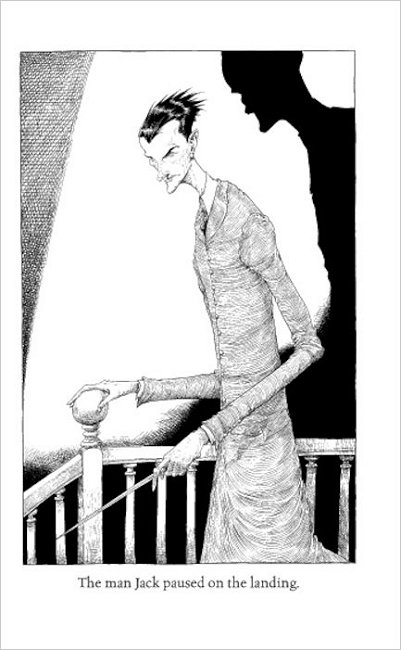
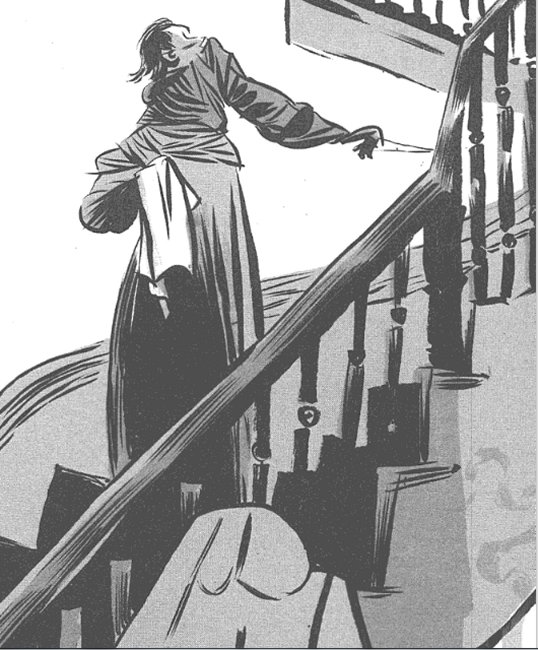
Master story teller of dark tales Neil Gaiman produced another brilliant book for young adults back in 2008 and my Bloomsbury edition is beautifully illustrated by Chris Riddell. Gaiman is probably best known for his books Coraline and Stardust both of which were turned into wonderfully strange films, along with the comic novel masterpiece that is Sandman and his collaboration with Terry Pratchett in writing Good Omens. The American edition, also released in 2008 was illustrated by Dave McKean who also did all the covers for the Sandman graphic novels and this version contains far more illustrations than the UK edition but I really like the sparseness of the Riddell pictures, see the two examples below. The darkness of the novel starts right from page one where before we get to the bottom of the page our hero’s entire family, mother, father and elder sister have been murdered by the man Jack and he is going up the stairs to kill him who is just eighteen months old. First is the picture by Chris Riddell and then comes part of the image of the same scene by Dave McKean.

Fortunately for the, as yet unnamed, toddler he had heard something and climbed out of his cot using his teddy bear as a stepladder and had worked his way down the stairs whilst the man Jack had been killing his family. Finding the front door open he had gone outside as stairs going up were far more difficult than bouncing down on your bottom so the choices were limited and tottered up the road outside until he reached what looked like a park. The man Jack followed him by scent, for there is a lot more to the man Jack than just a common assassin as we will find out as the book progresses, but as for the toddler he is now at an old graveyard, one that is no longer used for burials and is now, at least during the daytime, a nature park, but it is currently nighttime and the gates are locked but the child could squeeze through the railings. Eventually the man Jack tracks down the child and gets into the graveyard only to be confronted with the ghosts who ‘live’ there along with Silas (more of him later) and after a brief appearance of the ghosts of his family the inhabitants of the graveyard decide to look after the child as best they can.

Silas convinces the man Jack to leave using one of his powers which is to be extremely convincing even to such as Jack and is appointed the child’s guardian by the rest of the ghosts because Silas can leave the graveyard and exist in the world of the living as he is neither dead nor alive. It is never made clear in the book who, or indeed what, Silas is but he is clearly from the realm of the undead. All of this takes place in the first five pages of what is a 289 page book so as you can see Gaiman packs a lot of story into this work which was written piecemeal as he came up with ideas.

My son Michael inspired this book. He was only two years old, riding his little tricycle between gravestones in the summer, and I had a book in my head. Then it just took me twenty-something years to write it.

When I started writing the book (I started with Chapter Four) only my daughter Maddy’s request to know what happened next kept me writing beyond the first couple of pages

From the Acknowledgements at the rear of the book

Chapter four was originally published as a short story entitled ‘The Witch’s Headstone’ in a couple of anthologies and each of the chapters from two to seven make up complete short stories set a couple of years apart as Bod, as he becomes known, grows up in the graveyard with Silas able to bring food and clothes from the town of the living to keep him alive and the ghosts teaching him what they can. Bod, short for Nobody, makes a friend for a short while and Scarlett features in a couple of the chapters, Bod even manages to go to school for a while but that doesn’t end well and the man Jack reappears to try to finish what he started all those years ago but this time Bod is a teenager and on his own territory and knows just how to deal with the man Jack and his four accomplices. The book has funny parts as well as sections of considerable menace and appeals to adults both young and old. I loved it. There was even talk of making a film but despite a few abortive attempts nothing has yet come of that. But for me the most fun way to enjoy the book is with Neil Gaiman himself reading it which can be found here. This is the American edition so some of the words have been changed, a nappy becomes a diaper for example but even so enjoy…

The Sandman: Preludes & Nocturnes – Neil Gaiman

I’ve been a fan of Neil Gaiman’s writings for many years but I really don’t understand the reason for comics for adults so have stayed away from the creation that really launched Gaiman as a fantasy superstar writer, The Sandman series. Don’t get me wrong, I loved comics as a kid and have really enjoyed the nostalgia of the recent Folio Society triple set of Marvel reprints for what is known as the Gold, Silver and Bronze ages of comic books and reviewed the Silver Age edition almost a year ago here but I’ve never read a graphic novel or indeed been that interested in trying. I might have known that Gaiman would eventually draw me to a genre I have ignored for so long. Preludes and Nocturnes collates the first eight comics from The Sandman series which eventually ran to seventy five issues from January 1989 to March 1996.

The first comic deals with the capture of The Sandman, aka Morpheus, aka Dream in 1916 through a magical incantation that goes wrong. Roderick Burgess and his acolytes were actually trying to summon and capture Death and got instead the ruler of dreams. Frustrated by their prisoner clearly not being the right target and his refusal to say anything so they don’t know which powerful entity they have actually trapped they leave him in the magic circle hoping he will talk and be of use, but he simply sits there , biding his time, for seventy years, until he is accidentally released. After swiftly taking his revenge on the only mortal still alive who was involved in his capture he finds that his realm has gone to wrack and ruin in his absence and his three essential tools, his bag of sand, his helmet and his ruby talisman have gone missing and without them his powers are dramatically reduced.

The next six comics deal with his recovery of the missing artefacts, some of these stories work rather better than the others. The main failure is Passengers which tries too hard to make The Sandman part of the DC Comics universe by jamming other characters from that stable of superheroes and villains into the story line. Yes The Sandman is a DC character, initially created by Joe Simon and Mark Fleisher in 1974 in the traditional hero suit of close fitting top and tights but the Gaiman re-invention of the character fifteen years later doesn’t sit well amongst the costumed heroes and it just feels wrong, even Gaiman describes the attempt as “perhaps misguided”. These all come under the horror fantasy genre, especially 24 Hours which would definitely get an adults only certificate if it was filmed. The dark artwork if perfectly fitted to the story although the original artist left after just five comics and the design subtly changed at that point but not as much as it was going to do.

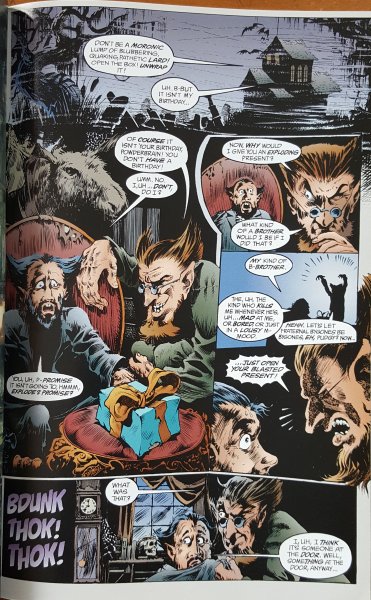
The page below is from the final comic in this volume, The Sandman now has his power restored and so his initial quest is complete. The resolution has come as an anticlimax and what he doesn’t know now is what to do next so is reduced to just sitting, feeding the pigeons in a park until his sister arrives to try to shake him out of his deep reverie. As you can see the artwork is very different in this comic which is effectively a codicil to the first seven, I actually enjoyed this episode more than those before it and this is the first slight hint of the existence of The Endless a group of seven siblings who are like gods (although there is no specific reference to the family this early on in The Sandman series). In the final panel of this comic, and the book, you see that The Sandman is back.

Did I enjoy reading this? Yes. Will I therefore purchase and read the rest? Probably not. It was fun to experience such a complex story in the comic format but I don’t feel the need to read more in this style. I am intrigued by the recent audio version being produced as a series of dramas by Dirk Maggs whose work in the field of adapting fantasy novels to audio dramas I greatly admire, so ironically I may well continue my experience of reading a graphic novel but in a format with no pictures.

Gaslight and Ghosts – Stephen Jones & Jo Fletcher (Editors)

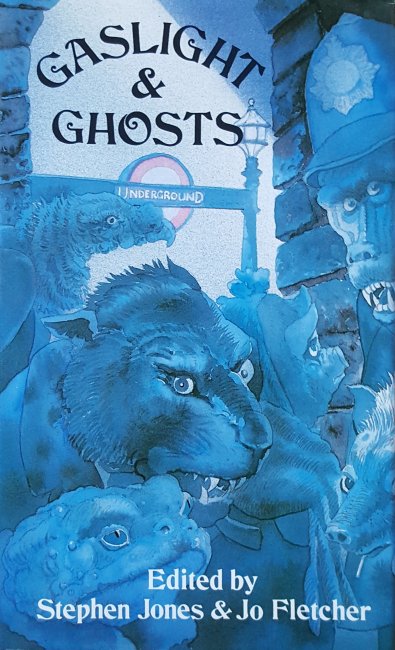
This book was published in conjunction with the 1988 World Fantasy Convention held in October in London and contains works by what is presumably all the featured guests. That horror writer James Herbert was the guest of honour naturally led to a book of horror and supernatural tales interspersed with some articles on the subject, for example Neil Gaiman, with his journalists hat on, wrote an appreciation of the James Herbert’s works and literary merit. Some writers provided extracts from new or future novels such as Clive Barker’s Cabal or Terry Pratchett’s Pyramids, others supplied short stories from existing collections but there are also numerous new works represented in the twenty two stories and articles in the book, including the piece by James Herbert. Even the editors wrote a short horror teaser together as the opening story rather than a more predictable introduction.

On the 31st October, Halloween, I was between books for this blog and fancied something totally different from what I had been reading and preferably something I could read in small chunks as I didn’t want a full blown novel, maybe a collection of short stories would fit the bill? Perusing the shelves led to Gaslight and Ghosts and it just felt natural that this should be the book to start then. It is decades since I last read a horror or even a simple ghost story, Susan Hill in the book I reviewed last week even wondered if you grow out of them, well the answer is no you don’t.

From the articles included, Neil Gaiman’s review of the literary career of James Herbert is a s well written as you would expect from a writer of his talents. Hugh Lamb contributed a fascinating insight into Victorian horror stories and the joys and difficulties tracking them down and bringing them to modern readers. Mike Ashley produced an interesting summary of the relationship between the American magazine Weird Tales in the 1920’s and 30’s and the dozen books edited by Christine Campbell Thomson in the UK known as the ‘Not the Night’ series which largely seem to be a way of getting round the differing copyright laws on either side of the Atlantic. However Kim Newman supplied a frankly tedious twenty nine page listing of films featuring Jack the Ripper however tenuously he was in them.

But it is the stories that you come to a compendium like this for and there are some really great tales. I particularly liked ‘Beyond Any Measure’ by Karl Edward Wagner which is also by far the longest story in the collection and ‘Immortal Blood’ by Barbara Hambly. Both of these are vampire tales, which I definitely thought I had grown out of, but they are so well written the genre didn’t interfere with a cracking good tale. The oldest story included is ‘The Writer in the Garret’ by Brian Lumley which dates back to 1971 and was genuinely creepy even though you have a horrible feeling that you know how it is going to end; whilst the second oldest, ‘Cat and Mouse’ by Ramsey Campbell, from 1972 is truly terrifying. I could go on James Herbert’s ‘Halloween’s Child’ was written especially for the book and is as un-nerving as you would expect from this master of horror and to relieve the tension both Brian Aldiss and Diana Wynne Jones both provided humorous stories. This volume, as with any anthology associated with a specific event, is tricky but not impossible to track down and is definitely worth the effort.

I bought the book second hand and my copy is multiple signed, clearly the original owner had been round the convention getting as many people as possible to sign it on the opening page of their story or in one case an illustration. The signatories are a spread of the great and the good from 1980’s horror and fantasy writing: Stephen Jones and Jo Fletcher, James Herbert, Neil Gaiman, Clive Barker, Brian Lumley, Dave Carson (illustrator), Ronald Chetwynd-Hayes, Robert Holdstock, Ramsey Campbell, Karl Edward Wagner, Terry Pratchett, Adrian Cole, Kim Newman and Charles L Grant. Sadly a lot of these are no longer with us and the most notable omission from the signed stories is the one by Brian Aldiss who has also unfortunately died in the intervening thirty two years since publication.

A really good book, I’m glad I was wondering what to read on Halloween.