Guard Your Daughters – Diana Tutton

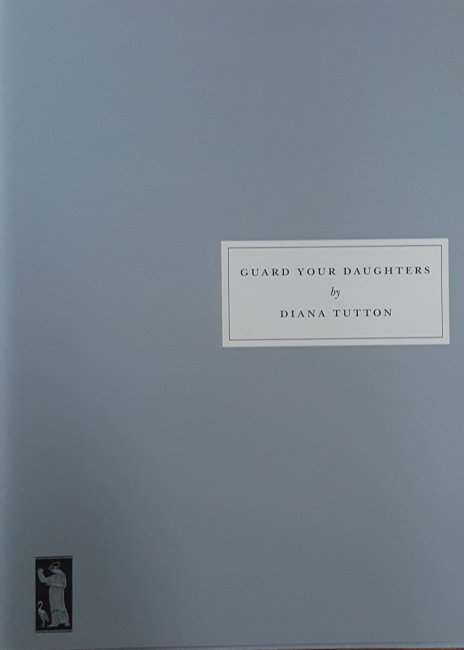
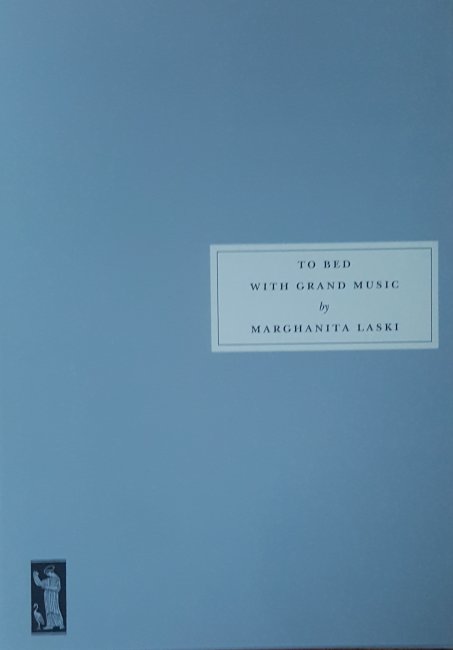
The second of the three Persephone books that I purchased from them at their own shop in Bath back in September this year. The first one I featured was ‘To Bed With Grand Music’ by Marghanita Laski which was also in their distinctive all grey binding and dust jacket. Persephone specialise in twentieth century female writers a large number of which have largely been forgotten nowadays, certainly I had never heard of Diana Tutton before buying this book. It turns out that this was Tutton’s second novel, but the first to be published, back in 1953 by Chatto and Windus, she would go on to write one more novel whilst living in Malaya in the early 1950’s before returning to the UK with her husband and apparently retiring from writing as I can find no other works by her other than these three novels. Guard your Daughters was easily her biggest hit and largely favourably reviewed at the time including by such literary luminaries as the future Poet Laureate John Betjeman who described it as ‘A really talented first novel’ in his review in the Daily Telegraph newspaper. Persephone Books have rather unusually included an afterword made up of contemporary reviews up to modern day blogs, I have to say that the more modern takes on the novel are nowhere near as complimentary as the reviews from the 1950’s and that I have to agree with them. Whatever ‘charm’ the book had when it first appeared has largely evaporated over the decades and I took weeks to read it despite it only being 250 pages long, picking up other books to read and review whenever I got totally fed up with the five Harvey sisters, their tedious father and their awful mother.

The father is apparently a famous mystery novelist although the pseudonym that he writes under is never mentioned and he spends most of his time in his study composing the books that have made him wealthy occasionally appearing to eat and in the evenings drink sherry before vanishing again to his room. The mother spends most of her time taking to her bed following whatever perceived slight she has objected to most recently and controlling her daughters to an obsessive degree so that none of them have ever been to school and are largely kept from any form of socialising, being effectively confined to the house except when needed to go on errands. As the book starts the eldest, Pandora, has escaped the oppressive atmosphere of the house by somehow getting married leaving behind her four sisters, in order of age, Thisbe, our narrator Morgan, Cressida and finally Teresa who is fifteen. The names are as pretentious as the girls are snobbish, seeing themselves as special because of their father and charmingly eccentric due to their odd existence cut off from the modern world without formal education, social life, telephone, or car rather than bizarre. The writing is all over the place as well with most things described in the present tense but then all of a sudden near the end of the book it’s Morgan looking back over the years at what had happened. Morgan is also not an interesting narrator which is another reason I kept putting the book down, frankly I didn’t care what these young women were doing in their extremely odd household where their mother did nothing other than flower arranging and having nervous collapses, leaving all the household duties to the girls, which are tediously described, and the one remaining servant who was mainly a cleaning lady as far as I could tell from her random appearances.

The girls attempts to add male company and presumably an escape from the house as Pandora managed are thwarted by the controlling interests of their parents but near the end of the book it looks like finally they may be set free. According to the Persephone Books website there was going to be a sequel where they did lead their own lives but this was unfinished. Frankly I’m happy Tutton never completed it, presumably she got as fed up with the Harvey sisters as I did.

Diana Tutton wrote a sequel in the late 1950s which, alas, was never published. It was called Unguarded Moments and its setting is London seven years after Mrs Harvey had a total breakdown and all the girls moved out: to freedom and their own lives. Morgan has married and had two children. In this novel, too, there is a dark side: one of her children disappears and is not found for a heart-stopping few hours.

Persephone Books website – see here

I will probably give this book away rather than find a home for it on the shelves as I’m unlikely to want to read it again, pity as I enjoyed Laski’s work and am really looking forward to the third book I bought in Bath which will be tackled sometime in the new year. As with the Laski there are patterned endpapers with a matching bookmark, this time it is taken from a 1953 printed cotton by Susie Cooper for Cavendish Textiles.

To Bed with Grand Music – Marghanita Laski

At the end of September I visited the city of Bath in Somerset, England and there found the headquarters of Persephone Books, a small publishing company specialising in the works of various female authors from the twentieth century. They started twenty five years ago in 1998 and all their books are bound in this silver/grey design with an identical dust wrapper but the end papers are different in each book and you also get a bookmark which matches that volumes’ end papers. Also each book, regardless of length, is priced at £14 but with a deal of any three books for £36. Restricting myself to three from the one hundred and forty nine titles available was tricky but at least from this book, number 86 on their list, I seem to have chosen well. It was originally printed in 1946 with the author taking the pseudonym of Sarah Russell almost certainly due to the scandalous nature of the subject matter. For Mrs Deborah Robertson says goodbye to her husband Graham in the early part of of the war as he is posted to Egypt and after moping about at their marital home in the country for a while with their young son Timmy, leaves him in charge of the housekeeper during the week and gets a job in London to keep herself occupied and starts on a series of affairs.

In fact the first ‘affair’ would nowadays be regarded as rape as the man involved got her drunk and they ended up in bed together for what was definitely a one off occasion which Deborah was completely disgusted with. However she soon moves in with a friend and starts relationships deliberately this time, partly for the company but mainly for what she can get out of them and she does seem to do rather well for quite a long time. The first proper affair was with Joe, an American lieutenant with a wife back in the States and this lasted quite a while with Deborah even taking him back to her marital home for what turned out to be an uncomfortable weekend to meet Timmy and this relationship lasted until he was posted out of the UK. He is followed by another American lieutenant called Sheldon who didn’t last very long before she found a French member of the London embassy called Pierre. This is the time when Deborah decides that what she really wants is to be a ‘professional mistress’ and asks Pierre to teach her what men are looking for is their dalliances. Pierre agrees but is also repelled by the task so after a few more weeks takes her for a meal with Brazilian diplomat Luis Vardas and after enjoying the meal simply leaves her with him as her new partner. By the end of affair number six she is completely manipulative over her lovers as can be told from the below extract when she has decided to get rid of her first British lover Anthony.

After Anthony we no longer have a lover by lover account of her partners instead there is a succession of men about who we find out very little and presumably neither does Deborah, she simply sees them as a means to an end although she is by now overspending in order to keep up the appearances needed for the class of man she is aiming to attract. Chapter ten begins…

Geoffrey was succeeded by Martin and Martin by Nils from the Norwegian Navy. Usually Deborah managed to avoid any awkward interregnum by building one up before the last had faded away, but sometimes this would fail and a gap would yawn. Then Deborah would give a party.

At such a party she would invite several possible successors for her favours and pick one to work on. By now Deborah is thoroughly unlikable as a character but the book is written so well that it is difficult to put down. Laski was a lover of words and the novel is beautifully put together so even as the ‘only in it for herself’ nature of Deborah becomes more and more dominant the novel still draws the reader in. Laski wrote six novels, five of which have been published by Persephone Books but her love of words is mainly shown by the fact that she contributed over a quarter of a million illustrative quotations to the Oxford English Dictionary and was also a regular panellist for twelve years on the BBC game show ‘What’s My Line’. I’ve loved the book and will almost certainly pick one of her other novels in my next group of three Persephone publications.

The end papers and the bookmark are printed with a design entitled ‘Good Night Everybody’, from a silk scarf made by London based silk specialist Jacqmar around 1940 and held in a private collection.

The Picture of Dorian Gray – Oscar Wilde

Oscar Wilde’s only novel can famously be summarised as the story of a man who doesn’t appear to grow older, but rather the portrait of him ages on his behalf. But the copy I have is 256 pages long so it must be much more than the twenty word precis just given and indeed it is. I didn’t know what to expect when I pulled this book off the shelf as for some reason I have never read it before despite it being a famous work of literature and my owning this copy for at least fifteen years, but I definitely enjoyed it for it is beautifully written.

Yes the story of the painting ‘ageing’ rather than Dorian is there but that just scratches the surface, the picture shows all the corruption, not only of his increasing age, but also the collapse of his morality and does so in real time. So when he views the portrait, which he does regularly as time goes on even though he has it locked away in an attic so nobody else can see it, he can see the effects of his lifestyle boldly depicted on the canvas. Indeed when he kills a man blood starts to show on his hand in the portrait and appears to be dripping onto the floor within the painting from his fingers.

Dorian Gray is the only child from a very wealthy family so has no need to work instead he can just idle his way through life doing whatever he wants and because he can do this he does, dragging other people along with him. We see evidence of his moral dereliction many times through the book and his effect on his friends and lovers, one of his friends is depicted late in the book in an opium den hopelessly addicted and others commit suicide after being abandoned or blackmailed by him. Dorian however does not care about any of them even the social approbation that comes his way with people leaving rooms if he comes in or otherwise shunning his company means nothing to him for he has retained his youthful looks and that is all that he apparently needs. In his rejection of societal norms he is guided by the hedonistic dandy Lord Henry Wotton, whom he meets right at the beginning of the book at the studio of artist Basil Hallward whilst he is painting the titular full length picture. Henry becomes probably his only life long friend, apparently unconcerned about the depravity of Dorian’s life and loves and equally unfazed by Dorian’s never ending youthful looks or his occasional collecting manias. Due to his vast wealth Dorian can pursue any interest he wishes, collecting rare tapestries, perfumes, musical instruments or even jewels amongst other things, becoming an expert in this or that field before moving on and it is this money and knowledge that enabled him to stay accepted by at least part of London society.

Yes Dorian Gray is a repellent character, one that if he had really existed anyone would do well to avoid the company of, but Oscar Wilde’s writing is in contrast truly lovely. The pages just flew past whilst I was reading the book and as the story developed of Dorian’s spiral into vice the writing seemed to get better. It is. I suppose, part gothic horror and part social commentary upon the idle rich that Wilde spent so much time in the company of both in the city of his birth, Dublin, and London but I loved the book and can’t believe I have managed to not read it before. The final denouement, whilst the reader is expecting something of the sort, still had surprising details so Wilde kept me engrossed to the very last word and there are few books where that could be said.

A Portrait of the Artist as a Young Man – James Joyce

A long time ago I read Ulysses by James Joyce and for decades considered that was enough Joyce to last a lifetime; but I also had this book, and at 199 pages it was a lot shorter, maybe it was time for another go? Well I finished it this morning and if anything it was the tougher read of the two books. A series of disjointed episodes with several characters appearing seemingly at random but treated as though they had been there all the time however lacking context to place them within the tale, such as it is. It was also, to my considerable surprise, a book about Stephen Dedalus, the main character for the first third of Ulysses and here more clearly as a fictional representative of James Joyce himself. The book starts with the earliest memories of Stephen as a very small child and finishes with him deciding to leave Ireland just as Joyce did, and on the way Stephen attends the same schools and university as the author and his family has the money problems not helped by his father’s alcoholism. So is it a work of fiction or is it a disguised autobiography? It’s a bit of both, a fictionalised autobiography and with no way to separate the two parts, it also has several issues which made it a more difficult read even than the famously difficult Ulysses; the biggest of which is the twenty odd pages in the middle of the book that is basically a religious screed on life, death, heaven and hell which in places reads like a sermon from the more hellfire branch of the Catholic church and in others like an interminable list of confusing arguments, see below for a random sample of this section.

What you eventually get from this huge section is Stephen Dedalus’s slow retreat from the Catholic doctrine that he has been immersed in from childhood, first at home and then at the Jesuit boarding school of Clongowes Wood College and after a year there, when his father ran out of money to pay the fees for that place, on to the Christian Brothers O’Connell School in Dublin. This was exactly as Joyce himself did. By the end of the book as he is graduating from university Dedalus admits to his friend that he doesn’t want to take holy communion as his mother wishes because he has largely lost his faith “I will not serve that which I no longer believe”. Joyce himself had a somewhat more complicated relationship with Catholicism, certainly by the time he left Ireland he was not a practising Catholic but he attended church services during his self imposed exile on the continent, largely in Paris and Trieste, which lasted from 1904 until his death in 1941.

My other problem with the book is the regular use of Latin in the text, which I have never studied, and in this version of the book is not translated in footnotes which I suspect more modern editions do. My copy is from May 1948 during the crossover from Penguin Books in America to them going independent as Signet which explains the somewhat confusing references to Penguin, Signet and even New American Library (NAL) on the front cover. There is also Irish slang and several words that I didn’t recognise so that much like the Dean in the passage below I found myself putting the book down to look up a word.

A tundish by the way is nowadays a plumbing term for a device placed close to the pressure release valve that allows people to see if water has escaped the system due to excessive water pressure rather than a means of getting liquid into something but a century ago when ‘A Portrait of the Artist as a Young Man’ was written it was more usually a funnel used in the brewing industry.

All in all you are left with the impression that Joyce was more concerned with showing off his own perceived brilliance than telling a coherent story and at times I was tempted to give up but by then I was half way through so kept on going. Fortunately the final chapter, of the five, did read more like the book I was expecting so it was worth ploughing on. Will I read more Joyce? Probably not; but then again I said that after finishing Ulysses. I don’t have any more of his works on the shelves though so it would have to be a new purchase.

Mr Petre – Hilaire Belloc

I have five or six books by French author, but naturalised Englishman, Hilaire Belloc but apart from his book of humorous poetry ‘Selected Cautionary Verses’ I haven’t read any of them, reading this makes me want to pull the others off the shelves. My copy is the 1947 first Penguin edition, so 75 years old, and I can’t find any currently available editions which is a shame as it is a genuinely great read. Although written in 1925 it is set in the future of April 1953 and the basic conceit of being in the future, at least as far as the author is concerned, is that there was no longer the need for passports for British citizens entering the UK, although how you proved you were British and therefore didn’t need a passport is conveniently glossed over. It is vitally important for the plot however as the character we come to know as Mr John K Petre has no documentation on him with his name having arrived from America and losing his memory almost upon disembarking from the ship. He clutches at a barely remembered name ‘Petre’ as his own as he sinks into a nightmare of scratchily forming memories, but the name alone, whether it is his or not, proves his salvation, for it is a name of an eccentric multi-millionaire who thrives on being incognito.

There then follows a series of chancy investments, mainly by accident, but where the name of Petre works as a guarantee with no real financial backing, the first of which nets almost eighty thousand pounds and the second over a million but without our hero having any real knowledge as to what he is doing. The first is a simple boosting of the stock market which follows the knowledge that the great John K Petre has invested in a moribund stock which massively boosts the value, at least for a few days at which point the agent he had met at a dinner party cashed in for him and simply sent a cheque for his profit to the hotel he was staying in. This has some of the least likely plot lines in the novel and also some of the most dodgy mathematics as try as I can I cannot get a profit as stated in the narrative from the vague hints as to what the story says happened. The depositing of the cheque into a random bank account set up to receive it is also highly unlikely as no evidence is either requested or presented that the cheque has not been stolen or that the depositor is indeed John K Petre. The second transaction is however, oddly, far more believable despite netting over a million pounds when the character had nowhere near the required collateral for the property purchase involved but as he sold it straight away for far more than the agreed purchase price I can see this as quite possible, it is just a matter of timing payments.

I don’t want to give too much away, these two transactions occur in the first half of the book and Mr Petre has far more to go through before the end, but it is a brilliant novel which really draws the reader into the plot line both in feeling for our hero, who clearly has no idea what he is doing and is just led along by advisers, and also joy in the sheer blind luck he has in getting away with random investments much to his own surprise. What really surprises me however is that this 1947 paperback appears to be the last edition available, searching though abebooks and biblio, which represent the vast majority of online second hand book dealers, I cannot find a more recent copy apart from print on demand. I cannot understand why such a superb book has been effectively out of print for seventy five years, please if any publishers are reading this can we have a more recent edition? If anything due to the financial shenanigans so prevalent nowadays the book is more relevant then when it was first published almost a hundred years ago. If you can find a copy I suggest getting and reading it you won’t be disappointed.

The Brontës Went to Woolworth’s – Rachel Ferguson

With a title like that how could I resist? For those of you unfamiliar with the Woolworth’s name it was a high street range of budget stores in various parts of the world starting in America and later arriving in the UK up until 2008 when the UK side of the business went into administration with over eight hundred shops closing just after Christmas that year. They sold everything from records to sweets, children’s clothing to household goods, toys to books, indeed Woolworth’s was the first big customer for the newly launched Penguin Books back in 1935. It is therefore inconceivable that the Brontë’s would have shopped there even if their timelines had crossed, but Charlotte, the last of the Brontë sisters, died fifty four years before American businessman Frank Woolworth opened his first store in the UK. So what is going on with the title?

OK, time for a confession, I wrote that opening paragraph back on the 24th May intending to read this relatively short book quickly, get this blog written and free up time around my birthday when I was going to meet a very good friend for the weekend whom I hadn’t seen for almost three years due to covid restrictions. As I write this paragraph it is the 25th June, my birthday is long gone, I am still only 84 pages into the full 182 and I hate the awful, shallow, self-centred characters that make up most of the story. The widowed Mrs Carne has brought up three daughters two of which are now adult, Deirdre is a journalist, Katrine starting on a career as an actress and Sheil, the youngest is only eleven. All four of them live fantasy lives still referring to talking dolls from the childhood of Deirdre and Katrine, writing letters from the dolls and sending them to themselves and making up stories about, and correspondence from, people they have met or simply read about as though they know them well. At this point in the book Deirdre has managed to insinuate herself into the home of Sir Herbert and Lady Toddington; a couple that all four of the dreadful Carne’s have obsessed about for three years ever since Mrs Carne did a week of jury service and Sir Herbert Toddington was the judge to the point at which Agatha Martin, Sheil’s governess, is convinced that they do actually know them.

Will I get any further into the book? It’s been haunting me for almost a month now since I put it down mid chapter totally frustrated by the characters and haven’t picked it back up apart from this morning to check the names for this entry.

Right it is now the 13th of July and I have finally completed the chapter where I gave up and the book is at last beginning to make a bit more sense, good job as I am now almost two thirds of the way through. The Brontë’s had even been discussed at the end of that chapter, if only rather disparagingly, with a comment by Sir Herbert that Anne Brontë never wrote anything quotable. So a quick reference to the Oxford Dictionary of Quotations (I have the 4th edition) to check this out only to find that none of the Brontë’s appear in this rather large volume, which as an English writing family probably makes them unique in that nothing any of them wrote is regarded as quotable. This book is a real struggle and if I wasn’t writing this blog then I would probably have given up long ago but it now feels like a challenge. This is also the first of these blogs to have become a sort of diary entry, I wonder when I will actually finish it?

Well I can now answer the question at the end of the last paragraph with the 2nd September finally seeing the conclusion of the book, and I would never have done it if I hadn’t looked up other reviews and found others with the same problem but saying that it got better. And yes it did with the last sixty pages if not flying by at least manageable in one sitting. The governess, Miss Martin, finally had enough of the family and left during this section and I knew exactly how she felt, but not before meeting the ghosts of Charlotte and Emily Bell, as they introduced themselves although they are clearly two of the Brontë sisters, when they came to visit the Carne’s. This is where the book completely pivots so that the reader isn’t sure what has been going on in the previous 150 pages as it is explained that whilst in Yorkshire the Carne’s had been holding seances and had contacted the entire Brontë family before rapidly leaving to come back south and this was them returning the visit. Are the fantasies of the family more than that? I don’t know and frankly don’t care enough to try to work it out especially when the Toddington’s start to completely step into the fantasy lives created for them by the Carne’s and all pretence of reasonableness from them also slips away. When Lady Toddington says, at the end of the Christmas party which is where the book also finishes, that she saw the Brontë’s in Woolworth’s the other day buying notepads I was half relieved that I could finally answer the question posed at the beginning of this review and half just pleased that I was at the end of page 179 of 182 so the end was near.

Rachel Ferguson wrote at least eight other books, according to the back flap of the dust wrapper, but Penguin only ever published this one. As you can probably gather I don’t recommend reading this book and her entire oeuvre is probably worth avoiding.

The Turn of the Screw – Henry James

Probably Henry James’s best known novel, The Turn of the Screw, is a ghost story and although I’m not a particular fan of this genre I have to admit that the suspense builds superbly and that I thoroughly enjoyed this rare wander into the supernatural. Although born in New York in 1843 James moved to Europe in 1869 and finally settled in England in 1876 where he lived until his death in 1915 a year after gaining British citizenship. The book, written in 1898, reflects this and reads much more like a Victorian English novel rather than one from his homeland, indeed if I hadn’t known the author was an American I would never have guessed it from the style. The initial premise that it is a story read out to a group of friends from an old manuscript seems similar to so many British mystery and crime novels from the golden age of the 1920’s and 30’s although predating them by at least twenty years that the structure of the work felt so familiar. A group of friends are gathered at Christmas and are telling tales of supernatural events when Douglas stands up and referring to the previous tale starts to introduce his own story…

“I quite agree – in regard to Griffin’s ghost, or whatever it was – that its appearing first to the little boy, at so tender an age, adds a particular touch. But it’s not the first occurrence of its charming kind that I know to have been concerned with a child. If the child gives the effect another turn of the screw, what do you say to two children?…”
“We say, of course,” somebody exclaimed, “that two children give two turns! Also that we want to hear about them.”
I can see Douglas there before the fire, to which he had got up to present his back, looking down at this converser with his hands in his pockets. “Nobody but me, till now, has ever heard. It’s quite too horrible.” This was naturally declared by several voices to give the thing the utmost price, and our friend, with quiet art, prepared his triumph by turning his eyes over the rest of us and going on:
“It’s beyond everything. Nothing at all that I know touches it.”
“For sheer terror?” I remember asking.
He seemed to say it wasn’t so simple as that – to be really at a loss how to qualify it. He passed his hand over his eyes, made a little wincing grimace. “For dreadful— dreadfulness!”
“Oh, how delicious!” cried one of the women

As you can see this passage from the preface to the novel introduces the title which is then not referred to. The two children are brother and sister Miles, aged ten, and Flora, aged eight, who start off being simply strange but rapidly become more than a little creepy. The story is told by their governess who was appointed to this position at the beginning of the book and the gradual loss of her composure as she discovers that the country house where she is working is haunted by two ghosts, the masters late valet Peter Quint and the children’s previous governess Miss Jessel. Only other servants live at the country house as the children’s parents are both dead and the house belongs to their uncle who never comes there, but lives in London, and as part of the condition of employing the new governess required her not to communicate with him. Her only support in dealing with the increasingly odd behaviour of the children, as they clearly seem not only to be able to see the ghosts but actively pretend not to and also appear to encourage manifestations is Mrs Grose the housekeeper who slowly reveals the history of the two characters. To add to the mystery Miles attended just one term at school before being expelled with no reason given by the headmaster and refuses to talk about his time there. When he was alive Quint apparently spent far too much time with Miles according to Mrs Grose and had an undue influence over the boy whilst Flora appears to have been rather too close to Miss Jessel.

The story is engrossing and was originally serialised in an American weekly magazine over a period of twelve weeks, so two chapters at a time. This probably explains the regular cliffhanger revelations at the end of the chapters thereby ensuring that the next section would be looked forward to by a presumably growing band of avid readers. I’m certainly glad to have finally got round to reading what Stephen King in his 1983 book Danse Macabre described as one of only two great supernatural works of horror in a century, the other being The Haunting of Hill House and I heartily recommend giving it a go.

This copy is from the Alma Classics Evergreens series which at the time of writing has an excellent deal available of ten books for just £30 with free UK shipping.

Rivers of London – Ben Aaronovitch

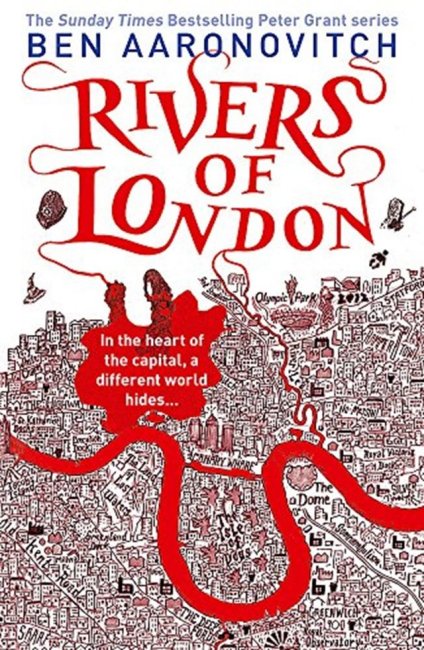
Well that was a fun read. First published in 2011 and clearly intended to be contemporary, the book starts out appearing to be a modern police procedural set in the Charing Cross police station of The Metropolitan Police (London’s police force) following the end of the probationary period for two trainee police officers, Peter Grant and Lesley May. Lesley is expected to do well in the police, her career looks bright and interesting in total contrast to that of Peter who appears to be heading for a life of doing the paperwork for the more go getting officers who are doing ‘real policing’ so haven’t got time for the boring bits. All this is about to change however following a particularly grisly murder that night at Covent Garden. When all the experienced officers have done what they can, but it is still too dark to do a proper search of the square the two most junior constables, Peter and Lesley, are called in to ‘protect the crime scene’ basically standing around on a freezing February night making sure nobody crosses the tape marking the edge of the area until dawn when the experienced officers will come back. At 5am Lesley goes off to get them both coffee and whilst he is alone Peter encounters a witness to the murder, the main problem with this witness is that although he did indeed see everything he is in fact dead and is a ghost haunting St. Peter’s church which is on the piazza. I’m really not giving much away here, this is all in the first few pages.

Going back the next night to try to find his ‘witness’ again Peter encounters Detective Chief Inspector Thomas Nightingale whom on discovering that Peter is ghost hunting and recognising a basic talent decides to take him on in his section of the Metropolitan Police, the magical part. As well as being a senior police officer Nightingale is the last wizard in Britain and so the whole plot swings away from ‘normal’ policing to encounters with magical beings all of which live unnoticed by the general public within modern London. As well as helping to solve what turns into a series of murders Peter is charged with resolving a dispute between Mother Thames and Father Thames, both river spirits who have taken responsibility for the tidal and freshwater parts of London’s major river respectively but whose territorial limits were being disputed. Nightingale not only takes Peter on as a Constable in his tiny division (which up until then had just consisted of him) but also as an apprentice wizard teaching him basic spells along with Latin as it turns out that all the textbooks are in this ancient language.

The book runs these two story lines in parallel and this I suspect led to one poor review when it first came out that the novel had inconsistent pacing. It is certainly the case that the sections on the murders are faster paced than the more bucolic dealings with Mamma and Father Thames and the positively erotically charged parts with one of Mamma Thames’s daughters Beverley Brook and her dealings with Peter and Lesley. I greatly enjoyed the book and look forward to reading more as there are eight novels so far in the series, with a ninth due out next month along with three novellas. Aaronovitch demonstrates an almost encyclopedic knowledge of London throughout the book so I suspect that an enormous amount of research went into the novel and I loved the use of the names of the various rivers that become tributaries of the Thames for characters, Beverley Brook for instance is a short river, only 14.3km long, in south east London. There is also Tyburn, Fleet, Ash, Lea, Brent and several others all characters in the book and rivers of London. For some odd reason Rivers of London was renamed ‘Midnight Riot’ when it was published in America which somewhat lost this point.

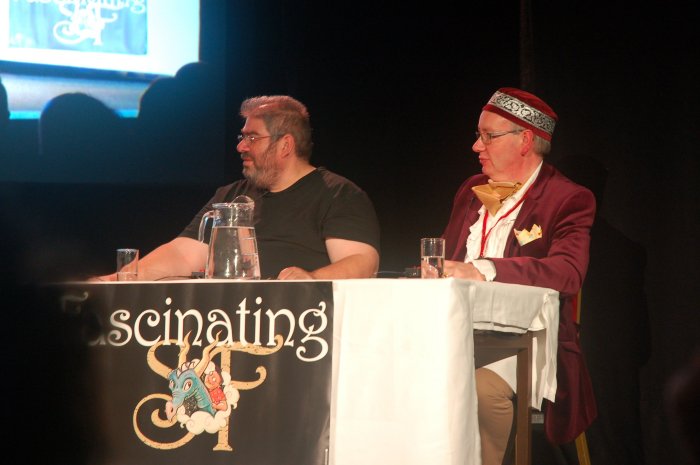
I met Ben Aaronovitch at the 2014 Discworld Convention where I was helping to run an event which was loosely based on the hit BBC TV programme QI which for copyright reasons we had called Strangely Fascinating (I was the scorer). It turned out that Ben was a definite Terry Pratchett fan and thoroughly enjoyed his time at the convention and didn’t mind being roped in as one of the contestants for our quiz. He is in the photo below, on the left, next to Pat Harkin who at the time was still working at Leeds Institute of Medical Education where he had been, amongst various jobs, lecturer in pathology.

Second Foundation – Isaac Asimov

Concluding the Foundation trilogy by Isaac Asimov, the review of part one can be found here and part two here.

This book is in two sections ‘Search by The Mule’ which is sixty pages long and ‘Search by the Foundation’ which is almost twice the length at 117 pages. After the events in Foundation and Empire both The Mule and The Foundation come to the conclusion that the mysterious Second Foundation hinted at by Hari Seldon three hundred years ago when he created the First Foundation on Terminus is a danger to their continued existence although for very different reasons, but where is it? Seldon had stated that the Second Foundation would be created at the other end of the Galaxy to the First but where exactly was that?

Search by The Mule (Originally published in January 1948 as ‘Now You See It’). This story continues immediately after the ending of the previous book and looks at the five years The Mule spent looking for the Second Foundation using both his mentally controlled subjects and a man who wasn’t under his direct control in case the control itself was what was stopping the leaps of imagination needed to locate it. After five years he gave up determined that the Second Foundation didn’t exist and concentrated on his empire, this story explains why.

Search by The Foundation (Originally published in three parts from November 1949 to January 1950 as ‘Now You Don’t’). Another fifty or so years have passed and during that time the First Foundation has been studying the brain as never before, partly in an attempt to understand the almost mythical Second Foundation especially since The Mule had decided it wasn’t there to be found. But they were convinced that Seldon’s plan had to be true and that the Second Foundation had helped, in secretive ways, to defeat their enemies over the last 3½ centuries. At the start of the novella five men gather at a family home to start an audacious attempt to find the Second Foundation, this story is probably the most fun of all the ones making up the trilogy especially with the final unexpected twist right at the end.

The three covers from this Panther edition make a complete image and it’s a great one from Chris Foss who I’m glad to say is still designing spaceships, including for the film Guardians of the Galaxy.

In the 1980’s Asimov returned to the Foundation series in an effort to integrate them with the other novels he had written, specifically the Robot series. One of the most striking aspects of the Foundation series when considered amongst Asimov’s other works is the lack of robots particularly from an author famous for his ‘three laws of robotics’ and numerous books about man and robots living together. The additional books comprise two prequels ‘Prelude to Foundation’ (1988) and ‘Forward the Foundation’ (1993) along with two sequels ‘Foundation’s Edge’ (1982) and Foundation and Earth (1986). ‘Forward the Foundation’ was published posthumously as Asimov died in April 1992. Of these books I only have a copy of ‘Prelude to Foundation’ but maybe I should get copies of the other three and give them a read, I have after all enjoyed rereading the original trilogy after decades of the books sat on my shelves unopened.

No Bed for Bacon – Caryl Brahms & S J Simon

Doris Abrahams and Simon Jacoblivitch Skidelsky, better known as Caryl Brahms and S J Simon respectively, collaborated on eleven comic novels and crime stories between 1937 and 1948 when S J Simon died suddenly at the age of just 44. No Bed for Bacon was their sixth book, first published in 1941, and is a comic retelling of Elizabethan England featuring William Shakespeare, Francis Bacon, Walter Raleigh, Queen Elizabeth herself and numerous other famous characters from the period. Caryl Brahms was best known as a theatre, especially ballet, critic and S J Simon was a journalist but much more famous in the world of contract bridge where he was European champion and also the author of books on the subject.

Well this was a fun romp round Elizabethan London with lots of running gags including the one that gives the book its title which is Sir Francis Bacon’s desperate attempt to get hold of a bed that Queen Elizabeth had slept in during one of her many progressions around England which was seen as a major status symbol in ones home. In this he is constantly thwarted partly at the hands of the Master of the Revels who controls all such progressions but also bu Elizabeth herself who knowing of his desire for such an item of furniture ensures that it never goes to him. Other running jokes include William Skakespeare constantly trying out spellings for his name, which definitely has a basis in fact because all the known remaining signatures by Shakespeare are spelt differently. Sir Walter Raleigh keeps getting a new and ever more flashy cloak only for it to be ruined within a couple of hours, from the, probably apocryphal, tale of him using his cloak to keep the Queens feet dry when her carriage stopped by a puddle and in contrast Lord Burghley keeps being dressed in more and more shabby attire. Shakespeare also keeps trying to start a new play called Loves Labours Wonne as a companion piece to Loves Labours Lost which famously has not survived to the present day even assuming that he ever finished it in reality and the regular sections in terrible Elizabethan spelling also add to the joy of reading the book.

The opening character remains anonymous through the work yet appears regularly always doing a different job as he makes a rapid rise, and even faster fall through the ranks of the proletariat from horse holder outside a theatre, to watchman, soldier, manservant, prisoner and back to watchman amongst many other jobs too numerous to list. He invariably starts any chapter actually set in London and you get used to seeing what he has managed to become this time. The other main fictional character, most of the people in the book really existed, is the young Lady Viola who disguises herself as a boy in order to join Shakespeare’s company as an actor as females were not allowed on the stage at the time and ultimately falls in love with him. If this sounds familiar than you have probably seen the 1998 film Shakespeare in Love where Gwyneth Paltrow plays Lady Viola who disguises herself as a man in order to join Shakespeare’s company as an actor as females were not allowed on the stage at the time and ultimately falls in love with him. Just a reminder that the book was written in 1941 and Tom Stoppard, who co-wrote the film is known to have had a copy of the book but claims to have not been influenced by it despite even using the same character name and no credits to Brahms or Simon are given in the film.

The book does play fast and loose with historical accuracy (as does the film which nicked the plot) but one of the most poignant sections and indeed the longest chapter of the novel takes place on a boat on the Thames with Queen Elizabeth progressing down the river in the company of her famous military and naval commanders whilst reliving the routing of the Spanish Armada. From what I remember of my Tudor history lessons this does appear to be mainly factually correct although it does contain Sir Francis Drake completing his game of bowls on Plymouth Hoe before heading out to meet the enemy which almost certainly didn’t happen. There are various sidelong comments regarding Drake being lucky with the wind which however was certainly correct.

Forsooth, tis a merrie romp Master Will and I definitely recommend the novel assuming you can lay your hands on a copy as it appears to have been out of print for a couple of decades but there are plenty of copies available on abebooks.

My copy is the first Penguin Books edition published in December 1948 five months after the death of S J Simon, Carly Brahms greatly outlived him and died just 3 days short of her 81st birthday in 1982.