A series of essays inspired by books that I own, talking about their history, some reviews and also how they came to be on my shelves. With over 6,500 books here and several more arriving each week I doubt I'll ever be short of a topic.
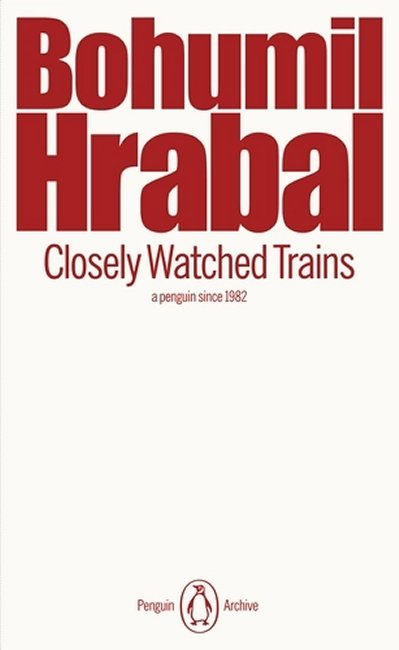
The first book to be featured on my blog of the ninety volumes published as Penguin Archive to mark the ninetieth birthday of Penguin Books on 30th July 2025 and oddly I have chosen this one because of the translator rather than the author. The book was translated into English from the original Czech by Edith Pargeter, better known by her pen name Ellis Peters and the author of the medieval mystery books featuring the monk from Shrewsbury Abbey called Brother Cadfael. Pargeter was born and brought up within a few miles of where I live now and died just a couple of miles away so I’m always intrigued when I come across anything different she worked on and until reading this book I didn’t know that Pargeter became fluent in Czech following her time in the country in 1947. The original Czech title is ‘Ostře sledované vlaky’ and in some English translations is given as ‘Closely Observed Trains’. The 1966 film that was based on the novella also seems to switch titles between the two options depending on where it was released. The film won the 1968 Oscar for best foreign film and was nominated for the 1969 BAFTAs in the best film and best soundtrack categories. The line on the cover ‘A Penguin since 1982’ refers to the first year one of Hrabal’s works was published by Penguin Books.
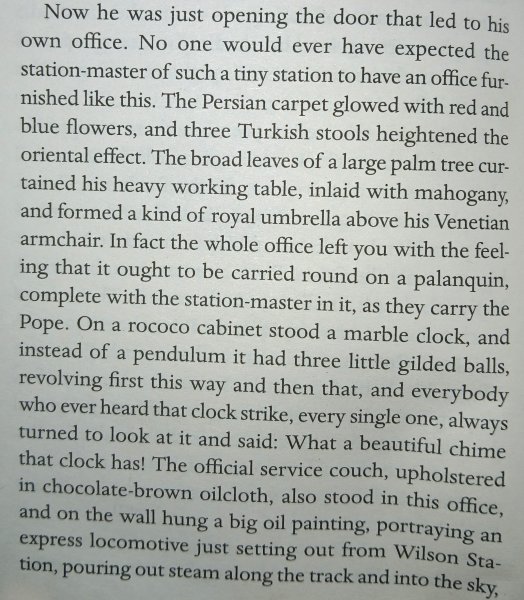
Hrabal worked as a railway labourer and train dispatcher during WWII, whilst waiting to complete his law degree in Prague as the university was shut down during the German occupation. The knowledge he gained from this experience is fully used in this 1965 novella which is set at a somewhat eccentrically run small railway station during 1945 as the Nazi troops were being forced back across Czechoslovakia. The main protagonist of the book is twenty two year old apprentice dispatcher Miloš Hrma, who at the beginning is about to start his first shift back at the station after attempting suicide by slitting his wrists three months previously. The eccentricity of the station can best be emphasised by the description of the Station Masters office:
The station master is as unconventional as his office, keeping his pigeons, which he exchanged from a German to a Polish breed at the start of hostilities, in the roof of the station and when upset shouting profanities into the ventilation ducts in his office. Miloš may be the apprentice dispatcher and his suicide attempt after failing to perform in his first foray into lovemaking with his girlfriend does mark him out but his senior dispatcher is also a man to be reckoned with. During Miloš’s time recovering Výpravcí Hubicka had had a bet with the telegraph operator and when she lost had used all the station’s ink rubber stamps to decorate her naked behind. Something that she simply finds as funny but has greatly upset not only the station master but the railway inspector who unexpectedly arrives to perform a disciplinary. As you can imagine the operation of the station is somewhat chaotic and that’s without the interaction with the occupying German troops.
The fighting on the Eastern Front and the subsequent traffic with trains containing fresh troops going east and injured and dead troops going west along with ammunition and equipment heading into the conflict seems to provide most of the movements through the station. These are presented as stark contrasts to the craziness at the station which flips between the wildly funny and the tragic, especially in the brilliant and unexpected denouement. I greatly enjoyed this book and will now try to search out the film.
Originally published by Hutchinson in 1962 and reprinted as a paperback by Penguin in 1965 this is now really more of a historical document a a lot of ‘The London Nobody Knows’ could really be retitled ‘The London Nobody Knew’ if reprinted today as quite a lot of what is featured no longer exists or has changed so dramatically as to be unrecognisable. For example the chapter dedicated to Islington refers to bomb damaged buildings and shops still in need on preservation, definitely not the case nowadays where in 2024 the average price for a terraced house there was £1,600,000 and a semi detached home getting on for 2 million pounds. I love the fact that Islington could be regarded as part of London nobody knows.
The book marks the beginning of the over thirty years Fletcher wrote and illustrated a diary column for the Daily Telegraph newspaper. As a young man in 1945 at the end of WWII he came to London to study at the famous Slade School of Fine Art and later at the Bartlett School of Architecture and brought his knowledge and art ability to the fore in his columns and his books. He died in 2004 at the age of eighty one back in his birthplace of Bolton and wrote, along with his newspaper work, at least thirty books of which this was the second. Of the books I have found listed two thirds are about London and almost all the rest are about how to paint and draw so he was dedicated to his subject and it shows in this delightful volume. There are two very different styles to the forty two drawings included, three of which are of the cast iron gents toilets in Star Yard, Holborn which I’m pleased to say is still there as a remnant of Victorian plumbing although no longer functional. I have chosen two illustrations to show both the finished drawings and what must really be regarded as sketches, the first being St Anne’s church in Limehouse, one of three churches he describes in that locality, another being Christ Church, in Spitalfields which he comments is in danger of demolition but is definitely still standing today and in regular use.
The title of the book has had a few dissenters over the years as ‘The London Nobody Knows’ is somewhat condescending to the many hundreds of thousands of people that live in the parts of London featured and know all too well in some cases. Whilst researching this article I found one comment that it should have been called ‘The London Nobody Who Reads The Telegraph Knows’ as it mainly covers parts of London that the more wealthy readers of that newspaper would have frequented although now of course a lot of it has been gentrified over the years.
Sadly the building I chose to demonstrate the more sketch like drawings, the Grand Palais Yiddish Theatre on Commercial Road, Whitechapel, was a bingo hall by 1962 when the book was written and was demolished in 1970. Whilst admiring the artistry of the more finished drawings I love the sketches as he captures the life of the people around the featured properties and you feel more drawn in. The suggested perambulations to find the buildings, or even lampposts and signs covered in the text are also a joy to read.
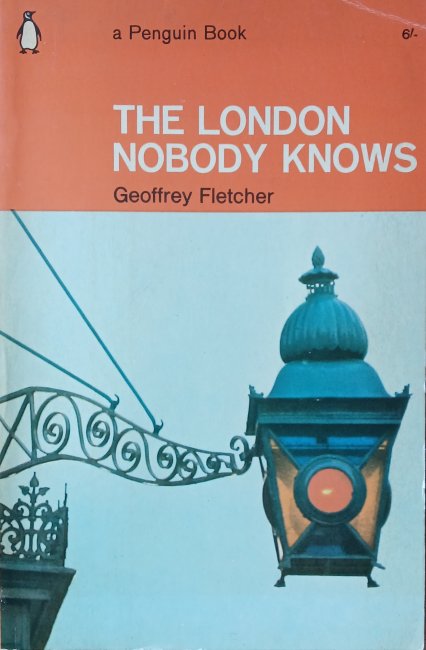
Annoyingly much as I would love to know where that multicoloured lamp is on the front cover, neither the photographer nor their subject is credited in the book, something at the time that Penguin Books were all to prone to do. Two years after my copy was published there was a documentary film of the same name based on the book where actor James Mason wanders round some of the places featured and parts of this are available on youtube including this bit about The Roundhouse, now a major music venue,and illustrated in the Camden Town chapter of the book.
2005 was Penguin Books seventieth anniversary and to mark the occasion they published seventy books at £1.50 each which were largely extracts from other works in their vast back catalogue as is this one although this is collated from several collections of short stories. With Borges though, as he is mainly a writer of short stories, you ended up with seven complete works in the book and as an introduction to his literary output this book is excellent. The art of writing a short story is extremely difficult as in a short space you must not only have a beginning, a middle, and an end but also express an idea or indeed several which will leave the reader satisfied and in all seven of these Borges has proved himself well able to meet those aims. Knowing that he was Argentinian I was expecting South American themes but instead the first two ‘The Mirror of Ink’ and ‘The Lottery in Babylon’ are set in the Middle East, the third ‘The Library of Babel’ could frankly be anywhere and everywhere. The fourth ‘The Theme of the Traitor and the Hero’ is in Ireland, ‘The Witness’ is probably medieval England, ‘Ragnarok’ could also be anywhere, whilst the final story ‘Blue Tigers’ is based in rural India. A linking theme, if there is one, is the somewhat mystical and fantastic ideas behind all of these stories, that and the definite quality of the prose. I hadn’t read any of Jorge Luis Borges before this slim volume and indeed this is the only book of his work that I possess but I definitely need to read more.
Sadly Borges suffered from fading eyesight for many years and became blind at the end of the 1950’s however he continued to write, dictating stories initially to his mother who took on the role of his secretary until her death. The last two stories in this book were written after his blindness and there is certainly no diminution of the power of his writing. I just want to pick out a couple of the stories that I particularly enjoyed:
‘The Library of Babel’ is an exploration of the concepts of infinity in that the library described contains all possible books that are exactly 410 pages long with a fixed format of forty lines per page and eighty characters per line where a character is one of twenty two letters of the alphabet, a full stop, a comma or a space and all combinations of these appear at least once in one of the infinite series of books stored in the apparently infinite number of replicating hexagonal galleries that make up the library. The concept of a library that because it has all combinations of the twenty five characters and therefore contains books of apparently complete nonsense but must also due to randomness have every book that could possibly exist expressing every theme and also arguing both for and against every idea is beguiling. The impossibility of ever finding a specific work is also clearly spelled out along with some of the oddities of infinite series in that a revolution in the past had destroyed countless volumes but that this didn’t matter because books survived elsewhere in the library which differed from the vandalised editions by as little as a punctuation mark somewhere within them.
‘Blue Tigers’ also drew me in with a weird mathematical theme, the tigers are not flesh and blood but a collection of odd blue disks that the narrator finds on top of the plateau of a sacred hill. These discs are uncountable, initially he thought he had around ten of them but when examining them found far more. Sometimes there would be as little as three but holding these few and then letting them fall could reveal hundreds. The narrator spends nights trying to find a pattern to the ever increasing, and decreasing, quantities without any success and eventually, to save his sanity, he gives them to a blind beggar who seems to understand in someway that he is the fitting custodian.
Naturally the four mathematical operations – adding, subtracting, multiplying and dividing – were impossible. The stones resisted arithmetic as they did the calculation of probability. Forty disks, divided, might become nine, those nine in turn divided might yield three hundred. I do not know how much they weighed, I did not has recourse to a scale, but I’m sure their weight was constant, and light. Their colour was always the same blue.
As 2005 was the seventieth anniversary it is clear that this year (2025) is the ninetieth and again Penguin have marked their birthday with a set of books, this time ninety of them at £5.99 each, some of which will be featured in this blog as the year goes on. The actual anniversary is the end of July so I am dedicating my August theme this year to the first four Penguin titles, which I will be reading in their first Penguin editions something I don’t do often due to the fragility of these ninety year old paperbacks.
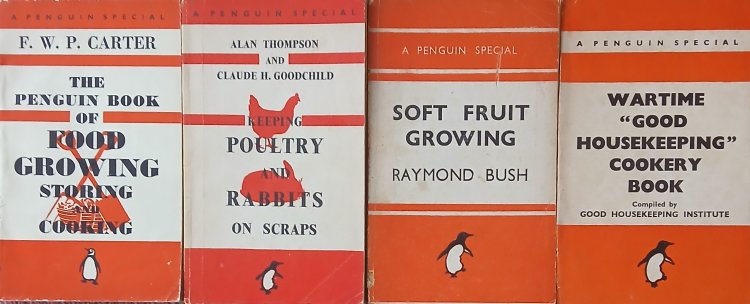
Last week saw the fiftieth anniversary of the end of the Vietnam War and this week sees the eightieth anniversary of VE Day, the end of the Second World War in Europe, as this post goes live on the 6th May 2025 two days before VE Day itself. Whilst last week I read Felix Greene’s excellent summary of the first half of the Vietnam War, this week I’m looking at eight books produced as part of the Penguin Specials series which were designed to help the population feed themselves during a time of food shortages and rationing. Penguin Specials were intended to be books dealing with issues of the day and they had rapidly multiplied during WWII with such titles as ‘Aircraft Recognition’, ‘Nazis in Norway’, ‘How Russia Prepared’, ‘Signalling for the Home Guard’ etc. The books were produced far quicker than titles in the other Penguin Series so that they were relevant to the issues of the day, but before the designation of some of them as handbooks there had also been some concerned with making best use of the food supplies however these were in the more usual red covers for Specials. These included ‘S90 The Penguin Book of Food Growing, Storing and Cooking’ (May 1941), ‘S101 Keeping Poultry and Rabbits on Scraps’ (January 1942), ‘S119 Soft Fruit Growing’ (December 1942) and ‘S127 Wartime Good Housekeeping Cookery Book’ (February 1943).
The dates shown below for most of these handbooks may seem quite late in the war for those of us born after the end of shortages and rationing, but it should be noted that general rationing in the UK continued until July 1954 although some items such as bread (1948) did come off rationing before then.
S132 Tree Fruit Growing – Apples – December 1943
Raymond Bush had already written one book for Penguin, as can be seen above, but the two handbooks detailing tree fruit growing took us to his main speciality which he had adopted following a bad accident in 1914 and being advised that an outdoor life would be better for his health than the poster design his company had been doing prior to the First World War. He was a commercial grower from 1915 up until 1935 when he started advisory work on the subject for various scientific committees. The book is a wide ranging guide to growing apple trees with notes where similar methods are appropriate for other fruits such as pears and almost a third of the book is dedicated to pests and how to get rid of them, but it is based on Bush’s determination that the wartime population should not be derived of wholesome fruit. As he says in his introduction “Well my amateur friends, once again you must sit back and watch the Ministry of Food collect most of the fruit to make jam go several times as far as it has any rights to go by the judicious addition of apple pulp, swedes, mangolds and what not. That is unless you grow your own fruit and make your own jam.”
S137 Preserves for all Occasions – April 1944
This book admits that it will soon become out of date as ingredients become more available after the war ut nevertheless it provide a lot of useful information on the varying ways of preserving food. Not just the expected jams and chutneys but syrups, bottling means of drying fruit, vegetables and herbs and how to store fresh produce for the longest time. Unlike other books on preserving that I own it doesn’t include recipes but instead concentrates on good techniques and means of avoiding common mistakes.
S138 Tree Fruit Growing – Pears, Quinces and Stone Fruits – December 1943
Volume 2 of Tree Fruit Growing concentrates much more on the individual varieties of a wider range of crops than I was expecting. I hadn’t realised that almonds were not true nuts but were in fact relative of the plum and peach where we eat the seed and discard the rest as a direct opposite to the two fruits. Bush admits to not having grown them himself and struggled to find any information but put together what he could. There is also a section on laying out an orchard and a substantial chapter on bees at the end along with the inevitable chapter on spraying for pests, a subject clearly on Bush’s mind a lot.
S140 Rabbit Farming – June 1944
Inspired by the success of ‘S101 Keeping Poultry and Rabbits on Scraps’ which as Goodchild explains in the introduction to this book was “giving all the practical hints I knew on rabbit keeping under wartime conditions in order that many newcomers could make a success of rabbit meat production”. This book on rabbit farming is however a very different work as it is aimed at a larger scale operation and includes use of the fur in coats and other clothes necessary to make a living from the business. Goodchild himself came from a long line of farmers and along with his partner ran the largest rabbit farm in England producing not just meat but from it’s manufacturing division coats, gloves and other assorted fur products. The photographs, presumably taken at his site near Crawley in south east England, show an extensive operation which must have been very useful to wartime food and clothing supplies.
S144 Poultry Farming – May 1945
The second of the books split off from ‘S101 Keeping Poultry and Rabbits on Scraps’ took almost a year longer to write than the first. Alan Thompson was amongst other things the editor of the monthly magazine ‘The Poultry Farmer’ which had started in 1874 as ‘The Fanciers Gazette’ and was eventually bought by the publishers of ‘Poultry World’ in 1968, so he was ideally suited to write the book. The book is not aimed at people wanting to keep a handful of chickens in their garden or allotment which was the point of S101 but instead those planning to run a commercial operation and early on mentions a figure of £2,000 (£73,500 in today’s money) for initial outlay if you want to have a hope of making a success of such a venture. The book goes into considerable detail not only on housing and selecting your chickens but also the finances of such an operation with several pages of photographs along with many line drawings to illustrate various points. My copy has clearly been well used.
S145 Trees, Shrubs and How to Grow Them – January 1945
Uniquely in this collection of eight books we have a title not covering food preparation or production and it is also, for me anyway, the least interesting of the titles. It goes into considerable detail about the various trees and shrubs in the UK, with guides as to what to plant and where, such as hedgerows and because Rowe is trying to impart so much information in a book just short of two hundred pages it is not particularly readable. That’s not to say it isn’t useful but just not for the general reader.
S146 The Vegetable Growers Handbook – Volume 1 – May 1945
All the other handbooks were commissioned by Penguin especially for this series and my copies are therefore true first editions whilst S146 and S147 are first editions in Penguin. The Vegetable Growers Handbook by civil servant Arthur J Simons however had first appeared in 1941 published by Bakers Nurseries Ltd of Codsall, Wolverhampton. Simons had written it during a period of quarantine he had undergone after contracting “a succession of childish but contagious diseases during the air raids”. In it you learn the basics of preparing the ground, improving the soil, using manure, compost and chemical fertilisers and this takes up the first third of the book. You then progress on what to grow, how to sow the seeds and raise the plants successfully initially in open ground and then a short section on using greenhouses and frames before a final chapter on pests and diseases and what to do about them. All in all a pretty comprehensive guide and I’m sure customers of Bakers Nurseries found it very useful.
S147 The Vegetable Growers Handbook – Volume 2 – May 1945
The second volume doesn’t have a first published date, but it doesn’t appear to be a Penguin original so I’m guessing this also first appeared from Bakers Nurseries. This volume deals specifically with the various crops you can grow, when to sow them and how to ensure a long cropping season with various vegetables ripening throughout many months. Like the first volume there are suggested plans for gardens or allotments to make maximum use of the space without wastage from gluts in certain weeks. Simons refers to letters he received after the first volume with suggestions which prompted this second book and despite the focus on wartime household needs these two books would even now be useful for a keen vegetable grower.
After the war it was decided to create a series of its own called Penguin Handbooks, the first new title of which was The Penguin Handyman which came out in November 1945 and was assigned the number PH9 with the obvious intention to move the existing eight books into this new series, however it all became more complicated than that, as it often does with Penguin Books. In fact PH1 is a 1945 reprint of ‘S119 Soft Fruit Growing’ but in the green cover of Penguin Handbooks rather than its original red. PH2 was assigned to the reprinted ‘S132 Tree Fruit Growing – Apples’ and PH3 became the reprint of ‘S138 Tree Fruit Growing – Pears, Quinces and Stone Fruits’, both of which are covered above and these would ultimately be combined into a single volume ‘PH83 Tree Fruit Growing’ in September 1962.
Despite the assumed plan of simply renumbering the existing handbooks into the gap left at the beginning of the new series we already have one book which hadn’t previously been issued as a handbook and just two of the originals occupying the first three numbers and this gets worse as numbers PH4 and PH5 were not in the end used and neither was PH8. This leaves just two numbers PH6 which became a reprint of ‘S145 Trees and Shrubs and How to Grow Them’ in 1951 and PH7 which combined S146 and S147 as the ‘Vegetable Grower’s Handbook’ in 1948.
Oddly ‘S137 Preserves for all Occasions’ did get reprinted as a ‘proper’ handbook as PH12 in July 1946, why they didn’t use one of the abandoned numbers I have no idea. ‘S140 Rabbit Farming’ and ‘S144 Poultry Farming’ were both discontinued in favour of their original base work ‘S101 Keeping Poultry and Rabbits on Scraps’ which came out as handbook PH14 in June 1949 making these two some of the most difficult to find Penguin Handbooks.
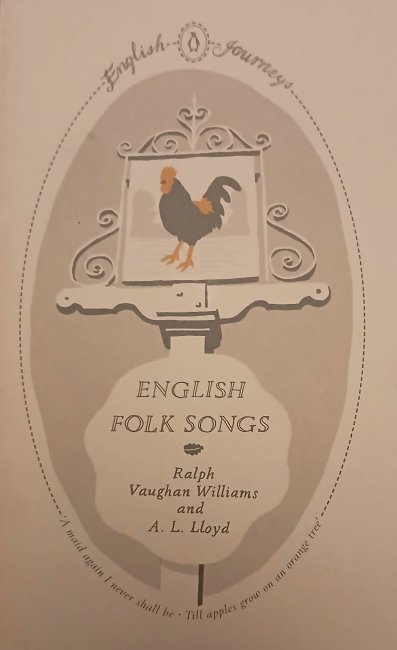
Continuing the bucolic countryside and doomed love themes from last week’s ‘Far From the Madding Crowd’ I was drawn to this book of English folk songs, which was Vaughan Williams’ last book as sadly he died just before it was published. Ralph Vaughan Williams was of course one of the great English composers of the first half of the twentieth century, he died in 1958, and was heavily inspired by English folk songs although he also wrote nine symphonies and four concertos along with his numerous song cycles and choral works. He qualified as a Doctor of Music from Cambridge University and it is as Doctor Vaughan Williams that A L Lloyd refers to him in his ‘Note on the Presentation of the Tunes’ at the start of this book. The selection of songs is quite widespread, although biased toward tunes gathered in the south of England as that was where Vaughan Williams lived so it was easier for him to travel round collecting material in that part of the country although there are a small number from the north. Vaughan Williams was inspired to start collecting English folk songs by contemporaries such as Cecil Sharp and the collections he made helped to preserve a rapidly dying art form as well as influencing his own work.
If I have one criticism of this book it is not in the choice of songs, which provide a spectrum of styles but in the structure of the book itself with the songs in the first part and the accompanying text in the second half which means that you need two bookmarks to keep track of where you are as you continually skip to and fro to read the context and history of the song you have just read. I would have much preferred the descriptions to be interleaved with the music as that would have been far simpler to read.
Before the couple of examples I have chosen, I must explain that the copy I have has a very tight spine and to avoid splitting it I have been forced to hold it open as much as I dared but that has led to somewhat distorted photos of the pages.
Although listed as collected from Somerset, the earliest versions of this song are known from Newcastle Upon Tyne, so the opposite end of the country, and these date back to the late seventeenth century. The lyrics included are a mix of at least three versions into a harmonious whole presumably by Vaughan Williams when collating this book.
The Green Bed follows a theme common with other songs of the period of a sailor who arriving at lodging he has used before claims to have lost all his money in a disaster and is turned away but when he shows that actually he has plenty of money all of a sudden beer and bed are available and the landlady is quite happy to include her daughter in the bed. However the sailor spurns the offer as it is clear that both of them are only interested in the money he has. Again the example comes from the south of England but versions of this song are also known from Warwickshire, in the English Midlands and therefore a long way from the sea.
I really enjoyed this exploration of English folk song and I have various other collections of traditional music which would also be worth exploring at a later date.
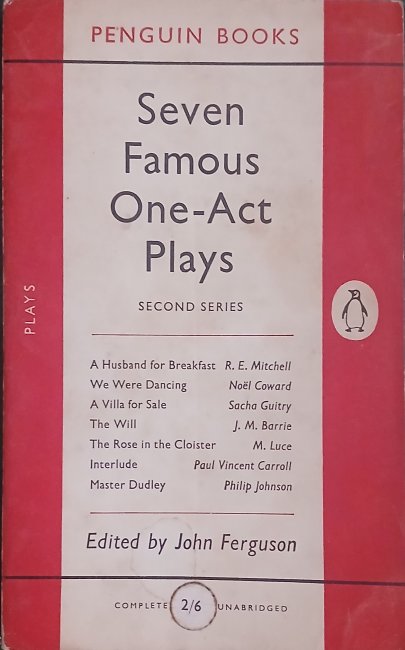
It was a long time between the first collection of one-act plays published by Penguin and this second selection, the first volume was published in November 1937 whilst this one came out in November 1953. Part of the sixteen year gap can of course be explained by the onset of WWII but Penguin wouldn’t publish any more collections of one-act plays until 1965 and the establishment of Penguin Plays as a series of its own. Which is odd if the blurb on the rear of the book is true as this suggests that one-act plays are particularly popular with amateur dramatic associations. Popular or not I’ve largely enjoyed this collection even if, just over seventy years after it came out, I recognise the names of just two of the playwrights of the seven ‘famous’ plays and there are three I would really like to see performed. Taking them in the order they appear in the book, rather than the front cover:
Villa For Sale – Sacha Guitry
A noted French actor, playwright and film maker, Guitry was prolific in both his production of plays and films, often acting, producing and directing in the same film where he also wrote the script and in 1936 he performed all four roles in four separate films. Villa for Sale is translated from the original French, although no translator is given in the book, and it was quite enjoyable as an entree to the collection. However it isn’t really satisfying as a story as the characters are quite lightly painted possibly due to the restrictions of the length of the play but as my favourite of this set is only a little longer I’m less inclined to give Guitry the benefit of the doubt with this. The story concerns a French lady who is trying to sell her villa for 250,000 Francs but would take 200,000 at a pinch, the villa is in an up and coming neighbourhood for the French film industry so should be in demand but has been on the market for a while, however she has a viewer this afternoon. A couple arrive and are welcomed but the husband is clearly bored of looking at villas and doesn’t really want to buy anything. Whilst his wife is upstairs being shown around it becomes clear that this couple are not the expected buyers but have turned up on spec when the real potential purchaser arrives, mistaking the man as the seller of the property she offers 300,000 Francs and provides a cheque straight away as she wants the place immediately ready to start working on a film. She leaves just before the real owners comes back downstairs and the husband writes a cheque for 200,000 Francs to buy the villa. All in all a rather tawdry story and not one I would rush to see performed.
We Were Dancing – Noel Coward
The play that for me has aged least well in the book, this comedy of manners based around a woman who feels that she has suddenly fallen in love with the man she was dancing with despite being married for many years to another man she loved once but over time it has become more habit to be together rather than love. I had high hopes for this as I had never read a play by Noel Coward, and at times the interactions between her husband and her new infatuation did work but frankly for the most part it left me bored and the clip I found of Coward performing the song included in the play does little to improve my opinion of the play.
Master Dudley – Philip Johnson
In third place of the plays I would like to see performed is this one, although the chance of any company even hearing of the play never mind putting it on are very low. Over fifty of Philip Johnson’s one-act plays appeared in the Samuel French catalogue of published plays of 1951 – more than any other author. In the comparable catalogue of 2005, his plays had disappeared without trace. At the start of the play Dudley’s aunt Stella had just arrived from America to provide support to her sister’s family as Dudley was on trial for murder, however as she arrives he is sensationally acquitted, It becomes clear as the play progresses that there has been a grave miscarriage of justice…
Interlude – Paul Vincent Carroll
Irish playwright Paul Carroll was well known in Ireland and wrote many works including for the National Theatre and this almost makes it into my list of plays I would like to see performed as I suspect that done well it would make great entertainment. The play is set in the office of a money lender in a small market town in Northern Ireland, Judy Tippin and her husband have come to Farrelly’s office to try to get an extension on their loan which was actually due to be settled the day before. Judy and Farrelly have history and she is hoping to use this to soften the heart of the famously stern money lender. The use of ‘defective’ electrics in the office which cause the lights to flicker occasionally and then ultimately go out leaving the performance by candlelight for a short-while has Judy almost convincing Farrelly to forget the debt in lieu of happy memories but then the lights come back on and in the harsh light the hard-hearted Farrelly takes her money leaving her and her husband with nothing.
Although Carroll was lauded in both Dublin and New York as a major new theatrical voice, virtually none of his work has been in print since his death in 1968 until Colin Smythe published a significant collection in 2014 as the sixteenth volume in his series of Irish dramatists, with six complete plays (although not including this one) and overviews of many of his other works.
A Husband for Breakfast – Ronald Elwy Mitchell
Top of my list for plays I would like to see performed from this collection is this one, yet annoyingly Mitchell is the author I can find least about on the internet, other than born in Camberwell, Surrey in 1905 and died in Dane County, Wisconsin, USA in 1986. Nothing he wrote appears to still be in print yet from this short play he was clearly an excellent writer. The play, set in a small Welsh village, is full of humour. It starts early morning as Aholibah is starting to prepare breakfast for her and her husband Isiah, who is still asleep, but is surprised by the arrival of a neighbour who is clearly expecting some sort of show. It becomes clear that Isiah had been in the pub the previous night and when it came to his turn to pay for the drinks he hadn’t any money. Trying to think of anything he could sell or barter for his round he was constantly thwarted by people pointing out the items he came up with belonged to Aholibah. Eventually he struck a deal with Moses Roberts to sell Aholibah herself to him for the price of the drinks. Various villagers were therefore descending on Aholibah’s cottage to see how she reacts. Eventually Moses Roberts himself arrives seeking the return of the half a crown he had paid Isiah but Aholibah sensing a way to profit from this instead sets him to work around the house as her new ‘husband’ much to the amusement of the other villagers there. Moses Roberts is then desperate to get out of the bargain as can be seen below and a trade is proposed for Roberts to buy himself out of the ‘contract’ which starts with two bushels of wheat but quickly escalates:
The Rose in the Cloister – Margaret Luce
Later Lady Margaret Luce as her husband was knighted when he became Governor of Aden in 1956 she is also one of the grandmothers of English actress Miranda Hart and wrote a book about her experiences in the Middle East ‘From Aden to Gulf: personal diaries’, which covers 1956 to 1966 and is a book I will definitely be looking out for. The play is well written and is also by far the shortest work in this collection being just nine pages long yet it manages to tell a complete story and even deliver a moral. It starts with a monk just concluding his sermon in the cloister of the monastery during which he points out a rose bush with a single flower and warns that “Only he whose heart is true as steel and without sin may pluck that rose from its stem: if any other dare to make the attempt his hands as they touch the stem will be burned”. This greatly excites his listeners but one resolves to take the rose and give it to his true love in place of the rose he has already brought for her.
The Will – J M Barrie
Second in my list of plays I want to see is this one. Barrie is probably most famous as the creator of Peter Pan and this is beautifully written as we see the effect of the years passing with the simple expedient of altering the set dressing, and presumably some quick changes on behalf of the cast. It is set in a solicitors office and a young couple arrive to set out his will in favour of his new wife. Once this is done the curtain falls ut rises again just ten seconds later to reveal subtle changes such as the portrait of the monarch going from Queen Victoria to King Edward VIII. The couple return, a little older, and revise the will, he is obviously doing much better than anticipated yet the beneficiaries other than his wife are getting less. The curtain falls and rises ten seconds later again, the portrait of the monarch has altered to King George V along with other small changes. The couple return and again revise the will, he is now wealthy but again the changes show even less regard for others. The curtain comes down and back up for a third time and this time just the man arrives as his wife has died, this time he wants to revise to will to pay back those people he had taken advantage of on his way up in society. The play is really well done as not only are the changes in the couple elegantly drawn but the father and son pair of solicitors also evolve over time.
One thing I would have liked included in the book is a brief biography of the various writers, I assume it is missing as they would have been well known at the time, but only Coward and Barrie have lasted the decades as names I recognised so I’ve had to do a little research to identify the authors.
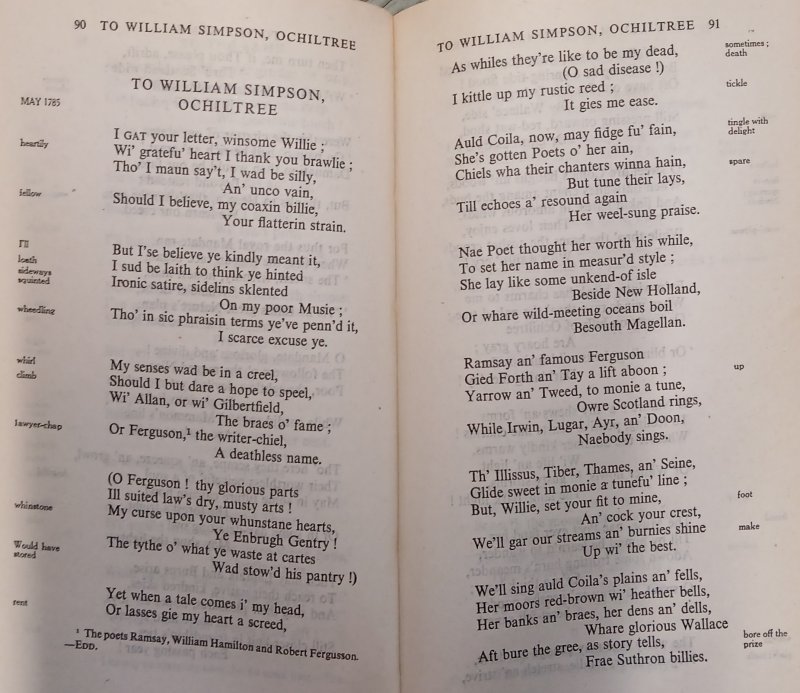
There is one name that comes to mind immediately when you think of New Years Eve and that is Robert Burns due to the international fame of Auld Lang Syne (Old Long Since) a song about a couple of friends enjoying a drink and reminiscing about things they have done in the past. But there is a lot more to Burns than a song that most people know the first verse and chorus to, even if they don’t know any more or what it means and this edition of The Penguin Poets from 1946 is a great introduction. The collection consists of forty three poems and fifty six songs and helpfully for those of us that struggle with the Scots language and dialect there is a single page glossary of common words and translations of lots of others alongside the lines where they occur.
I first came across Burns at school where he was introduced as one of the pioneers of the romantic movement in poetry although we didn’t do much more than the really famous ones including, ‘To a Mouse’, ‘To a Haggis’, ‘A Red, Red Rose’ and the comedic rage expressed in ‘To a Louse’ where Burns gets so annoyed when he sees a louse on a lady’s bonnet in church, all of which are of course in this collection. I really fell in love with the musicality of Burns’ verse however when I was lucky enough to be at The Scotch Malt Whisky Society in Edinburgh for Burns Night and to hear the poems recited with the correct accent made for a wonderful evening which of course included ‘To a Haggis’ and the appropriate, for the venue, ‘Scotch Drink’, the first verse of which (after the initial quote from Solomon’s Proverbs) goes as follows…
Let other Poets raise a fracas ‘Bout vines, an’ wines, an’ drucken Bacchus, An’ crabbit names an’ stories wrack us, An’ grate our lug: I sing the juice Scotch bear can mak us, In glass or jug.
Scotch bear is barley and Burns is of course talking about whisky, the full twenty one verses of the poem can be read here, let no-one say that Burns wasn’t keen to celebrate his national drink. When I first started to read this book for this blog I did have some problems with the unfamiliar Scots dialect but as I progressed through the works I gradually found it easier to understand and found I needed to refer back to the glossary less and less. Interestingly when I have heard Burns recited I have often had far fewer issues with understanding, I guess this is similar to the way I find reading Middle English easier if I read it aloud and it then seems to make more sense than just reading silently.
So let’s finish where we started with Auld Lang Syne. This is the original version from 1788, in 1795 he changed the first line of the chorus to ‘For auld lang syne, my dear’
Should auld acquaintance be forgot, And never brought to mind? Should auld acquaintance be forgot, And auld lang syne?
(Chorus) For auld lang syne, my jo, For auld lang syne, We’ll tak a cup o’ kindness yet, For auld lang syne.
And surely ye’ll be your pint-stowp! And surely I’ll be mine! And we’ll tak a cup o’ kindness yet, For auld lang syne.
We twa hae run about the braes And pu’d the gowans fine; But we’ve wander’d mony a weary foot Sin auld lang syne.
We twa hae paidl’d i’ the burn, Frae mornin’ sun till dine; But seas between us braid hae roar’d Sin auld lang syne.
And there’s a hand, my trusty fiere! And gie’s a hand o’ thine! And we’ll tak a right guid willy waught, For auld lang syne.
As this blog is being published on Christmas eve, I have taken the opportunity to review another of the privately printed Christmas books given by Alan and Richard Lane as gifts, in this case the book for Christmas 1951. I’m not going to attempt to review the gospel itself, this blog is concerned with the new translation, this edition of the translation and this book in particular. Penguin were to publish a new translation of The Four Gospels by E V Rieu a year later in November 1952 so this was a first view of this very readable new translation. It was a little odd to select the gospel of Mark as a Christmas gift as only Matthew and Luke include the birth of Jesus, which you would have thought would have been a consideration, but as you can see below Mark starts with the adult Christ being baptised by John in the River Jordan.
Mark is one of the three synoptic gospels where the same stories are told in much the same sequence and in similar words, indeed three quarters of Mark’s gospel also appears in those of Matthew and Luke whilst the gospel of St John is quite different both in style and content. As I said earlier the big difference is the lack of a nativity story in Mark but you also don’t get the Sermon on the Mount or several parables amongst other items in Mark which is quite a bit shorter than the other three gospels.
Looking at the first page as translated by Dr. Rieu it is clear that it is written as much more of story than the classic King James translation which I grew up with, which for all its magnificent prose can be a little daunting to approach, particularly for a modern reader. By way of contrast this is the same passage in the King James version.
1:1 The beginning of the gospel of Jesus Christ, the Son of God;
1:2 As it is written in the prophets, Behold, I send my messenger before thy face, which shall prepare thy way before thee.
1:3 The voice of one crying in the wilderness, Prepare ye the way of the Lord, make his paths straight.
1:4 John did baptize in the wilderness, and preach the baptism of repentance for the remission of sins.
1:5 And there went out unto him all the land of Judaea, and they of Jerusalem, and were all baptized of him in the river of Jordan, confessing their sins.
1:6 And John was clothed with camel’s hair, and with a girdle of a skin about his loins; and he did eat locusts and wild honey;
1:7 And preached, saying, There cometh one mightier than I after me, the latchet of whose shoes I am not worthy to stoop down and unloose.
1:8 I indeed have baptised you with water: but he shall baptize you with the Holy Ghost.
1:9 And it came to pass in those days, that Jesus came from Nazareth of Galilee, and was baptized of John in Jordan.
1:10 And straightway coming up out of the water, he saw the heavens opened, and the Spirit like a dove descending upon him:
1:11 And there came a voice from heaven, saying, Thou art my beloved Son, in whom I am well pleased.
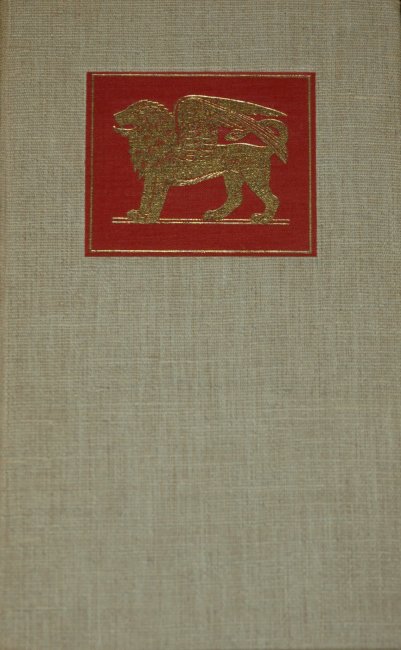
It is almost forty years since I first read E V Rieu’s translation of the four gospels. I took it, along with a couple of others from the Penguin Classics series, as my in flight reading for the first time I crossed the Atlantic in February 1986. I’m not remotely religious although I did go to a Church of England primary school for my education between the ages of four and eleven, but the way the gospels are presented in this translation means you can read them more like a collection of four novellas and enjoy the stories as they are told. This edition is really beautifully produced with canvas covered boards and terracotta cloth labels blocked in gold. The pages are a lovely grey and compliment the overall design by Hans Schmoller well. The lion design by Reynolds Stone is different to the one, also engraved by him, used for the Penguin Classic when it was finally published.
My copy was given to typographer Ruari McLean (it has his bookplate inside) who had joined Penguin Books in 1946 with specific responsibility for Puffin books and was instrumental in introducing Jan Tschichold to Penguin. By 1949 he had moved on and was working with Rev. Marcus Morris on the design of a new comic for boys he had devised called Eagle, which would go on to massive success in the 1950’s and 60’s. Tschichold would radically redesign Penguin books in the late 1940’s and came up with The Penguin Composition Rules.
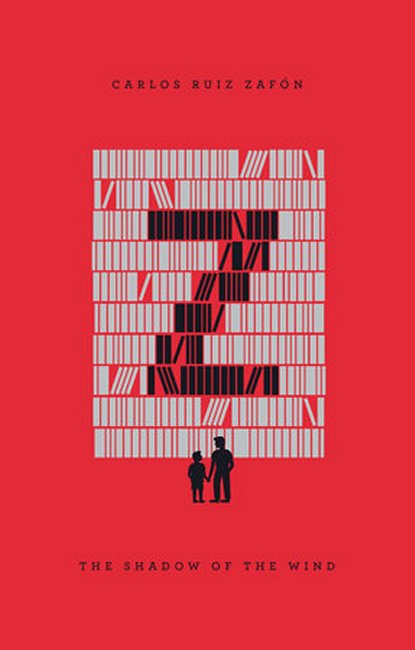
Dawn is breaking in post-war Barcelona when Daniel’s bookseller father guides him through the mist to a mysterious building hidden in the heart of the old city. Here in the Cemetery of Forgotten Books, ten-year-old Daniel is allowed to choose one from the hundreds of thousands of abandoned volumes that line the labyrinthine corridors. Inexplicably drawn to ‘The Shadow of the Wind’ by Julian Carax, the boy clutches the book and he and his father leave. That night Daniel reads through the night totally captivated by the story and the quality of the writing and I know exactly how he felt as although my all night reading sessions are well behind me as I found it difficult to put this remarkable book by Zafón down. Perhaps a longer section than I would normally quote will give an insight into the wonderful descriptive prose and the building tension that is maintained throughout the 511 pages. This passage is very early in the book so doesn’t contain any spoilers and describes the night after Daniel took the book to Don Gustavo Barceló, another bookseller but one who knew more about the rarities of printing than Daniel’s father, for him to have a look at. There he discovered that he may well have the last remaining copy of Carax’s final novel and that all the other copies along with editions of all his other books had been systematically bought or stolen and mysteriously found burned over the years.
I turned off the light and sat in my father’s old armchair. The breeze from the street made the curtains flutter. I was not sleepy, nor did I feel like trying to sleep. I went over to the balcony and looked out far enough to see the hazy glow shed by the streetlamps in Puerta del Angel. A motionless figure stood in a patch of shadow on the cobbled street. The flickering amber glow of a cigarette was reflected in his eyes. He wore dark clothes, with one hand buried in the pocket of his jacket, the other holding the cigarette that wove a web of blue smoke around his profile. He observed me silently, his face obscured by the street lighting behind him. He remained there for almost a minute smoking nonchalantly, his eyes fixed on mine. Then, when the cathedral bells struck midnight, the figure gave a faint nod of the head, followed, I sensed, by a smile that I could not see. I wanted to return the greeting but was paralysed. The figure turned, and I saw the man walking away, with a slight limp. Any other night I would barely have noticed the presence of that stranger, but as soon as I’d lost sight of him in the mist, I felt a cold sweat on my forehead and found it hard to breathe. I had read an identical description of that scene in The Shadow of the Wind. In the story the protagonist would go out onto the balcony every night at midnight and discover that a stranger was watching him from the shadows, smoking nonchalantly. The stranger’s face was always veiled by darkness, and only his eyes could be guessed at in the night, burning like hot coals. The stranger would remain there, his right hand buried in the pocket of his black jacket, and then he would go away, limping. In the scene I had just witnessed, that stranger could have been any person of the night, a figure with no face and no name. In Carax’s novel, that figure was the devil.
The plot flies along at a breakneck speed with multiple clues as well as a few blind alleys as to what is going on as Daniel tries to find out what happened to Julian Carax and how he came to be found shot dead in Barcelona when he should have been safely in Paris and what the wartime thug, murderer and now Inspector of Police Fumero has to do with it, as we progress from 1945 when Daniel first visits the Cemetery of Forgotten Books to the end of 1955 when the story finally reaches its denouement. Along the way a cast of superbly drawn characters are introduced, some of which help but more than a few are there to hinder Daniel’s fascination with Carax and his slowly developing interest in women as he goes through his adolescence. At about two thirds through the book and three days after I started I still hasn’t worked out how everybody was linked and how the various plot strands were connected so took an evening off reading to think through what I knew so far without adding more detail. This proved to be a good idea as I finally realised where the story was going and who the man watching from the shadows was, just in time as Zafón was about to upend the story and make my guess a possibility. I read the remainder of the book the next evening as Zafón neatly tied up all the loose ends in an eminently satisfying way.
Sadly Carlos Ruiz Zafón died of cancer in 2020 aged just 55, robbing the world of a great author well before his time. This English language version of the book is translated by Lucia Graves, daughter of the poet and novelist Robert Graves. She was brought up in Mallorca from the age of three, and according to her memoir ‘A Woman Unknown’ she grew up speaking English at home, Catalan with locals, and Spanish at school and it is she who has translated into English all five of Zafón’s ‘Cemetery of Forgotten’ novels.
it’s a riff on Arthur Machen’s “The Great God Pan,” which is one of the best horror stories ever written. Maybe the best in the English language. Mine isn’t anywhere near that good, but I loved the chance to put neurotic behavior—obsessive/compulsive disorder—together with the idea of a monster-filled macroverse. That was a good combination. As for Machen vs. Lovecraft: sure, Lovecraft was ultimately better, because he did more with those concepts, but “The Great God Pan” is more reader-friendly. And Machen was there first. He wrote “Pan” in 1895, when HPL was five years old.
The above quote is by Stephen King and if anyone can judge a horror story then he is probably the man, it can be found on his website here as part of one of his ‘self interviews’. Sadly I don’t have a copy of ‘The Great God Pan’ as this is the only book I have by Arthur Machen, which is actually the pen name of Welsh fantasy and horror writer Arthur Llewellyn Jones. Even Lovecraft regarded Machen as a great in the horror story genre naming him amongst the four modern masters of the style and he was highly influential in the development of Lovecraft’s Cthulhu stories. This book consists of fourteen short stories which whilst none of them are of the horror genre give a glimpse of the abilities of this popular writer many of whose works are still in print almost eighty years after his death. Indeed several bear the mark of another writer who came later that of Roald Dahl and his ‘Tales of the Unexpected’.
As is often the case with collections of short stories the better examples are the longer ones, especially in this set, the final tale of which, that I will also come to last, is excellent. The stories range from a story about a clergyman who vanishes without trace from his home for six weeks only to re-appear exactly as he was last seen by his housekeeper working at his desk and with no feeling that he had stepped away for more than a few minutes. One story I particularly enjoyed is ‘The Tree of Life’ which tells of a seriously unwell man running the lands of his estate from his sick bed by communicating his wishes via his land agent. The ending of the tale completely upends the story so far but in a completely believable manner. ‘The Bright Boy’ and ‘The Happy Children’ are the closest we get to horror in this collection with the first story of a man with the appearance of a boy and the odd occurrences that happen in the vicinity of the house where he lives with his supposed parents. The happy children tells however of a journalist unexpectedly coming across the spirits of dead children in the streets of a Yorkshire town before they process up to the abbey ruins. There is also the story an unspecified ceremony being performed at a strange stone in the woods that I wish was longer as the atmosphere is so well created and then it stops leaving me wanting more and ‘The Soldiers Rest’ where it gradually becomes clear what sort of rest he is having. All of these are wonderfully written but it is the final story of this collection along with one that is sadly missing that cement Machen in his position as a truly great writer of short stories never mind his horror novels.
The one that is missing is ‘The Bowmen’ which was first published on 14th September 1914 and tells the story of a horde of phantom bowmen from the Battle of Agincourt, five centuries earlier, which came to the aid of British troops at the Battle of Mons. This story, as it was published in The Evening News newspaper which Machen worked for at the time became believed as true and is the foundation of The Angel of Mons and evidence of divine intervention on behalf of the British soldiers. No matter how often Machen tried to say that he made it up he was rarely believed and the tale was spread around the world as fact. The story that completes this set is however ‘The Great Return’ and this is the first published story telling of the existence of the Holy Grail in modern times and the miracles that occur along with its reappearance. The story which along with Machen’s novel taking the same theme ‘The Secret Glory’, which he had already written by then but which wasn’t published until 1922, would clearly influence writers such as Dan Brown in his Da Vinci Code and George Lucas with Indiana Jones amongst others.
You can find out more about Machen via ‘The Friends of Arthur Machen‘ an international literary society dedicated to the works of this remarkable author.










 Ramblings on my bookshelves