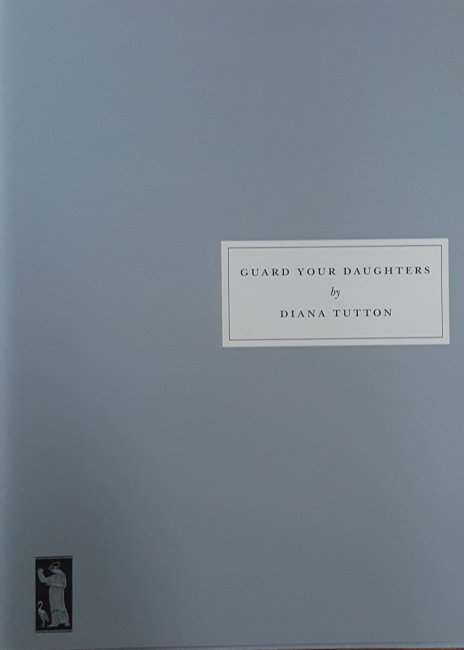
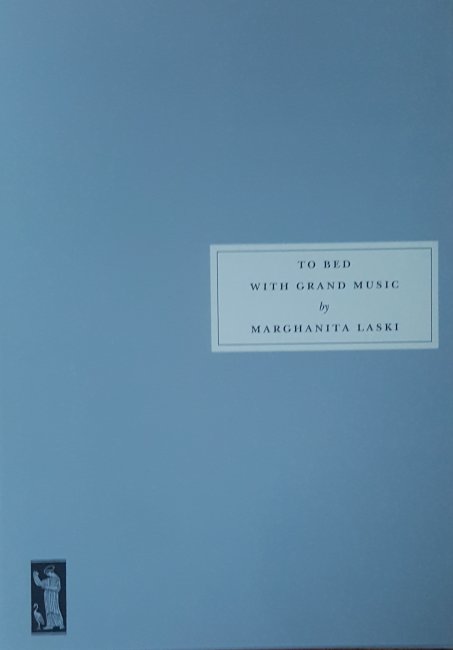
The second of the three Persephone books that I purchased from them at their own shop in Bath back in September this year. The first one I featured was ‘To Bed With Grand Music’ by Marghanita Laski which was also in their distinctive all grey binding and dust jacket. Persephone specialise in twentieth century female writers a large number of which have largely been forgotten nowadays, certainly I had never heard of Diana Tutton before buying this book. It turns out that this was Tutton’s second novel, but the first to be published, back in 1953 by Chatto and Windus, she would go on to write one more novel whilst living in Malaya in the early 1950’s before returning to the UK with her husband and apparently retiring from writing as I can find no other works by her other than these three novels. Guard your Daughters was easily her biggest hit and largely favourably reviewed at the time including by such literary luminaries as the future Poet Laureate John Betjeman who described it as ‘A really talented first novel’ in his review in the Daily Telegraph newspaper. Persephone Books have rather unusually included an afterword made up of contemporary reviews up to modern day blogs, I have to say that the more modern takes on the novel are nowhere near as complimentary as the reviews from the 1950’s and that I have to agree with them. Whatever ‘charm’ the book had when it first appeared has largely evaporated over the decades and I took weeks to read it despite it only being 250 pages long, picking up other books to read and review whenever I got totally fed up with the five Harvey sisters, their tedious father and their awful mother.
The father is apparently a famous mystery novelist although the pseudonym that he writes under is never mentioned and he spends most of his time in his study composing the books that have made him wealthy occasionally appearing to eat and in the evenings drink sherry before vanishing again to his room. The mother spends most of her time taking to her bed following whatever perceived slight she has objected to most recently and controlling her daughters to an obsessive degree so that none of them have ever been to school and are largely kept from any form of socialising, being effectively confined to the house except when needed to go on errands. As the book starts the eldest, Pandora, has escaped the oppressive atmosphere of the house by somehow getting married leaving behind her four sisters, in order of age, Thisbe, our narrator Morgan, Cressida and finally Teresa who is fifteen. The names are as pretentious as the girls are snobbish, seeing themselves as special because of their father and charmingly eccentric due to their odd existence cut off from the modern world without formal education, social life, telephone, or car rather than bizarre. The writing is all over the place as well with most things described in the present tense but then all of a sudden near the end of the book it’s Morgan looking back over the years at what had happened. Morgan is also not an interesting narrator which is another reason I kept putting the book down, frankly I didn’t care what these young women were doing in their extremely odd household where their mother did nothing other than flower arranging and having nervous collapses, leaving all the household duties to the girls, which are tediously described, and the one remaining servant who was mainly a cleaning lady as far as I could tell from her random appearances.
The girls attempts to add male company and presumably an escape from the house as Pandora managed are thwarted by the controlling interests of their parents but near the end of the book it looks like finally they may be set free. According to the Persephone Books website there was going to be a sequel where they did lead their own lives but this was unfinished. Frankly I’m happy Tutton never completed it, presumably she got as fed up with the Harvey sisters as I did.
Diana Tutton wrote a sequel in the late 1950s which, alas, was never published. It was called Unguarded Moments and its setting is London seven years after Mrs Harvey had a total breakdown and all the girls moved out: to freedom and their own lives. Morgan has married and had two children. In this novel, too, there is a dark side: one of her children disappears and is not found for a heart-stopping few hours.
Persephone Books website – see here
I will probably give this book away rather than find a home for it on the shelves as I’m unlikely to want to read it again, pity as I enjoyed Laski’s work and am really looking forward to the third book I bought in Bath which will be tackled sometime in the new year. As with the Laski there are patterned endpapers with a matching bookmark, this time it is taken from a 1953 printed cotton by Susie Cooper for Cavendish Textiles.



 Ramblings on my bookshelves