The Mystery of Orcival – Emile Gaboriau

Emile Gaboriau is largely forgotten now, especially in English translation, but he was a near contemporary of Sherlock Holmes creator Arthur Conan Doyle and his detective Monsieur Lecoq who appears in five novels and one short story by Gaboriau along with four novels by other writers all produced after Gaboriau’s untimely death at the age of just thirty six in 1873. Indeed Gaboriau was well enough known for Doyle to refer to him directly in the very first appearance of Holmes in the novel ‘A Study in Scarlet’ in 1887.

“Have you read Gaboriau’s works?” I asked. “Does Lecoq come up to your idea of a detective?”

Sherlock Holmes sniffed sardonically. “Lecoq was a miserable bungler,” he said, in an angry voice; “he had only one thing to recommend him, and that was his energy. That book made me positively ill. The question was how to identify an unknown prisoner. I could have done it in twenty-four hours. Lecoq took six months or so. It might be made a text-book for detectives to teach them what to avoid.”

A Study in Scarlet – Arthur Conan Doyle

Watson is upset at having two of his favourite detective writers dismissed as such amateurs, Gaboriau’s Lecoq along with Edgar Allen Poe’s Dupin

I felt rather indignant at having two characters whom I had admired treated in this cavalier style. I walked over to the window, and stood looking out into the busy street. “This fellow may be very clever,” I said to myself, “but he is certainly very conceited.”

A Study in Scarlet – Arthur Conan Doyle

To be fair to Holmes Lecoq is certainly an unusual character even wearing disguises at work so that his enemies, presumably people he has prosecuted and their associates, cannot find him to exact revenge “I have been a detective fifteen years, and no one at the prefecture knows either my true face or the colour of my hair.” He is clearly very intelligent and like Holmes sees inferences in the slightest clue which enables him to leap ahead of the other people on the case, what he lacks is a Watson where the conversations between the two keep the reader up to date with the plot. I enjoyed my first encounter with Lecoq in this his second novel although I also own a copy of his first appearance ‘L’Affaire Lerouge’ so I doubt it will be my only dalliance with this early policeman, and indeed the first time in fiction of a French detective. 

If I have one criticism of the novel it is the sudden appearance of a lot of back story, which in my copy starts on page 109 and runs until page 195, almost a third of the entire novel, and which kills the entertaining narrative up until then, effectively providing a pause in the story. This would probably have been better handled in an earlier part of the novel rather than pull the reader back to a time before the various crimes have been committed and deal with the relationships between the various characters, some of which are already dead by the time this extra information is provided. The sheer length of this section became frustrating as up until then the story had proceeded apace but suddenly we became bogged down in apparently irrelevant details, some of which do prove to be extremely relevant later. Yes we need this information to make full sense of the story but I don’t think it needed to be done in this way. This however is my only criticism of the novel, the various twists, that are revealed are very well done and whilst the reader can congratulate themselves in spotting the main suspect very early on the fact that this is confirmed just ninety pages in shows that you are probably supposed to work out the original protagonists according the provincial justice department were just red herrings.

The story when it eventually restarts at the case in hand is just as fast moving and ingenious as it was previously with Lecoq in control of chasing down the murderer whilst also willing to bend the law to protect the woman he is with, who would surely otherwise be dragged through the courts with her honour besmirched unnecessarily. Apart from the slow mid section of the novel I greatly enjoyed this early detective story from the 1860’s and Gaboriau was clearly an extremely capable pioneer of the genre who deserves to be far better known today than he is.

Haiku & Lips too Chilled – Matsuo Bashō

A Japanese poem of seventeen syllables, in three lines of five, seven, and five, traditionally evoking images of the natural world.

Oxford reference

Almost certainly the master, and certainly the best known outside Japan, of the Japanese poetry style known as haiku is Bashō, a poet who lived from 1644 to 1694 and produced the most elegant works in this form. However as can be seen from the definition of haiku it is an extremely difficult poetic style to translate as in theory to do it properly the translator has not only to render the meaning of the poem but also to express it in the syllable limitations. Which between two such different languages as Japanese and English, or indeed any of the ‘western’ languages, adds an extra level of complexity to the task which frankly could destroy the meaning.

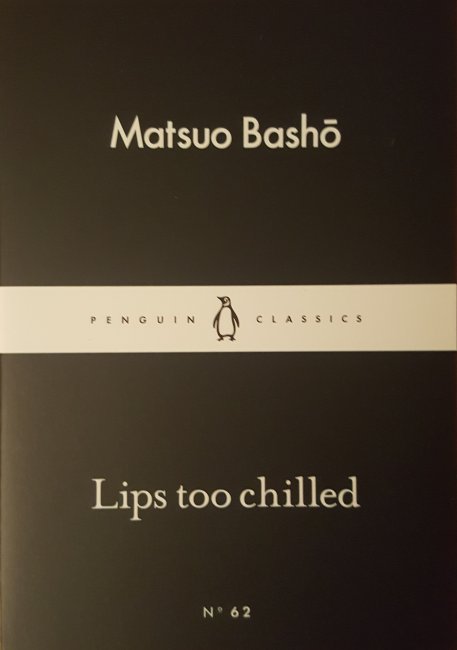
The two short volumes I have of Bashō’s poetry are both by Penguin although published twenty years apart, one to mark sixty years of Penguin Books (in 1995) and the other eighty (2015). They are both extracts from the Penguin Classics volume ‘On Love and Barley: Haiku of Bashō’ originally published in 1985 and translated by Lucian Stryk a Polish born American poet and professor of English at Northern Illinois University. This book has six haiku on each page and has sixty one pages of poetry so just over 360 poems in all. whilst ‘Haiku’ has a wonderful austerity of design with just one poem per page over sixty pages and ‘Lips too Chilled’ has two per page over fifty six pages. There is surprisingly little duplication between the two short books so I have somewhere around 150 haiku by Bashō which admittedly is still well short of half of his output but allows for an appreciation of his work. Stryk does sometimes attempt to stick to the rigid format of haiku but is quite happy to divert from this where the sense of the poem would be lost in translation, which I think is a perfectly fair way to approach the rendering between the two languages as I would much rather appreciate the meaning of the poets words than suffer the pedantic imposition of form. Let’s explore a little of the poets work in the title poem from the 2015 volume:

Lips too chilled
for prattle –
autumn wind

Not perhaps his finest work, I prefer:

Storming over
Lake Nio; whirlwinds
of cherry blossom

As with that I can picture the scene and the paucity of words adds a starkness to the image which would be lost with a longer form. So who was Matsuo Bashō? Well as I mentioned at the beginning he lived in the second half of the 15th century in Japan and as is common in the far east his first name (Matsuo) is his family name. Bashō is not even his real given name as he was born Matsuo Kinsaku, he took the name Bashō from the Japanese banana plant outside the hut built for him by his followers in the later part of 1675 as by then he was already a well known poet and this hut clearly inspired him.

New Year – the Bashō-Tosei
hermitage
a-buzz with haiku

Bashō is also well known in Japan as a traveller making many long walks, usually alone despite the dangers of bandits. But his best known walk, taking 150 days and covering roughly 2,400km (around 1,500 miles) was done in 1689 with one of his students and inspired his great travel book ‘The Narrow Road to the Deep North’, which when it was published posthumously further embellished the master’s fame.

Journey’s end –
still alive, this
autumn evening

I Hate and I Love – Catullus

A collection of forty three poems by Gāius Valerius Catullus, a Roman poet born in 84 BCE and who died in 54 BCE, but in his short life he wrote a number of poems, 116 of which have survived to the present day. Penguin published a complete volume translated by Peter Whigham which I don’t possess however this selection from that larger volume is part of the Penguin Little Black Classics all of which I purchased when they came out. Catullus’s poetry is normally categorised nowadays into three main subject types, those dealing with his friends, those about a woman he loves but refers to only as Lesbia rather than her real name which was probably Clodia Metelli and the rest are largely described as invective or works attacking other people, which was quite a popular style at the time. This volume is mainly poems in the ‘friends’ or ‘Lesbia’ categories with just seven of the ‘invective’ style represented although over fifty of the surviving works are categorised as ‘invective’. An example of the invective style is poem 43 which attacks the girlfriend of Formianus.

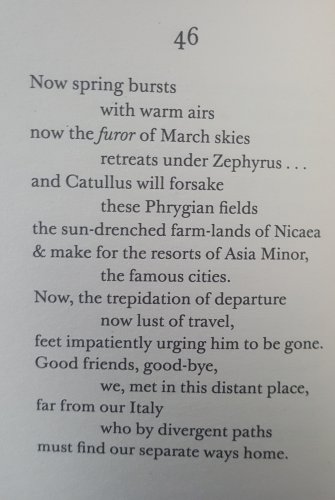
Apologies but photographing the poems without breaking the spine of the book has led to the distortions in the images. The next poem that I want to select to illustrate the tone of Catullus is one which describes his desire to travel now that the warmer weather is here. I have deliberately selected three of the shorter works although few are what we would regard as long, but the descriptions of personal experiences and desires is what marks Catullus as one of the writers known collectively as poetae nov or ‘new poets’ as poetry moved away from the epic heroic style favoured before then. The works of Catullus were almost lost to us completely as a single manuscript was found in the Chapter Library of Verona around seven hundred years ago. This document was copied twice before it was again mislaid and one of the copies was in its turn copied twice before being lost. So the 116 poems have come down the centuries due to these three surviving precious documents.

That one feels very modern with Catullus looking forward to a holiday in Turkey and hoping to meet up with friends there. For my third example it has to be one of the famous Lesbia poems although not the best known, which is poem 5, as that extends over a page in this edition so is difficult to include here. But poem 51 expresses his desire for Lesbia and how he feels when in her company although it is worth pointing out that poem 85 refers to her husband so Catullus was probably one of several men she had affairs with, including Rufus the subject of invective poem number 77 written after Catullus found out about their relationship.

A few others are quite ribald so I don’t feel I can put them on this blog. Although I have certainly enjoyed reading the collection it does nowadays probably need to come with a warning regarding adult themes, The title by the way is from the opening line of the very short poem 85, which is just two lines long:

I hate and I love. And if you ask me how.
I do not know. I only feel it, and I’m torn in two

Catallus 85 translated by Peter Whigham

À rebours – Joris-Karl Huysmans

It was the strangest book that he had ever read. It seemed to him that in exquisite raiment, and to the delicate sound of flutes, the sins of the world were passing in dumb show before him. Things that he had dimly dreamed of were suddenly made real to him. Things of which he had never dreamed were gradually revealed.

It was a novel without a plot and with only one character, being, indeed, simply a psychological study of a certain young Parisian who spent his life trying to realise in the nineteenth century all the passions and modes of thought that belonged to every century except his own, and to sum up, as it were, in himself the various moods through which the world-spirit had ever passed, loving for their mere artificiality those renunciations that men have unwisely called virtue, as much as those natural rebellions that wise men still call sin.

The Picture of Dorian Gray (chapter 10) – Oscar Wilde

When I recently read ‘The Picture of Dorian Gray‘ I assumed that the book referred to as the inspiration of Gray’s sensual explorations and obsessions was simply a device invented by Wilde, so I was surprised to discover that in fact the book actually existed. Wilde confirmed that À rebours by Huysmans was the book during his failed libel trial against the Marquess of Queensbury in 1895, and I found that not only did it exist but that a copy was already on my shelves, and had been for probably twenty years although sadly neglected, in form of the Penguin Books translation of 1959 with its title translated as ‘Against Nature’, it is also known as ‘Against the Grain’.

Charles-Marie-Georges Huysmans, who wrote as Joris-Karl in a tribute to his father, was a career civil servant, author and art critic living in Paris between 1848 and 1907 and was far from the character of the aesthete, Des Esseintes, who is the ‘hero’ of Against Nature. I put the word hero in quotes advisedly as the Duc Jean Des Esseintes is far from heroic being “a frail young man of thirty, who was anaemic, with hollow cheeks, cold eyes of steely blue, a nose that turned up, but straight, and thin papery hands”. This then is the subject of the book with other characters reduced to mere cyphers as he keeps himself away from all other human contact as far as possible. Even arranging that his two servants rarely see him and they live in a sound deadening apartment in a separate part of the house so that their existence doesn’t impinge on the solitude and quiet so desired by their master. Huysmans is clearly highly educated and very well read as demonstrated by the third chapter of the book, in this edition at least as translations vary between the chapter breaks, which is largely a harangue on the Latin writers from Virgil, just before the Christian era, to the eighth century Anglo-Saxon ecclesiastical authors whilst featuring the Des Esseintes library.

It is only fair to add that, if his admiration for Virgil was anything but excessive, and his enthusiasm for Ovid’s limpid effusions exceptionally discrete, the disgust he felt for the elephantine Horace’s vulgar twaddle, for the stupid patter he keeps up as he simpers at his audience like a painted old clown was absolutely limitless.

Sallust, who is at least no more insipid than the rest, Livy who is pompous and sentimental Seneca who is turgid and colourless, Suetonius who is larval and lymphatic, Tacitus who with his studied concision, is the most virile, the most virile, the most sinewy of them all. In poetry, Juvenal, despite a few vigorous lines, and Persius, for all his mysterious innuendos both left him cold. Leaving aside Tibullus and Propertius, Quintilian and the two Plinies, Statius, Martial of Bilbilous, Terence even and Plautus whose jargon with its plentiful neologisms, compounds and diminutives attracted him, but whose low wit and salty humour repelled hm.

Translation by Robert Baldick – Penguin 1959

Well that just about sums up most of the famous ancient Roman writers and presumably these are not just the supposed opinions of Des Esseintes but that of the author as well, the denigration of the Latin poets and later biblical scholars continues for several more pages as he moves through history. Two more chapters near the end of the book perform similar attacks on French literature but as these concentrate on liturgical authors and what Huysmans himself describes as minor writers I found these far more difficult to read as I wasn’t familiar with the works discussed. Another chapter represents the Des Esseintes art collection where Huysmans has him own Gustave Moreau’s ‘Salome Dancing Before Herod’ and ‘The Apparition’ both of which are described at length along with prints by Dutch artist Jan Luyken of medieval torture scenes along with other works. We are now roughly a third of the way through the book and I can see the fascination that this book must have had for Oscar Wilde, the descriptions are sumptuous, if at times macabre, but the book is so unlike anything else I have read apart from the work that it clearly inspired, that of Dorian Gray. Here we have a character determined to absorb all they can from the great art and literature to the exclusion of anything and anyone else, a man with a fine eye to colour and the effects that different lighting has upon it and a determination to appreciate all that he sees as good. A man who lives almost entirely in artificial light as he wakes in the evening and breakfasts then does as he pleases before dining in the early hours and going to bed as the sun rises so what looks good by candlelight is an essential consideration.

Later chapters cover, amongst many other things, his fascinating, although short lived collection of hot house flowers, deliberately chosen to look fake in texture and colours in contrast to his existing man-made floral displays that are masterpieces of realism. A detailed account of his bedroom also features where again artifice triumphs over nature with fine materials displayed to mimic the austerity of a monks cell such as the yellow silk on the walls to represent the paint on plaster of his original subject. All in all I loved this book and I’m glad I read it after ‘The Picture of Dorian Gray’, its very obscurity up until then had caused me to bypass in my shelves until I was truly ready to read it. I must admit I expected a difficult read and was pleasantly surprised as to how quickly I was absorbed in the work and apart from the previously noted French literature issues the 200+ pages largely flew past. Admittedly with several pauses where I looked up various things such as some of the paintings or flowers itemised by Huysmans which I was not familiar with, but that he had piqued my interest with to make sure I fully appreciated the points he was making and the exactitude of his representations of them,

The Prince – Niccolò Machiavelli

Everyone has heard the name Machiavelli, but how many have actually read the book he is most famous for? Well until this week I hadn’t got round to it despite owning a copy for many years. It’s an interesting book, originally written in Italian at around 1513 and ultimately dedicated to Lorenzo de Medici after the original proposed dedicatee died before the work was finished; it has given its author a reputation for ruthlessness and scheming which is partly but not entirely justified. Machiavelli was above all else a patriot to his city state of Florence and having lived through turbulent times when the various Italian states had been repeatedly fighting each other along with invasions from both France and Spain he wanted to set down some advice based on his experiences. Florence was seriously weakened during his lifetime and he wanted it to rise again so sets out in the first half of the book some arguments as to how a state rises, is maintained, and can ultimately fall with numerous historical examples to back up his propositions.

It is probably the second half of the book which has been historically so troubling but frankly despite the directness of the language, you can still read it and see where he is coming from even if you don’t agree with his arguments, see the following passage for how a prince should behave

he should learn from the fox and the lion; because the lion is defenceless against traps, and the fox is defenceless against wolves. Therefore one must be a fox in order to recognise traps, and a lion to frighten off wolves. Those who simply act like lions are stupid. So it follows that a prudent ruler cannot, and should not, honour his word when it places him at a disadvantage and when the reasons for which he made his promise no longer exist. If all men were good this precept would not be good; but because men are wretched creatures who would not keep their word to you, you need not keep your word to them.

Chapter XVIII – How princes should honour their word

He further looks to whether a prince should be generous or parsimonious and concludes that whilst generosity can possibly rise a new ruler to princedom it cannot keep him there as it ultimately will be ruinous and any attempt to raise further funds will be resented by the majority who have to supply the money either by taxes or seizures of property and merely appreciated by the minority who gain by them. This will lead to uprisings against the prince and the loss of his state or more likely his life. The decision is then that a prince should be seen as miserly by preference especially if they use the garnered wealth to maintain sufficient soldiers to make the state safer from possible attacks from its neighbours. He also has much to say about armies and why mercenaries are a bad thing as they just draw on the state funds when not in use and can simply move to another state willing to pay them more money if things start to look as if they are going against them. Even a professional army is a problem that needs to be carefully looked after to avoid officers rising to a point where they could see themselves as possible rulers and therefore mutiny and there is a balancing act needed to ensure loyalty without engendering resentment from the populace who ultimately have to pay for them.

He is even more troublesome when it comes to cruelty or compassion to your subjects

So a prince should not worry if he incurs reproach for his cruelty as long as he keeps his subjects united and loyal. By making an example or two he will prove more compassionate than those who, being too compassionate, allow disorders which lead to murder and rapine, These nearly always harm the whole community, whereas executions ordered by the prince only affect individuals.

Chapter XVII – Cruelty and compassion, and whether it is better to be loved than feared, or the reverse.

Well that last sentence is certainly true, especially for the individual being executed, but I’ve never come across such an argument so brutally put and it is probably such sentiments that have given Machiavelli his reputation today, and indeed pretty well ever since the book was published in the early sixteenth century.That is not to say that the book is not worth reading, because it definitely should be read today especially when considering the current state of world politics and conflicts. Machiavelli is blunt in his opinions but that only makes them easier to read and understand, I’m certainly not recommending the book as a guide to how to exist nowadays but it can give valuable pointers as to the possible mindsets of various rulers today who whilst not embracing Machiavelli in his entirety definitely give the impression of being in general agreement with him.

The Secret History – Procopius

Procopius was born around 500AD and died sometime after 565AD, a period during which the Roman empire was in serious decline. For many years he worked for the celebrated military commander General Belisarius during which time he wrote the work he became known for in the time of the empire ‘History of the Wars’. This series of eight books is a standard document of the campaigns of Belisarius who seemed to be leading his armies, and even the navy at some point, everywhere. It is clear from the level of detail that Procopius was on the scene for most of the battles he describes even though his official role, at least initially, was as legal advisor to the general. Less well known is his work ‘The Buildings’ which is largely a hagiography of Emperor Justinian (527AD to 565AD) as it describes the major construction works undertaken during his reign and exclaims the greatness of Justinian due to these churches and other civil engineering projects. His third work however is the one that I have read this week and it is very different to the rest, not least because it wasn’t available during his lifetime and indeed was only discovered in the Vatican library centuries after his death and finally published in 1623. So why wasn’t it available in the preceding thousand years, well Procopius gives us the explanation in his foreword.

This book is basically a scandal sheet denigrating Justinian as a genocidal leader interested only in the money he could confiscate or swindle out of everyone else and slaughtering tens of thousands of people on a whim whilst losing vast chunks of what was left of the empire. His wife is portrayed as a scheming whore, free with her body from an outrageously young age, stripping off in public places and letting anyone have their way with her as they wished. His former boss Belisarius and his wife are similarly pilloried by Procopius as is the previous emperor Justin who is described as an idiot and little more than a jackass. It is quite clear why he decided not to publish in his lifetime or indeed whilst anyone mentioned in the book was still alive, the repercussions would have been swift and brutal.

One slightly irritating feature of the book is the constant references back to Procopius’s eight volume history, this is usually where he is giving a scandalous reason for something that he had previously written about but which he had glossed over the causes of in the earlier book. This becomes more annoying if, like me, you don’t own ‘History of the Wars’ so can’t refer back, the notes in this edition simply tell you which of the eight volumes the story was first told, it would have been nice if a short precis was available so that the reader can compare the two accounts but that would have made the book probably over long. All in all I quite enjoyed this book though, it is unusual by being a character assassination of a couple of Roman emperors written at the time of their reigns, the only work I can think of that I have read with a similarly blunt although not as brutal or scandalous assessment of the emperors is ‘The Twelve Caesars’ by Suetonius although all the rulers he wrote about were dead before he started work on that.

As can be seen from the foreword the writing style is fairly chatty, although the subject matter with it’s never ending tales of depravity can get a little wearing at times. The translator of this Folio Society edition is Geoffrey Williamson and it was originally published as a Penguin Classic (L182, first published August 1966). The Folio Society first printed it in 1990 and it has gone through several editions since then.

The Knight in Panther Skin – Shota Rustaveli

This prose translation of Rustaveli’s Georgian epic poem from the twelfth century by Katharine Vivian was praised by The Director of the Institute of the History of Georgian Literature in Tibilisi, A G Baramidze, as

an interesting attempt to render Rustaveli’s poem in prose – not to give a literal word by word translation, but rather a free rendering which may bring to the reader the contents of the poem and thus contribute greatly to Rustaveli’s popularity throughout the English-speaking world.

Prefatory note

The poem is seen as one of the greats of Georgian literature and Rustaveli is regarded there in much the same way as Shakespeare is here so it was a surprise on reading it that it doesn’t appear to have any action take place in Georgia. Instead Avtandil and his great love Tinatin are portrayed as coming from Arabia whilst Tariel and his love Nestan-Darejan are Indian. The story concerns how Avtandil and Tariel are separated from the loves of their lives and ultimately win their hands in marriage although in two very different ways. But let us start at the beginning because that is where the story is closest to Georgian history. The first chapters deal with Tinatin being raised to be Queen of Arabia by her father as he steps aside and this mirrors the ascension of Queen Thamar in Georgia who was monarch during Rustaveli’s lifetime and this is still seen as a golden age for Georgia. Avtandil is commander of Tinatin’s army and a favourite of her father Rostevan whilst Queen Thamar’s second husband was a highly successful military commander. From here onwards though the poem leads off on a mythical path.

One day whilst Rostevan and Avtandil were out hunting they see in the distance a knight on a black charger clad in a panther skin and when they get nearer it can be seen that he is weeping. Rostevan dispatches some of the soldiers with them to bring the knight to him but he seeing soldiers approach kills them assuming that they meant him harm. When the king attempts to get near the knight turns his horse and vanishes. Greatly intrigued by this mysterious knight and saddened by the loss of his men Rostevan sends Avtandil on a three year quest to find the knight in the panther skin. Now this is where the tale could have been padded out considerably in describing Avtandil’s journey, and the poem is already 200 pages long, but within a page we find ourselves near the end of the three years and all we are told is that he hadn’t found him, Rustaveli is clearly keen to get to the action.

Finally about to turn back and report failure Avtandil spies his quarry but remembering what happened to the last soldiers he saw approach the knight decides to track him rather than approach directly. He discovers his home in some caves and finally manages to talk to the woman who lives with him and persuades her to get the knight to talk to him. This knight turns out to be Tariel and king of one of the seven kingdoms of India and prospective heir to other six who are all held by one man, he is also maddened by grief. It turns out that he is desperately in love with Nestan-Darejan who is the daughter of the other king and she is in love with him but that he had killed the man who had been arranged to be her husband and fled the country to avoid the repercussions. Nestan-Darejan, once it was discovered that she was in on the plot was exiled in secret and Tariel had been looking for her ever since and this is where the story really begins to pick up.

The tale of how Avtandil returns to Arabia to report finding the knight and then heads back to him against the wishes of Rostevan, thereby making himself an outcast, but he does so in order to aid Tariel find Nestan-Darejan. The great quest he makes in this search (which this time is covered by the poem) and the ultimate success not only in defeating the many enemies he comes up against but also in rescuing her and into the arms of Tariel is the main part of the story. That all ends well for our heroes, including the other characters that assist them greatly is happily the result and the way the story builds in excitement is really well done. Avtandil and Tariel are endowed with mythical abilities in war and either singly or with a few hundred men are capable of taking on foes with considerably greater numbers whilst emerging with at worst a minor injury to themselves. This truly is a tale of the Heroic Age and what would probably have been a daunting read, a 200 hundred page poem is something to take care with, was transformed in Katharine Vivian’s prose to be a romp through a great story. Georgian literature is poorly represented in English translation so I am glad I finally took this book off the shelves.

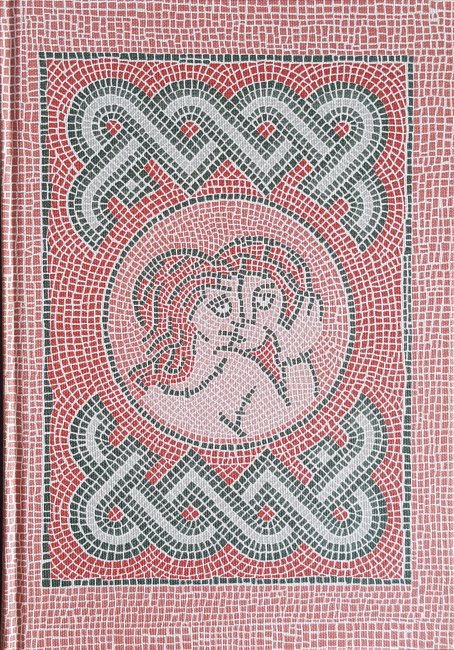
The book was published by The Folio Society in 1977, unusually by using letterpress, and is bound in Princess Satin cloth with a very attractive device on the cover by Levan Tsutskiridze. Sadly for A G Baramidze’s hopes that this would spread the word about their great epic it was never reprinted and I cannot find Katharine Vivian’s translation being subsequently published by anyone else. In fact this appears to be the only English translation of Rustaveli’s masterwork ever printed in the UK.

A Winter Book – Tove Jansson

Best known for her Moomin stories, Tove was also a highly talented artist and writer away from her children’s books. This volume is a collection of twenty short pieces originally published in Swedish between 1968 and 1998 and collected here for the first time in English in 2006 by Sort of Books.The book is split into three sections; ‘Snow’, ‘Flotsam and Jetsam’ and ‘Travelling Light’ the first two of which are re-arranged chapters from Tove’s first adult work ‘The Sculptor’s Daughter’ (Bildhuggarens dotter). This re-arrangement brings the winter themed parts together into ‘Snow’ and the summer items into ‘Flotsam and Jetsam’. ‘Travelling Light’ consists of six pieces, some of which have never been translated into English before and all of them are difficult to find in English. The book is illustrated with numerous photographs from Tove’s life including some charming ones of her as a small child. You may wonder why it is called ‘A Winter Book’ when it includes works that relate to the summer but that is to contrast with the earlier work ‘The Summer Book’ (Sommarboken) which was first published in 1972 and which was a novel rather than a compendium of short stories.

‘The Sculptor’s Daughter’ was first published in Swedish in 1968 and translated into English in 1969 and provides fictional retelling of episodes in the young Tove’s life growing up with her sculptor father and artist mother and all written from the viewpoint of the little girl she was at the time. Tove Jansson was fifty four when she wrote these tales down but she is meticulous in giving life to her younger self and continuing to see the world from the eyes of a small child, albeit one with a strong sense of adventure as illustrated by the story ‘The Boat and Me’ which recounts a journey she undertook in her first boat to head off round the group of islands where the family lived in the summer before being found and towed home by her father well after dark.

Another favourite of mine from these two sections is ‘The Iceberg’ where Tove finds an iceberg just too far off the shore for her to safely get on it and separated from the shore by some quite deep and freezing cold water. In the story she debates attempting to get on the berg and ultimately just throws her torch onto it where it nestles in an indentation exactly where she most wanted to be. The story is a tale of regret that she didn’t have the courage to attempt the jump herself and ride off on the ice to who knows where.

The story that I loved most however is from the collection of random stories in ‘Travelling Light’ and that is ‘The Squirrel’ which is taken from her second collection of short stories ‘The Listener’ (Lyssnerskan) first published in 1971 and here in a new English translation. In this story we have an old woman living on and island just as Tove Jansson and her long time partner Tuulikki “Tooti” Pietilä did but this lady is living alone. This island has no trees so she is surprised to see a squirrel one morning on the landing stage. The interplay and ultimate relationship she feels for this lost traveller over the coming winter is great fun and beautifully written, you can really feel for her as she tries to feed the animal and look after it without letting it into her home and what happens when it gets in anyway. The ultimate resolution of the story is completely unexpected and had me laughing out loud.

There are a couple of flops, particularly ‘Messages’ which frankly I didn’t get at all, but overall the book is a joy to read and a complete contrast to the Moomin tales, I’m so glad I spotted it and picked it up earlier this year.

Poems – St John of the Cross

For this, the 200th post in this blog, I have chosen a Penguin Classic translation of the poetry of St. John of the Cross, the 16th century Spanish mystic christian and follower of Teresa of Ávila whose writings have also appeared in the Penguin Classics catalogue. The book is actually rather more than a translation as it is a parallel text edition with the original Spanish text on the left hand pages and the English on the right. Saint John (Juan de la Cruz in Spanish) was a Catholic priest and Carmelite friar involved in setting up religious houses in northern Spain but was also the greatest of the mystic poets in Spanish literature and indeed one of the giants of Spanish literature regardless of style or theme.

However, before discussing the poems, I would like to take a little time over the translator, much as the book does with a preface by his widow Mary Campbell. Roy Campbell was born in South Africa in 1901 and first came to England in 1919 where he met and married Mary in 1922 and they moved back to South Africa in 1925. He worked as an editor on a literary magazine whilst writing poetry but disagreed with the apartheid regime so moved back to London in 1927. On their return to England they fell in with the Bloomsbury Group and Mary started a lesbian affair with Vita Sackville-West at the same time as Virginia Woolf was also having an affair with Vita. Roy strongly, and reasonably, disapproved of his wife’s affair and to separate Mary and Vita the Campbell’s moved first to Provence and then to Toledo in Spain where Roy Campbell discovered the works of St John of the Cross and the couple converted to Roman Catholicism. It was in Toledo that St John had been imprisoned by rival Carmelite monks opposed to the very strict variant of the calling espoused by Teresa and John, he wrote most of his poems during his confinement. Roy Campbell, by the 1930’s, was becoming a well known poet in his own right and was fascinated by the poems of St John and whats more his heroic poetic style seemed ideally suited to the extant works of St John so he began work on a translation that was finally published by Harvill in 1951 and won the 1952 Foyle Prize. It is this verse translation that is reprinted in the 1960 Penguin first edition that I have, Roy Campbell having died in 1957 hence his widow penning the preface where she completely fails to mention the lesbian affair that took them to Spain in the first place.

The Spanish text is by Padre Silverio de Santa Teresa CD, and first appeared in an UK book in 1933 published by the Liverpool Institute of Hispanic Studies.Roy Campbell has done an excellent job of translating the poems as not only has he translated the text but found English words which allow the lines to largely scan and always rhyme as the originals do. A moments thought would tell you how difficult this is and why many poetry translations don’t attempt this.The longest work is ‘Songs between the soul and the bridegroom’ where the poem is in the form of a conversation between the two parts where God is gradually revealed to be the bridegroom that the soul or bride is conversing with. I really enjoyed this one as there is more time for development of the story within the poem as it goes on for seven pages, most are less than a page and a half and some are simply one verse.

Several of the poems use repetition of the last line of each verse such as ‘Song of the Soul that is Glad to Know God by Faith’ where each verse, apart from the eleventh, ends “Aunque es de noche” (Although it is night) although with this particular poem Campbell varies the last line between “Although by night” and “Though it be night” and I’m not sure why he made the change as reading it with “Although by night” seems to scan perfectly well with each verse. My favourite poem of the collection though is ‘Verses about the soul that suffers with impatience to see God’ and this is another where repetition of the last line of each verse is utilised although this time it is the sense of the last line that is repeated as the words vary between “Am dying that I do not die”, “And die because I do not die”, “The more I live the more must die” etc. culminating in the more hopeful “I live because I’ve ceased to die”.

I was surprised by how much I enjoyed this volume of poetry as I’m not remotely religious, let alone Catholic, so am clearly not the target audience. I suspect this is partly down to the way religion is handled in English schools where is is taught as a ‘normal’ subject and after all nobody asks you to believe in geography.

Voyages to the Moon and the Sun – Cyrano de Bergerac

For a long time I believed that the author of this book wasn’t a real person but had been made up in some obscure French novel and that the character had lived on beyond the original work, so to find that Cyrano de Bergerac was not only real but an author as well as the famous soldier and duellist was a pleasant surprise. His life is however poorly documented, but this work can be dated reasonably well as it mentions the death of the philosopher Descartes, which happened in 1650 and de Bergerac himself died in 1654. My copy is the Folio Society edition published in 2018, illustrated by Quentin Blake and rounds off my selection of works translated from French that I have been reading throughout August. The illustrations to this blog were taken from the Folio Society web site entry on the book.

The book is in three sections so I’ll review it in the same way:

Journey to The Moon

The time that de Bergerac was writing in was a period of considerable scientific advancement as people moved away from the ancient Greek science towards the start of physics as we know it but there was much that was still up for debate such as if the Earth was the centre of the universe with everything else revolving around it. It is clear right from the start that de Bergerac had moved on from this notion and he understood that the Earth rotated, that the Moon orbited the Earth and that together they orbited the Sun. Journey to the Moon starts with the hero trying to reach the Moon by means of dew collected in jam jars. The reasoning is fair, dew rises in the morning so if you could collect enough of it and attach it to your body then it should take you with it, this he duly does and rises up into the air from Paris one morning. After a few hours he decides to land, releases the dew and is surprised to find it is still morning and he is in Canada as the Earth has rotated underneath him, de Bergerac didn’t consider that the atmosphere also rotates with the land beneath. Later he builds another machine this time powered by fireworks which does lift him to the Moon, leaving from Quebec.

The Moon he arrives at is however unrecognisable from the one we know as he finds the Garden of Eden there along with several old testament prophets and here the book starts to fail as he indulges in pages of theological arguments which drag the pace so much that I almost gave up at this point and began searching for another book to read, however I’m glad I persevered. Ultimately he leaves religion behind and goes on a fantastical exploration of his version of the Moon before returning to Earth by catching hold of the Devil on his way to deposit an inhabitant of the Moon to Hell and of course he has to pass the Earth on the way.

Journey to The Sun

For a long time it looked as if Journey to the Sun wasn’t actually going to get there, for the first twenty five pages it covers being persuaded to write up and publish Journey to the Moon and his subsequent denouncement as a sorcerer. Which leads to him being jailed, escaping and undertaking a very funny chase sequence which results in him accidentally running full circle and seeking shelter from his pursuers through the back door of the very jail he had escaped from. Eventually he builds a contraption which uses the power of sunlight via lenses to build up lift so that he can escape again, however he misjudges the power of his invention and instead of just rising and then landing again he is drawn all the way to the Sun and aims to land on a sun spot which he takes to be an area of land floating on the sun’s surface. The Sun in the book is not the flaming ball of gas that we understand but simply a larger globe that it is perfectly possible to traverse.

Eventually he meets a tiny king who with his subjects can transform themselves into anything they wish either singly or as a group to make something as large as a tree and in this tree is a Nightingale who leads him to the Kingdom of the Birds.

Story of the Birds

On arrival in the Kingdom of the Birds he is arrested and put on trial for the heinous crime of being a man and therefore a destroyer and killer of birds. Here de Bergerac demonstrates his ecological credentials and tries our hero for the damage mankind has done to the Earth and the wanton killing of bird life. He is ultimately sentenced to be eaten to death by insects but is reprieved when a parrot that he once set free from its cage speaks up in his defence.

Various adventures follow his release as he travels towards the Kingdom of Philosophers, although again de Bergerac gets distracted and spends pages retelling Greek myths without progressing with the story. Eventually this rather tedious section finishes and the hero continues on his way, meeting people from the Kingdom of Truth and the Kingdom of Lovers before the book suddenly finishes mid paragraph.

Overall I enjoyed the book but the large sections of ‘philosophising’ I could definitely have done without.