The Strange Case of the Sixth Penguin Book

The first ten Penguin books were all published together in July 1935 with an edition size of 20,000 books per title and launched a publishing phenomena. being a fraction of the cost of any other books available at the time, but there was to be a problem with book number six. It soon became clear that Penguin Books might not have the rights to publish a paperback version of ‘The Mysterious Affair at Styles’ by Agatha Christie so despite it’s popularity, it was reprinted twice in 1935, the book was pulled from the list of available titles leaving a gap in the neat numbering system. What to do? Well by early 1936 Penguin definitely had the rights to another book by Agatha Christie, ‘The Murder on the Links’ and in March that year this replaced ‘The Mysterious Affair at Styles’ but numbered 6A, see below.

Using an A to differentiate between the two books looked odd so in September 1936 the A was quietly dropped and ‘The Murder on the Links’ became number six. In the meantime however Penguin had sorted out the rights over ‘The Mysterious Affair at Styles’ but this couldn’t go back to being book six without renumbering ‘The Murder on the Links’ and causing even more confusion so in June 1936 ‘The Mysterious Affair at Styles’ was published again, this time as number sixty one. ‘The Mysterious Affair at Styles’ as number sixty one is relatively easy to find but the book as number six is extremely rare despite the original print run. I have collected Penguin Books for over thirty years and only obtained a copy of this version in the last few days and fortunately didn’t have to pay the £750 that a similar condition copy apparently recently sold for. All of Christie’s first five books were published by The Bodley Head which at the time of publication was the home of Penguin Books whilst its Managing Director, Allen Lane, got Penguin started before leaving to run Penguin as a separate entity at the start of 1937. This interconnection between the two businesses is probably the cause of the confusion over rights.

So let’s look at the two books:

The Mysterious Affair at Styles

Originally published in 1920 this was Agatha Christie’s first book and introduced her most famous creation Hercule Poirot to the world. It was only when flicking through the book when it arrived that I realised that I hadn’t actually read it before, which was a considerable surprise. When we first meet Poirot he is with a group of other Belgian refugees from the First World War living in a house in Styles St Mary, a small village near the grand house of Styles Court. The man who would be Poirot’s chronicler and friend, Arthur Hastings, was staying at Styles Court whilst recuperating from being invalided out of the war. He is greatly surprised to find Poirot, whom he had met in Belgium before the war living so close and when Emily Inglethorp, the elderly owner of the manor house, dies, apparently of strychnine poisoning, he suggests getting Poirot involved in solving the case. The plot is surprising well constructed for a first novel and numerous family members and other guests at the house are suspected before Poirot explains the true solution in the final chapter. According to the rear flap of the dust wrapper the book was a result of a bet that Christie couldn’t write a detective story where the reader only discovered the true murderer in the last chapter. I have to say the final twist is most ingenious and yet the reader cannot say that any clues were not available to them in trying to solve the case themselves.

Poirot and Hastings would return to Styles Court in his last appearance, ‘Curtain’, only this time the house is no longer a family home but has been turned into a guest house.

And now for the second number six, this is one of only two times two completely different Penguin books shared the same catalogue number that I have been able to find in the almost ninety years Penguin Books have been publishing, the other being number 305 which was allocated to the first two volumes of Penguin New Writing before that was spun off into its own series. There are however several examples of books by that publisher being re-issued under a different number to that originally assigned so six becoming sixty one, whilst it is unusual and is the first such renumbering at Penguin is certainly not unique.

The Murder on the Links

Agatha Christie’s third book and the second to feature Hercule Poirot must presumably have been already planned for publication by Penguin before it suddenly appeared as 6A, the book had been first published in 1923 and like ‘The Mysterious Affair at Styles’ had gone through numerous editions before appearing in Penguin. This time Poirot and Hastings are trying to solve a murder in northern France, in the imaginary small coastal town of Merlinville-sur-Mer which is apparently an up and coming destination and is constructing a golf course and casino in order to attract more wealthy visitors. Poirot had received a letter from Paul Renauld at his home in London, showing a considerable step up from his shared refugee home in Styles St Mary, which requested his urgent assistance in France so off they both go only to discover when they arrive that Paul Renauld was murdered the previous night. The plot has the addition of humour with Inspector Giraud, a modern detective from the Sûreté in Paris, whose methods amuse Poirot and the obvious resentment Giraud has for Poirot leads to a rivalry in which a five hundred franc bet is made between the two detectives as to who will solve the case. The case is more complicated than Poirot’s first appearance showing a growth in confidence by Christie after the very positive reception of her first two novels and I enjoyed this book more than the first.

Poirot and Hastings are so often seen as a double act, clearly based on Holmes and Watson, that it is perhaps surprising that of the further twenty Poirot novels Christie would write Hastings is only in five of them and she would later rewrite two of those removing Hastings as she did so. Indeed she is clearly trying to get rid of him in this book as he meets his future wife during this case and subsequently moves to Argentina to run a ranch with her. I like Hastings, although he can be a bit irritating but I have definitely enjoyed reading the two number sixes from Penguins catalogue.

The Clouded Mirror – L T C Rolt

L T C Rolt, also known as Tom Rolt, was one of the best writers on industrial history and the people who made it, and not only did he write about it but he was personally involved in saving a lot of Britain’s heritage from the Industrial Revolution from the eighteenth and nineteenth centuries for present generations to enjoy. In 1946 he was one of the three founders of the Inland Waterways Association, dedicated to restoring and making use of the long neglected canal network that criss-crossed the UK eventually leaving in 1951, by which time he had a huge new project to work on. He was chairman of the Talyllyn Railway Preservation Society which he helped found in 1950 and which was planning on restoring the old Welsh slate mining railway and turning it into the major tourist destination that it is now and it was through reading as a child his excellent 1953 book ‘Railway Adventure’ about his time rescuing the Talyllyn that I first became aware of him. Rolt died in 1974 having been more responsible for the preservation of what remains of the Industrial Revolution than anyone else and on top of the two organisations I have already mentioned he was a trustee and member of the Advisory Council of the UK Science Museum, joint founder of the Association for Industrial Archaeology, vice-president of the Newcomen Society, a member of the York Railway Museum Committee and helped to form the Ironbridge Gorge Museum Trust amongst many other things. He wrote ‘The Clouded Mirror’ in 1955 and this edition is from The Penguin English Journeys series published in 2009.

The Clouded Mirror is actually three works in one book, the first is acually called ‘The Clouded Mirror’ and surprisingly is concerned with two poets from the 1600’s who were based in the Welsh Marches, the border country between England and Wales with Herefordshire to the east and the Black Mountains to the west. Despite having given the book its title this was extremely dull and made me wonder where the rest of the book was going.

The second part, entitled ‘Kilvert’s Country’was an improvement but still a surprise given everything I thought I knew about the author as it is largely autobiographical and deals with his young childhood from the age of four when his family moved to the outskirts of Hay on Wye. This small town is in the heart of the Welsh Marches so this link at least partly explains Rolt’s fascination with the two poets in ‘The Clouded Mirror’. I know Hay very well as it was the world’s first booktown and I have been going there for decades looking for interesting works to add to my collection. Rolt’s childhood summers from 1914 sound idyllic as he gets older and explores the surrounding countryside. He writes with his customary gentle style beautiful descriptions of the places he gets to and his father sounds like a real character, having been in Australia, South Africa and even an unsuccessful prospector during the Yukon gold rush up in north western Canada. His shooting and fishing expeditions made sure that throughout WWI the family never went short of food and Rolt says that when war finished he realised that he had barely noticed that it had been happening as Hay was so remote from anyway directly affected by the conflict.

Finally there is ‘Canal Crusade’ and this is the section that made the book all worthwhile, for me anyway. It tells some of the stories from the early days of the Inland Waterways Association with Rolt travelling up largely derelict and weed clogged canals to highlight the poor state that this important transport network had reached following decades of neglect. This is Tom Rolt at his best, campaigning and writing about industrial heritage, forcing the railway companies that largely owned the canals in the first half of the twentieth century to finally maintain what they were responsible for. It seems amazing to me now, with the excellent condition that the canals are largely in now and their considerable use by holidaymakers that the stories of silted up waterways, collapsed bridges and what seemed terminal conditions are from just seventy years ago so the Inland Waterways Association must be congratulated in its work even if a major disagreement amongst the three founders meant that only one of them was still there by 1950. Fortunately by then Rolt had the Talyllyn to occupy him.

In short the book is worth reading for the second and third pieces but I won’t bother with the first part if I pick it up to read it again.

The Secret History – Procopius

Procopius was born around 500AD and died sometime after 565AD, a period during which the Roman empire was in serious decline. For many years he worked for the celebrated military commander General Belisarius during which time he wrote the work he became known for in the time of the empire ‘History of the Wars’. This series of eight books is a standard document of the campaigns of Belisarius who seemed to be leading his armies, and even the navy at some point, everywhere. It is clear from the level of detail that Procopius was on the scene for most of the battles he describes even though his official role, at least initially, was as legal advisor to the general. Less well known is his work ‘The Buildings’ which is largely a hagiography of Emperor Justinian (527AD to 565AD) as it describes the major construction works undertaken during his reign and exclaims the greatness of Justinian due to these churches and other civil engineering projects. His third work however is the one that I have read this week and it is very different to the rest, not least because it wasn’t available during his lifetime and indeed was only discovered in the Vatican library centuries after his death and finally published in 1623. So why wasn’t it available in the preceding thousand years, well Procopius gives us the explanation in his foreword.

This book is basically a scandal sheet denigrating Justinian as a genocidal leader interested only in the money he could confiscate or swindle out of everyone else and slaughtering tens of thousands of people on a whim whilst losing vast chunks of what was left of the empire. His wife is portrayed as a scheming whore, free with her body from an outrageously young age, stripping off in public places and letting anyone have their way with her as they wished. His former boss Belisarius and his wife are similarly pilloried by Procopius as is the previous emperor Justin who is described as an idiot and little more than a jackass. It is quite clear why he decided not to publish in his lifetime or indeed whilst anyone mentioned in the book was still alive, the repercussions would have been swift and brutal.

One slightly irritating feature of the book is the constant references back to Procopius’s eight volume history, this is usually where he is giving a scandalous reason for something that he had previously written about but which he had glossed over the causes of in the earlier book. This becomes more annoying if, like me, you don’t own ‘History of the Wars’ so can’t refer back, the notes in this edition simply tell you which of the eight volumes the story was first told, it would have been nice if a short precis was available so that the reader can compare the two accounts but that would have made the book probably over long. All in all I quite enjoyed this book though, it is unusual by being a character assassination of a couple of Roman emperors written at the time of their reigns, the only work I can think of that I have read with a similarly blunt although not as brutal or scandalous assessment of the emperors is ‘The Twelve Caesars’ by Suetonius although all the rulers he wrote about were dead before he started work on that.

As can be seen from the foreword the writing style is fairly chatty, although the subject matter with it’s never ending tales of depravity can get a little wearing at times. The translator of this Folio Society edition is Geoffrey Williamson and it was originally published as a Penguin Classic (L182, first published August 1966). The Folio Society first printed it in 1990 and it has gone through several editions since then.

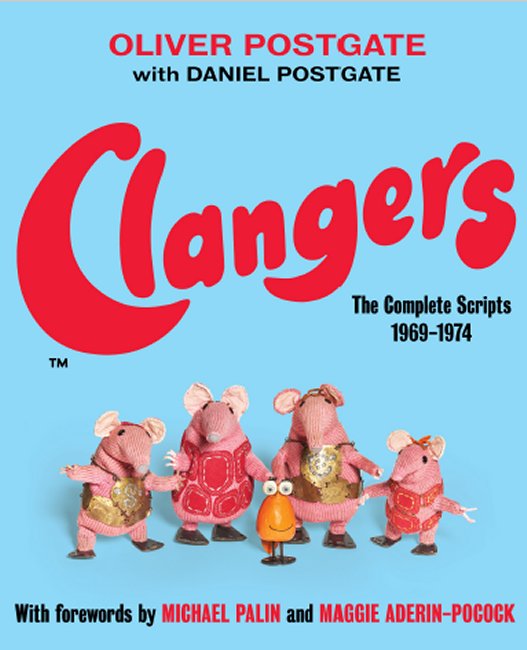
Clangers: The Complete Scripts – Oliver Postgate and Daniel Postgate

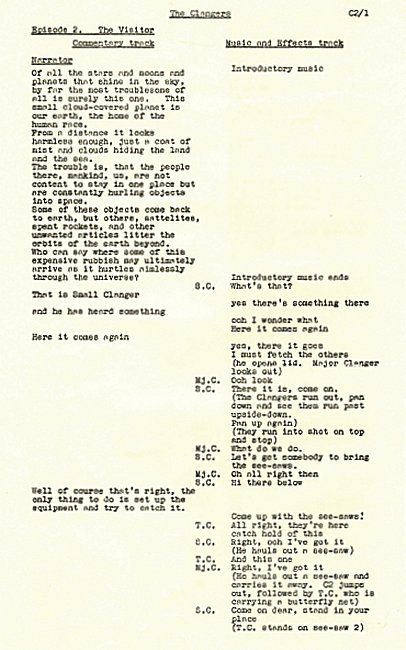
For those of you familiar with the BBC children’s TV classic originally broadcast from the late 1960’s to mid 1970’s there will probably be a feeling that something is wrong when you see this book is the full scripts. But surely, you will reasonably ask yourself, the Clangers only spoke in whistles, how can there be scripts? Well yes the Clangers did only speak in whistles but all the whistles were fully scripted in English and swanee whistles were used to mirror the inflection and length of the words. Take this example from series one, The Visitor which can be watched here and compare to the start of the script below.

I was seven years old when Clangers first appeared on TV with the first episode broadcast on 16 November 1969 just four months after man had first walked on the moon via Apollo 11 and it seems therefore appropriate to be reviewing this brand new book as Artemis I has reached the moons orbit, the first time for one month short of fifty years since the last Apollo mission that a craft capable of taking humans back to the moon has been there. Oliver Postgate was inspired to create Clangers by the Apollo programme, his tiny production company had previously made The Pogles and Noggin the Nog for BBC children’s television but both of these were in black and white so not appropriate for the launch of colour TV in Britain at the end of the 1960’s. Instead Smallfilms Ltd were tasked with creating something new that would embrace colour, beyond that nothing was specified by the BBC but Postgate decided that as space was clearly a major topic at the time he would have a go at a space based animation and make it super colourful.

Smallfilms was very small, just Oliver Postgate and Peter Firmin working in a converted pig shed at Oliver’s farm, Postgate wrote the scripts, was the narrator and voiced most of the characters in Smallfilm’s various productions whilst Firmin was the artist and model maker and between them they did the animation of the stop motion work. The book includes all the scripts from the original two series along with the special ‘Vote for Froglet’, As previously stated the first series started in November 1969 and ran on until early 1970, series two started on 18th April 1971 and finished later that year, both series consisting of thirteen episodes at that appeared to be that for Clangers. In 1974 however Postgate and Firmin were being interviewed on BBC radio and an idea was hatched to produced a special episode to try to explain elections to the children watching the show and so ‘Vote for Froglet’ was made in just three days and shown on election night.

The book also includes instruction as to how to knit your own Clanger and is extensively illustrated with stills from the programmes and behind the scenes images of Oliver and Peter at work on the show, it is a complete delight for anyone who grew up with Clangers in their lives and the show was repeated over many decades so there are a lot of us out there.

There was unfortunately no room for sentimentality over the legacy of what they were producing. When Clangers came to an end the sets were put on a bonfire and various other bits just buried as space was needed for the next project ‘Bagpuss’. In his introduction Oliver’s son Daniel recalls his sister Emily occasionally finding bits whilst working on the family vegetable patch. Sadly Oliver Postgate died in 2008 so all the additional material (beyond the actual scripts and production notes) has been written by Daniel. Peter Firmin just a few months short of his ninetieth birthday in 2018. Those wondering about why actor and writer Michael Palin and astronomer Maggie Aderin-Pocock wrote forewords, well Palin was a fan from the start and was also the narrator of the relaunched Clangers in 2015, whilst Aderin-Pocock claims to have been inspired to take up astronomy due to watching Clangers as a small child. The book was crowdfunded via unbound,com and is book number 383 by them. I was one of the people that invested in the initial project.

Case for Three Detectives – Leo Bruce

Leo Bruce was the crime writing pseudonym of amazingly prolific writer Rupert Croft-Cooke who wrote well over a hundred books under his own name from 1920 until 1975, along with over thirty crime novels as Leo Bruce and numerous short stories under both names. This is the first of his crime novels and along with it being a really fun parody of other writers it introduced his plain speaking Sergeant Beef who has no time for the amateur detective so beloved of so many other authors. Indeed the three detectives in this book are very thinly disguised famous other detectives Lord Simon Plimsoll is clearly Dorothy L Sayer’s Lord Peter Wimsey, Monsieur Amer Picon is Agatha Christie’s Hercule Poirot and Monsignor Smith is Father Brown by G K Chesterton, this will be the first, and presumably last, time all three will work on the same case but they do not work together.

The crime occurs in a large country house, home of Dr. Thurston and his wife Mary who are hosting a group of their friends for the weekend. After the evening meal, which had featured a discussion about murder mysteries, Mrs Thurston goes to bed at about eleven o’clock. Shortly afterwards there are some screams heard, the guests rush upstairs to the Thurston’s room and discovering it bolted break down the door and inside find Mrs Thurston lying on the bed with blood all over the pillow. A brief search is made but nothing relevant found so how was she killed inside a locked room? A car is sent for the local village police sergeant along with the Dr Tate the village’s general practitioner as the phone line to the house is cut, the doctor confirms that Mrs Thurston is definitely dead from a cut throat and Sergeant Beef checks the scene and states that he knows who did the murder but being just the local copper is completely ignored by everyone else. The book is written in the first person as though by one of the guests to the house party.

Quite early the next morning those indefatigably brilliant private investigators, who seem to be always handy when a murder has been committed, began to arrive. I had some knowledge of their habits and guessed at once what had happened to bring them here. One had probably been staying in the district, another was a friend of Dr Tate’s, while a third, perhaps, had already been asked to stay with the Thurstons. At any rate it was not long before the house seemed to be alive with them, crawling about on floors, applying lenses to the paint-work and asking the servants the most unexpected questions.

First paragraph of chapter five

The three detectives seem a little put out at first that all of them were there but agree to apply their own methods to solving the case, having a good look round not only the house and grounds but spreading their investigations to neighbouring villages as well. they convene that evening to question the guests and the servants at the end of which all three claim to be on their way having theories about solving the case and Sergeant Beef is getting more and more exasperated as he explains that the ain’t got a theory as he don’t need one as he knows who did it. Everyone continues to ignore and dismiss him as he is just a lowly village sergeant so what would he know?

On the second evening the group gather again to hear the three detectives explain how the murderer go in and out of a locked room and whom it was, why they did it and the name of their accomplice that was needed in order to effect an escape via ropes that were found secreted in the water tank in one of the top rooms of the house. Each solution is more and more ingenious and of course the three detectives give completely different solutions and alternative suspects, all of which fit the clues as we know them, whilst ruling out their compatriots reasoning. In the following confusion it is finally down to Sergeant Beef to explain what really happened.

The book is great fun especially if you are familiar with the three detectives being parodied here as their mannerisms and styles are so well sent up. I had no knowledge of Rupert Croft-Cooke aka Leo Bruce before reading the book and didn’t know I was in for a very funny parody when I got the volume off the shelf, it was a green (therefore crime) Penguin book and that was what I felt the need for at the time and expected a much more serious tale but I loved it.

Beyond the Wand – Tom Felton

Published last month (October 2022), this is a really fun autobiography, even though I have to admit that I have never managed to get on with the Harry Potter books or the films. However I have heard Tom being interviewed a few times and his totally laid back and unpretentious style, so unlike the character of Draco Malfoy he plays in the films, drew me to this book pretty well as soon as it came out. I wasn’t to be disappointed. The foreword is by Emma Watson.

Tom is likewise eloquent about his friendship with Emma and several times states his admiration for her along with Daniel Radcliffe and Rupert Grint especially over the very strange childhoods that these three child actors had. As the filming schedule of the Harry Potter was relentless all three existed in a bubble of private tutoring alongside their filming commitments. These were the only three to have this regime however, Tom along with all the other child actors went to a normal school but with random absences to be on set and he freely admits that he took advantage of this to bunk off school as it would be assumed he was working on Harry Potter. At thirteen when he started filming the series he was also significantly older than the three stars, Daniel and Rupert were eleven and Emma just nine years old and that age gap is important when you are so young, this all meant that whilst he wasn’t particularly close to the other three at least at the start of the movie series his friendship with them all has continued long after the films stopped.

Obviously most people reading this book will be looking for insights into the making of the Harry Potter films and yes that is covered with chapters talking about the various actors he worked with and what he learned from their vast experience. The cream of British acting talent were involved in the films over the years and even though at the start Tom had hardly heard of a lot of them he certainly learnt to respect their talent and almost used the films as an ultimate acting class. But, if like me, you haven’t seen the films then there is still a lot to be got out of this autobiography and Tom’s confusion when people treated him as the character he played, abusing him for what Draco had done is genuine and quite funny.

Tom also isn’t shy about writing about his failings, either a one off shoplifting offence done under peer pressure from the other lads at his school or during the time his elder brother Chris was his chaperone on set them disappearing all night to go carp fishing. Chris is a well known angler and Tom also loved nothing better than getting his equipment out and fishing through the night. Indeed when it came to filming the green screen quidditch sequences each actor had a photograph on a pole which marked where their eye line was supposed to be in each shot, somebody had Cameron Diaz, Tom had a particularly attractive carp. He also covers his time avoiding and then eventually spending time in rehab after his drinking and cannabis smoking got too much after the Harry Potter films had finished and he had moved to Hollywood. All in all this is a very honest book and well worth a read.

Penguins Stopped Play – Harry Thompson

Harry Thompson was the original producer for the hit BBC TV show ‘Have I Got News For You’ and ran it for the first five series, he was also involved in several other TV programmes, there are a few short references to his TV career in the book, most notably when he managed to get people such as comic actor Hugh Dennis to turn out for his cricket team but this is not really an autobiography.It is instead a history of the cricket team he started and captained for over twenty five years. Now village cricket is not a high level sport and The Captain Scott XI, named after a person who famously came second, struggled to reach even this low bar. Initially this was deliberate on the part of several members of the team who simply wanted to lark about and had no intention of winning a game, gradually however this complete disregard for sporting etiquette meant that it became harder and harder for Thompson to find teams willing to play them. Gradually the team split into two camps and eventually into two separate teams one which continued to just lark about and the other, led by Thompson, determined to win a few games for a change.

The book starts however with a rapidly abandoned game on an Antarctic ice shelf which ironically doesn’t feature the Captain Scott XI at all but is instead an impromptu match thought up by passengers on an Antarctic cruise (including Thompson) who discover that due to excess ice they were going to be unable to get to Shackleton’s and Scott’s huts after all. Using oars from the ship as bats and a real cricket ball packed by a New Zealand passenger just in case it would be useful they start a game but presumably the echoes in the water underneath the ice shelf attracted the penguins which soon swarmed over the ‘pitch’ making play impossible leading to the oddest reason for stopping a game and the title of this book.

Before the original Captain Scott XI fell apart someone came up with the bright idea to go as a team to India to play a few matches in the hope that this would bring the increasingly fractious players together.

It sounded like a great idea; and also like a terrible mistake. It turned out to be both

The ‘tour’ started in Hong Kong as one of the ex members of the Captain Scott XI had been posted there by the bank he worked for and promised to arrange a couple of games, they would then fly back via India for a few more games before heading home a more united team. Almost none of this went to plan. As stated at the beginning English village cricket is just about as low level as you can get and still play, this standard doesn’t seem to be understood by any other country so they kept coming up against far better teams and losing spectacularly even without the sabotage several of the players indulged in. They did however play some games and get back without actually killing each other and this ‘success’ inspired Thompson to try again, this time heading for South Africa, the home country of a couple of the regular players for the team. Not only was the Captain Scott XI destined to be beaten again by much better teams who simply didn’t believe that another cricket team could be this bad but the travelling arrangements were almost impossible to make. This was the tour that finally split the team completely and ‘the layabouts’ as Thompson refers to them went off and formed a separate team.

Freed from the players that were ‘holding them back’ and flushed with the success of almost winning a couple of games Thompson came up with a clearly crazy plan, the Captain Scott XI would tour the world, and it is this trip that makes up the second half of the book. The cricket definitely gets better and they had managed another quick tour before then, just a week with only two matches in Malaysia because two of the team were half Malay which included them actually winning against the Malaysian national team, although a severely depleted version by playing on a week day when half the team would be working. Touring Barbados, Buenos Aires, Australia, Singapore and South Africa one after another on eleven round the world tickets when the British Airways system ‘gets confused’ if there is more than nine people in a group was an amazingly chaotic experience. Several times BA assured them that there were no flights from one destination to another leaving them flying thousands of miles in the wrong direction when they boarded next to a direct flight going exactly where they wanted to go, wasting time and adding to increasingly bad jet lag. Tickets kept getting refused, players arrested for having the wrong paperwork (normally whilst transiting America) and one thing they could almost always guarantee was torrential rain on arrival. It was to be the last international tour of the Captain Scott XI under Harry Thompson and the stories he tells are hilarious.

Sadly Thompson died from lung cancer aged just 45 despite never having smoked in his life, he had time to go over the final notes for this book in his last few days. This therefore becomes the third book I’ve read in as many months where the author didn’t live to see it come out after Barry Letts and Elisabeth Sladen. You don’t need to be a cricket fan, although I am, to enjoy this book, the often disastrous travel stories are what makes it a great read and you fume along with Harry at the magnificent incompetence of the British Airways flight booking service.

The Tale of Peter Rabbit – Beatrix Potter

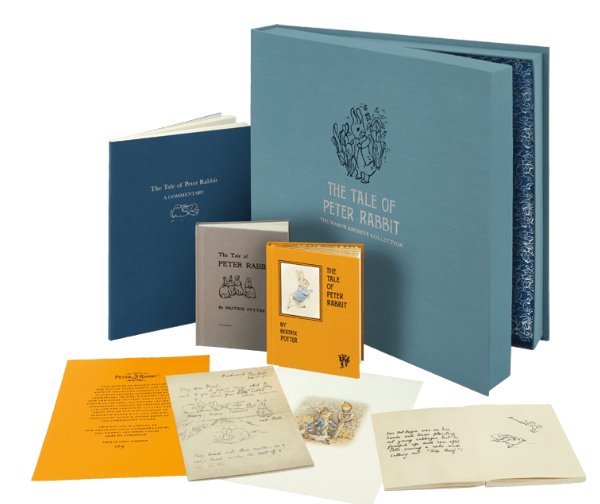
October 2022 marks the 120th anniversary of the first commercial publication of The Tale of Peter Rabbit and this magnificent collection of facsimiles of items from the Frederick Warne Archives was produced by The Folio Society to mark the occasion. The set is limited to 1000 examples and mine is number 5. There is so much to look at and compare from the very first appearance of Peter in a picture letter eight years before Beatrix Potter privately printed Peter’s first book to replicas of some of the tiny Christmas letters she created, There is also a wonderfully informative booklet which tells the story of the creation of The Tale of Peter Rabbit and has a introduction by Emma Thompson who wrote her own Peter Rabbit stories starting with the 110th anniversary set published by Frederick Warne, see here.

Just how much is included can be seen in the following list:

  • Facsimile of picture letter, 1893, printed on Arena Wove paper – 8 pages. 8˝ × 4¾˝
  • Facsimile of privately printed edition, 1901 bound in Wibalin paper, printed on Sirio Calce Stucco paper – 88 pages. 5¾˝ × 4¼˝
  • Facsimile of maquette, 1902, printed on Arena Wove paper and presented in an archive folder made from Sirio Color paper blocked in silver foil – 88 pages. 5˝ × 3¾˝
  • Facsimile of deluxe edition, 1902, bound in cloth with an inset label, printed on Sirio Calce Stucco paper with gold page tops and printed endpapers – 104 pages. 5½˝ × 4˝
  • Five Christmas letters printed on Arena Wove paper, each 3˝ × 1½˝
  • Giclée print on Modigliani Insize Neve paper with blind embossed frame line – 9˝ × 6½˝
  • Commentary set in Caslon, printed on Abbey Pure paper and bound in Sirio Color paper blocked in silver foil – 80 pages. 9½˝ × 6½˝
  • Limitation certificate printed letterpress on Fedrigoni Tintoretto Ceylon paper

Lets look at some of the items in more detail

Above are the 1901 (grey) and 1902 deluxe (yellow) edition facsimiles, posed on top of the history booklet. These are beautiful replicas from the black and white privately printed edition to the first commercial version in full colour.

1901 Privately printed edition
1902 Deluxe version of the first commercial edition

The number of changes between the two volumes makes reading them side by side is a fascinating experience, even the text of the first page of the commercial edition is split over two pages in the original and consequently has two pictures only the second of which survived into the later book. There are also new pictures in the 1902 edition which aren’t in the 1901, but the most noticeable difference when you first pick them up is that only the frontispiece in the early edition is coloured whilst all commercial versions are full colour throughout. I hadn’t seen the original black and white sketches before and they are a lot more crude than the final watercolours that Beatrix produced but they do have a certain charm about them which makes me glad I spent the £325 that The Folio Society charges for the set. Engaging as these books are, and the text is a lot longer in the 1902 version, although the words and picture shown above from the 1901 edition don’t appear at all in the later version it is the maquette that comes between them that is truly interesting.

1902 Maquette

Here we can see in Beatrix’s own handwriting how she wanted the Frederick Warne edition to appear and apart from a couple of pages reproduced in other books I had never seen this unique edition before. To have the complete book in this form (missing a cover as she didn’t produce one for this version) What I found particularly interesting about this page is that you can see crossing out of words where she intended to change the original text but the words used here are exactly the same as in the 1901 edition but different to what Warne actually printed for this page which runs as follows:

Then he tried to find his way straight across the garden, but he became more and more puzzled. Presently he came to a pond where Mr McGregor filled his water-cans. A white cat was staring at some gold-fish; she sat very, very still and now and then the tip of her tail twitched as if it were alive. Peter thought it best to go away without speaking to her; he had heard about cats from his cousin little Benjamin Bunny

As you can see the text ends the same way as Beatrix’s plan but the start is quite different. The other items included as facsimiles are the 1893 letter which again I had seen small pictures of in various books but never the whole thing and the tiny Christmas letters, there is also a lovely print of Peter eating the radishes in Mr McGregors garden.

This wonderful box set is a lovely edition to my Beatrix Potter collection and has already provided hours of enjoyment in looking at the differences as the story evolved. You can see the video produced by The Folio Society to mark the launch of this collection here.

The Albatross Press

I’ve been fascinated by The Albatross Press and their huge selection of books solely issued in the English language although printed and circulated only in continental Europe for well over twenty years, possibly thirty, from when I first became aware of their existence and the obvious influence the press had on Allen Lane when he came to found Penguin Books back in 1935. However until this book was published in 2017 information about Albatross was patchy at best and for my 250th blog I’ve decided to look again at my small Albatross collection along with reviewing Michele Troy’s excellent book. The Albatross Press books are difficult to find here in the UK as due to copyright restrictions they were not available in the UK, British Empire or the USA and indeed were seized by customs officials if anyone tried to bring them in, but they can be found occasionally and when I see one at a reasonable price I normally pick it up to add to my library. I’m going to split this blog into two sections, firstly a review of Michele Troy’s superb and phenomenally well researched book and then a piece about my collection which will give an idea as to the sort of titles published by Albatross from its foundation in 1932 until closing down soon after 1947. In fact it survived as an entity until 1955 but didn’t produce any new books in the 1950’s merely trying to sell its back stocks as it faced competition from a wave of American and British new paperback publishers all able to undercut Albatross prices.

Strange Bird – Michele K. Troy

As implied by the subtitle of this impressive volume 1932 was not a good year to start a publishing venture in Germany as Hitler along with his followers burgeoning censorship of books, sometimes for little reason, made operating there extremely difficult from his rise to power in 1933. Alongside the issues of Nazi interference as to what may or may not be published there was a significant problem with the business model for The Albatross Press and that was that there was already a well established publishing company issuing English language books on the continent and the German firm Tauchnitz had been in that market for over ninety years. The Albatross Press was an extremely complicated company, initially printing books in Italy and then moving that part of the business to Germany to get round Nazi regulations. European distribution was also run from Germany but the editorial team were in Paris whilst the funding came from Britain via a holding company in Luxembourg. It’s founding partners were John Holroyd-Reece a German born naturalised Brit who was half Jewish and German Max Christian Wegner who had recently been fired as Managing Director of Tauchnitz. Running the distribution from his existing company was another German, Kurt Enoch, who was also Jewish. You can see the problems that will rapidly start to accumulate under the rise of the Nazis. Holroyd-Reece also started numerous other publishing companies some of which owned shares in the other ones and it is frankly amazing that not only does Michele Troy explain this dense web of businesses but does so in a highly readable way.

Part of the reason for the complexity was a desire to present the company as German to Germans, British to the British and sufficiently international to confuse everyone else but you may wonder why there was not only a market for English language books on the continent and how such a market got started. Troy does her best to cover this as well, initially created by Tauchnitz partly in order to allow British and later American authors to obtain copyright for their works in Europe decades before international copyright was available. Well educated Europeans could also normally read English perfectly and having books in the original language is always seen as preferable to translations. By the mid to late 1930’s though the main thing that was driving the existence of Albatross and Tauchnitz, which by then Albatross had succeeded in getting editorial control over, was the need for foreign currency by Hitler’s government. This is another complicating aspect ably covered by Michele Troy as she digs into Nazi files and reveals the various sides trying to decide if Albatross, as a British firm, should be trading in Germany at all, especially when it turned out that the main British backer was also a Jew. Amazingly even after war broke out Albatross continued to trade until 1944 although it was largely concerned in selling it’s stored books.

What starts off as the history of a now largely forgotten publishing house turns into almost a detective story as she pieces together the surviving documentation despite both Albatross and Tauchnitz archives being destroyed during the war. The notes and citations alone run to fifty seven pages and the selected bibliography a further twelve pages. This is a major academic research project from the professor of English at Hillyer College at the University of Hartford and is well worth a read even if you have never heard of Albatross because it is so well written the story draws you in.

My collection of Albatross Press books

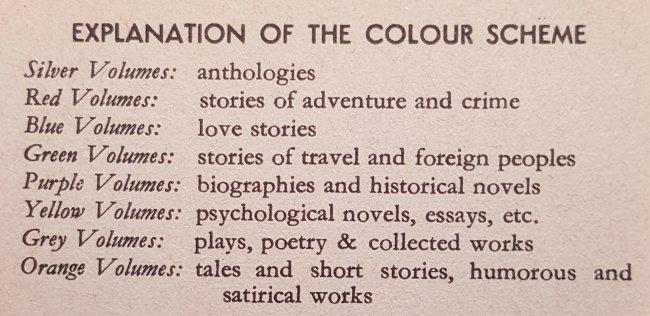
As has become clear to anyone reading my blog for a while I collect Penguin Books and have over 3,500 of them so Albatross are a logical side collection. The inspiration for Penguin Books was partly due to the press being named after a bird but mainly for the cheap but smart editions which are colour coded by subject matter, something that Allan Lane immediately adopted for his new enterprise. The chart shown below is from the dust wrapper of Memoirs of a Fox-hunting Man.

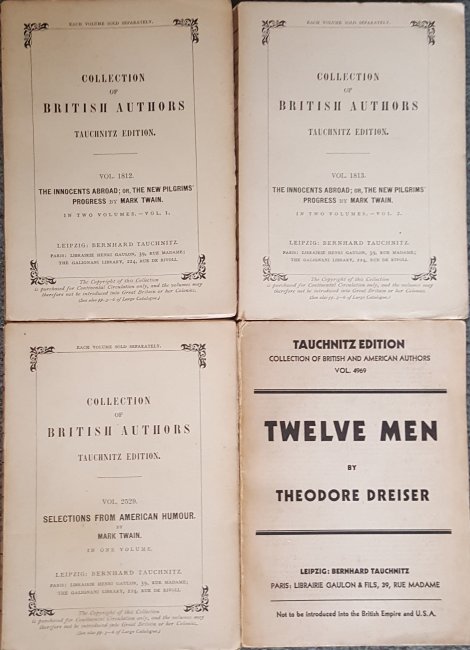
Troy explains the importance of Tauchnitz and if anything volumes from this publisher are even more difficult to find in the UK than Albatross, I just have four, three of which are from 1879 and 1880 and the final one, ‘Twelve Men’ is from 1930 so shows the plain typographical covers that the bright and colourful Albatross were going up against to attract customers.

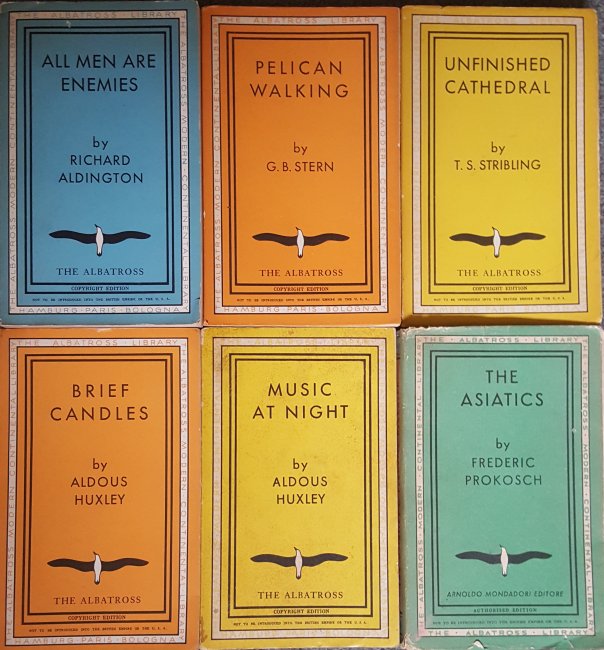
I have managed to accumulate twenty three Albatross books, so roughly one a year since I started looking for them, and their immediate attraction is obvious even if the standardisation of colours is sometimes poor to say the least. Both ‘Journal’ and ‘The Arches of the Years’ are purple and ‘Journal’ isn’t faded as it is that shade on the spine and rear cover as well.

  • 16 – The Brothers printed in Italy in 193?
  • 19 – Ambrose Holt and Family printed in Germany in 1932
  • 31 – Apocalypse printed in Germany in 1932
  • 32 – The White Peacock printed in Germany in 1932
  • 52 – Journal printed in Germany in 1933
  • 203 – The Arches of the Years printed in Germany in 1934
  • 216 (Extra Volume) – All Men are Enemies printed in Germany in 1934
  • 236 – Pelican Walking printed in Germany in 1934
  • 240 – Unfinished Cathedral printed in Germany in 1934
  • 247 – Brief Candles printed in Germany in 1935
  • 260 – Music at Night printed in Germany in 1935
  • 310 – The Asiatics reprinted in Italy in 1947
  • 317 (Special Volume) – The Weather in the Streets reprinted in Italy in 1947
  • 326 (Extra Volume) – Aaron’s Rod printed in Germany in 1937
  • 359 – The Bridge printed by Collins in Scotland in 1938 as Les Editions Albatros, Paris
  • 377 – Juan in China printed in Germany in 1938
  • 390 (Extra Volume) – The Letters of D.H. Lawrence printed in Germany in 1938
  • 514 – Grandma Called it Carnal printed in Italy in 1947
  • 551 (Special Volume) – Operation Neptune printed in Holland in 1947
  • 556 (Special Volume) – English Saga printed in Holland in 1947
  • 558 – Siegfried’s Journey printed in Holland in 1947
  • 4802 – Lord Jim printed in Italy for Librairie Marcel Didier in 1947
  • 4975 – Memories of a Fox-Hunting Man printed in Italy for Librairie Marcel Didier in 1947

The massive leap in the numbering scheme for the last two books should not be taken to show thousands of new titles suddenly being released. Rather I suspect that this is to keep the Librairie Marcel Didier volumes well out of the numbering scheme of the existing Albatross Press books. Penguin did something similar when launching Penguin Inc in America during the war and starting their book numbering at 500. Penguin Inc’s managing director was Kurt Enoch having escaped the Nazi’s so this was his second publishing venture. In 1948 following disagreements with Allen Lane back at Penguin headquarters in England Penguin Inc was dissolved and Enoch started again with his third publishing firm this time as Signet and Mentor. As for the Extra and Special Volumes these are normally significantly thicker than ‘normal’ volumes and presumably had a higher price although 558 Siegfried’s Journey is a normal size so maybe Special Volumes had a different rule.

But why Albatross? Holroyd-Reece had several explanations but the one I find most persuasive is because the word is similar in a lot of European languages: Albatros in Catalan, Czech, Danish, Dutch, French, German and Spanish amongst many others, Albatro in Italian, Albatrosz in Hungarian and surprisingly Albatross in Estonian and those last two languages I know from personal experience are normally miles away from English. I’m still on the lookout for more volumes from The Albatross Press and have even added a sideline of want to be Albatross books including the Italian Corvi press, which is undated but numbered 4 in the series and looks to be from the 1930’s. This is a true polyglot of a title as it is a biography of a British Prime Minister written by a French politician and translated into Italian. Alongside is a book I picked up earlier this year in Budapest which is much later, 1979, but is clearly inspired by Albatross design and in this case is written in Hungarian but published in Bucharest, Romania. Fabre was a French naturalist and this is a translation of one of his books about insects.

All in all The Albatross Press produced some very attractive books from a wide range of significant authors so are well worth looking for and are a pleasant surprise when you do find one on a shelf in a second hand bookshop. As Michelle Troy’s incredibly well researched book proves they also had a fascinating history behind them.

The Symposium – Plato

Like the situation with Hilaire Belloc’s works in last weeks blog entry I have several books by Plato but have never read them so he was an obvious choice for this week. Regarding the title, apparently a symposium meant something very different in ancient Greece to the way we use the word today. Nowadays a symposium would be “an occasion at which people who have great knowledge of a particular subject meet in order to discuss a matter of interest” but the ancients saw it as a drinking party held after a meal usually with musicians present. However in the case of the one described by Plato in this work the flautist is dismissed before starting to play and each person there is asked to give a short talk on a topic decided by the host, specifically the god of Love. It soon becomes clear just what different social mores the ancient Greeks lived by than we do today. Let’s take an extract from one of the early speeches:-

There can be no doubt of the common nature of Love which goes with the common Aphrodite; it is random in the effects it produces, and it is this love which the baser sort of men feel. It’s marks are, first, that it is directed towards women quite as much as young men; second, that in either case it is physical rather than spiritual; third, that it prefers that its objects should be as unintelligent as possible, because its only aim is the satisfaction of its desires, and it takes no account of the manner in which this is achieved. That is why its effect is purely a matter of chance and quite as often bad as good. In all that it partakes of the corresponding nature of its goddess, who is far younger than her heavenly counterpart, and who owes her birth to the conjunction of male and female. But the heavenly Aphrodite to whom the other Love belongs for one thing has no female strain in her, but springs entirely from the male and for another is older and consequently free from wantonness. Hence those who are inspired by this Love are attracted towards the male sex, and value it as naturally the stronger and more intelligent. Besides even amongst the lovers of their own sex one can distinguish those whose motives are dictated by this second Love, they do not fall in love with mere boys, but wait until they reach the age at which they begin to show some intelligence, that is to say until they are near growing a beard.

Extract from the speech by Pausanias in The Symposium by Plato

Yes the Love discussed by the various participants in this symposium is homosexual and specifically that between men and adolescent boys. I knew that the ancient Greeks were keen on pederasty but had no idea how much it was regarded as superior to relationships between men and women before reading this work. Speaker after speaker continues to praise the theme of ‘The Lover’ (a virile adult male) and ‘His Beloved’ (an adolescent boy or possibly young adult male) and denigrates love between men and women as clearly inferior until we at last reach the last speaker, Socrates. Not that he contradicts the previous speeches, but he does instead look to establish the nature of the God of Love himself and what the nature of love and desire is. It is worth mentioning that those men that take a particularly young boy as their Beloved are not rejected out of hand, but it is not regarded as such a high love as those that wait until the boy is fourteen or fifteen years old.

After Socrates has finished and at the very end of the book, a very drunken Alcibiades bursts in to the gathering and requests to be included, but then notices Socrates and becomes agitated as he regards himself as having been grossly insulted by him in the past. The nature of this ‘insult’ becomes clear when he is encouraged to speak in praise of Socrates and it turns out that he had so wanted to become Socrates’ Beloved that he invited him to his home several times in an attempt to seduce him. Socrates however clearly values intellectual over physical interactions and had rebuffed his attentions each time.

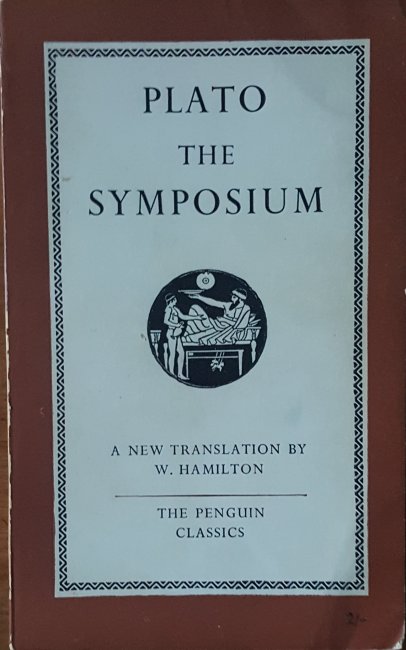
The problematic subject of the book is particularly an issue due to when my edition was published by Penguin Books, i.e. 1951, so sixteen years before the Sexual Offences Act of 1967 which legalised sex between men (although definitely not between men and boys) was passed in the UK. It is therefore highly doubtful that a contemporary work dealing with the same subject would have been permitted and not banned under the Obscene Publications Act even though no homosexual acts are actually described in the book. Indeed in the introduction to the book, presumably written by the translator, Walter Hamilton, although not ascribed to him he writes:-

we must first face a fact which is so repugnant to the orthodox morality of our own times that there is a serious risk of it destroying the value and pleasure of The Symposium for many readers. The love with which the dialogue is concerned, and which is accepted as a matter of course by all the speakers, including Socrates, is homosexual love; it is assumed without argument that this alone is capable of satisfying a man’s highest and noblest aspirations, and the love of man and woman, when it is mentioned at all, is spoken of as altogether inferior, a purely physical impulse whose sole object is the procreation of children.

As is my usual habit I didn’t read the introduction until after I had completed the text, I don’t like the spoilers which are invariably included in this section and this would have been a big one. Walter Hamilton was master and honorary fellow of Magdalene College, Cambridge and translated several books of ancient Greek for Penguin Books, I have enjoyed this translation as it was very readable so I’ll definitely be pulling other works he has translated off my shelves for future blog entries.