Sherlock Holmes – Arthur Conan Doyle – 1

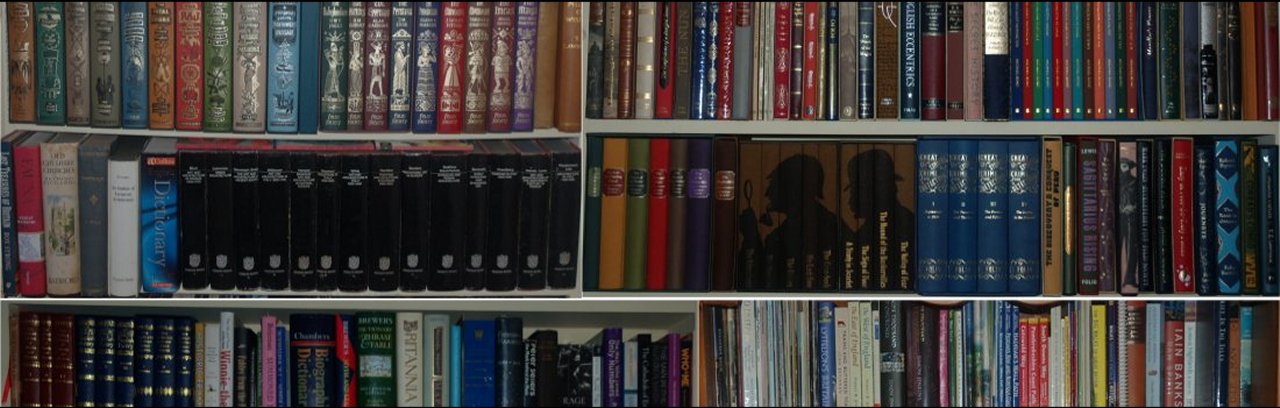
Last August I completed a reading challenge of all ten books in the first Penguin Books crime set from 1938. So this month I have decided to also attempt more than the expected four books by tackling the complete Sherlock Holmes stories by Sir Arthur Conan Doyle as published by The Folio Society. The set consists of five volumes of short stories issued in 1993 and four volumes of novels which came out the following year. The series has a very attractive binding of an offset wrap around design on each book which makes the spines also display the image and appropriately the books are printed using the Baskerville font. My copies are well read and the titles on the short stories are badly worn, although looking at other examples in various bookshops this does seem to be a common feature of this particular edition.

20190806 Sherlock Holmes 1

Now although this looks like a logical reading order in fact Doyle wrote the first two novels “A Study in Scarlet” and “The Sign of Four” before he produced any short stories so in fact a better reading sequence is those books this week, followed by the short stories then finally the last two novels. Although novel number three “The Hound of the Baskervilles” is set during the time of the first two collections of short stories it didn’t actually come out until much later and it doesn’t affect time lines too much to leave the last two novels until the end as they both are looking back on past cases.

As last year I will be writing about each volume as I go along rather than waiting for completion so without further ado lets jump in with the first two novels

20190806 Sherlock Holmes 2

A Study in Scarlet

This is the first appearance of Holmes and Watson and originally appeared in print in the 1887 Beeton’s Christmas Annual before being published in book form in July 1888.

“Dr. Watson, Mr. Sherlock Holmes,” said Stamford, introducing us.

“How are you?” he said cordially, gripping my hand with a strength for which I should hardly have given him credit. “You have been in Afghanistan, I perceive.”

“How on earth did you know that?” I asked in astonishment.

“Never mind,” said he, chuckling to himself.

and so a partnership was born…

The book fairly rattles along, just ten pages in Holmes and Watson are ensconced in 221b Baker Street and Holmes has started his work much to the puzzlement of Watson. The two men are after all just sharing the property there is no indication that Watson would get involved in anything in fact he is specifically looking for a quiet life whilst recovering from his injuries from the war in Afghanistan. Watson however is intrigued as to what Holmes is up to and creates a list of attributes to try to work it out, these include him knowing nothing of literature, astronomy or philosophy, whilst other things such as botany (natural poisons anyway) or geology (soils and clays) were specialised in the extreme. Chemistry and sensational literature however he was a complete master of; none of these items seem to make any sense though.

Another few pages and Holmes again demonstrates his deductive reasoning and explains he is a consulting detective just as he gets a message from Sergeant Gregson of Scotland Yard asking him to come to Lauriston Gardens; Watson joins him and so starts his journals that the Holmes stories are supposedly taken from. The case, to Holmes anyway, is absurdly simple. In fact so simple that by the eightieth page he has apprehended the murderer with the help of his street urchin employees also known as The Baker Street Irregulars, and there is where the book starts to fall apart. For the next fifty two pages are back story. Doyle writes well with the dynamic of Holmes and Watson along with the bungling Gregson and Lestrade from Scotland Yard but over fifty pages without any of these characters whilst he ranges over the settlement of the Mormons in Salt Lake City and the inter-family rivalries just plods along especially after the pace of the first half of the book. It is not even written as though being told to our protagonists it is just an over long history.

We finally get back to Holmes, Watson, Gregson, Lestrade and their prisoner in 221b with just 22 pages left for Watson’s journal to wrap up and the murderer to explain how and why he did it. Very much a book of two halves but with enough promising material regarding the great detective to make a sequel inevitable.

20190806 Sherlock Holmes 3

The Sign of Four

The second time out for Holmes was in the February 1890 issue of Lippincott’s Monthly Magazine issued jointly in the UK and US, and by October of that year it had been published as a standalone book.

Sherlock Holmes took his bottle from the corner of the mantel-piece and his hypodermic syringe from its neat morocco case. With his long, white, nervous fingers he adjusted the delicate needle, and rolled back his left shirt-cuff. For some little time his eyes rested thoughtfully upon the sinewy forearm and wrist all dotted and scarred with innumerable puncture-marks. Finally he thrust the sharp point home, pressed down the tiny piston, and sank back into the velvet-lined arm-chair with a long sigh of satisfaction.

The opening paragraph of The Sign of Four shows Holmes the drug addict, in this case injecting a seven percent solution of cocaine much to the disgust of Dr. Watson. This was turned into a particularly powerful scene in “The Secret of Sherlock Holmes”, a play starring Jeremy Brett and Edward Hardwicke that I saw in 1988 at Wyndham’s Theatre in London’s West End. These two actors, for me at least, are the definitive Holmes and Watson and to see Brett as Holmes in silhouette at the back of the stage injecting into his arm before the lights were cut at the end of the scene is a dramatic act that has stayed with me for over 30 years.

As for the book itself it is much better written than the first although there is again a large section of back story at the end. This time it is much shorter than in “A Study in Scarlet” and rather than being a standalone tale it is given as Jonathan Small telling his involvement in the crimes at 221b Baker Street with Holmes, Watson and in this case Athelney Jones of the Yard. This is a considerable improvement as the three can react to Jonathan Small’s story and there is no massive disjointed section. This is also the first appearance of probably the most famous Holmes quote

How often have I said to you that when you have eliminated the impossible whatever remains, however improbable, must be the truth?

Still back to the beginning, Dr. Watson is trying to draw Holmes away from the cocaine over breakfast the next day when a young lady by the name of Miss Mary Morstan arrives and lays out a singular problem for the great man. Her father had returned to England eleven years ago and disappeared without trace however each year for the last six she has received a fine pearl from an anonymous benefactor and now she has had a letter from him desiring her to be at the Lyceum theatre and she can bring two companions. Naturally Holmes and Watson are willing to go but for very different reasons, Holmes to solve a puzzle but Watson has fallen for Miss Morstan almost immediately and in this state would do anything for her.

Without giving away the plot, the pearls are quickly revealed to be part of a large treasure and in searching for the remainder Holmes engages the use of a scent hound to follow a creosote trail left by one of the culprits from a house in Norwood after he stepped in some of this highly pungent liquid, and this provides one of the few bits of genuine humour in the books as the dog getting confused by crossing trails eventually comes to its mark…

On the dog raced through sawdust and shavings, down an alley, round a passage, between two wood-piles, and finally, with a triumphant yelp, sprang upon a large barrel which still stood upon the hand-trolley on which it had been brought. With lolling tongue and blinking eyes, Toby stood upon the cask, looking from one to the other of us for some sign of appreciation. The staves of the barrel and the wheels of the trolley were smeared with a dark liquid, and the whole air was heavy with the smell of creosote.

Sherlock Holmes and I looked blankly at each other, and then burst simultaneously into an uncontrollable fit of laughter.

Another funny passage occurs with Watson attempting to take Miss Morstan’s mind off the danger they may be in with some of his tales from Afghanistan.

To this day she declares that I told her one moving anecdote as to how a musket looked into my tent at the dead of night, and how I fired a double-barrelled tiger cub at it.

His tongue-tied behaviour is somewhat explained at the end of the book when less than a week after first meeting her he explains to Holmes that he will no longer be available to accompany him on adventures as

Miss Morstan has done me the honour to accept me as a husband in prospective.

Next week I start on the short stories first printed in The Strand Magazine between 1891 and 1893. Will Watson still be living with Holmes or are he and Mary setting up home together with him merely reporting from the sidelines?

Under the Frog – Tibor Fischer

a béka segge alatt

translation from Hungarian
Under the frogs arse – which indicates that things are really bad

20190723 Under the Frog

November 1955

It was true that at the age of twenty-five he had never left the country, that he had never got more than three days march from his birthplace, no more than a day and a half of horse and carting or one long afternoon’s locomoting. On the other hand, Gyuri mused, how many people could say they had travelled the length and breadth of Hungary naked?

The opening paragraph of Under the Frog  raises a few questions. I first read the book whilst working in Hungary in 1995 just six years after the fall of the Iron Curtain, and whilst Hungary then was a lot better than when I originally visited in 1987 when it was still very restricted, away from Budapest (which is where I was) it still felt very different. I have come to know and love the country over the decades both from working there and also visiting friends since that time but I haven’t picked this book up again in twenty four years. It will be interesting to see how my reactions to it have changed. Back then I didn’t know much Hungarian history and this was to be the first book that really awakened my interest in that subject. But what little I did know was that less than a year after that paragraph is set roughly two thousand five hundred Hungarians would have died in a failed revolution and many more than that had been imprisoned for their actions so just what is going on in that paragraph?

After the first chapter the book leaps back to 1944 and then progresses to the disasters of 1956. Tibor Fischer was born in England in 1959 to Hungarian parents that had managed to escape in 1956 and this, his first novel, takes his parents background as Hungarian basketball players as a means of informing his text. His mother was captain of the national team and his father was also a quality player, whilst Gyuri and his fellow misfits that we follow through the novel play for the Locomotive team in the Hungarian first division.

Like last week’s book, Lolly Willowes, the novel changes significantly about two thirds in although this time it is because there simply isn’t much funny that can be written about the Hungarian revolution of 1956 and Fischer wisely doesn’t try. Up until then however the book is full of often quite dark humour. As far as possible it also seems to be historically accurate, from the invasion of the country by the Russians in 1944 which pushed out the Germans, but did little to improve the conditions of the populace beyond that, to following the development of the communist state after the war. There are several mentions of the AVO secret police which a couple of the characters have unfortunate encounters with during the novel and the general malaise of life under the regime. The chapters headings are all dates as we trace the passage of time via significant events for either the country or more often the characters interaction with each other or the police state until we get back to November 1955 where if things are not actually going well at least they don’t appear to be getting any worse as long as you stay out of the clutches of the AVO.

The final, and longest, chapter is entitled 23rd October 1956 and it certainly starts then with the birth of the revolution but it continues until early November when the Russians totally crushed the nascent republic. Fischer is very good at inserting his characters into the significant moments of the revolution whilst keeping their being there entirely believable. Central Budapest is surprisingly small and easy to walk around so it is highly likely that people did follow Gyuri’s route around the city on the 23rd, being at both the Radio building and also around the fighting surrounding the Corvin cinema. As stated earlier the jokes largely stop here and indeed the tragic aftermath of the fighting is brought more into focus by the contrast with the considerably more jokey style (even when dealing with awful events) that characterises the first two thirds of the book.

I was in Budapest in October 2016 for the 60th anniversary of the revolution, the 23rd is now a national holiday and a few of my pictures can be seen at the end of this blog. Sadly it would be another thirty three years before the Russians went home as painted on the side of the car and the oppression would if anything be worse in the years immediately after 1956. It’s a very good book and it won’t be another twenty four years before I read it again. Under the Frog was, in 1993, the first debut novel ever to be nominated for the Booker Prize and made it to the shortlist of five before losing to Paddy Clarke Ha Ha Ha by Roddy Doyle.

This slideshow requires JavaScript.

Lolly Willowes – Sylvia Townsend Warner

A radio programme I listen to regularly is BBC Radio 4’s “A Good Read”, it’s a book programme with a difference as rather than focusing on new works the presenter and her two guests each choose a book they like; they then read all three and finally meet up in the studio to discuss them. The last episode in June had novelist Nicci Gerrard pick an odd sounding book, but the title seemed familiar to me and sure enough it is on my shelves. Now from the discussion I have a slight idea as to what happens and it sounds intriguing, from the summary on the radio shows website we get.

Nicci’s favourite is Lolly Willowes by Sylvia Townsend Warner, a novel which takes a surprising turn halfway through and provokes a debate about the merits of sleeping in ditches

What’s not to like with a precis like that so here I go. My copy is the 1937 first Penguin Books edition, the first ever edition was by Chatto and Windus in 1926. It’s still in print although now as a Virago Modern Classic.

20190716 Lolly Willowes

The book tells the story of Laura Willowes, known to her nieces and nephews as Aunt Lolly and starts with the death of her father leading her to move in with one of her brothers and his wife in London. We then take a step back and learn about her childhood growing up in Somerset; her mother had died when she was in her teens and by the time her father died she was twenty eight, still a spinster and showing no signs of being interested in marriage. The Somerset family home would go to her other brother, James, and his wife and Lolly looks to settle into the role of the maiden aunt to both couples children. Life in the London home of Henry, Caroline and their two girls was undoubtedly respectable as befitting the late Victorian period, but also full of dull routine. So it continued for many years, through the Edwardian period and up to the First World War with even that failing to disturb Lolly’s routine much.

All begins to change in the winter of 1921 when Lolly whilst out shopping has ‘a revelation’, she is now forty seven and she needs a complete change out of London and back to the countryside. She buys a guidebook and map and announces that evening at a family get together that as the children are all grown up, she isn’t needed any more so she is moving to Great Mop in the Chilterns. Upon this apparently random decision the book pivots.

There are hints soon after she arrives about what is going on in the village, groups of villagers standing around in groups late in the evening, the fact that the place is strangely quiet after that. But she soon fits in to village life however without feeling that she is fully accepted. The arrival of her, now grown up, nephew further upsets her hopes of fitting in by his decision to also move to Great Mop.  But one evening Lolly finds a kitten in her room at her lodgings and suddenly her landlady wants to go for a walk late that evening and takes her to a remote field where most of the rest of the villagers can be found dancing and enjoying a witches sabbath.

Lolly realises that she also is a witch and that must have been what drew her to the village with the help of Satan who appears to her in the guise of a gamekeeper and also a gardener during the rest of the book. Now you can read the book as a mystical adventure but it really is a feminist novel about a woman finding herself and escaping her fusty background. She gets her independence from the family to whom she will always be just dependable old Aunt Lolly and realises just what she can become. In the last twenty or so pages where she is discussing this with Satan you could, apart from the setting obviously, be reading from works by the great feminist writers such as Virginia Woolf’s A Room of One’s Own. I’ll finish with an extract where Lolly is describing the position of women at the time which gives a good example of the quality of the writing as well.

women living and growing old, as common as blackberries, and as unregarded. I see them wives and sisters of respectable men, chapel members and blacksmiths. and small farmers and puritans…
Well there they are, there they are, child rearing, home-keeping, hanging washed dishcloths on currant bushes; and for diversion each other’s silly conversation, and listening to men talking in the way men talk and women listen. Quite different to the way women talk and men listen, if they listen at all. And all the time being thrust further down into dullness when the one thing that all women hate is to be thought dull. And on Sundays they put on plain stuff gowns and starched white coverings on their heads and necks – the Puritan ones did – and walked across the fields to chapel. and listened to the sermon. Sin and Grace and God and the – (she stopped herself just in time) and St Paul. All men’s things like politics and mathematics. Nothing for them except subjection and plaiting their hair. And on the way back they listened to more talk. Talk about the sermon, or war, or cock-fighting; and when they got back there were the potatoes to be cooked for dinner. It sounds very petty to complain about, but I tell you, that sort of thing settles down on one like a fine dust, and by and by the dust is age, settling down.

Don’t Tell Mum I Work on the Rigs – Paul Carter

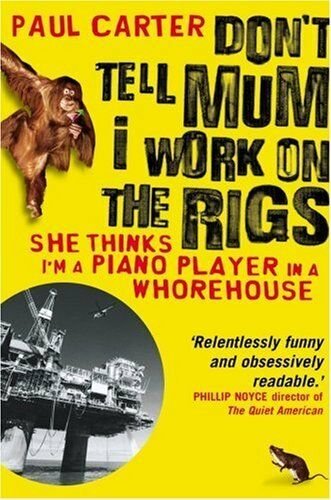
Or to give the book its full title “Don’t Tell Mum I Work on the Rigs: She Thinks I’m a Piano Player in a Whorehouse”. A series of real life stories of life on oil rigs around the world in some of the most dangerous places you could ever hope not to go to.

20190709 Don't tell Mum I work on the Rigs

Carter has written a really funny summary of some of his exploits in fifteen years working on oil rigs around the world and the scrapes he has got into whilst doing it. The book has a prologue with an extract from chapter nine which has him in business class on a scheduled flight from Port Moresby in Papua New Guinea; unfortunately with Amoebic Dysentery which strikes just after take-off. Now there is definitely nothing inherently funny about an explosive attack of dysentery, especially in a crowded aeroplane, but the way he writes about it is so vivid that you cannot help laughing at the situation.

The first chapter relates to his childhood and initial links to oil, He had a rough time in his early years with a domineering father who was in the RAF, eventually his mother left him taking the two children with her. She moved the family to Aberdeen and got a job in the oil industry where she would meet her second husband and subsequently got posted to Australia which is where Carter spent his adolescence and eventually some dead end jobs but he wanted to work on rigs. Ironically after his father left the RAF he also started working on rigs and Carter would sometimes meet people who had worked with him. As he says the work is all over the world but the actual people doing the work form a surprisingly small community and there are regular characters that keep turning up no matter where he is working.

In amongst the stories about offshore and land rigs, crazy holding accommodation and the horror stories you also get to learn a little about the oil business and definitely a lot about why being involved may be lucrative but also extremely dangerous. Carter has worked on all sorts and after proving his abilities has been freelance for four years at the time he covers in the book. He is obviously good enough at what he does to be wanted by numerous companies no matter what type of rig is involved.

20190709 Don't tell Mum I work on the Rigs 2

We go on a bounce around the world starting in Australia with a land rig in the Western Australia goldfields back in the early 1990’s where he learnt the trade as a labourer, or roughneck, and worked his way up and then mainly in the Asian oilfields. Apart from the dysentery, and the local wildlife trying to kill you this was relatively safe until it got to time away from the rig when men who work in a dangerous and frequently deadly job chill out by doing dangerous and sometimes deadly ways of not being at work. The wilder the country the more dangerous it was, not just from the locality but also the often poorly maintained equipment such as ancient helicopters.

Every time I read Upstream, an oilfield newspaper, there’s an article like this

Bumfuck Nowhere: all nine passengers and crew died yesterday, when a twelve seater Sikorsky helicopter operated by Doom Air crashed in a really big ball of flames shortly after take off from Bumfuck Nowhere regional airport. Witnesses say the helicopter fell for, oh wow, ages before vaporising into the jungle at 1592 miles an hour.

He also worked the Gulf and South America but the stand out awful places were Russia which  was cold, so very cold and really primitive and worst of the worst Nigeria which was so dangerous to work in that getting out alive was regarded as a bonus. Nowhere in Nigeria was without armed guards when not on the rig especially on the trip to and from the airport, his two predecessors for the job he had there had both been killed by fake taxi drivers before they had even made it to the camp for the first time.

But it’s not just about the oilfields you also get the ups and downs of his personal life and the surprising sideline he ended up doing which was in advertising in Sydney in his downtime between jobs. This is probably what honed his way with words and makes the book such a pleasure to read.

This is not a book for the easily shocked or offended, but you probably guessed that from the prologue so at least you have been warned. I loved it and need to get his follow up “This is Not a Drill”

Steve Smith’s men – Geoff Lemon

20190625 Steve Smith's Men

The moment you pick this book up you notice the texture of the printed title, it looks and feels like the sandpaper that caused all the trouble and the crash and burn of Australian cricket in South Africa that March day in 2018. Geoff Lemon has covered the team for many years and this is his analysis not just of what happened in Cape Town but also just how did the Australian national team come to be in this mess in the first place. However as Lemon points out at the start of chapter three

This book is not a detective story. It won’t give you every detail of what happened in the Cape Town dressing rooms…

… Only once careers finish will talk begin. Someone can write the comprehensive history then.

What Lemon does do is look deeply at the team and make as good attempt as can be done now as to what happened and why.

For those people who don’t know the background to this, Cameron Bancroft was seen rubbing the ball with sandpaper to roughen it and make it swing more during the Test Match against South Africa. More details can be found on the BBC website here which details the bans given to Bancroft and also the captain Steve Smith and his vice-captain David Warner after this incident.

However this isn’t just about cricket it is also a look at the psyche of a team that formed an effectively closed group and how harmful attitudes were just amplified as there was nobody from the outside to point out how the worst things became normal and then continued on a downward spiral egged on by certain members. As such it can be read as a useful resume of just how groups can deteriorate if left to their own devices. As Lemon points out the team became self selecting, performance on the field became secondary to being mates and being seen to fit the culture that had been created. At times it reads like a real life Lord of the Flies, and just as self-destructive, no matter how good you were you wouldn’t get in the national team unless you were one of the gang and that gang was so tight knit that they rejected all suggestions that things might be wrong.

Things had been going wrong for years and Lemon looks back over that time not just at the team but also at the governing body, Cricket Australia, to try to track why Australia had become the most disliked team in world cricket. Chapter 21 “Australia’s Cricket Culture” starts with five pages of quotes all riffing on the theme that they “never cross the line” meaning that they play hard but not beyond limits, the problem was that the Australian team wanted to set the limits and wanted them further in the distance for them than their opponents. Although stressing that this was a much older problem Lemon decides to focus of the England tour of Australia over 2017/8 to emphasise the build up to the South African debacle. This was a pretty bad tempered few months with Australia emerging the clear victors so they should have gone to South Africa on a high especially given their record in that country, but things started to go wrong soon after they arrived at the first test match. The sledging on both sides was distinctly unpleasant, Warner had taken considerable offence to references to his wife and this had led to a fight almost breaking out after they left the field which unfortunately was caught on camera. That it was Warner, who is probably the nastiest sledger in world cricket, who took offence is ironic in the extreme but that set the tone for what was to come. The Australians claimed that the attempt to alter the ball in the third test was the first time it had been done but nobody believed them so the one caught along with the captain and vice captain had to go, not because of the cheating, but because they were caught out telling bare-faced lies that just kept the story going. If they had just held a press conference at the end of the day and admitted to what had been done then there would have been fines from the match referee but probably not much more.

The book is not only incisive but funny and difficult to put down, the one problem with it getting a wider readership may well be the frequent use of expletives, the ‘f’ and ‘c’ words appear a lot. Now that isn’t necessarily a bad thing, Lemon is trying to show where things had got to and on-field abuse hurled at the opposition, known as sledging, is often quoted verbatim and this may put off some readers. I think he was justified in the use of language because of the story he is trying to tell and it is a thoroughly good read.

An Old Man’s Love – Anthony Trollope

Twenty years or so ago I collected all forty seven novels plus the autobiography of Anthony Trollope in the lovely edition printed by the Folio Society which was the first ever complete edition to be illustrated. These are now long out of print but can still be obtained easily on the second hand market. I admit to having bought them far faster than I have ended up reading them in order to complete the set at the time. I have now read over half but have decided for the purpose of this blog to tackle his final work of fiction, completed before he died in 1882. He was still working on The Landleaguers which was published as an unfinished work in 1893 oddly before An Old Man’s Love which didn’t actually get published until 1894. Both of these are amongst his less well known works, indeed I cannot find an edition of An Old Man’s Love currently in print. Trollope suffered a decline in popularity towards the end of his life and it took sixty or seventy years before his reputation as a great Victorian novelist was restored but even so only about half of his novels are read to any extent today.

20190611 An Old Man's Love

The vast majority of An Old Man’s Love is written as as you would expect although there are passages where the author is talking directly to the reader and Trollope can get quite chatty as in the opening paragraph to the third chapter when we are properly introduced to The Old Man’s love interest.

There is nothing more difficult in the writing of a story than to describe adequately the person of a hero or a heroine, so as to place before the mind of the reader any clear picture of him or her who is described. A courtship is harder still—so hard that we may say generally that it is impossible. Southey’s Lodore is supposed to have been effective; but let any one with the words in his memory stand beside the waterfall and say whether it is such as the words have painted it. It rushes and it foams, as described by the poet, much more violently than does the real water; and so does everything described, unless in the hands of a wonderful master. But I have clear images on my brain of the characters of the persons introduced. I know with fair accuracy what was intended by the character as given of Amelia Booth, of Clarissa, of Di Vernon, and of Maggie Tulliver. But as their persons have not been drawn with the pencil for me by the artists who themselves created them, I have no conception how they looked. Of Thackeray’s Beatrix I have a vivid idea, because she was drawn for him by an artist under his own eye. I have now to describe Mary Lawrie, but have no artist who will take the trouble to learn my thoughts and to reproduce them. Consequently I fear that no true idea of the young lady can be conveyed to the reader; and that I must leave him to entertain such a notion of her carriage and demeanour as must come to him at the end from the reading of the whole book.

But the attempt must be made, if only for fashion sake, so that no adventitious help may be wanting to him, or more probably to her, who may care to form for herself a personification of Mary Lawrie.

And so he continues to give a basic description of the young lady who finds herself an orphan and is taken in to the home of Mr Whittlestaff, initially as an act of kindness because he was a friend of the family and she had nowhere else to go. At the start of the book Mr Whittlestaff is fifty and Miss Lawrie is twenty five although we quickly leap about a year and a half to two years so that she is well settled in the house and Mr Whittlestaff decides to ask her to marry him. Now this she is willing to do, although in truth she loves another, a certain John Gordon who vanished from her life three years earlier without actually declaring his love for her but promising to one day return. Then, on the very day that she agrees to her engagement to William Whittlestaff, John Gordon does come back and arrives at Croker’s Hall intending now that he has made money in South Africa to ask her to marry him.

All this has occurred in the first forty or so pages of the book and so the stage is set for the rivalry between the two men for the hand of Miss Mary Lawrie which is to be played out in the grounds of Victorian manners. Some of the characters favour her becoming Mrs Whittlestaff and yet more favour Mrs Gordon and none are shy about coming forward with their opinion even in front of the three main characters. There are numerous twists and turns before the final conclusion and there is also a sub-plot concerning the housekeeper at Croker’s Hall and her drunken husband which also needs to be resolved in the 172 pages so there is a lot going on considering the relative shortness of this book in the grand scheme of Victorian novels.

Romance is not normally a genre that I would choose to read but I definitely enjoyed this story and whilst Trollope is clearly not at the height of his powers as he was in The Chronicles of Barchester books or the Palliser series, both of which consist of six novels each, it is well written and draws you into the tale of the love triangle.

Hansel and Gretel – Simon Armitage

This was not the book I expected to be writing about at the beginning of June as the publication date is not until the 24th of this month, but on the 31st May a wonderful package arrived and I couldn’t help abandoning what I had been reading and starting on this beautiful volume straight away.

20190604 Hansel and Gretel 1

Simon Armitage has just been made the Poet Laureate for the next ten years and this is therefore his first newly published work since that honour. The poem originally appeared as a ‘libretto’ to a puppet production designed and directed by Clive Hicks-Jenkins which toured England between July and November 2018 but this is its first book publication.

You can see the entire production with the darkly appropriate music by Matthew Kaner, performed by the Goldfield Ensemble here

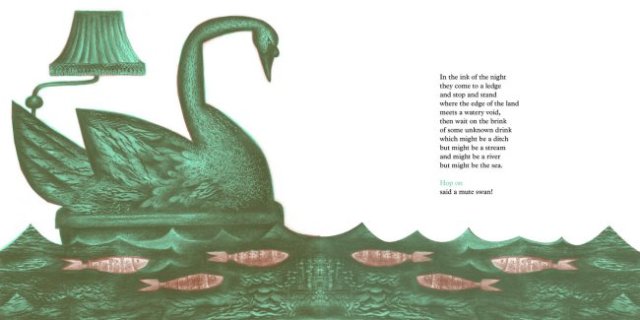
Clive Hicks-Jenkins has produced a wonderful series of illustrations for this book published by Design For Today. These are clearly based on the theatre production without being limited by his original work.

20190604 Hansel and Gretel 3

The subtitle of the poem is ‘A Nightmare in Eight Scenes’ as the Hansel and Gretel story has been re-interpreted as a modern tale of refugees from a war zone. Without giving too much away the family are starving as the bombs rain amongst them at the start of the book and the parents decide to at least get the children away from there to somewhere where they stand more chance of survival. Hansel and Gretel though mishear their parents planning and think they are simply to be abandoned. This is not the only time that mishearing becomes a plot device in the poem.

As in the original Brothers Grimm tale there is a ‘witch’ and a gingerbread cottage, a trail of stones, a trail of breadcrumbs and abandonment to avoid famine followed by a return only this time without the treasure that would lead to a happy ending. In the modern world of war meted out against helpless civilians there is rarely a happy ending…

The illustrations fit the text so well and the design of the book is beautifully done. I particularly like the colour coding of the words so that you know who is speaking, each character has their own colour as specified in the cast list at the start.

20190604 Hansel and Gretel 2

Oddly I’d never read any Simon Armitage before this but I will definitely be seeking out more of his work. According to his website there are a lot of books to check out

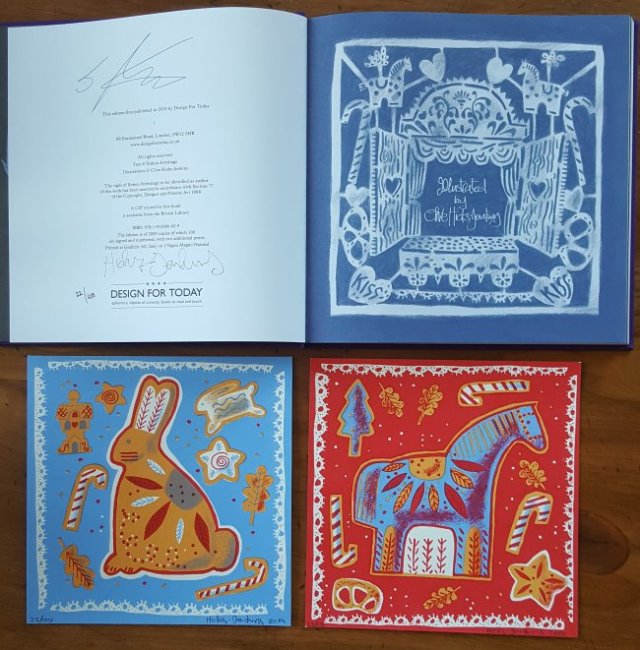
The total production run of this book is two thousand copies, of which one hundred form a further limited edition signed by Simon Armitage and Clive Hicks-Jenkins and which include two extra art prints. Mine is copy number twenty two.

20190604 Hansel and Gretel 4

My Name Escapes Me – Alec Guinness

20190528 My Name Escapes Me

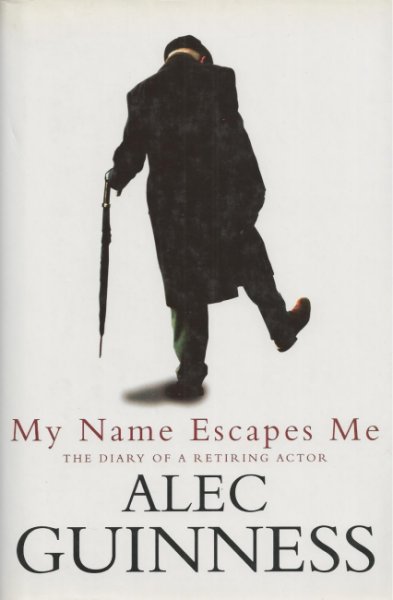
Subtitled “The diary of a retiring actor” this book takes us from the 1st January 1995 to the 6th June 1996. 1995 is treated rather episodically with large gaps in the diary but there are much more frequent entries for 1996 at least as far as that year goes. The book is quite a gentle read, ideal for a quiet afternoon where you just want something to entertain rather than educate. Guinness is in his eighties by the time he wrote this and effectively has retired although he does do a couple of very small parts for films and a short voice-over during the 18 months of the diary.

There are the expected reminiscences scattered through, not just of stage and screen but also of his conversion to Roman Catholicism forty years earlier. Through most of the book his wife Merula is having problems getting about leading to hip surgery and a long slow recovery and he clearly dotes on her, with various changes of plan wrapped around her current health. He is an inveterate name dropper and chides himself several times in the diary for long convoluted stories he tells at dinner parties probably boring everyone else in the process, a habit Merula sometimes curtails by commenting, with the punchline that he is slowly working up to, during the story. People expect actors, especially ones of his seniority, to be able to talk in public but Guinness is quite clear several times that having him give a speech is doomed to failure from the start, it always has been and age has not improved his ability.

One running commentary relates to the Star Wars films and the fan mail, usually with photographs they want signing that he gets all the time.  As in this entry from 16th December 1995 which gives a good flavour of the style of the book.

Today I have felt querulous. Behaviour has been spiky; largely due, I think, to our affable postman dutiful pushing piles of junk mail through the letterbox daily. It gets worse near Christmas. The rubbish, the charity appeals (often in duplicate) and worst of all, the photographs from Star Wars demanding autographs. They mostly come from America and as often as not enclose a stamped addressed envelope – the stamps being US stamps are useless her. The English usually make their demand without photograph, envelope, stamp or money. The nation has got acclimatized to asking something for nothing. Bills in the post are welcome in comparison. It’s mean and hard of me but from 1 January 1996 I am resolved to throw it all in the waste bin unopened (bills excepted, of course); I no longer have the energy to assist teenagers in their idiotic, albeit lucrative, hobby.

He makes a good point here, that a lot of the signed pictures are probably destined for Ebay or some such autograph trading site, where they would make a significant profit for the person who sent them and that is the reason for the contact in the first place. This is something that Sir Terry Pratchett was also somewhat wary of, threatening to sign any book where no dedication was requested “To Ebay purchaser”. Terry does actually make a slight appearance in the book in the 13th June 1995 entry where Guinness praises the Jungle Quest episode from the previous night which featured Terry and his PA Rob in Borneo with Orang Utans.

The diary ends on the 56th birthday of their son Matthew (also an actor) soon after a much needed holiday at Lake Como, not just to mark his birthday but also the anniversary of the Normandy invasion in 1945. Guinness was in the opposite side of Europe, in Italy, at the time having taken part in the attacks on Sicily and Italy several days before, designed not only to take that area but also to divert German military forces away from Dunkirk.

It’s a good read, if a little light, and has an excellent index which reveals that Alan Bennett is mentioned twelve times, The National Theatre four times whilst the National Lottery gets five. Shakespeare or his plays are name checked forty five times whilst the second highest is his wife Merula at twenty nine (although much longer entries) and third comes dogs at twenty one times. I think this says a lot for his priorities. Sir Alec Guinness died in August 2000 and Merula only lived another couple of months afterwards.

The Plagiarist in the Kitchen – Jonathan Meades

I first came across Jonathan Meades through his highly idiosyncratic TV documentaries where he was always dressed as shown on the cover of this volume, all in black with black sunglasses. He would talk direct to the camera whilst totally ignoring something going on behind him or alternatively somebody else would be talking to the camera and he would appear in the background apparently having little connection to what was being said. The films looked spontaneous precisely because they weren’t, everything was tightly scripted and performed with an artifice unique to Meades. The person on screen was not Meades as he really was it was Meades acting a character of himself and presenting the sort of intelligent TV that rarely gets made today. I later found out that The Times newspaper had employed him as a restaurant critic for fifteen years so seeing that in 2017 he had written a cookbook made searching that out imperative. How would the Jonathan Meades I knew and loved from his many programmes approach cooking. The answer, it turned out, was uniquely and also filled with his dry wit, in short exactly as I hoped.

20190521 The Plagiarist in the Kitchen 1

Meades explains the title by stating that all recipes are theft, they all come from somebody, even if you add to or alter them in some way, there is really only so many ways to cook something and they have all been done. This is more than a cookbook it is a cookery philosophy and also assumes that the reader has an understanding of cooking in that a lot of the recipes don’t actually have quantities to the ingredients. The only times that quantities are given is when it is essential to get the balance right such as avoiding a sloppy batter, or getting the right balance of flavours such as with gayettes (French style faggots). Other than that there may be hints, such as don’t use too much celery or carrot in a mirepoix because both can dominate. Some of the recipes can barely be called such.

20190521 The Plagiarist in the Kitchen 2

Simplicity is everything. But when he needs a more complex approach it can also be found here, cassoulet for instance takes four pages, most of which is actually involved with cooking the dish.  What you definitely do get is a healthy dose of advice, such as his instructions for making risotto.

What you do with the rice is more important than where it comes from
What you do is keep patient
What you do is stay put whilst it’s cooking
What you don’t do is slip outside for a gasper with the other snoutcasts
What you don’t do is include wine. It adds nothing

Do not get carried away stirring, cooking is not therapy

One of the joys of the book are Meades epigrams, which can be pearls of wisdom or just plain funny. Just a few from the section on oils will give a flavour of what to expect

  • Extra-virgin might be a desirable quality in nuns … but applied to olive oil it is close to meaningless
  • Various degrees of chastity have spread to other oils
  • Duck fat – Much cheaper than goose fat and virtually indistinguishable.
  • Toasted sesame – Asian dishes are for consuming, not for preparing. It is futile to steal what you can’t understand
  • Beef dripping – Delicious on toast … Good for chips and Yorkshire pudding and anything else that comes from north of the Trent

20190521 The Plagiarist in the Kitchen 3

The recipes are definitely practical and I will certainly be cooking a few with the exception of the fig and ham tart which ends

Leave to cool
Taste
Chuck in bin

This was Meades attempt a creating a dish and as he says the reasoning behind it appeared sound at the start but…

Only the doltishly insentient, the immemoriously recidivist, the sociopathic and the smug regret nothing. I no doubt belong, in this instance, to one of those unhappy categories by not regretting having invented this dish. I do not regret it because it was a warning. Never create when you can steal. Never enter a restaurant that advertises its ‘cuisine d’auteur’ or ‘creative cooking’.

But definitely do read this book.

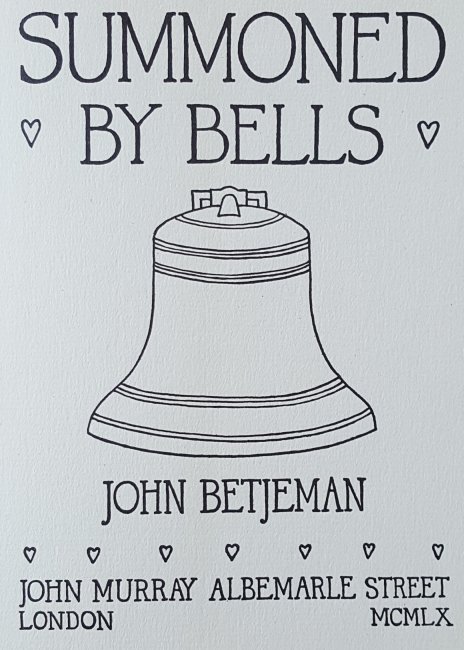
Summoned by Bells – John Betjeman

20190514 Summoned by Bells 1

This autobiography in verse covers Betjeman’s early life from his Edwardian childhood (he was born in 1906) to his university days at Magdalen College in Oxford where he was taught by C.S. Lewis. The book was first printed in 1960 just as Betjeman was getting serious recognition as a poet with a dozen volumes published before this and it is also the year he received The Queen’s Medal for Poetry and was made a CBE. The verse has his characteristic humour but also darker times like describing being bullied at school. It is uncharacteristic also in being, for the most part, blank verse, though he can’t stop himself at times, from adding in some parts in rhymes. The book is split into nine chapters as we follow him growing up.

We start in Highgate where the family had moved when he was three years old, they were clearly relatively well to do as they owned a four wheeled carriage and regularly holidayed in Cornwall. Apart from Maud, his overbearing nurse, who seemed to delight in punishing him for slight misdemeanors he appears to have had a happy childhood up until he went to school. Apart from one traumatic incident that clearly haunted him right up to his fifties when he wrote the lines on just the second page of Summoned by Bells.

Safe were those evenings of the pre-war world
When firelight shone on green linoleum;
I heard the church bells hollowing out the sky,
Deep beyond deep, like never ending stars,
And turned to Archibald, my safe old bear,
Whose woollen eyes looked sad or glad at me,
Whose ample forehead I could wet with tears,
Whose half-moon ears received my confidence,
Who made me laugh, who never let me down,
I used to wait for hours to see him move,
Convinced that he could breathe. One dreadful day
They hid him from me as a punishment:
Sometimes the desolation of that loss
Comes back to me and I must go upstairs
To see him in the sawdust, so to speak,
Safe and returned to his idolator.

His father was the third generation owner of a silversmith and cabinet making business and was very disappointed in John because he refused to carry on the firm and all this is covered in the second chapter of the book. In this edition each of the chapters has a small line drawing by Michael Tree and a brief summary of what will be covered. The description of the workshops for the business in this section and the hours that John spent clearly enjoying himself with the craftsmen employed there made it all the more galling for his father when he later expressed no interest in continuing it

To all my father’s hopes. In later years,
Now old and ill, he asked me once again
To carry on the firm, I still refused.
And now when I behold, fresh-published, new,
A further volume of my verse, I see
His kind grey eyes look woundedly at mine,
I see his workmen seeking other jobs,
And that red granite obelisk that marks
The family grave in Highgate cemetery
Points an accusing finger to the sky.

20190514 Summoned by Bells 3

Chapter three has him at school and being bullied at both his junior schools, he seems unclear why at the first one but at the second his apparently German surname in 1913/4, spelt then Betjemann, led to him being picked on by gangs and having to come up with various routes home to avoid them. Ironically the family was actually originally Dutch and the additional ‘n’ was added when they came to the UK over a century earlier but soon Britain was at war with the Netherlands, so they wanted to appear German. During WWI the second ‘n’ was quietly dropped again. Chapter four and the family is on holiday in Cornwall leading to the start of the young Betjeman’s love affair with railways and the English countryside.

20190514 Summoned by Bells 2

Chapters five and seven describe his private education, first at Dragon preparatory school in Oxfordshire and then Marlborough college in Wiltshire. His time at Dragon appears to have been pretty happy and exploring by bicycle leads him to churches and that other great love of his throughout his life, architecture. Marlborough however was a more difficult time, there are stories of beatings and the prefects birching the boys and terrorising them as a group known to the younger boys as “Big Fire” because of where they sat in the evenings. A boy who had transgressed would be called to “Big Fire” for a beating or sometimes worse. I skipped chapter six which covers being back in London during holidays exploring the London Underground and buying books, the family had moved to Chelsea and the bookshops abounded

Untidy bookshops gave me such delight,
It was the smell of books, the plates in them,
Tooled leather, marbled paper, gilded edge,
The armorial book-plate of some country squire

I’m with Betjeman all the way with those sentiments.

20190514 Summoned by Bells 4

The summary above of chapter eight pretty well covers it, his father is even more dominating than before but now John is big enough to escape and does so on long cycle rides round the area discovering yet more churches.

The final section deals with his years at Oxford, a place he freely admits to doing little or no work at and certainly not studying for his degree. Instead he builds a wide social network which become extremely useful to him in later years

No wonder, looking back, I never worked.
Too pleased with life, swept in the social round,
I soon left Old Marlburians behind.
(As one more solemn of our number said:
“Spiritually I was at Eton, John”)
I cut tutorials with wild excuse,
For life was luncheons, luncheons all the way-
And evening dining with the Georgeoisie

How much of this lack of drive towards his degree was down to the mutual dislike between himself and C S Lewis it is difficult to tell, it’s quite possible that even with a more sympathetic tutor who may have got more out of him he would still have left without a degree. In the poem he blames a failure of the compulsory divinity course but in reality he really put so little effort into his studies that he was never going to pass.

The book is a fun read and so unusual in the use of verse throughout. I first read it many years ago and had forgotten how much I enjoyed it.