Travels of a Victorian Photographer – Selected by Roger Hudson

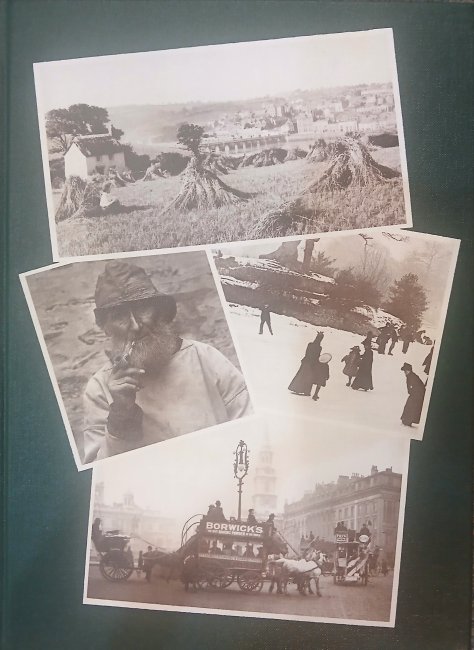
The third and last of this brief series by The Folio Society turned the original concept on its head. Whilst the first two were in turn a book and then a collection of writings both were illustrated by contemporary photographs. This time it is the photographer that is featured and the images are illustrated by selected texts. For me despite the fact that this is supposed to be a book of photographs there simply aren’t enough of them and they are somewhat overwhelmed by the text presumably in an attempt to match the balance of text to images from the first two volumes which is somewhat unfair to the great Francis Frith. With that in mind I have selected six images that I think show what Frith was doing and why he is was important not just for photographing so much that is now lost but for his impact on the developing tourism industry and indeed without ever knowing it, the postal service.
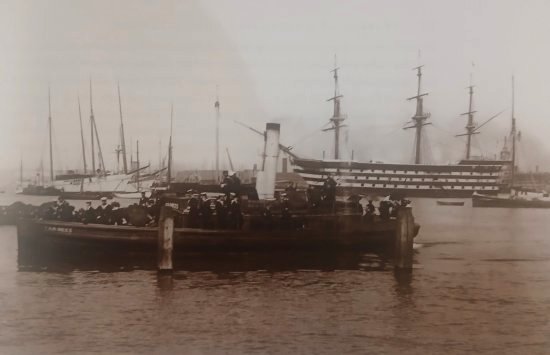
Portsmouth harbour

Fortunately I knew the name of Francis Frith many decades before I read this book as I was a deltiologist (a collector of postcards) from a child and as I got older and took it more seriously was a founder member of The Potteries Postcard Society in Stoke of Trent back in 1983, so I was really looking forward to this book when it came out in 2001 as Francis Frith was a pioneer in the field of souvenir images. Firstly may I apologise for the reproduction of the pictures, the book really didn’t want to lie flat so the sharpness of Frith’s work is sometimes not as I would like with these handheld pictures of the quite glossy pages. Oddly this is in tune with the book itself as despite it being ostensibly a book about him, Francis Frith is only mentioned in the introduction and it is the texts by twenty nine different writers such as Beatrix Potter, Charles Dickens, Francis Kilvert and Henry James that makes up the bulk of the contents so I would like to right that wrong in the next paragraph or two.

Ventnor – The Isle of Wight

Francis Frith was born in 1822 and started his career as a wholesale grocer in Liverpool which was so successful that he could sell the business at the age of 34 and effectively retire as what would now be the equivalent of a multi-millionaire. On the proceeds he started to travel and went to the Middle East and the Holy Land where he indulged his new hobby taking advantage of the very early days of photography which had only been invented in 1839. With the success of selling prints from his work he decided to set up the worlds first photographic business F Frith & Co.and started supplying shops with high quality photographs of their local sites for them to sell as souvenirs, this new business also went on to be wildly successful with Frith employing numerous photographers to travel the UK taking photographs and by 1886 the catalogue listing the images available ran to 670 pages not just of British locations but selections from around the world which Frith bought in to increase the available range. Sadly Francis Frith died in 1896 so never saw the fame his business would achieve when international regulations changed on the layout of postcards in 1902 to allow writing on the same side as the address and the resulting explosion in sending postcards from wherever you went which Frith & Co. were ideally placed to take advantage of with their vast archive..
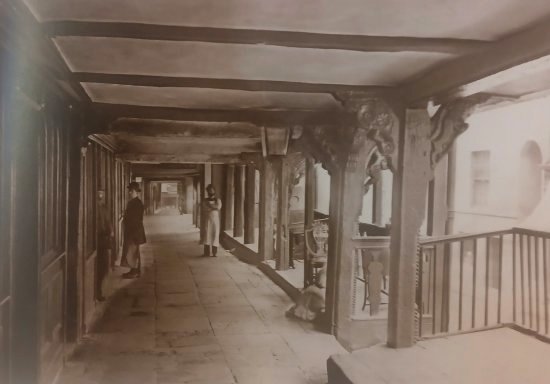
Chester – The Rows

Frith & Co. were one of the leading UK companies in postcard production and there was a good chance that a seaside view postcard sent up until the 1960’s would have the name Francis Frith on it, I know I still have lots. But in 1970 with no family members still involved, and the then managing director about to retire, the decision was made to close the company and that might have been it, indeed the factory was due to be demolished in 1971 and the priceless historical archive of over 300,000 images, a lot of which were on glass plates, destroyed; but fortunately it was saved with just a week to spare before the bulldozers went in and we can still admire the work of Francis Frith to this day, as just ten years ago (2016) the digitisation of this enormous body of work was completed. The last 200,000 photographs were scanned in just two years and they are being cleaned up as and when somebody orders a print which is obviously a more practical way of prioritising the work and photos were still being released to the online archive up until 2023. The physical collection is now housed near Salisbury but the website is available to everyone.
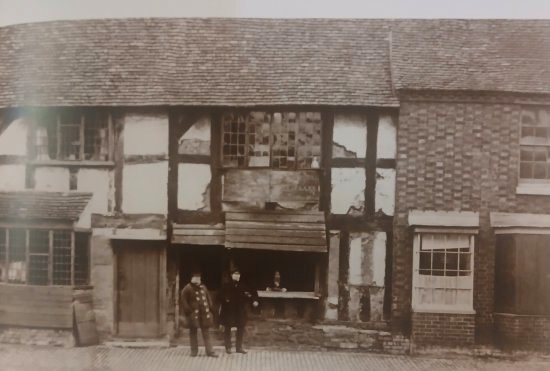
Stratford Upon Avon – Shakespeare’s birthplace circa 1850 before its extensive restoration

As I said the book barely mentions Francis Frith and certainly doesn’t give the prominence due to his work. It is split into counties and Dorset for example occupies thirteen pages on which there are just five photographs and none of those are quite the size of a half page. The rest is mainly given over to sizeable extracts from the novels of Thomas Hardy, apart from a couple of pages quoting from the diary of William Allingham regarding a trip to Lyme Regis with Alfred Lord Tennyson and Francis Palgrave. What it did do though is introduce me to the works of authors I had heard of but never read before and I particularly enjoyed yet another Francis, The Reverend Francis Kilvert, who was a clergyman based near Hay on Wye just over the Welsh border but in this extract from the 1870’s he was down in the farthest south west of mainland England.

After dinner Cept. P. took Miss Lewis and me down to Land’s End, a little triangular point of rock reached by passing round to the seaward side of a tall upright shaft of cliff. The accomplishment of an old dream.
Coming back we met a noisy rabble of tourists, males and females, rushing down the rocks towards the Land’s End as if they meant to break their necks, and no great loss either. The rest of the insufferable snobs had of course been endeavouring to insult the ladies and Capt. Parker suggested that a kicking might tend to mend their manners.

I’ll definitely have to read more of Kilvert’s Diary, it appears to be a lot funnier than I expected, it’s a great pity he died so young.
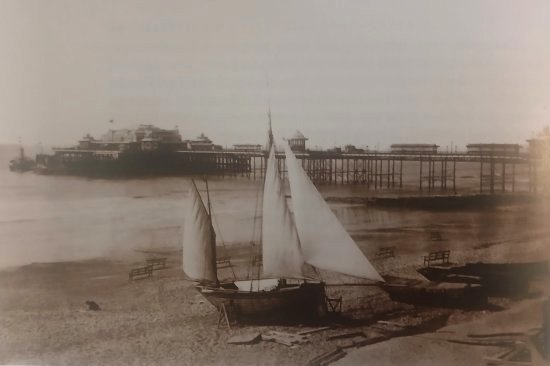
Drying sails on Brighton beach

I suspect that the lack of focus on Frith despite what the average reader would expect from the title is partly what ultimately killed off this short series from The Folio Society after just three volumes and I have greatly enjoyed reading the first two J B Priestley and Sir John Betjeman but I was disappointed by this final volume. So I will finish with a view of The Lake District in north west England as a carriage which had been converted into a mobile darkroom by Frith & Co can be seen, it was probably also temporary living quarters in some of the wilder parts of the UK for the luckless photographer assuming he could squeeze in with the dangerous chemicals and bulky equipment which would take priority for space.
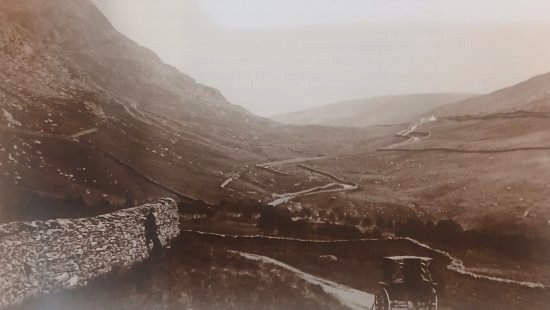
Kirkstone Pass – The Lake District – with one of the Frith mobile darkrooms on the road

Next week I’ll be exploring the capital in another collection of writings selected by Roger Hudson for The Folio Society.
Betjeman’s Britain – selected and edited by Candida Lycett Green

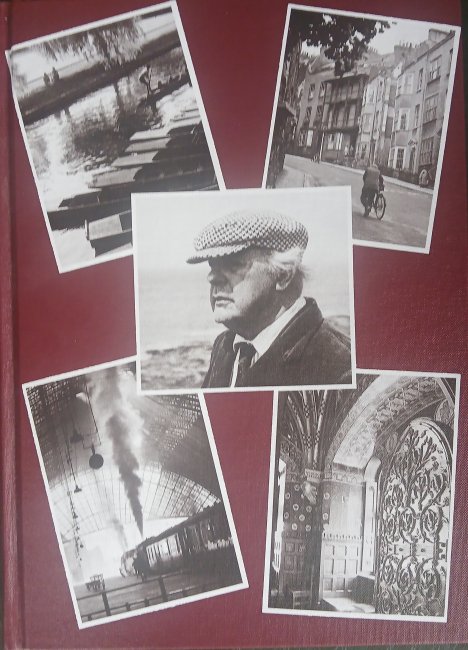
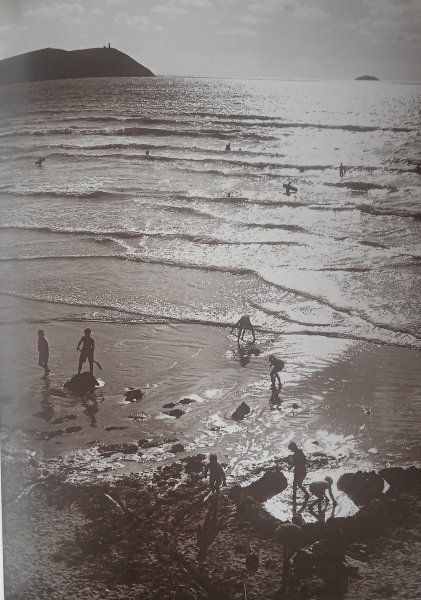
This is an excellent companion volume to last week’s English Journey by J B Priestley. Whilst Priestley was covering the depths of the depression and concentrates largely on the people he encounters on his journey around England in 1933, this book is a selection of Betjeman’s writings between the late 1930’s and the mid 1970’s selected by his daughter, Candida, and ruminates mainly on landscape and architecture. The photographs that illustrate the book are also literally lighter in tone being sepia renditions rather than the harsh black and white of the Priestley volume. Earlier this year I read ‘Trains and Buttered Toast‘ which was also a collection of Betjeman’s talks and essays but there are very few duplications between the two books, in fact I can only think of one, which is the 1937 BBC talk entitled ‘Cooke of Cookesborough’ which is so well written and amusing it was certainly no hardship to read it again. Trains and Buttered Toast is mainly drawn from his BBC talks but Lycett Green has chosen far more widely so we get newspaper articles and longer sections from books he wrote, such as the 1958 ‘English Parish Churches’ and, of course, the Shell county guides several of which he edited along with artist John Piper and others with both of them contributing heavily to the text and photographs. The first book in the series was written by Betjeman and was dedicated to his beloved Cornwall and the West Country represents the first 79 of the 318 pages in this book, Priestley was a novelist and playwright and wrote beautifully but Betjeman was a poet and you can tell by his love of words.

Stepper Point from Polzeath, Cornwall by John Gay

I just want to quote a passage from his 1949 BBC talk about Port Isaac in Cornwall:

Can it really be that a town is half a mile away? I have walked between high Cornish hedges from St Endellion, once the parish church of Port-Isaac. The tower dwindles. The land winds. The slate of the hedges is overgrown with grasses, bedstraw and milky-pink convulvulus, pale-purple scabious and here and there darker valerian. From several places, standing on a hedge of looking through a gate, I can glimpse the sea. The sea is there all right, the great Atlantic, emerald green, wrinkled, glittering, sliding streaks of water, spotted dark blue here and there with reflections. It was a full tide, tamed and quiet for the moment, sliding around this inhospitable coast of North Cornwall, with white crescents of surf floating close inshore. From here on these high up fields, where blackthorn is sliced by the sea wind and leans inland, I can see all along the rocky cliffs to Tintagel Head. Behind me is even grander coast to the Rumps Point and Pentire. Cliffs and ocean are fine to watch, from these high windy fields as cloud shadows race over them. But where can there be a town? Less than half a mile and still no sight of it!

Eventually he does see his destination, but the beauty of the description of that short walk almost puts me beside him on the way to it.

St Pancras train shed, London by John Gay

Betjeman is probably best know for his enthusiasms for railways and churches and there are many lovely descriptions of both throughout the book, the chapter on London illustrates this perfectly as it consists of seven pieces, three of which are railway stations, two churches along with two others:

  • Westminster Abbey – from his preface to the eponymous guide published 1972
  • Paddington Station – Wheeler’s Quarterly Review, Spring 1968
  • King’s Cross Station – Wheeler’s Quarterly Review, Autumn 1969
  • St Pancras Station – Wheeler’s Quarterly Review, Winter 1969
  • Middlesex – Daily Telegraph, 12 August 1963
  • Bedford Park, Chiswick – Daily Telegraph, 22 August 1960
  • St Paul’s – Daily Telegraph, 25 May 1957

The article on Middlesex bemoans the encroachment and eventual swallowing up of what was once a fertile county by the ever spreading London conurbation, whilst Bedford Park is a purpose built Victorian suburb of the city which is largely praised for it’s overall plan. But it is his descriptions of the abbey, cathedral and magnificent railway stations that Betjeman really comes into his own.

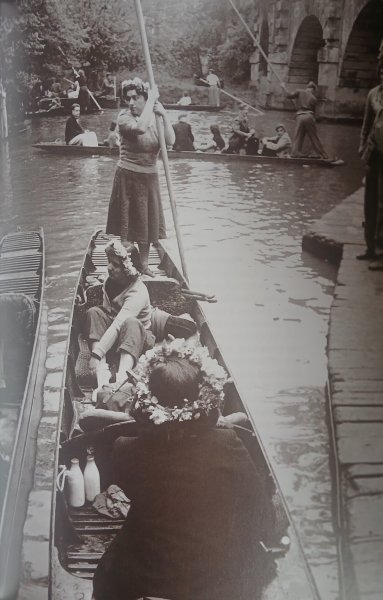
May Day punting on the River Cherwell, Oxford by Thurston Hopkins

The other big difference to last week’s book is that this time we get out of England, visiting Wales, Scotland, Ireland and even the Isle of Man where he seems perfectly at home in a tiny country that always feels slightly more foreign than it’s location would suggest, enjoying the ceremony of Tynwald Day and the unspoilt countryside and of course the trains away from the crowds of holidaymakers in the capital, Douglas. It was a really fun read, even more enjoyable than ‘Trains and Buttered Toast’, the choice of longer articles than in that other book, especially the ones from Architectural Review, gave Betjeman more room to express himself and the selection by Lycett Green was impeccable letting her father’s writing shine through and including several of his poems.

The final picture in the book shows Sir John standing on the dunes at Trebethrick where he had a home and where he died in 1984. He was the only Poet Laureate to have already have been made a knight of the Realm before taking on the role, gaining the honour in 1969 before becoming Laureate in 1972.

John Betjeman at Trebethrick, Cornwall by June Brown

English Journey – J B Priestley

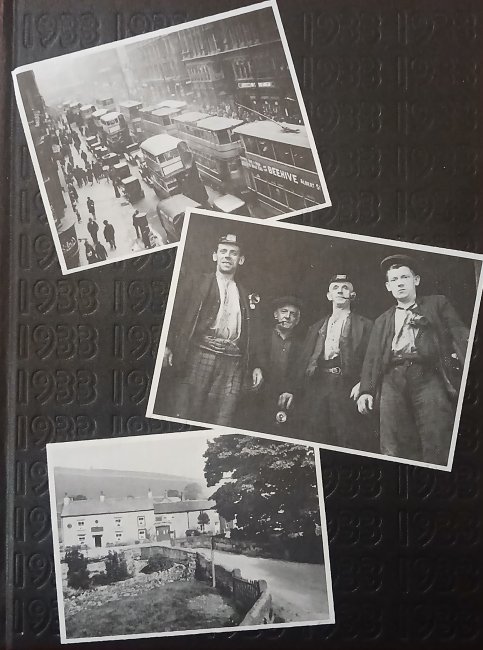
It’s time again for my August themed books and for this year I’ve chosen to feature some titles from The Folio Society starting with English Journey by J B Priestley. Annoyingly for a month that requires four entries the society only produced three books in this short series from the 1990’s so I have added a logical fourth to round them out as the books themselves deserve attention. Especially this first title ‘English Journey’ which is a classic analysis of the state of England in the depression years and particularly the year 1933 when Priestley undertook his travels across the country. The photographs used in this Folio Society edition are from the 1984 Jubilee publication by William Heinemann Ltd although eight pictures from that version could not be obtained due to changes in copyright. The photos are all contemporary to the text, so from the 1930’s

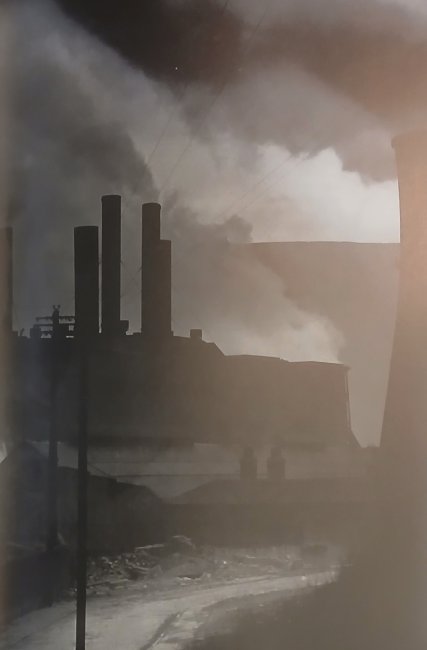
Halifax Townscape by Bill Brandt 1936 – From the chapter ‘To the West Riding’

The book begins and ends in places largely untouched by The Great Slump which had decimated the industrial north and was triggered by The Great Depression in America from 1929 to 1933. Priestley set off to find out how England had been affected by the economic collapse without realising he was seeing it probably at its worst and he started off in the south of the country where he saw some economic decline in Southampton and Bristol, far less in The Cotswolds but then as he heads north through Birmingham and The Black Country and then into The Potteries and Yorkshire poverty increases along with the dirt and grime of industry both past and present. A quote from his chapter on The Potteries and that nebulous new city of Stoke On Trent which doesn’t have a city centre that can be recognised and still doesn’t to the confusion of anyone who visits there. Priestley keeps struggling to work out where he is.

But the general impression is of an exceptionally mean, dingy provinciality, of Victorian industrialism in its dirtiest and most cynical aspect. The look of these places bears no relation to the work that goes on in them. It seems to me to be monstrous that good craftsmen, whose families have been working for generations perhaps with Wedgewoods or Adams or Spode, should be condemned to live in such miserable holes as these.

In the next chapter ‘To Liverpool and Manchester’ the great wordsmith finds himself lost for words when trying to describe what he found in Liverpool and the deprivation he found in the slums there and determines that “Miserably I decided that somebody else must give a plain fair account of this great city, the task, in the time, was beyond me”

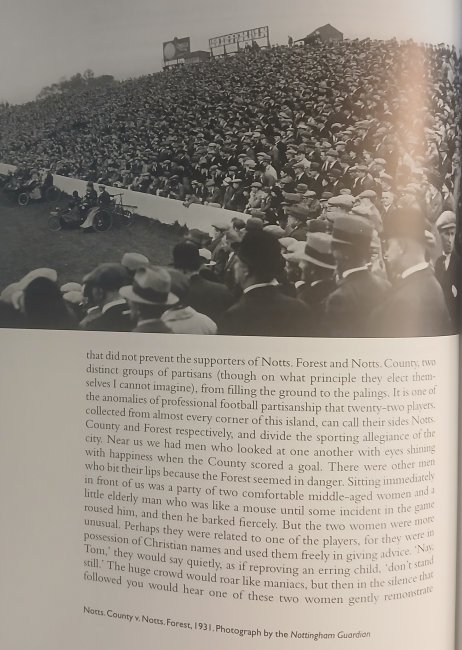
Notts County v Nottingham Forest – Nottingham Guardian newspaper 1931 – From the chapter ‘To Leicester and Nottingham’

But it’s not all doom and gloom, Priestley manages to attend a football match, has great fun making very poor attempts at creating pottery items in Stoke, goes to Nottingham Goose Fair and even see rehearsals for one of his plays being put on at The Palace Theatre in Manchester, He admires the Bourneville district of Birmingham along with Chipping Campden and Boston on market day But its in the dark oppressive places that he really comes into his own and I don’t think I’ve read such a powerful text on squalor and deprivation largely caused by the decline of industry in the early years of the 1930’s

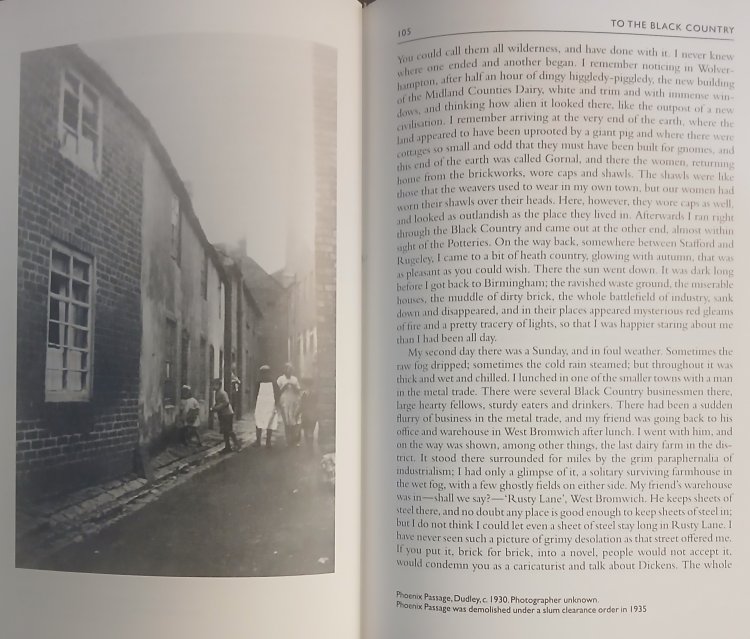
Phoenix Passage in Dudley photographer unknown circa 1930 – from the chapter ‘To the Black Country’

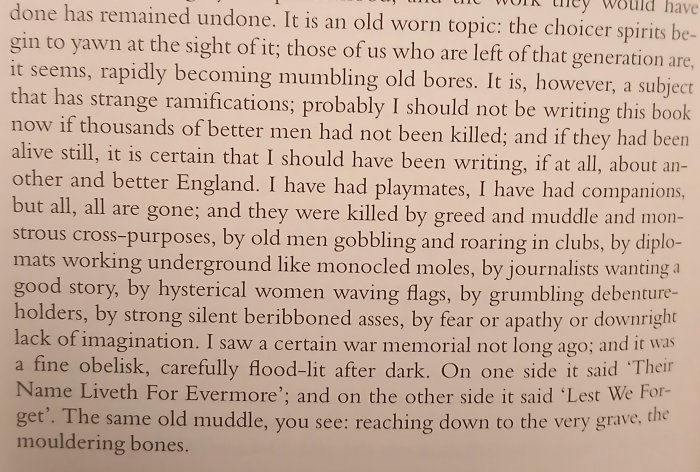
The longest chapter is describing a trip to the West Riding of Yorkshire, specifically to Priestley’s birth town of Bradford where he had arranged to attend a gathering of survivors from the First World War of his old regiment. Priestley himself was invalided out of the front lines in 1916 when the trench he was in was hit by a mortar shell and very few of his old comrades from that time were still around and able to attend the reunion but he did meet some and according to his account of the event a good time was had by all. But it is in this section that Priestley’s anger at the conflict and loss of life which had ended just seventeen years earlier is most on display, and for me some of his best writing in the entire book is in this chapter, a small section of which is shown below.

This is not a hugely positive book, how could it be when it is dealing with the early part of the depression and the waste of skilled men desperate for non-existent jobs to earn money to feed their families or the still ongoing aftermath of WWI with broken men struggling to cope with mental and physical issues. I refer to men as this was still a time when the roles of the sexes were largely differentiated, yes Priestley encountered women at work, largely at repetitive manufacturing such as he found in Birmingham and The Potteries, but the heavy industries in the north were on their knees and it was men that were employed there bringing in the income. I encourage everyone to read this book, especially now as who knows where AI and robotics are going to take us. A lot more unemployment looks to be not that far ahead as manufacturing increasingly replaces humans with machines that can work twenty four hours a day, seven days a week. I had not thought of Priestley as a social commentator before, for me he was a playwright and novelist, but he is a powerful writer especially when he rails against injustice.

Britain’s Lost Cities – Gavin Stamp

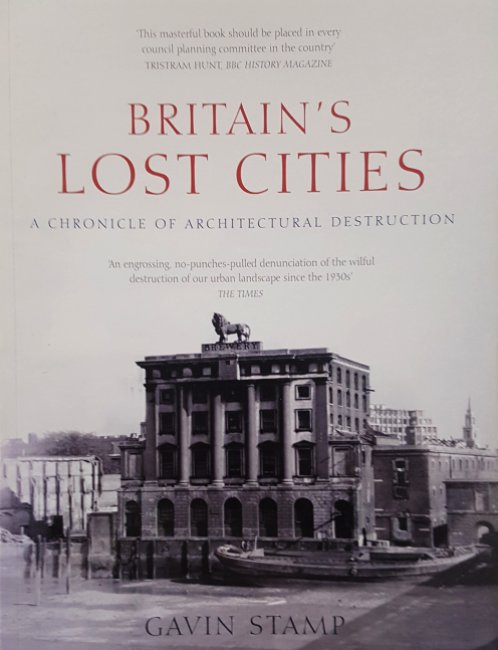
This has to be the most depressing yet fascinating books I have read in a long time. Gavin Stamp was an architectural historian and for many years was president of the Twentieth Century Society, sadly he died in 2017 aged just 69. He wrote many books and hundreds of articles on architecture including almost forty years as a columnist for Private Eye under the pseudonym of Piloti and was for a time professor of architectural history at The Mackintosh School of Architecture, part of the Glasgow School of Art. As you can tell from the brief biography he was an expert in his field and despite his long time association with the Twentieth Century Society this book is excoriating about the wanton vandalism to major cities undertaken by city planners in the 1930’s to 1970’s. The book looks at nineteen cities in England and Scotland and with the assistance of old photographs shows some of what has been lost including the Lion Brewery which features on the cover and which stood on the south bank of the Thames in London and survived WWII only to be pulled down in 1948 to make way for the Royal Festival Hall.

I assumed, like probably most people in Britain, that most of the soulless centres to British cities were down to thoughtless rebuilding plans after the Luftwaffe bombing runs of WWII done in the years of austerity following the war. But this book makes it clear that at least for some of the cities the destruction of ancient thoroughfares and the buildings that made them often happened long before the bombers made razing what was left so convenient for the planners involved. I have travelled over large parts of Europe and seen the wonderful rebuilding of old cities, often reconstructing the lost or damaged buildings from before the war not the awful mediocrity of Britain’s reconstruction forcing inappropriate new ring roads through what was largely repairable, or even worse undamaged, buildings. The page shown above dealing with Coventry includes one of the most damning quotations from a city planner.

We used to watch from the roof to see which buildings were blazing and then dash downstairs to check how much easier it would be to put our plans into action.

Donald Gibson, City Architect for Coventry from 1938

The photograph of Bull Street in Birmingham at the top of the page reproduced above is amazing as every building shown in the picture no longer exists. I chose to illustrate this blog with Coventry and Birmingham as those are the cities I know best but I have to say that the pictures in the book for these Midlands industrial centres are completely unrecognisable. Quite what St George in the Fields church in Hockley (one of the northern districts of central Birmingham) had done to offend the local planners before its demolition in 1960 I don’t know but it looks a fine large building with an important history and where it stood is now just an open parkland so it clearly wasn’t in the way of some grand design. According to Wikipedia it had a capacity of almost two thousand people so it was a substantial church apparently needlessly lost.

Birmingham had its heart ripped out in the 1950’s and 60’s to make way for the car with underpasses and flyovers running right through the centre with little thought for pedestrians and is now undergoing further massive rebuilding largely removing structures thrown up sixty years ago. It’s too late sadly to restore the city centre but what is going up now does seem to be an improvement on what was done in the middle of the twentieth century.

Sorry about the wobbly images of the inside pages, trying to photograph these whilst holding the book open without breaking the spine really called for at least three hands, possibly four which is definitely more than I have available at the time. The copy I have is the 2010 first softback edition, the book was originally published in 2007 as a hardback, both versions are by Aurum Press which is now a division of The Quarto Group. I also have the first hardback edition of his follow up book Lost Victorian Britain, sadly both of these books are now out of print.

Sacred Britain – Martin Palmer and Nigel Palmer

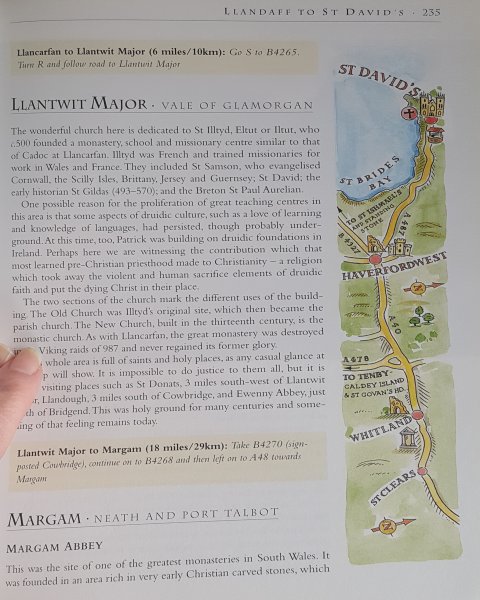
OK let’s start off by saying this book is a little odd and although I’m sure it could be used in the way it appears to have designed I have never done so in the twenty four years I have owned it. The book lives in my car rather than on a bookshelf and the times I have referred to it are when I am away from home and for some reason have some spare time to do a little exploring. But lets get back to why I think it’s odd. Firstly it is sponsored by the World Wildlife Fund for Nature. Now why, coming up to the millennium, this charity thought it appropriate to involve itself in a project regarding sacred spaces is beyond me as apart a small reference to trees and plants commonly found in a British churchyard there appears to be nothing linking nature to this book. Secondly although there are ancient pilgrimage routes in Britain these have been largely ignored by the authors, apart from one route to Canterbury cathedral, and instead they have created their own routes linking various sites which are usually associated with a varied selection of faiths, including pagan, all in one journey. Even the journey to Canterbury which was a major Christian pilgrimage in medieval times especially for those unable for financial or time reasons to make the trip to the Holy Land the suggested journey in this book goes via an iron age fort, the remains of a 1000 year old synagogue, a druids grove and some neolithic burial mounds, none of which fit in with a Christian pilgrimage. The inclusion of some excellent churches, cathedrals and ruined abbeys does not really get away from the trip being an odd mish mash of sites. The third oddity is to do with the panel maps within the text of the routes which are all narrow vertical pictures regardless of the true geography and to my mind are also upside down. Now there are ‘proper’ maps as well but these are the ones that you have to hand so to speak.

The example above shows what I mean, this is a journey TO St David’s and if you are going to ignore geographic orientation, north is to the right on this panel, then at least work down the picture to the destination not up. Also as you can see the text doesn’t actually refer to the map on the page, in fact that part of the journey is eight or nine pages further on, where there is no map but could easily have been one. The whole page layout throughout the book is as confusing as the selection of routes, you find yourself either inserting lots of bookmarks or constantly flipping between pages in an attempt to follow what is going on.

So why am I reading it this time, rather than dipping in for a specific locality which is my usual way of using the book? Well England is about to come out of what is the third and hopefully last lock down to prevent the spread of Covid 19 and I’m desperate to escape these four walls and go somewhere, in fact pretty well anywhere and I’m looking for inspiration. In all there are thirteen of these suggested journeys and they cover most of England, Scotland and Wales, the latter two will still be out of bounds next week but it should be possible to go somewhere in England if only for a day trip as overnight accommodation is still not easily available and won’t be for at least another month, probably longer. I’m not looking for a route but a destination preferably not too far away and if there is somewhere else interesting near to it then that would be a bonus. The one advantage of the route structure of the book is that places near one another are next to each other in the book so you can get happy accidents of two or three interesting places all in one go.

There are also sections that don’t stick to the routes but dot around by theme and one of these chapters on stone circles and tombs has probably inspired me to journey out on day trips more than any other and this is the only travel guide I own that specifically has a section on these ancient sites. So what to make of the book as a whole, well as I said at the beginning it’s odd and doesn’t really work in the way it was intended. It can also be infuriating due to the constant chopping and changing of pages to see what should be all together but it has earned its place in my car for when I have a spontaneous urge to go somewhere unplanned. It also has the advantage that it doesn’t matter that it is nearly a quarter of century old, which would be a serious handicap in most guide books as it is specifically pointing you to places that largely haven’t changed for centuries and will remain for years to come.

This book was originally published in 1997 by Piatkus in the UK and was reprinted in the USA in 2000 by Hidden Spring Books under the title ‘The Spiritual Traveller’. The sequence of some of the chapters are altered and suggestions of places to stay are added in the American edition but the books are to all intents and purposes the same.

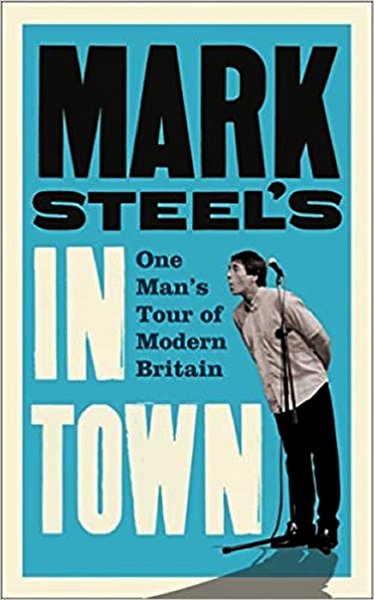
Mark Steel’s in Town – Mark Steel

Mark Steel is a stand up comedian that started a BBC Radio 4 radio show called Mark Steel’s in Town back in March 2009 where he travels to towns in the UK and builds a routine about the place and people for a one off show played in that town. He has deviated slightly over the years and two shows have come from outside the UK, namely Gibraltar and most recently Malta (broadcast February 2019) both of which he found more British than a lot of the places he had been to before. This book, published by Fourth Estate in 2011, is adapted from his travels in the first two series along with other towns and cities that he did as part of his stand up tours which weren’t recorded for the BBC shows. The idea is to gently poke fun at the place he is in and during the radio show he also includes interviews with locals which highlight the oddities and history of the location.

The idea for the show grew out of a frustration that all towns are starting to look the same, you know that such and such a shop will be on that corner there, next to a legion of other similar shops, there is no real way to tell if you are in Taunton or Norwich when you are in the main shopping area as the same retailers are in roughly the same place no matter where you are. What Mark does is celebrate what makes a place different from anywhere else and the fact that he does it in such a funny way has made his series last over a decade. Presumably he would be working on series ten if it wasn’t for the coronavirus that makes such a project impossible.

In this book Mark bounces around Britain from Penzance in the far south west with its outdoor swimming pool which has a cannon built into one side of it; to Kirkwall on Orkney which is just about as far north as you can go and still be in the UK where he encounters a pram shop which is also a fully stocked off licence, presumably on the basis that drinking too much of some of the stock may lead you to needing the other half of the shop nine months later. In between he visits the concrete hippo of Walsall, the rabbits that must not be mentioned of Portland and the bonfire societies of Lewes amongst lots of others. He isn’t put off dealing with harder issues either such as ‘The Troubles’ in Northern Ireland when he went to Andersontown or the chronic unemployment and deprivation in Merthyr Tydfil in South Wales. You really can learn a lot about the UK, its geography and history from these short essays.

All in all it is a delightfully eccentric tour of the UK only marred by his use of the ‘f’ word on several occasions which makes it unsuitable for younger readers, but frankly they aren’t the audience he is aiming at. It is a pity though as the language is unnecessary because Steel has a wonderful turn of phrase and is genuinely funny and he is much more careful with his broadcast versions. All fifty four episodes of the Radio 4 show are currently available on BBC Sounds and are well worth a listen.

The Trial of Charles I

As I start reading this book it is 371 years to the day (January 30th 1649) since the execution of King Charles I and the events that led up to initially the Commonwealth of England, Scotland and Ireland later that year and then by 1653 the Protectorate under the control of Lord Protector Oliver Cromwell. The republic he founded turned out to be somewhat less of a democratic state than its founders hoped, relying on military force to control the country rather than popular support. The appointment of Cromwell’s third son, Richard, as Lord Protector on the death of Oliver in 1658 and thus replacing one hereditary leader with another did little to suggest that getting rid of the monarchy had led to significant change and eventually led to the Restoration in 1660 with King Charles II taking his place on the throne. It’s a fascinating period of British history so I’m looking forward to tackling this slim volume published by the Folio Society in 1959 and bound to resemble a book from Charles I’s own library.

20200203 The Trial of Charles I

The book is split into six sections, the first is a really good summary of the reign of Charles I and the issues that led to the Civil War and the subsequent trial after Charles lost the conflict. This twenty six page introduction is written by noted historian C V Wedgewood and she succeeds admirably in setting the scene for the remainder of the book which is made up from contemporary sources.  These take us from 13th November 1647 when Charles fled to the Isle of Wight hoping to avoid parliamentary forces and maybe get across the channel to France right through to his funeral in February 1649. The texts come from two sources and are interleaved as they cover the time period. Initially we come to Sir Thomas Herbert who was Groom of the Bedchamber throughout the book and was therefore in constant contact with the King right up until his death, the second source is John Rushworth who was a lawyer and collected information about any court cases that interested him and therefore is the best non-partisan recorder of the trial and its aftermath.

Thomas Herbert provides a lot of interesting background to the incarceration of Charles in the Isle of Wight and thence Windsor and ultimately St James in London for the trial itself. Although by inclination a Parliamentarian he provides a fair and balanced account of the Kings actions during this time and the publication of his account helped considerably with the improvement of the regard Charles was held in when it revealed the calm and dignified way he acted at all times compared to the treatment he received from his captors. Rushworth’s account of the trial itself, relying as it does on transcripts paints a clear picture of what would now be regarded as a kangaroo court where the decision of guilt had already been made before they started, the only question was if Cromwell could persuade enough judges to pass the death sentence. Charles is brought before the court and legitimately challenges the legality of the process. In fact there was no actual basis in law for Parliament to sit as a court and they were well aware of this as his repeated challenges simply result in adjournments to the next day whilst they try to come up with a legal argument. In the end Parliament simply ends up with the effective position that this is a legal court because we say it is and will not allow dissent from this statement. Unsurprisingly, after a couple of days of ‘evidence’ where Charles was not allowed to attend let alone challenge anything given against him they decided on the death sentence that Cromwell had wanted from the first.

We then switch back to Herbert’s account of Charles’s last few days, which are spent in prayer and in trying to do what he can for his children. Rushworth is used again for a description of the execution before we return to Herbert to cover the funeral. These three sections are a lot shorter than the first two but again show the King in a favourable light. What is particularly interesting is the use of these two contemporary sources, I learnt about the Civil War at school and we probably covered the entire period of this book in one lesson being more concerned with the start of the conflict and the battles rather than the capture and trial of King Charles I. This book is an extremely interesting addition to my knowledge of this part of British history, for instance I didn’t know that the Scottish parliament had written to the English one complaining about the way they were handling the situation as Charles was also their King and they certainly didn’t want him executed.

There are four brief appendices, the most interesting of which concerns the death warrant itself and the changes made to it which suggest that it was written earlier and then had to be amended to fit the ultimate date along with two names that have been written over ones subsequently removed. It appears that the decision of the judges was more fluid than the Parliamentarians would have liked.