Sherlock Holmes – Arthur Conan Doyle – 2

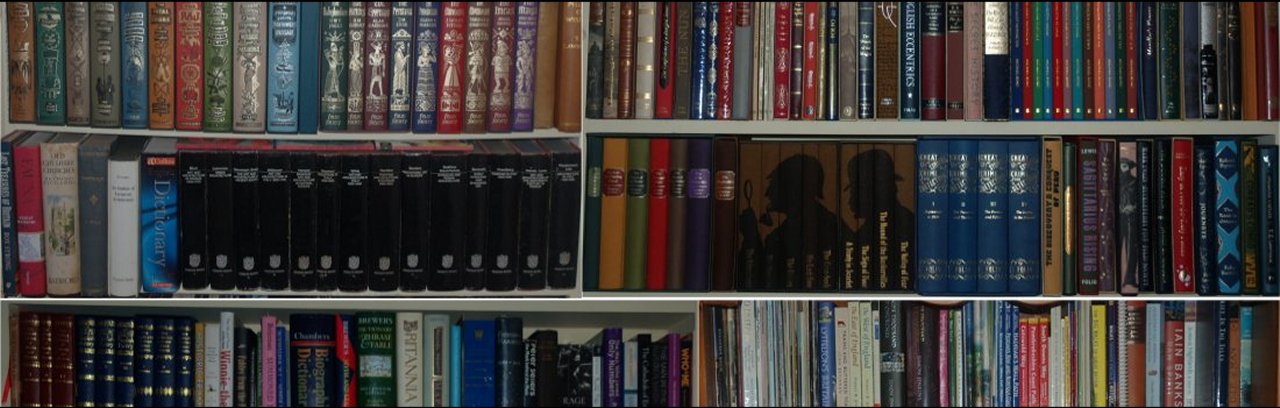
Continuing reading the complete Sherlock Holmes stories by Sir Arthur Conan Doyle in an edition published by The Folio Society. The set consists of five volumes of short stories issued in 1993 and four volumes of novels which came out the following year. The series has a very attractive binding of an offset wrap around design on each book which makes the spines also display the image and appropriately the books are printed using the Baskerville font.

20190806 Sherlock Holmes 1

Last week I read the first two novels as these preceded the appearance of Holmes in short story format however it is now time to tackle the first twenty three short stories in volumes one and two of the set I have.  The first group of short stories is collectively titled…

20190813 Sherlock Holmes 1

The Adventures of Sherlock Holmes

This consists of twelve short stories and in this edition it also has a short introduction by Peter Cushing who played the part of Holmes many times both in film and on television. Originally printed in The Strand magazine between 1891 and 1892, the collection was first published in book form in 1892 and the twelve stories are as follows:

  • The Adventure of a Scandal in Bohemia
  • The Adventure of the Red Headed League
  • The Adventure of a Case of Identity
  • The Adventure of the Boscombe Valley Mystery
  • The Adventure of the Five Orange Pips
  • The Adventure of the Man with the Twisted Lip
  • The Adventure of the Blue Carbuncle
  • The Adventure of the Speckled Band
  • The Adventure of the Engineer’s Thumb
  • The Adventure of the Noble Bachelor
  • The Adventure of the Beryl Coronet
  • The Adventure of the Copper Beeches

I do not propose to review each story as that would make this blog excessively long and I am also concerned about revealing too much about the plots, but let’s look briefly at each, there may be small spoilers ahead but nothing that gives away solutions. However I do need to answer a question posed at the end of last weeks review, where is Watson? Straight away on the first page of Scandal in Bohemia we find

I had seen little of Holmes lately. My marriage had drifted us away from each other.

Watson had indeed moved out and Holmes was now living alone in Baker Street and for the most part the stories in this volume deal with cases after that separation. But the Speckled Band specifically mentions that it occurred before Watson’s marriage to Mary, but only now can Watson reveal it to the world as the lady concerned in the case had passed away. This story also includes the information that some seventy cases had been documented by Watson over the first eight years of his friendship with Holmes so Doyle was clearly already allowing for a significant number of stories to be eventually written even if he didn’t increase the time line any further. The last three tales also relate to the time before Watson’s marriage, The Noble Bachelor specifically states that it occurs a few weeks before he moves out whilst the other two are clearly set whilst the two men are sharing the apartment.

Going back to Scandal in Bohemia, this is the only time that Holmes would be defeated by a woman,  although later on in this book he also admits to three failures against male opponents.  Irene Adler not only bamboozles Holmes but has the nerve to speak to him whilst in disguise outside his own home. so he greatly admires her, keeping a picture of her in 221b Baker Street. The next three tales are a bit of a let down as it is obvious what is going on and who the respective culprits are well before the end however the Five Orange Pips, which is the first ‘old’ tale i.e. before Watson’s marriage and has interest as it is effectively Holmes versus The Ku Klux Klan or at least the remnants of its first incarnation. When Doyle wrote this story the KKK was a thing of the past having effectively died out in the mid 1870’s and it wouldn’t be revived until 1915.

The next three stories, along with the Copper Beeches are my favourites from this set with enough detail given to make it possible to reason along with Holmes as he solves the cases but with enough of a twist to make them interesting. The Engineers Thumb is another where Holmes fails to capture the perpetrators but you do still get a satisfactory resolution to the case however the solution to The Noble Bachelor revolves around the price of a hotel room being high, but it is just given as eight shillings, which a reader from over a century later simply has no idea if that is high, low or a median for London prices at the time. This leaves The Beryl Coronet which frankly has a ridiculous plot device that a banker is worried about a famous treasure being stolen from the safe in his bank so takes it home and locks it in a bureau which has such a poor lock that pretty well any key will spring the drawer, and having first shown it to everyone in the house.

On to the second volume of short stories.

20190813 Sherlock Holmes 2

The Memoirs of Sherlock Holmes

Again all the stories were originally printed in The Strand magazine, this time between 1892 and 1893; the collection was first published as a book in 1894 and there are eleven stories included as follows:

  • Silver Blaze
  • The Yellow Face
  • The Stockbroker’s Clerk
  • The Gloria Scott
  • The Musgrave Ritual
  • The Reigate Squires
  • The Crooked Man
  • The Resident Patient
  • The Greek Interpreter
  • The Naval Treaty
  • The Final Problem

I enjoyed this selection rather more than the first, it gets off to a great start with Silver Blaze which is a really good story about a murder and a missing racehorse although the denouement would certainly not be allowed in modern times and I doubt it would have been possible back in the 1890’s either. One of the joys of this collection is that unlike the first there is no obviously weak story, Doyle appears to have gained mastery of the difficult genre of mystery short stories. Considering that the entire tale from setting out the original position, through investigation and then to the conclusion has to be done in such a condensed manner, the eleven cases here average just over 8,100 words each, this is quite a challenge and that all of them work well says a lot about his improved abilities as a writer in this style over the first collection.

There are really just ten cases in this collection as The Final Problem is supposedly written by way of an obituary and description of how Holmes met his death at the Reichenbach Falls whilst fighting Professor Moriarty, but published two years after it happened.  Doyle must have realised that separating his two compatriots was not really a good idea so only three stories are set after Watson married Mary, these are The Stockbrokers Clerk, The Crooked Man and The Naval Treaty. There are also a couple of tales set before Holmes and Watson met (The Gloria Scott and The Musgrave Ritual) where Holmes is telling Watson about the cases which alters the narrative structure. The Gloria Scott is apparently the first ever case that Holmes was consulted on and he clearly enjoys telling the tale. The Musgrave Ritual is his third and is more of a treasure hunt rather than one of his more usual endeavours. I like this structure of the two men just discussing a case in their apartment and I hope there will be more like this in the further books. The other five tales are set during the time whilst the two men are sharing 221b Baker Street.

The Greek Interpreter marks the first appearance of Mycroft Holmes, Sherlock’s older and even more astute brother, and is technically another of his few failures as although he saves his client the protagonists get away. The Resident Patient also has the wanted men escape but at least we get to understand what and why they do what they do. Probably the weakest story included is The Stockbrokers Clerk and that would have been fine apart from the fact that the plot is quite similar to The Red Headed League, although the ultimate reason is different.

It is difficult to pick out a favourite, The Yellow Face has an interesting twist at the end and for a change Holmes is not dealing with a crime, just a mysterious circumstance. I also liked the Naval Treaty particularly as it is one of the few examples of Holmes showing a sense of humour along with an urge to be dramatic in his final reveal. I think these have to be joint favourites and as I said at the start of the review of The Memoirs the writing is definitely better than the first collection.

And there this reading marathon of the tales of Sherlock Holmes and Dr. Watson should have ended. Doyle made it quite clear in 1893 that he had no intention of writing any further stories about the duo which is why he killed off his hero in his Final Problem as he wanted his other works to be appreciated more.

However after a break of eight years Holmes would be back…

It remains for me to provide a link to my Catalan friend Mixa’s, reviews of my second weeks books which we read simultaneously. The Google created English translations are readable if not very good English but at least you get the feel for what she wrote.

The Adventures of Sherlock Holmes

Original Catalan

Translation to English via Google

The Memoirs of Sherlock Holmes

Original Catalan

Translation to English via Google


Sherlock Holmes – Arthur Conan Doyle – 1

Last August I completed a reading challenge of all ten books in the first Penguin Books crime set from 1938. So this month I have decided to also attempt more than the expected four books by tackling the complete Sherlock Holmes stories by Sir Arthur Conan Doyle as published by The Folio Society. The set consists of five volumes of short stories issued in 1993 and four volumes of novels which came out the following year. The series has a very attractive binding of an offset wrap around design on each book which makes the spines also display the image and appropriately the books are printed using the Baskerville font. My copies are well read and the titles on the short stories are badly worn, although looking at other examples in various bookshops this does seem to be a common feature of this particular edition.

20190806 Sherlock Holmes 1

Now although this looks like a logical reading order in fact Doyle wrote the first two novels “A Study in Scarlet” and “The Sign of Four” before he produced any short stories so in fact a better reading sequence is those books this week, followed by the short stories then finally the last two novels. Although novel number three “The Hound of the Baskervilles” is set during the time of the first two collections of short stories it didn’t actually come out until much later and it doesn’t affect time lines too much to leave the last two novels until the end as they both are looking back on past cases.

As last year I will be writing about each volume as I go along rather than waiting for completion so without further ado lets jump in with the first two novels

20190806 Sherlock Holmes 2

A Study in Scarlet

This is the first appearance of Holmes and Watson and originally appeared in print in the 1887 Beeton’s Christmas Annual before being published in book form in July 1888.

“Dr. Watson, Mr. Sherlock Holmes,” said Stamford, introducing us.

“How are you?” he said cordially, gripping my hand with a strength for which I should hardly have given him credit. “You have been in Afghanistan, I perceive.”

“How on earth did you know that?” I asked in astonishment.

“Never mind,” said he, chuckling to himself.

and so a partnership was born…

The book fairly rattles along, just ten pages in Holmes and Watson are ensconced in 221b Baker Street and Holmes has started his work much to the puzzlement of Watson. The two men are after all just sharing the property there is no indication that Watson would get involved in anything in fact he is specifically looking for a quiet life whilst recovering from his injuries from the war in Afghanistan. Watson however is intrigued as to what Holmes is up to and creates a list of attributes to try to work it out, these include him knowing nothing of literature, astronomy or philosophy, whilst other things such as botany (natural poisons anyway) or geology (soils and clays) were specialised in the extreme. Chemistry and sensational literature however he was a complete master of; none of these items seem to make any sense though.

Another few pages and Holmes again demonstrates his deductive reasoning and explains he is a consulting detective just as he gets a message from Sergeant Gregson of Scotland Yard asking him to come to Lauriston Gardens; Watson joins him and so starts his journals that the Holmes stories are supposedly taken from. The case, to Holmes anyway, is absurdly simple. In fact so simple that by the eightieth page he has apprehended the murderer with the help of his street urchin employees also known as The Baker Street Irregulars, and there is where the book starts to fall apart. For the next fifty two pages are back story. Doyle writes well with the dynamic of Holmes and Watson along with the bungling Gregson and Lestrade from Scotland Yard but over fifty pages without any of these characters whilst he ranges over the settlement of the Mormons in Salt Lake City and the inter-family rivalries just plods along especially after the pace of the first half of the book. It is not even written as though being told to our protagonists it is just an over long history.

We finally get back to Holmes, Watson, Gregson, Lestrade and their prisoner in 221b with just 22 pages left for Watson’s journal to wrap up and the murderer to explain how and why he did it. Very much a book of two halves but with enough promising material regarding the great detective to make a sequel inevitable.

20190806 Sherlock Holmes 3

The Sign of Four

The second time out for Holmes was in the February 1890 issue of Lippincott’s Monthly Magazine issued jointly in the UK and US, and by October of that year it had been published as a standalone book.

Sherlock Holmes took his bottle from the corner of the mantel-piece and his hypodermic syringe from its neat morocco case. With his long, white, nervous fingers he adjusted the delicate needle, and rolled back his left shirt-cuff. For some little time his eyes rested thoughtfully upon the sinewy forearm and wrist all dotted and scarred with innumerable puncture-marks. Finally he thrust the sharp point home, pressed down the tiny piston, and sank back into the velvet-lined arm-chair with a long sigh of satisfaction.

The opening paragraph of The Sign of Four shows Holmes the drug addict, in this case injecting a seven percent solution of cocaine much to the disgust of Dr. Watson. This was turned into a particularly powerful scene in “The Secret of Sherlock Holmes”, a play starring Jeremy Brett and Edward Hardwicke that I saw in 1988 at Wyndham’s Theatre in London’s West End. These two actors, for me at least, are the definitive Holmes and Watson and to see Brett as Holmes in silhouette at the back of the stage injecting into his arm before the lights were cut at the end of the scene is a dramatic act that has stayed with me for over 30 years.

As for the book itself it is much better written than the first although there is again a large section of back story at the end. This time it is much shorter than in “A Study in Scarlet” and rather than being a standalone tale it is given as Jonathan Small telling his involvement in the crimes at 221b Baker Street with Holmes, Watson and in this case Athelney Jones of the Yard. This is a considerable improvement as the three can react to Jonathan Small’s story and there is no massive disjointed section. This is also the first appearance of probably the most famous Holmes quote

How often have I said to you that when you have eliminated the impossible whatever remains, however improbable, must be the truth?

Still back to the beginning, Dr. Watson is trying to draw Holmes away from the cocaine over breakfast the next day when a young lady by the name of Miss Mary Morstan arrives and lays out a singular problem for the great man. Her father had returned to England eleven years ago and disappeared without trace however each year for the last six she has received a fine pearl from an anonymous benefactor and now she has had a letter from him desiring her to be at the Lyceum theatre and she can bring two companions. Naturally Holmes and Watson are willing to go but for very different reasons, Holmes to solve a puzzle but Watson has fallen for Miss Morstan almost immediately and in this state would do anything for her.

Without giving away the plot, the pearls are quickly revealed to be part of a large treasure and in searching for the remainder Holmes engages the use of a scent hound to follow a creosote trail left by one of the culprits from a house in Norwood after he stepped in some of this highly pungent liquid, and this provides one of the few bits of genuine humour in the books as the dog getting confused by crossing trails eventually comes to its mark…

On the dog raced through sawdust and shavings, down an alley, round a passage, between two wood-piles, and finally, with a triumphant yelp, sprang upon a large barrel which still stood upon the hand-trolley on which it had been brought. With lolling tongue and blinking eyes, Toby stood upon the cask, looking from one to the other of us for some sign of appreciation. The staves of the barrel and the wheels of the trolley were smeared with a dark liquid, and the whole air was heavy with the smell of creosote.

Sherlock Holmes and I looked blankly at each other, and then burst simultaneously into an uncontrollable fit of laughter.

Another funny passage occurs with Watson attempting to take Miss Morstan’s mind off the danger they may be in with some of his tales from Afghanistan.

To this day she declares that I told her one moving anecdote as to how a musket looked into my tent at the dead of night, and how I fired a double-barrelled tiger cub at it.

His tongue-tied behaviour is somewhat explained at the end of the book when less than a week after first meeting her he explains to Holmes that he will no longer be available to accompany him on adventures as

Miss Morstan has done me the honour to accept me as a husband in prospective.

Next week I start on the short stories first printed in The Strand Magazine between 1891 and 1893. Will Watson still be living with Holmes or are he and Mary setting up home together with him merely reporting from the sidelines?

A History of the World in 100 Objects – Neil MacGregor

In 2010 BBC Radio 4 ran a fascinating series where the then Director of the British Museum in London chose 99 objects from the museums collection to illustrate world history. Each object was described in its own radio programme over a period of several months and soon became addictive. By Christmas a book had been produced which not only included versions of each lecture but importantly had a really good photograph accompanying it. MacGregor had done a wonderful job describing each item for the radio but the inclusion of pictures completed the project.

20190730 A History of the World 1

The book is over seven hundred pages long to cover properly the 100 objects in the series and has an excellent index and bibliography which alone makes the book an invaluable companion to the series. The 100th object was chosen by MacGregor from suggestions by listeners to represent the modern day and was purchased by the museum to complete the collection. Fortunately both the BBC and the British Museum regard this as a milestone project so all 100 episodes are still available as downloadable podcasts from this BBC site. The museum also maintains a series of web pages dedicated to the project including a programme by programme set of pages which also tell you where the object can be found in the museum if it is currently on display (at the time of writing 21 of the 100 objects are not in a museum gallery).

20190730 A History of the World 2

The above mosaic shows all 100 objects and as you would probably guess this is not a book you can really just sit and read. Not only from its sheer length, but also from the way it was created from 100 separate lectures which were never intended to be listened to one after an other although it does make sense to hear or read them in sequence. Having loved the series from its inception I of course bought the book when it came out but still I tend to listen to Neil when I want to delve into the series, preferably with the book to hand so that I can admire the object as he talks about it.

We start with the mummy case of Hornedjitef and end with a Chinese made solar lamp and charger but I’m just going to pick out five of my favourites:-

  • 12 – Standard of Ur – A truly beautiful object which nobody knows what it was used for. It is inlaid with a mosaic of people coming to pay their taxes to the king so is clearly a demonstration of his power.
  • 17 – Rhind Mathematical Papyrus – Basically a primer in ‘all the mathematics that you need’ in order to work in the Egyptian civil service. How such a document came to survive the centuries is a miracle. I have a book on ancient Egyptian mathematics, maybe I should review that sometime?

  • 47 – Sutton Hoo Helmet – It was reading about the Sutton Hoo discoveries as a child that first gave me an interest in archaeology and history.
  • 76 – The Mechanical Galleon – It was this object that really made me want this book, listening to Neil’s description of this marvellously intricate device made me want to see it and there is a wonderful close up image of the stern with the beautifully detailed figures standing there.
  • 91 – Ships Chronometer from HMS Beagle – One of twenty two carried on the famous voyage where Charles Darwin was inspired in his great work on evolution. The chronometers were used to determine longitude and led to the first truly accurate maps of South America.

So this short article before I hit my planned August reading marathon for this year is yes a suggestion that you should obtain and read the book but really  a big hint to check out the podcasts available via the links I have included and enjoy a master at work.

Under the Frog – Tibor Fischer

a béka segge alatt

translation from Hungarian
Under the frogs arse – which indicates that things are really bad

20190723 Under the Frog

November 1955

It was true that at the age of twenty-five he had never left the country, that he had never got more than three days march from his birthplace, no more than a day and a half of horse and carting or one long afternoon’s locomoting. On the other hand, Gyuri mused, how many people could say they had travelled the length and breadth of Hungary naked?

The opening paragraph of Under the Frog  raises a few questions. I first read the book whilst working in Hungary in 1995 just six years after the fall of the Iron Curtain, and whilst Hungary then was a lot better than when I originally visited in 1987 when it was still very restricted, away from Budapest (which is where I was) it still felt very different. I have come to know and love the country over the decades both from working there and also visiting friends since that time but I haven’t picked this book up again in twenty four years. It will be interesting to see how my reactions to it have changed. Back then I didn’t know much Hungarian history and this was to be the first book that really awakened my interest in that subject. But what little I did know was that less than a year after that paragraph is set roughly two thousand five hundred Hungarians would have died in a failed revolution and many more than that had been imprisoned for their actions so just what is going on in that paragraph?

After the first chapter the book leaps back to 1944 and then progresses to the disasters of 1956. Tibor Fischer was born in England in 1959 to Hungarian parents that had managed to escape in 1956 and this, his first novel, takes his parents background as Hungarian basketball players as a means of informing his text. His mother was captain of the national team and his father was also a quality player, whilst Gyuri and his fellow misfits that we follow through the novel play for the Locomotive team in the Hungarian first division.

Like last week’s book, Lolly Willowes, the novel changes significantly about two thirds in although this time it is because there simply isn’t much funny that can be written about the Hungarian revolution of 1956 and Fischer wisely doesn’t try. Up until then however the book is full of often quite dark humour. As far as possible it also seems to be historically accurate, from the invasion of the country by the Russians in 1944 which pushed out the Germans, but did little to improve the conditions of the populace beyond that, to following the development of the communist state after the war. There are several mentions of the AVO secret police which a couple of the characters have unfortunate encounters with during the novel and the general malaise of life under the regime. The chapters headings are all dates as we trace the passage of time via significant events for either the country or more often the characters interaction with each other or the police state until we get back to November 1955 where if things are not actually going well at least they don’t appear to be getting any worse as long as you stay out of the clutches of the AVO.

The final, and longest, chapter is entitled 23rd October 1956 and it certainly starts then with the birth of the revolution but it continues until early November when the Russians totally crushed the nascent republic. Fischer is very good at inserting his characters into the significant moments of the revolution whilst keeping their being there entirely believable. Central Budapest is surprisingly small and easy to walk around so it is highly likely that people did follow Gyuri’s route around the city on the 23rd, being at both the Radio building and also around the fighting surrounding the Corvin cinema. As stated earlier the jokes largely stop here and indeed the tragic aftermath of the fighting is brought more into focus by the contrast with the considerably more jokey style (even when dealing with awful events) that characterises the first two thirds of the book.

I was in Budapest in October 2016 for the 60th anniversary of the revolution, the 23rd is now a national holiday and a few of my pictures can be seen at the end of this blog. Sadly it would be another thirty three years before the Russians went home as painted on the side of the car and the oppression would if anything be worse in the years immediately after 1956. It’s a very good book and it won’t be another twenty four years before I read it again. Under the Frog was, in 1993, the first debut novel ever to be nominated for the Booker Prize and made it to the shortlist of five before losing to Paddy Clarke Ha Ha Ha by Roddy Doyle.

This slideshow requires JavaScript.

Lolly Willowes – Sylvia Townsend Warner

A radio programme I listen to regularly is BBC Radio 4’s “A Good Read”, it’s a book programme with a difference as rather than focusing on new works the presenter and her two guests each choose a book they like; they then read all three and finally meet up in the studio to discuss them. The last episode in June had novelist Nicci Gerrard pick an odd sounding book, but the title seemed familiar to me and sure enough it is on my shelves. Now from the discussion I have a slight idea as to what happens and it sounds intriguing, from the summary on the radio shows website we get.

Nicci’s favourite is Lolly Willowes by Sylvia Townsend Warner, a novel which takes a surprising turn halfway through and provokes a debate about the merits of sleeping in ditches

What’s not to like with a precis like that so here I go. My copy is the 1937 first Penguin Books edition, the first ever edition was by Chatto and Windus in 1926. It’s still in print although now as a Virago Modern Classic.

20190716 Lolly Willowes

The book tells the story of Laura Willowes, known to her nieces and nephews as Aunt Lolly and starts with the death of her father leading her to move in with one of her brothers and his wife in London. We then take a step back and learn about her childhood growing up in Somerset; her mother had died when she was in her teens and by the time her father died she was twenty eight, still a spinster and showing no signs of being interested in marriage. The Somerset family home would go to her other brother, James, and his wife and Lolly looks to settle into the role of the maiden aunt to both couples children. Life in the London home of Henry, Caroline and their two girls was undoubtedly respectable as befitting the late Victorian period, but also full of dull routine. So it continued for many years, through the Edwardian period and up to the First World War with even that failing to disturb Lolly’s routine much.

All begins to change in the winter of 1921 when Lolly whilst out shopping has ‘a revelation’, she is now forty seven and she needs a complete change out of London and back to the countryside. She buys a guidebook and map and announces that evening at a family get together that as the children are all grown up, she isn’t needed any more so she is moving to Great Mop in the Chilterns. Upon this apparently random decision the book pivots.

There are hints soon after she arrives about what is going on in the village, groups of villagers standing around in groups late in the evening, the fact that the place is strangely quiet after that. But she soon fits in to village life however without feeling that she is fully accepted. The arrival of her, now grown up, nephew further upsets her hopes of fitting in by his decision to also move to Great Mop.  But one evening Lolly finds a kitten in her room at her lodgings and suddenly her landlady wants to go for a walk late that evening and takes her to a remote field where most of the rest of the villagers can be found dancing and enjoying a witches sabbath.

Lolly realises that she also is a witch and that must have been what drew her to the village with the help of Satan who appears to her in the guise of a gamekeeper and also a gardener during the rest of the book. Now you can read the book as a mystical adventure but it really is a feminist novel about a woman finding herself and escaping her fusty background. She gets her independence from the family to whom she will always be just dependable old Aunt Lolly and realises just what she can become. In the last twenty or so pages where she is discussing this with Satan you could, apart from the setting obviously, be reading from works by the great feminist writers such as Virginia Woolf’s A Room of One’s Own. I’ll finish with an extract where Lolly is describing the position of women at the time which gives a good example of the quality of the writing as well.

women living and growing old, as common as blackberries, and as unregarded. I see them wives and sisters of respectable men, chapel members and blacksmiths. and small farmers and puritans…
Well there they are, there they are, child rearing, home-keeping, hanging washed dishcloths on currant bushes; and for diversion each other’s silly conversation, and listening to men talking in the way men talk and women listen. Quite different to the way women talk and men listen, if they listen at all. And all the time being thrust further down into dullness when the one thing that all women hate is to be thought dull. And on Sundays they put on plain stuff gowns and starched white coverings on their heads and necks – the Puritan ones did – and walked across the fields to chapel. and listened to the sermon. Sin and Grace and God and the – (she stopped herself just in time) and St Paul. All men’s things like politics and mathematics. Nothing for them except subjection and plaiting their hair. And on the way back they listened to more talk. Talk about the sermon, or war, or cock-fighting; and when they got back there were the potatoes to be cooked for dinner. It sounds very petty to complain about, but I tell you, that sort of thing settles down on one like a fine dust, and by and by the dust is age, settling down.

Don’t Tell Mum I Work on the Rigs – Paul Carter

Or to give the book its full title “Don’t Tell Mum I Work on the Rigs: She Thinks I’m a Piano Player in a Whorehouse”. A series of real life stories of life on oil rigs around the world in some of the most dangerous places you could ever hope not to go to.

20190709 Don't tell Mum I work on the Rigs

Carter has written a really funny summary of some of his exploits in fifteen years working on oil rigs around the world and the scrapes he has got into whilst doing it. The book has a prologue with an extract from chapter nine which has him in business class on a scheduled flight from Port Moresby in Papua New Guinea; unfortunately with Amoebic Dysentery which strikes just after take-off. Now there is definitely nothing inherently funny about an explosive attack of dysentery, especially in a crowded aeroplane, but the way he writes about it is so vivid that you cannot help laughing at the situation.

The first chapter relates to his childhood and initial links to oil, He had a rough time in his early years with a domineering father who was in the RAF, eventually his mother left him taking the two children with her. She moved the family to Aberdeen and got a job in the oil industry where she would meet her second husband and subsequently got posted to Australia which is where Carter spent his adolescence and eventually some dead end jobs but he wanted to work on rigs. Ironically after his father left the RAF he also started working on rigs and Carter would sometimes meet people who had worked with him. As he says the work is all over the world but the actual people doing the work form a surprisingly small community and there are regular characters that keep turning up no matter where he is working.

In amongst the stories about offshore and land rigs, crazy holding accommodation and the horror stories you also get to learn a little about the oil business and definitely a lot about why being involved may be lucrative but also extremely dangerous. Carter has worked on all sorts and after proving his abilities has been freelance for four years at the time he covers in the book. He is obviously good enough at what he does to be wanted by numerous companies no matter what type of rig is involved.

20190709 Don't tell Mum I work on the Rigs 2

We go on a bounce around the world starting in Australia with a land rig in the Western Australia goldfields back in the early 1990’s where he learnt the trade as a labourer, or roughneck, and worked his way up and then mainly in the Asian oilfields. Apart from the dysentery, and the local wildlife trying to kill you this was relatively safe until it got to time away from the rig when men who work in a dangerous and frequently deadly job chill out by doing dangerous and sometimes deadly ways of not being at work. The wilder the country the more dangerous it was, not just from the locality but also the often poorly maintained equipment such as ancient helicopters.

Every time I read Upstream, an oilfield newspaper, there’s an article like this

Bumfuck Nowhere: all nine passengers and crew died yesterday, when a twelve seater Sikorsky helicopter operated by Doom Air crashed in a really big ball of flames shortly after take off from Bumfuck Nowhere regional airport. Witnesses say the helicopter fell for, oh wow, ages before vaporising into the jungle at 1592 miles an hour.

He also worked the Gulf and South America but the stand out awful places were Russia which  was cold, so very cold and really primitive and worst of the worst Nigeria which was so dangerous to work in that getting out alive was regarded as a bonus. Nowhere in Nigeria was without armed guards when not on the rig especially on the trip to and from the airport, his two predecessors for the job he had there had both been killed by fake taxi drivers before they had even made it to the camp for the first time.

But it’s not just about the oilfields you also get the ups and downs of his personal life and the surprising sideline he ended up doing which was in advertising in Sydney in his downtime between jobs. This is probably what honed his way with words and makes the book such a pleasure to read.

This is not a book for the easily shocked or offended, but you probably guessed that from the prologue so at least you have been warned. I loved it and need to get his follow up “This is Not a Drill”

Porpoise Books

One of Penguin’s few publishing disasters was Porpoise Books which were all released in September 1948. Planned to be the first four in a series they totally failed to sell, probably due to the high price that these children’s hardbacks retailed at which was more than double Puffin story and picture books were at the time. It may well also be that hardback children’s books of this format were difficult to display in shops so were not stocked by many retailers in the first place. Most were pulped, although a large (but quantity unknown) number were apparently sent to New Zealand where they almost all vanished, but that is where they do occasionally turn up on the secondary market, two of mine came from there. For books printed as editions of 100,000 copies per title Porpoise are extremely rare but there are only four to collect if you fancy a challenge.

The books themselves are each forty eight pages long, eight and three quarters inches tall and seven inches wide (222mm x 180mm) and significantly very fragile, almost all examples that you find are missing their spines and although they were all issued with dust wrappers these have also tended to go missing in the seventy plus years since they were published. Of the ones in my collection only The Flying Postman is in poor condition with no dust wrapper and just over 50% of its spine surviving.

J1: Aladdin and his Wonderful Lamp – Traditional

20190702 Porpoise Books 1

Printed by Chromoworks Ltd of Willesden, London and dated 1947 inside, although like the others it was not actually released until September 1948. No translator is given and it is described on the title page as ‘from the Arabian Nights Entertainment’. Penguin would not publish an edition of A Thousand and One Nights until August 1954, appropriately as book number 1001, although this was reissued just six months later as L64 in the classics series. However this is not the source of the text used here as Aladdin is not included in the original tales translated by N J Dawood, it being an 18th century addition to the book by French translator Antoine Galland when he produced the first European language edition in twelve volumes between 1704 and 1717.

20190702 Porpoise Books 2

The illustrations are by John Harwood who was also approached to produce Ali Baba and the Forty Thieves (another addition to 1001 Nights by Galland) for the second tranche of Porpoise Books.  His work with Penguin included what are now some of the rarest of their productions such as a couple of ‘Baby Puffins’ in 1944 and two Christmas themed cut out books from 1955 all of which are now pretty well impossible to find. He did also illustrate several Puffin Story books for Penguin so he continued to have a link with the company for many years.

J2: Paul, The Hero of the Fire – Edward Ardizzone

20190702 Porpoise Books 3

Printed by Van Leer apparently in England rather than their main presses in Amsterdam, Paul, The Hero of the Fire was written and illustrated by Edward Ardizzone and the Porpoise edition was its first appearance in print. This was the only Porpoise book to be reprinted by Penguin although that didn’t happen until March 1969 in a considerably cheaper format in the second set of books in the Picture Puffin paperbacks launched in October 1968. The book tells the story of a young boy who hears his parents talking about having to sell their house as the stock market has collapsed and they have no money to live as they do now. He loves living there so decides to run away and earn some money to help. Ending up in a circus he does get a job but one night a fire breaks out and Paul sees some panicking children which he gathers together to lead to safety, on the way they also save many of the animals. The newspapers declare him a hero and he is presented with a reward which enables his parents to keep the house.

20190702 Porpoise Books 4

I love the work of Edward Ardizzone, he was a prolific artist of books for children which is where I first came across his instantly recognisable style and I also own some of his prints from his time as a war artist in the 1940’s. He illustrated many books over the years for Penguin and was scheduled to be featured in his own volume under the Modern Painters series but sadly MP18 was never published.

J3: The Ugly Duckling – Hans Christian Anderson

20190702 Porpoise Books 5

Printed by Balding and Mansell Ltd. of Wisbech, Cambridgeshire and with the list of current and proposed titles on the back inner page rather than on the rear of the dust wrapper. The story is the classic by The Brothers Grimm about a swans egg that accidentally ends up in a duck nest and when the egg hatches of course the cygnet is treated as ‘an ugly duckling’ and teased by his apparent siblings. Eventually he runs away and is resigned to being lonely all his life on a lake but sees some swans who tell him what he really is. That moment is captured in the painting below.

20190702 Porpoise Books 6

For me this is the most beautiful of the Porpoise books, the watercolour illustrations by Will Nickless fit in perfectly with the tale. Although he illustrated several other children’s books I can’t find anything where he worked with Penguin again. It’s a pity as he is clearly a very talented artist and I would have liked to see more of his work in my Penguin collection.

J4: The Flying Postman – V H Drummond

20190702 Porpoise Books 7

Printed by The Haycock Press from Camberwell, London. Like Paul, The Hero of the Fire this appears to have been specially written and illustrated by Violet Drummond for Porpoise, the only other editions I can find are significantly later. It’s a distinctly off the wall story regarding a postman who delivers his mail by autogyro until one day he crashes into the local church tower causing lots of damage to his aircraft and needing the fire brigade to get him down. He is subsequently fired and takes up making ice-cream for a living but eventually manages to get his job back after the postmaster falls off his horse and is looked after the postman and his wife. Actually his job is dependant on the postmaster having six ice creams a day delivered to him which somewhat smacks of corruption and is very odd in a children’s tale.

20190702 Porpoise Books 8

The illustrations are just as offbeat as the story and like Nickless she does not appear to have any further dealings with Penguin beyond this one title.

As you can see above another odd feature of Porpoise books was that despite only four titles being published they were all printed by different printers. Also unusually for Penguin the books were not numbered or printed with a series code and it is only from later official catalogues from Penguin that we know that they were J1 to J4.

Grace Hogarth, the series editor, had high hopes for the series before publication and was well under way with negotiations for more titles including having commissioned some books so on the back of three of the dust wrappers (as mentioned above The Ugly Duckling wrapper doesn’t have a list but repeats the rear cover of the book) there was the tantalising hint of things to come.

20190702 Porpoise Books 9


Steve Smith’s men – Geoff Lemon

20190625 Steve Smith's Men

The moment you pick this book up you notice the texture of the printed title, it looks and feels like the sandpaper that caused all the trouble and the crash and burn of Australian cricket in South Africa that March day in 2018. Geoff Lemon has covered the team for many years and this is his analysis not just of what happened in Cape Town but also just how did the Australian national team come to be in this mess in the first place. However as Lemon points out at the start of chapter three

This book is not a detective story. It won’t give you every detail of what happened in the Cape Town dressing rooms…

… Only once careers finish will talk begin. Someone can write the comprehensive history then.

What Lemon does do is look deeply at the team and make as good attempt as can be done now as to what happened and why.

For those people who don’t know the background to this, Cameron Bancroft was seen rubbing the ball with sandpaper to roughen it and make it swing more during the Test Match against South Africa. More details can be found on the BBC website here which details the bans given to Bancroft and also the captain Steve Smith and his vice-captain David Warner after this incident.

However this isn’t just about cricket it is also a look at the psyche of a team that formed an effectively closed group and how harmful attitudes were just amplified as there was nobody from the outside to point out how the worst things became normal and then continued on a downward spiral egged on by certain members. As such it can be read as a useful resume of just how groups can deteriorate if left to their own devices. As Lemon points out the team became self selecting, performance on the field became secondary to being mates and being seen to fit the culture that had been created. At times it reads like a real life Lord of the Flies, and just as self-destructive, no matter how good you were you wouldn’t get in the national team unless you were one of the gang and that gang was so tight knit that they rejected all suggestions that things might be wrong.

Things had been going wrong for years and Lemon looks back over that time not just at the team but also at the governing body, Cricket Australia, to try to track why Australia had become the most disliked team in world cricket. Chapter 21 “Australia’s Cricket Culture” starts with five pages of quotes all riffing on the theme that they “never cross the line” meaning that they play hard but not beyond limits, the problem was that the Australian team wanted to set the limits and wanted them further in the distance for them than their opponents. Although stressing that this was a much older problem Lemon decides to focus of the England tour of Australia over 2017/8 to emphasise the build up to the South African debacle. This was a pretty bad tempered few months with Australia emerging the clear victors so they should have gone to South Africa on a high especially given their record in that country, but things started to go wrong soon after they arrived at the first test match. The sledging on both sides was distinctly unpleasant, Warner had taken considerable offence to references to his wife and this had led to a fight almost breaking out after they left the field which unfortunately was caught on camera. That it was Warner, who is probably the nastiest sledger in world cricket, who took offence is ironic in the extreme but that set the tone for what was to come. The Australians claimed that the attempt to alter the ball in the third test was the first time it had been done but nobody believed them so the one caught along with the captain and vice captain had to go, not because of the cheating, but because they were caught out telling bare-faced lies that just kept the story going. If they had just held a press conference at the end of the day and admitted to what had been done then there would have been fines from the match referee but probably not much more.

The book is not only incisive but funny and difficult to put down, the one problem with it getting a wider readership may well be the frequent use of expletives, the ‘f’ and ‘c’ words appear a lot. Now that isn’t necessarily a bad thing, Lemon is trying to show where things had got to and on-field abuse hurled at the opposition, known as sledging, is often quoted verbatim and this may put off some readers. I think he was justified in the use of language because of the story he is trying to tell and it is a thoroughly good read.

The Communist Manifesto

20190514 The Communist Manifesto

I was first introduced to the works of Karl Marx at school. At the age of seventeen the teacher assigned to my year to teach the compulsory Religious Education class (oddly the only subject mandated by law in the UK) decided to take a VERY wide view of his brief. What he decided to do was, as we had already done many years of ‘normal’ RE classes, he would spend a term each on three significant thinkers of the modern age. This was interesting as philosophy was not available as a subject at my school so exposure to the three people he chose was a whole new concept for most of us. We started with Marx, then after Christmas moved on to Sigmund Freud and finally after Easter we reached Jean Paul Satre. We didn’t read The Communist Manifesto at the time (purchasing thirty copies might have been pushing the school governors a bit too much) but did discuss his ideas. I’ve owned this book for three years now so it seems about time I opened it.

A spectre is haunting Europe—the spectre of Communism. All the Powers of old Europe have entered into a holy alliance to exorcise this spectre: Pope and Czar, Metternich and Guizot, French Radicals and German police-spies.

OK that was not how I expected the book to start but all is explained further down the page. What is being pointed out is that Communism at the time was being blamed for all sorts of things without anyone really knowing what it does stand for so the decision was made to have a symposium of international Communists and come up with a manifesto which ultimately came to be written by Marx and Engels. By the way His Most Serene Highness The Prince of Metternich-Winneburg was Chancellor of the Austrian Empire and François Guizot was Prime Minister of France during the time the manifesto was written. It’s safe to assume that whilst almost everyone has heard of Karl Marx and probably to a lesser extent Friedrich Engels almost nobody knows who the two people mentioned in the opening paragraph are any more.

In fact the entire book is nothing like I expected as it isn’t a manifesto as we would now understand the word, which is a document that sets outs a party’s proposed policies and aims in the lead up to an election. Instead it relies more on the original Latin derivation manifestare (to make public) which also comes from manifestus (obvious). What the book is intended to do is make public and obvious the arguments for communism and against the current status quo as seen by Marx, Engels and their grouping that instigated the document. In doing so it is split into four sections after the initial introduction.

The first is entitled Bourgeois and Proletarians. This is an attempt by Marx and Engels to set out their view of the current situation and how we got there with the modern industrialist bourgeois making money out of the work and indeed the lives of their downtrodden workforce proletariat. The irony that Engels is the son of a wealthy industrialist with factories in Germany and England and that it is his money that finances not only his lifestyle but allows Marx to live for the rest of his life without having to do any actual physical work and instead spend a large amount of time writing his later magnum opus Das Kapital in the British Library reading room is completely lost on both of them.

The second section is headed Proletarians and Communists. This is the only section that actually includes anything that can be described as a policy plan in the entire book.

These measures will of course be different in different countries.

Nevertheless in the most advanced countries, the following will be pretty generally applicable.

1. Abolition of property in land and application of all rents of land to public purposes.

2. A heavy progressive or graduated income tax.

3. Abolition of all right of inheritance.

4. Confiscation of the property of all emigrants and rebels.

5. Centralisation of credit in the hands of the State, by means of a national bank with State capital and an exclusive monopoly.

6. Centralisation of the means of communication and transport in the hands of the State.

7. Extension of factories and instruments of production owned by the State; the bringing into cultivation of waste-lands, and the improvement of the soil generally in accordance with a common plan.

8. Equal liability of all to labour. Establishment of industrial armies, especially for agriculture.

9. Combination of agriculture with manufacturing industries; gradual abolition of the distinction between town and country, by a more equable distribution of the population over the country.

10. Free education for all children in public schools. Abolition of children’s factory labour in its present form. Combination of education with industrial production, &c., &c.

Of these the last one is probably the only non-contentious concept. The fourth is yet again an inability of Marx and Engels to recognise irony as both are emigrants to England from Germany but without Engels’ money they wouldn’t have had the leisure time to develop their theories. These policies have been tried to a greater or lesser extent several times by various countries. Sometimes, when taken literally, they have had disastrous consequences such as the application of numbers eight and nine by the Khmer Rouge in Cambodia which started with forced movement of population away from the cities to the land, regardless of whether it was good for agriculture and ultimately led to the genocide of millions.

Even Marx and Engels recognised the difficulty in selling several of these to the proletariat, why should they work hard if the state takes everything they earn above what is needed to live? Most of part two is made up of a question and answer format addressing such points.

Part three, Socialist and Communist Literature, is probably the oddest part of the manifesto. It seems to consist mainly of the authors rubbishing of other movements, they appear to have a particular dislike of German Socialism spending almost 8% of the entire manifesto in a diatribe about its failures.

The final section, with the unwieldy title of “Position of the Communists in relation to the various existing opposition parties”, is a quick bounce around Europe stating where the authors see the state of communism. The manifesto ends with probably the most well known quotes from it, even amongst people who have never read it.

In short, the Communists everywhere support every revolutionary movement against the existing social and political order of things.

In all these movements they bring to the front, as the leading question in each, the property question, no matter what its degree of development at the time.

Finally, they labour everywhere for the union and agreement of the democratic parties of all countries.

The Communists disdain to conceal their views and aims. They openly declare that their ends can be attained only by the forcible overthrow of all existing social conditions. Let the ruling classes tremble at a Communistic revolution.
The proletarians have nothing to lose but their chains.
They have a world to win.

WORKING MEN OF ALL COUNTRIES, UNITE!

An Old Man’s Love – Anthony Trollope

Twenty years or so ago I collected all forty seven novels plus the autobiography of Anthony Trollope in the lovely edition printed by the Folio Society which was the first ever complete edition to be illustrated. These are now long out of print but can still be obtained easily on the second hand market. I admit to having bought them far faster than I have ended up reading them in order to complete the set at the time. I have now read over half but have decided for the purpose of this blog to tackle his final work of fiction, completed before he died in 1882. He was still working on The Landleaguers which was published as an unfinished work in 1893 oddly before An Old Man’s Love which didn’t actually get published until 1894. Both of these are amongst his less well known works, indeed I cannot find an edition of An Old Man’s Love currently in print. Trollope suffered a decline in popularity towards the end of his life and it took sixty or seventy years before his reputation as a great Victorian novelist was restored but even so only about half of his novels are read to any extent today.

20190611 An Old Man's Love

The vast majority of An Old Man’s Love is written as as you would expect although there are passages where the author is talking directly to the reader and Trollope can get quite chatty as in the opening paragraph to the third chapter when we are properly introduced to The Old Man’s love interest.

There is nothing more difficult in the writing of a story than to describe adequately the person of a hero or a heroine, so as to place before the mind of the reader any clear picture of him or her who is described. A courtship is harder still—so hard that we may say generally that it is impossible. Southey’s Lodore is supposed to have been effective; but let any one with the words in his memory stand beside the waterfall and say whether it is such as the words have painted it. It rushes and it foams, as described by the poet, much more violently than does the real water; and so does everything described, unless in the hands of a wonderful master. But I have clear images on my brain of the characters of the persons introduced. I know with fair accuracy what was intended by the character as given of Amelia Booth, of Clarissa, of Di Vernon, and of Maggie Tulliver. But as their persons have not been drawn with the pencil for me by the artists who themselves created them, I have no conception how they looked. Of Thackeray’s Beatrix I have a vivid idea, because she was drawn for him by an artist under his own eye. I have now to describe Mary Lawrie, but have no artist who will take the trouble to learn my thoughts and to reproduce them. Consequently I fear that no true idea of the young lady can be conveyed to the reader; and that I must leave him to entertain such a notion of her carriage and demeanour as must come to him at the end from the reading of the whole book.

But the attempt must be made, if only for fashion sake, so that no adventitious help may be wanting to him, or more probably to her, who may care to form for herself a personification of Mary Lawrie.

And so he continues to give a basic description of the young lady who finds herself an orphan and is taken in to the home of Mr Whittlestaff, initially as an act of kindness because he was a friend of the family and she had nowhere else to go. At the start of the book Mr Whittlestaff is fifty and Miss Lawrie is twenty five although we quickly leap about a year and a half to two years so that she is well settled in the house and Mr Whittlestaff decides to ask her to marry him. Now this she is willing to do, although in truth she loves another, a certain John Gordon who vanished from her life three years earlier without actually declaring his love for her but promising to one day return. Then, on the very day that she agrees to her engagement to William Whittlestaff, John Gordon does come back and arrives at Croker’s Hall intending now that he has made money in South Africa to ask her to marry him.

All this has occurred in the first forty or so pages of the book and so the stage is set for the rivalry between the two men for the hand of Miss Mary Lawrie which is to be played out in the grounds of Victorian manners. Some of the characters favour her becoming Mrs Whittlestaff and yet more favour Mrs Gordon and none are shy about coming forward with their opinion even in front of the three main characters. There are numerous twists and turns before the final conclusion and there is also a sub-plot concerning the housekeeper at Croker’s Hall and her drunken husband which also needs to be resolved in the 172 pages so there is a lot going on considering the relative shortness of this book in the grand scheme of Victorian novels.

Romance is not normally a genre that I would choose to read but I definitely enjoyed this story and whilst Trollope is clearly not at the height of his powers as he was in The Chronicles of Barchester books or the Palliser series, both of which consist of six novels each, it is well written and draws you into the tale of the love triangle.