Hansel and Gretel – Simon Armitage

This was not the book I expected to be writing about at the beginning of June as the publication date is not until the 24th of this month, but on the 31st May a wonderful package arrived and I couldn’t help abandoning what I had been reading and starting on this beautiful volume straight away.

20190604 Hansel and Gretel 1

Simon Armitage has just been made the Poet Laureate for the next ten years and this is therefore his first newly published work since that honour. The poem originally appeared as a ‘libretto’ to a puppet production designed and directed by Clive Hicks-Jenkins which toured England between July and November 2018 but this is its first book publication.

You can see the entire production with the darkly appropriate music by Matthew Kaner, performed by the Goldfield Ensemble here

Clive Hicks-Jenkins has produced a wonderful series of illustrations for this book published by Design For Today. These are clearly based on the theatre production without being limited by his original work.

20190604 Hansel and Gretel 3

The subtitle of the poem is ‘A Nightmare in Eight Scenes’ as the Hansel and Gretel story has been re-interpreted as a modern tale of refugees from a war zone. Without giving too much away the family are starving as the bombs rain amongst them at the start of the book and the parents decide to at least get the children away from there to somewhere where they stand more chance of survival. Hansel and Gretel though mishear their parents planning and think they are simply to be abandoned. This is not the only time that mishearing becomes a plot device in the poem.

As in the original Brothers Grimm tale there is a ‘witch’ and a gingerbread cottage, a trail of stones, a trail of breadcrumbs and abandonment to avoid famine followed by a return only this time without the treasure that would lead to a happy ending. In the modern world of war meted out against helpless civilians there is rarely a happy ending…

The illustrations fit the text so well and the design of the book is beautifully done. I particularly like the colour coding of the words so that you know who is speaking, each character has their own colour as specified in the cast list at the start.

20190604 Hansel and Gretel 2

Oddly I’d never read any Simon Armitage before this but I will definitely be seeking out more of his work. According to his website there are a lot of books to check out

The total production run of this book is two thousand copies, of which one hundred form a further limited edition signed by Simon Armitage and Clive Hicks-Jenkins and which include two extra art prints. Mine is copy number twenty two.

20190604 Hansel and Gretel 4

My Name Escapes Me – Alec Guinness

20190528 My Name Escapes Me

Subtitled “The diary of a retiring actor” this book takes us from the 1st January 1995 to the 6th June 1996. 1995 is treated rather episodically with large gaps in the diary but there are much more frequent entries for 1996 at least as far as that year goes. The book is quite a gentle read, ideal for a quiet afternoon where you just want something to entertain rather than educate. Guinness is in his eighties by the time he wrote this and effectively has retired although he does do a couple of very small parts for films and a short voice-over during the 18 months of the diary.

There are the expected reminiscences scattered through, not just of stage and screen but also of his conversion to Roman Catholicism forty years earlier. Through most of the book his wife Merula is having problems getting about leading to hip surgery and a long slow recovery and he clearly dotes on her, with various changes of plan wrapped around her current health. He is an inveterate name dropper and chides himself several times in the diary for long convoluted stories he tells at dinner parties probably boring everyone else in the process, a habit Merula sometimes curtails by commenting, with the punchline that he is slowly working up to, during the story. People expect actors, especially ones of his seniority, to be able to talk in public but Guinness is quite clear several times that having him give a speech is doomed to failure from the start, it always has been and age has not improved his ability.

One running commentary relates to the Star Wars films and the fan mail, usually with photographs they want signing that he gets all the time.  As in this entry from 16th December 1995 which gives a good flavour of the style of the book.

Today I have felt querulous. Behaviour has been spiky; largely due, I think, to our affable postman dutiful pushing piles of junk mail through the letterbox daily. It gets worse near Christmas. The rubbish, the charity appeals (often in duplicate) and worst of all, the photographs from Star Wars demanding autographs. They mostly come from America and as often as not enclose a stamped addressed envelope – the stamps being US stamps are useless her. The English usually make their demand without photograph, envelope, stamp or money. The nation has got acclimatized to asking something for nothing. Bills in the post are welcome in comparison. It’s mean and hard of me but from 1 January 1996 I am resolved to throw it all in the waste bin unopened (bills excepted, of course); I no longer have the energy to assist teenagers in their idiotic, albeit lucrative, hobby.

He makes a good point here, that a lot of the signed pictures are probably destined for Ebay or some such autograph trading site, where they would make a significant profit for the person who sent them and that is the reason for the contact in the first place. This is something that Sir Terry Pratchett was also somewhat wary of, threatening to sign any book where no dedication was requested “To Ebay purchaser”. Terry does actually make a slight appearance in the book in the 13th June 1995 entry where Guinness praises the Jungle Quest episode from the previous night which featured Terry and his PA Rob in Borneo with Orang Utans.

The diary ends on the 56th birthday of their son Matthew (also an actor) soon after a much needed holiday at Lake Como, not just to mark his birthday but also the anniversary of the Normandy invasion in 1945. Guinness was in the opposite side of Europe, in Italy, at the time having taken part in the attacks on Sicily and Italy several days before, designed not only to take that area but also to divert German military forces away from Dunkirk.

It’s a good read, if a little light, and has an excellent index which reveals that Alan Bennett is mentioned twelve times, The National Theatre four times whilst the National Lottery gets five. Shakespeare or his plays are name checked forty five times whilst the second highest is his wife Merula at twenty nine (although much longer entries) and third comes dogs at twenty one times. I think this says a lot for his priorities. Sir Alec Guinness died in August 2000 and Merula only lived another couple of months afterwards.

The Plagiarist in the Kitchen – Jonathan Meades

I first came across Jonathan Meades through his highly idiosyncratic TV documentaries where he was always dressed as shown on the cover of this volume, all in black with black sunglasses. He would talk direct to the camera whilst totally ignoring something going on behind him or alternatively somebody else would be talking to the camera and he would appear in the background apparently having little connection to what was being said. The films looked spontaneous precisely because they weren’t, everything was tightly scripted and performed with an artifice unique to Meades. The person on screen was not Meades as he really was it was Meades acting a character of himself and presenting the sort of intelligent TV that rarely gets made today. I later found out that The Times newspaper had employed him as a restaurant critic for fifteen years so seeing that in 2017 he had written a cookbook made searching that out imperative. How would the Jonathan Meades I knew and loved from his many programmes approach cooking. The answer, it turned out, was uniquely and also filled with his dry wit, in short exactly as I hoped.

20190521 The Plagiarist in the Kitchen 1

Meades explains the title by stating that all recipes are theft, they all come from somebody, even if you add to or alter them in some way, there is really only so many ways to cook something and they have all been done. This is more than a cookbook it is a cookery philosophy and also assumes that the reader has an understanding of cooking in that a lot of the recipes don’t actually have quantities to the ingredients. The only times that quantities are given is when it is essential to get the balance right such as avoiding a sloppy batter, or getting the right balance of flavours such as with gayettes (French style faggots). Other than that there may be hints, such as don’t use too much celery or carrot in a mirepoix because both can dominate. Some of the recipes can barely be called such.

20190521 The Plagiarist in the Kitchen 2

Simplicity is everything. But when he needs a more complex approach it can also be found here, cassoulet for instance takes four pages, most of which is actually involved with cooking the dish.  What you definitely do get is a healthy dose of advice, such as his instructions for making risotto.

What you do with the rice is more important than where it comes from
What you do is keep patient
What you do is stay put whilst it’s cooking
What you don’t do is slip outside for a gasper with the other snoutcasts
What you don’t do is include wine. It adds nothing

Do not get carried away stirring, cooking is not therapy

One of the joys of the book are Meades epigrams, which can be pearls of wisdom or just plain funny. Just a few from the section on oils will give a flavour of what to expect

  • Extra-virgin might be a desirable quality in nuns … but applied to olive oil it is close to meaningless
  • Various degrees of chastity have spread to other oils
  • Duck fat – Much cheaper than goose fat and virtually indistinguishable.
  • Toasted sesame – Asian dishes are for consuming, not for preparing. It is futile to steal what you can’t understand
  • Beef dripping – Delicious on toast … Good for chips and Yorkshire pudding and anything else that comes from north of the Trent

20190521 The Plagiarist in the Kitchen 3

The recipes are definitely practical and I will certainly be cooking a few with the exception of the fig and ham tart which ends

Leave to cool
Taste
Chuck in bin

This was Meades attempt a creating a dish and as he says the reasoning behind it appeared sound at the start but…

Only the doltishly insentient, the immemoriously recidivist, the sociopathic and the smug regret nothing. I no doubt belong, in this instance, to one of those unhappy categories by not regretting having invented this dish. I do not regret it because it was a warning. Never create when you can steal. Never enter a restaurant that advertises its ‘cuisine d’auteur’ or ‘creative cooking’.

But definitely do read this book.

Summoned by Bells – John Betjeman

20190514 Summoned by Bells 1

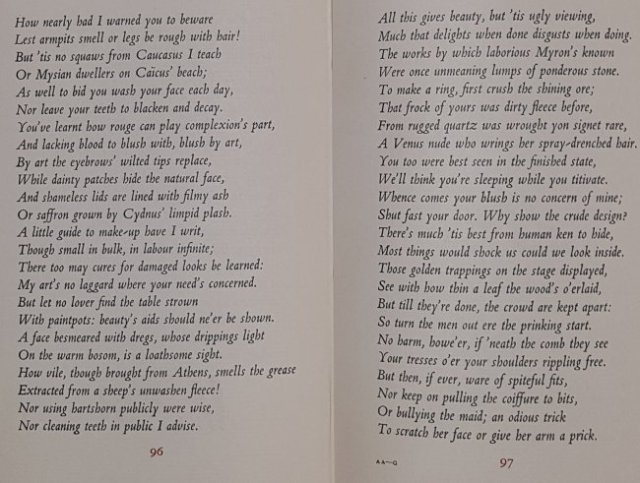
This autobiography in verse covers Betjeman’s early life from his Edwardian childhood (he was born in 1906) to his university days at Magdalen College in Oxford where he was taught by C.S. Lewis. The book was first printed in 1960 just as Betjeman was getting serious recognition as a poet with a dozen volumes published before this and it is also the year he received The Queen’s Medal for Poetry and was made a CBE. The verse has his characteristic humour but also darker times like describing being bullied at school. It is uncharacteristic also in being, for the most part, blank verse, though he can’t stop himself at times, from adding in some parts in rhymes. The book is split into nine chapters as we follow him growing up.

We start in Highgate where the family had moved when he was three years old, they were clearly relatively well to do as they owned a four wheeled carriage and regularly holidayed in Cornwall. Apart from Maud, his overbearing nurse, who seemed to delight in punishing him for slight misdemeanors he appears to have had a happy childhood up until he went to school. Apart from one traumatic incident that clearly haunted him right up to his fifties when he wrote the lines on just the second page of Summoned by Bells.

Safe were those evenings of the pre-war world
When firelight shone on green linoleum;
I heard the church bells hollowing out the sky,
Deep beyond deep, like never ending stars,
And turned to Archibald, my safe old bear,
Whose woollen eyes looked sad or glad at me,
Whose ample forehead I could wet with tears,
Whose half-moon ears received my confidence,
Who made me laugh, who never let me down,
I used to wait for hours to see him move,
Convinced that he could breathe. One dreadful day
They hid him from me as a punishment:
Sometimes the desolation of that loss
Comes back to me and I must go upstairs
To see him in the sawdust, so to speak,
Safe and returned to his idolator.

His father was the third generation owner of a silversmith and cabinet making business and was very disappointed in John because he refused to carry on the firm and all this is covered in the second chapter of the book. In this edition each of the chapters has a small line drawing by Michael Tree and a brief summary of what will be covered. The description of the workshops for the business in this section and the hours that John spent clearly enjoying himself with the craftsmen employed there made it all the more galling for his father when he later expressed no interest in continuing it

To all my father’s hopes. In later years,
Now old and ill, he asked me once again
To carry on the firm, I still refused.
And now when I behold, fresh-published, new,
A further volume of my verse, I see
His kind grey eyes look woundedly at mine,
I see his workmen seeking other jobs,
And that red granite obelisk that marks
The family grave in Highgate cemetery
Points an accusing finger to the sky.

20190514 Summoned by Bells 3

Chapter three has him at school and being bullied at both his junior schools, he seems unclear why at the first one but at the second his apparently German surname in 1913/4, spelt then Betjemann, led to him being picked on by gangs and having to come up with various routes home to avoid them. Ironically the family was actually originally Dutch and the additional ‘n’ was added when they came to the UK over a century earlier but soon Britain was at war with the Netherlands, so they wanted to appear German. During WWI the second ‘n’ was quietly dropped again. Chapter four and the family is on holiday in Cornwall leading to the start of the young Betjeman’s love affair with railways and the English countryside.

20190514 Summoned by Bells 2

Chapters five and seven describe his private education, first at Dragon preparatory school in Oxfordshire and then Marlborough college in Wiltshire. His time at Dragon appears to have been pretty happy and exploring by bicycle leads him to churches and that other great love of his throughout his life, architecture. Marlborough however was a more difficult time, there are stories of beatings and the prefects birching the boys and terrorising them as a group known to the younger boys as “Big Fire” because of where they sat in the evenings. A boy who had transgressed would be called to “Big Fire” for a beating or sometimes worse. I skipped chapter six which covers being back in London during holidays exploring the London Underground and buying books, the family had moved to Chelsea and the bookshops abounded

Untidy bookshops gave me such delight,
It was the smell of books, the plates in them,
Tooled leather, marbled paper, gilded edge,
The armorial book-plate of some country squire

I’m with Betjeman all the way with those sentiments.

20190514 Summoned by Bells 4

The summary above of chapter eight pretty well covers it, his father is even more dominating than before but now John is big enough to escape and does so on long cycle rides round the area discovering yet more churches.

The final section deals with his years at Oxford, a place he freely admits to doing little or no work at and certainly not studying for his degree. Instead he builds a wide social network which become extremely useful to him in later years

No wonder, looking back, I never worked.
Too pleased with life, swept in the social round,
I soon left Old Marlburians behind.
(As one more solemn of our number said:
“Spiritually I was at Eton, John”)
I cut tutorials with wild excuse,
For life was luncheons, luncheons all the way-
And evening dining with the Georgeoisie

How much of this lack of drive towards his degree was down to the mutual dislike between himself and C S Lewis it is difficult to tell, it’s quite possible that even with a more sympathetic tutor who may have got more out of him he would still have left without a degree. In the poem he blames a failure of the compulsory divinity course but in reality he really put so little effort into his studies that he was never going to pass.

The book is a fun read and so unusual in the use of verse throughout. I first read it many years ago and had forgotten how much I enjoyed it.


Toad of Toad Hall – A A Milne

20190507 Toad of Toad Hall 2

What could be better than a play written by one of the English language’s best known children’s authors based on the book by one of the others. A A Milne whilst famous for his tales of Christopher Robin, Winnie the Pooh and all his friends in The Hundred Acre Wood was also a prolific playwright and in 1929 he adapted Kenneth Grahame’s famous 1908 tale The Wind in the Willows for the stage. This year marks ninety years since the first production and the copy I have is the first American edition also from 1929 printed by Charles Scribner’s Sons of New York. The introduction is particularly interesting as Milne deals with the problems of adapting a book, particularly one as well known as The Wind in the Willows.

There are two well-known ways in which to make a play out of a book. You may insist on being faithful to the author, which means that the scene in the aeroplane on page 673 must be got in somehow, however impossible dramatically, or, with somebody else’s idea in your pocket, you may insist on being faithful to yourself, which means that by the middle of act III everybody will realise how right the original author was to have made a book of it. There may be a third way, in which case I have tried to follow it. If, as is more likely, there isn’t, then I have not made a play of The Wind in the Willows. But I have, I hope, made some sort of entertainment, with enough of Kenneth Grahame in it to appease his many admirers, and enough of me in it to justify my name on the title page.

Milne’s solution to condensing the book is to focus on the parts that feature Mr Toad. this means that a consistent central cast is established although Toad is actually only in roughly half of the original book. He also gets round the problem of just how big is everyone, after all Toad drives cars and owns a horse drawn caravan but is definitely smaller than Badger whom we know lives under a tree in the Wild Wood so must be ‘normal sized’ at least most of the time. by having the start of the first act and also the epilogue make it clear that all the action is actually the dream of a young girl called Marigold sitting with her nursemaid on the banks of the river on a warm spring morning, neither of which are in the original story.

In reading the book, it is necessary to think of Mole, for instance, sometimes as an actual mole, sometimes as such a mole in human clothes, sometimes as a mole grown to human size, sometimes as walking on two legs, sometimes on four. He is a mole, he isn’t a mole. What is he? I don’t know. And, not being a matter of fact person, I don’t mind. At least I do know, and still I don’t mind

This quote, also from the introduction, gets to the heart of the ‘problem’ with The Wind in the Willows. But the reason why I put the word problem in quotes is because it isn’t a problem and never has been to readers of the book who are just swept up in the story. But put it on a stage, with humans playing the characters, and the stage director definitely has a potential problem. This is solved by the dream concept and allows the tale to unfold seamlessly with everyone being human sized yet still being Mole, Ratty, Badger, Toad et al.

For all of Milne’s protestations above the play is actually remarkably faithful to the parts of the book being dramatised and the humour is wonderful. Especially for my mind those lines given to Alfred, the sarcastic, and feeling much put upon, horse pulling Toad’s caravan. Anyone who loves Eeyore in the Winnie the Pooh stories will love Alfred, he was created by Milne as the horse isn’t named and is only a bit and indeed silent player in the book but here he really comes alive…

Enter a horse pulling a gaily painted wooden caravan

ALFRED Oh, there you are. I’ve been looking for you everywhere
TOAD (excitedly) Now isn’t this lucky? Just at the psycho – psycho – what’s the word?
ALFRED (hopefully) Encyclopaedia, That is, if you ask me
TOAD I didn’t ask you. Ratty you know the word–
ALFRED Introduce me to your friends, won’t you? I do get so frightfully left out of it
TOAD My friends Mr. Rat and Mr. Mole this is Alfred
ALFRED Pleased to meet you. If you are coming my way, you must let me take you. Only I do like a little conversation (To Toad) Encyclopaedia, that was the word you wanted
RAT (Sadly) So this is the latest?
TOAD (Eagerly) Absolutely the very latest. There isn’t a more beautiful one, a more compact one, a more – what’s the word?
ALFRED Heavy
TOAD A more up to date one, a more –
RAT So this is the latest craze! I understand. Boating is played out. He’s tired of it, and done with it
ALFRED Don’t blame me. I wasn’t consulted about this at all; but if I had been, I should have said boats. Stick to boats.
TOAD My dear old Ratty, you don’t understand. Boating – well – a pleasant amusement for the young. I say nothing against it. But there’s real life for you (he waves a paw at the van) – in that little cart. The open road, the dusty highway, the heath, the common, the hedgerows, the rolling downs!
ALFRED And the ups. However nobody consults me. Nobody minds what I think.

The play starts with Marigold on the phone (actually a daffodil) pretending to call Mr. Rat who she eventually gets through to and sets the basis of the play as her fantasy as regards the main characters. Suddenly we hear elfin music, the stage goes dark, Marigold and her nurse vanish and the magic of the story unfolds with Mole appearing out of his hole and meeting Ratty for the first time. We are soon afterwards introduced to Badger and then Toad and the tale continues with the arrival of Alfred so they can go on a caravanning trip. Sensibly Badger declines to be involved. Caravanning doesn’t last long however, they are forced off the road by a furiously driven car and the only thing Toad can think of after that is having one of those; “Poop Poop” is all they can get out of him for quite a while. And so ends the first act.

Act two is set entirely within the Wild Wood home of the dangerous Stoats and Weasels. Initially with Mole getting lost whilst exploring in the snow and scared of the woods inhabitants before being rescued by Ratty. Then the two of them stumble over Badger’s house and decide to take refuge from the bad weather and the ever present danger from attack when wandering at night in the wood. Inside Badgers home all is comfortable and settled as you would expect from the residence of an older gentleman content in his own company. The three friends start talking about Toad and his motoring exploits, apparently he has already owned (and crashed) seven cars, they are just discussing what they should do to save him from himself when Toad himself arrives. He has crashed car number eight… Badger decides to keep Toad at his house until this current craze has passed but after a few weeks Toad manages to trick Ratty into leaving him alone and the act closes with Toad running off singing about how clever he is.

Act three starts in a courthouse with Toad on trial for stealing a car and then calling a policeman fat-face. Sentenced to twenty years for these heinous crimes, especially the being cheeky to a policeman we then find him in a cell. He makes his escape with the help of the jailers daughter and her washerwoman aunt who they bribe to let him wear her clothes and after a series of adventures, including stealing a bargee’s horse he heads for the river.

The final act starts with Toad at Ratty’s home where he is informed that during the four weeks he was incarcerated the Stoats and Weasels have taken over Toad Hall and a daring plan is formed by Badger to take it back. The final scene of the battle and aftermath is actually the only time Toad Hall appears in the play despite being in the title. Finally the short epilogue as mentioned earlier has Marigold asleep amongst the daffodils as her nurse wakes her to go home.

As can be seen from the above précis the play follows the book pretty well, and it is sometimes difficult to spot which author is responsible for what. Indeed I will leave the last word to the summary on the dust wrapper of the first US edition and a photo of the front of the dust wrapper which is a paler version of the book cover shown at the top of the blog

we in turn, might ask ourselves after reading this play: “Is it Kenneth Grahame? Is it A. A. Milne?” We don’t know, but it doesn’t at all matter, for it is perfect

20190507 Toad of Toad Hall 1

The Book of Margery Kempe

The earliest autobiography in English and by that most marginalised section of the population in historical texts (especially medieval history) a woman.  The book is a remarkable document all the more so from the fact that it was ‘lost’ for many centuries. It was known to have existed because of a seven page extract published by Wynkyn de Worde circa 1501 but the original manuscript which dates back to the 1430’s was believed to no longer exist. However in 1934 a copy was found in the collection of an old Catholic family the Butler-Bowdens, it is not the original dictated by Margery (as she could neither read nor write) but certainly a very early copy and a remarkable survivor. The book was first published in 1936 and the manuscript was acquired by the British Library in 1980. It is split into two books, the first has eighty nine chapters but it turns out that the person she dictated that to had such terrible handwriting that nobody could read it. In the four years it took to find somebody to rewrite this main section she dictated another ten chapters that were added as book two.

My copy is the first Folio Society edition of 2004 and uses the edited, and updated from medieval English, version by professor Windeatt, which was first published by Penguin Books in 1980, it has a lovely cover by Chris Daunt who also provided a dozen engravings included within the text.

20190430 Margery Kempe 1

In the medieval period a woman was effectively the property of her husband and this is illustrated many times in the book such as within chapter 51 when Margery is in York

Then the worthy doctor said to her “Woman, what are you doing here in this part of the country?”
“Sir, I come on pilgrimage to offer here at St William’s shrine”
Then he went on “Do you have a husband?”
She said “Yes”
“Do you have a letter recording his permission?”
“Sir” she said “my husband gave me permission with his own mouth”

As well as the need to have permission we see here Margery’s habit of referring to herself in the third person, when she is not doing so then she uses ‘this creature’ as the usual term regarding herself. Margery had by this time travelled to Rome, Jerusalem and Santiago (Spain) on a couple of trips all without her husband. In fact he was probably enjoying the breaks from her presence as she has to be the most annoying person I have ever read about and frankly like a lot of her travelling companions I would also have spent a lot of time trying to get away from her.  On her way to Jerusalem from England her companions had abandoned her several times or insisted that she ate separately from them when she was present and in Italy they went so far as to book a ship across the Mediterranean and leave their lodgings without telling her in a desperate attempt to get away.

So why was she so irritating? Well Margery started having visions after her first child was born and would very loudly express them, calling out to all the members of the Holy Trinity and speaking to them as well as quite a few saints in churches dedicated to them. That she clearly believed that she was having these conversations is beyond doubt and she was no longer interested in anything else but aspects of her faith.

And those who knew of her behaviour previously and now heard her talk so much of the bliss of heaven said to her. “Why do you talk so of the joy that is in heaven? You don’t know it, and you haven’t been there any more than we have.” And they were angry with her because she would not hear or talk of worldly things as they did, and as she did previously.
And after this time she never had any desire to have sexual intercourse with her husband, for paying the debt of matrimony was so abominable to her that she would rather, she thought, have eaten and drunk the ooze and muck in the gutter than consent to intercourse, except out of obedience.
And so she said to her husband; “I may not deny you my body, but all the love and affection of my heart is withdrawn from all earthly creatures and set on God alone.

Alongside the visions she also took to weeping and crying whenever she was in a holy place or with a religious person regardless of rank and this would also be loud often involving throwing herself to the ground to bawl like a toddler. This naturally made her a difficult person to be around especially if you are trying to observe the peace of a holy site. When she got back from her pilgrimage to Jerusalem and Rome she would cry around fourteen times a day as she ‘remembered the passion’ as during a vision there she had seen herself with the body of Christ on the cross as though she had actually been present at the crucifixion.

For me, one of her most irritating features though is the total fixation on herself during the book. She travelled across Europe to Rome and onto Jerusalem taking well over eighteen months from late 1413 to Easter 1415 yet she records nothing of the places she went to or the trip itself. This journey alone would have made a fascinating book, she would certainly had a vast number of interesting experiences and a first hand record of Europe and the Holy Land from six centuries ago by an ‘ordinary’ woman as opposed to nobles and royalty would be invaluable to historians. She mentions that she spent twelve weeks in Venice before taking the boat to Jerusalem but that is it, who she met, where she went and what she saw during that time we learn nothing.

But that is not to say that book does not have a lot to recommend it, Margery’s responses to being challenged, even by the highest authority show a quick wit and can be quite funny and despite being frustrating at times to a modern reader, especially the passages where she is conversing with God I’m glad I read it. I’ll finish with a passage from chapter sixty which shows her at her feisty best…

There was a lady who wanted to have the said creature to a meal. And therefore, as decency required, she went to the church where this lady heard her service and where this creature saw a beautiful image of our lady called a pieta. And through looking at that pieta her mind was wholly occupied with the Passion of our Lord Jesus Christ and with the compassion of our Lady, St. Mary, by which she was compelled to cry out very loudly and weep very bitterly, as though she would have died.
Then the lady’s priest came to her, saying “Woman, Jesus is long since dead.”
When her crying had ceased, she said to the priest, “Sir, his death is as fresh to me as if he had died this same day, and so, I think, it ought to be to you and all Christian people, We ought always to remember his kindness, and always to think of the doleful death that he died for us.”

and that told him.

The Eyre Affair – Jasper Fforde

Jasper Fforde’s first novel also introduces his main protagonist, Thursday Next, an agent for LiteraTec Special Operations who has now appeared in seven books by Fforde. The books exists in an alternate history where, in the case of this book, the year is 1985 and the Crimean War is now into its 135th year, there are companies commercially genetically engineering extinct species so a popular pet is a dodo and Special Operations includes division 27 which looks after works of literature. In fact literature seems to dominate society with people changing their names to that of famous authors to such an extent that they are legally obliged to have a number tattooed on them to identify which John Milton you are talking to for example. There is also the Goliath Corporation a firm that has made billions in financing the Crimean War and seems to have various shadowy sidelines of it’s own which are strictly for the good of the corporation.

A running trope through this book is “Who wrote the plays attributed to Shakespeare?” sometimes there are short discussions regarding Bacon or Marlowe and in one tedious section which ruins the flow of the plot a whole series of pages are dedicated to this discussion for no good reason whatsoever.

20190423 The Eyre Affair 1

The book after all is theoretically about Jane Eyre, although in fact for almost half the story it is about Martin Chuzzlewit. The basic conceit of the book is that there is a master criminal who obtains a machine invented by Thursday’s uncle Mycroft which allows people to travel in and out of works of literature. Archeron Hades steals the original manuscript of Charles Dickens’ work, removes one of the minor characters and has him killed in the present day. This changes all copies of the book, even those already printed, and he threatens to do the same to Chuzzlewit himself unless a ransom is paid.

For various reasons the plot is foiled and the ransom not paid but Hades escapes to the fiercely independent Republic of Wales where he cannot be followed by English justice, only to try again by this time stealing the original manuscript of Jane Eyre and kidnapping Jane herself immediately before she rescues Mr Rochester from his flaming bed. All copies of the book are therefore much shorter and there is uproar. Thursday Next is sent to get Jane and the book back together.

As implied above there are numerous sub plots, in fact far too many sub plots, as the book is overly complicated by them. You get the feeling that Fford is trying to show off his literary erudition at the expense of just telling a good story and there is definitely a good story to be found in there if you work at it. I’m inclined to forgive him as this is his first published work and I will definitely read at least the next volume about Thursday Next entitled “Lost in a Good Book” which is set a few months after “The Eyre Affair”.

The book cover by the way is printed to look as though it is rather dog-eared, my copy is brand new.

Chapter 13

There is an ongoing joke in Fforde’s books regarding chapter thirteen or rather the lack of one. If there are numbered chapters then there is always one listed in the contents at the start but in fact chapter 14 always immediately follows chapter 12 and the page given for chapter 13 to start is either blank or part way through chapter 12. They do however have titles:

  • The Eyre Affair – The church at Capel-y-ffin
  • Lost in a Good Book – Mount Pleasant
  • The Well of Lost Plots – Reservoir near the church of St Stephen
  • Something Rotten – Milton
  • First Amongst Sequels – Cross Lewis’ number
  • One of Our Thursdays is Missing – 14th May 1931
  • The Woman Who Died a Lot – A Penguin
  • The Big Over Easy – First on the right
  • The Fourth Bear – 111110000

Note: assuming 111110000 is binary then the decimal equivalent is 496, it is anyone’s guess if this is significant or if there is any meaning to the choice of titles for the missing chapters; although the 14th May 1931 was a Thursday.

Flatland – Edwin A. Abbott

20190416 Flatland 1

I asked my friend, Catalan booktuber Anna, best known under her nom de plume of Mixa, to choose this weeks read from a random group of titles I provided and she selected Flatland because she had never heard of it and was intrigued by the idea of a mathematical classic combined with social parody. Written in 1884 by an English headmaster who specialised in ‘classics’ i.e. Greek and Latin; this is as an unlikely cornerstone of multi-dimensional non-Euclidean geometry as can really be imagined. I first read it in my teens and although the copy on my shelves is from my mid twenties I probably haven’t read it in over two decades so it is well worth revisiting.

The book is split into two sections, the first describes Flatland and it’s inhabitants whilst the second deals with one of it’s inhabitants A. Square and his perspective of several other lands. Initially Lineland, then what is called Spaceland which is our own set of dimensions and finally Pointland before he finally returns to his own two dimensional world and the prison that we find him in at the start of the narrative.

But let us begin with a description of Flatland because it is with an understanding of this two dimensional land that we will start to see the effects of an extra dimension which is not apparent to the inhabitants. Our narrator A. Square is as you might expect a square and as such is a lawyer, the number of sides that each character has denotes his status in society as follows:

Our Middle Class consists of Equilateral or Equal-Sided Triangles. Our Professional Men and Gentlemen are Squares (to which class I myself belong) and Five-Sided
Figures or Pentagons. Next above these come the Nobility, of whom there are several degrees, beginning at Six-Sided Figures, or Hexagons, and from thence rising in the number of their sides till they receive the honourable title of Polygonal, or many-sided. Finally when the number of the sides becomes so numerous, and the sides themselves so small, that the figure cannot be distinguished from a circle, he is included in the Circular or Priestly order; and this is the highest class of all.

It is a Law of Nature with us that a male child shall have one more side than his father, so that each generation shall rise (as a rule) one step in the scale of development and nobility. Thus the son of a Square is a Pentagon; the son of a Pentagon, a Hexagon; and so on.

Below the Equilateral triangles are the ranks of workers and soldiers who are Isosceles and as the size of the smallest angle contained within a figure is an indication of intelligence clearly the more ‘pointed’ such a triangle is the lower the intellect and (bearing in mind this is a Victorian book) the more violent and criminal the individual is assumed to be. Rather than increasing sides with each generation Isosceles triangles gain half a degree to their smallest angle each time until they are finally assessed to be Equilateral and the family can then start to rise through society.

Now it should be noted that as indicated in the quote above this only applies to sons, so what about the females, well they are all just straight lines and this is where Edwin Abbott Abbott (yes the A. in his name really was Abbott as well) hit accusations of misogyny even in the 1880’s. Something he attempted to address in a preface added to the second and revised edition but without much success, one of the more offending sections being below…

Not that it must be for a moment supposed that our Women are destitute of affection. But unfortunately the passion of the moment predominates, in the Frail Sex, over every other consideration. This is, of course, a necessity arising from their unfortunate conformation. For as they have no pretensions to an angle, being inferior in this respect to the very lowest of the Isosceles, they are consequently wholly devoid of brain-power, and have neither reflection, judgement nor forethought, and hardly any memory.

Still enough of the first half of the book, there are lots of details given as to how houses are constructed, how the people recognise each other and various social mores which whilst interesting in the way Abbott has tried to give life to his creation do not really impinge on the main object of the book which is contained in part two. The important section is in the remainder where A Square visits other lands and learns about dimensions other than the North/South, East/West directions he is currently familiar with. The first of these is described as a dream where he perceives Lineland a place of just one dimension with all the inhabitants travelling over a single line with him floating over it so that he can see along the line.


20190416 Flatland 5

As A. Square interacts with the King of Lineland at first he is simply a disembodied voice coming from nowhere along the line and therefore not perceptible as a figure to his majesty. He therefore lowers himself onto (and through the line) revealing himself as a line as that is all he can be in just one dimension, but a line that can appear and disappear at will. This understanding is vitally important for him to grasp the concept of Spaceland later on in the book when a sphere visits him in his home.

20190416 Flatland 2

As can be seen from the diagram to A. Square the sphere is merely a circle within Flatland and one that can change size and also appear and disappear just as he could in Lineland but even though he had his dream he still struggles to comprehend what it is that he is seeing until the sphere lifts him off the plane of Flatland and shows him his world from above. Suddenly he can see inside his house and not only that but everyone and everything in it simultaneously. He can even see inside his sons, grandsons and servants and also his wife panicking because he has suddenly vanished.


20190416 Flatland 4

This is revelatory to him and at this point he grasps a logical progression that had eluded the sphere himself

I. Nay, gracious Teacher, deny me not what I know it is in thy power to perform. Grant me but one glimpse of thine interior, and I am satisfied for ever, remaining henceforth thy docile pupil, thy unemancipable slave, ready to receive all thy teachings and to feed upon the words that fall from thy lips.

Sphere. Well, then, to content and silence you, let me say at once, I would shew you what you wish if I could; but I cannot. Would you have me turn my stomach inside out to oblige you?

I. But my Lord has shewn me the intestines of all my countrymen in the Land of Two Dimensions by taking me with him into the Land of Three. What therefore more easy than now to take his servant on a second journey into the blessed region of the Fourth Dimension, where I shall look down with him once more upon this land of Three Dimensions, and see the inside of every three-dimensioned house, the secrets of the solid earth, the treasures of the mines in Spaceland, and the intestines of every solid living creature, even of the noble and adorable Spheres.

Sphere. But where is this land of Four Dimensions?

I. I know not; but doubtless my Teacher knows.

Sphere. Not I. There is no such land. The very idea of it is utterly inconceivable.

I. Not inconceivable, my Lord, to me, and therefore still less inconceivable to my Master. Nay, I despair not that, even here, in this region of Three Dimensions, your Lordship’s art may make the Fourth Dimension visible to me; just as in the Land of Two Dimensions my Teacher’s skill would fain have opened the eyes of his blind servant to the invisible presence of a Third Dimension, though I saw it not. Let me recall the past. Was I not taught below that when I saw a Line and inferred a Plane, I in reality saw a Third unrecognised Dimension, not the same as brightness, called “height”? And does it not now follow that, in this region, when I see a Plane and infer a Solid, I really see a Fourth unrecognised Dimension, not the same as colour, but existent, though infinitesimal and incapable of measurement? And besides this, there is the Argument from Analogy of Figures.

Sphere. Analogy! Nonsense: what analogy?

I. Your Lordship tempts his servant to see whether he remembers the revelations imparted to him. Trifle not with me, my Lord; I crave, I thirst, for more knowledge. Doubtless we cannot see that other higher Spaceland now, because we have no eye in our stomachs. But, just as there was the realm of Flatland, though the poor puny Lineland Monarch could neither turn to left nor right to discern it, and just as there was close at hand, and touching my frame, the land of Three Dimensions, though I, blind senseless wretch, had no power to touch it, no eye in my interior to discern it, so of a surety there is a Fourth Dimension, which my Lord perceives with the inner eye of thought. And that it must exist my Lord himself has taught me. Or can he have forgotten what he himself imparted to his servant?
In One Dimension, did not a moving Point produce a Line with two terminal points?
In Two Dimensions, did not a moving Line produce a Square with four terminal points?
In Three Dimensions, did not a moving Square produce – did not this eye of mine behold it – that blessed Being, a Cube, with eight terminal points?
And in Four Dimensions shall not a moving Cube – alas, for Analogy, and alas for the Progress of Truth, if it be not so – shall not, I say, the motion of a divine Cube result in a still more divine Organization with sixteen terminal points?
Behold the infallible confirmation of the Series 2, 4, 8, 16; is not this a Geometrical Progression? Is not this – if I might quote my Lord’s own words – “strictly according to Analogy”?
Again, was I not taught by my Lord that as in a Line there are two bounding Points, and in a Square there are four bounding Lines, so in a Cube there must be six bounding Squares? Behold once more the confirming Series, 2, 4, 6; is not this an Arithmetical Progression? And consequently does it not of necessity follow that the more divine offspring of the divine Cube in the Land of Four Dimensions, must
have 8 bounding Cubes; and is not this also, as my Lord has taught me to believe, “strictly according to Analogy”?

Sorry for quoting such a large section but this really is the whole crux of the book as we see that logically there must be a fourth direction that is no more visible to us as up/down was to the square in Flatland and north/south was to the inhabitants of Lineland stuck as they are in their eternal east/west line.

We leave Flatland as we began with A Square in prison for having committed the heresy of declaring of what he calls ‘upward not northward’ and trying to spread these ‘lies’ in Flatland. He is being visited by a priest, as he has been for seven years to try to get him to recant from his madness but instead he determines to write this book.

Flatland has never been out of print since it’s original publication over 130 years ago and it remains one of the great primers in understanding multidimensional geometry so important after the work of Einstein, I heartily recommend it and have thoroughly enjoyed rereading it so thank you Anna.

20190416 Flatland 3

White Horses – Eric Ravilious

20190409 White Horses 1

Puffin Picture Books, an imprint of Penguin Books intended for children, started in December 1940 and ran until March 1965, although by then you were lucky to get one new title a year. In all 119 titles were published out of 120 that were given numbers, the missing title was 116 assigned to Life Histories by Paxton Chadwick and this was eventually printed by the Penguin Collectors Society in March 1996 under the guidance of Steve Hare. The story of the series appeared to be complete, but there were in the archives references to other titles that never even got as far down the path to publication that Life Histories had. One of these was Eric Ravilious’s White Horses. The beautiful watercolours of chalk figures and hills on the English chalk Downs intended for the book did exist but there appeared to be nothing more.

20190409 White Horses 4

Ravilious had been approached by Noel Carrington, editor of the Puffin Picture Book series to produce illustrations for a thirty two page landscape book of Downland figures back in 1939 and he was originally very enthusiastic about the project working of watercolours straight away. By the beginning of 1941 he had produced a dummy which showed the planned layout but by then commitments to the War Ministry left him no time to do more. Sadly on 28th August 1942 Ravilious was killed in an air crash whilst working as war artist in Iceland, the dummy of Downland Man (as Carrington referred to it)  disappeared and the planned book appeared to have died with him.

The story leaps to 2010 and the rediscovery of the dummy tucked away with other papers in the possession of Roland Collins. This critical evidence is now held at The Wiltshire Museum in Devizes and it is with their permission to make use of the document that the book I now have in front of me exists. Step forward Joe Pearson, owner of a small printing company in London, book and illustration collector and Penguin Books expert.

20190409 White Horses 2

Design For Today has, since its launch in 2015, already built up a reputation for producing fine examples of illustrated books based on Joe’s love of mid 20th century design, either reprints or more often using contemporary artists as inspired by the period as Joe is. As their website says…

Design For Today’s artists’ books are all designed, crafted and printed in the UK, using quality, sustainable materials and printed using the traditional processes of lithography, letterpress, screenprint, or linocut.  Editions are small, from 500 – 1500

Joe had been hinting throughout 2018 that White Horses (as Ravilious titled the dummy) was a project he was working on; with Alice Pattullo commissioned to produce the black and white illustrations needed to complete the artwork as Ravilious had only ever done the colour pictures and Puffin Picture Books are a mix of both. The text of the final book is by Joe himself.

On the 31st December 2018 disaster struck, as the warehouse holding all of DFT’s stock, along with part of Joe’s own book collection and personal items, was burnt to the ground and nothing could be saved. White Horses is the first book to be launched after that loss of all of the back stock from the first years of the business and members of the Penguin Collectors Society are to receive a copy of the standard edition with their June mailing.

My copy of the limited edition version, which also includes a signed A3 print of one of the pictures by Alice, arrived the other day and it is an excellent piece of work not just well printed as I expected having quite a few of DFT’s products already, but entirely in the spirit of the Puffin Picture Book series.

20190409 White Horses 3

The double page spread above shows the sort of village that the creators of the earliest chalk carvings would have lived in at about 1500BC and this is the illustration that comes as the print with the limited edition book. The limited edition appears to have sold out already but standard copies of this beautiful book are available for £15 plus postage from Design For Today, anyone who like me loves Puffin Picture Books and/or the works of Eric Ravilious is sure to want one.

The Antipope – Robert Rankin

The first in the increasingly inaccurately titled Brentford Trilogy (currently eleven books with at least one more to come, which is claimed to be the last of the series) The Antipope also has the most straight forward title. Rankin has a passion for punning titles but as this was also his first ever book, originally published in 1981, maybe he felt something more mainstream was required. My copy is the 35th anniversary limited edition privately published by Rankin and signed by him, it is also the first time the book has appeared in hardback. Rankin himself describes his work as far fetched fiction, indeed his privately published volumes are by Far Fetched Books, at the time of writing the limited edition of The Antipope was still available and is illustrated internally by the author, the cover is by the brilliant Josh Kirby

20190402 The Antipope 1

The full list of Brentford Trilogy books so far is as follows; and from this you can see his love of wordplay with other book titles and songs:

  1. The Antipope (1981)
  2. The Brentford Triangle (1983)
  3. East of Ealing (1984)
  4. The Sprouts of Wrath (1988)
  5. The Brentford Chainsaw Massacre (1997)
  6. Sex and Drugs and Sausage Rolls (1999)
  7. Knees Up Mother Earth (2004)
  8. The Brightonomicon (2005)
  9. Retromancer (2009)
  10. The Lord of the Ring Roads (2017)
  11. The Chronicles of Banarnia (2018)

The Brightonomicon and Retromancer (2009) are included above although they aren’t in the list of Brentford Trilogy books at the front of this book which only has the first seven but equally on the dust wrapper it says:

The Antipope was the first book in the Brentford Trilogy which now includes at least nine books and will feature one more with the launch of The Lord of the Ring Roads – the first book in a new Brentford Trilogy – some time in the not too distant future.

The reason for the confusion in the number of books to be officially counted in the series is probably due to the appearance of several characters from the set appearing in other books by Rankin which means that those may, or may not, be part of the canon. The books also do not appear to have a specific reading order; things that happen in one book are ignored in later volumes, characters even reappear when they were apparently killed off or written out in earlier books and never with any explanation. Individual volumes are consistent within themselves however just don’t expect a sweeping narrative across them all.

20190402 The Antipope 2

Brentford itself is one of the least eventful places in the UK and certainly contests strongly for the top spot for this amongst towns within Greater London. Looking on the time line on the wikipedia page reveals that the only act worthy of mention in the last ninety years is the 1965 opening of the elevated section of the M4 motorway, an opportunity the express road took to bypass Brentford entirely. This makes the location all the funnier for the ‘far fetched fiction’ that Rankin has take place there and the cast of odd characters that populate the books. Chief amongst these are John Omally and Jim Pooley who are the reluctant, and frequently drunk, heroes of the book. They are never happier than when enjoying a pint of large in The Flying Swan served by Neville the part time barman at that establishment. It should be noted that Neville appears to be the only barman at the Flying Swan so he does seem to be full time although is always described as the part time barman. The other main characters for this tale are Professor Slocombe who understands more than most what is going on and guides the characters to the ultimate defeat of the Antipope; Norman Hartnell (always described as not to be confused with the other Norman Hartnell) who is a mad inventor and runs the newsagents; Soap Distant explorer of the inner Earth; Captain Carson from the Seaman’s Mission and Archroy who, at least at the start of the book, is working at the local rubber factory.

20190402 The Antipope 3

The plot starts with the arrival in the Flying Swan of

a beggar of dreadful aspect and sorry footwear

All those who encounter him feel compelled to cross themselves even if they are not Catholic and he slowly encounters most of the main protagonists most especially Captain Carson as he moves in and then takes over the Mission house. Quite what a seaman’s mission is doing in Brentford is also a mystery, the town is on the Thames but a long way from the sea. The plot gets odder and odder with each flight of fantasy by Rankin including ‘magic’ beans, vast underground chambers, an attempt to wade the English Channel and a cowboy night nobody will ever forget amongst other things.

Now I’m going to have to read the others in the series…

To conclude with Robert Rankin’s own explanation of Far Fetched Fiction from a 1999 interview in Dublin

 I’ve said this before, when I went into writing I wanted to create a new genre of fiction that wasn’t like anybody else’s. It was going to be called Far Fetched Fiction, I would have my own book shelf in Smiths, with just my books in them and it would be bliss. But it didn’t quite work out like that, I ended up in a general fiction section, and then they realised that I didn’t write general fiction and I ended up in science fiction, which I feel a bit of a fraud for being there. Because people who write science fiction don’t know what I write, and… I’ve forgotten what I was going to say, what was I going to say?