The Wanderer & other Old-English Poems

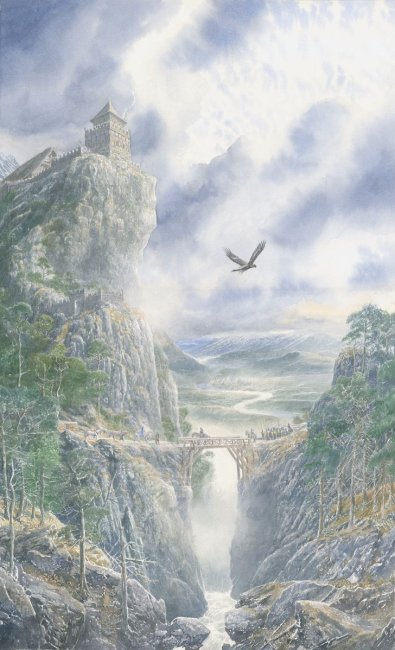
My latest limited edition book from The Folio Society is The Wanderer illustrated and signed by Alan Lee. An artist best known for his decades long association with works by Tolkien, both in illustrating his books and his many years in New Zealand working on the Lord of the Rings and Hobbit trilogies.

20200225 The Wanderer 1

The text is largely from a 1966 Penguin Classic ‘The Earliest English Poems’, translated by Michael Alexander, which also included four pages of Beowulf. Over the years this has been revised until the 2008 edition which provides the entire text for this book, with some amendments, which by then was entitled ‘The First Poems in English’. Lee was approached by The Folio Society to see if he would like to illustrate something for them and between them chose this work as it takes him back to the source materials that so inspired Tolkien in his writings. This is by no means a typical way round, the society would normally choose a book that they wanted to publish and then approach an artist to illustrate it; but what it has produced is a book where you can see the love the artist has for the material and I suspect they eventually had to stop him from creating any more artwork so that the book could actually get published. As it is each poem has its own distinctive decorative borders along with the beautiful tipped in colour paintings and on page printed black and white illustrations.

20200225 The Wanderer 3

The poems and riddles themselves come from a very short window in time, between the reign of King Alfred the Great over the Anglo Saxons (886 to 899AD) where he started the process of moving the written word from Latin to Old-English and the Norman invasion of 1066 when all that was swept away with the imposition of Norman French. In truth there were probably just thirty or forty years where Old-English hit its peak before becoming almost extinct. The greatest source material for the work of this period is The Exeter Book which was regarded as largely worthless for centuries before becoming recognised as the treasure trove that it is.  The poems are much more powerful than might be expected from their great age, they clearly come from an oral tradition as they are directed at the reader as though being read to them, I am reminded of the Icelandic sagas in concept if not in size. Indeed as Bernard O’Donoghue writes in his especially commissioned foreword

There’s a vitality to these poems, written as they were at a time when life was so much more embattled, more desperate and fragile

Along with the general introduction and note on translation each poem has its own introduction setting the scene for the following work and providing mush needed context. The works are over a thousand years old and the people who wrote and read them were very different to ourselves.

20200225 The Wanderer 2

The original Penguin book its variants and companion volumes have sold over a million copies in the fifty years since they came out and the quality of the work shows exactly why Michael Alexander is such a respected translator and this edition makes reading them so much more of a joy than the original paperbacks. The text is presented with the original on the left hand side and the translation on the right as can be seen in one of my favourite works included the fragment of ‘The Battle of Maldon’ from the section of Heroic Poems. I suspect I like these more than the somewhat more introspective other poems is my fondness for the sagas and these have more of a feel of those. However this is an account of a real battle that can be also seen in The Anglo-Saxon Chronicle to such a level of detail that there is also an accompanying map included with the text so the reader can easily see how the fight progresses, which frankly is not well for the English side and a lot better for the attacking Vikings.

20200225 The Wanderer 4

The riddles are great fun and at the back are a set of proposed solutions, however the one that I have shown as an example also has drawings by Alan Lee which somewhat give away the answer. All the riddles are from The Exeter Book where presumably there are a lot more as these start at number seven and there are lots of numeric gaps.

20200225 The Wanderer 5

The answer is of course mead.

As only 750 copies were printed at £395 each and these are all sold out from the Folio Society it would be difficult to get a copy of this fine edition, but if I have whetted your appetite for Old-English poetry and riddles then the Penguin paperback is still in print and considerably cheaper.

There is a short video showing the book from the Folio Society

and a longer video of an interview with Alan Lee.


Wind, Sand and Stars – Saint-Exupéry

20200114 Wind, Sand and Stars 1

I think most people come across Antoine Marie Jean-Baptiste Roger de Saint-Exupéry, to give him his full name, via his massively popular novel The Little Prince which is one of the most translated books ever written, only beaten by The Bible and, depending on where you look, Pinocchio. Once you have heard of his work then quite often you discover that he was a French pioneer aviator, flying mail planes from 1926 and that he died in mysterious circumstances during WWII whilst on a reconnaissance flight looking for German troop movements in mid 1944. This lovely Folio Society edition concerns some of his flying experiences from a student through the 1930’s. He was to write another book covering his wartime flying called Flight to Arras and having finished this book I now need to get hold of a copy of that.

I’m not sure what I expected from this book, tales of daring do, a man against the elements in what was still very primitive machinery perhaps, what I had not allowed for was how much the philosopher and poet would shine through. Indeed near the beginning in the chapter called ‘The Elements’ which describes being caught in a storm in the Andes Saint-Exupéry makes it quite clear that my first thoughts are not to be realised

And so, in beginning my story of a revolt of the elements which I myself lived through I have no feeling that I shall write something which you will find dramatic.

In reality the story that follows is dramatic, but not because of excitable reportage which may have been the style selected by a lesser writer, but for the calm descriptions of each problem thrown at the pilot as the storm winds batter his plane around the sky. The various chapters whilst maintaining an internal consistent time-frame are not placed chronologically in the book. Chapter one does cover his days as a student pilot, or at least the preparations for his first flight as the pilot on a mail plane rather than his student days and as the book progresses you find him in South America and later the Sahara although in reality his three years as a desert pilot preceded his time across the Atlantic.

There is surprising little flying in the book at all, the longest chapter ‘Prisoner of the Sand’ starts out with a proposed flight from Paris to Saigon in December 1935 and does indeed have Saint-Exupéry and his mechanic in the air for several pages until the inevitable crash presaged by the chapter title has them down in an unknown part of the desert. The main part of the chapter concerns their attempts to attract rescue and treks away from the plane wreckage to seek water and nourishment almost all of which had been lost in the crash. But even here Saint-Exupéry deflates the tension pointing out early on that he is writing the story so they must have eventually found help, even  though it was at the last possible chance as they were almost dying from lack of water. This for me is the best chapter of the book, closely followed by ‘Men of the Desert’ which again is chiefly not concerned with flying but rather the people on the ground that he comes into contact with and almost half the chapter regards the freeing of a slave held by desert nomads and returning him to Marrakesh.

The final chapter, entitled ‘Barcelona and Madrid (1936)’ covers some of his experiences in the Spanish Civil War. His involvement in this conflict was never as a participant unlike George Orwell whose time there led to his book Homage to Catalonia. In fact it is not clear exactly what he is doing there as he manages to be on both fronts and is vitriolic regarding the futility of the conflict.

There was not much to choose between Barcelona and its enemy, Saragossa; both were composed of the same swarm of communists, anarchists and fascists. The very men who collected on the same side were perhaps more different from one another than from their enemies. In civil war the enemy is inward; one as good as fights oneself. What else can explain the particular horror of this war in which firing-squads count for more that soldiers of the line?

and a little later

Here in Spain a man is simply stood up against a wall and he gives up his entrails to the stones of the courtyard. You have been captured. You are shot. Reason: your ideas were not our ideas.

Here again Saint-Exupéry is dealing with mankind as his subject, the title of the book is probably a little misleading, you expect Biggles but you get Descartes.

20200114 Wind, Sand and Stars 2

On the 23rd July 1944 Saint-Exupéry’s most famous work The Little Prince was published for the first time. Eight days later he set off on a routine reconnaissance flight in a P-38 Lightning looking for German troops and was never seen again. Indeed no trace of his plane was to be found for over fifty years, first a bracelet was discovered in the nets of a Marseilles fisherman and that led to the discovery of a wrecked P-38 off the coast. Checking a recovered serial number proved the wreck to be his plane but there was no body. Near the end of The Little Prince the eponymous hero has to return to his own planet and amongst his last words are

I shall look as if I were dead; and that will not be true…

For over fifty years fans of Saint-Exupéry wanted that to be true of him also…


Summer Lightning – P G Wodehouse

A certain critic – for such men, I regret to say, do exist – made the nasty remark about my last novel that it contained ‘all the old Wodehouse characters under different names’. He has probably by now been eaten by bears, like the children who made mock of the prophet Elisha: but if he still survives he will not be able to make a similar charge against Summer Lightning. With my superior intelligence, I have outgeneralled the man this time by putting in all the old Wodehouse characters under the same names. Pretty silly it will make him feel, I rather fancy.

The opening paragraph of the preface by Wodehouse to Summer Lightning is typical of the humour of the man and is a perfect example of why I love his works. I don’t care that you can often recognise bits of previous characters in some new ones. Frankly the world of which he writes of stately homes in the country and clubs in London all populated by the most bizarre yet oddly believable characters is what I’m looking for when I pick up one of his books. Of invariably rich and often foolish young men, sensible young women, wildly eccentric uncles and terrifying aunts is the Wodehouse world made and the occasional sensible male character such as Jeeves, the gentleman’s gentleman in the Wooster stories or Beach the butler at Blandings merely highlight the craziness going on around them by being a beacon of solidity. They are an escape from reality to a time and place that probably only ever existed in Wodehouse’s fertile brain but which is instantly recognisable as 1920’s England and could be nowhere else.

20191126 Summer Lightning 1

Summer Lightning is part of the series of books and short stories that relate to the goings on at Blandings Castle and was originally published in 1929. For those people who only know Wodehouse through the ever popular Jeeves and Wooster stories we are introduced to a whole new collection of odd characters and yet more bizarre plots in this series of books. Summer Lightning is not the first in the series but it is a perfectly good place to begin as you are introduced to the population of the castle very well and don’t need the earlier volumes to know the dynamic between them. Head of the family and, theoretically at least, in charge of the castle is Lord Emsworth who would be quite happy if left alone with his library, the castle grounds and of course the love of his life, his prize pig The Empress. In reality the castle is run by his sister Lady Constance who as châtelaine makes certain that things actually get done, as long as they are what she wants doing. The two do not exactly get on and Lord Emsworth usually gets bullied into at least starting some of the things his sister plans although usually by his absent-mindedness they rarely end up as she intended. The other constant inhabitant of the castle is the butler Beach who invariably gets caught up in the shenanigans of the various family members and guests there.

As the novel starts there are three other significant people in residence, one of Lord Emsworth’s nieces Millicent Threepwood, his newly appointed secretary Hugo Carmody (who is secretly engaged to Millicent) and his brother Galahad Threepwood who is writing his scandalous (and possibly slanderous) memoirs. You can already see two plot lines that will be developed. Later on add in Ronald Fish who is one of Lord Emsworth’s nephews, a friend of Hugo Carmody who he ran a failed nightclub with and whom Lady Constance hopes will marry his cousin Millicent, along with Sue Brown, a chorus girl in a London theatre, who is engaged to Ronald but would definitely be regarded as unsuitable by the family and things really start to get mixed up. Throw in pig-napping, mistaken identity, rivalry with the neighbour Sir Gregory Parsloe-Parsloe, more pig-napping and a detective brought in who is also in love with Sue Brown although she dislikes him and it becomes quite complicated. Having said that Wodehouse is a master of this and you can always follow the various machinations of the characters as each tries to get to their desired outcome with greater or lesser success.

Beautifully illustrated by Paul Cox this 2004 edition of Summer Lightning is published by The Folio Society and as well as this stand alone volume it is available as part of a boxed set of six books which between them make up roughly half of Wodehouse’s output about Blandings Castle and it’s inhabitants. I now live within four or five miles of where the Blandings books are set in north Shropshire. Precisely which place gave Wodehouse his inspiration is not known but journey times and the fact that The Wrekin can be seen from the castle means that it has to be round here, local newspapers mentioned in the books although fictional also refer to local towns. The most likely house that the prototype for Blandings is Apley Hall and the sheer scale of this property fits in well with the descriptions of the castle in the books. This local link is what has encouraged me to re-read the books set round here and this had led to me exploring more of his works since moving to the area. He wrote over 70 novels and well over 200 short stories so is remarkably prolific and is possibly even more popular now than he was in his lifetime with a 1000 strong membership of the P G Wodehouse Society and deservedly so. His books are great fun, now which one shall I read next?

Ars Amatoria – Ovid

Much better known for his work Metamorphosis, Ovid also produced this treatise on the technique for finding and importantly keeping the love of your life. That it also includes hints for hiding infidelity and some of the advice is a little too true to life for some of its readers two thousand years ago probably didn’t help when he fell out of favour with the Emperor and was exiled from Rome for the final sixteen years of his life.

20191119 Ars Amatoria 1

As the lovely Folio Society edition that I have is quarter bound in leather with a plain brown cover I have chosen not show the outside as it is rather dull but instead to have three extracts with the drawings by Victor Reinganum which decorate most of the pages, including the opening shown above where Ovid sets out what he hopes to achieve. The book was published in 1965 and uses the translation by B.P. Moore originally published by Blackie & Son Ltd. The font used is Poliphilus 13 point and I think suits the text admirably well. Unusually for Folio the book was reprinted just two years later which attests to its popularity.

The work consists of three short books, the first two are aimed at men trying to find a partner and get her interest (book 1) and then Ovid looks at how to keep her (book 2). The third book was written slightly later and is aimed at women looking for a man. Despite being over two thousand years old much of the advice given by Ovid is as good today as it was in Roman times. The first, and most obvious, but still got wrong many times, is that if you want to meet a woman then it is best to go to where they are, don’t hang around in places with your male friends, go to the parks or theatres. But remember you are not there just to watch the play.

20191119 Ars Amatoria 3

When you have found ‘the one’ then how to make sure she knows you are not only interested but are looking for more than just a friend is covered next, and then once a relationship has started make sure that she knows that she is the only one for you.

20191119 Ars Amatoria 2

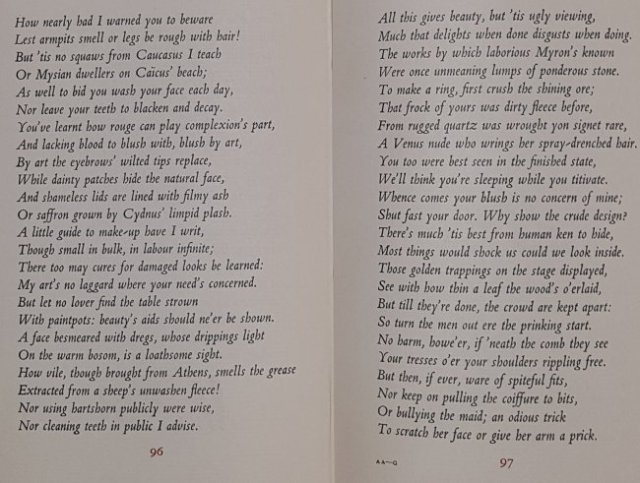
The third book, for women hoping to secure a man, repeats the suggestion from the first book to go where they are although it point out that the sensible men that are also looking for women (and have read the earlier treatise) will be where she already is, so maybe start at the theatre. However there is also beauty advice, such as for make-up (basically don’t overdo it, use enough to enhance not redefine) and hair (pick a style that suits your face shape). The words about makeup are particularly poignant when you consider the very basic types available at the time which would degrade quite quickly in the Italian sun. I love the suggestion in the passage shown below that the morning beauty routine is best done away from the gaze of the man the lady is hoping to attract, after all why should he know what she has done to enhance her beauty.

20191119 Ars Amatoria 4

I don’t want to give the impression that Ovid is just covering beauty tips, there is much the same sort of advice given to the ladies as to the men in how to attract a mate and even what to do when you have got him. How to arrange messages between you when things are still not publicly known and you don’t want anyone else to know. This also applies to illicit trysts when secrecy is vital and he is not shy of making this clear in his text.

Overall the book(s) are a fun read and in places could be lifted straight into the advice columns of today. It’s a fascinating glimpse into an ancient past that perhaps is not that ancient after all.

A note on the translation used is probably useful here at the end of the review. Clearly Moore updated some parts, there are two references to cars for instance when leaving the vehicles as period would have been far less jarring. There are other lines where I felt the intrusion of the modern was out of place and disturbed the flow of the text. Having said that the translation is very readable apart from these examples and the deliberate attempt to keep notes to an absolute minimum (just two pages at the back which mainly name the character referred to when a reader in 2AD would have simply known who it was) makes it more a reading pleasure rather than an academic exercise. There is a translation available at Project Gutenberg which dates from 1885 but this is in prose rather than the verse employed by Moore and is a lot less fun to read so overall I’m glad I have this edition.

Sentimental Journey – Laurence Sterne

To give the book its full (and misleading) title “A Sentimental Journey through France and Italy. Why misleading, well in the copy I read, which is 161 pages long, by page 143 he is still in Paris having travelled there from Calais on page 1, after that there is a rapid dash as far as Lyon which is where the book ends. Sterne undoubtedly intended to continue the tale in a further volume, as he had done numerous times with his much more famous novel regarding ‘The Life and Opinions of Tristram Shandy’ which eventually ran to nine volumes, but he died just three weeks after this book was first published in 1868.

20190924 Sentimental Journey 1

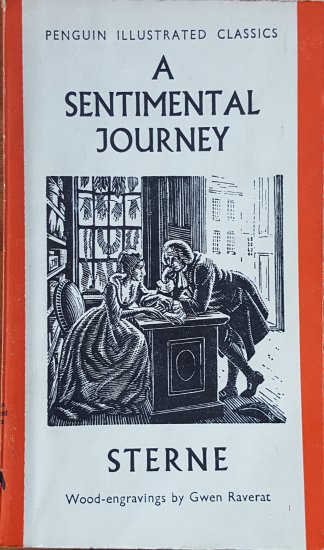
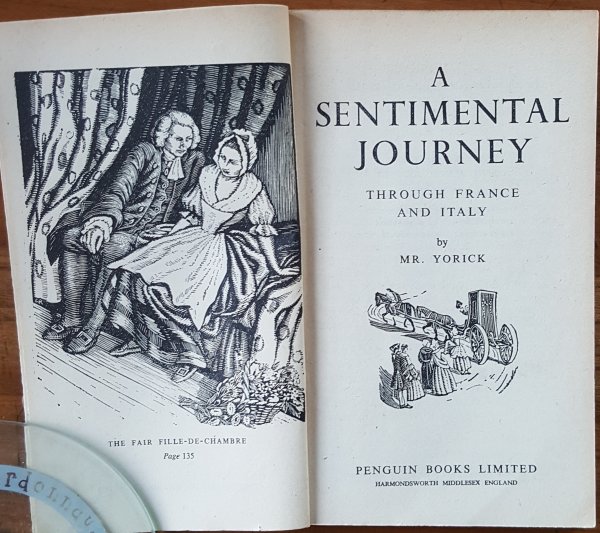
I have two copies of this book on my shelves, both there due to them being parts of separate book collections rather than a desire to own a copy of the novel but it did feel that it was time to tackle the book as it is regarded as a classic of English literature. That this is so is attested by the fact that the Folio Society edition I have read is only the fourteenth title produced by that publisher and came out in 1949. The other copy I have is from 1938 and was part of the ten books published by Penguin as Illustrated Classics which were their first attempt at a series of illustrated books, just three years after they started publishing. That two major publishers should select it so early in their existence suggests how much both companies rated the book and both editions are beautiful. The Folio Society copy is illustrated by Nigel Lambourne in lovely drawings that match well his cover design, see the picture of Maria further down this essay. The Penguin edition, in common with the other nine volumes published simultaneously, uses wood engravings in this case by a master of that art form Gwen Ravarat.

20190924 Sentimental Journey 2

And so to the tale itself… Well I have to admit that of all the books I have read so far for this blog this was the one I struggled with the most. Even though it is quite short (less than forty thousand words) it has taken over three weeks to read it as I kept putting it down after a few pages. Both the Maupassant short stories and The Pillow Book by Sei Shōnagon have been read and written about whilst I worked my way through A Sentimental Journey. There are two main reasons for this, firstly I couldn’t get on with Sterne’s style of writing and secondly it really needs a significantly better knowledge of French than I have so I have had to pause to translate sections before continuing if I really wanted to make sense of the narrative especially in the case of a letter which is important to the story but which is entirely in French. A random sample of the text, where Yorick (Sterne’s alter ego in the story) employs a servant is below.

La Fleur had set out early in life, as gallantly as most Frenchmen do, with serving for a few years; at the end of which, having satisfied the sentiment, and found, moreover, That the honour of beating a drum was likely to be its own reward, as it open’d no further track of glory to him,—he retired à ses terres, and lived comme il plaisoit à Dieu;—that is to say, upon nothing.

—And so, quoth Wisdom, you have hired a drummer to attend you in this tour of yours through France and Italy!—Psha! said I, and do not one half of our gentry go with a humdrum compagnon du voyage the same round, and have the piper and the devil and all to pay besides?  When man can extricate himself with an équivoque in such an unequal match,—he is not ill off.—But you can do something else, La Fleur? said I.—O qu’oui! he could make spatterdashes, and play a little upon the fiddle.—Bravo! said Wisdom.—Why, I play a bass myself, said I;—we shall do very well.  You can shave, and dress a wig a little, La Fleur?—He had all the dispositions in the world.—It is enough for heaven! said I, interrupting him,—and ought to be enough for me.—So, supper coming in, and having a frisky English spaniel on one side of my chair, and a French valet, with as much hilarity in his countenance as ever Nature painted in one, on the other,—I was satisfied to my heart’s content with my empire; and if monarchs knew what they would be at, they might be as satisfied as I was.

Another problem I had was the references to Tristram Shandy (which I have not read) including a whole section near the end of the book where Yorick goes off to comfort one of the characters from that novel thereby further muddying the narrative of this supposed travellers tale unnecessarily.

alas! I have but a few small pages left of this to crowd it into,—and half of these must be taken up with the poor Maria my friend, Mr. Shandy, met with near Moulines.

The story he had told of that disordered maid affected me not a little in the reading; but when I got within the neighbourhood where she lived, it returned so strong into the mind, that I could not resist an impulse which prompted me to go half a league out of the road, to the village where her parents dwelt, to enquire after her.

’Tis going, I own, like the Knight of the Woeful Countenance in quest of melancholy adventures.  But I know not how it is, but I am never so perfectly conscious of the existence of a soul within me, as when I am entangled in them.

The picture of the distraught Maria from the Folio edition is below.

20190924 Sentimental Journey 3

Enough of the negatives however, I persevered with the book rather than abandoning it because hidden behind the irritating (at least to me) overly stylistic writing is actually a pretty good story if only the first part of it. Laurence Sterne had indeed travelled through France and Italy in 1765, which was a couple of years after the Seven Years War had ended and he sets the story with Yorick making a similar trip but earlier so the conflict is actually still in progress. That it has no impact on his ability to travel through the country other than the need to get a passport authorising the journey, something Yorick had neglected to do before setting out thereby creating part of the story as he endeavours to obtain such a document before the police catch up with him, is surprising to modern readers. Although the title implies that this is a travel book do not expect any descriptions of places, rather it is a tale of his interactions with the people he meets, especially the ladies, and that is what makes it A Sentimental Journey.

20190924 Sentimental Journey 4

If you wish to read the novel for free then it is available on Project Gutenberg by following this link.

The Pillow Book of Sei Shōnagon

20190917 The Pillow Book 1

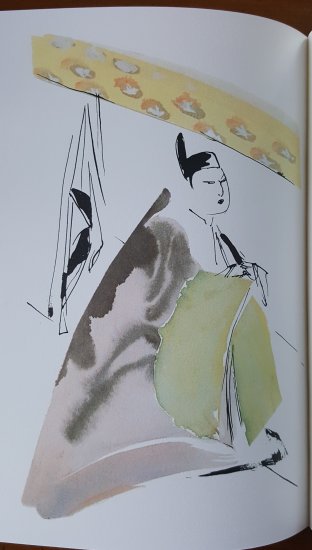
This beautiful Folio Society edition was first published by them in 1979 and my copy is the 4th printing from 2015, it is bound in black artificial moire silk blocked in gold with the title in Japanese characters. The original book was written during the late Heian Period, between 900 and 1000AD, by one of the ladies at the Japanese emperors court and is a rather strange combination of observations, being whatever she felt like writing down at the time. The translation used is that of Ivan Morris from 1967 and he has numbered each of the entries unlike some other translators. It is literally a pillow book because it was a notebook kept by the bed for use when inspiration struck some of the entries are fascinating glimpses into life at court whilst others are just odd lists of objects or places for example entry 140:

Things That Give a Clean Feeling
An earthen cup. A new metal bowl. A rush mat. The play of the light on water as one pours it into a vessel.
A new wooden chest.

Others really are simple lists as in section 108

Hot Springs
Nanakuri, Arima and Tamatsukuri

There are about 150 of these simple lists on subjects as varied as Peaks, Plains, Markets etc. spread through the text. Whether they were just particular favourites it is impossible to tell as very rarely is any context given. The third passage however lets us visit the court itself…

Especially delightful is the first day of the First Month, when the mists so often shroud the sky. Everyone pays great attention to his appearance and dresses with the utmost care. What a pleasure it is to see them all offer their congratulations to the Emperor and celebrate their own new year!

This is the day when members of the nobility who live outside the Palace arrive in their magnificently decorated carriages to admire the blue horses. As the carriages are drawn over the ground-beam of the Central Gate, there is always a tremendous bump, and the heads of the women passengers are knocked together; the combs fall out of their hair, and may be smashed to pieces if the owners are not careful. I enjoy the way everyone laughs when this happens.

I remember one occasion when I visited the Palace to see the procession of blue horses. Several senior courtiers were standing outside the guard-house of the Left Division; they had borrowed bows from the escorts, and, with much laughter, were twanging them to make the blue horses prance. Looking through one of the gates of the Palace enclosure, I could dimly make out a garden fence, near which a number of ladies, several of them from the Office of Grounds, went to and fro. What lucky women, I thought, who could walk about the Nine-Fold Enclosure as though they had lived there all their lives! Just then the escorts passed close to my carriage, remarkably close, in fact, considering the vastness of the Palace grounds, and I could actually see the texture of their faces. Some of them were not properly powdered; here and there their skin showed through unpleasantly like the dark patches of earth in a garden where the snow has begun to melt. When the horses in the procession reared wildly, I shrank into the back of my carriage and could no longer see what was happening.

It is fascinating to see what happens during the period of appointments. However snowy and icy it may be, candidates of the Fourth and Fifth Ranks come to the Palace with their official requests. Those who are still young and merry seem full of confidence. For the candidates who are old and white-haired things do not go so smoothly. Such men have to apply for help from people with influence at Court; some of them even visit ladies-in-waiting in their quarters and go to great lengths in pointing out their own merits. If young women happen to be present, they are greatly amused. As soon as the candidates have left, they mimic and deride them, something that the old men cannot possibly suspect as they scurry from one part of the Palace to another, begging everyone, “Please present my petition favourably to the Emperor” and “Pray inform Her Majesty about me.” It is not so bad if they finally succeed, but it really is rather pathetic when all their efforts prove in vain.

This passage is quite revealing about Sei, she is quite often arrogant and demeaning to others, she also finds it funny to cause problems for people she regards as her social inferiors. In this she is not alone at least according to her own accounts. Entry 292 describes an encounter with a man who has lost everything when his house burnt down following a fire in the Imperial haylofts…

We all burst out laughing at this, including the mistress of the robes; I took a sheet of paper and wrote

If the vernal sun burns strong enough
To sprout the young grass roots
Even a place like Yodo plain
Can ill survive its heat

‘Kindly give him this’ I told Mama throwing the paper to her. With loud laughter Mama handed the paper to the man.

They then instructed him to get somebody to read it to him and set off to the palace roaring with laughter as he set off believing that he had a record slip granting him money. She also claims that when the Empress was told about this she also found if funny.

But for all the casual cruelty of her interactions with others the book is still an important document into the lives of Japanese courtiers over 1000 years ago. She is free (and frequent) with her choice of lovers and this is also clearly normal as is the expectation that as soon as the gentleman has gone home in the morning that he would write a carefully considered letter to her using his finest calligraphy and choose a handsome page to deliver it. We are further told that he should not rush off on leaving in the morning but should linger a while, however if he is leaving during the night then spending time getting formally dressed is not acceptable as who would see him and he should just go when decent. What things look like or at least appear is everything to the ladies of the court, a deep knowledge of poetry and an ability to produce their own lines at a moments notice and of course write them with beautiful lettering is vital.

20190917 The Pillow Book 2

I was simultaneously fascinated by and surprised by the details in this book, admittedly as Sei herself says at the end this was not intended for publication, it was her notes for her own pleasure, but it has gone on to be one of the classics of Japanese literature. We do not even know her real name, Sei is either a pseudonym or possibly a family name and Shōnagon is actually her title (a minor counsellor of the fifth rank). She was however of the class that would place her in the court as a daughter of a provincial governor and a long distant descendant of the former Emperor Temmo (630 to 686AD). She was a part of the Yokihito, literally ‘The Good People’. who comprised the aristocracy, and they preserved a complete lack of knowledge and indeed interest of the Tadahito, ‘Mere People’, which comprised the vast majority of the Japanese population. As such she can tell us nothing regarding the life of most Japanese at the time but the rarefied existence at the very top that she enjoyed is fascinating. In fact the Emperor whilst running the country at least in name was for centuries merely a puppet of the Fujiwaras family who were careful to never actually become Emperor but were always the power behind the throne and ensured that the cultivated art inspired court remained completely distant from the people so they could get on with actually controlling the country.

It was an interesting time, the Heian period lasted well over three centuries and there are few other records for us to see what was happening during that period. Sei Shōnagon has left us this record and it is well worth finding a copy and reading.

Note: I have now seen the Penguin Classics version of Ivan Morris’s translation, first published in 1971, and in that he edited it to remove the simple lists so that instead of 326 sections there are only 185. This means that the section numbers above don’t work with this edition. I have therefore given below a cross-reference for passages quoted above:

  • 140 – Things that give a clean feeling becomes 97
  • 108 – Hot Springs is omitted
  • 3 – Especially delightful is the first day becomes 2
  • 292 – We all burst out laughing becomes 168

Sherlock Holmes – Arthur Conan Doyle – 4

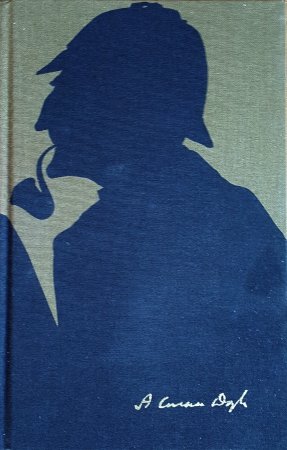
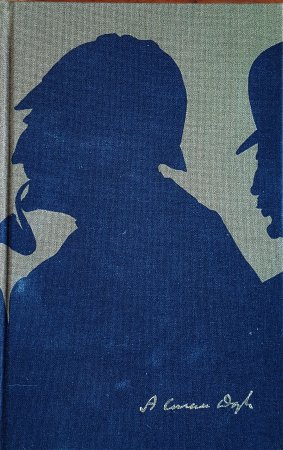
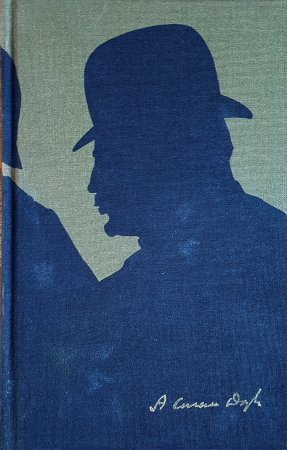
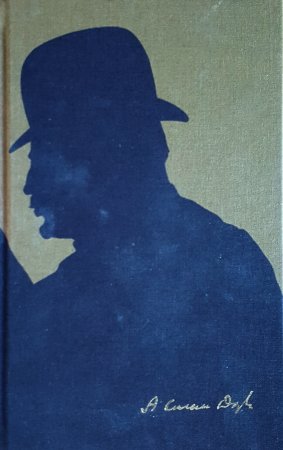
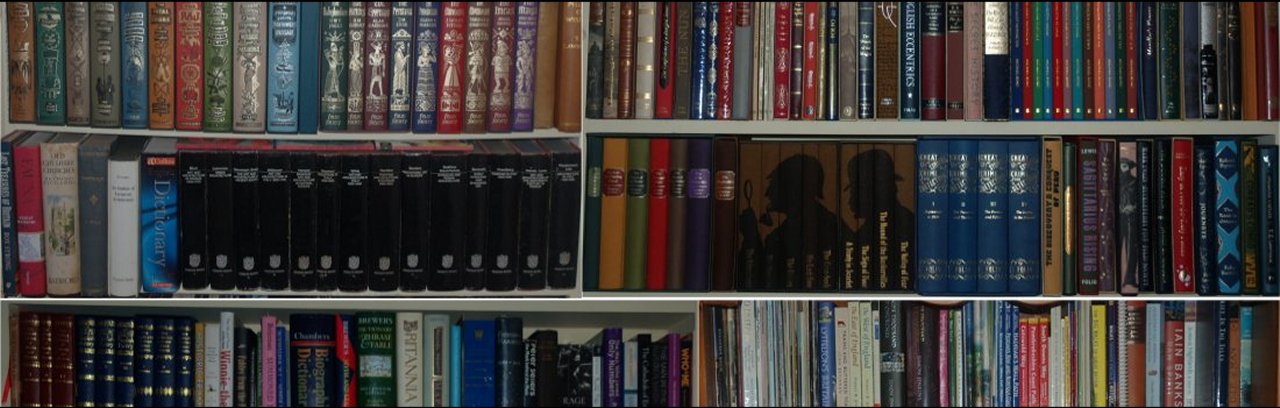
The final stage of my August reading marathon of the complete Sherlock Holmes stories by Sir Arthur Conan Doyle in an edition published by The Folio Society. The set consists of five volumes of short stories issued in 1993 and four volumes of novels which came out the following year. The series has a very attractive binding of an offset wrap around design on each book which makes the spines also display the image and appropriately the books are printed using the Baskerville font.

20190806 Sherlock Holmes 1

Two novels and fifty six short stories down, just two novels to go to complete the exercise

20190827 Sherlock Holmes 1

The Hound of the Baskervilles

As mentioned in last week’s blog “The Hound of the Baskervilles”  appeared in Strand magazine in August 1901 was serialised over the following eight months. Doyle did not intend this to be a reboot of the series and it is deliberately set before the ‘death’ of Holmes in “The Final Problem”. It appeared in book form in 1902 and the next year Doyle gave in to public pressure and ‘resurrected’ his most famous creation. The first two novels had disappointed me but this was an excellent adventure well told. In the many years, if not decades, since I last read it I had managed to completely forget the plot other than a vague memory of a luminous dog chasing people to their death so the solution was still a revelation to me.

It all starts with the arrival at Baker Street of Dr Mortimer, a country physician from Devon with the strange tale of a curse on the Baskerville family from the time of the English Civil War when Hugo Baskerville had kidnapped the beautiful daughter of a neighbour intending to force her to marry him. The maiden escapes and he sets off to hunt her across the moor having first offered his body and soul to the Devil if he could catch her. Catch her he did but with a tragic end as found by three of his friends who followed him.

The moon was shining bright upon the clearing, and there in the centre lay the unhappy maid where she had fallen, dead of fear and of fatigue. But it was not the sight of her body, nor yet was it that of the body of Hugo Baskerville lying near her, which raised the hair upon the heads of these three dare-devil roisterers, but it was that, standing over Hugo, and plucking at his throat, there stood a foul thing, a great, black beast, shaped like a hound, yet larger than any hound that ever mortal eye has rested upon. And even as they looked the thing tore the throat out of Hugo Baskerville, on which, as it turned its blazing eyes and dripping jaws upon them, the three shrieked with fear and rode for dear life, still screaming, across the moor. One, it is said, died that very night of what he had seen, and the other twain were but broken men for the rest of their days.
“Such is the tale, my sons, of the coming of the hound which is said to have plagued the family so sorely ever since.

Holmes is not interested in superstitious “fairy tales” and says so but Dr Mortimer does catch his attention when he says that the the most recent owner of Baskerville Hall had died of heart failure in the grounds and near the body was “the footprints of a gigantic hound!” There is but one remaining Baskerville to inherit the estate and he is to arrive in London from Canada that very day and Mortimer wants to know what to do. Hugo Baskerville duly arrives at Baker Street and the fact that he is clearly being followed by somebody and even more peculiarly has had two of his boots stolen on separate nights convinces Holmes that there is more to this case than superstition but apparently he is too busy in London to look into it in person so Watson will have to go.

All this happens in the first five chapters and for the next six (90 out of the 211 pages in my edition) the case is solely pursued by Watson and we get his reports back to Holmes along with extracts from his diary as the narrative. I really enjoyed the way Doyle wrote this, it was good to see Watson at work rather than just following Holmes and reporting on his actions. The addition of an escaped prisoner from the high security prison on the moor further complicates the tale and leads Watson down other tracks other than those immediately involved in the case in hand. The reappearance of Holmes in the story with just 59 pages to go is the signal for the various strands of the case that have been apparently heading off in various directions to be drawn together, even that of the convict is significant right until the end. It’s a great story, far better than the first two Holmes novels and makes me look forward all the more to the final book in this reading marathon.

20190827 Sherlock Holmes 2

The Valley of Fear

First serialised in The Strand Magazine between September 1914 and May 1915 “The Valley of Fear” was published in book form in February 1915 in America by George H Doran and in June that year the UK edition came out published by Smith, Elder and Co. this was the only time that the American edition preceded the UK one for any of the nine books.

OK at halfway through this book I felt a deep sense of disillusionment, here we are back to the worst aspects of the first two novels, lots of back story with no Holmes and Watson, in this case far worse than those books as over half the book is back story. But I persevered and I’m glad I did so because whilst it doesn’t involve our heroes it actually reads like a separate novella which includes a couple of the characters from the Sherlock novella making up the first half. The first part (99 pages in my edition) is an excellent Holmes and Watson tale which is complete in itself, there is no real need for the American adventure in part two other than to pad the story out to novel size. When read in the original serial I’m sure readers felt they were being short changed as the 107 pages (again my edition) that has no Holmes, but instead is a Pinkerton Detective Agency mystery, would have made up probably five months of the magazine.

The Holmes story is probably the closest Doyle gets to the classic ‘locked room mystery’ there is no obvious way for the culprit to escape as each possible solution is shot down by the ridiculousness of the events needed to affect such an escape. And there is also The Case of the Missing Dumbbell to solve! The mystery is maintained until the last few pages and it is an excellent place to finish my Holmes and Watson marathon; but it isn’t where it ends. There are still the 107 pages of Pinkerton and 3 pages of epilogue to go. Now I said at the start of this review that I wasn’t happy with the way the novel was split but unlike the first two novels, where it really did feel like padding, the non-Holmes story was actually very good and written (and consequently could be read) as a complete separate work. It also has to be said that I worked out who Jack McMurdo was, not just in his alias in this part of the book relating to the first, but also his real profession within a few pages so there was absolutely no surprise at the end. Neither was the epilogue unexpected as Professor Moriarty had been mentioned at the start so I was fully prepared for him to act at the end but I did really enjoy this story after I got past my initial disappointment.

This marathon reading of the Holmes and Watson books by Sir Arthur Conan Doyle has been great fun, some I have read within the last few years, others (like the two here) it has been decades since I last tackled them but I’m very glad I gave them all a go this month and I recommend anyone to dip into the stories and enjoy the evolution of one of the greatest fictional detectives.

Sherlock Holmes – Arthur Conan Doyle – 3

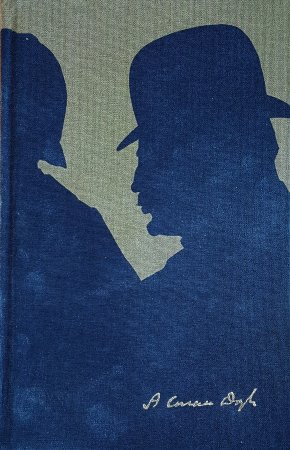
Part three of the reading marathon of the complete Sherlock Holmes stories by Sir Arthur Conan Doyle in an edition published by The Folio Society. The set consists of five volumes of short stories issued in 1993 and four volumes of novels which came out the following year. The series has a very attractive binding of an offset wrap around design on each book which makes the spines also display the image and appropriately the books are printed using the Baskerville font.

20190806 Sherlock Holmes 1

So far I have read the first two novels and the first two sets of short stories, this takes us up to the disappearance of Holmes in “The Final Problem” where Sherlock apparently fell to his death from the Reichenbach Falls whilst combating Professor Moriarty.  This had been printed in December 1893 and there the stories appeared to end. In August 1901 however a new Sherlock Holmes story appeared, although set before the events in “The Final Problem”; “The Hound of the Baskervilles” was serialised over the following eight months in the Strand magazine and by the end the clamour for more Holmes stories was irresistible regardless of how much Doyle claimed he didn’t want to write any more he had opened the floodgates and was swept along. Again there are minor spoilers below as it is difficult to review the stories without having them but no plot resolutions are included.
20190820 Sherlock Holmes 1

The Return of Sherlock Holmes

This consists of thirteen short stories originally printed in The Strand magazine between 1903 and 1904, the collection was first published in book form 1905 and the stories are as follows:

  • The Adventure of the Empty House
  • The Adventure of the Norwood Builder
  • The Adventure of the Dancing Men
  • The Adventure of the Solitary Cyclist
  • The Adventure of the Priory School
  • The Adventure of Black Peter
  • The Adventure of Charles Augustus Milverton
  • The Adventure of the Six Napoleons
  • The Adventure of the Three Students
  • The Adventure of the Golden Pince-Nez
  • The Adventure of the Missing Three-Quarter
  • The Adventure of the Abbey Grange
  • The Adventure of the Second Stain

Although Holmes had been away from print for eight years Dr. Watson makes it quite clear in “The Adventure of the Empty House” that he had actually vanished for just three years as this story is set in 1894. In this tale he explains his absence as he needed to be in hiding from members of Moriarty’s gang who wanted to avenge their leaders death, for indeed he had died in the incident at the falls at the end of the last book. To this end Holmes had been travelling the world, including a significant amount of time in Tibet in the guise of a Norwegian called Sigurdson. By the time he introduces himself to Watson again only one danger remains at large and he seeks assistance in dealing Colonel Moran who will probably try to assassinate him that very evening. The capture of Moran, in a more dramatic manner than Holmes intended, does indeed occur that night and the two men return to Baker Street to renew their friendship.

Also in the first tale we learn that Mary has died and Watson is again alone. At the start of “The Adventure of the Norwood Builder” Watson has been persuaded by Holmes to sell his medical practice and move back in to 221b Baker Street. So Doyle has got rid of the awkward plot narratives of the second set of short stories where one of them needed to go to fetch, or visit, the other before things could happen. All the stories where a date is identifiable are set after Holmes return and Watson comments that they represent a tiny fraction of the cases handled in the ten years since 1894. But again Doyle is clearly planning to stop writing about our favourite detectives as he has Watson explain at the start of “The Adventure of the Second Stain”.

I had intended “The Adventure of the Abbey Grange” to be the last of those exploits of my friend, Mr. Sherlock Holmes, which I should ever communicate to the public. This resolution of mine was not due to any lack of material, since I have notes of many hundreds of cases to which I have never alluded, nor was it caused by any waning interest on the part of my readers in the singular personality and unique methods of this remarkable man. The real reason lay in the reluctance which Mr. Holmes has shown to the continued publication of his experiences. So long as he was in actual professional practice the records of his successes were of some practical value to him; but since he has definitely retired from London and betaken himself to study and bee-farming on the Sussex Downs, notoriety has become hateful to him, and he has peremptorily requested that his wishes in this matter should be strictly observed.

It was only because the last tale had apparently been promised earlier that Holmes allows it to be told. The stories in this collection are nearly all good reads, only one as far as I am concerned, “The Adventure of the Missing Three-Quarter”, fails in this regard and as it is one of the shortest examples it doesn’t really let down the book as a whole. Speaking of length I should really have checked how many pages I have to read this week to maintain the schedule, this book is 311 pages, next comes 195 pages and then 241 making a total of 747 and I also have to write around 3000 words, this is tight.

Two of the stories, “The Norwood Builder” and “The Golden Pince-Nez” rely on very similar solutions to the big reveal although they are handled differently and both are excellent tales.  “The Norwood Builder” also has a reference to the uniqueness of fingerprints which Holmes states that he has heard of. This story is set in 1894 so this was very new at the time as it was only in 1892 that the first book on the possible use of fingerprints for criminal detection was published. “The Dancing Men” is another example of Holmes defeating an American gangland member in this case by breaking what is actually quite a simple cypher. We also have several tales that revolve around the English nobility, two of which “Charles Augustus Milverton” and “The Second Stain” are blackmail cases where a lady’s indiscreet letters from before her marriage are to be sent to her husband or else. These very much rely on the strict Victorian morals to make much sense nowadays as a basis for murder. “Black Peter” has an interesting misdirection in the clues presented to us whilst “The Three Students” has, as the title suggests, just three possible malefactors, in this case which of the three students took an opportunity to cheat by copying the paper for an exam they were about to sit.

All in all this was an excellent collection of stories but there will now be another, although shorter, break in Doyle writing any more Holmes and Watson tales as yet again he tries to bring the series to an end.
20190820 Sherlock Holmes 2

His Last Bow

Six of the stories included in this volume were originally printed in The Strand magazine between 1908 and 1913, one other from 1892 (the Cardboard Box) had appeared in the first edition of “The Memoirs of Sherlock Holmes” but was dropped from some further editions and the title story was first published by Collier’s in 1917; the complete collection was published in 1917 and with just eight tales it is the shortest of the anthologies:

  • The Adventure of Wisteria Lodge
  • The Adventure of the Cardboard Box
  • The Adventure of the Red Circle
  • The Adventure of the Bruce-Partington Plans
  • The Adventure of the Dying Detective
  • The Disappearance of Lady Frances Carfax
  • The Adventure of the Devil’s Foot
  • His Last Bow: The War Service of Sherlock Holmes

The book starts with a preface by Dr. Watson which reinforces his comments at the start of the previous volume.

The friends of Mr. Sherlock Holmes will be glad to learn that he is still alive and well, though somewhat crippled by occasional attacks of rheumatism. He has, for many years, lived in a small farm upon the Downs five miles from Eastbourne, where his time is divided between philosophy and agriculture. During this period of rest he has refused the most princely offers to take up various cases, having determined that his retirement was a permanent one. The approach of the German war caused him, however, to lay his remarkable combination of intellectual and practical activity at the disposal of the Government, with historical results which are recounted in His Last Bow. Several previous experiences which have lain long in my portfolio have been added to His Last Bow so as to complete the volume.

John H. Watson, M.D

These asides to the reader are great fun and add to the realism of the two characters. The self awareness of the two men, with Holmes regularly complaining in the stories about the ‘sensationalism’ in Watson’s writing up of his cases, is one of the things that make the Sherlock Holmes stories so different from anything else and make them far more engaging personalities. I’ve been looking forward to getting to this collection as ‘the Bruce-Partington Plans’ is one of my favourites of the tales.

The oddest part of this sequential reading is something I hadn’t noticed before and that is just how much the first few pages of ‘The Adventure of the Cardboard Box’ are almost identical to that of ‘The Resident Patient’ in the edition that I have. It appears that Doyle was rather fond of ‘the mind reading experiment’ that Holmes performs on Watson in that section and when the Cardboard Box was not included in subsequent editions of ‘The Memoirs’ collection he simply rewrote the start and tacked it onto the other story.  Whilst reading this volume just a few days later however it was immediately clear that I had read those four pages before, if with slight changes. Editions exist with both stories in the same book and when that is the case ‘the mind reading’ only happens in The Cardboard Box, this was confirmed by my Catalan friend Mixa as her copy does indeed have both tales. However on with the review of the stories as told in this volume.

The first story along with ‘The Red Circle’ feature Inspector Gregson of Scotland Yard whom we have only previously heard of at that rank in ‘The Greek Interpreter’ from ‘The Memoirs’, although he also is a main character in the first Holmes novel ‘A Study in Scarlet’. In that work he was really just a foil to Holmes’ brilliance as he is regularly being shown to be wrong in his deductions. In ‘The Greek Interpreter’ he was very much a bit part but now he has come on in leaps and bounds. In ‘Wisteria Lodge’ he follows his own enquiries, which in previous Holmes novels would result in whichever official detective is involved being shown the error of their ways before long, but in this case he works out the solution just as Holmes does. In ‘The Red Circle’ he is actually working on the same case but from a completely different angle and the two men only become aware of the others involvement at the denouement. Having a Scotland Yard detective proving to be just as good as Holmes at following the clues is a pleasant change so both stories have a lot to recommend them even before they prove to be excellent mysteries. The Cardboard Box is the weakest story in the collection which is probably why Doyle felt safe in extracting its start as he probably assumed it wouldn’t end up being reprinted. he had no expectation of writing more stories about Holmes when the book was published and it would be a shame to waste the best bit of the tale.

Next comes ‘the Bruce-Partington Plans’, I like this because there are two mysteries in one which have to be solved, who stole the plans and what did they do with them? along with how did the body of the main suspect, Arthur Cadogan West, come to be where it was found? The answer to the first proves to be rather simpler than the second but is also the last to be revealed. The structure of the short story draws the reader along in a very satisfying way. In ‘the Dying Detective’ Holmes already knows the solution to the case from the start and we instead follow his trap for the murderer and his explanation at the end is the first we get to know about what he has been working on. A very nice twist to the narrative structure which shows Doyle’s mastery of his craft at this stage of his career.

Another variant is seen in ‘The Disappearance of Lady Frances Carfax’ this time instead of Holmes being the detective he sends Watson off on a chase around Europe looking for the missing lady only to eventually become exasperated by his failure to catch up with her and have to get involved after all. They jointly rescue her, but with only minutes to go. ‘The Devil’s Foot’ is one of those tales which I thought we had seen the last of as it is based around a narcotic with unusual properties that Doyle has invented. This means that the reader can have no real feel for the story as the solution is hidden in a fantasy product.

Finally we come to the title story, written much later than the other works, it has Holmes pulled out of retirement a couple of years before the First World War by the urging of the Prime Minister to crack a German spy network before they can obtain military secrets which would assist them greatly in the expected conflict. This he duly does although only just in time as it takes him a lot of that time to infiltrate the organisation. It has a very different feel to any previous Holmes and Watson story and definitely gave the impression that Holmes will at last be allowed to disappear into retirement this time for good, although of course the existence of another volume on my shelf means that this wasn’t to happen.
20190820 Sherlock Holmes 3

The Case-Book of Sherlock Holmes

This consists of twelve short stories originally printed in various magazines between 1921 and 1927, the collection was first published in book form 1927 and the stories are as follows:

  • The Adventure of the Illustrious Client
  • The Adventure of the Blanched Soldier
  • The Adventure of the Mazarin Stone
  • The Adventure of the Three Gables
  • The Adventure of the Sussex Vampire
  • The Adventure of the Three Garridebs
  • The Problem of Thor Bridge
  • The Adventure of the Creeping Man
  • The Adventure of the Lion’s Mane
  • The Adventure of the Veiled Lodger
  • The Adventure of Shoscombe Old Place
  • The Adventure of the Retired Colourman

Doyle by this time has stopped having Watson saying this will be the last collection and instead wrote an introduction under his own name where he acknowledges the significance of the story arc and finally recognises that it hasn’t really detracted from what he sees as his more ‘serious’ work but there will be no more and this time he means it. Let us however start with what must be the worst of the Holmes stories in any collection ‘The Adventure of the Creeping Man’ just to get it out of the way. I have no compunction in revealing that this case is based on the nonsensical concept that the taking of extracts of monkey glands to ‘enhance an older man’s prowess with a much younger lady’ would either work or even more ridiculously lead to him acting like an ape and able to scale sheer walls with the aid of guttering and window ledges just like one and then running round on all fours dragging his knuckles on the ground. Doyle was clearly following one of his madder moments when he wrote this, much like his belief in spiritualism or fairies at the bottom of the garden.

That said the remaining eleven tales are very good. ‘The Adventure of the Three Garridebs’ takes back to familiar territory first trodden with the ‘Red Headed League’ where it is necessary to lure somebody out of their home in order to achieve a nefarious act but with again a twist to make the story interesting although as 33 years separate the writing of the stories it is only when reading them one after another that this becomes so obvious. Two of the tales are written by Holmes rather than Watson, the first ‘The Blanched Soldier’ is apparently because after criticising the good doctor’s style for many years and being told to “Try it yourself, Holmes!” he feels he really ought to have a go. The second, ‘The Lion’s Mane’ is because it occurs well after Holmes’ retirement to the South Coast and Watson is simply not around. Both cases are interesting, although ‘The Lion’s Mane’ has quite an obvious solution right at the beginning and the switching of the narrative style works surprisingly well although Holmes does complain that it makes the writing more difficult.

And here it is that I miss my Watson. By cunning questions and ejaculations of wonder he would elevate my simple art, which is but systematised common sense, into a prodigy. When I tell my own story I have no such aid.

The other eight cases presented in this final volume are all equally strong and mark a fitting end to the Holmes saga. I particularly enjoyed ‘Thor’s Bridge’ for its ingenious solution and ‘The Sussex Vampire’ also has much to recommend it. The final story was actually ‘Shoscombe Old Place’, printed in April 1927, forty years after the publication of ‘A Study in Scarlet’ and three years before the death of Sir Arthur Conan Doyle. He would write another novel and several stories and articles for The Strand magazine in the intervening years including an obituary of the cricketer W.G. Grace, but nothing more about his great detective.

Next week I will read the final two novels written well before this final set of stories but it seemed logical that once I had started on the short stories I would carry through to the end and Holmes is nothing but logical.
 

Sherlock Holmes – Arthur Conan Doyle – 2

Continuing reading the complete Sherlock Holmes stories by Sir Arthur Conan Doyle in an edition published by The Folio Society. The set consists of five volumes of short stories issued in 1993 and four volumes of novels which came out the following year. The series has a very attractive binding of an offset wrap around design on each book which makes the spines also display the image and appropriately the books are printed using the Baskerville font.

20190806 Sherlock Holmes 1

Last week I read the first two novels as these preceded the appearance of Holmes in short story format however it is now time to tackle the first twenty three short stories in volumes one and two of the set I have.  The first group of short stories is collectively titled…

20190813 Sherlock Holmes 1

The Adventures of Sherlock Holmes

This consists of twelve short stories and in this edition it also has a short introduction by Peter Cushing who played the part of Holmes many times both in film and on television. Originally printed in The Strand magazine between 1891 and 1892, the collection was first published in book form in 1892 and the twelve stories are as follows:

  • The Adventure of a Scandal in Bohemia
  • The Adventure of the Red Headed League
  • The Adventure of a Case of Identity
  • The Adventure of the Boscombe Valley Mystery
  • The Adventure of the Five Orange Pips
  • The Adventure of the Man with the Twisted Lip
  • The Adventure of the Blue Carbuncle
  • The Adventure of the Speckled Band
  • The Adventure of the Engineer’s Thumb
  • The Adventure of the Noble Bachelor
  • The Adventure of the Beryl Coronet
  • The Adventure of the Copper Beeches

I do not propose to review each story as that would make this blog excessively long and I am also concerned about revealing too much about the plots, but let’s look briefly at each, there may be small spoilers ahead but nothing that gives away solutions. However I do need to answer a question posed at the end of last weeks review, where is Watson? Straight away on the first page of Scandal in Bohemia we find

I had seen little of Holmes lately. My marriage had drifted us away from each other.

Watson had indeed moved out and Holmes was now living alone in Baker Street and for the most part the stories in this volume deal with cases after that separation. But the Speckled Band specifically mentions that it occurred before Watson’s marriage to Mary, but only now can Watson reveal it to the world as the lady concerned in the case had passed away. This story also includes the information that some seventy cases had been documented by Watson over the first eight years of his friendship with Holmes so Doyle was clearly already allowing for a significant number of stories to be eventually written even if he didn’t increase the time line any further. The last three tales also relate to the time before Watson’s marriage, The Noble Bachelor specifically states that it occurs a few weeks before he moves out whilst the other two are clearly set whilst the two men are sharing the apartment.

Going back to Scandal in Bohemia, this is the only time that Holmes would be defeated by a woman,  although later on in this book he also admits to three failures against male opponents.  Irene Adler not only bamboozles Holmes but has the nerve to speak to him whilst in disguise outside his own home. so he greatly admires her, keeping a picture of her in 221b Baker Street. The next three tales are a bit of a let down as it is obvious what is going on and who the respective culprits are well before the end however the Five Orange Pips, which is the first ‘old’ tale i.e. before Watson’s marriage and has interest as it is effectively Holmes versus The Ku Klux Klan or at least the remnants of its first incarnation. When Doyle wrote this story the KKK was a thing of the past having effectively died out in the mid 1870’s and it wouldn’t be revived until 1915.

The next three stories, along with the Copper Beeches are my favourites from this set with enough detail given to make it possible to reason along with Holmes as he solves the cases but with enough of a twist to make them interesting. The Engineers Thumb is another where Holmes fails to capture the perpetrators but you do still get a satisfactory resolution to the case however the solution to The Noble Bachelor revolves around the price of a hotel room being high, but it is just given as eight shillings, which a reader from over a century later simply has no idea if that is high, low or a median for London prices at the time. This leaves The Beryl Coronet which frankly has a ridiculous plot device that a banker is worried about a famous treasure being stolen from the safe in his bank so takes it home and locks it in a bureau which has such a poor lock that pretty well any key will spring the drawer, and having first shown it to everyone in the house.

On to the second volume of short stories.

20190813 Sherlock Holmes 2

The Memoirs of Sherlock Holmes

Again all the stories were originally printed in The Strand magazine, this time between 1892 and 1893; the collection was first published as a book in 1894 and there are eleven stories included as follows:

  • Silver Blaze
  • The Yellow Face
  • The Stockbroker’s Clerk
  • The Gloria Scott
  • The Musgrave Ritual
  • The Reigate Squires
  • The Crooked Man
  • The Resident Patient
  • The Greek Interpreter
  • The Naval Treaty
  • The Final Problem

I enjoyed this selection rather more than the first, it gets off to a great start with Silver Blaze which is a really good story about a murder and a missing racehorse although the denouement would certainly not be allowed in modern times and I doubt it would have been possible back in the 1890’s either. One of the joys of this collection is that unlike the first there is no obviously weak story, Doyle appears to have gained mastery of the difficult genre of mystery short stories. Considering that the entire tale from setting out the original position, through investigation and then to the conclusion has to be done in such a condensed manner, the eleven cases here average just over 8,100 words each, this is quite a challenge and that all of them work well says a lot about his improved abilities as a writer in this style over the first collection.

There are really just ten cases in this collection as The Final Problem is supposedly written by way of an obituary and description of how Holmes met his death at the Reichenbach Falls whilst fighting Professor Moriarty, but published two years after it happened.  Doyle must have realised that separating his two compatriots was not really a good idea so only three stories are set after Watson married Mary, these are The Stockbrokers Clerk, The Crooked Man and The Naval Treaty. There are also a couple of tales set before Holmes and Watson met (The Gloria Scott and The Musgrave Ritual) where Holmes is telling Watson about the cases which alters the narrative structure. The Gloria Scott is apparently the first ever case that Holmes was consulted on and he clearly enjoys telling the tale. The Musgrave Ritual is his third and is more of a treasure hunt rather than one of his more usual endeavours. I like this structure of the two men just discussing a case in their apartment and I hope there will be more like this in the further books. The other five tales are set during the time whilst the two men are sharing 221b Baker Street.

The Greek Interpreter marks the first appearance of Mycroft Holmes, Sherlock’s older and even more astute brother, and is technically another of his few failures as although he saves his client the protagonists get away. The Resident Patient also has the wanted men escape but at least we get to understand what and why they do what they do. Probably the weakest story included is The Stockbrokers Clerk and that would have been fine apart from the fact that the plot is quite similar to The Red Headed League, although the ultimate reason is different.

It is difficult to pick out a favourite, The Yellow Face has an interesting twist at the end and for a change Holmes is not dealing with a crime, just a mysterious circumstance. I also liked the Naval Treaty particularly as it is one of the few examples of Holmes showing a sense of humour along with an urge to be dramatic in his final reveal. I think these have to be joint favourites and as I said at the start of the review of The Memoirs the writing is definitely better than the first collection.

And there this reading marathon of the tales of Sherlock Holmes and Dr. Watson should have ended. Doyle made it quite clear in 1893 that he had no intention of writing any further stories about the duo which is why he killed off his hero in his Final Problem as he wanted his other works to be appreciated more.

However after a break of eight years Holmes would be back…

It remains for me to provide a link to my Catalan friend Mixa’s, reviews of my second weeks books which we read simultaneously. The Google created English translations are readable if not very good English but at least you get the feel for what she wrote.

The Adventures of Sherlock Holmes

Original Catalan

Translation to English via Google

The Memoirs of Sherlock Holmes

Original Catalan

Translation to English via Google


Sherlock Holmes – Arthur Conan Doyle – 1

Last August I completed a reading challenge of all ten books in the first Penguin Books crime set from 1938. So this month I have decided to also attempt more than the expected four books by tackling the complete Sherlock Holmes stories by Sir Arthur Conan Doyle as published by The Folio Society. The set consists of five volumes of short stories issued in 1993 and four volumes of novels which came out the following year. The series has a very attractive binding of an offset wrap around design on each book which makes the spines also display the image and appropriately the books are printed using the Baskerville font. My copies are well read and the titles on the short stories are badly worn, although looking at other examples in various bookshops this does seem to be a common feature of this particular edition.

20190806 Sherlock Holmes 1

Now although this looks like a logical reading order in fact Doyle wrote the first two novels “A Study in Scarlet” and “The Sign of Four” before he produced any short stories so in fact a better reading sequence is those books this week, followed by the short stories then finally the last two novels. Although novel number three “The Hound of the Baskervilles” is set during the time of the first two collections of short stories it didn’t actually come out until much later and it doesn’t affect time lines too much to leave the last two novels until the end as they both are looking back on past cases.

As last year I will be writing about each volume as I go along rather than waiting for completion so without further ado lets jump in with the first two novels

20190806 Sherlock Holmes 2

A Study in Scarlet

This is the first appearance of Holmes and Watson and originally appeared in print in the 1887 Beeton’s Christmas Annual before being published in book form in July 1888.

“Dr. Watson, Mr. Sherlock Holmes,” said Stamford, introducing us.

“How are you?” he said cordially, gripping my hand with a strength for which I should hardly have given him credit. “You have been in Afghanistan, I perceive.”

“How on earth did you know that?” I asked in astonishment.

“Never mind,” said he, chuckling to himself.

and so a partnership was born…

The book fairly rattles along, just ten pages in Holmes and Watson are ensconced in 221b Baker Street and Holmes has started his work much to the puzzlement of Watson. The two men are after all just sharing the property there is no indication that Watson would get involved in anything in fact he is specifically looking for a quiet life whilst recovering from his injuries from the war in Afghanistan. Watson however is intrigued as to what Holmes is up to and creates a list of attributes to try to work it out, these include him knowing nothing of literature, astronomy or philosophy, whilst other things such as botany (natural poisons anyway) or geology (soils and clays) were specialised in the extreme. Chemistry and sensational literature however he was a complete master of; none of these items seem to make any sense though.

Another few pages and Holmes again demonstrates his deductive reasoning and explains he is a consulting detective just as he gets a message from Sergeant Gregson of Scotland Yard asking him to come to Lauriston Gardens; Watson joins him and so starts his journals that the Holmes stories are supposedly taken from. The case, to Holmes anyway, is absurdly simple. In fact so simple that by the eightieth page he has apprehended the murderer with the help of his street urchin employees also known as The Baker Street Irregulars, and there is where the book starts to fall apart. For the next fifty two pages are back story. Doyle writes well with the dynamic of Holmes and Watson along with the bungling Gregson and Lestrade from Scotland Yard but over fifty pages without any of these characters whilst he ranges over the settlement of the Mormons in Salt Lake City and the inter-family rivalries just plods along especially after the pace of the first half of the book. It is not even written as though being told to our protagonists it is just an over long history.

We finally get back to Holmes, Watson, Gregson, Lestrade and their prisoner in 221b with just 22 pages left for Watson’s journal to wrap up and the murderer to explain how and why he did it. Very much a book of two halves but with enough promising material regarding the great detective to make a sequel inevitable.

20190806 Sherlock Holmes 3

The Sign of Four

The second time out for Holmes was in the February 1890 issue of Lippincott’s Monthly Magazine issued jointly in the UK and US, and by October of that year it had been published as a standalone book.

Sherlock Holmes took his bottle from the corner of the mantel-piece and his hypodermic syringe from its neat morocco case. With his long, white, nervous fingers he adjusted the delicate needle, and rolled back his left shirt-cuff. For some little time his eyes rested thoughtfully upon the sinewy forearm and wrist all dotted and scarred with innumerable puncture-marks. Finally he thrust the sharp point home, pressed down the tiny piston, and sank back into the velvet-lined arm-chair with a long sigh of satisfaction.

The opening paragraph of The Sign of Four shows Holmes the drug addict, in this case injecting a seven percent solution of cocaine much to the disgust of Dr. Watson. This was turned into a particularly powerful scene in “The Secret of Sherlock Holmes”, a play starring Jeremy Brett and Edward Hardwicke that I saw in 1988 at Wyndham’s Theatre in London’s West End. These two actors, for me at least, are the definitive Holmes and Watson and to see Brett as Holmes in silhouette at the back of the stage injecting into his arm before the lights were cut at the end of the scene is a dramatic act that has stayed with me for over 30 years.

As for the book itself it is much better written than the first although there is again a large section of back story at the end. This time it is much shorter than in “A Study in Scarlet” and rather than being a standalone tale it is given as Jonathan Small telling his involvement in the crimes at 221b Baker Street with Holmes, Watson and in this case Athelney Jones of the Yard. This is a considerable improvement as the three can react to Jonathan Small’s story and there is no massive disjointed section. This is also the first appearance of probably the most famous Holmes quote

How often have I said to you that when you have eliminated the impossible whatever remains, however improbable, must be the truth?

Still back to the beginning, Dr. Watson is trying to draw Holmes away from the cocaine over breakfast the next day when a young lady by the name of Miss Mary Morstan arrives and lays out a singular problem for the great man. Her father had returned to England eleven years ago and disappeared without trace however each year for the last six she has received a fine pearl from an anonymous benefactor and now she has had a letter from him desiring her to be at the Lyceum theatre and she can bring two companions. Naturally Holmes and Watson are willing to go but for very different reasons, Holmes to solve a puzzle but Watson has fallen for Miss Morstan almost immediately and in this state would do anything for her.

Without giving away the plot, the pearls are quickly revealed to be part of a large treasure and in searching for the remainder Holmes engages the use of a scent hound to follow a creosote trail left by one of the culprits from a house in Norwood after he stepped in some of this highly pungent liquid, and this provides one of the few bits of genuine humour in the books as the dog getting confused by crossing trails eventually comes to its mark…

On the dog raced through sawdust and shavings, down an alley, round a passage, between two wood-piles, and finally, with a triumphant yelp, sprang upon a large barrel which still stood upon the hand-trolley on which it had been brought. With lolling tongue and blinking eyes, Toby stood upon the cask, looking from one to the other of us for some sign of appreciation. The staves of the barrel and the wheels of the trolley were smeared with a dark liquid, and the whole air was heavy with the smell of creosote.

Sherlock Holmes and I looked blankly at each other, and then burst simultaneously into an uncontrollable fit of laughter.

Another funny passage occurs with Watson attempting to take Miss Morstan’s mind off the danger they may be in with some of his tales from Afghanistan.

To this day she declares that I told her one moving anecdote as to how a musket looked into my tent at the dead of night, and how I fired a double-barrelled tiger cub at it.

His tongue-tied behaviour is somewhat explained at the end of the book when less than a week after first meeting her he explains to Holmes that he will no longer be available to accompany him on adventures as

Miss Morstan has done me the honour to accept me as a husband in prospective.

Next week I start on the short stories first printed in The Strand Magazine between 1891 and 1893. Will Watson still be living with Holmes or are he and Mary setting up home together with him merely reporting from the sidelines?