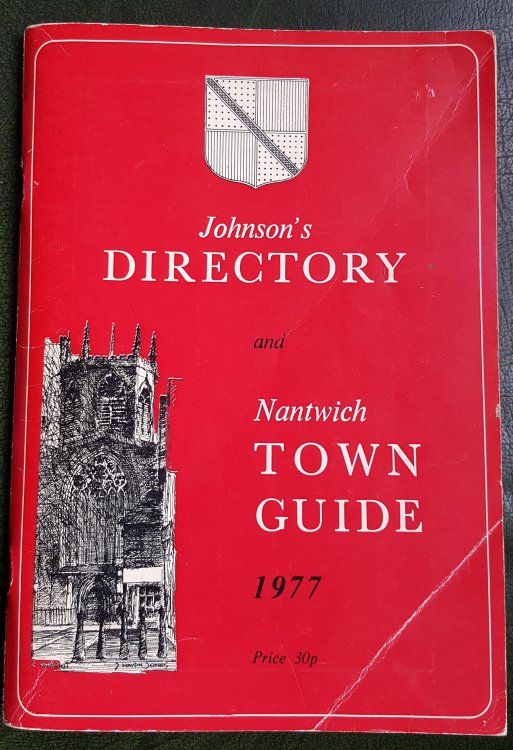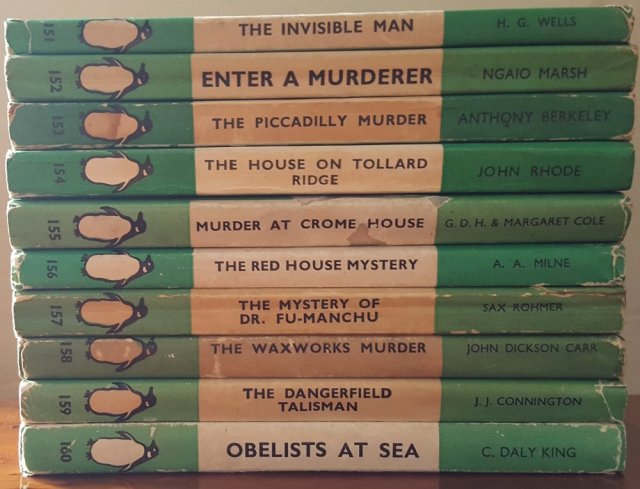
The Garden – Vita Sackville-West

20180410 The Garden 8

Well the weather still isn’t admitting it’s spring, it’s pouring down with rain as I write this, but maybe this will give it a prod in the right direction. The winter seems to be hanging on way too long when it is definitely time to think of that jewel of English houses, the garden.

Bubbles of colour striking through the bleak
Dun soil, surprising in a week,
As the low desert flowers after rain
Leap into being where they were not seen
Few hours before and soon are gone again
So in our English garden comes the Greek
Blue wind-flow’r cousin of the meek
Bashful anemone of English woods,
As thick as shingle strewn on Chesil Beach;
So comes the Lady Tulip, with her streak
Of pink that ribs her white; and through the green
Of young fine grass, The Glory of the Snow,
So blue, a smear of fallen sky; come each
In quick succession as they grow and blow
In liberal April, host to little guests;

Vita Sackville-West was a poet, a novelist, a prolific letter writer, a lover, but above all else was a gardener and amongst her works one of the least well known but most evocative of that side of her is a short collection of verse entitled The Garden. My copy is the first edition from 1946 published by Michael Joseph, which I bought from the shop at Vita’s own garden Sissinghurst Castle in Kent now run by the National Trust. Although she would live until 1962 this was her final book of verse, with 11 volumes of poetry preceding it and indeed she only wrote 3 novels after 1946, out of the 17 she produced in total, as she gradually faded from literary fashion.

Nowadays if Vita is remembered at all it is for two things, her garden at Sissinghurst and her 10 year affair with Virginia Woolf which was the inspiration for Virginia’s best known novel Orlando. I will cover this aspect of her life more fully when I write about Orlando in a later blog. But it is sufficient to say here that although Vita was married to novelist and diplomat Harold Nicholson they both had several same-sex relationships during the marriage and her relationship with Virginia brought her into contact with The Bloomsbury Group although she never appeared to be comfortable there and never became an accepted member.

Her time with Virginia however was probably the peak of both of their literary output. Whether this was coincidence, or the result of their two personalities so strongly bonded feeding off each other for inspiration we will never know; but certainly Vita would never have this vitality in her work again and Virginia although still as successful after they split had written her best by 1935 when they parted.

This slideshow requires JavaScript.

As for this work, the book has 5 separate but linked poems, The Garden, Winter, Spring, Summer, Autumn. The verse quoted above is from Spring and as suggested by the titles we progress through the year from winter planning…

                                                    – so in Winter
The Gardener sees what he will never see

Here, in his lamp-lit parable, he’ll scan
Catalogues bright with colour and with hope,
Dearest delusions of creative mind,
His lamp-lit walls, his lamp-lit table painting
Fabulous flowers flung as he desires.
Fantastic, tossed, and all from shilling packet
-An acre sprung from one expended coin,-
Visions of what might be.
We dream our dreams.
What should we be, without our fabulous flowers?
The gardener dreams his special own alloy
Of possible and the impossible.

The dreams of what will come after the cold and rain of winter has been banished lead on to awakening buds and early flowers in the quote from spring to summer where Vita clearly has a wasp problem, or at least a problem with wasps as there are 2 or 3 pages of verse complaining about them whilst enjoying the fruits of her labours. Oddly although Vita, rather than Harold, was the gardener of the two the poems always refer to ‘The Gardener’ as a man whenever a gender is required in the text.

But then in Autumn we find the gardener busy again

But in October, later, shall you stand
With paper sack of bulbs and plunge your hand
And carelessly fling your bulbs both large and small
To roll, to topple, settling sparse or thick,
Over the grass, and plant them where they fall,
(Legitimate device, a sanctioned trick,)
Thus in a drift as though by nature planned
Snowdrops shall blow in spreading tide,
Little white horses breaking on the strand
At edge of orchard; and the orange-eyed
Narcissus of the poets in a wide
Lyrical river flowing as you pass
Meandering along the path of grass

As for Vita’s actual garden it is presented as a series of ‘rooms’ each with their own theme, these are separated by hedgerows or walls and each allows for a glimpse into one or two adjacent rooms through carefully placed gaps. The division of the design between Vita and Harold appears to be that he came up with the rooms and the network of interconnects and Vita filled them with flowers to make best use of the deliberately restricted views out of each one. Fortunately it is possible to go high up one of the towers and look down on the patchwork to appreciate how cleverly the structure is put together and at ground level you are constantly getting glimpses of new vistas whilst being able to concentrate on the theme of the room you are in due to the clear boundaries imposed. The formal gardens are roughly 4 hectares (almost 10 acres) in size and are 1 of 145 Grade 1 listed gardens and parks in England. They were largely laid out through the 1930’s with the exception of the famous ‘white garden’ which was created after the war to replace a rose garden from the original plan. There is an excellent description of the entire garden in the Historic England listing for Sissinghurst. This compartmentalised structure to the garden is mirrored in the way the book is produced with what is basically one long poem split into the seasonal sections and preceded by the section just called The Garden which is the subject of this final quote

Much toil, much care, much love and many years
Went to the slow reward; a grudging soil
Enriched or lightened following its needs;
Potash and compost, stable dung, blood, bones,
Spent hops in jade-green sacks, the auburn leaves
Rotted and rich, the wood-ash from the hearth
For sticky clay; all to a second use
Turned in a natural economy,
And many a robin perched on many a sod
Watched double-trenching for his benefit
Through the companionable russet days,
But only knew the digger turned the worm
For him, and had no foresight of the frost
Later to serve the digger and his clod
Through winter months, for limitations rule
Robins and men about their worms and wars,
The robin’s territory; and man’s God.

I visited Sissinghurst many times when I lived in Kent and somewhere I have a box of photos I have taken there, but until I find and scan them a few of some other peoples shots will have to do to illustrate the work of a poet and artist of flowers. I first read this book of poetry in Vita’s own garden and it will always transport me back to warm summer days in the Garden of England in the late 1990’s.

20180410 The Garden 1


20180410 The Garden 2


20180410 The Garden 3


20180410 The Garden 4


20180410 The Garden 5

Siné – Massacre

As this post goes up onto the blog I will be on my way to Hay on Wye to give a talk on the Gentle Art of Penguin Book Collecting as part of the Hay Independence celebrations for 2018, as part of the talk I’m going to cover the strange story of Siné’s Massacre in it’s only Penguin edition.

20180403 sine1

The title of the cartoon on the cover is a sort of pun in French, dessin morbide means morbid drawing but mord translates as belly so the vampire biting the belly of his victim covers both meanings. The fact that this was chosen as the cover and therefore amongst the least controversial of the cartoons included says a lot about the content of the book. Through the rest of this blog I will include other cartoons from the book although I have been careful not to include the most offensive examples, Siné had a fascination with toilets, hangings, amputation, sex and the catholic church sometimes all in one cartoon and I don’t feel many of the cartoons are suitable even now.

20180403 sine6

Given this controversial nature, why was he considered for a Penguin book dedicated to him? Well Penguin had a long history of publishing books of cartoons featuring selections of a particular artist, anything from Thelwell and his little girls at their pony club, through Osbert Lancaster, Peter Arno, Charles Addams (and his famous family) and Gerald Hoffnung with his musical fantasies to name just a few. On 5th October 1966 therefore a Penguin Books board meeting was convened to discuss the advisability of including Siné, as he was regarded as a major French cartoonist and a range that had the gentle work of Thelwell at one end and Siné at the other would definitely appear to be inclusive of all styles. It is worth pointing out that this board meeting would appear to have been very very late in the process, as the books had already been printed and were in the warehouse, orders had been placed but they hadn’t yet been distributed to retailers. So technically the book had not yet been published, but it really was a technicality at this point.

20180403 sine4

Sir Allen Lane, the founder of the business back in 1935, was still chairman of the board at this time although he no longer had total autocratic control of the business as he once had. He had given way long ago to the consensus of the board of directors as he had had to due to the huge increase in the size of the company, which was way beyond the ability of one man to control; however he still thought of Penguin Books as his. Nevertheless the minutes of the meeting show that the overall position was to back Tony Godwin, then Chief Editor and therefore a board member, with some reservations expressed. Backing Godwin was particularly forcefully put by Charles Clark who felt that not doing so at such a late stage would put Godwin in an untenable position; Sir Allen was not happy but, at the meeting at least according to the minutes, backed the decision to publish.

20180403 sine3

A draft press release was prepared announcing the publication on the 1st November 1966 which included a statement that the board were not in full agreement with the publication, however after the internal legal advisor was consulted it was decided to remove references to the disagreement and all was set for 3 weeks time. So far just a tale of a controversial book being prepared for publication, there had been several before at Penguin and there didn’t seem anything to make this different but the story was about to become bizarre…

20180403 sine5

George Nicholls recalled in 1970 (after the death of Sir Allen Lane) the events of a night in October 1966 which is almost certainly unique in the annals of UK publishing. He was in bed, as it was around midnight, when the phone rang and he was summoned to the office. When he got there he found Sir Allen along with 3 other men and he wanted the warehouse unlocking, Nicholls had the keys so they set off. On the way the reason for the late night escapade became clear as Lane explained.

I’ve got Singleton round the back with the farm wagon, I’m going to pinch all those Siné’s … that bloody board outvoted me, but I’ll have my own back on them.

Nicholls was shocked but as he said Sir Allen was “the governor” so he did what he was told. After a while they managed to load all the palletised stock onto the trailer and then realised that there would be boxes ready for shipping in the distribution area so went and found all those as well and loaded them onto the truck. It took a few hours but eventually Nicholls locked up the warehouse again and Allan Lane set off with his cargo after saying to Nicholls that this would be their secret.  What happened next is largely speculation, various accounts say that when Lane got back to his farm near Reading he had a large bonfire, some say the books were buried, others that he composted the lot and eventually spread it on his fields, what is certain is that the printed books were never seen again and Penguin never did officially publish Siné’s Massacre. Allen Lane also briefly vanished from the scene heading off on an impromptu holiday to Spain whilst things quietened down.

20180403 sine2

The odd thing was that there was apparently no hue and cry about the missing books; it all seems to have been quietly ignored, the few orders that had come in were cancelled as the book was ‘out of stock’. I used to design warehouse systems so know that so much stock going astray would definitely be noticed very quickly especially with unfulfilled orders this close to the official publication date but nothing was said. The only copies that survived are the few examples that had been sent to people to get their opinions about publication and some trade samples that had made it to representatives on the road. It all adds up to this being one of the rarest, and consequently most valuable, paperbacks produced by Penguin in the last 60 years. Checking abebooks reveals only one copy available at the time of writing this, across all the dealers on there around the world, and that is priced at £145.

20180403 sine7

The Devil’s Dictionary

20180327 Devil's Dictionary

Although now recognised as an American classic The Devil’s Dictionary by Ambrose Bierce was never originally intended to even become a book and certainly not intended to be read like one. It is, as the title implies, a dictionary; but full of alternative definitions, normally humorous, often satirical and sometimes it has to be said just plain strange at least to modern readers. But before looking at the book itself it is a good idea to know something about Bierce himself and how it came to be written and that is not as simple a task as it sounds as implied by the first sentence of the book summary in my copy.

The life of Ambrose Bierce is a tissue of facts embroidered with legend.

Normally at least birth and death dates of a well known journalist and author such as Ambrose Bierce would at least be known but although we know that he was born in 1842 the best that can be done for his death is ‘probably 1914’ when he went to Mexico during the revolution and was never heard of again.

But lets backtrack over what is known. In 1861 he enlisted in the 9th Indiana Infantry and fought in the American Civil War apparently with distinction and it was thought that he would go to a military academy after the war and make that his career but he was already interested in writing. So in 1866 he apparently ‘tossed a coin to decide whether to stay in the army or become a journalist. Journalism won the toss.’ By this time his army career had brought him to San Francisco, and that is where he started to teach himself what he needed to know; and started writing pieces some of which made it to print. In 1868 he got his first regular journalistic job and in a roundabout way this was to lead to the book I have. The job wasn’t journalism as such in that it didn’t involve factual reporting of news, instead it was a page in the San Francisco News Letter entitled ‘Town Crier’ which was a humorous and satirical view of life in the city and Bierce was set on his path to fame. He would over much of the rest of his life continue to write satire for numerous publications and by 1869 he had included his first multiple definition entry of what would eventually be a book although at the time it was probably just a useful space filler for the Town Crier page.

Over the ensuing thirty plus years Bierce continued his definitions in his various columns in publications not just in America but also in England where he lived for 3½ years in the 1870’s. They became increasingly popular and also much copied with Bierce sometimes entitling them The Devil’s Dictionary or later on The Cynic’s Dictionary until the idea of combining them into a book came to him in 1903. By the time of publication however not only had his idea been stolen but even the title of his column had been used by a competitor to publish their own set of definitions so he was forced to use the title The Cynic’s Word Book when it came out in 1906. Oddly it only included 521 definitions for the letters A to L with an intention to have a second volume covering M to Z later on, however it didn’t sell well enough for this plan to be realised.

And so it stayed as an unfinished work until 1911 when Bierce was working on his collected works and volume 7 was entitled The Devil’s Dictionary, this time covering the entire alphabet and with 1000 definitions, some of which were specially written for the book especially at the end of the alphabet because over all of his columns Bierce had only reached the word shoddy.

Shoddy: n. (vulgus) A term that expresses the status of a large part of our society, and furnishes a weakly page of matter to many of our time-serving dailies.

*Weakly is as written and implies a certain disdain for many of his less talented rivals producing similar columns for other newspapers.

The collected works was also a financial failure but The Devils Dictionary was recognised as probably his finest work and after his death went on to be published as a standalone volume by several companies and establish itself as a major work of American humour.

We then leap forward to 1963 when Ernest Jerome Hopkins, after a long career as a journalist, became Professor Emeritus of Journalism at Arizona State University and after discovering that the title didn’t actually come with any specific work decided to have another look at The Devils Dictionary and some strange gaps in the words chosen. It rapidly became clear that by no means all of the definitions Bierce had written for his various columns had made it into the published book, almost certainly because at the time of compiling he had been living on the Eastern seaboard of America and a lot of the early material was 3000 miles away in California and no copies would have existed in reference libraries where he was. Over the next few years Hopkins unearthed a further 851 definitions left out of the 1911 book and in 1967 the Enlarged Dictionary was published. My copy is the Penguin Classics edition, first issued under this imprint in 1985 although Penguin printed their first edition in 1971 in their main series.

To conclude let’s have a few definitions taken at random from the book, I have literally just opened the book and picked a word for each of these so it should give a flavour of the work as a whole, some are funny, some are sharp and some are odd, I’ll let you decide which are which. In the case of long definitions I have just included the first part, some go on a lot longer than others.

Edible: adj. Good to eat and wholesome to digest, as a worm to a toad, a toad to a snake, a snake to a pig, a pig to a man, and a man to a worm.


Bald: adj. Destitute of hair from hereditary or accidental causes – never from age.


Riddle: n. Who elects our rulers?


Miss: n. A title with which we brand unmarried women to indicate that they are in the market.


Insurance: n. An ingenious modern game of chance in which the player is permitted to enjoy the comfortable conviction that he is beating the man who keeps the table.


Dice: n. Small polka-dotted cubes of ivory, constructed like a lawyer to lie on any side, but commonly on the wrong one.


Fauna: n. A general name for the various beasts infesting any locality exclusive of domestic animals, travelling menageries and Democratic politicians.


Road: n. A strip of land along which one may pass from where it is too tiresome to be to where it is futile to go.

First Folio: 1

Mention the words First Folio to most book collectors and their initial thought will go to the first collection of Shakespeare’s plays printed in 1623; and indeed I will come to that in a later blog as I have a copy of the Norton facsimile. Hence this essay being entitled First Folio: 1, the facsimile will be covered in First Folio: 2 in a few weeks time.

So what is this one about then? Well in 1946 after being demobbed from WWII Charles Ede was looking for a way to make a hobby into a career. He had discovered the beauty of the pre war private presses whilst still a schoolboy, publishers such as William Morris and the Kelmscott Press. During the war he had started a collection of Kelmscott, Nonesuch and Golden Cockerel Press fine editions but these really were the preserve of the book buyer with a significant disposable income and well beyond the means of most people. What he had spotted was what he believed was a gap in the market, even if his friend, Christopher Sandford, then running The Golden Cockerel Press thought the gap was too small for anyone to make a business from it. What if somebody could print fine editions of books but at a price that more people could afford? In a quote I particularly love as it ties my two largest book collections together Sandford said

But life is full of wonders, and people like you do get away with things – like Lane and his Penguins – so thumbs up.

So Ede went for training at the London College of Printing and by October of the next year The Folio Society was born.

20180320 First Folio 01

The first title was a collection of short stories by Tolstoy, my copy has some damage to the dust jacket where somebody has clearly put a cup down on it but as you don’t often come by Folio’s first book with dust jacket I added it to my collection nevertheless. The tales included are:

  • The Raid
  • Two Hussars
  • Three Deaths
  • Polikushka
  • Two Old Men
  • The Death of Ivan Ilyitch

The idea was that books would be published at the rate of one a month and sold through standard booksellers, neither of which turned out to be the case. The first few titles did get sold that way but the retailers weren’t really interested in a new small publishing venture, so building on the idea of the Society part of the name Charles Ede by the end of 1947 decided to turn it into a club and sell only to members which added to the exclusive aspect of the books.


The first few years were hard and the Society survived by doing other things beyond the original plan such as private editions and selling manuscript pages along with fine art prints but slowly the subscriber base grew especially when the concept of a free presentation volume for members who agreed to purchase a minimum number of books each year was introduced in 1950.

To be frank part of the problem with the early years was that because of the ongoing paper rationing and the quality of what was available the first few books are not as good as Ede wanted, this is particularly clear with Tales by Tolstoy which was printed in Belgium to get round the shortage of paper but the actual printing as Ede himself noted in 1968 in the first Folio bibliography ‘Folio 21’

The printers, who only undertook the job as a favour, were not used to this type of work and the standard leaves a good deal to be desired.

20180320 First Folio 04

and as the above illustration from Three Deaths illustrates it really isn’t that good, the picture appears to be over-inked and lacks the lightness of touch that a line-blocked pen and ink sketch would have in later years. The paper also feels rough and not what you would expect from a fine edition.

The Folio Society did however manage to get out a total of three books in 1947 so the equivalent of one per month, something they were not to manage regularly until 1955 with 13 volumes and have never dropped below 12 in a year since then. The second was Trilby by George du Maurier which also became the first book from the society to be illustrated by the author, something that is still a rarity today.

20180320 First Folio 05

This book was much better quality than the Tolstoy edition, although also printed by Brepols in Belgium, and contains a 5 page appendix which prints for the first time in book form a section of the book which clearly describes the painter James Whistler and was presumably left out of earlier editions for legal reasons. The drawings by du Maurier are reproduced very well, this one is entitled ‘the soft eyes’

20180320 First Folio 07

The first Folio Society book to be printed in the UK was book number 3 Aucassin & Nicolette, translated from Old French by F.W. Bourdillon and this was a real oddity. The first two books were traditional editions in paper dust jackets, this is a lot smaller at 8.9 x 5.8 inches (226 x 148 mm) and the jacket is transparent plastic printed in black with the title and illustrator information.

20180320 First Folio 08

The plastic wrapper has often got lost over the years or the text rubbed off, mine is in very good condition, the poor appearance in the photograph is due to glare off the plastic. The black print on the slippery plastic continues on the inside of the wrapper and again is prone to damage.


The title page gives a feeling of the book which is my favourite of the first three and gives the first real hint of Folio as a fine press publisher, at 10s 6d it cost the equivalent of just over £20 today which for a 60 page book is quite a lot but it is a lovely edition. The printer was the Chiswick Press who would go on to print many editions for Folio.

20180320 First Folio 11

What is noticeable to those people familiar with the production of the Folio Society today is that books all have dust jackets, the familiar slip cases did not become standard until 1959 although they had started to appear in 1956 and dust jackets were still used throughout the 1960’s although mainly for the subscribers presentation volume.

These three books in my collection are all first editions in Folio, in fact none of them were ever reprinted, the first book to make it to a second impression was Shakespeare’s Sonnets, originally printed in 1948 and reprinted 3 times in the next 42 years before being replaced by a completely new edition.

Last year the society reached it’s 70th birthday and a couple of years before that finally abandoned the membership concept that served it so well along with the idea of a free presentation volume other than the occasional diary or notebook to encourage buyers to spend more. Nowadays the website is open to everyone and you can just have one book if that is all you require. At the last count I have over 425 Folio books and still happily add more each year, the only years where I don’t own at least one example of that years publications are 1967 and 2006, so beware the Folio Society is definitely addictive…

Burghall’s Diary – a record of the English Civil War

Until the advent of print on demand publications in the last decade or so the diary of Edward Burghall, vicar of Acton in south Cheshire was one of the most difficult to source of all local history accounts for that county. This was a pity as he was an eye witness to the progress of the English Civil War (1642-51) and his diary covers this entire period and once the style settles down it provides a real feel of how the county and its population was affected by the conflict.

The diary first appeared in print as an adjunct to the Chester edition of King’s Vale Royal of England by William Smith and William Webb, published by Daniel King in 1656, this book is now extremely rare and supplements like this are even rarer as they were not issued at the time but were additional extras that the publishers came up with as they found them. It was included in the combination volume of the relevant section of King’s Vale Royal with Sir Peter Leycester’s Antiquities of Cheshire published in two volumes by John Poole of Chester in 1778. The next time it is known to have been reprinted is as part of Cheshire Biographies by Barlow, printed in 1855 which is also a very difficult book to locate. After that we have to leap all the way to 1993 when it was printed for the first time as a separate book by The Tern Press of Macclesfield as a limited edition of just 200 under the title of Providence Improved and that is the copy on my bookshelves.

20180312 Burghalls Diary 1

As mentioned above Edward Burghall was vicar of Acton, a small village about a mile from the ancient market town of Nantwich which dominated the otherwise mainly rural surroundings in south Cheshire. Nantwich was for Parliament in the war against the Royalists so the diary does tend to cover the conflict from that side. The diary whenever it has been printed has included extracts from various years before the war which as well as illustrating the style of the diary at that time which was more of a series of notes rather than the  extended essays it became during the war also give an idea of Burghall’s belief that god shall strike down the unrighteous, there are very few examples of the righteous being blessed by god however.

20180312 Burghalls Diary 2

20180312 Burghalls Diary 3

Interesting as these are is showing the beliefs and attitudes of the people at the time the diary really gets into it’s stride with the origins of the war and descriptions of military actions. Here Burghall proves to be a faithful witness of manoeuvres either seen by himself or reported by people involved in the local area and especially in the lead up to the siege of Nantwich and it’s aftermath in January 1644.

This page from May 1643 also includes a drawing by Nicholas Parry of the Crown Hotel which still looks pretty much the same now as it did then.

20180312 Burghalls Diary 4 May 1643

Whitchurch is 14 miles (22½ km) from Nantwich so the soldiers starting at midnight marched 14 miles in 3 hours, fought a battle, won it, gained some booty from the defeated army and march 14 miles back again returning by 5 in the afternoon. Quite a days work! This isn’t the only example of similar there and back again in a day raids run out of Nantwich that are recorded in the diary; on another day they went to Chester, fought in a battle and got back a round trip of 41 miles (66 km)

20180312 Burghalls Diary 5 Oct 1643

By the end of 1643, as can be seen above, the Royalists were clearly getting fed up about the way the troops from Nantwich were able to so disrupt their positions that it was decided to move against the town itself.  By then Nantwich was the only town still under Parliamentary control in the entire county so it was definitely becoming a nuisance and  skirmishes started in October that would eventually lead to the Battle of Nantwich on 25th January 1644.20180312 Burghalls Diary 6 Jan 1644


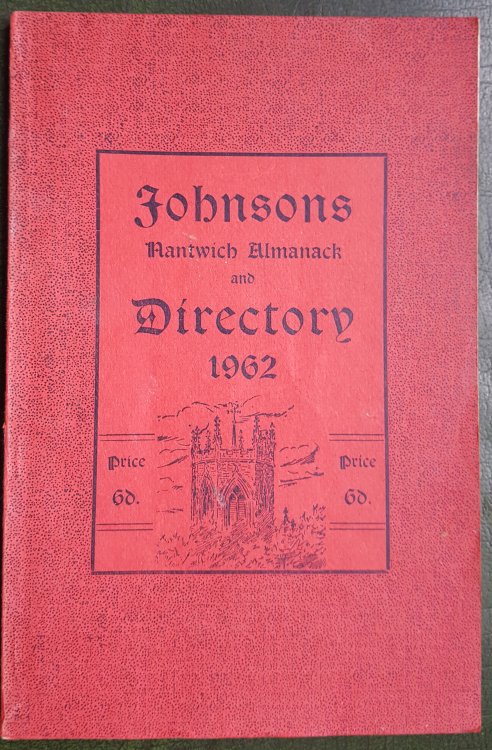
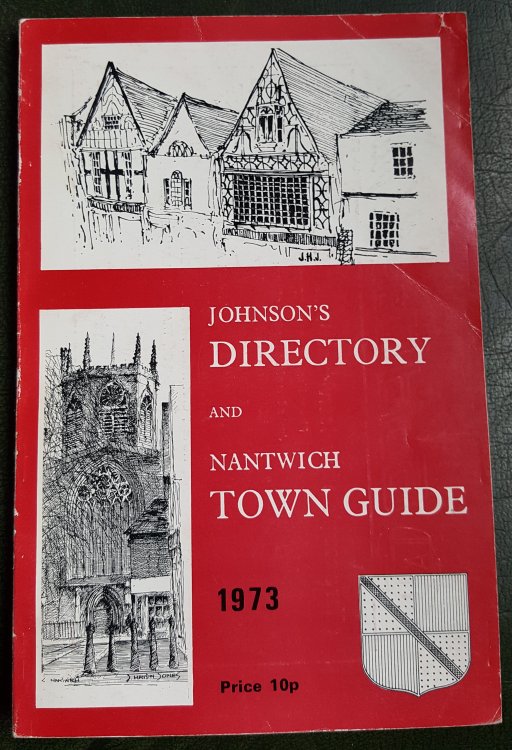
The battle is still commemorated in the town each year and since the 1970’s there has been a re-enactment and other entertainments suitable to the period on the Saturday closest to the 25th January and is known as Holly Holy day as back in January 1644 the townspeople wore sprigs of holly in their hats to celebrate the victory there being no other colourful plants at that time of year. I was born in Nantwich and lived there throughout my childhood which is why wanted this book so much when it came out. As I said at the beginning of this blog nowadays it is easy to get the text from more than one print on demand source both here and in America, it is always found with Memorials of the civil war in Cheshire and the adjacent counties by Thomas Malbon, of Nantwich as both books are quite short and it makes for an interesting read.

Another aspect of this book that I want to cover is how this edition came to be printed. Crowd-funding is seen by many as a modern phenomenon, sites such as KickStarter and GoFundMe are in common use now however the book business has used this model for centuries with subscribers editions and selling books against a prospectus. Printing a book was an expensive game, and still is if you want an object of quality, so subscribers would be sought to put up money in advance to ensure that the massive initial outlay was at least mainly offset before the publisher went to press. Subscribers would get the earliest editions and often their name printed in the back, also their edition may be on larger paper or have extra illustrations to make it stand out. The alternative would be a prospectus, a simple sheet of paper produced to interest buyers before publication and again persuade them to pay before the physical book exists, usually by getting a discount on the final published price. That was how Tern Press went about selling this book as can be seen below as I kept my copy of the prospectus and tucked it inside the book when I had it.

The specials were a lot more expensive (from memory about £200) but for that you got an original watercolour by the artist tipped into the book and you could choose what you wanted him to paint. I however couldn’t afford that so handed over my £48 in advance of publication and eventually received number 31 in the post.

You don’t have to be from Nantwich, or even be interested in Cheshire history to find the book interesting. Burghall eventually lost his position at Acton on the 3rd October 1663, as a fervent Parliamentarian he was always at risk after the restoration of the monarchy in May 1660, and he died in apparent poverty on the 8th December 1665.

Robert Hooke’s Micrographia

2nd January 1666

Thence to my bookseller’s and at his binders saw Hookes book of the Microscope which is so pretty that I presently bespoke it.

20th January 1666

so to my bookseller’s and there took home Hookes book of Microscopy, a most excellent piece, and of which I am very proud.

21st January 1666

Before I went to bed I sat up till 2 a-clock, in my chamber reading of Mr Hookes Microscopicall Observations, the most ingenious book that ever I read in my life.

I have to agree with Samuel Pepys, I have added this book to my library in the last week and like the celebrated diarist I have spent hours late into the night reading and looking at the wonderful illustrations. It is hard to imagine just how revolutionary a work it was in it’s time, nobody had seen anything like it before. Very few people had access to a microscope and very little had been printed with illustrations of what you could see with the use of one. Micrographia was the first book published by The Royal Society, just three years after the society had been granted it’s royal charter in 1662 making it the oldest scientific academy in the world. Pepys had become a fellow of the society on 16th February 1665 so knew Hooke and would have been well aware of the book before publication.

Now it may seem odd to write a review of a book that came out over 350 years ago but the edition published by The Folio Society is the first high quality version printed in the last 200 years and reproduces in full size the original plates including large fold out pages that are up to 2 feet (60cm) across. The book is consequently large at 13½” × 8¾” (34.3cm x 22.2cm) and quarter bound in leather. The cover is printed on cloth and based on the eye of a grey drone fly and was designed by Neil Gower.

20180305 Micrographia 1

Inside the illustrations are the first thing to catch your eye but then the text pulls you in. Although this is primarily an important, and in its time ground breaking, scientific work Hooke wrote for the interested layman and even after all these centuries it is still an engaging story. Instead of just describing the illustrations he explains why and how he came to look at them in the first place, you get his first impressions and you can share in his sense of wonder at what is revealed.

20180305 Micrographia 2

A study of a piece of cloth to reveal the weave, the end of a pencil, a needle, nothing is beyond his inquiring mind and everything he looked at and wrote about was new to the reader who would not have had access to anything like this before.

20180305 Micrographia 3

The picture above is of the black spots on the leaves of the rose bushes in his garden. To his surprise these turned out to be ‘tiny plants’ growing on the leaves themselves. Nowadays we understand what he is looking at but the text explains his reasoning that this is some sort of mould and the next thing he then examines is a blue mould on a book bound in leather from a sheep to see if his premise is valid. You learn with Hooke and it’s no surprise that Pepys found the book so fascinating.

20180305 Micrographia 4

The large fold out plates are possibly the most famous pictures in the book and The Folio Society have reproduced pages from original 1st and 2nd editions (whichever were the best examples) held in the Bodleian Library in Oxford. There is also a small section at the end where Hooke turns his attention away from the very small to the very large and includes some observations he made with a telescope including an early map of part of the moon.

20180305 Micrographia 5

It really is a joy to own and read this book, which was published in 2017 in a limited edition of just 750 copies, mine is number 635. Whilst I love the normal production of The Folio Society and have over 400 books printed by them; it is their limited editions that are their crowning glory. Printed on the finest paper and treated as a work of art in their own right these books are rightly regarded as something special and Micrographia was the winner of the “Scholarly, Academic and Reference Book” category at The British Book Design & Production Awards 2017. A fantastic addition to any library.

There is a video of the book from The Folio Society on YouTube which  gives a better idea as to the size and beauty of this amazing work and this makes an interesting comparison to a video from The Bodleian Library about their first edition.


Uncle Jim

20180227 Uncle Jim 1

Back in 1965 a teenage apprentice journalist started work at the Bucks Free Press, then as now, the local newspaper covering the Buckinghamshire area, places such as High Wycombe, Beaconsfield, Marlow, Gerrards Cross etc. The newspaper had started over 100 years earlier and there was nothing really to suggest that this new trainee was much different to the many that had gone before him except that 2 years earlier at the age of 15 he had had his first story printed in Science Fantasy magazine (volume 20, number 60), more of that particular magazine in a later blog because that is also on my shelves.

The Bucks Free Press had a section called Children’s Circle (the image at the top is scanned from a 1966 copy) which had stories and birthday wishes aimed at younger readers all of which were apparently written by Uncle Jim, the general nom de plume of whoever was tasked to write them and it seemed logical to give the job to the new starter who had already proved he liked to write stories. In the coming years he would write over 80 tales as Uncle Jim nearly all of which were split over several weeks to keep the kids coming back for more, whilst also working as a journalist covering all the things that a local paper needs to do, he saw his first dead body within a week of starting.

The name of this young chap – Terence David John Pratchett, later to become Sir Terence, knighted for services to literature in 2009, or just Terry for those of us lucky enough to have met or indeed spent time in bars late at night with him. Because Terry always had time for his fans and we loved him for it.

Dsc_0558

Now trying to find local newspapers from over 50 years ago is largely a fruitless task so the first time I saw some of these stories from Terry’s early days was on a website started by the Bucks Free Press in association with the Friends of High Wycombe Libraries in June 2010, which posted 2 of them and the first 4 parts of what would become Terry’s first novel The Carpet People. They indicated that they intended to make them all available before they were told to stop quite quickly after the site was started as Terry owned the copyright. The site never actually added any more work and was eventually taken down by the end of 2012. What they did have on the site though was a partially useful list that showed the first time Terry wrote as Uncle Jim was published on the 8th October 1965 and the last they listed was 20th December 1968, in total there were 167 parts listed making up 47 distinct stories. The earliest was a 12 part story that eventually led to The Carpet People, the next longest were 2 stories, one in 1966 and one in 1968 which needed 8 parts and there were 7 stories that were completed in just one part.

These figures are however known to be incomplete as even the article on the Bucks Free Press website announcing the launch of the site in 2010 states that his last appearance as Uncle Jim was in 1970 and there were some 250 episodes, however they do provide an insight into the first 3 years of Terry’s work on this column and the way the stories were split. In fact there were 247 parts written by Terry between 8th October 1965 and 17th July 1970 making up the 80+ stories but apart from going to Beaconsfield library and reading their newspaper archive that seemed to be the end of being able to access these stories far less being able to have Uncle Jim wish you a happy birthday.

20180227 Uncle Jim 2

However as can be seen from the image of the books above there have now been 3 collected volumes and I have all 6 of them. Yes you read that right, each one has come out as a standard edition alongside a collectors version.

Dsc_0560

Dsc_0559

So lets make a comparison of the available volumes:

Dragons at Crumbling Castle – published 2014

  • Standard edition – Dust wrapper – 14 stories, two of which went to make up The Carpet People but are here presented as 2 separate works and an introduction.
  • Collectors edition – Slipcase – 16 stories, the two extras being ‘The Wergs Invasion of Earth’ and ‘Bason and the Hugonauts’. There is also a different, significantly longer, introduction; commentaries after each story written by Terry and a colour print tucked inside.

The Witch’s Vacuum Cleaner – published 2016

  • Standard edition – Dust wrapper – 14 stories and an introduction
  • Collectors edition – Slipcase – 16 stories, the two extras being ‘Johnno, the Talking Horse’ and ‘The Wild Knight’. Commentaries after the stories were written by Terry’s assistant Rob Wilkins as Terry had sadly passed away in March 2015 and there was also a postscript added by Rob by way of a eulogy to his boss and friend. Again a colour print was included as a loose insert.

Father Christmas’s Fake Beard – published 2017

  • Standard edition – Dust Wrapper – 11 stories, including one of the stories from The Dragons at Crumbling Castle, ‘Father Christmas goes to Work at the Zoo’.
  • Collectors edition – Slipcase – Identical text to the standard edition but on better paper and all the illustrations are in colour. No other extras

This means that 42 (or 41 if you regard the two parts of The Carpet People as 1 piece) have now been published which is roughly half of what appeared in the newspaper all those years ago.

The books are great fun, the pages are covered in typographical games, at one point when the lights go out in a story the next two pages are white text on black, and there are numerous uses of other fonts and text sizes to emphasise the action.

Dsc_0562

The colour edition of Father Christmas’s Fake Beard is also a joy to own, the original looks great but the colour just looks fantastic.

Dsc_0564

During Terry’s tenure as Uncle Jim a lot of the stories are centred on the fictional county of Gritshire, its county town of Blackbury with surrounding towns like East Slate and Umbridge (on the river Um) and the notorious Even Moor where strange things happen in the wild places. The characters gradually develop over the stories so you really feel that there is such a community where odd events occur almost every day and almost feel sorry for the largely incompetent county councillors who just seem to invite disaster with their every plan for improvement. I suspect that this was Terry letting his main job. which included reporting on local government decisions. drift into his fantastical imagination.

I shall finish with the two prints from the collectors editions. The one on the right of Sir Terry as a knight in armour includes his actual coat of arms as ably described in this Wikipedia entry. Let’s hope to see more of these wonderful stories from Terry aka Uncle Jim being published in the future, after all there is still 50% of the work unavailable apart from in frustratingly difficult to obtain old newspapers.

Dsc_0565

Persian Poets

In 1997 I was in Iran and in the Tehran museum saw fabulous hand painted pages from the great classics of Persian literature some of which were 1000 years old, so were contemporary with the great early medieval illuminated manuscripts produced by the monks in Western Europe that I was already familiar with. However these pages were on a different level being more miniature paintings surrounded by text rather than marginal images, a complete book would be a wonder of any age but few have survived intact.

The great epic poem Shahnameh by Ferdosi (also Ferdowsi, Firdusi etc. Persian to English isn’t a precise transliteration) was one of the stars of the exhibition with several wonderful pages on display and at over 100,000 lines it is the longest poem ever written by one author. Written and revised between 997 and 1010AD the 1000 year old poem tells the tale of Persia from a mythological start and the creation of the world, through a time of legendary heroes to historical accounts up to around 750AD and the fall of the Sassanid rulers of Persia. Despite the age of the text it is still perfectly readable to modern Iranians whereas Geoffrey Chaucer (who lived roughly 400 years later) is about as far back in English that you can go and  have a reasonable chance of being able to understand the meaning. Regrettably I don’t read Persian so the text is beyond me but the illustrations made me yearn for a copy for myself. So along with a couple of rugs my souvenirs of Iran included a book in tribute to this great work and the ancient illustrations that so fascinated me on first seeing them.

20180220 Ferdosi 01

20180220 Ferdosi 10

The book was printed in 1991 and describes itself as a commemoration of the millennium of composing Shahnameh by Ferdosi. It was a few years early but the 1000 years have now passed and I’m glad it was early or I may not have been able to obtain this lovely, if somewhat large (42cm x 30cm), volume. The basic premise of the book is that 22 paintings by Mahmoud Farshchian done in the old style of Persian miniature art that I so admired would be used to illustrate sections from the heroic phase of the poem, it is written mainly in Persian with some English to explain the paintings.  The introductory pages are truly beautiful

and then we get into the main work which is the 22 modern interpretations of pages from the ancient works, I love the way that the pictures reach out beyond the frame. Click on the pictures to access full screen versions.

I have chosen 5 pages from the book to illustrate it and these are:

  • In his third labour, Rostam slays the dragon
  • Sohrab launches an offensive against Persia
  • Siavosh undergoes the ordeal by fire which Keykavus has arranged
  • Rostam sets Bijan free from the well where he has been imprisoned by order of the Turanian ruler
  • View of the Hunting Ground, with Bahram Gur talking to the harpist maiden

Ferdosi is not by any means the most famous of the Persian poets, that honour probably goes to Hafez and the annual Hafez festival was on when I arrived in his birthplace of Shiraz. He lived from 1315 to 1390 and like Ferdosi his name is more of an honorific, the difference is that we don’t know the real name of Ferdosi but Hafez was Khwāja Shams-ud-Dīn Muḥammad. Being called Hafez indicates somebody who has memorised the Koran, which apparently he did at a remarkably early age and that is the name with which he has gone down in posterity. Also on my bookshelves is the programme for the event.

20180220 Hafez 6

and I took several photographs at his mausoleum which is where recitals and singing of his poems were taking place. He is a much loved poet in Iran which is odd when you consider that most of his poems involve wine, love or the beauty of women; hardly the subjects that are approved of in conservative Iran.

There are fortunately several good English translations including Penguin paperbacks of Hafez’s works, and now Ferdosi has also been included in Penguin Classics so let us leave this blog post with some words by Hafez from The Penguin Little Black Classic “The nightingales are drunk”

With wine beside a gently flowing brook – this is best;

Withdrawn from sorrow in some quiet nook – this is best;

Our life is like a flower’s that blooms for ten short days

Bright laughing lips, a friendly fresh-faced look – this is best.


Penguin Drop Caps

In 2012 Penguin Books started a series of books for sale in the USA and Canada and it made use of their extensive back catalogue along with some newer modern classics in a handsome new style hardback binding. The tagline of the set is

It all begins with a letter

and the concept was to produce 26 titles where each letter of the alphabet was represented by the surname of the author. An interesting idea especially over the choice of names for some of the more difficult letters. What made the set a cohesive whole was the decision to have all the letters on the covers designed by one person, Jessica Hische, and for her to create an evocative set of designs. Adding the input of Penguin Art Director Paul Buckley we ended up with a rainbow of classic books which call to you from the shelves and look totally different to anything else I have. Good design has been the hallmark of Penguin Books from their beginning in 1935 and it’s good to see that tradition being respected in a modern set.

20180213 Drop Caps 1

Of course a set like this appeals to the collector part of me, especially when they are not officially available in the UK as I like a challenge, but it also harks back to the very first Penguin Books I initially accumulated, then decided to collect, which was the early (first 125) Penguin Classics.  Buying a set of books forces you to purchase authors you may not have been intending to buy or even to have heard of and once the book is on the shelf it would be remiss not to at least give the book a go. The first title is a case in point; Pride and Prejudice by Jane Austen is not a title that has ever appealed but I have to say that much to my surprise I’m really enjoying it. I have also read Madame Bovary, A Portrait of the Artist as a Young Man, Five Children and It, and Cannery Row so far and I’m looking forward to tackling authors I don’t know at all such as Willa Cather and Sigrid Undset.

The full list is as follows, with links to books reviewed in this blog:

A to F came out in 2012, G to P in 2013 and Q to Z in 2014 although I only started to collect these books towards the end of last year (2017) so the last 5 have only recently arrived and I didn’t buy them in alphabetical order but rather which 4 or 5 a month I could find at a sensible price.  Their official retail price varies on the copies I have between US $23 and $30 although the Canadian prices fluctuate much more widely between $24 and $40. The cheapest I found one in the UK was around £10 and had to spend up to £17 to get the last few I was missing.

20180213 Drop Caps 2

The spines are also attractive and make a bold statement on the shelf next to me as I write this, as can be seen in the picture above the page edges are also coloured to complement the cover and the rear cover has a short quote from the book that Penguin have turned into a parlour game

Mine is from Great Expectations:

Suffering has been stronger than all the other teaching, and has taught me to understand what your heart used to be.

and then A Portrait of the Artist as a Young Man

to forge in the smithy of my soul the uncreated conscience of my race

Not the cheeriest of quotes but I’m not going to let them put me off reading all these as they are lovely books with a clear font (Archer) as you would hope from a series that takes lettering seriously and a pleasure to pull off the shelf and sit down with.

Norse Mythology – Neil Gaiman

20170206 Norse mythology 1

Neil Gaiman’s Norse Mythology is a retelling of the Old Norse myths in a straightforward style aimed at the young adult market. He begins with a brief introduction to Odin, Thor and Loki and then the other characters that populate the myths are explained as we meet them.  The book has had a small number of poor reviews on Amazon, but mainly by people who were expecting a Neil Gaiman story rather than an introduction to the Norse mythology and were therefore disappointed not to find one. For me however it took me back to my childhood in the 1960’s and 70’s reading childrens’ magazines such as Look and Learn and World of Wonder, both of which regularly dipped into mythologies from around the world for features or retellings.

The dustwrapper is beautiful, featuring Thor’s hammer Mjollnir against a background of stars but how many people have taken this off to find the hammer again on the cover of the book

20170206 Norse mythology 2

There are 15 tales included, ranging in length from 3 to 23 pages, so this can be dipped into as a quick read over a period of a few days, but equally it doesn’t take long to read the whole thing. They are easily approachable, avoiding the temptation to explain everything with additional notes which can be a failing in editions aimed at adults which can fall into a scholastic tone. As Neil himself says in his introduction

As I retold these myths, I tried to imagine myself a long time ago, where the stories were first told, during the long winter nights perhaps, under the glow of the Northern Lights, or sitting outside in the small hours, awake in the unending daylight of midsummer, with an audience of people who wanted to know what else Thor did, and what the rainbow was, and how to live their lives, and where bad poetry comes from.

And that I think is the essence of Neil’s book, they feel like they are tales as told to an audience rather than pinned to the page like a specimen butterfly, they have a narrative flow and it doesn’t matter that Yggdrasil and the nine worlds is only 3 pages long, it tells you what you need to know and that information will illuminate later tales.

The book is of course just a brief introduction to the huge body of Norse tales and it would be nice to think that readers today will be inspired, as I was all those years ago with the magazines, to explore further and then maybe try some of the Icelandic sagas which I have enjoyed over the intervening years. More of those I think in a later blog. So thank you Neil for reminding me of the pleasure I got when I first encountered the Norse myths when I was 6 or 7 years old and the joy they still give me.

20170206 Norse mythology 3

Footnote: I thought the UK hardback cover was beautiful and then saw the American paperback due out next month…

20170206 Norse mythology 4