The Club of Queer Trades – G K Chesterton

The Club of Queer Trades is an organisation that only admits members who earn their living from a unique perspective. Having come up with this concept Chesterton wrote six excellent short stories based around a narrator called Charlie “Cherub” Swinburne, his friend, and retired judge, Basil Grant and Basil Grant’s younger brother Rupert Grant who is a private detective. Between them they experience several odd encounters with The Club.

In the individual reviews below I’m just going to set up the unusual story in each one to avoid giving away the queer trade and the denouement of each tale.

The Tremendous Adventures of Major Brown

Major Brown is a perfectly respectable retired military gentleman whose passion is growing ever increasing varieties of pansies so when he is encouraged by a vendor of such plants to look over a wall near where he lives and sees spelt out in a bed of pansies “Death to Major Brown” he is more than a little perturbed. He enters the house, finds a rather unusually decorated room and speaks for a while with a somewhat enigmatic woman before hearing a noise and confronting a large man in the cellar, they fight and Major Brown comes away with the mans coat as the man himself escapes. Totally confused by his experiences the Major comes to consult Rupert Grant, who suggests that they should go to the address found on an envelope in one of the coats pockets. When they do this, instead of the confrontation expected by Rupert, the Major is simply presented with an invoice.

The Painful Fall of a Great Reputation

This story is quite a bit simpler than the first in that it revolves around a character called Mr Wimpole who has developed a reputation as a great wit at dinner parties in London if a rather cruel one as witnessed by Basil and Charlie when they pay a call on Lord Beaumont one evening. They are still in the hallway when after a gale of laughter from the dining room Sir Walter Cholmondeliegh emerges.

“Now, my dear chap,” began Lord Beaumont hastily.

“I tell you, Beaumont, I won’t stand it,” exploded the large old gentleman. “I won’t be made game of by a twopenny literary adventurer like that. I won’t be made a guy. I won’t—”

Upon being calmed down and re-entering the dining room it is clear from another bout of laughter that Cholmondeliegh had been made a fool of again.

But what is really going on here? It’s not what it seems to be.

The Awful Reason of the Vicar’s Visit

Rupert was dressing for dinner, for he was due to go out with Basil when the Reverend Ellis Shorter unexpectedly called on him, apparently at the suggestion of Major Brown. He had a very strange tale of being set upon and forcibly being dressed as an old woman and made to commit a crime at gun point by a group of five apparently old women who were in reality cross dressed younger men. The vicar was bald headed and with substantial whiskers but these were concealed by the poke bonnet he was forced to wear, the abduction was apparently carefully planned. He had only finally escaped from them when they walked past a policemen and he pretended to be drunk so that the officer would take an interest in what was going on.

All this took a long time to explain as the Rev. Shorter was very unlike his name and was surprisingly long winded in telling his tale so that there was no chance for Rupert to go to his acquaintances home for dinner and indeed Basil would probably be already back at his home so he suggested going to see him only to find that he had also not made it to the meal as he had been called on by an elderly vicar with an unbelievable tale. Just what was going on? Basil had already worked it out.

The Singular Speculation of the House-Agent

Lieutenant Drummond Keith was an interesting character and like Major Brown a retired military man but not as successful in rising through the ranks as the Major, this means that he is also quite poor and like a lot of the poor moved around London from rented property to rented property struggling to find one he can both afford and enjoy. He had few possessions indeed we are introduced to him by means of this small collection of items.

He carried from house to house and from parish to parish a kit which consisted practically of five articles. Two odd-looking, large-bladed spears, tied together, the weapons, I suppose, of some savage tribe, a green umbrella, a huge and tattered copy of the Pickwick Papers, a big game rifle, and a large sealed jar of some unholy Oriental wine. These always went into every new lodging, even for one night; and they went in quite undisguised, tied up in wisps of string or straw, to the delight of the poetic gutter boys in the little grey streets.

I had forgotten to mention that he always carried also his old regimental sword. But this raised another odd question about him. Slim and active as he was, he was no longer very young. His hair, indeed, was quite grey, though his rather wild almost Italian moustache retained its blackness, and his face was careworn under its almost Italian gaiety. To find a middle-aged man who has left the Army at the primitive rank of lieutenant is unusual and not necessarily encouraging. With the more cautious and solid this fact, like his endless flitting, did the mysterious gentleman no good.

We meet the Lieutenant as he calls on and also borrows £100 from Basil who seems to regard him as a good friend, and he then says he is heading to his house agent. Rupert however is not convinced that Drummond is all that he seems and insists on going to the agent with him much to the irritation of Drummond who nevertheless acquiesces. After a short meeting with Mr Montmorency regarding his new property they leave and Drummond is caught up in a street brawl which Rupert incorrectly accuses him of instigating. The policeman who takes his address later reports that there is no such house as The Elms, Buxton Common, near Purley, Surrey. So where is our mysterious Lieutenant? Basil is sure he can find him.

The Noticeable Conduct of Professor Chadd

This story is an outlier, as I fail to see how Professor Chadd would raise an income from his eccentricity so he cannot be regarded as a member of The Club. Indeed the professor had invented a new language where he expressed himself via dance, nowadays interpretive dance is well known but this may be the first time it is described in literature.

The Eccentric Seclusion of the Old Lady

In this final tale Rupert and Charlie are walking along a quiet road in London when they hear a female voice from a basement saying “When shall I get out? When shall I get out? Will they ever let me out?” Upon being rebuffed by the gentlemen living in the house they determine to return with Basil who doesn’t seem in the least concerned regarding the lady in the cellar and appears to strike up friendly terms with the two homeowners. Rupert and Charlie are concerned however and decide to take the men prisoner whilst they rescue the woman. This they duly due in an unintentionally comic manner with Basil assisting in the conflict but when they make their way down to the basement the lady refuses to leave her captivity and it is only when Basil also descends that she agrees to go.

This story has a surprise ending, set several months after the apparent end of the tale where it is finally revealed whose queer trade had led to the locking up of the old lady and the reason for her initial refusal to be rescued. I loved this final twist so I’m not about to give it away here.

The short stories originally appeared in Harpers Weekly between December 1903 and July 1904 before being first published as a collection by Harper and Brothers in 1905. My copy is the Penguin Books first edition from October 1946 which is in remarkably good condition for a paperback book that is approaching its 77th birthday and which is printed on the fairly poor paper stock still in use this close to the end of the war. I have previously reviewed one of Chesterton’s earliest novels ‘The Napoleon of Notting Hill‘ written in 1904 but which was set in 1984 and which inspired George Orwell to also set his classic dystopian novel published in 1948 in the same year. Almost a hundred years after its first publication The Club of Queer Trades is still in print which I suggest says a lot for its quality and I have to agree. Chesterton wrote many superb books along with hundreds of short stories, several of which have disappeared out of print over the years but his best are still easily available. At some point in the future I will cover the five volumes, plus a few uncollected tales, of Father Brown short stories for which he is nowadays most famous but I recommend him as one of those rare authors where if ever you encounter one of his books it is almost certainly worth reading. Oh and as for Professor Chick and his own new trade, he is never mentioned again after the introduction so I have no idea what he did.

The Wind From the Sun – Arthur C. Clarke

This book contains all eighteen short stories Arthur C. Clarke wrote in the 1960’s, including one set in his beloved Sri Lanka where he had moved to from England in 1956 and resided there until his death at the grand old age of ninety in 2008. Although all the stories were written in the 1960’s the last two didn’t actually get published until the early 1970’s including probably the strongest of the works in the book ‘A Meeting With Medusa’. The title story ‘The Wind From the Sun’ is also one of my favourites from this, the sixth collection of short stories by Clarke, it’s original title was ‘Sunjammer’ and it is still occasionally published under that name but Clarke explains in the preface that he changed its title as fellow SciFi author Poul Anderson used the same title, and indeed the same concept of sailing the solar wind, almost simultaneously in early 1963. To add to the confusion, and this time not mentioned by Clarke, another SciFi writer, Jack Vance, also had the same idea and published a similar story ‘Gateway to Strangeness’ also known as ‘Sail 25’ although that came out in late 1962. All three men had come up with the same idea independently and had no idea of each others work and the time taken to get things into print more than allows for the disparate publishing dates.

Perhaps inspired by the co-incidences around ‘Sunjammer’ there is another short essay included in this book entitled ‘Herbert George Morley Roberts Wells Esq.’ which describes Clarke’s absolute conviction that a story called ‘The Anticipator’ was written by H.G. Wells and he had written as such in his single page short story ‘The Longest Science-Fiction Story Ever Told’ which precedes the Roberts/Wells essay in the collection. In fact ‘The Anticipator’ was written by Well’s contemporary Morley Roberts and in the essay he explains that the story is about a high quality writer who keeps having the plots of his stories hijacked by a hack writer and published just before his version comes out so that the general public assume that he is constantly plagiarising the less good author so it is somewhat appropriate that Clarke didn’t get the true authors name right. It happened again to Clarke in 1979 when his book ‘The Fountains of Paradise’ was published at the same time as Charles Sheffield’s ‘The Web Between The Worlds’ both of which are about the construction of a giant tower all the way up to geostationary orbit which would operate as a space elevator therefore removing the need for rockets to reach space. Both novels have a similar construction method using a robot called Spider, both towers are built by a engineer who had previously constructed the longest bridge in the world and there are several other identical, or near identical features including the engineers name beginning with M. Again neither author knew about the others work it was simply an idea whose time had come.

All but two of the stories in this collection take place within the Solar System, the exceptions being ‘Crusade’ and ‘Neutron Tide’ and most occur on the Earth or Moon. This is another feature of Clarke’s science fiction writing, not for him universe wide adventures or galaxies at war which a lot of his contemporaries wrote about. Clarke, for the most part, is a more grounded writer. That doesn’t mean they are less fantastical just less space opera and more extensions of the readers understanding. ‘Maelstrom II’ for example has a man on his way home from the Moon when the, normally freight carrying, railgun that he is using as a cheaper way to get back malfunctions so he doesn’t have enough speed to achieve escape velocity. Yes it’s science fiction but everything in the story is valid science.

Arthur C. Clarke had a first class degree in mathematics and physics from King’s College London and used his scientific training in his writing, always making sure, as much as possible, that any concepts he came up with had a valid scientific basis. This makes him one of the strongest writers of science fiction as opposed to fantasy, when Clarke describes the fall into the atmosphere of Jupiter in ‘A Meeting With Medusa’ or the astronomical observations in ‘Transit of Earth’, which has an astronaut on Mars watching Earth cross The Sun you can be sure that the figures used are as accurate as 1960’s science allowed. Clarke didn’t come up with the idea of geostationary orbit but he did write the first scientific paper describing how satellites placed there would be perfect for telecommunications.

It’s a fun set of short stories and I was surprised how well I remembered several of them from when I first read the book in the mid to late 1970’s.

Change of Use – Candia McWilliam

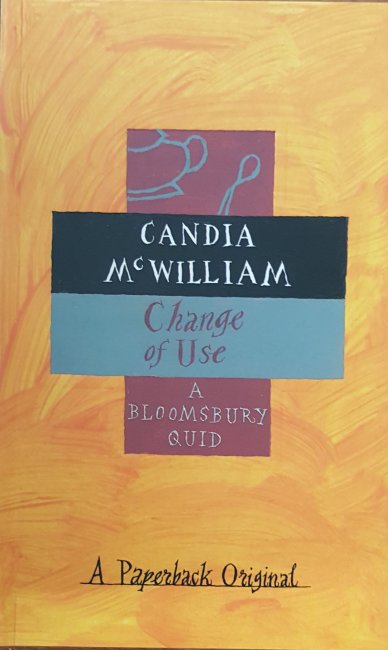
As a response to Penguin Books and Pheonix producing small cheap editions in the mid 1990’s Bloomsbury decided to have a go as well and so the Bloomsbury Quid was born, and almost immediately died. The initial ten books, which came out in 1996, were never followed by any more. Priced, as implied by the series name, at a quid, or one pound, they are probably the nicest designed and best produced, being on much higher quality paper than others of these cheap editions so it is a great pity that Bloomsbury never saw fit to produce any more, perhaps they didn’t sell, perhaps there simply wasn’t enough money in it, who knows after almost thirty years? The titles chosen were certainly interesting:

  • Change of Use by Candia McWilliam
  • The Drowned Son by David Guterson
  • Faith by Joanna Trollope
  • Harald, Claudia, and Their Son Duncan by Nadine Gordimer
  • The Queen and I by Jay McInerney
  • She Wasn’t Soft by T. Coraghessan Boyle
  • A Story for Europe by Will Self
  • Three Stories and a Reflection by Patrick Süskind
  • Two Boys and a Girl by Tobias Wolff
  • The Labrador Fiasco by Margaret Atwood

From the page dedicated to this series on Library Thing you can see that the series was bright and colourful and even that these are suggested as a collectors item of the future; and whilst that hasn’t proved to be the case so far, I’m glad I picked up the full set when they came out.

So enough of the publishing history, what is the book itself like?

On the back of the book is the opening line of the story and it’s certainly intriguing, Why is Mary sitting on the edge of a sink and what sort of rituals? It slowly comes clear that most of the story is set in a retirement home and the rituals are literally that, things that are done ritually by the people being cared for. Mary is one of the nurses at the establishment and she is overseeing one of the residents as he polishes some silver spoons whilst reliving his time as a butler, interestingly enough at the same property that is now his nursing home. Interleaved with his story is that of the grandmother of the person who drives the laundry van that calls at the home. She is getting increasingly fed up with the research work that she does for various authors and dreams of a life away from it and like Mr Charteris, the ex butler, she longs for the memories of her younger life and is scheming to reclaim them.

The story is interesting as you get into the minds of the various characters very well for such a short work and I loved the twist at the end. I’m definitely going to have to read another of McWilliam’s surprisingly few books. She stopped writing in 1997 and then had a medical condition in 2006 which left her blind for two years and which inspired her to take up writing again although this time a memoir which was published in 2010 which was her last published work. Interestingly this story has never been reprinted, even though McWilliam published a collection of short stories in 1997 so this small volume remains the only place you can read it.

The Yellow Wall-Paper – Charlotte Perkins Gilman

The story that provides the title of this collection of three short stories is easily Charlotte Perkins Gilman’s best known work, it is beautifully written and is also a very difficult read. It deals with the descent into madness of a woman who suffered from a severe bout of postpartum psychosis, a range of mental illnesses which occur soon after childbirth. Gilman was perfectly aware of how this could be as she suffered from very bad attack of some form of postpartum psychosis after the birth of her first child so the story can be seen as semi-autobiographical. Unfortunately for Gilman this collapse of her mental health wasn’t recognised by the medical profession back in 1885 when she had her daughter and she was largely seen as simply needing to pull herself together and rest and recuperate physically after the birth, but in fact she didn’t really start to recover her mental well being until 1888 by which time she had separated from her first husband and was resting in Rhode Island with a female friend.

It was in 1890 that she wrote The Yellow Wall-Paper and the story is told first person from the point of view of the unnamed female narrator as she gradually becomes more and more obsessed with the wallpaper in the bedroom she is in. At first all seems well, her husband, who is also a doctor ‘treating’ her condition has taken a large house in the country for three months to see if the air would help her recover from the psychosis she is suffering from but slowly she reveals to the reader, if not herself, the true position she is in. The room that he puts her in is a large one in the attic that has a bed screwed to the floor and initially no other furniture so some random pieces are brought up from the rooms below. There is also a gate at the top of the stairs up to this room so initially she assumes that the room had been for the children of a previous resident but it gradually becomes clear to the reader that she is a prisoner in this room, with its terrible, faded and partly pulled off the walls wallpaper. Oh the wallpaper, the pattern is odd, not quite matching and making a satisfying design but maddeningly elusive and the missing pieces along with the faded patches make finding the pattern even more difficult. The colour is also coming away from the paper, brushing up against it leaves yellow stains on your clothing and that blurring makes it even more difficult to interpret.

The colour is hideous enough, and unreliable enough, and infuriating enough, but the pattern is torturing.

She is also told to rest after meals and not to do any work, even writing is forbidden so she hides her notes on the changes of the wallpaper that she perceives in different lighting conditions. This was also the fate of Gilman herself, a writer told not to write and this greatly prolonged her own mental collapse. Gradually, as the weeks progress, our narrator starts to see movement behind the wallpaper and is convinced that some malevolent creature is behind the paper, small at first but the creature grows as the nights pass until she sees a woman loping behind the paper and determines to release her. This has to be one of the most disturbing short stories I have ever read, you are drawn totally into this woman’s world and you can feel the paranoia rising. The Yellow Wall-Paper is rightly regarded as a classic of feminist literature and a few years later Gilman sent a copy to her own doctor to try to persuade him away from the stifling treatment she had received at his hands.

The other two stories in the book are also interesting, ‘The Rocking Chair’ is another beautifully written story where two friends take rooms in an old property having been drawn to it by the sight of a beautiful young woman rocking in a chair by the window, but all is not as it seems. The girl is almost never seen by either of the two men although one catches a glimpse of her one day but both of them are convinced that the other has been talking to her, indeed they have each seen the other standing by her at the window when approaching the house. Both are disturbed at night by the incessant rocking of the chair which is in one of their rooms but both deny having been in the chair at night. What is going on and what will be the ultimate result of their gradual loss of friendship for each other as they refuse to believe the others story of not seeing the girl?

The final story is for me the weakest of the three, ‘Old Water’ is another story of obsession this time of a young poet for the daughter of an acquaintance. The daughter is however not in the least interested in him as she likes sports and the outdoor life and his attempts to join in with her simply highlights his inadequacies in her eyes. You know it isn’t going to end well but the final twist is unexpected but strangely satisfying as a conclusion.

I hadn’t heard of Charlotte Perkins Gilman before but I’ll definitely be reading more of her work.

A Winter Book – Tove Jansson

Best known for her Moomin stories, Tove was also a highly talented artist and writer away from her children’s books. This volume is a collection of twenty short pieces originally published in Swedish between 1968 and 1998 and collected here for the first time in English in 2006 by Sort of Books.The book is split into three sections; ‘Snow’, ‘Flotsam and Jetsam’ and ‘Travelling Light’ the first two of which are re-arranged chapters from Tove’s first adult work ‘The Sculptor’s Daughter’ (Bildhuggarens dotter). This re-arrangement brings the winter themed parts together into ‘Snow’ and the summer items into ‘Flotsam and Jetsam’. ‘Travelling Light’ consists of six pieces, some of which have never been translated into English before and all of them are difficult to find in English. The book is illustrated with numerous photographs from Tove’s life including some charming ones of her as a small child. You may wonder why it is called ‘A Winter Book’ when it includes works that relate to the summer but that is to contrast with the earlier work ‘The Summer Book’ (Sommarboken) which was first published in 1972 and which was a novel rather than a compendium of short stories.

‘The Sculptor’s Daughter’ was first published in Swedish in 1968 and translated into English in 1969 and provides fictional retelling of episodes in the young Tove’s life growing up with her sculptor father and artist mother and all written from the viewpoint of the little girl she was at the time. Tove Jansson was fifty four when she wrote these tales down but she is meticulous in giving life to her younger self and continuing to see the world from the eyes of a small child, albeit one with a strong sense of adventure as illustrated by the story ‘The Boat and Me’ which recounts a journey she undertook in her first boat to head off round the group of islands where the family lived in the summer before being found and towed home by her father well after dark.

Another favourite of mine from these two sections is ‘The Iceberg’ where Tove finds an iceberg just too far off the shore for her to safely get on it and separated from the shore by some quite deep and freezing cold water. In the story she debates attempting to get on the berg and ultimately just throws her torch onto it where it nestles in an indentation exactly where she most wanted to be. The story is a tale of regret that she didn’t have the courage to attempt the jump herself and ride off on the ice to who knows where.

The story that I loved most however is from the collection of random stories in ‘Travelling Light’ and that is ‘The Squirrel’ which is taken from her second collection of short stories ‘The Listener’ (Lyssnerskan) first published in 1971 and here in a new English translation. In this story we have an old woman living on and island just as Tove Jansson and her long time partner Tuulikki “Tooti” Pietilä did but this lady is living alone. This island has no trees so she is surprised to see a squirrel one morning on the landing stage. The interplay and ultimate relationship she feels for this lost traveller over the coming winter is great fun and beautifully written, you can really feel for her as she tries to feed the animal and look after it without letting it into her home and what happens when it gets in anyway. The ultimate resolution of the story is completely unexpected and had me laughing out loud.

There are a couple of flops, particularly ‘Messages’ which frankly I didn’t get at all, but overall the book is a joy to read and a complete contrast to the Moomin tales, I’m so glad I spotted it and picked it up earlier this year.

A Tall Ship – ‘Bartimeus’

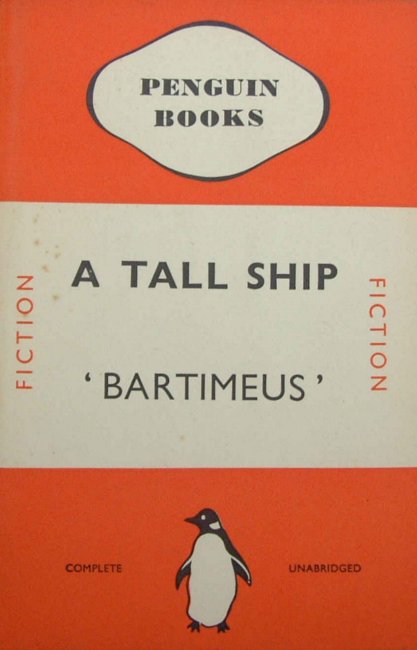
Originally published in September 1915 by a by then well known author of naval stories I was expecting tales of daring do on the high seas so was quite surprised that with the exception of the first and last stories in this collection the actual war didn’t really impinge on the stories being told. It all starts excitingly enough with the short story ‘Crab-pots’ which begins with the torpedoing of a ship and the unusual revenge that one of the sailors manages to take some time later. This sailor will become part of a recurring group through most of the other nine stories in this collection but this isn’t clear at the start as he gains the nickname Torps by story number two ‘The Drum’ which is also one of the odder tales as it has two parts with no link between them. This story starts with a couple of Cornish fishermen repairing a boat by hammering out an old boiler to make a plate to cover worn out timbers and then jumps to Torps and Margaret (who had nursed him after the sinking of his ship) on a hillside looking out to sea and not really getting anywhere as to a relationship that he clearly wants but she is not sure about.

I don’t want to work my way through all the tales but there is one which just consists of recounting the morning work of a naval captain, doing his paperwork and dealing with requests from the sailors under his command. Another has the ships officers arranging a children’s party on board which has one of the funniest lines in the entire book which takes place between two of the children on the harbour side waiting to be picked up on a small boat in what looked like choppy conditions

“My daddy’s a Captain” continued Cornelius James “and I’m never sick – Are you?”
She nodded her fair head. “Yeth” she lisped sadly.
“P’raps your daddy isn’t a Captain” conceded Cornelius James magnificently.
The maiden shook her head. “My daddy’s an Admiral” was the slightly disconcerting reply.

All in all though the book was remarkably dull and it’s no surprise to see that it and the other works by Bartimeus are long out of print. He was definitely popular in his time though but it’s hard to see why, this is the second book by him in the first 110 Penguin books a feat only matched by Agatha Christie and Andre Maurois (excluding two part books) but none of his other works have ever appeared in Penguin unlike the two other authors so it is clear he was waning in popularity even in the mid 1930’s.

As can be seen from the rear flap of the dust wrapper there are quite a lot of clues as to who the pseudonymous Bartimeus actually was. A little digging finds that the author was born Lewis Anselm da Costa Ricci in 1886; although he anglicised his name to Ritchie by deed pole in 1941. Joining the Royal Navy in 1901 he trained to become a naval officer, however while still young, he contracted Malta Fever (brucellosis); this cost him the sight of one eye and damaged the other. Unable now to pursue a career at sea, he remained in the Navy, initially in the accounting branch, but began writing stories about naval life. He finally left the Navy at the start of the Second World War retiring as captain of the Royal Yacht and became press secretary to King George VI from 1944 to 1947. He took his pen-name from the Bible, ironically hinting at his reason for leaving the career he loved by naming himself after Bartimeus, the blind beggar of Mark 10, 46-52.

The Clicking of Cuthbert – PG Wodehouse

By way of contrast to the five French works I read throughout August I have chosen the most quintessentially English of writers for the first book of this month P G Wodehouse. I should at this point make it clear that I am not a golf fan so this is a slightly odd choice of book to have on my shelves, but I am definitely a Wodehouse fan and he didn’t let me down. The ten stories collected into this book are definitely all set on the golf course but the gentle humour of Wodehouse pervades the tales not so much about golf but about relationships and especially young love. Men battle it out with clubs and balls to win the hand of the one they love, in two of the stories without the lady herself being aware she was the object of such competition. Always playing the ball where it lies or being regarded as a blackguard, see the cover illustration where Cuthbert Banks plays from the dining table of a house adjacent to the links. It should be noted that although the book is called The Clicking of Cuthbert he only appears in the first story.

Most of the stories are related in the clubhouse by The Oldest Member usually as some younger chap comes to him for advice, not necessarily on golfing matters. He will then relate a tale of some past member with a useful message for the struggling supplicant, in the case of Cuthbert Banks it was how golf finally won him the hand of the lovely Adeline Smethurst a girl who until a fateful evening at a literary soiree thought that only a renowned novelist or poet would be a suitable match. The Oldest Member tells the story to encourage a young man not to give up golf and prove that there is a use for golf.

The Folio Society edition is beautifully illustrated by Paul Cox with 41 inset black and white drawings along with a colour cover, frontispiece and end papers which illustrate the Woodhaven Golf Club where most of the stories are set, see final picture in this blog. Below is the occasion where Celia Tennant had hit her fiancee with her niblick in an attempt to stop his endless chattering on the course from the fifth story in the book, The Salvation of George Mackintosh.

One of the stories concerns the need to always retain a clear head whilst playing golf as illustrated in this quote from Ordeal by Golf.

How few men, says the Oldest Member, possess the proper golfing temperament? How few indeed, judging by the sights I see here on Saturday afternoons possess any qualification at all for golf, except a pair of baggy knickerbockers and enough money to enable them to pay for the drinks st the end of the round. The ideal golfer never loses his temper. When I played I never lost my temper. Sometimes, it is true, I may, after missing a shot, have broken my club across my knees, but I did it in a clam and judicial spirit, because the club was obviously no good and I was going to get another one anyway.

As the stories in this book date from 1919 to 1922, it was first published in book form in 1922, the club names are the traditional ones from the then almost exclusively Scottish makers. Clubs weren’t numbered until the Americans got involved in manufacturing in the 1930’s it therefore helps to know that a Brassie is a 3 wood, a Mashie a five iron, a Niblick is a nine iron and by inference a Mashie-niblick is a 7 iron. Other clubs referred to in the book are a Spoon (5 wood), a Rut niblick (wedge) and a Cleek (either a 1 or 2 iron). Bring back the old names, they give a definite beauty to the game.

In the end paper illustration Paul Cox has clearly studied the stories in the book as the holes are recognisable from the descriptions given with the various hazards such as the lake on hole 2 clearly visible.

Little Tales of Misogyny – Patricia Highsmith

After a huge book last week, Dune at 556 pages, it’s time for something a lot shorter and amazingly seventeen of Patricia Highsmith’s short stories fit into this little book of just 90 pages. Although aware of her name I have to admit that I’d never read anything by her before picking up this volume printed as part of the celebrations of the 60th anniversary of Penguin Books in 1995.

Well for such a short book the death rate was incredibly high, the main question you face when you start each short story is who is going to die and how? That Highsmith manages to keep this to herself until usually the last few lines is a tribute to her storytelling ability and the variety of the situations she places her characters in. What I must point out is that the title is somewhat misleading as both men and women come out badly throughout the book and you wouldn’t want to spend any social time with any of them. The first story has this as it’s opening line

A young man asked a father for his daughter’s hand and received it, in a box – her left hand.

The Hand by Patricia Highsmith

Having had that idea a lesser writer would have made the arrival of the hand the punchline to the tale, but no, Highsmith opens with it and then tells the story of what happened next. The book is full of twists, you can rarely guess how a story will turn out, the longest one, at ten pages, is a case in point. ‘The Breeder’ starts out as a simple tale of a newly married young couple who want children but are having problems conceiving; that it turns into a darkly comic tale and a descent into madness could not be anticipated from the homely beginning. Indeed some form of madness or at least a compulsive mania is the basis to several of the plots and Highsmith is clearly a master of the short story genre and some of these are very short. ‘The Hand’ is just two and a half pages long as is ‘The Coquette’ but both manage to tell a full story, you don’t even notice how short they are, there is just so much going on.

This taster of Highsmith has made me want to read more. Along with numerous short stories she wrote twenty two novels, the first of which, Strangers on a Train, was the basis for Alfred Hitchcock’s classic 1951 film although the adaptation strays significantly from the book. She also wrote the much better known novel ‘The Talented Mr Ripley’ and its four sequels which continue to follow the exploits of serial killer Tom Ripley, the first three of which have also been made into films.

The Golden Age – Kenneth Grahame

Originally published in 1895 by The Bodley Head without any illustrations, my copy is also published by them and is the 1928 first edition illustrated by Ernest H Shepard who is probably best known for his Winnie the Pooh drawings for A A Milne’s classic children’s works. The book is simply beautiful even before you open it with the cover silhouette and text embossed into buckram covered boards. Kenneth Grahame of course is famous for his own children’s classic ‘The Wind in the Willows’ which was published thirteen years after ‘The Golden Age’ and was converted into the play ‘Toad of Toad Hall’ by Milne in 1929. Surprisingly after such a major hit with ‘The Wind in The Willows’, and despite living for another twenty four years after that, he published no more books and ‘The Golden Age’ is the second of just four other books he wrote before ‘The Wind in the Willows’.

Kenneth Graham was born in Edinburgh in 1859 but when he was only five years old his mother died and his father, who was probably alcoholic, couldn’t look after Kenneth and his three siblings so they were sent to live with their grandmother in a small village in Berkshire. This sudden change from the centre of a Scottish city to a rural English parish had a lasting effect on Grahame and his explorations as a child of the countryside surrounding him undoubtedly led decades later to ‘The Wind in the Willows’. His earlier writings, especially ‘The Golden Age’, feature a group of children having fun growing up in just such an idyllic environment written entirely from their point of view and are clearly fictionalised versions of his own life in the mid to late 1860’s in Cookham Dean. The book is made up of seventeen short stories and a prologue which refers to the, largely distant, adults as The Olympians and the children as the Illuminati because only they could see the pirates, knights, soldiers, wild animals etc. of their playing and truly enjoy themselves.

Looking back to those days of old, ere the gate shut to behind me, I can see now that to children with a proper equipment of parents these things would have worn a different aspect. But to those whose nearest were aunts and uncles, a special attitude of mind may be allowed. They treated us, indeed, with kindness enough as to the needs of the flesh, but after that with indifference (an indifference, as I recognise, the result of a certain stupidity), and therewith the commonplace conviction that your child is merely animal. … These elders, our betters by a trick of chance, commanded no respect, but only a certain blend of envy—of their good luck—and pity—for their inability to make use of it. Indeed, it was one of the most hopeless features in their character (when we troubled ourselves to waste a thought on them: which wasn’t often) that, having absolute licence to indulge in the pleasures of life, they could get no good of it.

From the opening paragraph of The Golden Age

The stories are delightfully and really evoke a long gone period in mid-Victorian England, as well as harvest time depicted above they encounter mounted soldiers in one of the lanes all dressed up in regimental finery with red jackets and plume helmets so very different to the modern military. There are stories of Charlotte, the youngest girl, playing with her dolls and telling them off for misbehaving, the three boys are always in and out of the river or exploring the woods or generally being where and doing what they shouldn’t be, often in the company of Charlotte if not her elder sister Selina. The relatives the children were staying with were clearly quite well off, the house appears to be quite large and there are servants hence the opportunity for them to enjoy their childhood despite regular complaints about having to do schoolwork. For those wondering ‘dreeing his weird’ is a Scottish expression meaning to accept your fate, so clearly Harold had ended up with a tummy ache after all that raw turnip but had recognised that his illness was entirely his own fault so wasn’t complaining about it. None of Grahame’s actual brothers and sisters match the names of the children in the book or its sequel ‘Dream Days’ where Charlotte appears again in the short story ‘The Reluctant Dragon’ which of all of Grahame’s short stories is easily the best known although the rest of ‘Dream Days’ doesn’t really live up to this gentle fantasy.

The illustrations by Ernest H Shepherd are as charming as you would expect from this master of book illustration but for me the real joy in the book are his silhouettes, they are just so beautifully done and as can be seen above sometimes continue across a double page spread. The children are enjoying some ginger beer purchased with the reward for Edward being steadfast under the dentists attention and having a tooth removed that morning. The misunderstanding as to what corked wine meant with the subsequent worry about expanding pieces of cork being dangerous inside you is quite funny and behind Selina can be seen one of the children’s rabbits chosen as the “most self-respecting of the rabbits … let loose to grace the feast”.

The book is still easily available and as far as I can tell has never gone out of print in the 125 years since it was first published, maybe not very well known now but still worth searching out. I’ll leave the last word however to Kenneth Grahame himself.

Well! The Olympians are all past and gone. Somehow the sun does not seem to shine so brightly as it used; the trackless meadows of old time have shrunk and dwindled away to a few poor acres. A saddening doubt, a dull suspicion, creeps over me. Et in Arcadia ego—I certainly did once inhabit Arcady. Can it be that I also have become an Olympian?

Closing paragraph of the prologue to The Golden Age

Gaslight and Ghosts – Stephen Jones & Jo Fletcher (Editors)

This book was published in conjunction with the 1988 World Fantasy Convention held in October in London and contains works by what is presumably all the featured guests. That horror writer James Herbert was the guest of honour naturally led to a book of horror and supernatural tales interspersed with some articles on the subject, for example Neil Gaiman, with his journalists hat on, wrote an appreciation of the James Herbert’s works and literary merit. Some writers provided extracts from new or future novels such as Clive Barker’s Cabal or Terry Pratchett’s Pyramids, others supplied short stories from existing collections but there are also numerous new works represented in the twenty two stories and articles in the book, including the piece by James Herbert. Even the editors wrote a short horror teaser together as the opening story rather than a more predictable introduction.

On the 31st October, Halloween, I was between books for this blog and fancied something totally different from what I had been reading and preferably something I could read in small chunks as I didn’t want a full blown novel, maybe a collection of short stories would fit the bill? Perusing the shelves led to Gaslight and Ghosts and it just felt natural that this should be the book to start then. It is decades since I last read a horror or even a simple ghost story, Susan Hill in the book I reviewed last week even wondered if you grow out of them, well the answer is no you don’t.

From the articles included, Neil Gaiman’s review of the literary career of James Herbert is a s well written as you would expect from a writer of his talents. Hugh Lamb contributed a fascinating insight into Victorian horror stories and the joys and difficulties tracking them down and bringing them to modern readers. Mike Ashley produced an interesting summary of the relationship between the American magazine Weird Tales in the 1920’s and 30’s and the dozen books edited by Christine Campbell Thomson in the UK known as the ‘Not the Night’ series which largely seem to be a way of getting round the differing copyright laws on either side of the Atlantic. However Kim Newman supplied a frankly tedious twenty nine page listing of films featuring Jack the Ripper however tenuously he was in them.

But it is the stories that you come to a compendium like this for and there are some really great tales. I particularly liked ‘Beyond Any Measure’ by Karl Edward Wagner which is also by far the longest story in the collection and ‘Immortal Blood’ by Barbara Hambly. Both of these are vampire tales, which I definitely thought I had grown out of, but they are so well written the genre didn’t interfere with a cracking good tale. The oldest story included is ‘The Writer in the Garret’ by Brian Lumley which dates back to 1971 and was genuinely creepy even though you have a horrible feeling that you know how it is going to end; whilst the second oldest, ‘Cat and Mouse’ by Ramsey Campbell, from 1972 is truly terrifying. I could go on James Herbert’s ‘Halloween’s Child’ was written especially for the book and is as un-nerving as you would expect from this master of horror and to relieve the tension both Brian Aldiss and Diana Wynne Jones both provided humorous stories. This volume, as with any anthology associated with a specific event, is tricky but not impossible to track down and is definitely worth the effort.

I bought the book second hand and my copy is multiple signed, clearly the original owner had been round the convention getting as many people as possible to sign it on the opening page of their story or in one case an illustration. The signatories are a spread of the great and the good from 1980’s horror and fantasy writing: Stephen Jones and Jo Fletcher, James Herbert, Neil Gaiman, Clive Barker, Brian Lumley, Dave Carson (illustrator), Ronald Chetwynd-Hayes, Robert Holdstock, Ramsey Campbell, Karl Edward Wagner, Terry Pratchett, Adrian Cole, Kim Newman and Charles L Grant. Sadly a lot of these are no longer with us and the most notable omission from the signed stories is the one by Brian Aldiss who has also unfortunately died in the intervening thirty two years since publication.

A really good book, I’m glad I was wondering what to read on Halloween.