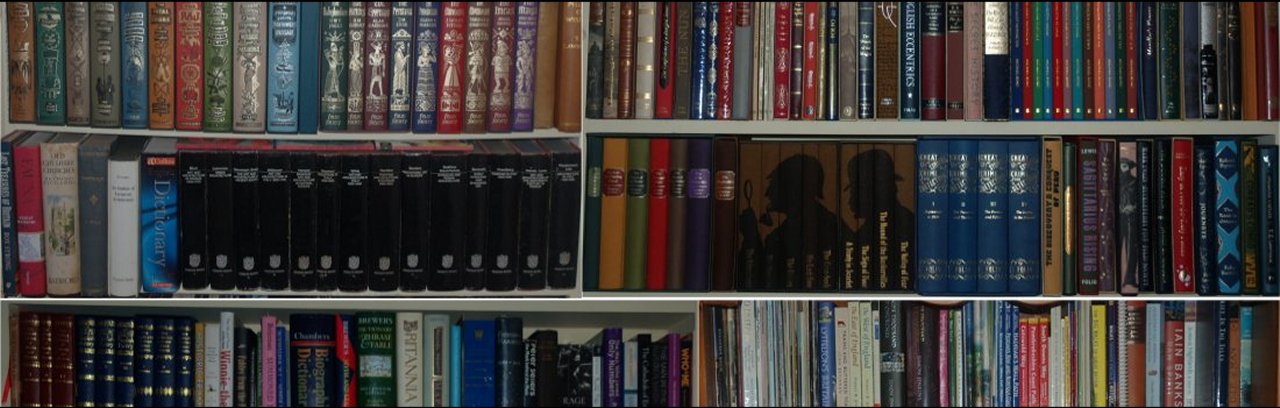
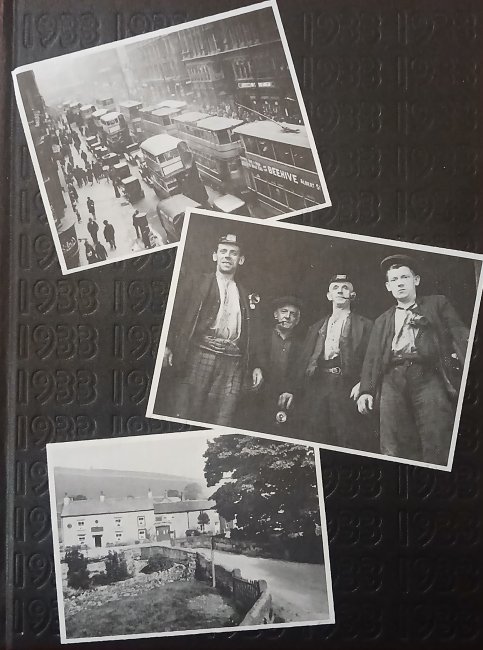
It’s time again for my August themed books and for this year I’ve chosen to feature some titles from The Folio Society starting with English Journey by J B Priestley. Annoyingly for a month that requires four entries the society only produced three books in this short series from the 1990’s so I have added a logical fourth to round them out as the books themselves deserve attention. Especially this first title ‘English Journey’ which is a classic analysis of the state of England in the depression years and particularly the year 1933 when Priestley undertook his travels across the country. The photographs used in this Folio Society edition are from the 1984 Jubilee publication by William Heinemann Ltd although eight pictures from that version could not be obtained due to changes in copyright. The photos are all contemporary to the text, so from the 1930’s
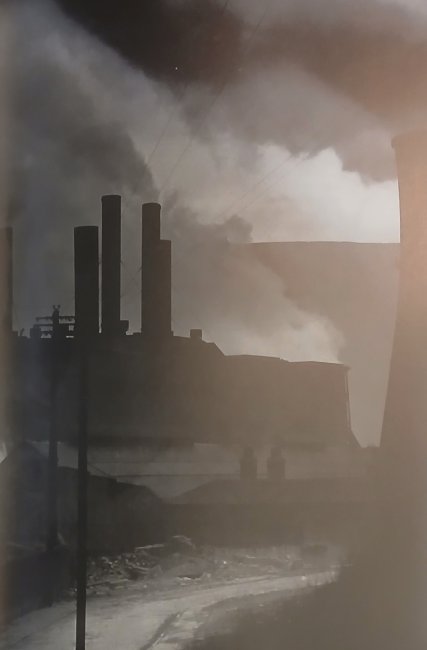
The book begins and ends in places largely untouched by The Great Slump which had decimated the industrial north and was triggered by The Great Depression in America from 1929 to 1933. Priestley set off to find out how England had been affected by the economic collapse without realising he was seeing it probably at its worst and he started off in the south of the country where he saw some economic decline in Southampton and Bristol, far less in The Cotswolds but then as he heads north through Birmingham and The Black Country and then into The Potteries and Yorkshire poverty increases along with the dirt and grime of industry both past and present. A quote from his chapter on The Potteries and that nebulous new city of Stoke On Trent which doesn’t have a city centre that can be recognised and still doesn’t to the confusion of anyone who visits there. Priestley keeps struggling to work out where he is.
But the general impression is of an exceptionally mean, dingy provinciality, of Victorian industrialism in its dirtiest and most cynical aspect. The look of these places bears no relation to the work that goes on in them. It seems to me to be monstrous that good craftsmen, whose families have been working for generations perhaps with Wedgewoods or Adams or Spode, should be condemned to live in such miserable holes as these.
In the next chapter ‘To Liverpool and Manchester’ the great wordsmith finds himself lost for words when trying to describe what he found in Liverpool and the deprivation he found in the slums there and determines that “Miserably I decided that somebody else must give a plain fair account of this great city, the task, in the time, was beyond me”
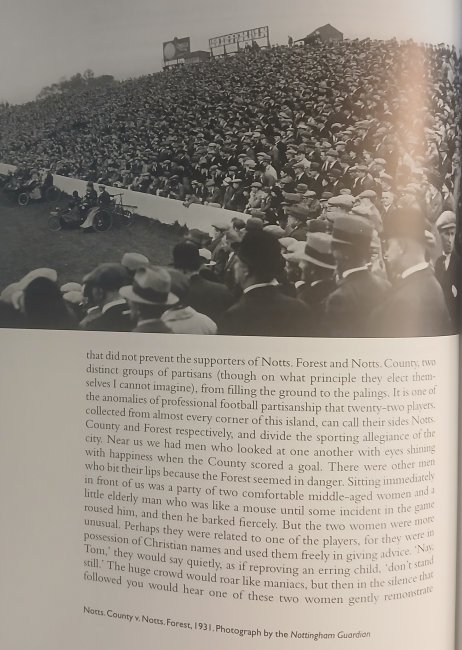
But it’s not all doom and gloom, Priestley manages to attend a football match, has great fun making very poor attempts at creating pottery items in Stoke, goes to Nottingham Goose Fair and even see rehearsals for one of his plays being put on at The Palace Theatre in Manchester, He admires the Bourneville district of Birmingham along with Chipping Campden and Boston on market day But its in the dark oppressive places that he really comes into his own and I don’t think I’ve read such a powerful text on squalor and deprivation largely caused by the decline of industry in the early years of the 1930’s
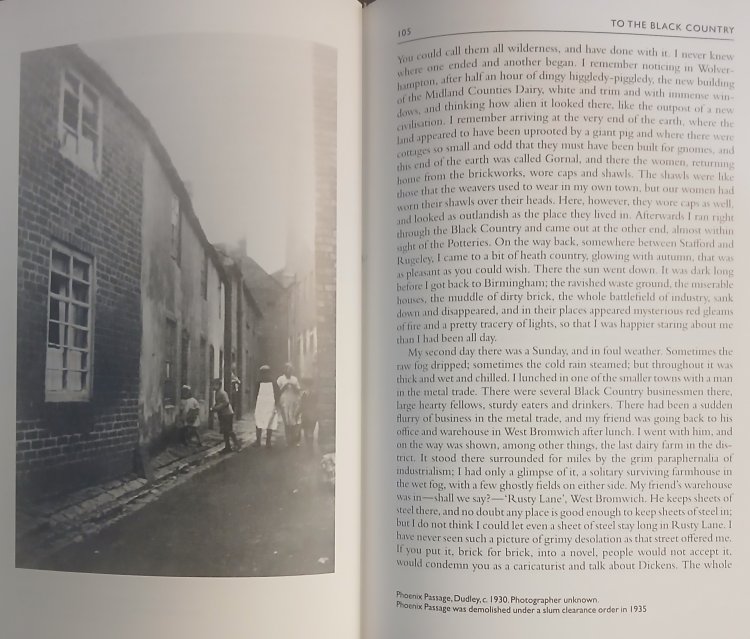
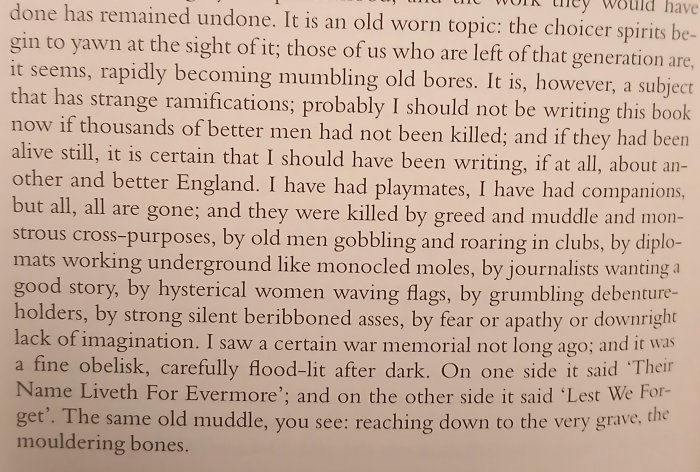
The longest chapter is describing a trip to the West Riding of Yorkshire, specifically to Priestley’s birth town of Bradford where he had arranged to attend a gathering of survivors from the First World War of his old regiment. Priestley himself was invalided out of the front lines in 1916 when the trench he was in was hit by a mortar shell and very few of his old comrades from that time were still around and able to attend the reunion but he did meet some and according to his account of the event a good time was had by all. But it is in this section that Priestley’s anger at the conflict and loss of life which had ended just seventeen years earlier is most on display, and for me some of his best writing in the entire book is in this chapter, a small section of which is shown below.
This is not a hugely positive book, how could it be when it is dealing with the early part of the depression and the waste of skilled men desperate for non-existent jobs to earn money to feed their families or the still ongoing aftermath of WWI with broken men struggling to cope with mental and physical issues. I refer to men as this was still a time when the roles of the sexes were largely differentiated, yes Priestley encountered women at work, largely at repetitive manufacturing such as he found in Birmingham and The Potteries, but the heavy industries in the north were on their knees and it was men that were employed there bringing in the income. I encourage everyone to read this book, especially now as who knows where AI and robotics are going to take us. A lot more unemployment looks to be not that far ahead as manufacturing increasingly replaces humans with machines that can work twenty four hours a day, seven days a week. I had not thought of Priestley as a social commentator before, for me he was a playwright and novelist, but he is a powerful writer especially when he rails against injustice.

