Carry On Jeeves – PG Wodehouse

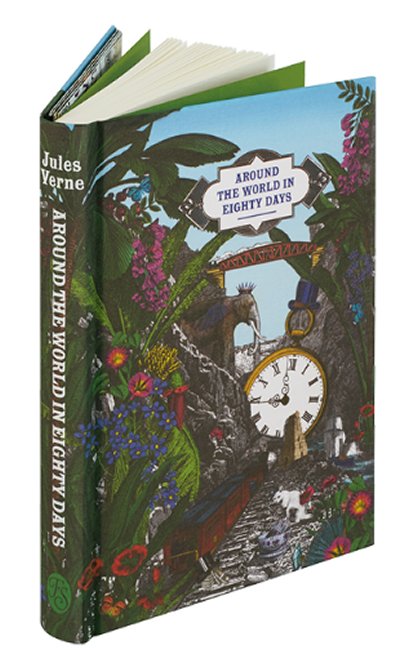
There are times when only a PG Wodehouse will do. I’ve featured two of his books before on this blog, Summer Lightning back at the end of November 2019 and The Clicking of Cuthbert in September 2021, Summer Lightning is one of the Blandings Castle novels set in a stately home in Shropshire, whilst The Clicking of Cuthbert is a collection of short stories featuring golf. You can see from this description that there is a noticeable gap in my descriptions of the works of Wodehouse and that is the thirty five short stories and eleven novels that make up the Jeeves and Wooster canon. I do have all of these in three boxed sets from The Folio Society beautifully illustrated by Paul Cox, and I have chosen this book comprising of ten stories because it includes the appearance of the indomitable gentleman’s gentleman Jeeves into the life of wealthy dilettante Bertie Wooster. This story ‘Jeeves Takes Charge’, originally published in 1915, begins with Bertie very badly hungover when his new valet arrives from the agency:

I crawled off the sofa and opened the door. A kind of darkish sort of respectful Johnnie stood without.

‘I was sent by the agency, sir,’ he said. ‘I was given to understand that you required a valet.’

I’d have preferred an undertaker; but I told him to stagger in, and he floated noiselessly through the doorway like a healing zephyr. That impressed me from the start. Meadowes had had flat feet and used to clump. This fellow didn’t seem to have any feet at all. He just streamed in. He had a grave, sympathetic face, as if he, too, knew what it was to sup with the lads.

‘Excuse me, sir,’ he said gently.

Then he seemed to flicker, and wasn’t there any longer. I heard him moving about in the kitchen, and presently he came back with a glass on a tray.

‘If you would drink this, sir,’ he said, with a kind of bedside manner, rather like the royal doctor shooting the bracer into the sick prince. ‘It is a little preparation of my own invention. It is the Worcester Sauce that gives it its colour. The raw egg makes it nutritious. The red pepper gives it its bite. Gentlemen have told me they have found it extremely invigorating after a late evening.’

I would have clutched at anything that looked like a lifeline that morning. I swallowed the stuff. For a moment I felt as if somebody had touched off a bomb inside the old bean and was strolling down my throat with a lighted torch, and then everything seemed suddenly to get all right. The sun shone in through the window; birds twittered in the tree-tops; and, generally speaking, hope dawned once more.

‘You’re engaged!’ I said, as soon as I could say anything.

The hiring of Jeeves would prove to be the best thing Bertram Wooster would ever do and many a time Jeeves would get him out of terrible problems, often caused by Bertie’s friends although sometimes by Bertie himself. This book comprises of ten of the short stories an was first published in 1925 by Herbert Jenkins Ltd and as well as introducing us to Jeeves the stories are set around the first few novels. It isn’t necessary to have read the other stories before this collection although there are some spoilers regarding plots, most noticeably around Bertie’s interaction with the Glossop family which assumes that the reader is familiar with them. The odd thing is that although this collection includes the hiring of Jeeves, the collection of eighteen short stories (some of which were originally published in combination) in The Inimitable Jeeves was first published in 1923 and includes much of the appearances of Sir Roderick Glossop and his daughter Honoria whom Bertie gets engaged to twice only for Jeeves to successfully extricate him both times.

The other thing to bear in mind is that Wodehouse started writing about Jeeves and Wooster in 1915 and wrote his final novel about them, ‘Aunt’s Aren’t Gentlemen’, in 1974 so a spread of almost six decades but none of the characters age more than about five years over this period and the lifestyle of Bertie is firmly rooted in the 1910’s and 20’s. It also needs to be understood that the First World War doesn’t impinge on the books at all and it is easier to assume whilst reading them that almost the whole story line is set in the early 1920’s. The one obvious exception to this is the novel ‘Ring For Jeeves’ which is clearly set later and is the only Jeeves book which doesn’t feature Bertie Wooster.

Of the ten stories in ‘Carry On Jeeves’ four are set in New York where Bertie had taken refuge to avoid the wrath of his aunt Agatha and one in Paris where he is simply on holiday for a couple of weeks whilst the rest are in his native England. Wooster is sufficiently wealthy that he doesn’t have to work for a living so Wodehouse is free to place him wherever he fancies which includes hiring a house for an extended holiday by the coast. It is also clear that Bertie is not the brightest of chaps but then again neither are most of his friends, with the intellectual status being almost entirely given to Jeeves. Almost all the stories and novels are written from the perspective of Bertie but this collection includes the only one seen from Jeeves’s viewpoint ‘Bertie Changes His Mind’, where Jeeves is worried that he might be about to be let go by Bertie and is determined to make sure that this doesn’t happen. For Jeeves, despite his occasional disagreements with Bertie, largely over his sartorial choices, knows that his employer is one that is worth retaining especially compared to some of the others he has worked for.

I love the works of PG Wodehouse as his gentle comedies are invariably just the thing to brighten the day and they are beautifully written. You can read one of the various series such as Jeeves and Wooster, Blandings Castle or the Psmith stories or pick one of the numerous stand alone works that together comprise the around a hundred novels and collections of short stories along with over fifty plays and scripts that he wrote over more than seventy years, Indeed he was working on another Blandings novel when he died aged ninety three.

The Struggles of Brown, Jones & Robinson – Anthony Trollope

The Struggles of Brown, Jones & Robinson, as the book is properly titled, is one of Trollope’s less well known and even lesser read novels. I don’t know why The Folio Society in their complete Trollope novels series decided to drop ‘The Struggles of’ from the title other than the probable difficulty of fitting all the words into the standard spine layout for the series. That this is a relatively unknown work can be judged by its sporadic printing history and the fact that even The Trollope Society themselves largely dismiss it in a single paragraph write up and that the list of primary characters on that web page fails to mention any of Mr Brown, Mr Jones or Mr Robinson. I mentioned the printing history because it is so odd for a novelist of the stature of Trollope, Longman along with Chapman & Hall both declined the novel and it first appeared in eight monthly parts in The Cornhill Magazine in 1861/2. Despite being written in 1857 it didn’t appear as a book until American publisher Harper’s Library issued a copy in 1862, the first British edition was Smith, Elder’s (who also published The Cornhill Magazine) copy in 1870, there then followed another American edition in 1882 and then nothing for ninety nine years!

It largely seems to have been reprinted since 1981 as part of sets of complete works with no publisher judging it sufficiently commercial to make it a stand alone book in its own right. Indeed even The Folio Society, whose copy I have, left it to the last to be printed of the forty seven Trollope novels in their complete set which they started in 1989 with ‘Can You Forgive Her?’ and finally finished in 1999 with this book and then topped off the collection with Trollope’s autobiography. There isn’t even a Wikipedia entry for the novel. With all that in mind it was with some trepidation that I decided to see if it was really that bad.

Happily the answer is no, and whilst it isn’t a great novel I definitely enjoyed it both as a satire of the advertising industry and a tale of intertwined relationships. To set the scene Mr Brown becomes a widower at the start of the book and gains control of his wife’s butter business which he has no interest in so subsequently sells. He has two daughters Sarah Jane who had married Mr Jones and Maryanne who is single but has promised marriage to Mr Brisket, the butcher. Mr Robinson has fallen in love with the flighty Maryanne to the extreme annoyance of the much larger butcher who several times threatens him with violence if he doesn’t stay away from her. Oddly the three title characters subsequently start a business together selling haberdashery which none of them know anything about, with Brown putting up the money, Jones being the floor manager and Robinson in charge of advertising, he also takes charge of the decor and uniforms in the shop which is themed around the recently invented colour, magenta. The original capital in the business is stated as £4,000, which is the equivalent of around £365,000 today, a massive sum to start a small business with, but right from the off the partners, encouraged by Robinson, planned big with significant premises at 81 Bishopsgate Street and a significant amount of staff to match. What they didn’t have was much stock as Robinson was convinced that spending a lot on advertising would bring people in and then you could sell them what you had, rather than what you had promised you had.

It is not only Robinson’s extremely expensive advertising ploys, which range from horse riding knights in armour, to liverymen handing out leaflets but Jones’s dodgy selling which involved putting high quality items in the windows with low prices then actually selling similar looking but lower quality items to the customers for the same price which leads to the reputation of the business starting to fall away. Brown meanwhile is still dealing badly with his two daughters who see their inheritance frittered away in the business whilst he banks less than the actual takings and salts some away from himself. It’s difficult to find a single likeable character in the book with the possible exception of Robinson who is more naive than criminal, Brown’s two daughters are truly horrible and I rejoiced when Maryanne, after playing Brisket and Robinson off one another throughout the book ends up with neither of them and both count themselves lucky to be rid of her.The firm needless to say burns through the large amount of capital it started with in about a year and goes bust, a story that could be applied to numerous businesses that have more ideas than plans or solid foundations. It would have been interesting to see what Trollope would have made of the various overinflated dotcom and IT companies and dodgy banks built on loans to them over the last twenty years but ‘The Struggles of Brown, Jones and Robinson’ is an excellent primer on dubious companies living well beyond their means but believed to be sound right up until they crash. It may not ever have been rated highly but it should be read by anyone looking to start, or invest, in a company in the present day.

The forty eight Trollope books in the complete works set by the Folio Society.

Surely You’re Joking, Mr Feynman! – Richard Feynman

Well this book was a complete surprise when I finally pulled it off the shelf where it has sat, largely undisturbed, for over ten years. The year before buying it I had read Six Easy Pieces and Six Not so Easy Pieces which were sections lifted from the Feynman Lectures on Physics and whilst I had enjoyed them I never felt in the mood to see which topics were included in this volume. In fact this isn’t a physics textbook but a stab at autobiography based on taped conversations between Feynman and Ralph Leighton largely done over a seven year period whilst they were drumming together, Feynman was a keen bongo player. The short pieces that make up the book are arranged in a rough chronological order from his childhood to getting his degree in physics at MIT in the first section, his time getting his PhD at Princeton University in the second. Part three covers his time at Los Alamos working on the Manhattan Project which developed the first atomic bomb during WWII whilst part four has him working as professor of physics at Caltech and Cornell universities and the final section has some fairly random stories in it. This potentially sounds rather dry but it is far from it, what we actually get is a total of forty anecdotes a lot of which have nothing to do with physics at all. As well as being one of the outstanding physicists of the twentieth century Feynman loved an anecdote and also stretching his brain doing things that had nothing to do with his career such as learning to do safe-cracking and taking it upon himself to translate Mayan pictographs relating to mathematical problems, both of which are covered in this book.

The stories are often humorous such as the first one concerning his Princeton years, which is also where the title of the book comes from. On arrival to start work on his doctorate he was invited to the rooms of the head of college for tea and being a young man from a Jewish background in New York he hadn’t come across this decidedly English concept which was popular amongst the academic elite at Princeton so didn’t really know what to expect. On being asked if he wanted lemon or milk in his tea he replied ‘both’ leading the lady pouring the tea to exclaim ‘Surely you’re joking, Mr Feynman!’ One of the funniest stories is his battle with the censors working at Los Alamos, now technically they weren’t allowed to censor mail within America but clearly they were going to because of the nature of the work on the Manhattan Project, However Feynman liked to keep his mind sharp so had already started having his correspondence with his father and his wife include codes without giving him a hint as to the key so that he had to crack the codes and the censors really didn’t like that aspect of his letters. Eventually they settled on having the letter writer include on a separate piece of paper how to crack the code and the censors would remove the solution before passing it onto Feynman. All I can say is he must have been a tricky person to work with and indeed his long time collaborator, Freeman Dyson, described him as ‘half genius, half buffoon’ which he later updated as ‘all genius, all buffoon’.

By its very nature the book is somewhat bitty, there are little, if any, links between the various stories included and you quite often want to know more and it leaves out large chunks of his life including his work on the report into the space shuttle Challenger disaster which helped bring him to wider public recognition outside of the world of physicists and academia. However the fact that it is forty largely self contained tales means it can be just dropped into wherever you feel making it ideal for reading when you just have short periods of time available and it is definitely worth reading, even if Feynman does come over as a pain in the ass at times. My copy was published by The Folio Society in 2012, twenty seven years after it first came out and is beautifully illustrated with numerous photographs along with drawings by Aude van Ryn.

The Secret History – Procopius

Procopius was born around 500AD and died sometime after 565AD, a period during which the Roman empire was in serious decline. For many years he worked for the celebrated military commander General Belisarius during which time he wrote the work he became known for in the time of the empire ‘History of the Wars’. This series of eight books is a standard document of the campaigns of Belisarius who seemed to be leading his armies, and even the navy at some point, everywhere. It is clear from the level of detail that Procopius was on the scene for most of the battles he describes even though his official role, at least initially, was as legal advisor to the general. Less well known is his work ‘The Buildings’ which is largely a hagiography of Emperor Justinian (527AD to 565AD) as it describes the major construction works undertaken during his reign and exclaims the greatness of Justinian due to these churches and other civil engineering projects. His third work however is the one that I have read this week and it is very different to the rest, not least because it wasn’t available during his lifetime and indeed was only discovered in the Vatican library centuries after his death and finally published in 1623. So why wasn’t it available in the preceding thousand years, well Procopius gives us the explanation in his foreword.

This book is basically a scandal sheet denigrating Justinian as a genocidal leader interested only in the money he could confiscate or swindle out of everyone else and slaughtering tens of thousands of people on a whim whilst losing vast chunks of what was left of the empire. His wife is portrayed as a scheming whore, free with her body from an outrageously young age, stripping off in public places and letting anyone have their way with her as they wished. His former boss Belisarius and his wife are similarly pilloried by Procopius as is the previous emperor Justin who is described as an idiot and little more than a jackass. It is quite clear why he decided not to publish in his lifetime or indeed whilst anyone mentioned in the book was still alive, the repercussions would have been swift and brutal.

One slightly irritating feature of the book is the constant references back to Procopius’s eight volume history, this is usually where he is giving a scandalous reason for something that he had previously written about but which he had glossed over the causes of in the earlier book. This becomes more annoying if, like me, you don’t own ‘History of the Wars’ so can’t refer back, the notes in this edition simply tell you which of the eight volumes the story was first told, it would have been nice if a short precis was available so that the reader can compare the two accounts but that would have made the book probably over long. All in all I quite enjoyed this book though, it is unusual by being a character assassination of a couple of Roman emperors written at the time of their reigns, the only work I can think of that I have read with a similarly blunt although not as brutal or scandalous assessment of the emperors is ‘The Twelve Caesars’ by Suetonius although all the rulers he wrote about were dead before he started work on that.

As can be seen from the foreword the writing style is fairly chatty, although the subject matter with it’s never ending tales of depravity can get a little wearing at times. The translator of this Folio Society edition is Geoffrey Williamson and it was originally published as a Penguin Classic (L182, first published August 1966). The Folio Society first printed it in 1990 and it has gone through several editions since then.

The Tale of Peter Rabbit – Beatrix Potter

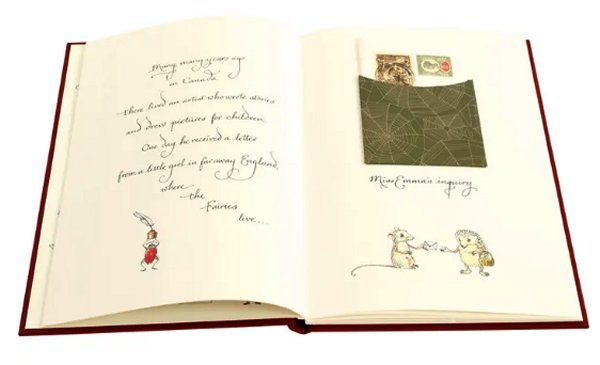
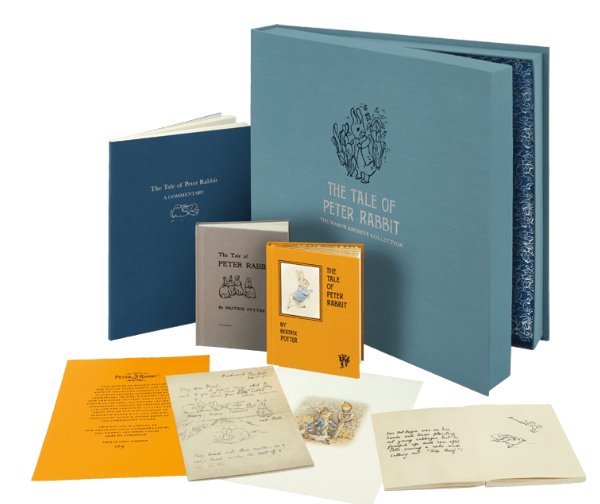
October 2022 marks the 120th anniversary of the first commercial publication of The Tale of Peter Rabbit and this magnificent collection of facsimiles of items from the Frederick Warne Archives was produced by The Folio Society to mark the occasion. The set is limited to 1000 examples and mine is number 5. There is so much to look at and compare from the very first appearance of Peter in a picture letter eight years before Beatrix Potter privately printed Peter’s first book to replicas of some of the tiny Christmas letters she created, There is also a wonderfully informative booklet which tells the story of the creation of The Tale of Peter Rabbit and has a introduction by Emma Thompson who wrote her own Peter Rabbit stories starting with the 110th anniversary set published by Frederick Warne, see here.

Just how much is included can be seen in the following list:

  • Facsimile of picture letter, 1893, printed on Arena Wove paper – 8 pages. 8˝ × 4¾˝
  • Facsimile of privately printed edition, 1901 bound in Wibalin paper, printed on Sirio Calce Stucco paper – 88 pages. 5¾˝ × 4¼˝
  • Facsimile of maquette, 1902, printed on Arena Wove paper and presented in an archive folder made from Sirio Color paper blocked in silver foil – 88 pages. 5˝ × 3¾˝
  • Facsimile of deluxe edition, 1902, bound in cloth with an inset label, printed on Sirio Calce Stucco paper with gold page tops and printed endpapers – 104 pages. 5½˝ × 4˝
  • Five Christmas letters printed on Arena Wove paper, each 3˝ × 1½˝
  • Giclée print on Modigliani Insize Neve paper with blind embossed frame line – 9˝ × 6½˝
  • Commentary set in Caslon, printed on Abbey Pure paper and bound in Sirio Color paper blocked in silver foil – 80 pages. 9½˝ × 6½˝
  • Limitation certificate printed letterpress on Fedrigoni Tintoretto Ceylon paper

Lets look at some of the items in more detail

Above are the 1901 (grey) and 1902 deluxe (yellow) edition facsimiles, posed on top of the history booklet. These are beautiful replicas from the black and white privately printed edition to the first commercial version in full colour.

1901 Privately printed edition
1902 Deluxe version of the first commercial edition

The number of changes between the two volumes makes reading them side by side is a fascinating experience, even the text of the first page of the commercial edition is split over two pages in the original and consequently has two pictures only the second of which survived into the later book. There are also new pictures in the 1902 edition which aren’t in the 1901, but the most noticeable difference when you first pick them up is that only the frontispiece in the early edition is coloured whilst all commercial versions are full colour throughout. I hadn’t seen the original black and white sketches before and they are a lot more crude than the final watercolours that Beatrix produced but they do have a certain charm about them which makes me glad I spent the £325 that The Folio Society charges for the set. Engaging as these books are, and the text is a lot longer in the 1902 version, although the words and picture shown above from the 1901 edition don’t appear at all in the later version it is the maquette that comes between them that is truly interesting.

1902 Maquette

Here we can see in Beatrix’s own handwriting how she wanted the Frederick Warne edition to appear and apart from a couple of pages reproduced in other books I had never seen this unique edition before. To have the complete book in this form (missing a cover as she didn’t produce one for this version) What I found particularly interesting about this page is that you can see crossing out of words where she intended to change the original text but the words used here are exactly the same as in the 1901 edition but different to what Warne actually printed for this page which runs as follows:

Then he tried to find his way straight across the garden, but he became more and more puzzled. Presently he came to a pond where Mr McGregor filled his water-cans. A white cat was staring at some gold-fish; she sat very, very still and now and then the tip of her tail twitched as if it were alive. Peter thought it best to go away without speaking to her; he had heard about cats from his cousin little Benjamin Bunny

As you can see the text ends the same way as Beatrix’s plan but the start is quite different. The other items included as facsimiles are the 1893 letter which again I had seen small pictures of in various books but never the whole thing and the tiny Christmas letters, there is also a lovely print of Peter eating the radishes in Mr McGregors garden.

This wonderful box set is a lovely edition to my Beatrix Potter collection and has already provided hours of enjoyment in looking at the differences as the story evolved. You can see the video produced by The Folio Society to mark the launch of this collection here.

Neverwhere – Neil Gaiman

The third of The Folio Society’s editions of Neil Gaiman’s greatest works, after American Gods and Anansi Boys, is the first one I have purchased as I already have very nice editions of the first two. However I had somehow not actually read Neverwhere, although I was familiar with it having listened to the 2013 radio play version several times. Whilst reading Neil’s ‘Introduction to this text’ I was surprised to discover that it had originally been a BBC TV series back in 1996 which I had completely missed and that Neil wrote the original novel partly so he could save the bits he liked that were either impossible to film within the constraints of the budget or were subsequently being cut from the show. He further expanded the book and removed some of the more obscure London references for a later international version and the version here is what is now known as the ‘Author’s Preferred Text’ where in 2006 he went back to both earlier iterations and merged them, bringing back the bits cut and also writing yet more new text to blend them seamlessly. The cast list for the radio adaptation, which was my first introduction to the book, is frankly amazing as can be seen in the Wikipedia entry for it and it was because of this when it was announced as a title for this years Autumn/Winter collection by The Folio Society I bought it immediately.

Neverwhere is a dark fantasy set in London Above and London Below, Richard Mayhew is an ordinary office worker but one evening on his way to restaurant for a meeting with his fiance and her boss finds an injured girl lying on the pavement. Ignoring his girlfriend’s insistence to just leave her as they are already late for the meal he instead decides to take her back to his home when she refuses medical assistance. Later his fiance calls to break off their engagement but by then Richard’s life has changed completely for the girl is a lady from one of the great houses of London Below and he is now irrevocably caught up in her escape from assassins sent to wipe out her family and her plans to avenge them.

London Below is a hidden place from almost all the inhabitants of London Above, partly on the tube lines, partly in the sewers, partly on the rooftops of London as we know it and partly in huge caverns invisible to those above. Door, for that is the girls name, needs help to escape from the murderous Mr Croup and Mr Vandemar and asks Richard to find the Marquis de Carabas with the assistance of the Rat Speakers. A lot of the character names seem very familiar to anyone who knows London, an aged man living on the rooftops is Old Bailey, Earls Court rides a tube train in a carriage that nobody seems to notice and which resembles a medieval court inside. There is also the scary Night’s Bridge where people disappear into the darkness and the realm of The Black Friars. One touch I particularly liked was The Floating Market, which moves around London Above completely invisible to the people there. Richard first encounters it in Harrod’s then later on it is on HMS Belfast, this is a place for the inhabitants of London Below to gather with a truce between all peoples.

This version of the book also includes the follow up short story ‘How The Marquis Got His Coat Back’, written in 2014, which introduces the very dangerous Shepherds of Shepherds Bush and the Elephant who controls Elephant and Castle. It has also been confirmed by Gaiman that he is writing a sequel novel called ‘The Seven Sisters’ which is paused whilst he is working on TV adaptations.

It’s only four chapters in, and waiting for me to stop showrunning and start writing.

Neil Gaiman’s twitter feed 24th January 2019

The book is, of course, beautiful with seven full page and two double page illustrations along with twenty one chapter headings all produced by Chris Malbon and the chosen font, Mentor with Tommaso as the chapter headings, is extremely clear making the 392 page book a delight to read and I devoured it in just two sittings getting completely immersed in the story. The picture above is of Richard and Door’s first encounter with The Angel Islington. The Folio Society also produced a short video on the release of this book on the 1st September 2022, which can be found here.

I loved the book, and the short story, and can’t work out why it took Folio Society to publish this version before I finally got round to owning a copy and reading it, roll on The Seven Sisters.

The Knight in Panther Skin – Shota Rustaveli

This prose translation of Rustaveli’s Georgian epic poem from the twelfth century by Katharine Vivian was praised by The Director of the Institute of the History of Georgian Literature in Tibilisi, A G Baramidze, as

an interesting attempt to render Rustaveli’s poem in prose – not to give a literal word by word translation, but rather a free rendering which may bring to the reader the contents of the poem and thus contribute greatly to Rustaveli’s popularity throughout the English-speaking world.

Prefatory note

The poem is seen as one of the greats of Georgian literature and Rustaveli is regarded there in much the same way as Shakespeare is here so it was a surprise on reading it that it doesn’t appear to have any action take place in Georgia. Instead Avtandil and his great love Tinatin are portrayed as coming from Arabia whilst Tariel and his love Nestan-Darejan are Indian. The story concerns how Avtandil and Tariel are separated from the loves of their lives and ultimately win their hands in marriage although in two very different ways. But let us start at the beginning because that is where the story is closest to Georgian history. The first chapters deal with Tinatin being raised to be Queen of Arabia by her father as he steps aside and this mirrors the ascension of Queen Thamar in Georgia who was monarch during Rustaveli’s lifetime and this is still seen as a golden age for Georgia. Avtandil is commander of Tinatin’s army and a favourite of her father Rostevan whilst Queen Thamar’s second husband was a highly successful military commander. From here onwards though the poem leads off on a mythical path.

One day whilst Rostevan and Avtandil were out hunting they see in the distance a knight on a black charger clad in a panther skin and when they get nearer it can be seen that he is weeping. Rostevan dispatches some of the soldiers with them to bring the knight to him but he seeing soldiers approach kills them assuming that they meant him harm. When the king attempts to get near the knight turns his horse and vanishes. Greatly intrigued by this mysterious knight and saddened by the loss of his men Rostevan sends Avtandil on a three year quest to find the knight in the panther skin. Now this is where the tale could have been padded out considerably in describing Avtandil’s journey, and the poem is already 200 pages long, but within a page we find ourselves near the end of the three years and all we are told is that he hadn’t found him, Rustaveli is clearly keen to get to the action.

Finally about to turn back and report failure Avtandil spies his quarry but remembering what happened to the last soldiers he saw approach the knight decides to track him rather than approach directly. He discovers his home in some caves and finally manages to talk to the woman who lives with him and persuades her to get the knight to talk to him. This knight turns out to be Tariel and king of one of the seven kingdoms of India and prospective heir to other six who are all held by one man, he is also maddened by grief. It turns out that he is desperately in love with Nestan-Darejan who is the daughter of the other king and she is in love with him but that he had killed the man who had been arranged to be her husband and fled the country to avoid the repercussions. Nestan-Darejan, once it was discovered that she was in on the plot was exiled in secret and Tariel had been looking for her ever since and this is where the story really begins to pick up.

The tale of how Avtandil returns to Arabia to report finding the knight and then heads back to him against the wishes of Rostevan, thereby making himself an outcast, but he does so in order to aid Tariel find Nestan-Darejan. The great quest he makes in this search (which this time is covered by the poem) and the ultimate success not only in defeating the many enemies he comes up against but also in rescuing her and into the arms of Tariel is the main part of the story. That all ends well for our heroes, including the other characters that assist them greatly is happily the result and the way the story builds in excitement is really well done. Avtandil and Tariel are endowed with mythical abilities in war and either singly or with a few hundred men are capable of taking on foes with considerably greater numbers whilst emerging with at worst a minor injury to themselves. This truly is a tale of the Heroic Age and what would probably have been a daunting read, a 200 hundred page poem is something to take care with, was transformed in Katharine Vivian’s prose to be a romp through a great story. Georgian literature is poorly represented in English translation so I am glad I finally took this book off the shelves.

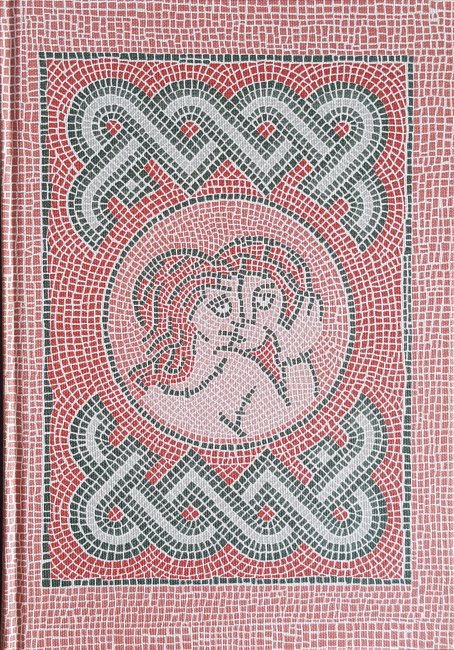
The book was published by The Folio Society in 1977, unusually by using letterpress, and is bound in Princess Satin cloth with a very attractive device on the cover by Levan Tsutskiridze. Sadly for A G Baramidze’s hopes that this would spread the word about their great epic it was never reprinted and I cannot find Katharine Vivian’s translation being subsequently published by anyone else. In fact this appears to be the only English translation of Rustaveli’s masterwork ever printed in the UK.

The Road to Oxiana – Robert Byron

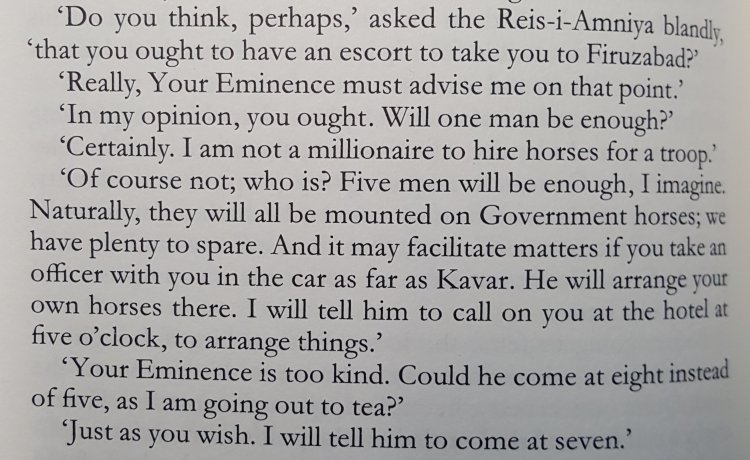
The Road to Oxiana is more than a travel diary, indeed it isn’t really a diary at all although it reads like one, as Byron actually took several years to produce something that appears to have been written at the time with it finally being first published in 1937. This is one of the all time classic travel books, like Patrick Leigh Fermors’ A Time of Gifts, also about a journey undertaken in 1933, this is a book by a young man who was experiencing the world at a momentous period between the two wars. Byron was 28, Fermor was even younger at just 19 and like Byron actually wrote his classic work several years later although in his case it wasn’t finished and published until 1977 when Fermor was 62. The Road to Oxiana is unfortunately not as well known as Fermor’s work but it deserves to be just as well read, partly for it’s historical nature but also for the insight it gives to countries and peoples that it can be very difficult to visit nowadays.

Byron’s humour and infectious enthusiasm for the countries he travels through and the people he meets starts with an apparent disaster with the non-arrival in Beirut of the experimental, and somewhat surreal, charcoal powered Rolls Royce that he had intended to travel in with his long suffering companion Christopher Sykes. We then continue on the road in a series of unpredictable and often ramshackle vehicles and an equal collection of unpredictable and ramshackle horses and ponies whilst continually dodging the Persian secret police who were desperate to find out what on Earth these men were doing. It was concern about these not very surreptitious although supposedly secret followers that led him not to refer to The Shah by name at any time in the notes he took whilst in Iran but to instead have that tiresome fellow Marjoribanks. The book is quite often funny especially in the reconstructed conversations that Byron has with varied notables during the trip often as they attempt to fleece him as he is seen as a wealthy traveller.

Not for nothing is the book called the Road to Oxiana, as the River Oxus, which is ostensibly the destination, only gets a brief mention at the very end although I won’t spoil the story by saying how. No, this is a book of a journey and the care and time that Byron took over his choice of words draws the reader into the extraordinary life of Iran at the peak of the Peacock throne, from unbelievable wealth to grinding poverty. We travel the length and breadth of this huge and truly spectacular country, about two thirds the size of the European Union with enormous mountain ranges and vast deserts all faithfully illustrated by Byron’s pen. However it isn’t just Iran that is covered in the narrative, although the majority of the book covers this vast country, we also visit Palestine, Iraq, Syria, Afghanistan and finish in Peshawar which was then in India and is now part of Pakistan.

This was Byron’s eighth, and final, book and his previous travel books had included a drive from England to Greece (his first book Europe in the Looking-Glass) and a couple of further books detailing his experiences in Greece along with a journey to Russia and Tibet and a visit to India. He also fitted in a history of Western painting and a book on architecture, but it is for The Road to Oxiana that he is known today. Sadly Byron was on board a ship that was torpedoed in 1941 on his way to Africa presumably on a mission for British Intelligence and his body was never found. Who knows where he would have got to had he survived the war and what books he would have written. Christopher Sykes went on to write a short memoir to his friend in his book Four Studies in Loyalty which was published in 1946.

I first read the book whilst travelling around Iran myself in 1998 and have returned to the book with increasing pleasure several times. I promise that you don’t need to visit Iran to love this book although be warned it may make you want to go there as well. The copy I currently have on my shelves is the Folio Society edition from 2000 which is beautifully illustrated with seventeen of Byron’s photographs taken whilst on the trip and bound in full cloth, gold blocked with a design by Francis Moseley.

Hangman’s Holiday – Dorothy L Sayers

By way of a complete contrast to last weeks religious poetry I’ve gone for this lovely Folio Society edition of Hangman’s Holiday by Dorothy L Sayers which I bought in the recent Folio Society autumn sale. I thought I’d read all the Lord Peter Wimsey tales but this includes four Wimsey short stories which I didn’t know, along with six Montague Egg shorts and a couple of other mysteries not featuring either of her long running characters. It has forty four illustrations along with the cover by Paul Cox who has worked on all the Dorothy L Sayers and P G Wodehouse editions for the Folio Society for more than three decades along with many other titles providing a lovely consistent feel to these series. I bought the book mainly for the Montague Egg tales as I’d not read any of those before and he is a definite contrast to Lord Peter, but let’s start with the Wimsey stories. All four of these are Wimsey alone without his trusty batman and collector of evidence Bunter and frankly I missed the interaction between the two of them. Two of the stories are quite disappointing, especially ‘The Incredible Elopement of Lord Peter Wimsey’ where Wimsey takes on the character of a magician in rural Spain and you are left wondering why Sayers decided to have Wimsey do this as he is completely out of character throughout most of the tale. The other one I didn’t enjoy much was ‘The Queen’s Square’ which was just too convoluted to be much fun to read. The remaining two Wimsey tales are ‘The Image in the Mirror’ and ‘The Necklace of Pearls’ both of which are fine as far as they go, but are definitely not in the first rank of Wimsey stories.

Moving on to Montague Egg, he is less of a detective like Wimsey than ‘a noticer of details’ which can be used by the police to solve a crime. His six stories are all quite short varying between nine and twelve pages when the space for illustrations is discounted but they each have quite a lot going for them despite their relative brevity.’The Poisoned Dow 08′ is an excellent introduction to Monty Egg as he is a commercial traveller selling wines and spirits and this is entirely within his area of expertise. Whilst on a return visit to a customer he arrives to find the police in attendance and his client dead, presumably by a poisoned bottle of port. Egg proves that there was nothing wrong with the port, that his firm had supplied, and that there was evidence of murder. Both ‘Murder in the Morning’ and ‘One Too Many’ have Monty Egg in the position of witness to a crime or rather the aftermath of a crime and the little details that he spotted at the time are critical to finding the solution whilst the remaining three stories have him operating much more as the archetypal amateur detective much loved by Dorothy L Sayers, Agatha Christie and the other Queens of Crime from the 1920’s and 30’s.

I quite warmed to Montague Egg, the shortness of the stories meant that I could read one whilst waiting for my evening meal to cook and there was sufficient complexity to make the mystery worthwhile.

The two final stories are quite good fun and I’m sure I’ve read both of these before. ‘The Man Who Knew How’ has a character on a train talking to a fellow passenger and claiming that he knew a foolproof way to kill people and get away with it as it would be assumed that they died due to the temperature shock of getting in a bath that was too hot. His fellow passenger then starts noticing a pattern in news reports of people dying in hot baths and is convinced he was talking to a serial killer. ‘The Fountain Plays’ is a story of blackmail and murder with an excellent twist at the end and rounded off the book perfectly.

I’m not sure that if I had known how weak the Lord Peter Wimsey stories were I would have paid the full £39.95 for this book but at half price in the sale I’m glad to have added it to my Dorothy L Sayers collection. Now to find and read the other five Montague Egg stories.

Voyages to the Moon and the Sun – Cyrano de Bergerac

For a long time I believed that the author of this book wasn’t a real person but had been made up in some obscure French novel and that the character had lived on beyond the original work, so to find that Cyrano de Bergerac was not only real but an author as well as the famous soldier and duellist was a pleasant surprise. His life is however poorly documented, but this work can be dated reasonably well as it mentions the death of the philosopher Descartes, which happened in 1650 and de Bergerac himself died in 1654. My copy is the Folio Society edition published in 2018, illustrated by Quentin Blake and rounds off my selection of works translated from French that I have been reading throughout August. The illustrations to this blog were taken from the Folio Society web site entry on the book.

The book is in three sections so I’ll review it in the same way:

Journey to The Moon

The time that de Bergerac was writing in was a period of considerable scientific advancement as people moved away from the ancient Greek science towards the start of physics as we know it but there was much that was still up for debate such as if the Earth was the centre of the universe with everything else revolving around it. It is clear right from the start that de Bergerac had moved on from this notion and he understood that the Earth rotated, that the Moon orbited the Earth and that together they orbited the Sun. Journey to the Moon starts with the hero trying to reach the Moon by means of dew collected in jam jars. The reasoning is fair, dew rises in the morning so if you could collect enough of it and attach it to your body then it should take you with it, this he duly does and rises up into the air from Paris one morning. After a few hours he decides to land, releases the dew and is surprised to find it is still morning and he is in Canada as the Earth has rotated underneath him, de Bergerac didn’t consider that the atmosphere also rotates with the land beneath. Later he builds another machine this time powered by fireworks which does lift him to the Moon, leaving from Quebec.

The Moon he arrives at is however unrecognisable from the one we know as he finds the Garden of Eden there along with several old testament prophets and here the book starts to fail as he indulges in pages of theological arguments which drag the pace so much that I almost gave up at this point and began searching for another book to read, however I’m glad I persevered. Ultimately he leaves religion behind and goes on a fantastical exploration of his version of the Moon before returning to Earth by catching hold of the Devil on his way to deposit an inhabitant of the Moon to Hell and of course he has to pass the Earth on the way.

Journey to The Sun

For a long time it looked as if Journey to the Sun wasn’t actually going to get there, for the first twenty five pages it covers being persuaded to write up and publish Journey to the Moon and his subsequent denouncement as a sorcerer. Which leads to him being jailed, escaping and undertaking a very funny chase sequence which results in him accidentally running full circle and seeking shelter from his pursuers through the back door of the very jail he had escaped from. Eventually he builds a contraption which uses the power of sunlight via lenses to build up lift so that he can escape again, however he misjudges the power of his invention and instead of just rising and then landing again he is drawn all the way to the Sun and aims to land on a sun spot which he takes to be an area of land floating on the sun’s surface. The Sun in the book is not the flaming ball of gas that we understand but simply a larger globe that it is perfectly possible to traverse.

Eventually he meets a tiny king who with his subjects can transform themselves into anything they wish either singly or as a group to make something as large as a tree and in this tree is a Nightingale who leads him to the Kingdom of the Birds.

Story of the Birds

On arrival in the Kingdom of the Birds he is arrested and put on trial for the heinous crime of being a man and therefore a destroyer and killer of birds. Here de Bergerac demonstrates his ecological credentials and tries our hero for the damage mankind has done to the Earth and the wanton killing of bird life. He is ultimately sentenced to be eaten to death by insects but is reprieved when a parrot that he once set free from its cage speaks up in his defence.

Various adventures follow his release as he travels towards the Kingdom of Philosophers, although again de Bergerac gets distracted and spends pages retelling Greek myths without progressing with the story. Eventually this rather tedious section finishes and the hero continues on his way, meeting people from the Kingdom of Truth and the Kingdom of Lovers before the book suddenly finishes mid paragraph.

Overall I enjoyed the book but the large sections of ‘philosophising’ I could definitely have done without.